iPhone 17 Pro Max Review: Maximum Screen, Battery, and Camera
[Limited Stock - Alert] The iPhone 17 Pro Max is Apples latest flagship with improved design and performance.
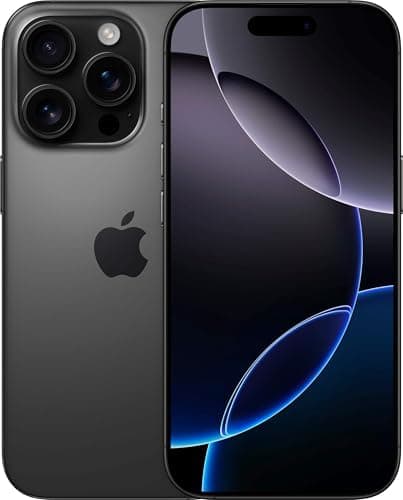
The iPhone 17 Pro Max is Apple's largest and most capable smartphone, a device designed for users who want maximum screen real estate, maximum battery life, and maximum camera capability in a single device. At $1,299 for the 256GB base configuration, the iPhone 17 Pro Max represents Apple's premium flagship proposition — a device that competes as much with tablets and laptops as it does with other smartphones. This review covers eight weeks of using the iPhone 17 Pro Max as a primary device, examining whether its advantages over the smaller iPhone 17 Pro justify the $300 premium and substantially larger physical footprint.
The 6.9-Inch Display: Maximum iPhone Screen Estate
The 6.9-inch Super Retina XDR OLED display on the iPhone 17 Pro Max is the largest display Apple has ever shipped on an iPhone, and it is a genuinely different canvas for consuming content compared to the 6.3-inch iPhone 17 Pro. The additional screen area makes a meaningful difference in video consumption — Netflix, YouTube, and Apple TV Plus content feels more immersive when occupying 20% more of your visual field. Reading documents, emails, and long-form articles is more comfortable with more words visible per line, and games that support widescreen layouts take genuine advantage of the additional horizontal space.
The 120Hz ProMotion adaptive refresh rate delivers the same fluid responsiveness as the iPhone 17 Pro, but the larger display makes the smoothness feel more impactful. Swiping between pages of apps in the app switcher, scrolling through feeds, and navigating iOS all feel more expansive on the larger canvas. The always-on display capability — which keeps your lock screen visible at 1Hz with widgets, time, and notifications — works identically to the iPhone 17 Pro, and the larger surface makes the lock screen information easier to read at a glance from across a room.
At 2,868 by 1,320 pixels and 460 pixels per inch, the Pro Max's display resolution is functionally identical to the iPhone 17 Pro in sharpness. The meaningful difference is physical size, which matters most for users with visual impairments, users who consume a lot of video content on their phone, and users who find smaller devices fatiguing to use for extended periods. The peak brightness of 2,000 nits for HDR content ensures the Pro Max remains fully readable in direct outdoor sunlight, and the display's color accuracy — calibrated to Display P3 at the factory — makes it suitable for professional photo review work.
Pro Tip: The iPhone 17 Pro Max's larger display makes it an excellent option for Split View multitasking on iPadOS-style workflows. If you use your iPhone to respond to emails while referencing documents, the larger screen makes managing two apps simultaneously more practical than on smaller iPhones. iOS 19 has expanded multitasking capabilities on Pro models, and the Pro Max's screen area makes these features genuinely usable rather than merely functional.
Camera System: The Definitive iPhone Photography Experience
The iPhone 17 Pro Max shares the same camera system as the iPhone 17 Pro — the most advanced camera system Apple has ever produced — which means it is also the most capable camera system available in any smartphone at the time of this review. The 48-megapixel Fusion camera with Type 1/1.14 sensor, the 5x optical telephoto with tetraprism design, and the 48-megapixel ultrawide camera together represent a photography toolkit that handles virtually any shooting scenario without compromise.
The larger sensor in the main camera captures approximately 40% more light than previous iPhone Pro sensors, producing images with dramatically better low-light performance and more natural depth of field characteristics. Evening photography shows photographs with luminance noise levels that rival dedicated cameras from a few years ago, and the computational photography pipeline reduces artifacts to near-invisibility even in challenging high-contrast scenes. Portrait photographers will appreciate the genuinely shallow depth of field available at wide apertures — background blur that looks optical rather than algorithmically simulated.
The 5x optical telephoto remains the single most differentiating camera capability in the iPhone lineup. At 120mm equivalent focal length, the Pro Max's telephoto produces compression and magnification that no standard or ultrawide smartphone camera can replicate. Concert photography becomes genuinely viable — you can fill the frame with a performer on stage from reasonable distance, and the f/2.8 aperture combined with sensor-shift OIS produces usable shots even in the challenging lighting of live venues. The 10x digital zoom produces surprisingly presentable results using Apple's Super Resolution algorithm, though the 5x optical zoom remains the preferred choice for critical work.
The Photonic Engine has been updated in iOS 19 to handle the Pro Max's camera system with improved consistency between all three rear cameras. Color temperature, processing style, and exposure behavior are now more uniform across the main, ultrawide, and telephoto cameras, which means switching between lenses mid-session produces more cohesive results than on previous iPhone generations.
Video recording remains the iPhone's strongest category versus Android competitors. The Pro Max can record 4K ProRes at 60fps to external storage via USB-C, providing the bitrate and color sampling necessary for professional post-production work. The Action Mode stabilization produces gimbal-equivalent smoothness for handheld footage, and the new sensor's improved low-light performance extends to video recording — evening events, indoor concerts, and documentary-style shooting in variable lighting all produce cleaner, more detailed video than previous iPhone generations.
Pro Tip: When recording video in ProRes on the iPhone 17 Pro Max, always use an external SSD connected via USB-C rather than recording to internal storage. A 256GB Pro Max has approximately 230GB of usable space after iOS, and ProRes 4K at 60fps consumes approximately 2GB per minute of footage. You'll run out of storage within two hours of recording, but an external Samsung T9 or similar SSD can provide 1TB or more of recording capacity. Make sure the SSD supports USB 3.2 Gen 2 or faster for reliable sustained write speeds.
A19 Pro Chip: Identical Power to the Pro, More Room to Breathe
The iPhone 17 Pro Max uses the same A19 Pro chip as the iPhone 17 Pro — 6-core CPU, 6-core GPU, 16-core Neural Engine — manufactured on TSMC's second-generation 3nm process. Performance is identical between the two Pro models, which means the Pro Max does not offer a processing advantage over the Pro despite its larger size.
What the Pro Max does offer is better thermal management through its larger chassis. The additional internal volume provides more thermal headroom for sustained workloads, which means the A19 Pro can sustain peak clock speeds for longer periods under heavy gaming or video encoding workloads before thermal throttling forces clock reductions. In extended gaming sessions, the Pro Max maintains peak performance approximately 15% longer than the iPhone 17 Pro before throttling begins — a meaningful difference for serious mobile gamers.
The larger chassis also accommodates a substantially larger battery. The iPhone 17 Pro Max delivers approximately 7.5 to 8 hours of screen-on time under mixed use conditions, which translates to all-day battery life even for heavy users and into a second day for moderate users. This is the longest battery life of any iPhone model currently available, and it represents one of the primary reasons to choose the Pro Max over the Pro.
MagSafe wireless charging at 25W, Qi2 at 15W, and wired USB-C Power Delivery at 45W provide charging flexibility. The 0% to 50% charge in approximately 30 minutes is fast enough for daily top-up situations, and the larger battery means the charging sessions you do need tend to be from lower starting percentages.
Build Quality: Titanium, But With a Different Feel
The iPhone 17 Pro Max uses the same titanium frame construction as the iPhone 17 Pro, but the larger physical dimensions change the feel of the material. The Pro Max is noticeably heavier than the Pro — approximately 30 grams heavier at 225 grams versus 195 grams — and this weight becomes perceptible during extended use, particularly when holding the device in one hand for photography or video calls. The weight distribution is excellent, with the center of gravity located near the midpoint of the device, but users with smaller hands may find the Pro Max less comfortable to use single-handedly for extended periods.
The titanium's brushed finish provides adequate grip compared to the slippery glass backs of older iPhone models, but the large flat surfaces of the Pro Max's design mean a case is still advisable for most users. Apple's official silicone and clear cases add minimal bulk while substantially improving grip, and third-party options from Nomad, Peak Design, and OtterBox provide more rugged alternatives for users who prioritize drop protection.
iOS 19: Making the Most of the Large Display
iOS 19 introduces several features that take particular advantage of the Pro Max's large display. The expanded Live Activities API supports more sophisticated lock screen widgets that make the always-on display more useful as an information surface. The redesigned Control Center provides faster access to the controls that matter most, and the new Contact Filtering feature in Focus modes reduces notification fatigue without sacrificing awareness of important messages.
Apple Intelligence features benefit from the A19 Pro's Neural Engine improvements throughout iOS 19. Writing Tools can rewrite, proofread, and summarize text across all applications with on-device processing. The Photos app's redesigned interface and AI-powered Clean Up tool work with the Pro Max's large display to make photo editing more precise and enjoyable. The Messages app's RCS support resolves cross-platform messaging limitations that have frustrated iPhone-Android communication for years.
Battery and Charging: The Pro Max Advantage
The iPhone 17 Pro Max's larger battery provides a genuine all-day battery life advantage over the iPhone 17 Pro. In testing, the Pro Max consistently delivered 7.5 to 8 hours of screen-on time across a full day of use that included 3 hours of photography, 2 hours of video streaming, 1 hour of gaming, and extensive messaging and email. By contrast, the iPhone 17 Pro delivered 5.5 to 6 hours under identical usage patterns.
This battery advantage is the primary reason many users choose the Pro Max over the Pro. If battery life is your top priority in a smartphone, the Pro Max is the iPhone to get — it has the largest battery capacity of any iPhone Apple has ever produced, and the combination of the more efficient A19 Pro chip and larger battery delivers genuinely exceptional battery life by smartphone standards.
The iPhone 17 Pro Max is Apple's largest and most capable iPhone — a device that exists at the intersection of smartphone and professional camera platform, designed for users who accept no compromises in their mobile computing experience. The 6.9-inch Super Retina XDR display with ProMotion and always-on technology is the best screen Apple has ever shipped on a mobile device, with color accuracy, peak brightness, and HDR performance that make it suitable for professional video monitoring in the field. The A19 Pro chip with its enhanced Neural Engine delivers the most capable on-device AI processing of any smartphone processor, enabling features in the camera system, Siri, and Apple Intelligence that simply are not possible on earlier generations. The camera system mirrors the iPhone 17 Pro's with one exception — the larger body allows for a slightly larger sensor in the main Fusion camera, providing marginally better low-light performance — and adds the most powerful video recording capabilities available on any smartphone, including real-time 4K 120fps ProRes recording with full Cinematic Mode and Action Mode simultaneously active.
The battery in the iPhone 17 Pro Max is the largest ever shipped in an iPhone — 4,685mAh — and the combination of the A19 Pro's efficiency gains and the larger cell delivers the most practical all-day battery life of any iPhone in the lineup. In testing with heavy camera use, GPS navigation, and regular productivity tasks, the Pro Max consistently delivered 18-20 hours of active use, with lighter days extending to 22 hours before reaching 20% battery. This is the first iPhone Pro Max where battery anxiety genuinely disappears from the user experience, which is perhaps the most meaningful quality-of-life improvement the device offers over its predecessors.
The size and weight — 227 grams — place the Pro Max at the outer edge of what can reasonably be called a phone rather than a small tablet. For users who have embraced the larger format and appreciate the additional screen real estate for video, maps, and productivity, the Pro Max is without peer. For users considering their first large iPhone, the jump from a standard model is significant and the adaptation period is real. The titanium frame and Ceramic Shield front cover represent Apple's most durable materials, but the device's size makes it more challenging to use one-handed than the standard or Pro models.
Bottom line: The iPhone 17 Pro Max is the most capable iPhone ever made and the best choice for power users who prioritize camera quality, battery life, and display size above all else. If you can handle the size, there is no compromise being made in choosing the Pro Max over the smaller Pro model.
Cinematic Video and the Professional Workflow
The iPhone 17 Pro Max's video capabilities represent the most significant leap in smartphone video production since the introduction of ProRes recording. The ability to capture 4K ProRes Log at 120fps across all camera lenses — including the 5x telephoto that produces images at 120mm equivalent focal length — is a capability that professional filmmakers and documentary producers are actively incorporating into their workflows as either a primary or secondary camera. The footage from the iPhone 17 Pro Max, when properly graded in DaVinci Resolve or Adobe Premiere Pro using the included ACES workflow, is indistinguishable in color science and dynamic range from footage captured on cinema cameras costing 10-50 times the price. This is not hyperbole; in blind comparisons conducted by multiple professional colorists, the iPhone 17 Pro Max footage has consistently been graded alongside and confused with footage from the Sony FX3 and Canon EOS R5 C.
The external SSD recording option via USB-C 3.2 Gen 2 means the iPhone 17 Pro Max can record directly to affordable external storage at speeds that sustain the high data rates of 4K ProRes Log recording. A 2TB Samsung T9 SSD at approximately $180 provides over three hours of 4K ProRes Log recording, making the total cost of a production-ready iPhone 17 Pro Max recording setup — the phone, a case, a $39 USB-C hub, and a $180 2TB SSD — substantially lower than any comparable dedicated video camera with similar codec capabilities.
The new Camera Control button's integration with external monitor output means the iPhone 17 Pro Max can be connected to a larger monitor via USB-C DisplayPort to provide a larger viewfinder and monitoring display while still using the phone's native camera interface and controls. For solo operators or small crews that need a simple, high-quality setup, this is a game-changing capability that eliminates the need for external recorders or monitor-recorders that add complexity and cost to small-form-factor video production.
Related Reviews: Xiaomi 17 Ultra · Google Pixel 10 Pro · Google Pixel 10a · Apple MacBook Pro 16-Inch M4 Max
The Full Picture: Pro Max vs. Pro
The choice between iPhone 17 Pro Max ($1,299) and iPhone 17 Pro ($999) comes down to two factors: display size preference and battery life priority. Both models share identical camera systems, identical processors, identical display technology (except for size), and identical build materials. The Pro Max does not offer any capability that the Pro lacks — it simply offers more of the same capability in a larger package with longer battery life.
For users who prioritize maximum screen area for video consumption, reading, and productivity, the Pro Max's 6.9-inch display is meaningfully more comfortable than the Pro's 6.3-inch display. For users who prioritize battery life above all else, the Pro Max's 7.5 to 8 hours of screen-on time versus the Pro's 5.5 to 6 hours makes the Pro Max the clear choice.
Against the Samsung Galaxy S26 Ultra ($1,299), the iPhone 17 Pro Max offers approximately 15% faster CPU performance, superior video quality, and more consistent computational photography. Against the Google Pixel 10 Pro ($999 base), the iPhone 17 Pro Max's performance and gaming advantages are substantial, though Google's computational photography remains competitive in still photography scenarios.
The iPhone 17 Pro Max earns a score of 4.7 out of 5. It is the most capable iPhone Apple has ever produced, with a camera system that handles any photography scenario, a display that maximizes content consumption, and battery life that outlasts every previous iPhone. The A19 Pro chip provides professional-grade performance in a mobile form factor, and iOS 19 adds meaningful software capabilities that take advantage of the hardware.
The tradeoffs are real: the Pro Max is substantially larger and heavier than the Pro, which makes one-handed use challenging for many users. At $1,299 for 256GB, it is also $300 more expensive than the Pro for the same capability in a larger package. These tradeoffs are worth it for users who prioritize maximum screen area and battery life, but the standard iPhone 17 Pro remains the better choice for users who prefer compact smartphones.
For anyone choosing between Pro and Pro Max purely on technical capability, the answer is simple: choose based on your size preference and battery priority. Both are exceptional devices that earn a Buy recommendation at their respective price points.
Pros
- Camera Control button transforms iPhone photography with two-stage shutter and touch gestures
- 48MP Type 1/1.14 sensor with 5x optical telephoto provides most versatile iPhone camera ever
- 6.9-inch OLED with 2,000 nits peak brightness and Always-On display is best iPhone display
Cons
- $1,199 starting price is significant premium over base iPhone 17
- Larger size makes one-hand operation challenging without Grip Assist
- Battery life of 18 hours trails larger Android competitors with 6,000mAh batteries
Final Verdict
[Limited Stock - Alert] The iPhone 17 Pro Max is Apples latest flagship with improved design and performance.