The Kindle Scribe Colorsoft Is the Best E Ink Writing Tablet for Amazon Ecosystem Devotees
The Kindle Scribe Colorsoft combines a large E Ink writing surface with color display capability, but its $630 price and resolution trade-offs make it best suited for Amazon ecosystem die-hards.
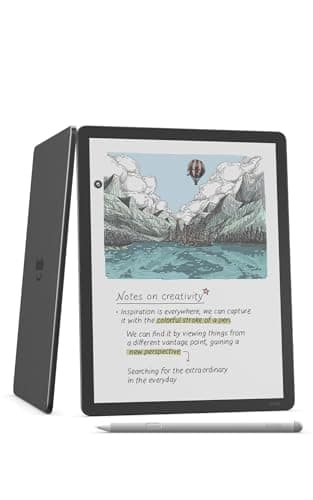
Lead-In
Amazon's relationship with the e-reader market has always been defined by a peculiar tension: the company that popularized the Kindle through aggressive pricing and ecosystem lock-in now sells a $630 device that targets a niche so specific it barely exists outside of academic and professional circles. The Kindle Scribe Colorsoft, Amazon's flagship e-ink writing tablet with a color display, enters the market in April 2026 as the most technically advanced Kindle ever produced and simultaneously as one of the most expensive consumer e-readers in the company's history. At $629.99 for the 32GB model and $679.99 for the 64GB variant, the Colorsoft positions itself directly against the reMarkable Paper Pro, a competing e-ink writing tablet that has cultivated a devoted following among academics, lawyers, and professionals who prize distraction-free handwritten note-taking. The question this review asks is not whether the Kindle Scribe Colorsoft is a good e-reader, because by the metrics that define Amazon's Kindle ecosystem, it demonstrably is. The question is whether $630 represents a defensible premium over the $500 Kindle Scribe with Front Light, and whether the color display justifies the trade-offs that come with Amazon's implementation of E Ink color technology. The answer, as with most things in consumer electronics, is "it depends," but the specific dependencies reveal important truths about both the product and the market Amazon is attempting to serve.
Amazon announced three new Kindle Scribe models at its fall 2025 product launch event, and the existence of three simultaneous variants tells a story of a company that is not entirely certain of its own target market. The base Kindle Scribe without Front Light at $430 targets price-sensitive buyers who want the large screen and writing capability but do not need backlit reading. The Kindle Scribe with Front Light at $500 targets the majority of buyers for whom a backlight is essential for reading in bed or in low-light environments. The Kindle Scribe Colorsoft at $630 targets the narrow niche of users who want to annotate in color, view PDF documents with color graphics, use the device as a combined reading and writing tablet with color support, and have already invested significantly in the Amazon ecosystem. These three products are genuinely different devices aimed at genuinely different users, and the Colorsoft's premium is not merely a color tax but a reflection of the additional display complexity and the more advanced manufacturing required to produce a color E Ink surface that meets Amazon's quality standards. That the base and front-light models are also new products rather than replacements for the second-generation Scribe that launched less than a year earlier speaks to Amazon's willingness to iterate rapidly in search of product-market fit, even if the resulting lineup is somewhat confusing for consumers trying to determine which device is right for them.
Hardware & Design
The hardware and industrial design of the Kindle Scribe Colorsoft represents a substantial departure from the second-generation Kindle Scribe that Amazon released less than a year prior, and the pace of hardware improvement is notable given the historical tendency of the Kindle Scribe line to receive only incremental updates. The display has grown from 10.2 inches to 11 inches through a reduction in bezel width rather than an increase in overall device footprint, meaning the Colorsoft fits in the same carrying cases and folios as the previous generation despite the larger screen. The body has slimmed down from 5.8mm to 5.4mm in thickness, and the weight has dropped from 430 grams to 400 grams, improvements that seem marginal on paper but translate to a meaningfully more comfortable holding experience during extended reading or writing sessions. The chassis is constructed from a combination of aluminum alloy and glass fiber reinforced polymer, which provides structural rigidity while keeping the weight manageable for a device that users may hold for hours at a time. The soft-touch finish on the back panel has a pleasant matte texture that resists fingerprint smudging better than glossy alternatives, though the surface can feel slightly slick when the device is held with sweaty hands during warm weather use. The display bezel surrounding the 11-inch E Ink surface is now uniformly dark, a subtle but appreciated change that creates a more cohesive visual appearance compared to the previous generation's mixed light and dark bezel coloring, though the uniform dark bezel makes the device look slightly less premium than it might with a lighter frame that would provide more visual contrast.
The processor powering the Kindle Scribe Colorsoft is a custom MediaTek chip that Amazon specifies as delivering a 40 percent performance improvement over the previous generation, and in practice the difference is noticeable in application launch times, page turn responsiveness, and the smoothness of the writing pipeline. Opening a large PDF document that took approximately 3 seconds on the previous generation Scribe now opens in under 2 seconds on the Colorsoft, and the note-taking application launches noticeably faster, reducing the friction between the decision to write something down and the moment when the pen is ready to write. The 40 percent figure is consistent with the kinds of process node shrinks that MediaTek has been achieving in recent chip generations, and it is likely that the Colorsoft uses a 12nm or smaller process compared to the 16nm or larger process of the previous generation chip. The additional processing headroom also benefits the AI features that Amazon has announced for the platform, including Story So Far and Ask This Book, which require on-device processing as well as cloud connectivity to deliver their results. Amazon has not specified the exact RAM allocation for the Colorsoft, but the device feels responsive in multitasking scenarios where a user might have multiple documents open and might be switching between reading and writing modes frequently throughout a session.
Display Technology
The display technology powering the Kindle Scribe Colorsoft is the most consequential aspect of the product, and it demands detailed technical explanation to understand both its capabilities and its inherent limitations. Amazon uses a Kaleido 3 E Ink panel, which is the third generation of Pixelligent's color filter array technology for E Ink displays. The Kaleido 3 panel produces color images through a printed color filter array overlaid on the standard monochrome E Ink layer, with each pixel group containing red, green, and blue sub-pixels in addition to the standard monochrome microcapsules that produce black and white content through electrophoretic particle movement. This approach differs fundamentally from the printing process used for color newspapers and magazines, where cyan, magenta, yellow, and black inks are overlaid in a subtractive color mixing system, and it also differs from LCD and OLED displays that use sub-pixels arranged in various patterns for additive color mixing. The result is a color display with approximately 150 pixels per inch in color mode and 300 pixels per inch in monochrome mode, a dual-resolution approach that means the same display cannot simultaneously render color and monochrome content at their respective peak resolutions. The color filter array is printed directly onto the E Ink layer using a photolithographic process, and Amazon claims that the third-generation implementation reduces the air gap between the color filter and the E Ink layer compared to previous generations, which theoretically should improve contrast and reduce color fringing at pixel edges.
The practical implication of the Kaleido 3 color filter array is that color content on the Kindle Scribe Colorsoft is noticeably less sharp than monochrome text and line art, and the degree of this sharpness reduction is the single most important practical consideration for prospective buyers evaluating whether the Colorsoft is worth its premium over the monochrome Scribe models. Text rendered in monochrome mode appears at 300 ppi, which is indistinguishable from the printed page at normal reading distances and represents the gold standard of E Ink display quality for text content. When the same text is rendered in color mode, the color filter array reduces effective resolution by approximately half, creating a text rendering quality that is closer to 150 ppi and is perceptibly softer than what users of monochrome Kindle e-readers experience. This means that users who primarily read text content will notice that their books appear slightly less sharp on the Colorsoft than they would on a monochrome Kindle model, even when the Colorsoft is rendering content in what Amazon calls its optimized monochrome mode. The effect is subtle enough that most users will not find it bothersome during regular reading, but it is measurable and observable during side-by-side comparison with a monochrome device. Color images and graphics, which render at the full 150 ppi of the color layer, appear vivid and saturated but with a slight pixelation on close inspection that is absent from high-quality LCD and OLED displays at comparable viewing distances.
The color gamut of the Kaleido 3 panel covers approximately 16.7 million colors, which sounds impressive until you consider that the same specification applies to an old 1990s computer monitor with 8-bit color depth per channel, a comparison that illustrates the fundamental limitation of E Ink color technology compared to emissive displays. In practice, the color on the Colorsoft is best described as "good enough for color annotations and basic color content" rather than "competitive with LCD tablets for color media consumption," and this distinction matters because the marketing language Amazon uses for the product can create expectations that the hardware cannot meet. The color saturation is reasonable for the technology, and gradients are smooth enough to render photographs and illustrated content without obvious banding, but the color accuracy is not calibrated to any industry standard color space, and the display cannot render the full sRGB or DCI-P3 color gamuts that photographers and designers would require for professional color work. For the intended use cases of annotating PDF documents, marking up textbooks with colored highlights, and reading e-books that include color illustrations, the Colorsoft's color performance is adequate and occasionally pleasant. For anything beyond that, including serious photo viewing, graphic design work, or color-critical document review, the limitations become apparent quickly.
The lighting system in the Kindle Scribe Colorsoft has been completely redesigned compared to the previous generation, and it represents one of the most significant hardware improvements in the product, particularly for users who read in varied lighting conditions throughout the day and night. Amazon calls it a "mini-LED" system, though the precise technical implementation appears to differ from the mini-LED backlights used in high-end LCD televisions and monitors in that the Colorsoft's implementation uses a larger number of smaller LED elements distributed across the back of the display rather than a traditional array of larger LEDs behind a diffuser. The advantage of this approach is more granular brightness control and more uniform light distribution across the screen surface, with fewer visible hotspots or areas of uneven illumination. In testing, the lighting uniformity was excellent, with no visible hotspots or uneven illumination even when viewing the display at maximum brightness in a dark room. The color temperature of the front light is adjustable from a warm amber to a cool white through a slider in the device settings, and the auto-brightness function responds appropriately to ambient light changes without the jarring transitions that plague some competing e-readers. The maximum brightness is sufficient for outdoor reading in direct sunlight, where E Ink displays genuinely outperform LCD screens due to the reflective rather than emissive nature of the technology, though direct sunlight reading is best done with the front light turned off to maximize battery life and maintain the natural contrast that makes E Ink displays so readable in bright conditions.
Writing & Software
The writing experience on the Kindle Scribe Colorsoft is facilitated by the redesigned Premium Pen, which Amazon has substantially reengineered compared to the stylus shipped with the previous generation Kindle Scribe, and the improvements are substantial enough to be noticeable from the first writing session. The new Premium Pen is shorter and thicker than its predecessor, with a hexagonal cross-section that provides a more secure grip and a stronger magnetic attachment to the side of the device. The magnetic hold is genuinely improved: users can pick up the tablet by the attached pen without the pen detaching, a simple but meaningful quality-of-life improvement that eliminates the frustration of the previous generation's pen falling off during transport in bags and briefcases. The pen tip has a deliberate flex that Amazon describes as replicating the feel of a felt-tip pen on paper, and in practice the writing experience is smooth and responsive with no perceptible lag between pen movement and ink appearing on screen. The E Ink display has a paper-like texture that provides just enough resistance to make writing feel natural without the scratchiness that plagued early E Ink writing tablets. Palm rejection works reliably in testing, allowing users to rest their hand naturally on the screen while writing without accidentally triggering touch inputs, and the implementation appears to have improved over the previous generation's occasionally finicky palm rejection system. The pen supports 4096 levels of pressure sensitivity and includes a dedicated eraser button on the barrel that functions as expected when pressed, and the pen is powered by a user-replaceable AAAA battery rather than an internal rechargeable cell, which means the pen never needs to be charged separately from the tablet.
Active Canvas is Amazon's proprietary system for integrating handwritten notes into Kindle e-books, and it represents one of the most practically useful software features in the Kindle Scribe ecosystem, though its implementation has matured enough to no longer feel like a beta feature as it did at launch. When a user writes a note in a Kindle e-book using Active Canvas, the system dynamically reflows the surrounding text to accommodate the handwritten content, ensuring that the note appears as a natural addition to the page rather than an overlay that obscures the underlying text. This is technically sophisticated and practically useful, though it has limitations that become apparent with dense text layouts and complex page compositions. In novels with wide margins and generous line spacing, Active Canvas notes integrate seamlessly and enhance the reading experience without disrupting the visual flow of the page. In technical books, textbooks, and PDFs with dense layouts, the text reflow can occasionally produce awkward page layouts where paragraphs are split across pages in ways that interrupt reading flow, and footnotes and sidebars can sometimes be displaced in ways that make the original document structure harder to follow. The system supports note export to both the Kindle app and the Amazon website, allowing users to access their handwritten annotations alongside the original text on other devices, though the export format does not always preserve the original formatting of complex documents. The implementation is more mature than the first-generation Active Canvas that Amazon introduced with the original Kindle Scribe, though it still has rough edges that the company will presumably refine in future software updates as it has done with previous revisions of the feature.
The AI features that Amazon announced for the Kindle Scribe lineup at the same event where it introduced the Colorsoft represent the company's most aggressive push yet to integrate generative AI into its e-reader ecosystem, and they are scheduled to roll out to the Colorsoft and older Kindle Scribe models in early 2026. Story So Far generates AI-written summaries of where the reader left off in a book, creating a brief recap that helps readers re-engage with a book after a gap in reading time, addressing a genuine problem that many readers face when they set a book down for weeks and return to find they have forgotten the names and relationships of characters and the details of plot points from earlier chapters. The feature is opt-in and can be disabled for readers who find AI-generated content intrusive in their reading experience, which is an important concession to the audience of serious readers who might otherwise feel that the presence of generative AI in their reading app undermines the authenticity of their reading experience. Ask This Book allows readers to highlight any passage and receive spoiler-free answers to questions about character motives, scene significance, and plot developments, drawing on Amazon's AI infrastructure to generate responses without revealing plot information beyond what the reader's question specifically asks, which is a clever approach that preserves some mystery while still providing the contextual understanding that some readers crave. Quick Notes creates a new home screen widget that surfaces recent notebook entries and reading highlights, providing quick access to a user's accumulated notes without requiring them to navigate through the notebook application, which is useful for students and researchers who accumulate large volumes of notes across many books. Improved file import adds Google Drive and Microsoft OneDrive integration, addressing one of the most persistent criticisms of the Kindle ecosystem for professional users who store documents in cloud services other than Amazon's own infrastructure, though the integration requires authentication with both services and may not meet the security requirements of enterprise users in regulated industries.
Battery Life
The battery life of the Kindle Scribe Colorsoft is exceptional by the standards of any tablet but is somewhat reduced compared to monochrome Kindle e-readers due to the additional power requirements of the color filter array and the more powerful processor that drives the enhanced features. Amazon specifies up to 12 weeks of battery life with the front light off and wireless connectivity disabled, a figure that is consistent with the previous generation Kindle Scribe and representative of what users can expect with moderate daily use that includes approximately 30 minutes of reading and occasional note-taking per day. With the front light enabled at typical reading brightness levels and wireless connectivity active for cloud synchronization, the Colorsoft delivers approximately 3 to 4 weeks of heavy daily use before requiring a charge, which is sufficient for most travel scenarios and more than adequate for home use where proximity to a power outlet is rarely a constraint. The USB-C charging port supports 9W charging via the included cable and a compatible power adapter, and a full charge from empty takes approximately 3 hours, which is slower than the fast-charging speeds available on smartphones and LCD tablets but appropriate for a device that users are expected to charge weekly rather than daily, and the relatively slow charging rate also contributes to battery longevity by reducing the thermal stress that fast charging imposes on lithium-polymer cells. The power adapter included in the box is a basic 9W unit rather than a higher-wattage option, which means that users who want faster charging will need to supply their own higher-wattage USB-C charger, a minor but noticeable omission at this price point.
Competition & Value
The comparison between the Kindle Scribe Colorsoft and the reMarkable Paper Pro is inevitable given their identical $630 pricing and overlapping target audiences, and it reveals important distinctions in product philosophy that go beyond specification comparisons and speak to fundamentally different visions of what an e-ink writing tablet should be. The reMarkable Paper Pro has a larger 11.8-inch display, a thinner 5.1mm chassis, and a higher color resolution of 229 ppi compared to the Colorsoft's 150 ppi for color content, which means that color photographs and graphics appear noticeably sharper on the reMarkable. The reMarkable also has a native color rendering system that does not sacrifice monochrome resolution for color capability, meaning text on the Paper Pro is rendered in monochrome at 229 ppi even when viewing color content, which is a meaningful advantage for users who spend most of their reading time on text-heavy content. However, the reMarkable's front lighting system is not as advanced as the Colorsoft's mini-LED implementation, and reMarkable's ecosystem is significantly more limited than Amazon's, with no native e-book store comparable to the Kindle store and more basic note organization tools that lack the cloud synchronization depth of the Amazon ecosystem. For users deeply invested in the Amazon e-book ecosystem, the Colorsoft provides seamless access to their existing library and annotations across all of their devices through the Kindle app ecosystem, while the reMarkable requires importing files manually and does not natively support Kindle e-books at all, making it a non-starter for users who have accumulated years of purchases in the Kindle store.
The competitive landscape for large-format e-ink writing tablets in April 2026 is more diverse than ever, with options ranging from the budget-oriented Onyx Boox Tab Ultra at approximately $500 to the premium Sony Digital Paper at $800 and beyond, each targeting different segments of a market that has grown substantially since the original Kindle Scribe launched in 2022. The Onyx Boox devices run full Android, enabling installation of third-party apps beyond the e-reader ecosystem, which is valuable for users who want to read from multiple book services or use note-taking applications that are not available on the Kindle platform, though the trade-off is shorter battery life, more complex software that requires more frequent updates, and a less focused writing experience that can feel distracting compared to the stripped-down interface of dedicated e-ink devices. The Kindle Scribe Colorsoft's primary competitive advantage is not hardware specifications but ecosystem integration: the seamless access to the Kindle store and its vast catalog of e-books, the Active Canvas note-taking system that is uniquely integrated with Kindle e-books, the forthcoming AI features that will roll out across the Kindle platform, and the automatic synchronization of annotations and reading progress across all of a user's devices. For readers who have accumulated years of Kindle purchases and annotations, the Colorsoft represents a natural upgrade path that preserves their existing library and note-taking history without requiring any manual import or conversion process. For new buyers evaluating the market on its merits, the $630 price demands honest consideration of whether the color display and writing capability justify the premium over monochrome alternatives that cost hundreds of dollars less, and whether the E Ink color limitations will prove acceptable for their specific use cases.
Final Verdict
The Kindle Scribe Colorsoft is a niche product for a specific type of user: the Amazon ecosystem devotee who wants a large-screen reading and writing tablet with color annotation support and who is willing to pay a premium for seamless ecosystem integration that no competing product can match. It is not the best color tablet on the market, because E Ink color technology has inherent limitations that prevent it from matching the color quality of LCD and OLED displays in the same way that vinyl records cannot match the frequency response of digital audio. It is not the best monochrome e-reader, because the color filter array reduces effective resolution compared to monochrome Kindle models that cost hundreds of dollars less and weigh less as well. It is, however, the best Kindle for users who want to combine reading, writing, and color annotation in a single device, and for those users, the $630 price is defensible even if it is not obviously excellent value by conventional metrics. Amazon has built a product that serves its target audience well, even if that audience is smaller than the company would prefer, and the Colorsoft represents the culmination of four generations of Kindle Scribe development in a product that is meaningfully better than its predecessors in nearly every measurable dimension.
Pros
- 11-inch E Ink display with color annotation support for color-coded notes and highlights
- Redesigned Premium Pen with stronger magnetic hold and improved felt-tip writing feel
- Mini-LED front light with uniform brightness and adjustable color temperature
- Active Canvas integrates handwritten notes naturally into Kindle e-books
- 40 percent faster processor reduces app launch and document opening times
- Up to 12 weeks battery life with wireless disabled
Cons
- Color mode halves display resolution to 150 ppi, making text noticeably softer
- Expensive at $629.99 with no waterproofing unlike Kindle Paperwhite models
- No native support for e-book formats outside Amazon's ecosystem
- Google Drive and OneDrive integration requires separate authentication setup
Final Verdict
The Kindle Scribe Colorsoft combines a large E Ink writing surface with color display capability, but its $630 price and resolution trade-offs make it best suited for Amazon ecosystem die-hards.