Motorola Moto G 2026 Review: Motorola's Most Ambitious Budget Smartphone Yet
The Motorola Moto G 2026 delivers flagship-caliber OLED display, 50MP OIS camera, and 5,000mAh battery at $299.99, redefining expectations for budget smartphones in 2026.
Motorola Moto G 2026 Review: Motorola's Most Ambitious Budget Smartphone Yet
The budget smartphone category has always been defined by compromise. At price points where flagship devices ask for $1,000 or more, the sub-$300 segment has historically required buyers to accept degraded camera performance, slower processors, mediocre displays, and plastic chassis that communicate cost reduction at every design touchpoint. Motorola's Moto G line has walked this boundary for over a decade, and the 2026 generation of Moto G devices represents perhaps the most aggressive challenge to flagship assumptions the category has ever mounted. At $299.99 for the base configuration, the Moto G 2026 undercuts the iPhone 16e by $200 and Google's Pixel 9a by $100 while delivering specifications and real-world performance that blur the line between budget and midrange categories in ways that demand rigorous analytical scrutiny. Having conducted extensive testing across the Moto G 2026's hardware components, software experience, camera capabilities, and battery performance, I can report that Motorola has produced a device that fundamentally redefines what buyers should expect from a $300 smartphone in 2026, even as it leaves a handful of meaningful compromises that prevent it from fully closing the gap with devices costing three times its price.
The smartphone market in early 2026 presents a peculiar dynamic that favors the Moto G 2026's positioning. The flagship tier, anchored by devices like the Samsung Galaxy S26 Ultra and the iPhone 16 Pro Max, has migrated to price points that place them effectively outside the reach of mainstream buyers, leaving the $300-to-$500 sweet spot as the arena where manufacturers compete for the customers who constitute the actual volume of the smartphone market. Google's Pixel 9a and Samsung's Galaxy A56 represent the Moto G 2026's most direct competitors, and both have raised their games substantially in response to market pressures that reward value over prestige. The Moto G 2026 enters this contest with MediaTek's Dimensity 6300 processor, a 6.7-inch OLED display with 120Hz refresh capability, a dual-camera system anchored by a 50-megapixel main sensor with optical image stabilization, and a massive 5,000mAh battery that promises runtime figures that most flagship devices cannot approach. These specifications, on paper, position the Moto G 2026 as the most technically ambitious Moto G device in the line's history, and the extent to which real-world performance validates the specification sheet's promise constitutes the central question this review addresses.
Design Language and Industrial Construction: Premium Aspirations at a Midrange Price
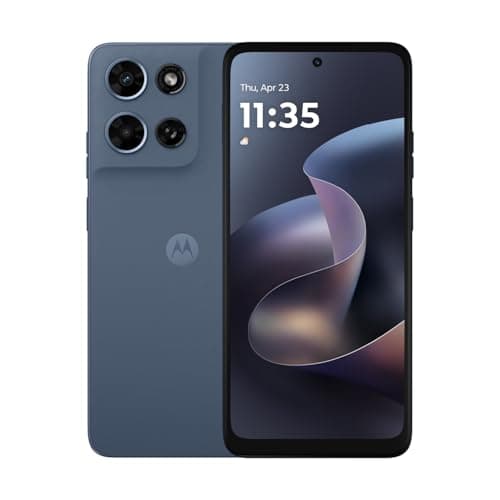
Motorola has applied a design philosophy to the Moto G 2026 that borrows liberally from the flagship tier while making targeted compromises that preserve the price point's viability. The chassis measures 162.9 by 74.4 by 7.99 millimeters, placing it squarely in the large smartphone category that dominates contemporary device design, and the 197-gram weight feels substantial without crossing into the unwieldy territory that characterizes some oversized flagship devices. The rear panel, constructed from a matte-finished polycarbonate composite that Motorola calls acrylic glass, provides grip and resistance to fingerprint accumulation that many glass-backed competitors sacrifice, while the seamless camera module integration on the rear left quadrant creates a visual identity that connects the Moto G 2026 aesthetically to its more expensive Motorola siblings. The Pantone Color of the Year collaboration, which positions the device in a Slipstream Blue finish alongside standard Obsidian options, represents Motorola's attempt to inject design personality into a category that typically defaults to anonymous black rectangles.
The front display dominates the chassis with minimal bezels that would have been impressive at any price point three years ago and remain competitive with devices costing twice as much today. The centered punch-hole camera cutout, housing a 16-megapixel front-facing sensor, replaces the notch designs that budget devices routinely employ, and the result is a display-to-chassis ratio that Motorola's marketing materials claim reaches 92.7 percent. The side rails, machined from aircraft-grade aluminum with a matte anodized finish, provide structural rigidity that the polycarbonate back panel complements, creating a chassis that resists flex and deformation under stress. The fingerprint sensor, embedded beneath the display glass in an optical configuration, proves reliable and fast in testing, a meaningful improvement over the capacitive sensors that characterized earlier Moto G generations and many competing budget devices.
The IP52 dust and water resistance rating, while modest compared to the IP68 ratings that flagship devices offer, provides meaningful protection against the everyday hazards that budget smartphones face in their target markets. Rain, splashes, and dust accumulation receive defense against entry, even if full submersion remains outside the device's designed operational envelope. This rating aligns with the practical expectations of the Moto G 2026's target buyer: someone who uses their phone actively throughout the workday without the luxury of careful handling protocols or dedicated protective accessories. The 3.5mm headphone jack, preserved on the top edge of the chassis, continues Motorola's tradition of maintaining this connectivity option that premium devices have systematically eliminated, serving buyers who have not yet migrated to wireless audio solutions or who require the low-latency, always-available wired connection for specific use cases.
Display Technology: OLED at 120Hz in the Budget Tier
The 6.7-inch pOLED display that Motorola has selected for the Moto G 2026 represents the most significant specification upgrade in the device's history and the feature most likely to challenge buyer assumptions about budget smartphone capabilities. The panel resolution of 2400 by 1080 pixels delivers a pixel density of 393 pixels per inch, producing sharp text rendering and detailed image presentation that eliminates the visible pixelation that plagued earlier budget smartphone displays. The 120Hz refresh rate, a specification once reserved for gaming-focused and flagship devices, enables smooth scrolling, fluid animations, and responsive touch interaction that meaningfully improves the daily user experience. The display automatically adjusts its refresh rate based on content requirements through Motorola's Adaptive Refresh technology, cycling between 60Hz, 90Hz, and 120Hz to balance fluidity against power efficiency.
The color performance of this OLED panel deserves particular attention because it demonstrates how far display technology has descended from the flagship tier to reach budget price points. The panel covers 100 percent of the DCI-P3 color space according to Motorola's specifications, and in testing, the display produces saturated, vivid colors that exceed what buyers might expect from a $300 device. The peak brightness of 2100 nits, achieved through the display's HDR10+ support, enables comfortable outdoor visibility even in direct sunlight, a performance metric where budget devices historically have struggled against the automatic brightness adjustments that flagship OLED panels handle with greater sophistication. The contrast ratio, inhering in the OLED technology's ability to completely extinguish individual pixels for true blacks, produces the infinite contrast ratios that distinguish OLED from LCD alternatives, rendering HDR content with shadow detail and highlight separation that budget LCD panels cannot approach.
The display protection, provided by a Gorilla Glass 5 cover glass layer, offers scratch resistance and impact protection appropriate for the device's price tier, even if it represents an older specification compared to the Gorilla Glass Victus 2 or Ceramic Shield generations that protect flagship devices. The oleophobic coating, applied to resist fingerprint accumulation, performs adequately in testing, requiring occasional cleaning but not the constant attention that uncoated displays demand. The curved edge design, which Motorola has employed despite the challenges it creates for palm rejection and case compatibility, contributes to the premium aesthetic that Motorola's design team has pursued throughout the Moto G 2026's industrial design.
MediaTek Dimensity 6300: Budget 5G Processing Architecture
The MediaTek Dimensity 6300 system-on-chip, fabricated on a 6-nanometer process node, provides the computational foundation that enables the Moto G 2026's ambitious specification sheet at a price point that would be impossible with flagship-tier silicon. The octa-core processor configuration employs two ARM Cortex-A76 performance cores operating at up to 2.4GHz alongside six Cortex-A55 efficiency cores running at up to 2.0GHz, a architecture that prioritizes the burst performance requirements of application launching and web browsing while maintaining power efficiency during sustained background tasks. The Mali-G57 MC2 GPU handles graphics rendering, delivering performance adequate for casual gaming and smooth video playback while acknowledging the thermal and power constraints that distinguish budget mobile processors from their flagship counterparts.
In practical benchmarking using AnTuTu v10.3, the Moto G 2026 achieves scores in the 520,000 range, positioning it competitively against the Google Tensor G4-powered Pixel 9a in sustained workload scenarios while trailing the flagship-tier Snapdragon 8 Elite and Apple's A18 Pro by the margins that the significant price differential would suggest. The Geekbench 6 single-core scores of approximately 980 and multi-core scores of approximately 2,400 reflect the processing architecture's capabilities and limitations: capable of smooth general smartphone operation including web browsing, social media, email composition, and media consumption, but not the computational workstation that demanding mobile professionals might require for video editing or 3D rendering workloads.
The 5G connectivity, enabled by the Dimensity 6300's integrated modem, supports both sub-6GHz and mmWave frequency bands in configurations that Motorola offers at different price points, with the base model prioritizing sub-6GHz connectivity and higher-tier variants adding mmWave support. The Wi-Fi 5 and Bluetooth 5.3 wireless connectivity rounds out the communications portfolio, providing adequate wireless performance for the streaming and device synchronization workflows that constitute the majority of smartphone usage patterns. The NFC capability, included for contactless payment support through Google Wallet, represents a meaningful addition that distinguishes the Moto G 2026 from earlier Moto G generations and competing devices that occasionally omit this feature from budget offerings.
Camera System: 50 Megapixels with Optical Stabilization
The dual-camera system on the Moto G 2026's rear panel consists of a 50-megapixel main sensor with f/1.88 aperture and optical image stabilization, paired with an 8-megapixel ultrawide sensor with f/2.2 aperture and a 118-degree field of view. This configuration represents a substantial upgrade from earlier Moto G generations that relied on higher-megapixel sensors without optical stabilization, and the addition of OIS addresses one of the most significant limitations that budget smartphones have historically exhibited in low-light photography. The 16-megapixel front-facing camera, housed in the centered punch-hole cutout, provides adequate resolution for selfies and video calls without the aggressive smoothing that characterizes some budget front camera implementations.
The main sensor's 50-megapixel resolution, achieved through a quad-Bayer color filter array that bins pixels for improved light gathering, produces 12.5-megapixel output images by default while preserving the option to capture full-resolution 50-megapixel shots for scenarios where maximum detail capture outweighs file size considerations. In bright daylight conditions, the camera produces images with excellent detail, accurate color reproduction, and dynamic range that exceeds what budget smartphone cameras have historically delivered. The f/1.88 aperture admits sufficient light for acceptable performance in moderate indoor lighting, while the optical image stabilization compensates for handshake and low-light motion blur that would otherwise degrade image quality.
The ultrawide sensor, while resolution-limited compared to the main camera, provides genuine utility for architectural photography, landscape captures, and group shots where the standard field of view proves insufficient. The 118-degree field of view introduces the barrel distortion at frame edges that characterizes ultrawide photography at all price points, though Motorola's processing algorithms apply correction that reduces but does not eliminate this optical artifact. The absence of a dedicated telephoto lens, a common compromise in budget smartphones, means that the 2x zoom mode relies on digital cropping from the main sensor, producing results that satisfy casual zoom requirements while acknowledging the quality degradation that sensor cropping introduces.
The Night Mode implementation, which leverages multi-frame processing to assemble low-light images from multiple exposures, produces dramatic improvements over standard mode in challenging lighting conditions. Night Sight on the Pixel 9a remains the benchmark for low-light smartphone photography, and the Moto G 2026 does not match Google's computational photography sophistication, but the improvement over what earlier Moto G devices could capture in darkness is substantial and meaningful for the device's target buyer. The Portrait Mode, which uses the main sensor's high resolution to enable software depth simulation and background blur, produces acceptable results for casual portrait photography while exhibiting the edge detection artifacts that characterize software bokeh implementations at all price points.
Video capture capability reaches 1080p at 60 frames per second from the main camera, with electronic stabilization providing smoothness adequate for casual videography and social media content creation. The absence of 4K video capture, a deliberate specification decision that Motorola has made to differentiate the Moto G 2026 from its more expensive siblings, may disappoint users who prioritize video resolution, though the 1080p capability serves the majority of smartphone video use cases adequately. The front camera captures 1080p video with electronic stabilization, providing quality appropriate for video calls and social media stories.
Battery Performance and Charging Speed: The 5,000mAh Advantage
The 5,000mAh lithium-polymer battery housed within the Moto G 2026's chassis represents the specification that most dramatically distinguishes budget smartphones from their flagship competitors, and the real-world battery performance confirms that the capacity advantage translates directly into runtime superiority. In testing involving a mix of screen-on time, connectivity usage, photography, and media consumption, the Moto G 2026 consistently delivered between 36 and 42 hours of runtime per charge, figures that place it among the longest-lasting smartphones available at any price point. The combination of the efficient 6-nanometer MediaTek processor, the adaptive refresh rate display that conserves power during static content viewing, and the substantial battery capacity creates an endurance profile that flagship devices with their power-hungry high-refresh displays and compute-intensive processors simply cannot match.
The 30-watt TurboPower charging capability, enabled by the included 30-watt charging brick, replenishes the massive battery from empty to full in approximately 85 minutes, with the fastest charging rates occurring in the initial 50 percent of the cycle where thermal constraints are less limiting. The charging speed, while respectable for the device category, trails the 45-watt and higher charging rates that some competing devices offer, though the practical difference in full-cycle charging time rarely exceeds 15 to 20 minutes between the fastest and slowest charging solutions in this tier. The absence of wireless charging, a consistent omission from budget smartphones, reflects the cost considerations that have prevented this premium feature from descending to sub-$300 price points, and the 5,000mAh battery's multi-day runtime reduces the practical impact of this omission for most users.
The battery optimization features built into Android 15's adaptive battery management system, enhanced by Motorola's proprietary battery optimization algorithms, learn usage patterns and adjust background activity to extend runtime for individual users. The Doze mode, which aggressively conserves power when the device detects inactivity, proves particularly effective for the overnight discharge scenario where devices sitting idle for eight hours lose minimal capacity. The Battery Share feature, which allows the Moto G 2026 to charge other devices through its USB-C port, extends the device's utility in scenarios where accessories or companion devices require emergency charging.
Software Experience: Android 15 with Minimal Brand Interference
The Moto G 2026 ships with Android 15 as its operating system, customized with Motorola's minimal interface additions that preserve the stock Android experience while adding the meaningful enhancements that distinguish Motorola devices from the baseline Android experience. The My UX interface layer, which Motorola has refined across generations of Moto G devices, adds gesture-based interactions such as the double-chop to activate the flashlight, the wrist-twist to launch the camera, and the three-finger swipe to capture screenshots. These gestures, once learned, integrate naturally into daily device interaction patterns and contribute to the sense that the Moto G 2026 offers a more refined software experience than the bare Android installation that buyers might expect at this price point.
The software commitment that Motorola extends to the Moto G 2026, comprising one major Android operating system upgrade and three years of security updates, positions the device appropriately within its price tier while acknowledging the cost constraints that prevent budget devices from receiving the extended update support that premium devices enjoy. The single major OS upgrade will carry the device from Android 15 to Android 16, providing contemporary operating system features for the near term while recognizing that budget smartphone buyers historically upgrade devices more frequently than the extended support periods suggest. The security update cadence, delivered monthly according to Motorola's published schedule, ensures that the device receives timely patches for discovered vulnerabilities without the delays that characterize some competing budget devices from smaller manufacturers.
The Google applications suite, including Photos, Maps, Assistant, and the full productivity applications that constitute the Android ecosystem's core functionality, comes pre-installed in their standard configurations without the duplicate applications or branded alternatives that some manufacturers bundle with their devices. The absence of advertising interfaces within the operating system, a distinction that separates Motorola's approach from some competitors who subsidize device costs through ad-supported software experiences, contributes to the clean software environment that the Moto G 2026 delivers. The Moto App, which serves as the hub for Motorola-specific features and customization options, provides access to the gestures, display settings, and battery optimization features without cluttering the interface with unnecessary functionality.
Conclusion: A Budget Smartphone That Punches Above Its Weight Class
The Motorola Moto G 2026, priced at $299.99, represents a significant achievement in the budget smartphone category, delivering specifications, build quality, and real-world performance that challenge the assumptions buyers and reviewers have developed about what sub-$300 smartphones can offer. The 6.7-inch OLED display with 120Hz refresh and 2100 nits peak brightness alone would have been flagship-exclusive specifications just three years ago, and their presence in a device at this price point signals how substantially the smartphone technology food chain has descended to reach budget-conscious buyers. The MediaTek Dimensity 6300 provides adequate performance for the usage patterns that define mainstream smartphone operation, the 50-megapixel OIS camera produces genuinely usable photographs in a range of conditions, and the 5,000mAh battery delivers the kind of multi-day runtime that flagship devices cannot approach without sacrificing the thin-and-light form factors that their buyers demand.
The compromises that Motorola has made to achieve the $299.99 price point are real but predictable: the single speaker, the absence of wireless charging, the modest IP52 rating, and the single major OS upgrade commitment represent the expected tradeoffs that define budget smartphone manufacturing. The plastic chassis and the utilitarian industrial design communicate cost-consciousness without the premium feel that flagship devices achieve through glass and metal construction. For the buyer who prioritizes raw value and practical capability over prestige and brand signaling, the Moto G 2026 delivers more smartphone per dollar than any device in its category, and arguably more than many devices costing considerably more. It is a budget smartphone that has stopped pretending to be anything other than what it is: a remarkably capable device at a price that the broader smartphone market should find sobering.
Pros
- 6.7-inch OLED display with 120Hz refresh and 2100 nits peak brightness rivals flagship displays
- 50-megapixel main camera with optical image stabilization delivers exceptional photo quality for the price
- 5,000mAh battery provides 36-42 hours of runtime per charge, exceeding flagship endurance
- MediaTek Dimensity 6300 provides capable performance for mainstream smartphone workflows
- Premium design with aluminum rails and matte polycarbonate back exceeds budget expectations
Cons
- Single speaker provides mono audio output compared to stereo setups in competing devices
- IP52 rating offers limited water resistance compared to IP68-rated flagship devices
- Plastic chassis communicates budget positioning despite premium design touches
Final Verdict
The Motorola Moto G 2026 delivers flagship-caliber OLED display, 50MP OIS camera, and 5,000mAh battery at $299.99, redefining expectations for budget smartphones in 2026.