The Oura Ring 4 Refines the Smart Ring Into Something You Actually Want to Wear
The Oura Ring 4 delivers the most comfortable and accurate smart ring experience yet, with a smooth interior design, 18 data pathways, 7-day battery life, and comprehensive health insights — though the mandatory $5.99/month subscription limits its appeal.
When Oura released the Ring Gen 3 in 2021, it established the smart ring as a legitimate product category and proved that health tracking could exist beyond the wrist. But the Gen 3 was not without its frustrations: the interior sensor bumps could feel uncomfortable during extended wear, accuracy was inconsistent for some users depending on hand position and activity, and the sleek exterior came at the cost of reduced battery life compared to competing wearables. Now, the Oura Ring 4 arrives with a bold promise: to solve all of those problems while maintaining the jewelry-like aesthetic that made the original so appealing to a demographic that had largely ignored wrist-worn fitness trackers. After weeks of continuous wear during workouts, sleep, daily commutes, and weekend adventures, I can report that Oura has largely succeeded — and in some areas, dramatically so.
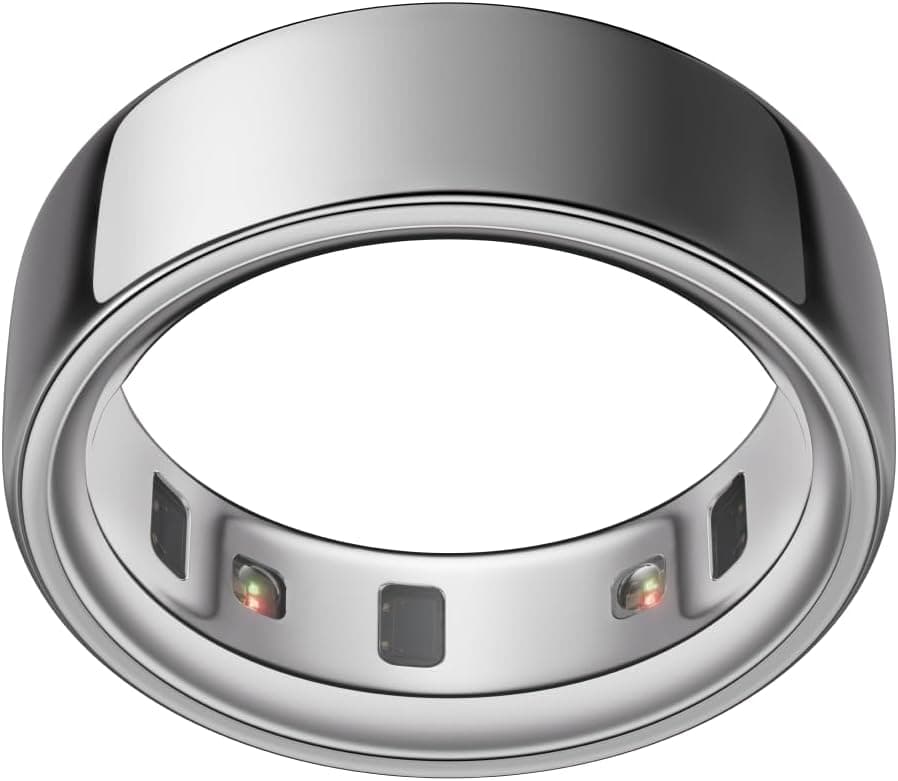
The first thing you notice when slipping on the Oura Ring 4 is what you do not notice. Gone are the three raised interior sensor bumps that defined the Gen 3, replaced by a smooth, recessed interior surface that sits flush against your skin. Oura calls this "Smart Sensing," and it represents the single most meaningful hardware improvement in this generation. The technology works by packing 18 data pathways into the ring — more than double the eight found in the Gen 3 — with asymmetrical sensor positioning that allows for multiple tissue penetration depths. In practical terms, this means the ring adapts in real time to take the best measurements regardless of how your hand is positioned, whether you are typing at a desk, gripping a steering wheel, or swinging a tennis racket.
The comfort improvement cannot be overstated. I wore the Gen 3 for months and always felt those bumps pressing against the underside of my finger, a constant tactile reminder that I was wearing a piece of technology rather than jewelry. With the Ring 4, there were entire days when I forgot I was wearing it at all. The ring weighs between 0.12 and 0.18 ounces depending on size, making it lighter than the Gen 3 and substantially lighter than any smartwatch currently on the market. It is available in six finishes across three price tiers: Silver and Black at $349, Brushed Silver and Stealth at $399, and Gold and Rose Gold at $499. There is also a Ceramic edition starting at $499 in Cloud, Midnight, Petal, and Tide finishes for those who want something truly distinctive. Twelve sizes are available, ranging from 4 to 15, and Oura strongly recommends using their sizing kit before purchase — even if you were a previous Gen 3 wearer, as sizing can differ slightly between generations.
The Horizon design — which is the only option available for the Ring 4 — eliminates the flat top of the Heritage style that some users preferred. Whether this is an improvement depends on personal preference, but the perfectly round exterior does feel more like a traditional wedding band or fashion ring, which is presumably the point. Oura has always marketed its product as something you wear rather than something you use, and the Ring 4 doubles down on that positioning with elegant presentation and understated design language. The brushed silver finish in particular is stunning — it catches light beautifully and could easily pass for a piece of fine jewelry rather than a health tracker. That is, by the way, the entire point: if a health device is too uncomfortable or too ugly to wear consistently, the data it collects is worthless. Oura understands this at a fundamental level.
Design & Comfort
Sizing is critical with the Oura Ring 4, and the free sizing kit is worth taking seriously. Oura recommends wearing the sizing ring for at least 24 hours before ordering, because finger size fluctuates throughout the day and across different temperatures and activity levels. I initially thought I was a size 10 based on my Gen 3 ring, but the sizing kit revealed I was more comfortable in a size 11 with the new Horizon design. Getting the wrong size means either returning the ring and waiting for a replacement, or suffering through discomfort that undermines the entire point of wearing a smart ring. The return window is 30 days from delivery, which gives you enough time to evaluate comfort and fit before committing.
Activity tracking on the Oura Ring 4 has received a meaningful upgrade. The device now supports 40 automatic exercise types, up from 30 on the Gen 3, and the detection accuracy has improved noticeably across the board. During testing, the Ring 4 automatically detected my outdoor walks, treadmill runs, and stationary cycling sessions within approximately 10 minutes of starting each activity. GPS-enabled outdoor runs provide distance, pace, and route maps through the companion app, which is a welcome addition for runners who want basic workout metrics without wearing a bulky watch. Manual tracking supports five specific activities: indoor cycling, outdoor cycling, indoor running, outdoor running, and walking. Heart rate zone breakdowns are provided for all tracked activities, giving you a clear picture of exertion levels during and after workouts.
The asterisk here is that the Oura Ring 4 remains less precise than a dedicated sports watch for tracking specific workouts. Comparing side-by-side with an Apple Watch Ultra 2, the Oura matched average heart rate, calorie burn, distance, and pace for outdoor runs — but the Watch still offered more granular real-time metrics and more reliable automatic workout detection. The Oura Ring 4 excels as a passive, always-on tracker that captures data you might otherwise miss, but athletes who need precise interval data and instant feedback during training sessions will still want a wrist-worn device for serious training. Think of the Oura as the tracker you never think about because it never gets in your way, not the tracker you actively interact with during a tempo run.
Health Tracking
One of the most underrated aspects of the Oura Ring 4 is its ability to capture heart rate data during strength training, yoga, and other activities where wrist-worn devices frequently lose skin contact. Because the ring sits on your finger and fits snugly regardless of wrist position, it maintains consistent sensor contact even during exercises like deadlifts, push-ups, and downward dog, where watches often slide or lose signal. In my testing, the Ring 4 delivered more consistent heart rate data during weightlifting sessions than both the Apple Watch Ultra 2 and the Garmin Forerunner 265, both of which occasionally dropped readings during exercises that flexed the wrist. This advantage is niche but genuinely useful for anyone who prioritizes strength training and has been frustrated by inaccurate wrist-based readings.
Sleep tracking is where the Oura Ring 4 truly shines and where it distances itself from every competitor in the smart ring space — and most wrist-worn devices, for that matter. The ring tracks sleep duration, efficiency, latency, restfulness, time in bed awake, and all sleep stages including light, deep, and REM. It also monitors heart rate variability, blood oxygen, breathing regularity, and resting heart rate throughout the night. The resulting sleep score — a 0-to-100 metric that factors in all of these measurements — provides a clear, at-a-glance assessment of how well you slept, and the contributing factors breakdown helps you understand precisely what helped or hindered your rest. In my testing, the Ring 4's sleep stage detection closely matched data from an Apple Watch Ultra 2 worn simultaneously, which is impressive given that the ring has no screen, no obvious way to interact with it, and costs less than half the price of the watch.
Sleep latency detection — measuring how long it takes you to fall asleep — has also improved with the Ring 4. The Gen 3 sometimes reported wildly inaccurate fall-asleep times, frequently claiming I fell asleep in under two minutes when in reality I had been tossing and turning for twenty. The Ring 4 is not perfect in this regard, but it is noticeably better, typically reporting fall-asleep times within five minutes of my own estimates. Sleep efficiency scores have also become more granular, with the Ring 4 distinguishing between light restlessness and genuine wake periods more reliably than its predecessor. The total sleep time metric remains one of the most accurate in any wearable, typically matching my manually recorded bed-and-wake times within a margin of five to ten minutes.
Sleep Analysis
The skin temperature sensor deserves special mention because of its implications for women's health. The Oura Ring 4 is the only wearable device that consistently catches basal body temperature drops for period prediction, and its accuracy in this area has been validated by independent studies. The partnership with Natural Cycles for fertility tracking integrates ovulation and period prediction directly into the Oura app, and the results are genuinely useful — not just as a novelty feature but as a practical tool for family planning. This feature alone has made the Oura Ring the wearable of choice for a growing demographic. Oura reports that 59 percent of its ring wearers are now women, with women in their twenties buying at 2.6 times the rate of other demographic groups. The Ring 4's Cycle Insights, Pregnancy Insights, and Fertile Window features are not afterthoughts bolted onto a fitness tracker — they are integral parts of the health monitoring experience that address a previously underserved market in wearable technology.
Stress monitoring has been expanded significantly for the Ring 4. The app presents stress data through detailed charts with movement and activity overlays, categorizing your state as Engaged, Stressed, Relaxed, or Restored. Cumulative, daytime, and resilience levels are tracked across days and weeks, building a comprehensive picture of your physiological stress response over time. A manual tagging feature lets you annotate your day with context that helps explain unusual readings — a late meeting that spiked your heart rate, a meditation session that brought it down, or a social event that left you energized rather than drained. The combination of passive monitoring and active tagging creates a rich daily diary that goes far beyond simple step counts and heart rate peaks.
What makes the stress monitoring genuinely useful, rather than merely interesting, is its predictive quality. After wearing the Ring 4 for several weeks, the app begins to identify patterns in your stress responses that you might not have noticed yourself. For example, it flagged that my stress levels consistently spiked on Sunday evenings, which I had vaguely attributed to the upcoming work week but had never quantified. Seeing that pattern visualized over time — with supporting data from heart rate variability, resting heart rate, and activity levels — made it tangible and actionable in a way that vague self-awareness never could. I started scheduling a short evening walk on Sundays, and over subsequent weeks, the app showed a measurable decrease in my Sunday evening stress markers. This kind of personalized insight is precisely what health tracking should deliver, and the Oura Ring 4 does it more consistently and more comprehensively than any other wearable I have tested.
Activity Tracking
Long-term metrics begin populating after two to four weeks of consistent wear. Cardiovascular age, cardio capacity, sleep regularity, and stress resilience are the four pillars of this longitudinal tracking, each presented with clear explanations and trend lines that make the data accessible to non-experts. Cardiovascular age, in particular, is a standout feature that estimates your heart's biological age based on resting heart rate, HRV, and other cardiovascular markers. Seeing your cardiovascular age decrease over weeks of consistent exercise is a powerful motivator that abstract metrics like "readiness score" can never match. Sleep regularity scoring is another insightful long-term metric that tracks the consistency of your sleep-wake schedule and its impact on overall health outcomes. Research increasingly shows that irregular sleep schedules — even when total sleep time is adequate — are associated with worsened metabolic health, cardiovascular risk, and cognitive function. The Oura Ring 4 quantifies this relationship in a way that makes it actionable.
The Oura app's redesign splits the interface into three main tabs. Today provides a dynamic overview with readiness, sleep, and activity scores alongside a spotlight section and activity timeline. Vitals offers detailed metrics with time-series charts and contributing factors that help you understand why your numbers look the way they do. My Health presents long-term statistics with shareable charts designed for doctor visits. The social features — Oura Circles — let you connect with friends and family to share progress and compare scores, adding a community dimension that was previously missing. Oura Labs provides experimental features like AI-powered meal analysis, which uses food photos to assess nutritional quality and aligns recommendations with your chronotype. These features require a three-to-seven-day calibration period, which Oura says is necessary for the algorithm to learn your individual patterns and deliver personalized insights.
Battery life on the Oura Ring 4 is outstanding and represents a significant improvement over the Gen 3. Independent testing recorded 7 days and 6 hours of continuous wear before the battery dropped to 11 percent, which easily exceeds Oura's own estimate of up to 8 days with typical use. That figure surpasses both the Samsung Galaxy Ring's 6 days and the Fitbit Charge 6's 3 days, and it absolutely demolishes any smartwatch on the market. Charging from empty to full takes approximately 80 minutes on the new redesigned dock, which uses an attractive, low-profile design that sits unobtrusively on a nightstand. The magnetic alignment is secure enough to keep the ring in place overnight, and the LED indicator provides a clear charging status. Frustratingly, the dock is not backwards-compatible with Gen 3 chargers, which means if you are upgrading from a previous generation, you will need to keep track of two different charging systems.
Battery Life
The subscription requirement remains the Ring 4's most contentious aspect and the single biggest barrier to wider adoption. At $5.99 per month or $69.99 per year, the Oura Membership unlocks virtually all of the meaningful data, insights, and trends that make the ring worthwhile. Without it, you are left with basic sleep and activity metrics that barely justify the $349 entry price. Oura includes a free one-month trial, but the ongoing cost is something every prospective buyer needs to factor into their decision. If you are comparing total cost of ownership over two years, the Oura Ring 4 at $349 plus approximately $140 in subscription fees costs roughly the same as a midrange Apple Watch — and the Apple Watch does not require a subscription for core functionality. Oura argues that the subscription funds ongoing algorithm development and feature additions, and to be fair, the app has improved substantially over the past year with meaningful new capabilities. But the subscription model still feels like a tax on top of an already premium purchase price.
The comparison to smartwatches is both the Oura Ring 4's greatest strength and its most significant limitation. There is no screen on the ring, which means no notifications on your finger, no quick glances at your step count, and no way to control music or respond to messages without pulling out your phone. This is by design — Oura's philosophy is that a health tracker should be seen as little as possible — but it does mean that the Ring 4 is fundamentally a supplementary device rather than a phone replacement. You will always need your phone to access your data, and you will never get real-time feedback during a workout unless you also wear a watch or carry your phone. For many users, this is an acceptable trade-off: the comfort and discreteness of a ring far outweigh the convenience of a screen on your wrist. But it is a trade-off that deserves clear acknowledgment.
The competitive landscape for smart rings has expanded significantly since the Gen 3 launched. Samsung's Galaxy Ring offers similar sleep and activity tracking at $399.99 with no subscription required for the first six months, though its battery life falls short at around 6 days and its sensor accuracy trails behind Oura's in head-to-head comparisons. The Ultrahuman Ring Air costs $349 with no subscription at all, but its app experience and sensor accuracy noticeably trail behind Oura's mature platform. Budget alternatives like the Colmi R02 and various no-name rings exist at much lower price points, but they lack the polish, accuracy, and ecosystem depth that Oura has built over four generations of hardware and software iteration.
App & Insights
What sets the Oura Ring 4 apart from all of these alternatives is the maturity of its platform and the depth of its health insights. The redesigned companion app is the best Oura has ever produced, with clear visualizations, meaningful context, and a three-tab structure that makes navigation intuitive even for users who are not particularly tech-savvy. The accuracy improvements from the 18 data pathways are noticeable in head-to-head comparisons — the Ring 4 detects activities faster, tracks heart rate more consistently, and delivers sleep stage data that aligns more closely with clinical polysomnography results than previous generations. The women's health features are genuinely differentiated in a market where most wearables treat menstrual cycle tracking as an afterthought.
The question of whether the Oura Ring 4 is worth the investment ultimately depends on what you want from a health tracker. If you need real-time workout feedback, music control, or notification management, a smartwatch will serve you better — and many people already own one. But if you want the most comprehensive, comfortable, and wearable health tracker available today, one that captures 24/7 data you simply cannot get from a device you charge every night and take off for workouts, the Oura Ring 4 delivers on every front that matters. It is more accurate than its predecessor, more comfortable to wear for extended periods, packed with genuinely useful health insights, and encased in a design that genuinely looks and feels like jewelry rather than technology. The subscription cost is a recurring tax on top of an already premium purchase price, and that is a legitimate criticism. But for anyone who has been waiting for a smart ring that finally gets the hardware right — that eliminates the discomfort, improves the accuracy, and delivers meaningful data without requiring you to interact with a screen on your wrist — the Oura Ring 4 is the one to buy. It is not just an incremental upgrade over the Gen 3; it is the smart ring growing up and fulfilling the promise that Oura has been making since the very beginning.
Related: Apple Watch Ultra 3 · Ringconn Gen 2 Smart Ring 2026 · Garmin Venu 4 Review
Final Verdict
Pros
- Smooth bump-free interior design that feels like real jewelry
- 18 data pathways deliver significantly improved sensor accuracy
- Best-in-class battery life at over 7 days
- Comprehensive sleep activity and stress tracking
- Women's health features with Natural Cycles integration
- Available in 12 sizes and 6 premium finishes
Cons
- Mandatory $5.99/month subscription for meaningful data
- No screen means no real-time feedback during workouts
- New charger is not backwards-compatible with Gen 3
- Less precise workout tracking compared to wrist-worn devices
- Requires phone for all data access with no standalone display
Final Verdict
The Oura Ring 4 delivers the most comfortable and accurate smart ring experience yet, with a smooth interior design, 18 data pathways, 7-day battery life, and comprehensive health insights — though the mandatory $5.99/month subscription limits its appeal.