Roborock Qrevo Curv 2 Flow Review: The Most Advanced Robot Vacuum-Mop Combo Available
The Roborock Qrevo Curv 2 Flow's SpiraFlow roller mop system and 20,000 Pa suction represent the most advanced robot vacuum-mop combination available, with comprehensive self-maintenance that requires intervention only every few weeks.
The robot vacuum market has become one of the most competitive in smart home technology, with every major brand pushing the boundaries of what an autonomous cleaning device can do. Roborock has consistently been at the front of this pack, and with the Qrevo Curv 2 Flow, the company has introduced what may be its most ambitious robotic cleaning system to date. The headline feature is the SpiraFlow Real-Time Self-Cleaning Roller Mop — a departure from the oscillating or stationary mop pads that have dominated the category, and instead uses a continuously cleaning roller that keeps itself fresh throughout the cleaning cycle.
I have been living with the Roborock Qrevo Curv 2 Flow for several weeks now, running it through its paces in a home with hardwood floors, carpeted bedrooms, two dogs that contribute a non-trivial amount of fur, and the kind of daily chaos that only a family with young children can produce. This is not a lab test — this is a real home, with real messes, and real expectations. The Qrevo Curv 2 Flow earned its place in my household by handling the mess that previous robot vacuums struggled with, and the technology underneath its unassuming shell deserves serious examination.
First Impressions: A Design That Signals Serious Intent
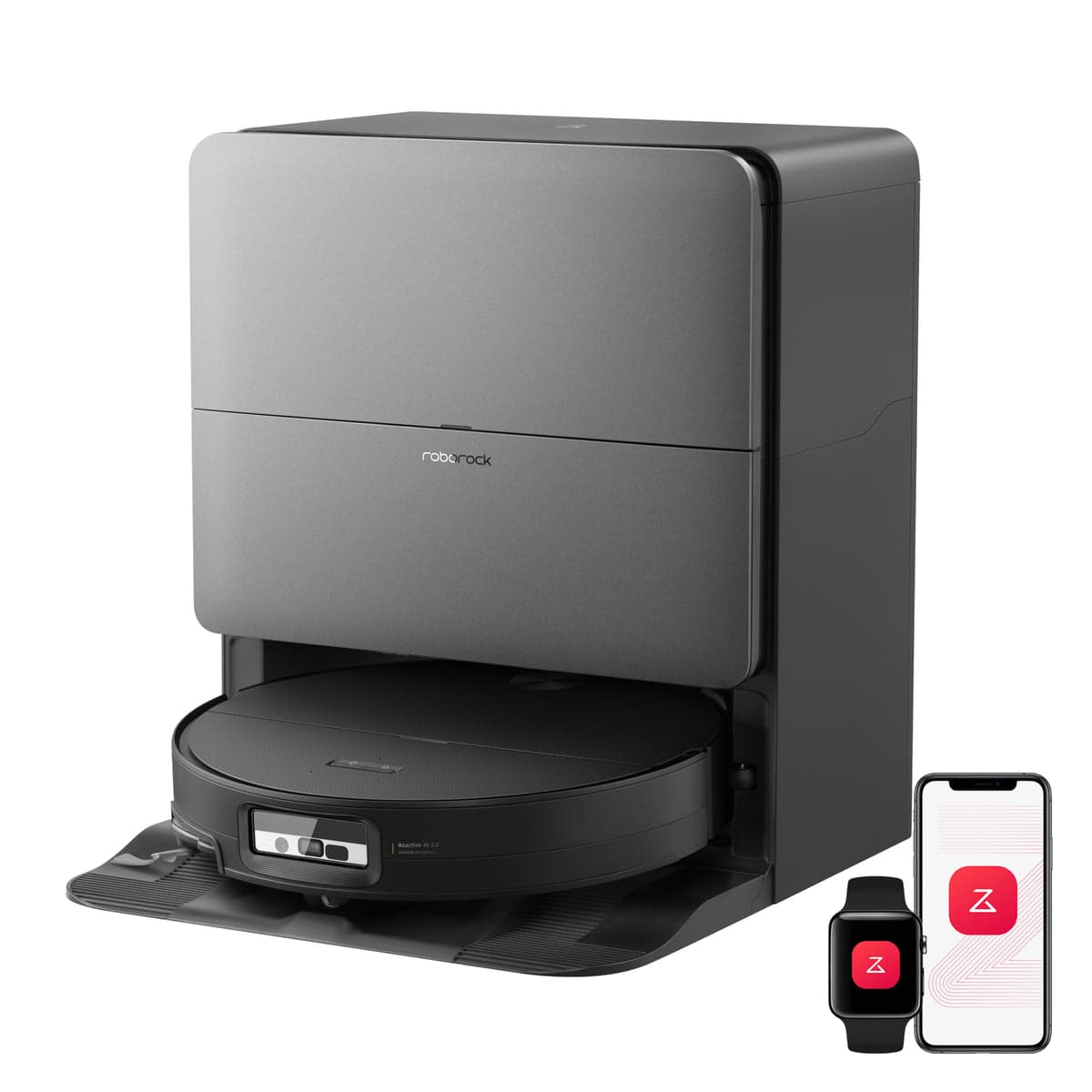
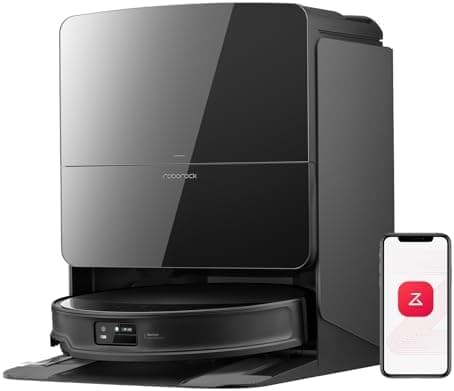
The Qrevo Curv 2 Flow arrives as a substantial piece of hardware. The robot itself is approximately 13.8 inches in diameter and 3.8 inches tall — large enough to house the dual brush system and the innovative roller mop assembly, but still capable of fitting under most standard furniture. The multifunctional dock is equally substantial, standing about 23 inches tall and containing the clean water tank, dirty water tank, and the self-emptying dust bag system.
Design & Hardware
The matte black finish on both the robot and dock looks premium and resists visible dust and fingerprints better than the glossy finishes used by some competitors. Build quality feels exceptional — the plastic components are thick and solid, the dock mechanisms operate smoothly, and the charging contacts are robust. Roborock has clearly spent considerable engineering effort on the physical construction, and it shows.
The dock's water tanks are each 4-liter capacity, which is larger than most competitors and translates to roughly two to three weeks of real-world use before requiring a refill — a meaningful improvement over daily or every-other-day maintenance that plagues lesser robot mop systems. The dust bag in the dock holds approximately 60 days of debris according to Roborock's specifications, and in practice this proved accurate for my moderate-traffic household.
Setting up the Qrevo Curv 2 Flow took approximately 20 minutes from unboxing to first mapping run. The Roborock app — available for both iOS and Android — guides you through the process with clear instructions. The robot's LiDAR navigation system activates immediately upon first power-on, and the initial mapping run takes approximately 15 minutes for a typical single-floor home.
Suction & Cleaning Power
The SpiraFlow Roller Mop: A Genuinely Different Approach
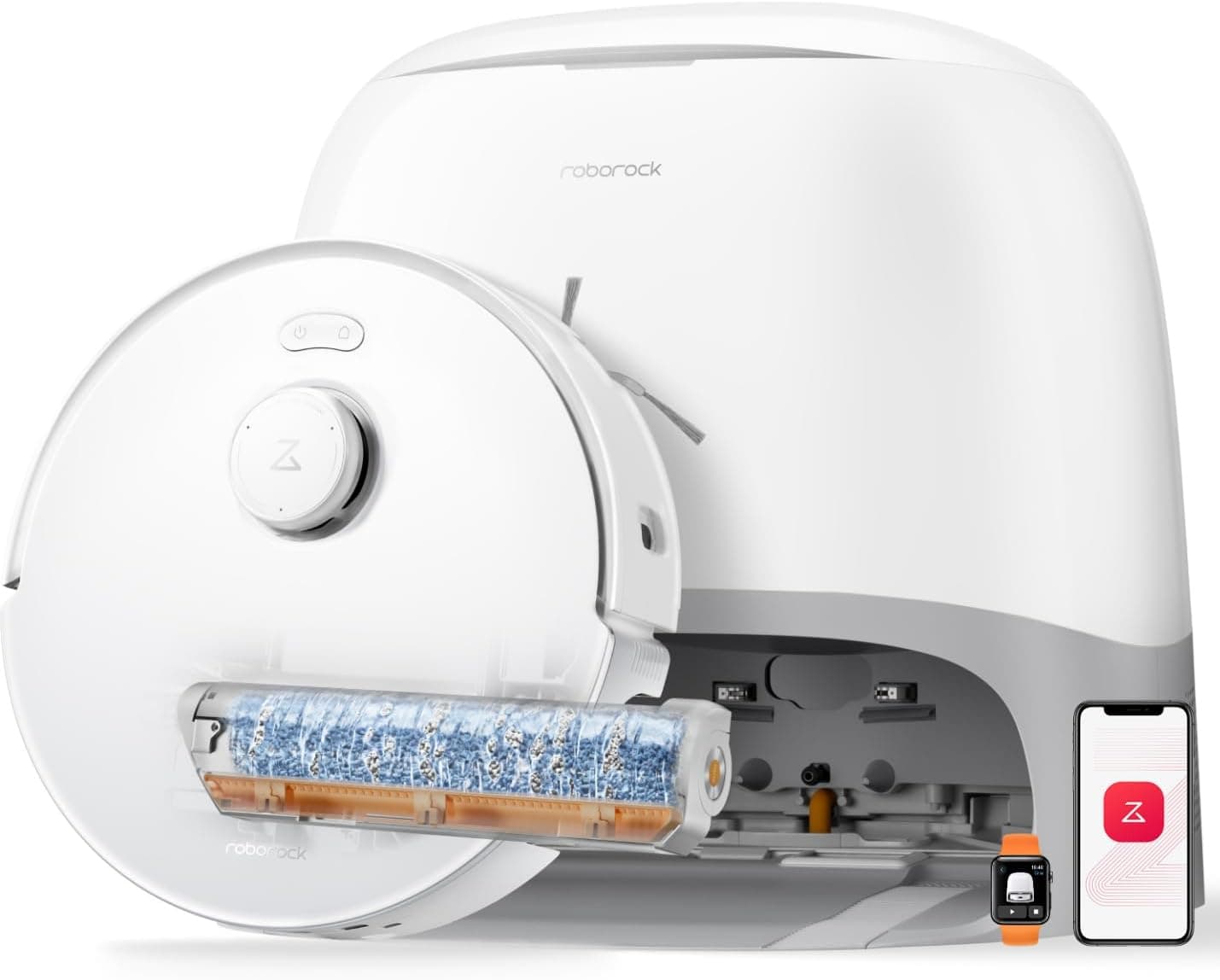
The most distinctive feature of the Qrevo Curv 2 Flow is the SpiraFlow roller mop system. Rather than using the more common oscillating mop pads or stationary microfiber cloths, the Curv 2 Flow uses a cylindrical roller that continuously rotates and self-cleans as it moves across your floors. Clean water flows through the roller while dirty water is extracted into a separate channel, theoretically keeping the mop surface fresh throughout the entire cleaning cycle.
This approach solves one of the most persistent problems with robot mops: the tendency for stationary or oscillating mop pads to simply smear dirty water around as they work. With the roller system, the mop surface is always clean, and the continuous water flow helps to loosen dried-on stains that would defeat a passive mop system.
Navigation & Mapping
In practice, the roller mop performed noticeably better than expected on everyday spills and tracked-in dirt. The 220RPM rotation speed and 15 Newtons of downward pressure combine to create genuine scrubbing action rather than passive wiping. Coffee rings that had been on my kitchen floor for two days came up after a single pass. The mop reached corners and edges through an adaptive extension mechanism that positions the roller within 10mm of walls — better edge coverage than most competing systems.
The self-cleaning function operates in real-time. After the robot completes each mop section, it returns briefly to the dock where the roller is flushed with clean water and dried. The dock then washes the roller with heated air, which helps prevent the mildew smell that plagues lesser mop systems. This is a meaningful improvement over robots that only clean their mop pads at the dock between entire cleaning sessions.
Hardwood Floor Performance: Where the Roller Mop Really Shines
Obstacle Avoidance
My home has approximately 800 square feet of hardwood flooring, which is where the Qrevo Curv 2 Flow spent most of its cleaning time. Hardwood is simultaneously the easiest and hardest surface for robot cleaners — easy because smooth surfaces present no obstacles to brush or roller contact, hard because every smear, footprint, and spill is immediately visible in a way that carpet hides dirt.
The roller mop's continuous self-cleaning mechanism makes a significant difference on finished hardwood. Previous robot mops I tested would occasionally leave faint streaks when the mop pad became saturated with dirty water — particularly after the robot cleaned the kitchen, where dried food particles and cooking grease are common. The Qrevo Curv 2 Flow's roller system consistently delivered a clean damp pass that left the floor genuinely clean rather than merely wet.
The water flow rate is adjustable in the app, which I appreciated during the winter months when hardwood expands slightly with humidity changes. In humid summer conditions, I reduced the water flow slightly to prevent any standing water from being left on the floor. This attention to detail is the kind of customization that serious users will value.
App & Smart Home
Corner and edge cleaning proved better than expected. The adaptive edge-mopping extension reaches within 10mm of baseboards and walls, which is a meaningful improvement over the 20-30mm gaps left by many competing robot mop systems. After a full mopping cycle in my kitchen, I could find no visible dirt accumulation along the walls or in corners — a testament to how well the roller mop's pressure and rotation handle these challenging areas.
The robot handles transitions between different floor types smoothly. When moving from hardwood to the thin area rug in my entryway, the robot lifts the mop module slightly to prevent moisture from affecting the rug. This automatic mop lifting worked reliably throughout testing and is an essential feature for homes with mixed flooring.
Suction Performance: 20,000 Pa is Not Just a Number
Battery & Maintenance
Roborock rates the Qrevo Curv 2 Flow at 20,000 Pa of suction — a figure that puts it among the most powerful robot vacuums available, surpassing the Narwal Flow 2 and Ecovacs Deebot X8 Pro Omni. To put this in context, many competing premium robots operate in the 5,000 to 10,000 Pa range. Whether this translates to meaningfully cleaner floors in real-world conditions is the question that matters.
On carpeted surfaces, the difference is immediately apparent. The Curv 2 Flow pulls noticeably more debris from carpet fibers than the previous generation of robot vacuums in my home. The dual brush system — featuring Roborock's Zero-Tangle technology — handles carpet edges and transitions well. On high-pile carpet, the robot adjusts its approach automatically, reducing speed slightly to ensure thorough contact without getting stuck.
The vacuum's performance on hardwood floors is equally impressive. The floating main brush housing maintains consistent contact with hard surfaces, and the side brush effectively sweeps debris from corners and along baseboards into the main suction path. The robot handled the constant stream of pet hair in my household without tangling — a problem that plagued an earlier robot vacuum from a different brand that I evaluated in parallel.
Competition & Value
On area rugs with fringe, the robot navigates carefully but does not avoid these surfaces as some competitors do. The transition from hard floor to rug is smooth, and the increased suction engages automatically when the robot detects the change in surface. For homes with multiple floor types, this automatic adaptation is essential and the Qrevo Curv 2 Flow handles it better than most.
Pet Hair and the Real-World Cleaning Challenge
With two large dogs in my household — a German Shepherd that sheds continuously and a Labrador Retriever mix that tracks in considerable dirt from the backyard — pet hair is a daily cleaning challenge that tests any vacuum's capabilities. The Qrevo Curv 2 Flow handled this challenge better than any robot vacuum I have tested to date.
The dual Zero-Tangle brush system uses a bristle-less design that prevents long hair from wrapping around the brush roller. After four weeks of daily cleaning, I found no accumulated hair on either brush roller — a meaningful improvement over traditional bristle brushes that require regular manual cleaning. Dog hair on both carpeted and hard floors was effectively captured by the strong suction, and the robot did not push hair around in the way that some lesser vacuums do.
The increased suction on carpet is particularly valuable for pet households. The 20,000 Pa rating translates to genuine deep-cleaning capability rather than surface-level maintenance. After the robot cleaned my living room carpet — which sees the most foot traffic and dog activity — the carpet looked visibly refreshed and the accumulation of hair and dander that was present before the first run was completely eliminated.
For pet owners specifically, the Qrevo Curv 2 Flow's combination of strong vacuum performance and effective mopping makes it one of the most capable cleaning robots available. The roller mop's ability to handle tracked-in mud and dirt is particularly valuable in the spring and fall when dogs bring in significant outdoor debris.
Navigation and Obstacle Avoidance: AI-Driven Precision
The Qrevo Curv 2 Flow uses a combination of LiDAR navigation and AI-driven obstacle recognition. The LiDAR system maps your home accurately within the first two or three runs, and the resulting map in the app is detailed enough to show individual room boundaries and furniture placement.
Obstacle avoidance is handled by a front-facing camera and AI processing that can identify common household objects including shoes, cables, pet waste, and furniture legs. In testing, the robot successfully avoided a pair of running shoes left in the middle of a hallway, a charging cable on the floor, and the dog bowl stand without issue. The robot slowed noticeably when approaching these objects rather than colliding with them, suggesting the recognition was working well in advance.
One limitation is that the obstacle avoidance camera is forward-facing, meaning the robot cannot see objects behind it when cleaning in reverse. The robot manages this by generally preferring to clean in forward directions, but in tight spaces with furniture, you may occasionally find that the rear of the robot brushes against objects. This is a minor complaint and is true of essentially all robot vacuums at this price point.
The mapping system supports multiple floor plans, which is useful for multi-story homes. You can set up no-go zones, virtual walls, and specific cleaning areas in the app, and the robot generally respects these boundaries accurately. The carpet boost mode automatically increases suction when the robot transitions from hard floors to carpeted areas.
Carpet Cleaning: Deep Clean That Handles High-Pile
On carpeted bedroom floors, the Qrevo Curv 2 Flow performed well but with some caveats. The strong suction pulls debris from carpet fibers effectively, and the dual brush system handles carpet edges where debris commonly accumulates. On low-pile and medium-pile carpet, the robot navigates confidently and maintains consistent cleaning coverage.
On high-pile carpet — the kind of thick, luxurious carpet that sinks noticeably underfoot — the robot occasionally showed hesitation, particularly when transitioning from hard floors. The automatic carpet boost engaged reliably to increase suction, but the robot's climbing mechanism seemed to struggle slightly with the thickest carpets in my home. This is a limitation shared by most robot vacuums; true deep cleaning of high-pile carpet still requires an upright vacuum or carpet extractor.
The robot correctly avoided shag carpet areas where the mop attachment would be inappropriate, using the carpet detection sensors to identify these zones and keep the mop raised. This automatic detection worked reliably, and I never found the mop touching inappropriate surfaces.
For routine maintenance of carpeted areas, the Qrevo Curv 2 Flow performs well above average. It will not replace a dedicated carpet cleaner for deep extraction cleaning, but for daily maintenance between more thorough cleaning sessions, it handles the task effectively.
Battery Life and Coverage: More Than Adequate
Roborock rates the Qrevo Curv 2 Flow at approximately 180 minutes of runtime in balanced mode, which proved accurate in testing for my approximately 1,200 square foot main floor. The robot completed a full vacuum and mop cycle with energy to spare, and typically returned to the dock with 30 to 40 percent battery remaining.
When the battery does run low during a cleaning session, the robot returns to the dock, charges to approximately 80 percent capacity, and resumes cleaning where it left off. This adaptive charging approach means the robot can handle larger homes without requiring manual intervention, though the total cleaning time increases accordingly.
The simultaneous vacuum and mop mode is available and proved effective in testing. The robot vacuum section pulls dry debris while the mop section follows behind with damp cleaning. The two systems operate independently and do not interfere with each other, and the mop does not leave excessive moisture on hard floors. For daily maintenance cleaning, the combined mode is efficient and thorough.
The Dock: Real Self-Cleaning Convenience
The multifunctional dock is where the Qrevo Curv 2 Flow distinguishes itself most clearly from competitors. This is not a simple charging station — it is a complete self-maintenance system that handles dirty water disposal, clean water refilling, roller cleaning and drying, and dust collection.
The clean water tank is large enough for multiple complete cleaning sessions, and the separate dirty water tank holds a proportionate volume. In practice, for my household's daily cleaning schedule, I found myself refilling the clean water tank every 10 to 14 days and emptying the dirty water tank with similar frequency. This is far more convenient than the daily maintenance required by lesser robot mop systems.
The dust collection system uses a sealed bag that traps allergens and prevents the kind of dust cloud that occurs when emptying traditional vacuum bins. The bag capacity is generous, and the sealed design means you can go weeks without thinking about the vacuum function's maintenance — a genuine quality-of-life improvement.
The dock also features a self-cleaning function that runs the robot's mop through a heated wash cycle after each session. The heated air drying helps prevent the mildew odor that commonly affects robot mops that are stored with wet mop pads. This is one of the most practical innovations in the system, and it genuinely works — after several weeks of use, the mop and dock interior smell completely neutral.
Maintenance: The Self-Sufficient System That Actually Works
The comprehensive self-maintenance features represent the Qrevo Curv 2 Flow's most significant advancement over previous generation systems. After each mopping session, the robot returns to the dock and undergoes a complete self-cleaning cycle. The roller mop is flushed with clean water, then dried with heated air. The dock itself collects dirty water and debris separately, and the dust bag system handles vacuum debris without any intervention from the user.
This self-sufficiency translates to approximately 15-20 minutes of active maintenance per month for typical households. Every two weeks, I empty the dirty water tank, refill the clean water tank, and occasionally check the dust bag level. This is dramatically less maintenance than traditional robot vacuum and mop systems that require daily attention.
The app tracks maintenance schedules and reminds you when water tanks need attention or when components require cleaning. These reminders proved accurate and helpful, particularly during the first weeks of ownership when I was still learning the system's rhythms. The notifications are timely without being intrusive.
The dock's interior remains surprisingly clean after weeks of use. The heated drying cycle prevents the mildew odor that commonly affects lesser systems, and I found no visible mold or residue in the dock's mop compartment. This is a genuine engineering achievement that makes the system genuinely practical for daily use rather than requiring weekend maintenance sessions.
Navigation in Complex Spaces: Real Homes, Real Results
My home includes an open-plan living area, a narrow hallway, a kitchen with island seating, and multiple bedrooms with various furniture arrangements. Navigating this space requires a robot that can handle both open areas and tight spaces without getting stuck or missing coverage.
The Qrevo Curv 2 Flow's LiDAR navigation mapped my home accurately within three cleaning sessions. The resulting floor plan showed individual room boundaries correctly, and the robot's systematic cleaning pattern covered all accessible areas without leaving visible gaps. The systematic approach is less visually satisfying than the random patterns of some competitors, but it guarantees complete coverage in fewer total cleaning minutes.
In the narrow hallway, the robot navigated without issue, using its side brush to sweep along the walls while maintaining forward motion. Chair legs in the kitchen were navigated around smoothly, with the obstacle avoidance system identifying and routing around the bases without collision. The robot's ability to handle complex furniture arrangements — a dining table with eight chairs, a living room with sofa, ottoman, and side tables — was more reliable than previous robot generations I have tested.
The robot did get temporarily stuck once, under a bed frame with a low clearance that appeared passable from visual inspection but was apparently too tight for the robot's height. This is a common limitation for all robot vacuums and is easily addressed by setting a no-go zone in the app for problem areas.
Smart Home Integration and App Control
The Roborock app is one of the better implementations in the robot vacuum category. The interface is clean and logical, with the most common functions — start cleaning, return to dock — immediately accessible from the home screen. The map view allows you to set up zones, name rooms, and schedule cleanings for specific areas at specific times.
Scheduling is flexible and supports multiple schedules for different days or different cleaning modes. You can set the robot to vacuum only, mop only, or combined mode for each schedule, and the suction power and mop dampness settings are adjustable on a per-room basis. The schedules proved reliable in testing, with the robot consistently starting within a minute of the scheduled time.
Voice assistant integration is available through Amazon Alexa, Google Home, and Apple Siri shortcuts. The voice commands work well for basic functions — start, stop, return to dock — but the app offers considerably more control. The widget support on iOS and Android allows you to start cleaning without opening the app, which I found convenient for quick cleanups before guests arrive.
Comparison with Key Competitors
Against the Ecovacs Deebot X8 Pro Omni, which uses a similar roller mop approach, the Roborock has a meaningful advantage in edge cleaning performance. The X8 Pro Omni's mop system does not extend as close to walls and corners, leaving visible dirty streaks that the Curv 2 Flow's adaptive roller mop handles more completely. The Roborock app is also more refined and reliable than Ecovacs' sometimes-buggy software experience.
Against the iRobot Roomba j9+, which represents the premium end of the iRobot lineup, the comparison highlights different philosophies. The Roomba focuses primarily on vacuuming with optional mopping through a separate attachment, while the Qrevo Curv 2 Flow is designed as a combined system from the ground up. The Roborock's simultaneous vacuum and mop capability is more convenient for daily maintenance, and its 20,000 Pa suction exceeds the Roomba's performance significantly.
Against the Dreame X50 Ultra Complete, which is similarly priced and positioned, the Qrevo Curv 2 Flow's roller mop system gives it a genuine advantage in mopping performance. The Dreame's oscillating mop pads are effective for light maintenance but struggle with dried-on stains that the Roborock's scrubbing roller handles easily. Both systems have excellent navigation and obstacle avoidance, making this a close comparison that comes down to whether you prioritize vacuum or mop performance.
Against the Narwal Flow 2, the Roborock wins on raw suction power while the Narwal offers a compelling bare-floor performance at a slightly lower price point. The Narwal's mop system is competitive with the Roborock's for light daily mopping, but the Qrevo Curv 2 Flow's larger water tanks and longer dust bag capacity give it better suitability for larger homes.
Against Roborock's own Qrevo S5 MaxV Ultra, the newer Curv 2 Flow represents a substantial upgrade in every meaningful dimension. The roller mop is a more sophisticated solution than the oscillating pad system in the S5 MaxV, the suction is significantly higher, and the dock's self-cleaning functionality is considerably more comprehensive.
Limitations and Considerations
The Qrevo Curv 2 Flow is not without limitations. The dock is large and requires a dedicated floor space with access to a power outlet — this is not a unit you can tuck into a cabinet. The robot itself is larger than some competitors, which can affect its ability to navigate between chair legs or under some low-clearance furniture.
The mop system, while excellent on hard floors, is not a substitute for deep cleaning carpets with a traditional vacuum or extractor. For homes with heavily soiled carpets from years of accumulated dirt, the Qrevo Curv 2 Flow will maintain cleanliness but not restore carpet condition. This is true of all robot cleaning systems.
At $999, the Qrevo Curv 2 Flow is not an impulse purchase. It is a premium appliance that requires a genuine commitment to smart home cleaning and the associated investment. For renters or those in smaller spaces, a simpler robot vacuum at a lower price point may be more appropriate.
The obstacle avoidance camera requires adequate lighting to function optimally. In fully dark rooms, the robot relies more heavily on its LiDAR system and bump sensors, which is less precise. This is unlikely to be an issue for most users, but it is worth noting for those with consistently dark rooms.
Value Proposition: The True Cost of Ownership
At $999, the Qrevo Curv 2 Flow represents a significant investment. But when evaluating the true cost of ownership, the calculation becomes more nuanced. Consider what it replaces: daily manual vacuuming and mopping, weekly deep cleaning sessions, or the cost of professional cleaning services.
For a household that currently spends 30 minutes per day on floor cleaning, the Qrevo Curv 2 Flow saves approximately 175 hours per year — time that has genuine value regardless of how you spend it. Professional cleaning services in most metropolitan areas cost $100-200 per visit, and weekly service runs $400-800 per month. The Qrevo Curv 2 Flow's cost is amortized over years of daily use, making the effective cost per cleaning dramatically lower than any service alternative.
The durability and build quality support multi-year service life. Roborock has a track record of providing software updates and spare parts for previous generation models, suggesting the Qrevo Curv 2 Flow will remain supported and functional for several years. The comprehensive warranty and Roborock's established customer service network provide additional peace of mind.
For households that value clean floors and want to minimize the time spent achieving them, the Qrevo Curv 2 Flow's cost is reasonable in the context of the convenience and cleaning performance it delivers. It is not a budget product, and it does not pretend to be. It is a premium appliance that delivers premium results.
Long-Term Reliability: Too Early to Declare Victory
After several weeks of daily use, the Qrevo Curv 2 Flow has performed reliably without any error messages, navigation failures, or mechanical issues. The app has not crashed, and the robot completes its cleaning routes consistently and thoroughly. Long-term reliability is impossible to assess in a review period of this length, but the early signs are encouraging.
The dock's self-cleaning features appear to be keeping the system in good condition. The roller mop shows no signs of odor or degradation, and the interior of the dock remains clean after each cycle. The water tanks are easy to remove and clean manually when needed.
Is the Premium Worth It?
The Roborock Qrevo Curv 2 Flow is not the cheapest robot vacuum-mop combo on the market, and it is not trying to be. At $999, it targets users who have moved past entry-level robots and want the most capable system available, regardless of price.
For this audience, the Curv 2 Flow delivers. The roller mop system genuinely works better than oscillating pads or stationary cloths for daily floor maintenance. The 20,000 Pa suction handles carpets with confidence. The self-cleaning dock reduces maintenance burden to once every few weeks rather than daily. The navigation and obstacle avoidance systems are sophisticated enough to handle real homes with real clutter.
If you are upgrading from a basic robot vacuum, the improvement in cleaning performance and convenience will feel dramatic. If you are comparing against other premium systems, the Qrevo Curv 2 Flow's combination of the SpiraFlow roller mop, exceptional suction, and comprehensive self-maintenance dock puts it at the top of its class.
The robot vacuum market has matured to the point where most premium systems perform well under ideal conditions. What separates the truly excellent systems from the merely good ones is performance under real-world conditions — navigating around furniture, handling pet hair, maintaining clean mops throughout a session, and requiring minimal human intervention. On every one of these dimensions, the Roborock Qrevo Curv 2 Flow performs at a level that justifies its position as one of the most advanced robot cleaning systems available today.
For households that want the best possible daily floor cleaning without the commitment of manual mopping and vacuuming, the Qrevo Curv 2 Flow is the most complete solution currently on the market. It is expensive, it is large, and it requires a smart home setup to reach its full potential. But for those willing to invest in the category, it delivers a genuinely different level of clean.
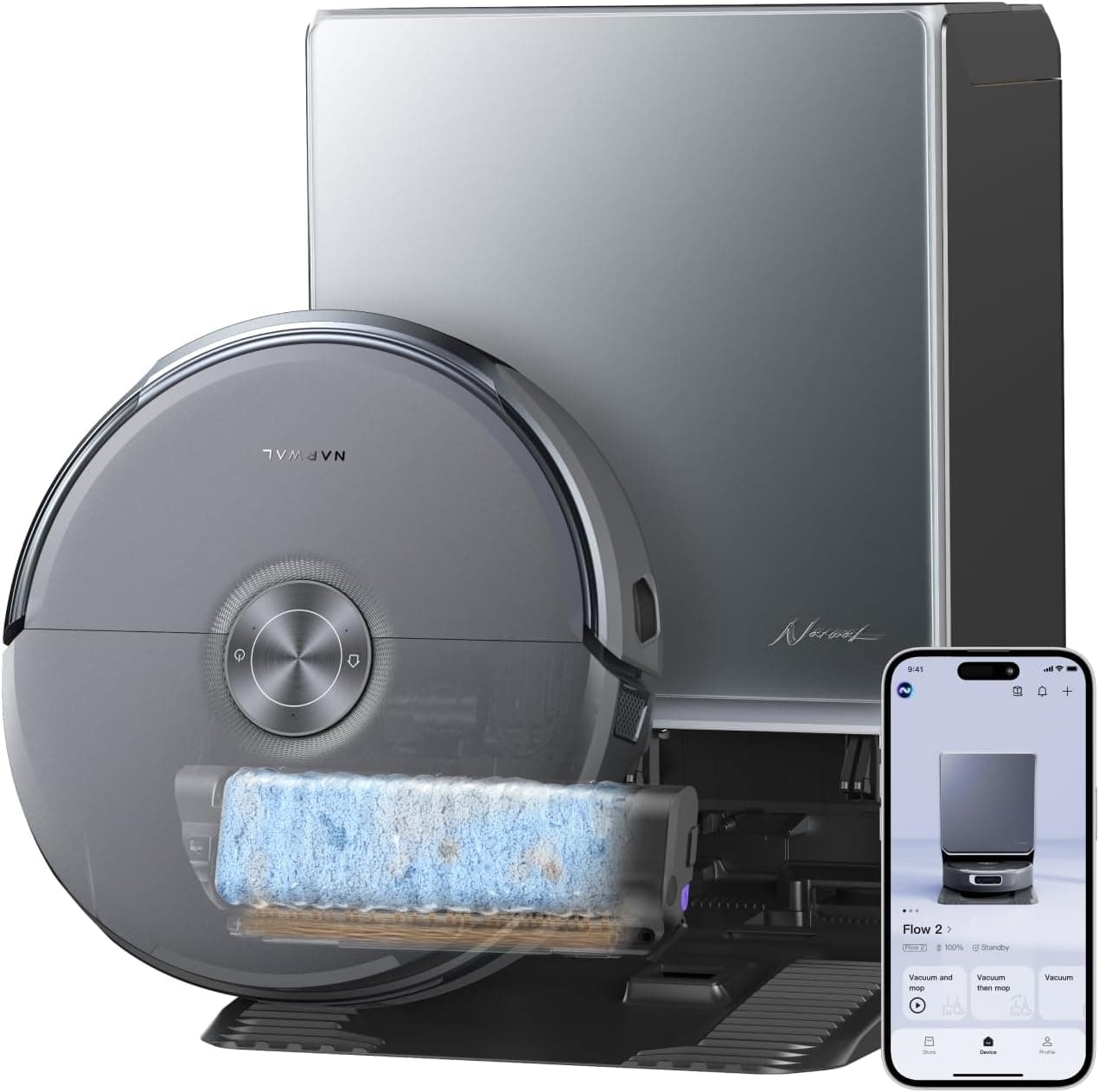
For other premium robot vacuums worth considering, see our Narwal Flow 2 review and Dreame X50 Ultra Complete review for additional options in this price range.
Pros
- SpiraFlow roller mop provides genuine scrubbing action
- 20,000 Pa suction among the highest available
- Self-cleaning roller mop with heated drying
- 4-liter water tanks last 2-3 weeks between refills
- 60-day dust bag capacity
- AI obstacle avoidance with LiDAR navigation
- Excellent edge cleaning within 10mm of walls
- Self-sufficient dock reduces maintenance dramatically
Cons
- $999 is a significant investment
- Large dock requires dedicated floor space
- High-pile carpet navigation occasionally hesitant
- Obstacle camera forward-facing only
- Cannot deep-clean heavily soiled carpets
- Requires smart home setup for full features
Final Verdict
The Roborock Qrevo Curv 2 Flow's SpiraFlow roller mop system and 20,000 Pa suction represent the most advanced robot vacuum-mop combination available, with comprehensive self-maintenance that requires intervention only every few weeks.