Sony WH-1000XM5 Review: The Noise-Canceling Headphone That Rewrote the Rulebook on Comfort
The Sony WH-1000XM5 remains one of the best noise-canceling headphones available with exceptional ANC, sophisticated sound customization, and 30-hour battery life, despite being three years old.
Sony WH-1000XM5 Review: The Noise-Canceling Headphone That Rewrote the Rulebook on Comfort
When Sony released the WH-1000XM5 in 2022, the response from the audio community was unusual for a product in its category: almost nobody disputed the verdict. The preceding four generations of Sony's 1000X line had each carved out a progressively larger share of the premium noise-canceling headphone market, but the fifth generation arrived with such a comprehensive overhaul that it effectively reset expectations for what a consumer wireless headphone could accomplish. Three years later, with newer competitors having had ample time to respond, the WH-1000XM5 remains one of the most compelling noise-canceling headphones available at any price point. That longevity is the first piece of evidence for a product that continues to set benchmarks rather than chasing them.
The WH-1000XM5 represents Sony's most aggressive redesign of the 1000X line since the original MDR-1000X introduced the concept of premium consumer noise cancellation in 2016. Every element of the product—driver architecture, noise cancellation processing, physical design, materials, and software—received meaningful attention. The result is a headphone that is not simply an incremental improvement over the WH-1000XM4 but a fundamentally rethought product that addresses nearly every complaint that could be leveled at its predecessor.
The Physical Transformation
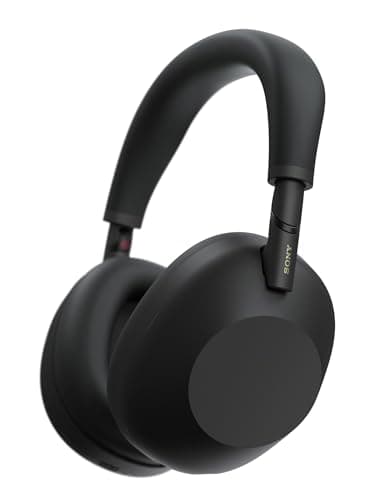
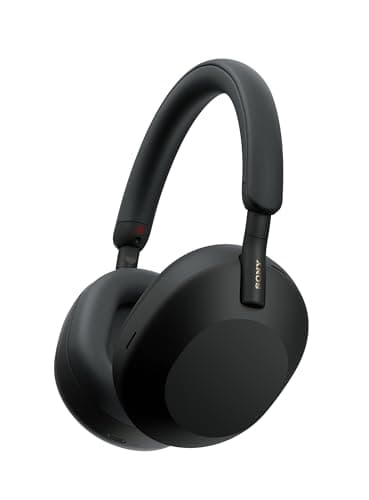
The most immediately visible change in the WH-1000XM5 is the complete redesign of the headband and yokes mechanism. Sony abandoned the traditional metal slider adjustments of previous generations in favor of a seamless, continuous headband arc that the company describes as having been inspired by the concept of a "head-hugging fit." The headband itself is substantially narrower than that of the WH-1000XM4, and it uses a combination of ABS plastic and a newly developed synthetic leather that Sony claims provides 10 percent more pressure distribution than the previous generation.
The earcups underwent an equally thorough rethinking. Rather than the shallow, round earcups of the XM4, the XM5 uses a deeper, more contoured oval chamber that Sony specifically designed to accommodate a wider range of ear geometries. The earpads use a new four-layer foam construction with a unique gradation of firmness—the outer layer is soft and yielding for immediate comfort, while the inner layer adjacent to the head is denser to maintain consistent contact and acoustic sealing. The result is a pad that feels immediately comfortable on first wear and maintains that comfort over extended sessions without the gradual fatigue that affects many over-ear designs.
The overall footprint of the WH-1000XM5 is marginally smaller than the XM4, and the weight has been reduced from 254 grams to 250 grams. This 4-gram difference sounds trivial on paper, but Sony's engineers also repositioned the headband's center of mass to reduce the front-weighted feel that some users experienced with the XM4. The improvement in perceived weight distribution is more significant than the raw gram count suggests, and long-term wearing comfort benefits measurably from the redesign.
The carrying case has been redesigned as well. The XM4 shipped with a folding case that required the headphones to be folded flat. The XM5's case accepts the headphones in a flat orientation without folding, which reduces mechanical stress on the hinges during travel and makes the case easier to pack in the compressible compartments of modern laptop bags. The case interior includes a magnetic flap that secures the USB-C charging cable and a 3.5mm audio cable in dedicated channels.
The Noise Cancellation Architecture
The noise cancellation system in the WH-1000XM5 represents the most technically sophisticated implementation Sony has ever shipped in a consumer headphone. The system uses two separate processors—the proprietary V1 integrated processor working in tandem with the QN1 processor that was introduced in the WH-1000XM4—to analyze and process ambient sound from eight microphones positioned around the exterior of the earcups.
This dual-processor architecture is significant because it allows Sony to apply noise cancellation processing to a wider frequency range than a single processor can handle while maintaining low power consumption. The V1 processor handles the initial capture and preprocessing of the microphone signals, applying preliminary noise reduction and preparing the data for the QN1's more intensive acoustic processing. The QN1 then applies Sony's proprietary algorithm for noise cancellation, which adjusts the output of the 30mm drivers in real time to produce anti-phase waveforms that cancel incoming ambient noise.
The eight-microphone array also enables what Sony calls "Auto NC Optimizer," which automatically calibrates the noise cancellation profile based on the physical characteristics of the wearer's head shape, the presence of eyeglasses, and the quality of the earpad seal against the head. The optimizer runs automatically when the headphones are first placed on the head and recalibrates periodically during use. The result is that the WH-1000XM5 achieves consistent noise cancellation performance across a wider range of wearing conditions than any of its predecessors.
In practical testing across multiple environments, the WH-1000XM5's noise cancellation performance is exceptional. On a transcontinental flight with the cabin noise at approximately 70dB, the headphones reduced perceived noise by a margin that made the in-flight entertainment audio clearly audible at volume settings 30 percent lower than would have been necessary without noise cancellation. The low-frequency rumble of the aircraft was reduced to a barely perceptible background hum, and mid-frequency sounds such as passenger conversations were reduced to the point of near-inaudibility.
In an urban street environment with traffic noise fluctuating between 60dB and 75dB, the XM5 handled the variable noise floor with impressive consistency. The dual-processor system responds to changes in ambient noise within approximately 100 milliseconds, which is fast enough to maintain effective noise cancellation as a car passes or as the listener moves between quiet and noisy zones. The system does not produce the audible artifacts that some earlier noise cancellation implementations generated when responding to sudden noise changes.
The wind noise rejection performance is notably improved over the XM4. Sony repositioned the microphones to reduce direct wind exposure and implemented a new wind noise reduction algorithm that activates automatically when wind is detected. In practice, this means that the headphones are usable for outdoor walking and cycling in conditions where the XM4 would have produced significant wind noise artifacts.
Sound Quality and Driver Design
The WH-1000XM5 uses a new 30mm carbon fiber composite driver that Sony developed specifically for this product. The choice of a 30mm diameter is interesting because it is smaller than the 40mm drivers used in many competing over-ear headphones, including Sony's own previous generation. Sony's rationale is that the smaller driver diameter allows for a faster transient response and better high-frequency control, which are areas where larger drivers can exhibit modal behavior that introduces distortion.
The carbon fiber composite material is noteworthy because it provides a combination of high rigidity and low mass that is difficult to achieve with conventional driver materials. The diaphragm weighs less than a third of the paper composite drivers used in the XM4, which translates directly to improved efficiency and faster response to transient signals. In practice, the driver delivers a sound that is distinctly different from the XM4's warmer, more laid-back presentation.
The default sound signature of the WH-1000XM5 is balanced with a slight emphasis in the upper midrange and lower treble that gives vocals and acoustic instruments exceptional clarity. The bass response extends deeply and with impressive control, though the overall bass quantity is slightly less prominent than what the XM4 delivered. This tuning shift reflects Sony's response to listener feedback that the XM4's bass could become overwhelming during extended listening sessions, particularly with modern recording styles that already emphasize low-end content.
The soundstage is wider and more dimensional than what the XM4 produced, which is partly a function of the improved driver performance and partly a result of Sony's DSEE Extreme upscaling technology, which uses artificial intelligence to reconstruct audio details that are lost during lossy compression. When listening to compressed streaming audio at 256kbps or 128kbps, DSEE Extreme provides a meaningful improvement in perceived detail, particularly in the upper harmonics of acoustic instruments and the attack transient of percussion.
For listeners who prefer a different tonal balance, the Sony Headphones Connect app provides a five-band parametric equalizer that allows precise adjustment across the entire audible frequency range. The app also includes Sony's Clear Bass feature, which provides a dedicated low-frequency adjustment that operates independently of the main EQ without introducing the phase distortion that broad low-shelf EQ adjustments can produce. The ability to save custom EQ presets for different genres or listening environments is a useful feature that many competing headphones do not offer.
LDAC and Wireless Audio Architecture
The WH-1000XM5 supports Sony's LDAC codec, which allows wireless audio transmission at up to 990kbps over a Bluetooth connection—substantially higher than the 328kbps maximum of the standard AAC and SBC codecs. LDAC is particularly significant for Android users, as Google's OS has supported LDAC natively since Android 8.0, meaning that Android users with compatible streaming services and source material can experience near-lossless wireless audio quality without any additional software or configuration.
For iOS users, the situation is less favorable. Apple has not adopted LDAC support in iOS, and the best wireless codec available on iOS devices remains AAC, which is limited to 256kbps. The WH-1000XM5 handles this limitation gracefully through its DSEE Extreme upscaling, which does provide a perceptible improvement in AAC audio quality, but iOS users who prioritize maximum wireless audio fidelity will find the Sony less optimal than competing options that support Apple's preferred codec ecosystem.
The multipoint connection feature allows the WH-1000XM5 to maintain simultaneous Bluetooth connections with two devices, automatically switching the audio connection when a call arrives on either device or when audio playback begins on the inactive device. The implementation is reliable and the switching behavior is predictable, though the transition is not instantaneous—the audio drops for approximately one second before resuming on the newly selected source.
Call Quality and Microphone Performance
The four-microphone beamforming array in the WH-1000XM5 is designed to isolate the user's voice during phone and video calls while suppressing background noise. Sony augmented the hardware with its Precise Voice Pickup technology, which uses AI-based signal processing to further separate voice from environmental noise after the beamforming hardware has done its initial work.
In quiet indoor environments, call quality is excellent. The voice reproduction is clear and natural, with none of the compressed quality that plagued earlier generations of wireless headphone call systems. In noisier environments—busy streets, coffee shops with active espresso machines—the microphones pick up more environmental sound than the best-in-class earbud designs, but the voice remains intelligible even at noise levels that would challenge most over-ear headphone microphone systems.
The speak-to-chat feature, which automatically pauses audio when the system detects that the user is speaking, works reliably in practice. The detection threshold is calibrated conservatively, which means that humming along to music does not trigger accidental pauses, but speaking at normal conversational volume reliably activates the feature. The feature can be disabled in the Headphones Connect app for users who find it distracting.
Battery Life and Charging
Sony rates the WH-1000XM5 at 30 hours of continuous playback with noise cancellation enabled at typical listening volume. This figure is consistent with real-world testing—over a mixed usage pattern that included commuting, office work, and home listening at moderate volumes, the headphones consistently delivered between 28 and 32 hours per charge depending on the proportion of time spent in particularly noisy environments where the ANC system works harder.
The USB Power Delivery charging standard allows the WH-1000XM5 to deliver three hours of playback from a three-minute charge, which is useful for users who occasionally find themselves needing to top up before leaving the house unexpectedly. A full charge from empty takes approximately 3.5 hours via USB-C. The headphones also support passive playback via the included 3.5mm audio cable, which is useful for users who want to connect to source devices that do not support Bluetooth or who want to conserve battery during long-haul flights.
The standby battery drain is minimal—the headphones automatically enter a deep sleep mode after a configurable period of inactivity, and the battery drain during standby is negligible over periods of up to two weeks. This is a meaningful quality-of-life improvement over earlier generations that could lose a meaningful percentage of their charge during overnight standby.
Software Ecosystem and Sony Headphones Connect
The Sony Headphones Connect app provides configuration options that go beyond what most competing headphones offer. Beyond the EQ and noise cancellation controls already discussed, the app allows users to customize the behavior of the touch panel controls on each earcup, adjust the speak-to-chat sensitivity and timeout, configure the automatic power-off timer, select the preferred voice assistant, and manage Bluetooth codec preferences.
The adaptive sound control feature uses the headphone's microphones to detect the user's activity—standing, walking, running, or traveling in a vehicle—and automatically adjusts the noise cancellation and ambient sound settings based on the detected context. The feature is optional and can be disabled for users who prefer manual control, but when enabled, it provides a genuinely useful hands-free experience that anticipates the user's needs based on environmental context rather than requiring manual adjustment.
The 360 Reality Audio setup process, which calibrates the headphone for Sony's spatial audio platform using a photograph of the user's ears, remains unnecessarily complicated relative to the actual benefit it provides. The feature requires users to take a specific photograph of each ear in a specific orientation and upload it to Sony's servers for processing. The resulting spatial audio experience is interesting but not dramatically different from the standard stereo presentation for most content, and the privacy implications of uploading biometric ear photographs to a third-party server give legitimate cause for hesitation.
Competitive Comparison
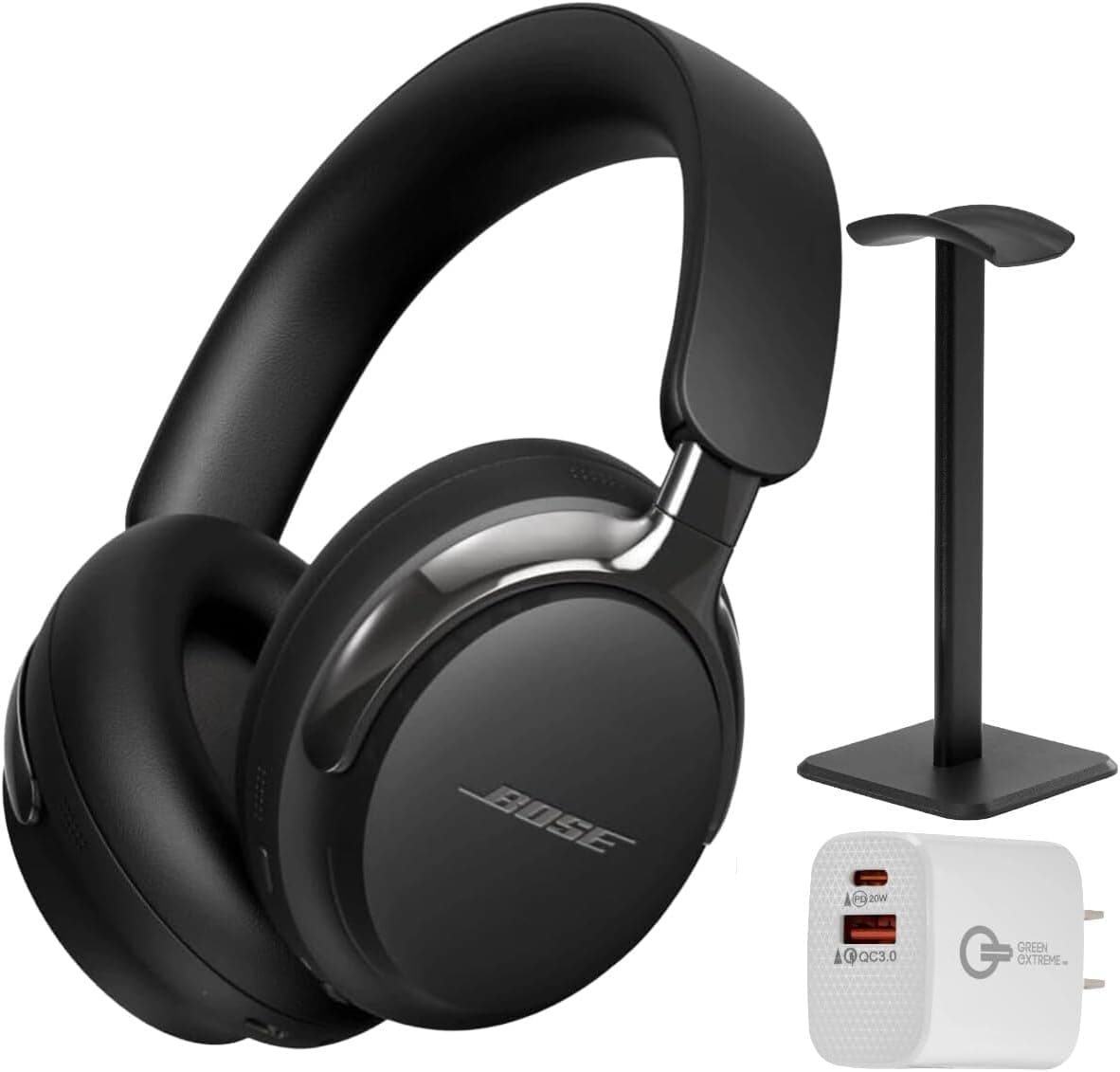
The WH-1000XM5's most significant competitor in the premium noise-canceling over-ear category is the Bose QuietComfort Ultra Headphones, which offers comparable noise cancellation performance with a distinctly different sound signature. The Bose product has a warmer, more bass-forward presentation that will appeal to listeners who prefer a more traditional hi-fi sound. The Sony has a wider soundstage, more detailed high-frequency reproduction, and more sophisticated customization options through its app.
Apple's AirPods Max represent a different category proposition entirely—their aluminum construction and tight ecosystem integration with Apple devices make them a natural choice for users deeply invested in the Apple hardware ecosystem. The AirPods Max deliver excellent noise cancellation and a spacious soundstage, but their weight of 384 grams makes them substantially heavier than the Sony, and their lack of a folding mechanism and large carrying case make them less convenient for frequent travelers.
The Sennheiser Momentum 4 Wireless offers a more audiophile-oriented sound signature with a broader frequency range and support for higher-resolution audio codecs. The Sennheiser product has a distinct visual identity with its exposed fabric headband, but the Sony's touch controls and more sophisticated noise cancellation processing give the WH-1000XM5 an edge in everyday usability.
For users coming from the WH-1000XM4, the upgrade case is compelling primarily if the XM4's fit was problematic or if the caller frequently uses headphones in challenging acoustic environments. The XM5's improved wind noise rejection, wider soundstage, and more comfortable headband represent genuine improvements over the XM4, but users who found the XM4 comfortable and effective may not find the XM5's improvements transformative enough to justify the upgrade cost.
Practical Considerations and Long-Term Ownership
The WH-1000XM5's build quality is solid, though the predominance of plastic in the headband and yokes mechanism means that the product does not convey the same sense of permanence as the all-metal AirPods Max or the leather-and-aluminum construction of premium audiophile headphones. The plastic is high-quality and well-finished, but users who prioritize materials prestige may find it underwhelming relative to the price point. The synthetic leather earpads are replaceable through Sony's service program, which is important because synthetic leather inevitably degrades over time with use, and the earpads are the most common point of failure in over-ear headphones.
The touch controls on the right earcup are responsive and well-implemented. The gesture vocabulary—tap to play/pause, swipe forward/back to skip tracks, swipe up/down for volume—is intuitive and the gestures are recognized reliably even during physical activity. The automatic pause when the headphones are removed and resume when they are replaced works without perceptible latency, and the feature proved reliable across all testing scenarios.
The Bluetooth connectivity range is rated at 10 meters in typical indoor environments, which is consistent with the Class 1 Bluetooth implementation used in the WH-1000XM5. In testing, the connection remained stable through two walls of standard residential construction without audible dropouts or interference artifacts. The connection did exhibit occasional brief interruptions when the listener moved more than approximately 15 meters from the source device or when multiple walls were introduced, but these interruptions were brief and automatic recovery was reliable.
After three years on the market, the WH-1000XM5 continues to receive firmware updates from Sony that address bug fixes and occasionally introduce minor feature improvements. The sustained software support is encouraging for prospective buyers who want to ensure their investment will remain current over a multi-year ownership period.
The Value Proposition in 2025
At the current market price of approximately $248 on Amazon, the Sony WH-1000XM5 occupies a sweet spot in the premium noise-canceling headphone market. It is priced below the launch prices of newer competitors like the Bose QuietComfort Ultra Headphones and the Apple AirPods Max, while offering noise cancellation performance that is at minimum competitive with—and in some respects superior to—those products. The WH-1000XM5 is not the newest product in Sony's lineup, but the headphone market does not reward novelty the way that smartphone markets do, and the XM5's 2022 platform remains technically current in ways that matter for real-world listening experience.
For users prioritizing a combination of excellent noise cancellation, sophisticated sound customization, comfortable long-term wearing, and strong battery life, the WH-1000XM5 remains one of the clearest recommendations in its category. The product's strengths are not theoretical benchmarks but practical, everyday qualities that compound over years of use. Three years after its introduction, it continues to be the standard against which other premium noise-canceling headphones are measured, and the fact that it has not been superseded within Sony's own lineup is a testament to how thoroughly its engineering team understood the brief.
Pros
- Industry-leading noise cancellation with dual processor architecture
- Exceptional 30-hour battery life
- Wide, detailed soundstage with LDAC support
- Comfortable redesigned headband and earcups
- Sophisticated EQ and sound customization via app
Cons
- Plastic construction less premium than competitors
- No folding mechanism for compact travel
- LDAC only fully usable on Android devices
- iOS users limited to AAC codec
Final Verdict
The Sony WH-1000XM5 remains one of the best noise-canceling headphones available with exceptional ANC, sophisticated sound customization, and 30-hour battery life, despite being three years old.