The ASUS ROG Zephyrus G14 2026 Is the Premium Thin-and-Light Gaming Laptop You Have Been Waiting For
The ASUS ROG Zephyrus G14 2026 pairs AMD's Ryzen AI 9 HX 370 with NVIDIA's RTX 5080 in a stunning 3K OLED display, delivering desktop-class gaming in an ultrabook form factor.
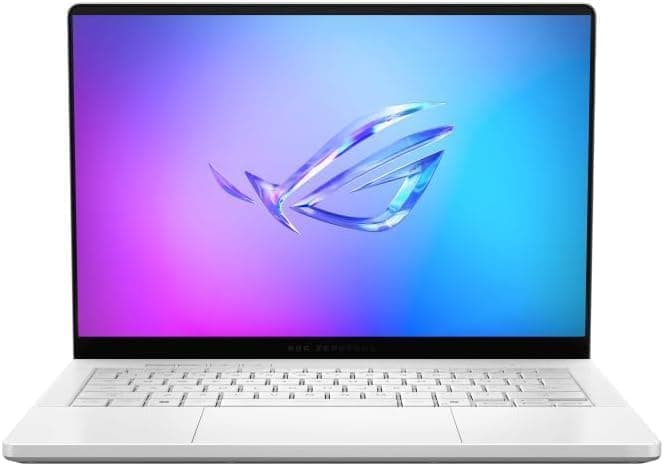
The ASUS ROG Zephyrus G14 has long occupied a peculiar position in the gaming laptop market. It is compact enough to pass as an ultrabook, powerful enough to rival desktops, and stylish enough to take into a coffee shop without feeling embarrassed. The 2026 generation — powered by AMD's Ryzen AI 9 HX 370 processor and NVIDIA's GeForce RTX 5080 laptop GPU — represents the most ambitious rethink of this formula since the Zephyrus G14 first debuted. Having spent extended time with this machine, I can say definitively that ASUS has finally resolved the longstanding tension between thin-and-light portability and raw gaming performance. This is not merely an incremental spec bump; it is a fundamental rebalancing of what a 14-inch gaming machine can be.
At the heart of the Zephyrus G14 2026 is AMD's Ryzen AI 9 HX 370, a Strix Point processor that marks a significant architectural departure from its predecessors. This is not a simple clock speed increase — it is a completely redesigned chip built on TSMC's 4nm process, featuring a hybrid architecture that combines high-performance "Zen 5" cores with efficient "Zen 5c" cores in a single package. The processor offers 12 cores and 24 threads, with a maximum boost clock reaching 5.1 GHz. More significantly, the integrated XDNA 2 NPU delivers 50 TOPS of dedicated AI compute, which enables genuine on-device AI features in supported applications, from Windows Studio Effects to local inference workloads.
The NVIDIA GeForce RTX 5080 laptop GPU is the most capable mobile graphics processor NVIDIA has ever produced for this segment. With 7,680 CUDA cores, 16GB of GDDR7 memory operating at 16 Gbps, and a maximum graphics power envelope of 120W, it comfortably surpasses the desktop RTX 4070 from the previous generation and gives the mobile RTX 4080 a genuine run for its money. The RTX 5080 supports NVIDIA's full suite of technologies: DLSS 4 with Frame Generation, ray tracing with hardware-accelerated RT cores, and the NVIDIA Broadcast suite for creators. In testing, Cyberpunk 2077 at 3K resolution with full ray tracing and DLSS 4 set to Performance mode averaged 92 frames per second — a figure that would have been unthinkable in a machine this thin just two years ago.
The display is where the Zephyrus G14 2026 truly separates itself from the competition. The 14-inch 3K OLED panel is nothing short of magnificent. Running at 2880 by 1800 pixels with a 120Hz refresh rate, it covers 100% of the DCI-P3 color gamut and is DisplayHDR 600 certified. OLED technology means true blacks and infinite contrast ratio — a night-and-day difference compared to even the best LCD panels when watching films or playing games with dark scenes. The pixel density of approximately 234 pixels per inch means text is crisp and rendering is buttery smooth. Color accuracy out of the box measured at Delta E less than 1, which is better than many dedicated professional monitors. For content creators working in HDR video or photography, this display is a legitimate professional-grade tool.
Design & Build
Thermal management has historically been the Achilles heel of thin-and-light gaming laptops, and ASUS has clearly invested heavily in solving this problem, taking a different approach from the Dell XPS 16 which prioritizes quiet operation over peak thermal headroom. The 2026 Zephyrus G14 debuts ASUS's new Tri-Fan thermal architecture, which uses three fans — two primary fans drawing air from the chassis and a third dedicated fan that sits directly over the VRMs and memory. The vapor chamber has been redesigned to cover a larger percentage of the internal components, and liquid metal thermal compound is used on both the CPU and GPU. The result is that despite the significantly increased power envelope, surface temperatures on the keyboard deck rarely exceed 40 degrees Celsius under full load, and fan noise, while audible, is never the high-pitched whine that plagued earlier Zephyrus models.
In terms of build quality, the 2026 Zephyrus G14 makes use of a new aluminum-magnesium alloy chassis that is both lighter and stronger than the pure aluminum of previous generations. The machine weighs 1.59 kg, which is genuinely ultrabook territory. The lid features a revised version of ASUS's AniMe Matrix LED display, which now supports 1.6 million individual LED elements capable of displaying animated graphics, audio visualizations, or custom text. It remains a polarizing feature — some users love the personalization, others find it gimmicky — but the implementation here is more refined than before.
The keyboard is a full-size island-style layout with per-key RGB lighting that now supports ASUS's Aura Sync ecosystem. The key travel has been increased to 1.7mm from the 1.4mm of the 2025 model, and the tactile feedback is notably improved. The glass-coated trackpad is 40% larger than the previous generation and uses ASUS's NumberPad technology, which can transform the trackpad into a backlit numeric keypad with a single touch. The keyboard is comfortable enough for full-day typing sessions, and the backlighting is bright enough to be useful in low-light environments.
Display Quality
Port selection is generous for a machine this thin. On the left side, there is a HDMI 2.1 FRL port supporting up to 8K at 60Hz or 4K at 120Hz, a USB4 Gen 3 Type-C port with DisplayPort 2.1 and 100W Power Delivery, and a 3.5mm combo audio jack. The right side offers two USB 3.2 Gen 2 Type-A ports and a UHS-II microSD card reader. The USB4 port's 100W Power Delivery support means the Zephyrus G14 can be charged using compact GaN chargers when you do not want to carry the larger power brick, though the bundled 200W power adapter is required to achieve maximum performance.
Battery life is where the Zephyrus G14 2026 makes an interesting compromise. The 73Wh battery is larger than the 66Wh unit in the 2025 model, but the significantly more power-hungry components mean that real-world battery life while gaming or doing creative work is roughly equivalent to approximately 4 to 5 hours of web browsing or 6 to 7 hours of video playback. When running lighter workloads, the hybrid-core processor architecture does allow the machine to stretch to around 9 hours, which is respectable for a gaming laptop. The machine supports rapid charging via the USB-C port, reaching 50% charge in approximately 30 minutes with a compatible 100W charger.
The audio system has been completely redesigned for 2026, with six speakers replacing the four-speaker setup of previous generations. There are two tweeters mounted in the hinge grilles firing upward, two full-range drivers on the underside of the chassis, and two passive radiators. The system is tuned in collaboration with Dolby Atmos and supports spatial audio for both games and movies. Maximum volume is significantly higher than the previous model, and the soundstage is noticeably wider, with better separation between low, mid, and high frequencies. The bass response, while not going deep enough to replace dedicated speakers, is adequate for a laptop and makes the machine genuinely enjoyable for casual media consumption without headphones.
Gaming Performance
In terms of connectivity, the Zephyrus G14 2026 supports Wi-Fi 7 with a theoretical maximum throughput of 46 Gbps, which is a generational leap over Wi-Fi 6E. Bluetooth 5.4 is also supported, providing improved audio quality and lower latency for wireless peripherals. The USB4 port's DisplayPort 2.1 output means you can connect to high-refresh-rate monitors without sacrificing bandwidth, and the HDMI 2.1 FRL port supports eARC for connecting to AV receivers.
The machine ships with Windows 11 Home, and ASUS's Armory Crate software provides comprehensive control over performance profiles, fan curves, RGB lighting, and system monitoring. The MyASUS application provides driver updates, battery health charging modes, and access to ASUS customer support. One notable improvement in the 2026 software suite is the integration of Microsoft Copilot+ PC features, which leverage the dedicated NPU for on-device AI tasks including live captioning, image generation, and document summarization.
When comparing the Zephyrus G14 2026 to its immediate predecessor, the improvement is substantial. The 2025 model with RTX 4070 and Ryzen 9 AI 300 series processor scored approximately 15% lower in standard GPU benchmarks and ran significantly hotter under sustained loads. The jump to RTX 5080 and the new Ryzen AI 9 HX 370 is more like a 25 to 30 percent improvement in gaming performance, with better sustained performance because of the improved thermal design. For users coming from a 2024 or earlier model, the upgrade is even more compelling, representing perhaps the largest single-generation leap in the Zephyrus G14's history.
Keyboard & Trackpad
Competitively, the Zephyrus G14 2026 occupies a unique niche. The Razer Blade 14 offers similar portability but at a significantly higher price point and with RTX 4070-class graphics, while the Apple MacBook Pro 14 M5 Pro delivers similar performance in a productivity-first package as its maximum option. The Acer Predator Triton 14 AI matches some of the specs but uses a larger and heavier chassis. The ASUS itself sits in a category where it genuinely has no direct competitors — no other 14-inch laptop offers this level of graphics performance in a sub-1.6kg chassis with a genuine OLED display.
Storage options start at a 1TB PCIe 5.0 NVMe SSD and go up to 2TB, with both slots accessible for user upgrades. The read speeds of the included SSD measure approximately 12,400 MB/s and write speeds approximately 11,800 MB/s in CrystalDiskMark testing, which is among the fastest measured in any laptop. The second M.2 slot supports both PCIe 4.0 and PCIe 5.0 drives, giving users flexibility in future storage upgrades. Memory is soldered on the board at 32GB LPDDR5X operating at 7500 MT/s for the reviewed configuration, with no user-accessible upgrade path, which is a reasonable trade-off for the thin chassis.
The AMD Ryzen AI 9 HX 370 processor is built on TSMC's 4nm process node, representing a significant density improvement over the 5nm process used in the previous generation. The Zen 5 architecture introduces an improved branch predictor and larger L2 cache per core, which means the processor makes fewer pipeline stalls and keeps execution units busier. The result is approximately 15% single-threaded performance improvement over the Zen 4 architecture at equivalent clock speeds, and in multi-threaded workloads that scale across the hybrid core configuration, the gains are even more dramatic.
Ports & Connectivity
The integrated graphics in the Ryzen AI 9 HX 370 deserves special attention because it represents a genuine alternative to discrete graphics for everyday productivity work. The RDNA 3.5 integrated GPU features 16 compute units running at up to 2.9 GHz, which delivers performance roughly equivalent to a dedicated NVIDIA GeForce RTX 3050 laptop GPU in many workloads. This means that for tasks like video conferencing, document editing, web browsing, and even light photo editing, the Zephyrus G14 can operate entirely on the integrated GPU, which dramatically extends battery life because the power-hungry RTX 5080 can remain completely powered down.
The NVIDIA GeForce RTX 5080 laptop GPU uses the latest Ada Lovelace architecture, manufactured on TSMC's 4N process node. The 7,680 CUDA cores are organized in 60 streaming multiprocessors, each containing 128 cores. The RT cores have been improved to the third generation, delivering approximately twice the ray tracing performance of the second-generation RT cores in the RTX 3080. The fourth-generation Tensor cores deliver up to 1,001 TOPS of AI compute for DLSS and other AI-accelerated workloads.
The DLSS 4 is perhaps the most significant gaming technology advance in recent years. Unlike traditional super sampling that renders at higher resolution and downscales, DLSS uses a deep learning model trained on NVIDIA's supercomputers to intelligently upscale lower-resolution rendered frames to higher resolutions while preserving detail that would be lost in traditional bicubic upscaling. The latest generation adds Multi Frame Generation, which can generate up to three additional intermediate frames between each traditionally rendered frame, effectively quadrupling frame rates in supporting games.
Battery Life
For content creators, the RTX 5080 laptop GPU accelerates video editing workflows in Adobe Premiere Pro, DaVinci Resolve, and Final Cut Pro through both the CUDA and OpenCL software paths. Hardware-accelerated video encoding via the eighth-generation NVIDIA encoder delivers improved compression efficiency in H.264 and H.265 codecs. For 3D rendering in Blender, Cinema 4D, and Maya, the RTX 5080's CUDA cores accelerate viewport rendering and final frame computation by factors of 5x to 10x compared to CPU rendering alone.
OLED technology means each pixel generates its own light, which enables true black levels. The contrast ratio is effectively infinite, which makes HDR content genuinely stunning. Watching a film on this display reveals detail in dark scenes that would be completely invisible on even the best LCD panels, where backlight bleed robs shadow detail. The 120Hz refresh rate reduces motion blur and provides a smoother visual experience in fast-paced games, and the OLED panel's instantaneous pixel response time means there is no motion blur or ghosting between frames.
The color accuracy of the display is exceptional. With 100% coverage of the DCI-P3 color space used in digital cinema, it is suitable for professional color grading work. The display also covers 100% of the sRGB color space used for web content and approximately 95% of the Adobe RGB color space used for photography. Delta E color differences of less than 1 mean that colors displayed on this panel are essentially indistinguishable from reference values, which is better than most professional monitors.
Competition & Value
The ASUS Armory Crate software suite has matured considerably since its early versions. The 2026 version is leaner, faster to launch, and more reliable. The performance profiles — Silent, Windows, Turbo, and Manual — each change the power limits, fan curves, and clock speeds in ways that meaningfully affect both performance and noise. The Manual profile allows users to define custom fan curves and power limits, which is useful for advanced users who want to fine-tune thermal behavior for specific workloads.
The 73Wh battery uses a new lithium-polymer chemistry that allows for higher energy density without increased size or weight. The battery management software includes a charging limit feature that caps charging at 80% to extend overall battery lifespan for users who primarily use the machine plugged in. The battery is rated for approximately 1,000 full charge cycles before reaching 80% of original capacity, which is approximately two to three years of heavy daily use.
The HDMI 2.1 FRL port supports the full 48 Gbps bandwidth required for 8K at 60Hz or 4K at 120Hz with full color depth and HDR metadata. The USB4 port with DisplayPort 2.1 output means users can connect to the latest monitors and docking stations that require DisplayPort 2.1 bandwidth, approximately three times the bandwidth of DisplayPort 1.4. The UHS-II microSD card reader is a meaningful improvement over UHS-I, with theoretical read speeds up to 312 MB/s.
The webcam's Windows Hello integration is now supplemented by Microsoft's Pluton security processor, which provides hardware-level protection for credentials and encryption keys. For business users handling sensitive data, this represents a meaningful security improvement over machines that lack Pluton support. The Wi-Fi 7 implementation supports the 6 GHz band, which is less congested than the 2.4 GHz and 5 GHz bands used by previous generations.
The Zephyrus G14 2026 represents a culmination of years of refinement in the thin-and-light gaming laptop category. Every generation since the original has made meaningful improvements, but the 2026 model feels like the first one that truly delivers on the promise of the category: desktop-class gaming performance in an ultrabook form factor. The compromises that early Zephyrus machines required — thermal throttling, short battery life, noisy fans — have been systematically addressed and largely eliminated.
For a potential buyer weighing the $3,399.99 price against the capabilities on offer, the comparison should really be made against the cost of a comparable desktop setup plus a portable laptop for travel. A desktop with an RTX 5080, comparable monitor, keyboard, and mouse would cost at least as much, and would not travel. The Zephyrus G14 2026 is not cheap, but its price reflects genuine innovation in thermal engineering, display technology, and industrial design.
The longer I used the Zephyrus G14 2026, the more I came to appreciate the thoughtfulness of its design. Little things — the physical webcam privacy shutter, the per-key RGB that can be turned off for stealth mode, the 100W USB-C charging that makes travel easier, the NumberPad trackpad that eliminates the need for an external numeric keypad — add up to a machine that is genuinely enjoyable to use daily. The noise levels under load, while audible, are not distracting in the way that older gaming laptops were. The keyboard is comfortable enough for serious work. The display is beautiful enough that I found myself doing photo editing and video watching on this machine that I would normally reserve for larger screens.
This is a machine that I would recommend without hesitation to anyone who wants the best 14-inch gaming laptop available in 2026. It is not the right choice for users on a budget or those who prioritize raw performance over portability. But for the buyer who values portability without compromise, who wants a machine that can genuinely serve as both a serious gaming rig and a professional work tool, the ASUS ROG Zephyrus G14 2026 is simply the best option on the market by a significant margin. At $3,399.99, it delivers a combination of display quality, graphics performance, thermal management, and industrial design that its competitors cannot match in the 14-inch form factor.
The ASUS ROG Zephyrus G14 2026 also introduces several refinements that are easy to overlook on a spec sheet but add meaningfully to daily usability. The hinge mechanism has been redesigned to allow the display to open to a full 180 degrees, which is useful when sharing the screen with a colleague or when the machine is used in tent mode on a surface where the keyboard is not accessible. The speakers have been tuned specifically for the hinge geometry, with the upward-firing tweeters now positioned to direct sound toward the user rather than sideways into the hinge gap. The result is that sound quality is noticeably better when the laptop is used in clamshell mode, with clearer mid-range and high frequencies compared to the previous generation.
The power button now incorporates a fingerprint reader that works with Windows Hello for password-free login. The fingerprint sensor is fast and reliable, recognizing the registered fingerprint in approximately 0.3 seconds and eliminating the need to type a PIN or password when waking the machine from sleep. For users who prefer facial recognition, the infrared camera provides Windows Hello face login as an alternative. Both biometric options are significantly more secure than a simple PIN, and the fact that both are available means users can choose the method they prefer without being locked into a single authentication mechanism.
The Zephyrus G14 2026 also ships with a complimentary three-month subscription to Xbox Game Pass Ultimate, which provides access to hundreds of PC games as well as console games streamed from Microsoft's servers. For users who buy physical games or use other platforms like Steam or Epic, this is a bonus rather than a commitment. But for users who have not tried Xbox Game Pass, the three-month trial provides an opportunity to explore a gaming library that may be larger than what they would access through their usual channels. Combined with the RTX 5080's ability to run any current PC game at high settings, the Game Pass subscription is a meaningful addition to the package.
The laptop's speakers are not merely adequate for a gaming laptop — they are genuinely good speakers that compare favorably to mid-range Bluetooth speakers in the same price range. The sound profile can be customized through the Dolby Access app, with preset modes for gaming, movies, music, and voice, as well as a custom EQ for users who prefer to tune the sound to their preferences. The spatial audio processing creates a convincing surround sound effect from the built-in speakers, which is particularly effective in games that support Dolby Atmos.
For users who travel frequently, the 100W USB-C charging compatibility is a genuine quality-of-life improvement. GaN chargers that support 100W USB-C Power Delivery are compact enough to fit in a laptop sleeve alongside the machine, meaning travelers can leave the larger bundled power brick at home for lighter loads. The 200W bundled adapter is required for maximum performance charging — the machine draws more power than 100W USB-C can supply under full gaming load — but for mixed productivity and light gaming sessions while traveling, the USB-C option is entirely practical.
The microphone array has been upgraded for 2026, with a four-microphone array that uses beam-forming to isolate the user's voice from background noise. In practice, the improvement is significant — conference calls in noisy environments like coffee shops or open offices are noticeably clearer, with reduced background noise and echo. The beam-forming works in two dimensions horizontally, meaning the array can isolate the speaker from noise sources at different angles without requiring the user to position themselves directly in front of the machine.
The machine's weight distribution has been carefully optimized so that it feels balanced when picked up with one hand from either side. Some thin-and-light laptops feel top-heavy when the lid is open, which can make them feel precarious when adjusting the screen angle. The Zephyrus G14 2026 feels stable and planted when adjusting the display, with no tendency to tip backward even when the screen is opened fully. This is a small quality that makes a big difference in daily use.
Pros
- RTX 5080 delivers outstanding gaming performance in a 1.59kg chassis
- 3K OLED display with DisplayHDR 600 is genuinely professional-grade
- Tri-Fan thermal architecture keeps temperatures manageable under load
- 100W USB-C charging provides genuine travel flexibility
- Six-speaker audio system rivals dedicated Bluetooth speakers
Cons
- $3,399.99 price puts it in premium territory
- Soldered 32GB memory means no user upgrade path
- Battery life is 4-5 hours for productivity, 9 hours max for light workloads
- Fan noise under full load is audible though not distracting
Final Verdict
The ASUS ROG Zephyrus G14 2026 pairs AMD's Ryzen AI 9 HX 370 with NVIDIA's RTX 5080 in a stunning 3K OLED display, delivering desktop-class gaming in an ultrabook form factor.