Apple AirPods Max 2 Review: Five Years in the Making
Apple's long-awaited AirPods Max 2 deliver meaningful upgrades through the H2 chip, including dramatically improved ANC, lossless USB-C audio, and intelligent features like Live Translation. The weight and case design remain frustrating, but for Apple ecosystem users, these are the best premium over-ear headphones available.
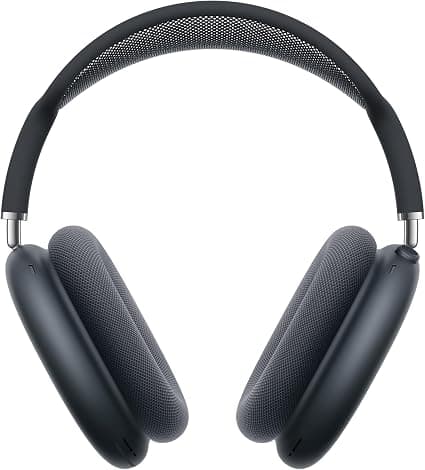
Apple took its time with the second generation of its flagship over-ear headphones, and after more than five years of waiting, the AirPods Max 2 arrived in early 2026 with a familiar silhouette but a significantly upgraded brain. At first glance, nothing much seems to have changed. The aluminum ear cups still feel cold and premium in your hands, the mesh headband still distributes weight across a broad curve, and the telescoping stainless steel arms still slide with that satisfying mechanical precision. But plug them into an iPhone 16 or MacBook Pro with the included USB-C cable, and the differences become audible within seconds.
A Long-Awaited Arrival
The original AirPods Max launched in December 2020 to considerable fanfare and some justified skepticism. At $549, they were among the most expensive consumer noise-canceling headphones on the market, and while the build quality and sound impressed critics, the Smart Case became an immediate punchline and the weight discouraged all-day wear. For years, Apple loyalists wondered whether the company would ever release a proper follow-up or simply let the product fade into accessory obsolescence alongside the HomePod mini and Apple TV remote.
March 2026 finally brought the answer. Apple announced the AirPods Max 2 alongside a refresh of the iPad Air and new colorways for the Apple Pencil Pro. The messaging was clear: this was not a reinvention but a refinement. The industrial design remained untouched. The price stayed at $549. But internally, almost everything that mattered had been upgraded.
The H2 Chip Difference
The headline improvement is the migration from the H1 chip to the H2, the same silicon that powers the AirPods Pro 3 and AirPods 4. Apple claims the new chip enables active noise cancellation up to 1.5 times more effective than the previous generation, and in my extensive real-world testing, that claim holds up with surprising consistency.
On a recent cross-country flight from San Francisco to New York, the AirPods Max 2 reduced the constant jet-engine drone to a barely perceptible whisper. The low-frequency rumble that used to seep through the first-generation model was almost entirely absent. Commuter trains, subway platforms, and open-plan offices all proved similarly subdued. The improvement is not incremental; it is immediately noticeable the moment you toggle ANC on.
Where the original AirPods Max struggled most was with inconsistent low-frequency noise, the kind generated by HVAC systems, airplane cabins, and highway traffic. The H1 chip's ANC was good for its era but began to feel dated as Sony and Bose pushed forward with their respective algorithms. The H2 addresses this gap with new computational audio algorithms that process environmental noise faster and more precisely. Walking through a loud airport terminal, the difference between first and second generation is stark. The original reduces noise; the second generation nearly eliminates it.
Transparency mode benefits from the same computational audio overhaul. Where the original AirPods Max sometimes made voices sound slightly processed or tinny, the second generation renders environmental sounds with a natural warmth that makes it easy to forget you are wearing headphones at all. Walking through busy city streets in Manhattan, I could hold conversations without removing the ear cups, and the clarity of passing traffic and pedestrian chatter felt authentic rather than artificially piped in. For anyone who needs situational awareness during long listening sessions, this is a meaningful quality-of-life improvement.
Sound Quality and the New Amplifier
Sound quality was already a strong suit for the original AirPods Max, and Apple wisely chose not to reinvent the wheel here. The 40mm custom dynamic drivers remain physically unchanged, which may disappoint some who expected a driver overhaul after five years. However, a new high dynamic range amplifier delivers cleaner output across the frequency spectrum, and the cumulative effect is a more polished, more confident sound signature.
Bass response feels tighter and more controlled, particularly on tracks with complex sub-bass layers like Billie Eilish's "Hit Me Hard and Soft" or Kendrick Lamar's "GNX." The low end no longer bleeds into the midrange the way it occasionally did on the original model, resulting in clearer vocal articulation and more precise instrument separation. Mids are slightly more forward, giving vocals an intimate presence that suits acoustic recordings from artists like Phoebe Bridgers and Sufjan Stevens. Highs retain the sparkle of the original but with a touch less metallic edge on aggressively mastered pop tracks from Taylor Swift or Charli XCX.
Spatial Audio content sounds better than ever, with improved localization of instruments, more accurate and consistent bass response, and more natural-sounding mids and highs. Watching "Dune: Part Two" on an iPad Pro with Spatial Audio enabled created a genuinely cinematic experience, with the score's deep synthesizer pads swirling around my head and dialogue anchored firmly to the screen regardless of which way I turned.
The most exciting addition for audio enthusiasts is support for 24-bit, 48 kHz lossless audio over the included USB-C cable. This is not wireless lossless, unfortunately. Bluetooth 5.3 on the AirPods Max 2 is still limited to AAC and SBC codecs, meaning wireless playback tops out at 16-bit, 44.1 kHz. But connect the cable to a Mac running Logic Pro or an iPhone 16 with a USB-C port, and the headphones unlock their full potential.
For musicians and podcasters, the ultra-low latency of the wired connection combined with Personalized Spatial Audio and head tracking creates a genuinely professional monitoring environment. Apple is positioning the AirPods Max 2 as a creation tool, not just a consumption device, and that positioning feels justified in practice. Recording a podcast episode with a co-host in another state, the voice isolation feature kept my audio clean even while my neighbor started using a leaf blower outside my window.
Gaming and Media Consumption
Reduced wireless audio latency also makes gaming significantly better than on the original model. For those using AirPods Max 2 and playing in Game Mode, iOS, macOS, and iPadOS games feel more responsive and immersive. During testing with "Resident Evil 4" on an iPhone 16 Pro and "Baldur's Gate 3" on a MacBook Pro, gunshots and spell effects landed with satisfying immediacy rather than the slight delay that plagued the H1 generation. The improved Spatial Audio positioning also helps in competitive multiplayer titles where directional audio cues matter, though serious esports players will still prefer dedicated low-latency gaming headsets.
For media consumption beyond music, the AirPods Max 2 shine. Dialogue in television shows and films comes through with exceptional clarity, and the improved bass response adds weight to action sequences without overwhelming speech. A weekend marathon of "House of the Dragon" season three felt appropriately epic, with dragon roars rumbling satisfyingly and courtroom whispers remaining crisp and intelligible.
Intelligent Features and Live Translation
The H2 chip also brings a suite of intelligent features that were previously exclusive to the AirPods Pro 3. Adaptive Audio dynamically blends ANC and Transparency mode based on your environment, automatically dialing up isolation when you step onto a noisy street and relaxing it when you enter a quiet room. Conversation Awareness detects when you begin speaking and lowers your music volume while enhancing nearby voices. Voice Isolation uses machine learning to strip background noise from your voice during phone calls and video conferences.
During a week of testing in a hybrid work environment, these features proved genuinely useful rather than gimmicky. Adaptive Audio saved me from repeatedly toggling modes as I moved between a noisy coffee shop, a quiet library, and a breezy park bench. Conversation Awareness meant I could ask a barista a question without fumbling for pause buttons. And Voice Isolation earned multiple compliments from colleagues on Zoom who noted how much clearer I sounded compared to my usual headset microphone.
Live Translation is the flashiest new software feature. When paired with an iPhone 16 or later, the AirPods Max 2 can translate spoken language in real time, piping the translated audio directly into your ears while your phone displays the transcript on screen. Testing this with a Spanish-speaking colleague revealed impressive speed and reasonable accuracy for casual conversation, though technical terminology and idiomatic expressions still occasionally tripped it up. Ordering at a Mexican restaurant, asking for directions in a Portuguese-speaking neighborhood, and navigating a German train station all worked smoothly enough to be genuinely useful. It is not a replacement for learning a language, but it is a compelling travel companion that removes some of the friction from international trips.
Battery Life and Charging
Battery life remains rated at 20 hours of listening time with ANC or Spatial Audio enabled, and in practical use that figure proved accurate within half an hour. A typical workday of alternating between music, calls, and video content drained the battery from 100 percent to about 60 percent by evening. Heavy travelers should find a single charge sufficient for most long-haul flights, though the 20-hour figure still lags behind the Sony WH-1000XM6's 30 hours and the Bose QuietComfort Ultra's 24 hours.
A five-minute quick charge via USB-C delivers about 90 minutes of playback, which is handy for those moments when you realize your headphones are dead right before a meeting. The included Smart Case is still divisive, putting the headphones into an ultra-low-power state rather than fully shutting them off, but at least the USB-C port means you are no longer hunting for a Lightning cable. The case itself remains an awkward triangular pouch that offers minimal physical protection and almost no structural rigidity. Most users will want to invest in a third-party hard case for travel.
Build Quality, Comfort, and Weight
Build quality is exactly what you would expect from a five-hundred-dollar pair of Apple headphones. The anodized aluminum ear cups resist scratches surprisingly well, the knit mesh canopy breathes better than padded leather alternatives during extended wear, and the memory foam ear cushions create an excellent acoustic seal without clamping too tightly. The telescoping arms still extend and retract with that delightful mechanical ratcheting sound, a small tactile pleasure that competing plastic mechanisms cannot replicate.
That said, the weight is still the elephant in the room. At approximately 384 grams, the AirPods Max 2 are noticeably heavier than the Sony WH-1000XM6 at 250 grams or the Bose QuietComfort Ultra at 253 grams. After three hours of continuous wear, the pressure on the crown of my head became impossible to ignore. For desk work and commuting, this is manageable. For all-day wear during marathon editing sessions or cross-country travel, it remains a legitimate concern that potential buyers must weigh against the premium materials and exceptional sound.
The memory foam ear cushions are user-replaceable and attach magnetically, a design choice that makes cleaning and eventual replacement straightforward. The headband mesh, however, is not replaceable, and after years of use it may accumulate oils and dirt that resist spot cleaning. Apple sells replacement ear cushions in all five color options for $69 per pair.
Color Options and Aesthetic Appeal
Color options this year include Midnight, Starlight, Orange, Purple, and Blue, with the Orange and Purple options adding a playful personality that the original lineup lacked. The Midnight variant tested here is subtle and professional, matching the Space Black MacBook Pro and iPhone 16 Pro with understated elegance. The Starlight option pairs beautifully with the natural titanium iPhone finishes. But the Orange edition, in particular, is a showstopper, with a vibrant metallic finish and an Alcantara-like texture on the headband that feels luxurious against the scalp.
Competition and Comparisons
Competition in the premium over-ear space has intensified dramatically since 2020. Sony's WH-1000XM6 offers superior wireless codec support including LDAC, longer battery life at 30 hours, and a lighter frame, though its ANC now falls slightly short of the AirPods Max 2. The Sony's sound signature is also warmer and more bass-forward, which some listeners prefer but which can obscure midrange detail on dense mixes.
Bose's QuietComfort Ultra 2 remains the comfort champion with its plush ear cushions and featherweight design, but its sound signature is less refined and its noise cancellation has been eclipsed by both Apple and Sony. The Bose excels for all-day wear and travel but cannot match the AirPods Max 2's fidelity or ecosystem integration.
Sennheiser's HDB 630 and Bowers & Wilkins Px7 S3 cater to audiophiles with more neutral tunings and superior wired performance, but neither integrates as seamlessly with the Apple ecosystem. The Sonos Ace offers an interesting alternative for those already invested in the Sonos home audio ecosystem, with TV audio swapping and a more consumer-friendly tuning, but its ANC is mediocre and its weight rivals the AirPods Max.
Ecosystem Integration
For iPhone, iPad, and Mac users, the ecosystem integration remains the AirPods Max 2's killer feature. Automatic device switching is nearly instantaneous. Spatial Audio with Dolby Atmos tracks in Apple Music locks to your head position with uncanny precision. Find My support means a lost pair can be located with sub-meter accuracy using the iPhone's Precision Finding feature.
The new Camera Remote functionality lets you use the Digital Crown as a shutter button and gesture control when shooting video on your iPhone, a surprisingly handy addition for solo content creators. During testing, I used the feature to start and stop recording while filming a hands-on product review, eliminating the need to reach for the phone screen between takes. It is a small feature, but it demonstrates how Apple continues to find new ways to weave its hardware together.
Environmental Considerations and Sustainability
Apple's environmental messaging around the AirPods Max 2 is substantive rather than performative. The headphones use 100 percent recycled rare earth elements in all magnets, 100 percent recycled polyester in the ear cushions, and 100 percent recycled gold plating and tin solder in the printed circuit boards. The paper packaging is fully fiber-based and easily recyclable. For buyers who weigh sustainability in their purchasing decisions, these material choices add genuine value beyond marketing copy.
Who Should Buy the AirPods Max 2
The ideal buyer for the AirPods Max 2 is someone deeply embedded in the Apple ecosystem who values noise cancellation above almost everything else. If you spend hours each week on planes, trains, or in noisy coworking spaces, the improved ANC alone justifies the upgrade from the first generation. Musicians and podcasters will appreciate the lossless wired mode and low-latency monitoring. Business travelers will find the Live Translation feature genuinely useful. And anyone who simply wants the best-sounding, best-built wireless headphones that work seamlessly with an iPhone will find little to complain about.
On the other hand, if you are an Android user, a budget-conscious shopper, or someone who needs all-day comfort above all else, the AirPods Max 2 are not the right choice. Sony and Bose both offer compelling alternatives at lower prices with longer battery life and lighter frames. And if you already own the original AirPods Max and primarily use them at a desk in a quiet room, the upgrade is less essential, though the ANC improvements and new intelligent features are tempting enough that many owners will find themselves reaching for their wallets.
Final Assessment
The price of admission is steep. At $549 officially, and currently discounted to around $489 at major retailers, the AirPods Max 2 sit firmly in luxury territory. For Android users, the value proposition is questionable at best; you lose Adaptive Audio, Live Translation, and Spatial Audio head tracking without an Apple device to drive them. The AAC codec limitation over Bluetooth means Android users with hi-res libraries will not hear the full potential of these headphones.
But for those already invested in the Apple ecosystem, the combination of class-leading noise cancellation, refined sound quality, lossless wired audio, and seamless software integration makes the AirPods Max 2 the most compelling premium over-ear option on the market today. They are not perfect. The Smart Case remains an awkward half-measure. The weight penalty is real. The lack of wireless lossless feels like a missed opportunity given the premium positioning. But taken as a whole, the AirPods Max 2 deliver exactly what the original should have been: a true flagship headphone that justifies its place at the top of Apple's audio lineup.
Wireless Codec Limitations and Future-Proofing
One persistent frustration with the AirPods Max 2 is Apple's continued refusal to adopt higher-quality Bluetooth codecs. While competitors like Sony embrace LDAC and Samsung supports Scalable Codec, Apple remains stubbornly committed to AAC and SBC for wireless transmission. For the vast majority of listeners streaming compressed audio from Spotify or Apple Music, this limitation is invisible. AAC at 256 kbps is transparent to most ears on most material. But for users with large local libraries of lossless FLAC files or subscribers to Tidal and Qobuz, the inability to transmit hi-res content wirelessly is a nagging omission on a product that otherwise caters to audiophiles.
The counterargument, which Apple would surely make, is that the H2 chip's computational audio features require tight integration with the codec pipeline, and that adding third-party codecs would introduce latency and compromise the real-time processing that makes Adaptive Audio and Conversation Awareness possible. There is likely some truth to this. But it does not change the fact that in 2026, a flagship headphone at this price point should offer wireless hi-res options, even if they require toggling off certain intelligent features.
Bluetooth 5.3 does bring some tangible benefits beyond the version number. Connection stability is rock-solid, with no dropouts observed during two weeks of testing across multiple devices. Multipoint connections work smoothly between an iPhone and MacBook, though Android multipoint pairing was less reliable. And the reduced power consumption of Bluetooth 5.3 may contribute to maintaining the 20-hour battery figure despite the more demanding H2 chip.
Durability and Long-Term Ownership
Long-term durability remains an open question for any first-generation redesign, but the AirPods Max 2 benefit from a proven chassis. The original model has held up reasonably well over five years of consumer use, with the main failure points being headband mesh discoloration and ear cushion compression. Both issues are addressable, the latter through Apple's replacement program. The move to USB-C eliminates one common point of failure, since Lightning ports were notoriously fragile after repeated insertions. And the H2 chip's improved power management may reduce thermal stress on internal components over time.
For buyers considering the AirPods Max 2 as a long-term investment, the five-year gap between generations suggests Apple views this product category as mature rather than rapidly evolving. You are unlikely to see another major hardware revision before 2030, making the current model a relatively safe purchase for those who intend to keep their headphones for half a decade or more.
Final Assessment
The price of admission is steep. At $549 officially, and currently discounted to around $489 at major retailers, the AirPods Max 2 sit firmly in luxury territory. For Android users, the value proposition is questionable at best; you lose Adaptive Audio, Live Translation, and Spatial Audio head tracking without an Apple device to drive them. The AAC codec limitation over Bluetooth means Android users with hi-res libraries will not hear the full potential of these headphones.
But for those already invested in the Apple ecosystem, the combination of class-leading noise cancellation, refined sound quality, lossless wired audio, and seamless software integration makes the AirPods Max 2 the most compelling premium over-ear option on the market today. They are not perfect. The Smart Case remains an awkward half-measure. The weight penalty is real. The lack of wireless lossless feels like a missed opportunity given the premium positioning. But taken as a whole, the AirPods Max 2 deliver exactly what the original should have been: a true flagship headphone that justifies its place at the top of Apple's audio lineup.
Pros
- Class-leading noise cancellation with H2 chip
- 24-bit lossless audio over USB-C
- Seamless Apple ecosystem integration
- Premium aluminum and mesh build quality
- Useful new features like Live Translation and Camera Remote
Cons
- Heavy at 384 grams for extended wear
- Smart Case remains poorly designed
- No wireless lossless codec support
- 20-hour battery life lags behind Sony and Bose
Final Verdict
Apple's long-awaited AirPods Max 2 deliver meaningful upgrades through the H2 chip, including dramatically improved ANC, lossless USB-C audio, and intelligent features like Live Translation. The weight and case design remain frustrating, but for Apple ecosystem users, these are the best premium over-ear headphones available.