Apple MacBook Neo Review: The $599 Laptop That Redefines Value
The Apple MacBook Neo delivers premium aluminum build, a bright Retina display, solid A18 Pro performance, and excellent battery life for just $599 — making it the best value laptop of 2026 and Apple's most important product in years.

When Apple announced the MacBook Neo in early 2026, the tech world collectively raised an eyebrow. A brand-new MacBook starting at $599 — the same price as mid-range Chromebooks and budget Windows laptops — felt almost suspiciously good to be true. After spending several weeks with the MacBook Neo as my daily driver, I can confidently say this is not only Apple's most important product of 2026 but also the laptop that redefines what "budget" means in the personal computing space.
The MacBook Neo represents a radical departure from Apple's usual strategy of pushing prices ever-upward with each generation. Instead, the company has gone in the opposite direction, creating an entry-level machine that undercuts even the now-discontinued MacBook Air M1 by $400. For those wanting more power, the MacBook Air 15-inch M5 offers a compelling upgrade path. The result is a laptop that brings the Mac experience to an entirely new audience — students, first-time Mac buyers, and anyone who has ever looked at a MacBook Air's $1,099 price tag and winced.
Design and Build Quality: Premium Where It Counts
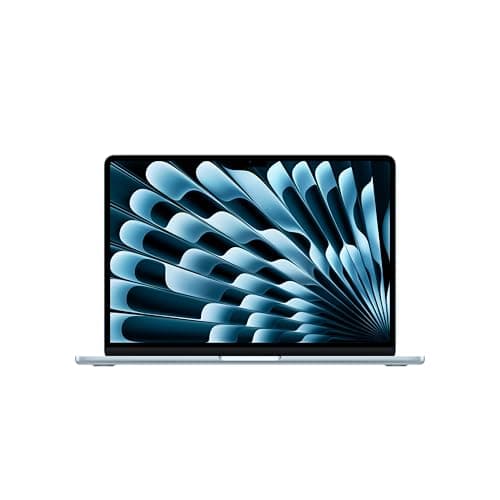
The first thing you notice when you pick up the MacBook Neo is just how solid it feels. In an era where budget laptops are synonymous with creaky plastic chassis, hollow trackpads, and flex-prone keyboards, the Neo is a revelation. Apple has given it a full aluminum unibody construction that feels nearly identical to the MacBook Air and MacBook Pro when you hold it. Close your eyes, and you would genuinely struggle to tell the Neo apart from its more expensive siblings based on build quality alone.
The Neo measures just 0.5 inches thick and weighs a featherlight 2.7 pounds, making it one of the most portable 13-inch laptops on the market. It is slightly smaller than the MacBook Air M5 — about 0.26 inches narrower and 0.34 inches shallower — which makes it even easier to slip into a backpack or messenger bag. The wedge-shaped design has been replaced with a uniform thickness that gives the Neo a clean, modern profile.
Apple has introduced four fun colors for the Neo: Silver, Indigo, Blush, and Citrus. Each color extends beyond the chassis — the rubber feet, the keyboard, and even the included wallpaper are all color-matched. This attention to detail is something you simply do not find in the $500-$600 Windows laptop segment. The Citrus model, in particular, is a stunner with its warm yellow-orange hue that catches light beautifully, while the Indigo variant offers a deep, sophisticated blue that looks far more expensive than it is.
The single criticism on the design front is the lack of a backlit keyboard. This is a genuinely baffling omission on Apple's part, especially since the MacBook Air has had a backlit keyboard for years. It is manageable if you work in well-lit environments or type by touch, but if you frequently find yourself typing in dimly lit rooms — coffee shops, libraries, late-night study sessions — you will miss that gentle glow. The keys themselves are full-size and comfortable, with the same scissor-switch Magic Keyboard mechanism that has been a highlight of Apple's laptops since 2020, but without backlighting, they are simply harder to see in low light. This is the compromise that will frustrate the most people day-to-day.
Display: Bright, Sharp, and Surprisingly Good
The 13-inch Liquid Retina display on the MacBook Neo is one of its strongest features, especially at this price point. With a resolution of 2408 by 1506 pixels at 219 pixels per inch, it delivers sharp text and detailed images that put most budget Windows laptops to shame. The display hits approximately 480 to 500 nits of brightness in our testing, which is genuinely impressive for a laptop in this price range. It is bright enough to use comfortably near a window or even outdoors in shaded areas.
Color coverage is rated at 78.6 percent of DCI-P3, which means it covers a solid chunk of the wide color gamut but falls short of the full P3 coverage found on the MacBook Air and Pro. For everyday tasks — web browsing, document editing, streaming video, photo viewing — the difference is negligible. Only creative professionals working with color-critical content will notice the gap, and those users should probably be looking at the MacBook Pro anyway.
One notable omission is True Tone technology, which adjusts the display's white balance to match ambient lighting. This is a feature Apple has included on virtually every Mac and iOS device for years, so its absence here raises eyebrows. The lack of a notch is a welcome change — the Neo uses uniform bezels all around rather than the controversial display cutout found on the Air and Pro models. Many users will prefer this cleaner, more symmetrical look that does not intrude on the display area.
For media consumption, the display is excellent. Streaming Netflix or YouTube at 1080p or 1440p looks crisp and vibrant, with good contrast and wide viewing angles. The 16:10 aspect ratio provides a bit more vertical screen real estate than the more common 16:9 panels found on Windows laptops, which is genuinely useful for reading documents and browsing the web. Text rendering is sharp and clear, making long reading sessions comfortable.
Performance: The A18 Pro Chip Surprises
The MacBook Neo runs on Apple's A18 Pro chip — the same processor that powered the iPhone 17 Pro lineup. This is a fascinating choice because it marks the first time Apple has used an iPhone-class chip in a Mac rather than a dedicated M-series processor. The A18 Pro features a 6-core CPU with two high-performance cores and four efficiency cores, paired with a 5-core GPU and a 16-core Neural Engine.
In Geekbench 6 testing, the Neo achieves single-core scores around 3,535 and multi-core scores around 8,920. The single-core performance is genuinely impressive — it is competitive with the M4 chip and actually beats the M3 Ultra in single-threaded workloads. The multi-core score tells a different story, as the ceiling is lower under sustained heavy loads. But for the vast majority of everyday tasks, you simply will not notice the difference from more expensive Macs.
Daily use is where the Neo shines. Opening applications is snappy, web browsing with multiple tabs is smooth, and streaming video is flawless. Even multitasking with a dozen Chrome tabs, Slack, Spotify, and a document editor running simultaneously is handled with no perceptible lag. The laptop handles Zoom calls, Google Meet, and Microsoft Teams without breaking a sweat. The fanless design means the Neo is completely silent at all times — there is no fan noise, no whirring, no sudden spin-up during a quiet video call.
Where the Neo begins to show its limitations is under sustained heavy workloads. Video editing in DaVinci Resolve or 4K video transcoding takes noticeably longer than on an M5 MacBook Air — about 9 minutes and 57 seconds for a 4K-to-1080p transcode in Handbrake, compared to 5 minutes and 8 seconds on the Air M5. Light photo editing in Photoshop or Affinity Photo is perfectly usable, but heavy batch processing of hundreds of RAW images will push the machine to its limits.
Gaming is surprisingly viable on the Neo. Apple's Game Porting Toolkit has opened up a growing library of titles, and the A18 Pro's 5-core GPU handles casual games with ease. Oceanhorn 3 runs smoothly at 1080p, and even more demanding titles like Resident Evil Village and Death Stranding are playable at lower settings and resolutions. You are not going to replace a dedicated gaming PC with the Neo, but for light and casual gaming during downtime, it is more than capable.
Apple Intelligence features are supported and work well, though they are slower than on M4 or M5 Macs. Generating images with Image Playground takes about 9 seconds compared to 5.5 seconds on an M4 MacBook Pro. Writing tools, notification summaries, and photo cleanup are responsive enough for practical use. The 16-core Neural Engine ensures that on-device AI processing, while not the fastest in Apple's lineup, is perfectly functional for everyday AI features.
RAM and Storage: The 8GB Question
The MacBook Neo comes with 8GB of unified memory and either 256GB or 512GB of SSD storage. The RAM cannot be upgraded after purchase — it is soldered to the motherboard — so what you buy is what you get for the life of the machine. This is the most controversial aspect of the Neo, and it deserves serious consideration before you buy.
Eight gigabytes of RAM in 2026 is tight. Apple's unified memory architecture is more efficient than traditional RAM setups, and macOS handles memory management better than Windows does with equivalent hardware. Still, 8GB imposes real limitations. The Neo aggressively uses swap memory — writing data to the SSD when RAM fills up — which is both slower and contributes to long-term SSD wear. Think of RAM as your desk space and swap as a filing cabinet: as long as you only need a few papers at a time, you are fine. But the more you spread out, the more you are constantly getting up to fetch things from the cabinet.
In practice, this means the Neo is best treated as a one-to-five-apps-at-a-time machine. Opening twenty to thirty browser tabs while running Slack, Spotify, and a document editor is fine. Adding video editing software, a virtual machine, or large data analysis software on top of that will cause the system to slow down noticeably. Over a three-to-four-year lifespan, this memory pressure will become more pronounced as applications continue to grow more resource-hungry. This is the single biggest argument against buying the Neo if you plan to keep it for five or more years.
The 256GB base storage is also tight for anyone who works with large files, downloads media, or installs many applications. After macOS and a few essential applications, you will have roughly 150GB of usable space remaining. You will need to rely on cloud storage for most of your files if you stick with the base configuration, or invest in an external SSD. The upgrade to 512GB costs an additional $100 but also adds Touch ID, which makes it a much more compelling option. If your budget allows, the $699 configuration with 512GB storage and Touch ID is the sweet spot that addresses the two biggest concerns with the base model.
Battery Life: Solid but Not Class-Leading
Battery life on the MacBook Neo is good but not exceptional by Apple's own high standards. Apple rates the Neo at up to 16 hours for video playback and up to 11 hours for wireless web browsing. In real-world testing, the Neo lasted 13 hours and 28 minutes during continuous web surfing — a strong result that beats every Windows laptop in its price range by a wide margin.
For context, the MacBook Air M5 lasts about 15 hours and 28 minutes in the same test, and the MacBook Pro 14-inch with M5 manages around 16 hours. The Neo falls roughly two hours short of the Air, but it also costs $500 less. In practical terms, the Neo will easily get you through a full day of work or classes without needing a charge. In our testing, a typical day of web browsing, document editing, messaging, and video calls consumed about 26 percent of the battery over two hours of heavy use.
The charging situation is one area where Apple has made significant compromises. The Neo ships with a 20W USB-C power adapter — the same one that comes with an iPad. This is much slower than the 30W or 35W adapters included with the MacBook Air. A 30-minute charge gets you only about 15 percent battery, compared to roughly 50 percent on the Air and Pro. Overnight charging is fine, but if you need a quick top-up between meetings or classes, the Neo will leave you waiting.
The 20W charger is also insufficient for charging while using the laptop under load. If you are editing video or running benchmarks while plugged in, the battery may actually continue to drain slowly, albeit at a much lower rate than when unplugged. For typical light use, this is not a problem, but it is worth noting if you frequently work with power-hungry applications. You can use a higher-wattage USB-C charger — the Neo will happily accept up to 45W — which solves the slow charging issue with a small additional investment.
Keyboard, Trackpad, and Audio
The Magic Keyboard on the Neo is the same comfortable scissor-switch design found on Apple's premium laptops, with one exception — it is not backlit. As mentioned earlier, this is a genuine disappointment that cannot be overstated. The key travel is satisfying at 1mm of travel, the key spacing is generous, and the scissor mechanism provides a stable typing experience with a crisp, quiet bottom-out. I achieved 74 words per minute on typing tests with excellent accuracy, matching my speed on a MacBook Pro.
The trackpad is mechanical rather than the haptic Force Touch trackpad found on the Air and Pro. This means it physically clicks down rather than simulating a click with haptic feedback. The difference is subtle — the mechanical trackpad feels slightly different under the finger, but it is smooth, responsive, and tracks accurately. The click is consistent across the entire surface, unlike the uneven mechanical trackpads found on many budget Windows laptops. Enabling Tap to Click in System Settings makes the mechanical nature a non-issue for most tasks.
Audio is a pleasant surprise. The Neo features side-mounted stereo speakers that, while physically small, deliver clear vocals and surprising depth. They support Dolby Atmos spatial audio, which adds a sense of width and immersion to music and movies. Bass is naturally lacking due to the small drivers, but midrange clarity and overall volume are impressive for such a thin laptop. These are easily the best-sounding speakers in the sub-$600 laptop category, and they handle everything from podcasts to movie soundtracks with confidence.
Ports and Connectivity
Port selection on the MacBook Neo is minimalist to the point of being frustrating. You get two USB-C ports and a 3.5mm headphone jack. That is everything. One of the USB-C ports is USB 3.0 at 10 Gbps speeds, and the other is limited to USB 2.0 speeds — 480 Mbps. Both support charging, but the USB 2.0 port is painfully slow for data transfer. There is no HDMI, no SD card slot, no Thunderbolt support, and no MagSafe charging.
The lack of Thunderbolt is the most significant omission. It means you cannot connect Thunderbolt docks, high-speed external SSDs, or multi-monitor setups through a single cable. The Neo supports only one external display at up to 4K 60Hz, which is fine for most users but limiting for productivity enthusiasts who rely on multiple monitors. This is likely a limitation of the A18 Pro chip itself, which is not designed with Thunderbolt controllers the way Apple's M-series chips are.
Wireless connectivity includes Wi-Fi 6E and Bluetooth 6.0, both of which are current-generation standards. Wi-Fi 6E delivers fast, reliable wireless networking on the 6GHz band, and Bluetooth 6.0 ensures compatibility with the latest peripherals and accessories. There is no Wi-Fi 7 support, which is a feature found on the MacBook Air M5 and Pro M5, but Wi-Fi 6E is still more than adequate for the vast majority of users and networks available in 2026.
For most people, the limited ports will require a USB-C hub or dongle. This is an additional expense and an extra thing to carry, but it is hardly unique to the Neo — many ultraportable laptops have made the same trade-off. A good-quality USB-C hub with HDMI, USB-A, and SD card support can be had for under $30 and effectively solves the port problem.
The Ecosystem Factor
One of the strongest arguments for the MacBook Neo is its access to the Apple ecosystem. For $599, you get the full macOS experience — no watered-down version, no missing features, no "budget edition" limitations. You get iCloud integration, AirDrop, Handoff, Universal Clipboard, iMessage, FaceTime, and all the other ecosystem features that make Apple products work so well together.
For students and first-time Mac buyers, this is a compelling value proposition. The Neo pairs seamlessly with an iPhone, allowing you to answer calls and texts from your laptop, copy text on one device and paste on another, and share files instantly via AirDrop. If you already own an iPhone, the Neo effectively becomes the most affordable way to get the complete Apple experience.
The comparison with budget Windows laptops is stark. A $600 Windows laptop typically comes with a plastic chassis, a dim 1080p display, 8GB of RAM, a 256GB SSD, and a processor that is already a generation or two old. It also comes preloaded with bloatware — 30-day antivirus trials, manufacturer utilities, sponsored apps, and other junk that clutters the start menu and slows down performance. The Neo boots into a clean macOS installation with zero bloatware. The total cost of ownership is effectively lower because you do not need to spend time cleaning up preinstalled garbage or fighting with driver issues.
MacBook Neo vs MacBook Air M5
The $500 price gap between the Neo ($599) and the MacBook Air M5 ($1,099) buys you meaningful upgrades. The Air has a faster M5 chip with double the GPU cores, 16GB of RAM (double the Neo's 8GB), a slightly larger 13.6-inch display with higher brightness and full P3 color, a backlit keyboard, a 12MP Center Stage webcam, a four-speaker sound system, Touch ID, Thunderbolt support, MagSafe charging, and Wi-Fi 7.
Whether those upgrades are worth $500 depends entirely on your needs. For a student who needs a laptop for browsing, writing papers, streaming video, and light multitasking, the Neo delivers everything they need at a price that is actually affordable without parental help or student loans. For a creative professional who edits video daily, runs virtual machines, or works with large datasets, the Air M5 is a better long-term investment.
The Neo's biggest achievement is that it makes this a legitimate comparison. No previous $600 laptop could realistically be weighed against a $1,100 MacBook. The fact that the Neo holds its own in this conversation is a testament to how well Apple has executed on its vision of an affordable Mac.
The Verdict
The MacBook Neo is not just the best budget laptop of 2026 — it is one of the best laptops, period. Apple has managed to distill the MacBook experience down to its essential elements and deliver them at a price that opens the macOS ecosystem to an entirely new audience. The aluminum build, bright Retina display, solid A18 Pro performance, excellent battery life, and clean macOS experience combine to create a laptop that outclasses everything in its price range.
Are there compromises? Absolutely. The lack of a backlit keyboard is frustrating and hard to excuse. The 8GB RAM ceiling is a real concern for longevity and power users. The slow 20W charger and limited port selection require accommodation that other laptops at this price handle better. The absence of Thunderbolt and the presence of a USB 2.0 port are genuine inconveniences.
But here is the thing: every single one of these compromises is understandable and forgivable at $599. No laptop at this price point offers anything close to the Neo's combination of build quality, display quality, performance, battery life, and software experience. The HP OmniBook 3, the Microsoft Surface Laptop Go 3, the Dell Inspiron 14 — none of them come close. However, if you need a traditional business laptop with more ports, the Lenovo ThinkPad X1 Carbon Gen 13 remains a solid choice in a different category to the Neo's overall package.
The MacBook Neo is a milestone product, arguably Apple's most important release since the original MacBook Air. It is the laptop that finally makes "budget" and "premium" feel compatible rather than contradictory. If you are a student, a light user, a first-time Mac buyer, or anyone looking for an affordable laptop that does not feel like a compromise, the MacBook Neo is the easiest recommendation I can make in 2026. At $599, it simply has no equal.
Pros
- Premium aluminum unibody construction at an unheard-of price
- Bright 500-nit Liquid Retina display with sharp 2408x1506 resolution
- Solid A18 Pro performance for daily tasks
- Excellent battery life — over 13 hours in real-world testing
- Completely silent fanless design
- Full macOS experience with zero bloatware
- Fun color-matched design options
Cons
- Keyboard is not backlit
- Only 8GB of non-upgradeable RAM
- Slow 20W charger included
- No Thunderbolt support, limited to USB 2.0 on one port
- No Touch ID on base model
- Mechanical trackpad instead of haptic Force Touch
Final Verdict
The Apple MacBook Neo delivers premium aluminum build, a bright Retina display, solid A18 Pro performance, and excellent battery life for just $599 — making it the best value laptop of 2026 and Apple's most important product in years.