Apple Watch SE 3 Review: The Best Smartwatch Value in 2026
The Apple Watch SE 3 delivers the same S10 chip as the Series 11, an always-on display, sleep apnea detection, and wrist temperature sensing at just $249 — making it the best smartwatch value on the market in 2026.
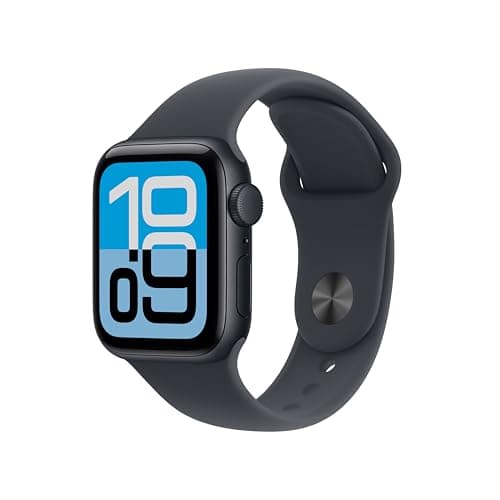
The Apple Watch SE 3 is proof that you don't need to spend $400 or more to get a genuinely excellent smartwatch experience. Starting at $249, the third-generation SE inherits the same S10 chip found in the Series 11 and Ultra 3, adds an always-on display for the first time, and packs in gesture controls, sleep apnea detection, and wrist temperature sensing — features that were previously reserved for Apple's flagship models. After spending two weeks with the 44mm GPS model, I can confidently say this is the best smartwatch value on the market in 2026.
Design and Display
At first glance, the Apple Watch SE 3 looks nearly identical to its predecessor. The familiar rounded rectangular shape, the digital crown, and the side button are all exactly where you'd expect them. But the big story here is what you can see before you even raise your wrist: the always-on Retina display. For the first time on an SE model, the watch face stays visible at a dimmed brightness at all times, which means you can glance at the time or your complications without making a theatrical arm movement. This might sound like a minor quality-of-life improvement, but after using it for a week, going back to a non-always-on display feels like a downgrade.
The display is bright enough at 1,000 nits to be readable in direct sunlight, though it's not quite as dazzling as the 2,000-nit panel on the Series 11. In practice, I never found the SE 3's screen hard to read outdoors, even during midday runs along a sunny waterfront or while checking notifications at an outdoor cafe. The bezels around the display are slightly thicker than on the Series 11, which is the most obvious visual giveaway that this is the more affordable model. But honestly, once you're actually using the watch — checking notifications, starting a workout, or glancing at your activity rings — those bezels fade into the background and become a non-issue.
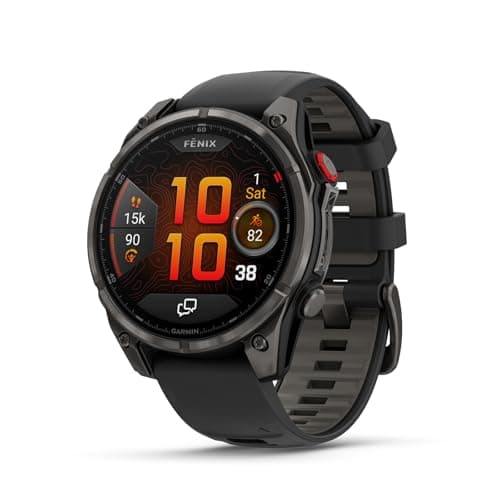
The 40mm and 44mm case sizes remain unchanged from the SE 2, and both are comfortable for all-day wear. The aluminum case comes in Midnight and Starlight finishes, and the nylon-composite back keeps the weight down to just 26.3 grams for the 40mm version. I've been wearing the 44mm model for sleep tracking without any discomfort, which is something I couldn't say about bulkier fitness trackers like the Garmin Fenix 8 or the Apple Watch Ultra 3. The watch is light enough that I sometimes forget I'm wearing it, which is exactly what you want from a daily wearable.
The choice between 40mm and 44mm comes down to wrist size and personal preference. The 40mm fits wrists as small as 130mm and looks elegant and unobtrusive, while the 44mm offers a larger display area that makes reading text messages and interacting with apps noticeably easier. I'd recommend the 44mm if your wrist can handle it, but both sizes offer the same features and performance.
Performance and the S10 Chip
This is where the SE 3 punches well above its weight class. The S10 system-in-package with its 64-bit dual-core processor and 4-core Neural Engine is the same chip powering the $400 Series 11 and the $800 Ultra 3. What that means in practice is that the SE 3 feels every bit as snappy as Apple's flagship watches. App launches are instant, Siri responses are near-instantaneous thanks to on-device processing, and the UI navigation is butter-smooth with no lag or stuttering.
The on-device Siri processing is a particularly welcome upgrade that dramatically improves the daily experience. You can now ask Siri to start a workout, set a timer, send a message, or check the weather without waiting for a round trip to the cloud. This makes Siri actually usable for quick tasks — I found myself using voice commands far more often than I did on my previous Apple Watch where Siri felt sluggish and unreliable. The watch also supports the new wrist flick gesture: flick your wrist downward to dismiss notifications, go back from the Smart Stack, or stop a timer. It sounds minor, but once you get used to it, it becomes one of those features you miss immediately when you switch to a watch that doesn't have it.
Storage has also doubled from 32GB to 64GB, which means you can store a meaningful music library for phone-free runs. I loaded about 15GB of my favorite playlists and still had plenty of room for apps and watch faces. This is a practical upgrade for anyone who likes to run or work out without their phone — you can store thousands of songs locally and stream them to Bluetooth headphones directly from the watch.
Double Tap, introduced on the Series 9 and now available on the SE 3, remains one of the most underrated smartwatch interactions. Tap your index finger and thumb together twice to answer calls, snooze alarms, stop timers, play or pause music, and take photos with the iPhone camera remote. It works reliably and feels natural once you get the hang of it. During my testing, I used Double Tap most often for stopping cooking timers and answering quick calls while my hands were full.
Health and Fitness Tracking
The SE 3 represents a significant leap in health tracking capability compared to the SE 2. The headline addition is temperature sensing, which enables retrospective ovulation estimates and powers the new Vitals app. The Vitals app gives you a consolidated view of your overnight health metrics — heart rate, respiratory rate, wrist temperature, and sleep duration — and flags any anomalies. During my testing, it correctly identified a night where I'd had too much caffeine before bed, showing elevated heart rate and restless sleep patterns. For women tracking their reproductive health, the wrist temperature sensor provides retrospective ovulation estimates that can be valuable for family planning.
Sleep apnea detection is another new addition that was previously exclusive to the Series lineup. The watch uses the accelerometer to monitor for breathing disturbances during sleep and sends a notification if it detects consistent patterns that might indicate moderate to severe sleep apnea. This is a genuinely useful health screening tool that could alert someone to a condition they didn't know they had. It's important to note that this is not a medical diagnostic device, but having an early warning system that prompts you to see a doctor about potential sleep apnea is valuable.
The second-generation optical heart sensor delivers accurate heart rate readings during both resting and active periods. I compared the SE 3 against a Polar H10 chest strap during several runs and found the wrist-based readings to be within 2-3 beats per minute of the chest strap, which is excellent for an optical sensor. The watch also tracks high and low heart rate notifications and irregular rhythm notifications (a-fib detection), though it lacks the ECG capability of the Series 11. For most people, the optical heart sensor provides enough data for meaningful health insights without needing a dedicated ECG reading that requires you to sit still for 30 seconds.
Fall detection and car crash detection are both present and work as well as they do on Apple's pricier watches. The SE 3 automatically detects a hard fall or severe car crash, contacts emergency services, and notifies your emergency contacts. Fall detection remains one of the most underrated safety features in any wearable, and it's great to see it on the most affordable Apple Watch. The Check In feature is also available: you can start a Check In from the watch, and if you don't arrive at your destination within a set time, your chosen contact is automatically notified with your location.
Activity and Workout Tracking
The fitness tracking experience on the SE 3 is comprehensive and polished. The three-ring system (Move, Exercise, Stand) remains the most intuitive activity tracking interface I've used on any smartwatch, and it's surprisingly effective at motivating you to stay active throughout the day. The stand reminders, in particular, have genuinely improved my daily habits — I find myself taking the stairs more often and walking during phone calls to close those rings.
The SE 3 adds Workout Buddy, powered by Apple Intelligence from your nearby iPhone, which provides real-time coaching cues and form tips during workouts. When I went for a run, Workout Buddy would chime in with pace suggestions and form reminders like "Try landing mid-foot" or "Shorten your stride to maintain efficiency." It's not as comprehensive as a dedicated running coach like Garmin's daily suggested workouts, but it's a welcome addition that makes the SE 3 feel more like a fitness companion than a passive tracker.
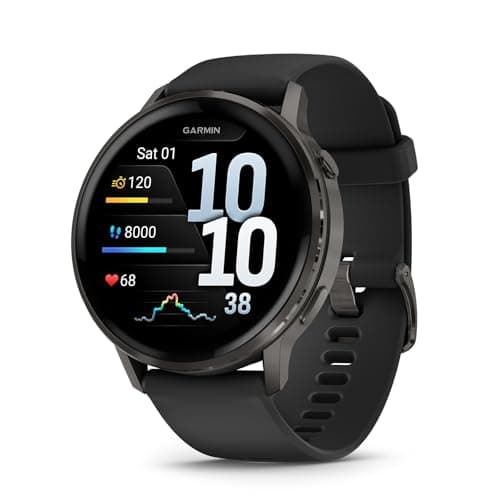
I tested the SE 3 across a variety of activities: outdoor runs, indoor cycling, strength training, open-water swimming, and even a yoga session. GPS accuracy was solid on outdoor runs, tracking my route accurately even on tree-lined paths where some watches struggle. The 50-meter water resistance rating means you can confidently take it swimming, and the swim tracking automatically detects stroke type, lap counts, and SWOLF (efficiency) scores. Compared to the Garmin Vivoactive 6, the SE 3's swim tracking is slightly less detailed — it won't give you a critical swim pace or distance per stroke — but for casual swimmers and triathlon training, it's more than adequate.
One area where the SE 3 notably falls short of the Series 11 is workout recovery metrics. You don't get training load analysis, detailed recovery recommendations, or the Vitals app's deeper integration with workout history. If you're a serious endurance athlete who needs daily suggested workouts and recovery time recommendations, you'd be better served by the Series 11 or a Garmin watch. But for the vast majority of users who just want to track their workouts, close their rings, and see trends over time, the SE 3 delivers everything you need.
The Workout app supports a wide range of activity types: running, walking, cycling, swimming, yoga, hiking, pilates, rowing, stair stepper, and more. You can also create custom workouts with specific intervals, distances, and goals — I set up a running interval workout with 400-meter repeats and 2-minute rest periods, and the watch guided me through each interval with haptic feedback and voice prompts.
Battery Life and Charging
Apple rates the SE 3 for 18 hours of normal use, which is in line with the rest of the Apple Watch lineup including the Series 11. In my testing, the SE 3 consistently lasted from 7 AM to midnight with about 20-25% battery remaining, including a 45-minute GPS workout, sleep tracking throughout the night, and normal notification usage during the day. The always-on display does drain the battery faster than the SE 2's lift-to-wake approach, but it's still manageable for a full day's use without anxiety.
The big upgrade here is fast charging. The SE 3 supports the same fast charging found on the Series 11, reaching 80% in about 45 minutes and delivering 8 hours of battery with just a 15-minute charge. This completely changes the charging habit that Apple Watch users have lived with for years. Instead of charging overnight while you sleep (and missing sleep tracking), you can charge the watch while you're in the shower or getting ready in the morning. By the time you're dressed and ready to leave, the watch has enough charge to get through the entire day and night.
Low Power Mode stretches battery life to up to 32 hours, which is useful for longer trips when you might not have easy access to a charger. In Low Power Mode, the watch still tracks activity and heart rate but disables the always-on display, background heart rate measurements, and some background app refresh features. I tested Low Power Mode during a weekend trip and got through two full days and a night of sleep tracking on a single charge.
Battery life is one area where the SE 3 can't compete with dedicated fitness trackers like the Fitbit Charge 6 (7 days) or Garmin Vivoactive 6 (11 days). If you don't want to charge your wearable more than once a week, the Apple Watch SE 3 isn't for you. But for most people, the daily charging routine — especially with fast charging — becomes a non-issue within a few days of use.
WatchOS and the App Ecosystem
The SE 3 ships with watchOS, which remains the gold standard for smartwatch operating systems. There's a reason every competing wearable platform is compared to it — the combination of smooth animations, intuitive navigation, deep iPhone integration, and a thriving third-party app ecosystem is unmatched in the wearable space.
The new watchOS 26 brings a redesigned Smart Stack that uses on-device intelligence to surface relevant widgets based on time of day and context. In the morning, the Smart Stack shows the weather, your calendar schedule, and your sleep trends. During a workout, it surfaces your Activity rings, music controls, and workout metrics. In the evening, it shows your wind-down reminders and tomorrow's calendar. The Smart Stack has become my primary interaction point with the watch — I rarely dive into the app grid anymore because the most relevant information surfaces automatically.
The App Store on the watch continues to grow, with native apps for everything from Uber and Spotify to training apps like Gentler Streak and WorkOutDoors. The SE 3 supports all of these, and the 64GB of storage means you'll never run out of space for apps, music, and podcasts. I installed about 15 apps and synced 15GB of music and still had over 30GB free.
One of my favorite features is the ability to use the Apple Watch SE 3 with Apple Watch For Your Kids. If you have a child or an older relative who doesn't own an iPhone, you can set up the SE 3 from your own phone, giving them a connected wearable with calling, messaging, and safety features without needing a separate iPhone. This makes the SE 3 an excellent option for parents who want to stay connected with their kids without giving them a smartphone, or for elderly relatives who need fall detection and emergency SOS but aren't comfortable with a smartphone.
The Wallet and Apple Pay integration on the watch is seamless. You can add credit cards, transit cards, boarding passes, movie tickets, and even car keys to the watch, and tapping to pay works flawlessly at any contactless terminal. I used Apple Pay from the watch at least a dozen times during my testing period and never had a failed transaction.
The Case for the SE 3 vs. Series 11
The SE 3 is $150 cheaper than the Series 11 ($249 vs $399 for the 40mm GPS model). Here's what you give up compared to the Apple Watch Series 11: ECG, blood oxygen monitoring, hypertension notifications, a 2,000-nit display (vs 1,000 nits), and a few niche health metrics like training load analysis. For the vast majority of people, none of these omissions are dealbreakers. ECG readings require a doctor's interpretation and are only useful if you have a known heart condition. Blood oxygen monitoring on consumer wearables has questionable medical utility for healthy individuals — the FDA has even questioned the accuracy of pulse oximetry on smartwatches. And the 1,000-nit display is still perfectly readable in direct sunlight.
What you keep is the same core performance, the same S10 chip, the same gesture controls, the same fast charging, the same sleep apnea detection, the same fall and crash detection, and essentially the same day-to-day experience. The SE 3 represents the best value proposition of any Apple Watch ever released, and it's the model I'd recommend to anyone who asks which Apple Watch to buy.
Compared to the Competition
The Apple Watch SE 3 faces stiff competition in the sub-$250 smartwatch market. Here's how it stacks up against the main contenders:
The Samsung Galaxy Watch FE ($199) offers a rotating touch bezel, Wear OS with Google services, and works with Android phones. Its fitness tracking is less refined than Apple's — the heart rate sensor is less accurate during high-intensity interval training, and sleep tracking lacks the sophistication of Apple's sleep staging. The Galaxy Watch FE also only works well with Samsung phones; you lose some features like blood pressure monitoring and ECG if you pair it with a non-Samsung Android phone.
The Fitbit Versa 5 ($229) has excellent battery life at 6+ days and detailed sleep tracking with a daily readiness score. The Fitbit app's community features and food logging are best-in-class. But its app selection is extremely limited compared to watchOS, the notification handling is basic (you can only glance at notifications, not interact with them), and the Google Assistant integration feels half-baked. The Versa 5 also lacks any kind of cellular option, so you can't leave your phone behind.
The Garmin Vivoactive 6 ($299) is a better choice for serious runners and triathletes. It offers multi-band GPS for accurate tracking even in challenging environments, training metrics like training load and recovery time, and an impressive 11-day battery life. But its smartwatch features are basic — notifications are read-only, you can't respond to messages, there's no music streaming from the watch (you have to sideload MP3s), and the payment system (Garmin Pay) has limited bank support.
For iPhone users, the choice is clear. No other smartwatch integrates as deeply with the Apple ecosystem as the Apple Watch SE 3. It unlocks your Mac, unlocks your iPhone, serves as a viewfinder for your iPhone camera, supports Apple Pay with any bank that supports Apple Pay, provides the most polished notification experience of any wearable (you can reply to messages, answer calls, and even take calls on the watch speaker), and integrates with all your iPhone apps out of the box.
Who Should Buy the Apple Watch SE 3
The Apple Watch SE 3 is the right choice for a wide range of buyers. It's perfect for first-time smartwatch buyers who want the Apple Watch experience without the premium price tag. It's ideal for fitness enthusiasts who track workouts and want health monitoring but don't need advanced training metrics. It's a great upgrade for anyone coming from an older Apple Watch SE, Series 4, Series 5, or Series 6 — the always-on display alone is worth the upgrade, and the S10 chip makes everything feel dramatically faster.
The SE 3 is also an excellent choice for parents who want to use Apple Watch For Your Kids to stay connected with their children, for seniors who need fall detection and emergency SOS features in a simple, easy-to-use package, and for anyone who wants a smartwatch for basic fitness tracking, notifications, and Apple Pay without spending flagship money.
Who Should Skip It
If you need ECG monitoring for a known heart condition, the Series 11 is the minimum recommended Apple Watch. If you're a serious athlete who relies on advanced training metrics like training load, recovery recommendations, and daily suggested workouts, the Series 11 or a Garmin watch would serve you better. If you want the absolute best display brightness for outdoor activities in extreme sunlight, the Series 11's 2,000-nit panel is noticeably brighter. And if you don't want to charge your watch daily, the Fitbit Versa 5 or Garmin Vivoactive 6 offer multi-day battery life.
Final Thoughts
The Apple Watch SE 3 is the smartwatch I'd recommend to most people without hesitation. It's not flashy, it doesn't have a titanium case or an ECG sensor, and the bezels are slightly thicker than the flagship models. But it does the things that matter — notifications, fitness tracking, health monitoring, and seamless iPhone integration — with a level of polish that competitors still haven't matched after years of trying.
The addition of the always-on display, the S10 chip, temperature sensing, sleep apnea detection, and fast charging make this a massive upgrade over the SE 2, and the $249 starting price makes it achievable for almost anyone. The SE 3 represents 90% of the Apple Watch experience for 60% of the price, and that's an equation that's hard to beat.
If you're an iPhone user looking for your first smartwatch, or if you're upgrading from an older Apple Watch, the SE 3 is the one to buy. It's everything you need and nothing you don't, and that's exactly why it's the best smartwatch for most people.
Pair your Apple Watch with a complete Apple setup — read our MacBook Neo review for the best entry-level Mac to complement your SE 3.
Get the Apple Watch SE 3 on Amazon: https://www.amazon.com/dp/B0FQFW7M9H?tag=newgearhub-20
Pros
- Same S10 chip as Series 11 at a fraction of the price
- Always-on display finally comes to the SE line
- Fast charging delivers 8 hours of battery in 15 minutes
- Sleep apnea detection and temperature sensing at $249
- Excellent iPhone integration and app ecosystem
Cons
- Thicker bezels than Series 11 give away the budget origins
- No ECG, blood oxygen, or hypertension monitoring
- Battery life still requires daily charging
- 18-hour battery life limits sleep tracking without morning top-up
Final Verdict
The Apple Watch SE 3 delivers the same S10 chip as the Series 11, an always-on display, sleep apnea detection, and wrist temperature sensing at just $249 — making it the best smartwatch value on the market in 2026.