Apple Watch Series 11 Review: The Best Smartwatch for iPhone Users Gets Even Better
The Apple Watch Series 11 delivers meaningful battery life improvements, hypertension notifications, a refined design, and best-in-class fitness tracking — making it the most complete smartwatch for iPhone users in 2026.
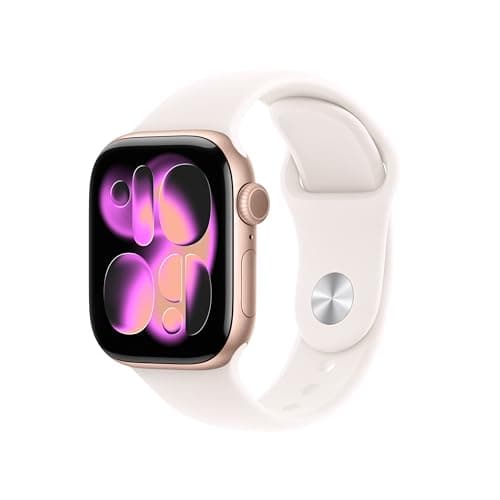
The Apple Watch Series 11 represents a fascinating inflection point in the evolution of Apple's wearable. On the surface, it looks like a modest update from last year's Series 10 — the same slim profile, the same gorgeous always-on display, the same S10 chip. But spend real time with it, and you realize the Series 11 fixes the one thing that has held the Apple Watch back for years: battery anxiety. It also introduces genuinely meaningful health features that transform it from a fitness tracker into a proactive health monitor. For anyone sitting on an older Apple Watch or considering their first smartwatch purchase, the Series 11 makes a compelling case that it is the best all-around wearable money can buy in 2026.
Design and Display
The Apple Watch Series 11 inherits the slim profile that Apple introduced with the Series 10. At just 9.7 millimeters thick, it is the thinnest smartwatch Apple has ever produced, and that thinness makes a real difference in daily wear. It slides under shirt cuffs effortlessly, feels lighter on the wrist during sleep tracking, and generally disappears in a way that bulkier watches cannot match. The case options come in two sizes — 42mm and 46mm — and seven finishes across aluminum and titanium. The aluminum models are available in Rose Gold, Silver, Jet Black, and Space Gray, while the titanium lineup includes Natural, Gold, and Slate.
The display is the same always-on Retina LTPO3 OLED found in the Series 10, but it still deserves praise. Peak brightness reaches 2,000 nits, which makes it readable in direct sunlight, and the minimum brightness drops to just 1 nit for comfortable viewing in pitch-black rooms. The wide-angle OLED ensures that the screen remains legible even when viewed from an angle, which matters when you glance at your wrist without fully raising it. The pixel density is 326 PPI, matching the iPhone's Retina standard, and text looks sharp.
Where the Series 11 genuinely improves over its predecessor is durability. Apple claims the Ion-X glass on the aluminum models is twice as scratch resistant as the Series 10. After several weeks of daily wear, including workouts, hikes, and general life, the display remains pristine. The sapphire crystal on the titanium models is even tougher. Water resistance is rated at 50 meters with IP6X dust resistance, which means the watch survives swimming, showering, and accidental dunks without concern.
Battery Life: The Fix Apple Needed
Battery life has been the Apple Watch's Achilles' heel since the original model launched in 2015. The Series 11 does not magically deliver multi-week battery life like some fitness trackers, but it extends the runtime to a consistent 24 hours with normal use, including an overnight sleep tracking session. In practice, that means you can wear the watch all day, track your sleep overnight, and still have enough charge in the morning to get through the morning routine before throwing it on the charger.
The improvement comes from a combination of the efficient S10 SiP, the LTPO3 display that can drop to an incredibly low refresh rate, and careful power management in watchOS 26. The result is that the Series 11 reliably makes it through a full day and night of use. Charging is fast enough to make the math work. A 15-minute charge provides up to 8 hours of normal use, and a 5-minute charge delivers enough for a full night of sleep tracking. In Low Power Mode, the watch stretches to 38 hours, which covers two full days and nights if you are willing to sacrifice the always-on display and some background measurements.
For comparison, the Apple Watch Ultra 3 still leads with 36 hours of standard use and 72 hours in Low Power Mode. But the Series 11's 24-hour runtime, combined with its fast charging, makes it practical for continuous wear in a way that earlier Series models never quite managed. The battery is no longer a reason to skip the Apple Watch.
Health Monitoring: Hypertension and Sleep Score
The headline health additions on the Series 11 are hypertension notifications and sleep score, and both represent meaningful steps forward for the platform.
Hypertension notifications are the standout feature. The optical sensor analyzes your blood vessel response to heartbeats over rolling 30-day periods to identify patterns consistent with chronic high blood pressure. Apple developed this feature using machine learning methods studied across over 100,000 participants, and the feature was validated in a clinical study. If the watch detects a concerning pattern, it notifies you and recommends measuring your blood pressure with a traditional cuff and sharing the readings with a healthcare provider.
This is a big deal. Hypertension affects approximately 1.3 billion adults globally, and it is frequently undiagnosed because it has no obvious symptoms. Having a device on your wrist that can spot potential signs of chronic high blood pressure could genuinely improve health outcomes for people who would otherwise never know they had a problem. The feature is not a diagnostic tool — Apple is careful to position it as an indicator that warrants follow-up — but it is a proactive health screen that no other consumer wearable offers at this level of sophistication.
The Sleep Score feature is a more direct quality-of-life improvement. The Apple Watch has tracked sleep for years, but the data was always presented as raw numbers and graphs that required interpretation. Sleep Score distills that data into a single daily score that considers duration, bedtime consistency, interruptions, and sleep stages. A score above 80 is considered good, and the watch provides contextual tips for improvement. It makes sleep data actionable rather than merely interesting.
The Vitals app aggregates overnight metrics — heart rate, respiratory rate, wrist temperature, and sleep duration — into a single dashboard. If multiple metrics deviate from your personal baseline, the watch notifies you. This is useful for spotting early signs of illness, overtraining, or stress before you consciously notice symptoms.
Fitness Tracking and Workout Features
The fitness tracking on the Apple Watch Series 11 builds on the already excellent foundation of watchOS 26 with several noteworthy additions. Workout Buddy is a particularly clever feature. Using Apple Intelligence running on your paired iPhone, Workout Buddy provides personalized audible motivation during workouts. It analyzes your past performance, the specific workout type, and your stated goals to generate encouragement that feels tailored rather than generic. It uses voice data from Fitness+ trainers to shape its tone and style, and the result is surprisingly effective at pushing you through tough intervals.
The redesigned Workout app introduces a cleaner interface with four corner buttons that provide quick access to Pacer, Race Route, and Custom Workouts. The Training Load metric gives you insight into how your workouts are impacting your body over time, helping you balance effort and recovery. This is the kind of feature that runners and cyclists will appreciate, as it replaces the guesswork of knowing whether you are training effectively or overdoing it.
For runners specifically, the Series 11 tracks advanced metrics including ground contact time, vertical oscillation, and stride length. These are measurements that used to require a dedicated running watch or a pod accessory. Having them on your wrist simplifies your gear and provides more consistent data. The Race Route feature lets you compete against your previous performances on frequently used routes, with real-time pace comparison and audio cues when you are ahead or behind.
Cyclists get power zone tracking, FTP estimation, and cadence monitoring. The watch supports Bluetooth power meter pedals and speed sensors, making it a viable cycling computer replacement for casual and serious riders alike. Swimmers get SWOLF scores, kickboard detection, and automatic set tracking. The Series 11 covers more sports disciplines than any previous Apple Watch, and the data quality is competitive with dedicated sports watches from Garmin and Polar.
Performance and Software
The S10 SiP powers the Series 11 with the same 64-bit dual-core processor and 4-core Neural Engine found in the Series 10. Performance is snappy. The UI navigates without lag, apps open quickly, and Siri responses are nearly instantaneous. The 64 GB of onboard storage provides plenty of room for music, podcasts, and apps, even if you download your entire library for phone-free workouts.
watchOS 26 introduces several quality-of-life improvements. The Flick gesture adds a new way to interact with the watch without touching the screen. A quick flick of your wrist dismisses notifications, silences calls, and advances through widgets. It works reliably and becomes second nature after a few days. The Dynamic Widgets adapt to your context, showing relevant information based on the time of day, your location, and your activity. The workout widget automatically appears during your usual gym time, for instance, and the sleep widget surfaces before bed.
The Dual-antenna system in the cellular models improves signal strength noticeably. GPS acquisition is faster, LTE calls are clearer, and streaming music without your phone is more reliable. The UWB Gen 2 chip improves precision finding for AirTags and enables hands-free unlocking of your car with supported digital keys. These are incremental improvements, but they add up to a more polished experience.
Connectivity and 5G
The Apple Watch Series 11 cellular models include 5G RedCap support, which brings faster data speeds to the watch without the power consumption of full 5G. In practice, this means streaming music, loading maps, and sending messages are noticeably faster over cellular compared to the Series 10's LTE connection. The watch also supports Wi-Fi 6 for faster local connections and Bluetooth 5.3 for improved range and stability with accessories.
The cellular feature continues to be one of the Apple Watch's strongest differentiators. Being able to leave your phone behind for a run, a hike, or a trip to the store while staying connected for calls, messages, and emergency services is genuinely liberating. The Series 11's improved 5G connectivity makes the phone-free experience more viable than ever.
Apple Watch Series 11 vs. Ultra 3 and SE 3
Choosing between the Apple Watch models in 2026 requires understanding what you gain and lose with each option. The Series 11 hits the sweet spot for most people. It offers the same health sensors as the Ultra 3 — ECG, blood oxygen, temperature sensing, hypertension notifications — in a lighter, more comfortable package that costs less than half the price. The Ultra 3 justifies its $799 price tag with 36-hour battery life, a 3,000-nit display, a 100-meter water resistance rating, an action button, and MIL-STD durability. The SE 3 starts at $249 but omits the ECG, blood oxygen, temperature sensor, and hypertension features.
For most buyers, the Series 11 at $399 (and often discounted to $329 or less on Amazon) represents the best value. You get nearly all of the Ultra 3's health capabilities in a package that is more comfortable for daily wear and sleep tracking. The Ultra 3 remains the choice for serious adventurers, divers, and anyone who needs multi-day battery life. The SE 3 is the budget option for users who primarily want notifications and basic fitness tracking.
Long-Term Ownership
Apple's track record with watchOS updates is excellent. The Series 11 will likely receive major watchOS updates for at least five years, which means it will continue gaining new features long after purchase. The S10 chip has enough headroom to handle future software demands, and the 64 GB of storage provides room for growing app complexity. The replaceable bands ecosystem means you can refresh the look without replacing the watch.
The build quality inspires confidence. The aluminum models are light but feel premium, and the titanium models offer a noticeable step up in luxury and scratch resistance. The Ion-X glass on the aluminum models holds up well against everyday wear, and the sapphire crystal on the titanium models is effectively scratch-proof. Water resistance is rated for pool and ocean swimming, and the dust resistance ensures reliable operation in sandy or dusty environments.
Battery degradation is a consideration for any wearable, but Apple's fast charging helps mitigate the impact. Even as the battery capacity decreases over years of use, the fast charging ensures that you can top up quickly enough to maintain 24-hour wear. Apple offers battery service for a fee, and the watch is designed to be serviceable.
watchOS 26: The Software Foundation
watchOS 26 is the software platform that ties the Series 11 experience together, and it is the most polished version of watchOS to date. The interface design remains focused on glanceable information, with complications that display relevant data at a glance and a home screen that balances app icons with useful widgets. The Smart Stack, activated by scrolling the Digital Crown, surfaces contextual cards throughout the day. The morning card shows the weather and your calendar, the workout card appears during your typical exercise window, and the sleep card appears before bedtime.
The new Photos face deserves special attention. It uses machine learning to select your best shots, crops them intelligently for the watch's aspect ratio, and applies a depth effect that makes the time pop out from the photo. It is the first watch face in years that genuinely makes you want to show it off.
Notification management has improved significantly. The watch intelligently groups notifications from the same app, and it learns which apps you dismiss quickly versus which ones you act on. Less important notifications can be set to deliver silently to the Notification Center without lighting up the display. This reduces the constant wrist taps that plagued earlier versions of watchOS and makes the watch feel less intrusive.
The Smart Stack also integrates third-party app widgets for the first time. Popular fitness apps like Strava and training apps like Gentler Streak can surface their most relevant information directly in the stack, which reduces the number of times you need to open dedicated apps. The watchOS widget ecosystem is still smaller than iOS, but it is growing, and the framework is solid.
Real-World Daily Use Scenarios
After wearing the Apple Watch Series 11 for an extended period, several usage patterns emerged that highlight its strengths. The morning routine starts with checking the Sleep Score and Vitals dashboard. If the score is above 80, I know I had a restful night. If it dips below 70, I pay attention to how I feel and adjust my day accordingly. The hypertension notification feature runs silently in the background, and receiving a clean bill of health every 30 days provides genuine reassurance.
Throughout the workday, the watch handles notifications with the right level of intrusion. Calendar alerts, messages, and calls come through on the wrist, while social media notifications stay on the phone. The Flick gesture for dismissing notifications becomes habitual within days, and it is faster than reaching for the phone. The walkie-talkie feature, though niche, is useful for quick coordination with family members in the house.
Workouts are where the Series 11 shines brightest. A typical gym session involves starting a strength training workout from the Workout app, which automatically detects rest periods and tracks sets. The Training Load metric accumulates data across workouts and provides a weekly view of your effort versus your baseline. After a few weeks, the watch develops a personalized understanding of your fitness level and can recommend when to push harder and when to ease off.
For outdoor runs, the GPS locks quickly and tracks routes accurately even in dense urban environments with tall buildings. The pace alerts work as expected, buzzing gently when you fall behind or exceed your target pace. The always-on display shows your metrics without requiring a wrist raise, which is useful during intervals when you need constant feedback.
Sleep tracking is where the improved battery life makes the biggest difference. The Series 10 required such precise charging timing that sleep tracking often fell by the wayside. The Series 11's 24-hour battery, combined with fast charging, makes it practical to wear overnight without planning. The Sleep Score provides a useful benchmark, and the integration with the iPhone's Health app means all your data lives in one place.
Accessories and Band Ecosystem
One of the Apple Watch's enduring strengths is its band ecosystem, and the Series 11 is compatible with every band Apple has released since the original Apple Watch. That means you have access to hundreds of first-party and third-party options spanning every material, color, and style. The Sport Band remains the default choice for workouts, the Solo Loop is ideal for sleep tracking, and the Leather Link or Magnetic Link works for formal occasions.
Apple has introduced new band colors for the Series 11, including a particularly attractive Deep Navy Braided Solo Loop and a soft Clay Sport Band. The Milanese Loop returns with a refined magnetic closure that feels more secure than previous versions. Third-party bands on Amazon offer even more variety at lower prices, and the quick-release mechanism makes swapping bands effortless.
The case material also influences band compatibility. The titanium models use a slightly different finish that pairs best with darker or neutral bands, while the aluminum models work with any color. The 42mm and 46mm sizes share band compatibility with the Series 10, so existing band collections transfer without issue.
Final Verdict
The Apple Watch Series 11 earns its place as the best smartwatch for iPhone users through a combination of thoughtful iteration and genuine innovation. The battery life improvement, while modest on paper, transforms the daily experience of owning an Apple Watch. The hypertension notifications represent a meaningful step toward proactive health monitoring that no other wearable offers at this level. The display, performance, and fitness tracking are all best-in-class.
The Series 11 is not perfect. Battery life still cannot match Garmin's multi-week endurance. The always-on display, while improved, still consumes more power than the watch face on a dedicated fitness watch. And the reliance on an iPhone means Android users are excluded entirely. But for iPhone users, the Series 11 is the smartwatch to beat. It does more things well than any competitor, and it does them in a package that is comfortable enough to wear every hour of every day.
The Apple Watch Series 11 is available on Amazon starting at $399 for the 42mm GPS model and $499 for the cellular version. With regular discounts bringing the price below $329, it represents outstanding value for the health and fitness capabilities it delivers.
Pros
- Hypertension notifications add proactive health monitoring
- 24-hour battery life with fast charging makes sleep tracking practical
- Twice as scratch-resistant display as Series 10
- Excellent Sleep Score and Vitals app integration
- Best-in-class fitness tracking features for runners and cyclists
Cons
- Battery still falls short of Garmin multi-week endurance
- Always-on display in Low Power Mode limits watch face options
- Requires iPhone for full functionality
Final Verdict
The Apple Watch Series 11 delivers meaningful battery life improvements, hypertension notifications, a refined design, and best-in-class fitness tracking — making it the most complete smartwatch for iPhone users in 2026.