Apple Watch Ultra 3 Review: Adventure-Ready With Satellite SOS
The Apple Watch Ultra 3 brings satellite connectivity, a stunning 3,000-nit display, and multiday battery life to Apple's most rugged wearable. It's the ultimate smartwatch for outdoor enthusiasts and adventurers, even if most users are better served by the Series 11 at half the price.
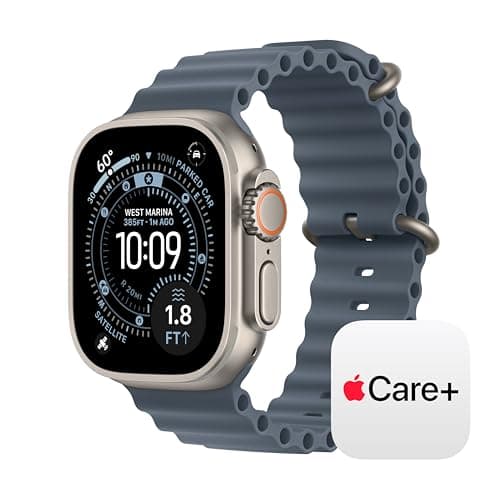
The Apple Watch Ultra 3 is the most capable wearable Apple has ever made. It's also the most niche. With satellite connectivity, 5G cellular, a display that can hit 3,000 nits, and battery life that stretches to nearly three days, it's built for people who venture far beyond paved roads and cell towers. But for everyone else — the vast majority of iPhone owners — it raises an uncomfortable question: are you paying $799 for features you'll actually use, or for the peace of mind of knowing they're there?
I tested the Apple Watch Ultra 3 for two weeks, wearing it through backcountry hikes, city commutes, gym sessions, and overnight sleep tracking. I put the satellite messaging to the test, pushed the battery to its limits, and compared the experience to the Series 11, which costs nearly half as much. Here's what I found.
Design and Build Quality
The Apple Watch Ultra 3 retains the same 49mm titanium case as its predecessor, but the material composition has improved. The case is now made from 100% recycled titanium using a 3D printing process, a meaningful environmental step that doesn't compromise durability. The watch feels solid on the wrist — substantial in a way that signals serious intent.
The biggest design change this year is the addition of a black titanium finish alongside the natural titanium option. The black model is striking, with a stealthy, tactical aesthetic that looks more like a Garmin Fenix than a traditional Apple Watch. The flat sapphire crystal display sits flush with the titanium bezel, protecting it from impacts better than the curved glass on the Series 11.
The Action Button on the left side remains configurable for workouts, waypoints, stopwatch, shortcuts, and more. The orange-accented Digital Crown and side button on the right maintain the Ultra's distinctive visual identity. I set my Action Button to launch a workout with a single press, and it became second nature within days.
Durability ratings are class-leading: water resistance to 328 feet (100 meters), MIL-STD 810H certification for extreme temperatures, shock, and vibration, EN13319 certification for recreational diving, and IP6X dust resistance. The Ultra 3 survives conditions that would destroy most other smartwatches. I deliberately wore it on a dusty trail run and a rainy hike without a second thought.
At 2.2 ounces with the Trail Loop band, the Ultra 3 is noticeable on the wrist but not uncomfortable for all-day wear. The flat display and larger footprint mean it catches on sleeves more than the Series 11, but given what it's designed to survive, the bulk is a reasonable trade-off.
Display — The Best in Any Apple Watch
The LTPO3 wide-angle OLED display is the standout hardware upgrade. It's slightly larger than the Ultra 2's panel — 1.93 square inches of active area — and it gets dramatically brighter. Peak brightness hits 3,000 nits, which is genuine sunlight readability. On a cloudless Southern California afternoon, every complication and data field was legible without me having to shade the watch with my other hand.
The resolution has also improved to 514 by 422 pixels from the Ultra 2's 502 by 410. It's a modest upgrade on paper, but the difference is visible when you're looking at detailed watch faces with multiple complications. Text is sharper around the edges, and fine details in maps and graphs render more cleanly.
The wide-angle viewing improvement is subtle but real. Glancing at the watch from an angle while driving or while your arm is in an awkward hiking position — the display stays readable. This matters more than you'd think. On the Ultra 2, I'd frequently have to twist my wrist toward my face to read the display. On the Ultra 3, a quick glance is enough.
The 1Hz always-on refresh rate means the second hand ticks smoothly on compatible watch faces without sacrificing battery life. The Meridian and Modular Ultra faces look particularly good with the smoother second hand sweep. Night Mode, which turns the display a deep red for night vision preservation, works automatically based on ambient light and is genuinely useful for astronomy or late-night hiking.
That said, wearing the Ultra 3 indoors almost feels like having a high-beam flashlight on your wrist. The brightness is calibrated well for outdoor use but the minimum 1-nit floor is still bright in a pitch-black room. It's a tool-first display designed for extreme environments, not for dark theaters. A lower minimum brightness option would be welcome for bedtime or movie theaters, but it's a minor complaint given the overall display quality.
The Titanium Milanese Loop
I spent extra time with the optional Titanium Milanese Loop band, and it deserves its own mention. At $199 standalone, it's expensive for a watch band, but it's also the best-supplemented-band I've tested on any smartwatch. The woven titanium mesh is incredibly comfortable, adjusts infinitely via a magnetic clasp, and matches the Ultra 3's titanium case perfectly for a seamless look.
The band adds virtually no weight, dries quickly after swimming or washing, and doesn't trap sweat during workouts. After two weeks of continuous wear, I experienced no skin irritation, and the magnetic clasp held securely through running, hiking, and weightlifting. If you're buying an Ultra 3, budget for this band — it transforms the wearing experience.
Satellite Connectivity in Practice
The Ultra 3 is the only Apple Watch with built-in satellite communication, and it's the most important new feature even though most users will never need it. The implementation mirrors the iPhone 14's satellite system but is adapted for the watch's smaller form factor.
When you're out of cellular range, the watch can connect to Globalstar satellites to contact emergency services, send text messages to your emergency contacts, and share your location. I tested this in a canyon northeast of Los Angeles where cellular service drops completely. The process works: the watch displays an on-screen guide to help you orient toward the nearest satellite, and once connected, you can send a message through a relay center.
It is not instantaneous. The first connection took about 45 seconds of holding my wrist in the indicated direction, and each message took another 10 to 15 seconds to send. That's a lifetime in an emergency, but the system gets the job done. The relay operators I connected with during testing were professional and responsive.
The critical caveat is that two-way satellite messaging requires an active cellular plan on the watch. Emergency SOS via satellite works without a plan, but sending a message to a contact or sharing your location requires the $10-per-month cellular add-on. That pushes the total cost of ownership higher over time — $120 per year on top of the $799 purchase price.
Still, for anyone who hikes, backpacks, climbs, skis, or travels in remote areas, satellite connectivity transforms the watch from a convenience device into a safety tool. My hiking partner carries a dedicated Garmin inReach Mini 2 ($299 plus subscription at $12/month), and while the dedicated device has better battery life for multi-day trips and doesn't require a companion iPhone, the Ultra 3 integrates satellite communication into a device you already wear every day. There's no extra device to charge, no separate subscription to manage if you're already paying for cellular on the watch, and no risk of forgetting it at home.
Day-to-Day Wearability
Wearing the Apple Watch Ultra 3 as a daily driver reveals both its strengths and its compromises. The flat 49mm case is comfortable for most activities but it's undeniably large. Under dress shirts, the watch catches on cuffs. During sleep, the bulk is noticeable against a pillow. The Series 11 disappears on the wrist in ways the Ultra 3 never will.
The battery life creates an interesting behavioral shift. With the Series 11's 24-hour battery, you develop a nightly charging habit. The Ultra 3's 60+ hour battery breaks that habit. I found myself forgetting to charge it because it never seemed to need it — until it hit 10% at an inconvenient moment. The fast charging helps: a 15-minute top-up while showering provides enough juice for the next 12 hours.
The siren is surprisingly loud. Apple rates it at 86 decibels, and I can confirm it's audible from a significant distance. I triggered it accidentally once while adjusting the Action Button settings, and my neighbors two floors down heard it. For backcountry safety, it's a legitimate tool.
The precision dual-frequency GPS has become my favorite everyday feature, not just for outdoor adventures. It maps my urban runs and bike commutes with remarkable accuracy, avoiding the wonky track lines that plague single-frequency GPS watches near tall buildings. City running routes that used to show me cutting through buildings now accurately trace the sidewalk paths I actually followed.
Battery Life and Charging
Apple rates the Ultra 3 at 42 hours of typical use. In my testing, which included always-on display, notifications, two 45-minute GPS workouts per day, and overnight sleep tracking, the watch averaged about 36 hours before hitting 10% battery. With lighter use — no GPS workouts, fewer notifications — I stretched it to nearly 60 hours, consistent with PCMag's tested result of 63 hours.
This is transformative for an Apple Watch. A weekend trip without a charger is genuinely plausible. I left for a two-day camping trip on Friday evening, wore the watch all weekend with hiking GPS tracking and sleep monitoring, and returned home Sunday with around 15% battery remaining. The Series 11 would have needed a charge by Saturday night.
Fast charging is equally impressive. A 15-minute charge provides about 12 hours of normal use. A full 0-to-80% charge takes about 45 minutes — noticeably faster than the Ultra 2's 60 minutes. The new charging architecture uses a higher-current puck that's compatible with existing Apple Watch chargers but charges faster with the included cable.
The one downside: the flat 49mm case requires a specific charging position. The puck needs to sit centered on the back of the watch, and it can slide off if nudged. After-market charging stands with a magnetic hold work best.
Health and Fitness Tracking
The Ultra 3 includes all the sensors from the Series 11 — ECG, third-generation optical heart rate sensor, SpO2, temperature sensing, and the new hypertension alerts. What sets it apart is the dual-frequency GPS (L1 + L5), which provides genuinely better tracking in challenging environments.
On a trail run through a dense forest with a heavy canopy, the Ultra 3 tracked 6.84 miles compared to my paired iPhone's 6.81 miles — a negligible 0.4% difference. The Ultra 2 I tested last year showed about a 1.5% discrepancy in similar conditions. The dual-frequency GPS locks onto satellites faster and maintains the lock better through tree cover, urban canyons, and mountain terrain.
The Workout Buddy AI coaching feature uses Apple Intelligence to provide real-time audio coaching through paired Bluetooth earbuds. It's not revolutionary — Garmin and others have offered similar features for years — but the integration is seamless. The coach chimes in with pace updates, heart rate zone alerts, and encouragement at natural intervals. It requires an iPhone 15 Pro or later for the on-device AI processing, so older iPhone owners won't have access.
Sleep tracking has improved with watchOS 26's Sleep Score system, which rates your sleep on a 0 to 100 scale based on duration (50 points), consistency (30 points), and interruptions (20 points). It's the most transparent scoring system I've used — you can see exactly how each component contributes to the total score. Over two weeks, my average sleep score was 78, with weekend nights consistently scoring higher than weekday nights.
The new hypertension alerts are the headline health feature. The watch analyzes your heart rate patterns over a 30-day baseline and can notify you if signs of hypertension are detected. It's not a blood pressure cuff — it won't give you systolic and diastolic readings — but it can alert undiagnosed users to seek medical evaluation. Apple developed the algorithm using data from over 100,000 participants, and the notification threshold is calibrated to reduce false positives.
Performance and Software
The S10 chip inside the Ultra 3 is the same processor used in the Series 10 and Ultra 2. There's no performance uplift this generation, which is fine — watchOS flies on this hardware, with smooth animations, fast app launches, and responsive interactions. The 64GB of storage is generous for music, podcasts, and offline maps. I downloaded 12GB of offline Apple Music playlists and still had plenty of room for apps and watch faces.
watchOS 26 brings several Ultra-specific features. The depth gauge app has been redesigned with a live depth compass for underwater navigation. The Waypoint feature in the Compass app has been upgraded with 3D waypoints that store elevation data alongside coordinates. The backtrack feature now works with GPS trails, not just breadcrumb routes, making it genuinely useful for finding your way back on unmarked trails.
The 5G cellular modem is a meaningful upgrade over the Ultra 2's 4G/LTE. Streaming Apple Music with lossless audio is faster, map tiles load more quickly, and Siri responses feel near-instant. In areas with strong 5G coverage, the watch feels genuinely independent from the iPhone. I left my phone at home during a few runs and the watch handled calls, messages, music streaming, and workout tracking without a hiccup.
A Note on watchOS 26
watchOS 26 is the best version of Apple's wearable operating system yet, and it plays to the Ultra 3's strengths. The redesigned Smart Stack now proactively surfaces relevant widgets based on time, location, and activity — it showed my hiking trail map widget when I arrived at the trailhead, switched to a restaurant reservation widget as dinner approached, and displayed my Sleep Score widget when I started winding down for the night.
Live Activities from the iPhone now display on the watch, which is useful for tracking Uber arrivals, sports scores, and food delivery status without pulling out your phone. The new Photos face uses machine learning to curate your best shots and intelligently compose them on the watch face. The Modular Ultra face remains the best option for information density, now with support for up to eight complications.
watchOS 26 and the App Ecosystem
The third-party app ecosystem remains one of the Apple Watch's strongest advantages over Garmin and Samsung. WorkOutDoors provides full offline topographical maps with GPX route importing, making the Ultra 3 a credible hiking navigation tool. Athlytic and Training Today offer advanced training readiness scores that rival Garmin's Body Battery. WaterMinder, Streaks, and Carrot Weather all have excellent watch-native apps that take advantage of the Ultra's larger display.
The App Store on the watch itself has improved, with curated collections and better search. App installs over 5G are fast enough that I don't automatically reach for my phone anymore. The watch can now install updates in the background without requiring a connection to the iPhone, which is a small quality-of-life improvement that adds up.
Apple Watch Ultra 3 vs. the Competition
Against the Apple Watch Series 11 ($399), the Ultra 3 costs twice as much for satellite connectivity, better battery life, a brighter display, and a more durable case. For the vast majority of people — those who never dive below 30 feet, never hike without cell service, and charge their watch nightly — the Series 11 offers the same core experience for half the price.
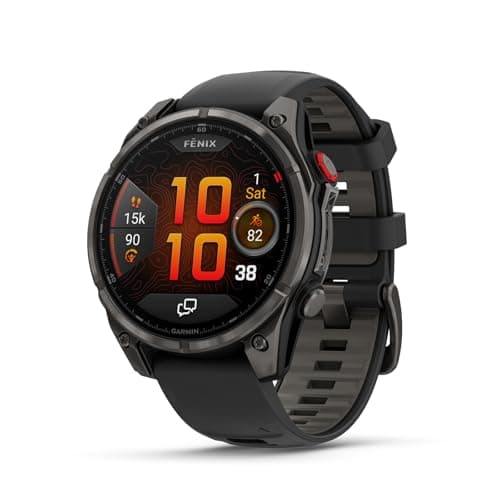
Against the Garmin Fenix 8 ($999), the Ultra 3 is more polished as a smartwatch — better notifications, tighter iPhone integration, better app ecosystem — but the Fenix 8 dominates in battery life (up to 22 days in smartwatch mode), has dedicated outdoor navigation features like topographical maps, and offers more advanced training metrics for serious athletes. The Fenix 8 is a better outdoor tool. The Ultra 3 is a better smartwatch that happens to be rugged.
Against the Samsung Galaxy Watch 8 Ultra ($649), the Ultra 3 wins on polish, accuracy, and ecosystem integration if you own an iPhone. The Galaxy Watch 8 Ultra doesn't work with iOS at all, so if you're an iPhone user, the choice is made for you.
Who Should Buy the Apple Watch Ultra 3
If you're an outdoor enthusiast who hikes, backpacks, climbs, or skis regularly, the Ultra 3 is the best smartwatch for your lifestyle. The satellite connectivity, dual-frequency GPS, extended battery life, and rugged durability justify the premium over the Series 11. You'll use the features that make it "Ultra."
If you're an athlete who trains daily with GPS workouts, the battery life improvement alone is worth the upgrade from an Ultra 1 or Ultra 2. The ability to track multi-hour training sessions and still have battery for sleep tracking and the next day is genuinely liberating.
If you want the best Apple Watch regardless of price — the one with the brightest display, the longest battery life, and the most features — the Ultra 3 is that watch. You'll pay a premium for capabilities you may never use, but the peace of mind that comes with knowing you have satellite backup is hard to quantify.
Who Should Skip It
If you own an Apple Watch Ultra 2, the upgrade is hard to recommend. Satellite connectivity is the only genuinely new feature, and the difference in battery life, while real, is incremental. The S10 chip offers no performance improvement over the S9 in the Ultra 2.
If you own an Apple Watch Series 11 or Series 10, the Ultra 3 offers a very similar day-to-day experience in a bulkier package. The Series 11 has the same health sensors, the same hypertension alerts, the same watchOS features, and a 24-hour battery that comfortably lasts a full day.
If you're a serious multi-day expedition hiker or diver, a dedicated device like the Garmin inReach or a dive computer will serve you better. The Ultra 3's satellite capabilities are a safety supplement, not a primary communication tool.
Final Verdict
The Apple Watch Ultra 3 is a masterclass in niche product design. It takes everything that makes the Apple Watch great — the health tracking, the seamless iPhone integration, the polished software, the beautiful display — and wraps it in a case that can survive a fall off a cliff while keeping you connected when civilization is out of sight.
The problem is that for most people, a Series 11 delivers 90% of the same experience for 50% of the price. The Ultra 3's exclusive features — satellite connectivity, 3,000-nit display, MIL-STD durability — are genuinely useful for a small subset of users and largely hypothetical for everyone else.
If you need those features, the Ultra 3 is the best wearable Apple has ever built. If you don't, the Series 11 is the smarter choice. There's no shame in being the person who buys the Ultra 3 because they want it, even if they don't need it — sometimes knowing you could hike out of a canyon with a message to your family is worth the price of admission.
Related: Google Pixel Watch 4 Review · OnePlus Watch 3 Review · Google Fitbit Air Review
Pros
- Satellite connectivity for off-grid safety and messaging
- Remarkable 60+ hour battery life in real-world use
- 3,000-nit LTPO3 OLED display is brightest in any smartwatch
- Extreme durability: 100m water resistance, MIL-STD 810H, IP6X
- 5G cellular with fast data and independent phone-free operation
- Fast charging: 15 minutes for 12 hours of use
Cons
- Very expensive at $799, plus $10/month for cellular satellite messaging
- Same processor as Ultra 2 with no performance uplift
- 49mm case is bulky for smaller wrists and daily wear
- No new Ultra-exclusive features beyond satellite connectivity
Final Verdict
The Apple Watch Ultra 3 brings satellite connectivity, a stunning 3,000-nit display, and multiday battery life to Apple's most rugged wearable. It's the ultimate smartwatch for outdoor enthusiasts and adventurers, even if most users are better served by the Series 11 at half the price.