Google Pixel Watch 4 Review: Google's Best Android Smartwatch Yet
The Google Pixel Watch 4 delivers two-day battery life, a stunning domed 3000-nit display, dual-frequency GPS, satellite SOS, and Gemini AI integration. It is the best Android smartwatch Google has ever built.
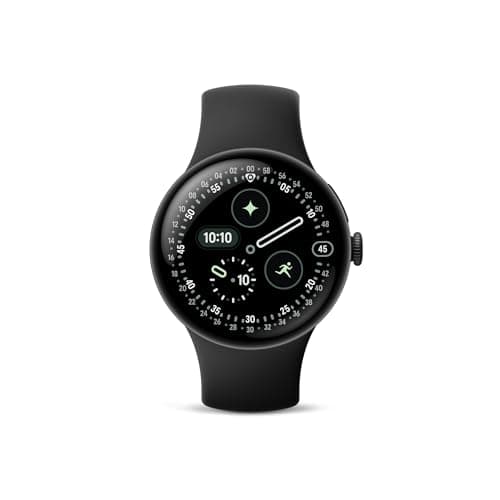
Google has been iterating on its Pixel Watch series steadily, and with the Pixel Watch 4, the company has delivered its most complete wearable yet. After spending years refining the formula, Google finally addressed the two biggest criticisms of earlier models — battery life and repairability — while adding meaningful upgrades to the display, performance, and health tracking. The result is a smartwatch that not only competes with the Samsung Galaxy Watch 8 on equal footing but surpasses it in several important ways.
The Pixel Watch 4 comes in two sizes — 41mm and 45mm — with pricing starting at $349 for the smaller model and $399 for the larger one. LTE models add $100 to each price tier and include two years of complimentary cellular service, which significantly improves the value proposition for anyone who wants to leave their phone behind during workouts or errands.
Design and Display
The Pixel Watch 4's design language remains consistent with its predecessors, but every aspect has been refined. The most immediately noticeable change is the new domed Actua 360 display, which curves dramatically at the edges to create a striking optical effect. As you scroll through notifications or watch faces, the content appears to shrink and flow over the curved edges of the glass. It is a subtle touch that makes the watch feel more premium than anything in its price bracket.
The display reaches an impressive peak brightness of 3,000 nits, up from 2,000 nits on the Pixel Watch 3. This makes the watch easily readable in direct sunlight, whether you are checking a notification during a bright summer run or glancing at your stats between sets at an outdoor gym. The bezels have been reduced by 16 percent compared to the previous generation, giving you 10 percent more active screen area without increasing the overall size of the watch case.
Build quality is excellent, with an aerospace-grade aluminum case and Corning Gorilla Glass protecting the display. The watch carries an IP68 dust and water resistance rating along with 5ATM water resistance, meaning it is safe for swimming and showering. One notable omission compared to the Galaxy Watch 8 is MIL-STD-810H durability certification, which Samsung includes. In day-to-day use, this is unlikely to matter for most people, but it is worth noting if you plan to take the watch into extreme environments.
The digital crown and side button are well-placed and responsive, though the crown could benefit from being offset slightly from the case to make it easier to manipulate without scraping your finger against the case edge. The band attachment system remains secure but is not as quick to swap as Samsung's one-click mechanism or Apple's slide-and-lock system.
Repairability — A First for Smartwatches
One of the most consumer-friendly features of the Pixel Watch 4 is its serviceable design. For the first time in a modern smartwatch, the battery and display can be replaced by users or repair shops. If you crack the glass — a common accident with any wearable — the entire watch no longer needs to be discarded. This is a genuinely meaningful step forward for sustainability and long-term value. Considering that most smartwatches become e-waste the moment the battery degrades or the screen cracks, Google deserves significant credit for building repairability into the Pixel Watch 4.
Performance and Battery Life
The Pixel Watch 4 runs on Qualcomm's Snapdragon W5 Gen 2 platform paired with a Cortex-M55 co-processor. This dual-chip architecture is the key to the watch's dramatically improved battery life. The co-processor handles low-power tasks like step counting and background sensing, while the main processor fires up for more demanding operations. The result is a watch that feels snappy and responsive in daily use while sipping power efficiently when idle.
The combination of 2GB of RAM and 32GB of internal storage ensures smooth multitasking and plenty of room for apps, music, and offline maps. The watch handles Wear OS 6.1 with zero perceptible lag — swiping between tiles, launching apps, and interacting with notifications all feel instant. This is a significant improvement over earlier Pixel Watch models, which occasionally stuttered when transitioning between demanding apps or during GPS initialization.
Battery life is the Pixel Watch 4's standout achievement. The 45mm model packs a 455 mAh battery that delivers approximately 40 hours of use with the always-on display enabled. PCMag's testing recorded an impressive 56 hours, though your mileage will vary depending on how heavily you use GPS tracking and notifications. The 41mm model, with its 325 mAh battery, delivers around 30 hours with the always-on display — still a full day and then some. In battery saver mode, the 45mm model stretches to approximately 72 hours, making it a legitimate multi-day wearable for users who do not need the always-on display.
Charging is remarkably fast. A 15-minute charge gets you to 50 percent, which is enough for a full day of use. A full charge from zero takes approximately 45 minutes for the 41mm model and 60 minutes for the 45mm model. The new charging dock holds the watch on its side, doubling as a bedside clock — a thoughtful design touch that makes overnight charging feel less utilitarian. The charging speeds are approximately 25 percent faster than the Pixel Watch 3, meaning you can top up during your morning shower and never worry about running out of battery during the day.
Wear OS 6.1 and Gemini AI
Software is where the Pixel Watch 4 truly distinguishes itself from the competition. Wear OS 6.1, running on top of Android, provides a polished, intuitive experience that integrates deeply with Google's ecosystem. The Material You design language carries over from Pixel phones, with rich colors and dynamic theming that make notifications and app interfaces feel cohesive. If you use a Pixel phone, the watch feels like a natural extension of your phone rather than a separate device that happens to sync with it.
Google's Gemini AI assistant is deeply integrated into the Pixel Watch 4 experience. You can access Gemini by raising your wrist to speak, long-pressing the side button, or adding a dedicated tile. Gemini handles complex queries that would trip up Siri or Bixby — planning itineraries, answering detailed questions about weather or nutrition, and controlling smart home devices through voice commands. The raise-to-talk feature works reliably, though it can occasionally be too sensitive and activate when you did not intend it.
In practical testing, Gemini outperformed Siri on complex multi-part questions. Asking Gemini to plan a weekend trip to Tokyo with specific restaurant recommendations, transit directions, and weather considerations produced a detailed, organized response. The same query to Siri on the Apple Watch returned a search result page. Where Gemini falls short is in sports-specific questions — any query about personal training metrics or running physiology simply opens the Fitbit app rather than providing a direct answer. This is a frustrating limitation that highlights the gap between Gemini as a general assistant and the specialized sports AI found in Garmin watches.
The Fitbit integration brings a redesigned app experience on the phone. You can now ask the Fitbit app natural language questions like "How do I improve my VO2 Max?" or "How can I recover from jet lag faster?" and receive contextual answers based on your personal health data. A personal AI health coach is expected in October 2026, which will build personalized training plans based on your goals and adjust them in real time based on sleep quality, recovery status, and activity history. This is a Fitbit Premium feature, but early descriptions suggest it could be genuinely transformative for users who want guided fitness without hiring a personal trainer.
Notification handling is excellent. The rich, colorful display makes notifications glanceable and actionable. Smart replies have been improved and are now roughly twice as fast to generate. A notification cooldown feature groups rapid-fire alerts from the same app, preventing your wrist from buzzing endlessly during a group chat explosion. The Notification Cooldown is one of those features that, once you experience it, you wonder why every smartwatch does not have it.
Wear OS 6.1 also introduces gesture controls including double-pinch and wrist-turn gestures. These work well for dismissing notifications, answering calls, and controlling music playback without touching the screen. The double-pinch gesture can be flaky with gloves during cold-weather runs, but in daily office and home use, it is a genuinely useful hands-free interaction method.
The watch face ecosystem has also been refreshed with 12 deeply customizable faces. The Concentric face with the Terminus color scheme is a particular standout, combining classic watch design cues with modern typography and vibrant color accents. Third-party watch faces from Facer and other platforms are also fully supported, giving you near-infinite customization options.
Health and Fitness Tracking
The Pixel Watch 4 packs an extensive array of sensors: accelerometer, altimeter, barometer, compass, continuous electrodermal activity (cEDA) sensor for stress tracking, gyroscope, magnetometer, multi-path optical heart rate sensor, skin temperature sensor with improved accuracy, SpO2, and ECG. This is as comprehensive a sensor suite as you will find on any Android smartwatch.
Heart rate tracking has been improved through software enhancements. In testing against a chest strap and the Apple Watch Ultra 3, the Pixel Watch 4 was generally within one to five beats per minute during steady-state running. It reacted slightly faster to heart rate spikes during interval training than the Apple Watch Ultra 3, which is impressive for a wrist-based optical sensor. As with any optical heart rate sensor, accuracy degrades during high-intensity interval training and in cold weather, but for recreational athletes, the Pixel Watch 4 provides reliable trend data that is more than sufficient for guiding your training decisions.
One area where the Pixel Watch 4 genuinely excels is stress and recovery tracking. The cEDA sensor provides continuous electrodermal activity monitoring that can alert you when your body is showing signs of stress, even if you do not feel stressed mentally. The Daily Readiness Score, available without a Fitbit Premium subscription, combines your sleep quality, heart rate variability, and recent activity to tell you whether you are ready for a hard workout or need a recovery day. This is the kind of actionable health insight that makes a smartwatch genuinely useful beyond simple step counting.
Sleep tracking is a genuine strength. The Pixel Watch 4 tracks sleep duration, stages, oxygen variation, average respiratory rate, and heart rate, then distills everything into a daily Sleep Score out of 100. In a 25-night comparison against the Apple Watch Ultra 3 and the Eight Sleep mattress sensor, the Pixel Watch 4 actually led in deep sleep accuracy with a mean absolute error of just 11 minutes. This is remarkable for a wrist-based tracker and makes the Pixel Watch 4 one of the most accurate sleep trackers available at any price. The sleep tracking is detailed enough to identify patterns — you can see how caffeine, alcohol, exercise timing, and stress affect your sleep quality over time.
The Pixel Watch 4 introduces dual-frequency GPS, a first for Google's wearable lineup. This was one of the most requested features from runners and outdoor enthusiasts. GPS lock times are significantly faster than the Pixel Watch 3, and accuracy is improved, particularly in urban canyons and tree-covered areas. In standardized testing, the Pixel Watch 4 scored 83 percent on a 10-mile course. This is behind dedicated sports watches like the Coros Pace 3 (92 percent) and Garmin Forerunner 970 (92 percent), and slightly behind the Apple Watch Ultra 3 (90 percent). For most recreational runners, cyclists, and hikers, this level of accuracy is perfectly adequate, but serious athletes who need centimeter-level precision for pacing and route analysis will want a dedicated GPS sports watch.
Auto-workout detection has been improved with AI-powered recognition that kicks in after approximately 15 minutes of activity. The watch now supports basketball and pickleball as dedicated workout modes, and cycling metrics can be broadcast to a compatible bike display. The Fitbit integration provides Readiness Scores, Cardio Load, and Target Load metrics for free, though personalized running plans and tailored workouts require a Fitbit Premium subscription at $9.99 per month after the six-month trial.
Satellite SOS and Connectivity
The Pixel Watch 4 includes satellite SOS functionality on the base model — not just the LTE version. This is a significant differentiator from most competitors that reserve emergency satellite features for premium cellular models. In an emergency, you can initiate a satellite SOS request by pressing the side button five times rapidly. The watch guides you through pointing your wrist toward the sky for a clear satellite connection. The feature connects you to emergency services, though it does not currently support texting contacts via satellite the way Apple's implementation does.
Bluetooth 5.3 provides reliable connectivity to your phone, and the dual-frequency GPS handles location services independently. Wi-Fi and NFC for Google Pay round out the connectivity options. The LTE model includes two years of free data service, which is an excellent deal that effectively offsets the $100 premium over the Bluetooth-only version.
What the Pixel Watch 4 Does Not Do Well
For all its strengths, the Pixel Watch 4 has meaningful limitations that you should consider before buying. The sports ecosystem is streets behind Garmin — there is no support for triathlon features, power meter connectivity, or advanced recovery metrics. If you are a competitive multi-sport athlete training for an Ironman or a HYROX competition, you need a Garmin or a Coros. The Pixel Watch 4 is a fitness companion, not a sports performance tool, and it makes no pretense otherwise.
GPS accuracy, while much improved, still trails the market leaders by a noticeable margin. In a standardized 10-mile test course, the Pixel Watch 4 scored 83 percent compared to 92 percent for the Coros Pace 3 and Garmin Forerunner 970. The difference is most apparent on twisty urban routes with tall buildings, where the watch occasionally cuts corners or places you slightly off the actual path. For most users, the difference will be academic, but tracking purists will notice the occasional drift.
The lack of snore detection and sleep apnea monitoring is a noticeable omission, particularly since the Galaxy Watch 8 includes both. The hardware likely supports these features, so the gap may be closed through a future software update, but as of now, Samsung has the edge in sleep health monitoring. Considering how good the Pixel Watch 4's sleep tracking is in other respects, the missing features feel like an artificial limitation rather than a hardware constraint.
Fitbit Premium's paywall for advanced training plans is frustrating, especially since Samsung provides similar features for free on the Galaxy Watch 8. The Pixel Watch 4 is excellent out of the box, but unlocking its full potential requires a recurring subscription that adds up over time. The six-month free trial is generous, but at $9.99 per month thereafter, you will pay $120 per year for features that competitors include at no additional cost.
The band attachment system is secure but not as easy to use as competing solutions. Swapping bands requires pressing a small button and sliding the band out, which is fiddlier than Samsung's one-click mechanism or Apple's slide-and-lock system. If you like to change bands frequently to match your outfit or activity, this will become an annoyance over time.
Real-World Usage Experience
Living with the Pixel Watch 4 for daily use reveals a smartwatch that mostly fades into the background and just works. The battery life is the single most transformative improvement — you can wear the watch to track your sleep, wake up with enough charge for the entire next day, and only think about charging during your morning routine the following day. This eliminates the charging anxiety that plagues most smartwatches and makes the Pixel Watch 4 feel like a true 24/7 health companion rather than a device you take off every night to charge.
The always-on display is bright enough to be useful indoors and outdoors, and the raise-to-wake gesture is responsive without being overly sensitive. Google Pay works reliably at terminals, and the notification experience is genuinely better than any other Android smartwatch thanks to the rich, colorful display and thoughtful notification management.
For fitness tracking, the Pixel Watch 4 handles daily exercise admirably. Morning runs, gym sessions, and evening walks are tracked accurately and automatically when the watch recognizes the activity. The Fitbit integration on the phone provides a clean, intuitive dashboard for reviewing your metrics over time. The Readiness Score has become a genuinely useful tool for deciding whether to push hard or take it easy on any given day.
The Gemini AI assistant, while not perfect for sports queries, is excellent for everyday tasks. Setting timers, controlling smart home devices, getting quick weather updates, and sending messages all work seamlessly through voice commands. The assistant is responsive enough that it becomes a natural part of your interaction with the watch rather than a feature you try once and forget about.
Comparisons to Competitors
Against the Samsung Galaxy Watch 8, the Pixel Watch 4 offers superior battery life, a more polished software experience, and the repairable design. Samsung counters with MIL-STD-810H durability, snore detection, sleep apnea monitoring, and free advanced health analytics. The Galaxy Watch 8 is the better choice for Samsung phone owners and anyone who wants the most feature-dense health tracking. The Pixel Watch 4 wins on everyday usability, style, and battery longevity.
Against the Apple Watch Series 11, the Pixel Watch 4 competes favorably in hardware but cannot match the depth of Apple's health research framework or the seamless integration with the iPhone ecosystem. For Android users, however, the Pixel Watch 4 is clearly the better choice — it integrates with Google services in ways the Apple Watch simply cannot match on Android.
Who Should Buy the Pixel Watch 4
The Google Pixel Watch 4 is the best Android smartwatch available for the vast majority of users. If you own a Pixel phone or any recent Android device, and you want a smartwatch that looks great, lasts two days on a charge, and provides accurate health tracking without requiring a degree in sports science to interpret the data, the Pixel Watch 4 is the obvious choice.
It is less suitable for serious athletes who need Garmin-level sports analysis, or for Samsung loyalists who want the deepest integration with the Galaxy ecosystem. But for everyone else — and that covers a very large group of people — the Pixel Watch 4 delivers the complete smartwatch experience Google has been working toward since the original Pixel Watch.
The repairable design, the stunning domed display, the two-day battery life, the capable Gemini AI, and the satellite SOS functionality combine to create a smartwatch that is not just good for an Android watch, but genuinely excellent by any standard. It is the first Pixel Watch that feels fully realized, and it sets a new benchmark for what an Android smartwatch should be.
Related: Apple Watch Ultra 3 Review · OnePlus Watch 3 Review · Google Fitbit Air Review
Pros
- Exceptional two-day battery life with fast 15-minute charging to 50%
- Stunning curved domed Actua 360 display at 3000 nits peak brightness
- Repairable design with user-serviceable battery and display
- Gemini AI assistant outperforms competing smartwatch assistants
- Dual-frequency GPS with faster, more accurate location tracking
- Satellite SOS available on the base model, not just LTE
- Best-in-class deep sleep tracking accuracy
Cons
- Sports ecosystem trails Garmin significantly for serious athletes
- Fitbit Premium paywall for advanced training plans
- No snore detection or sleep apnea monitoring
- GPS accuracy still trails Coros and Garmin by ~9%
- Band attachment system is more fiddly than competitors
- MIL-STD-810H durability certification absent
Final Verdict
The Google Pixel Watch 4 delivers two-day battery life, a stunning domed 3000-nit display, dual-frequency GPS, satellite SOS, and Gemini AI integration. It is the best Android smartwatch Google has ever built.