Apple Watch Series 11 Review: The Best Standard Smartwatch Gets Smarter
The Apple Watch Series 11 refines an already excellent formula with hypertension notifications, 5G cellular, improved scratch resistance, faster charging, and watchOS 26 — making it the best standard Apple Watch yet at $399, and an absolute steal at its Prime Day price of $279.
DISCLAIMER: As an Amazon Associate, I earn from qualifying purchases. Some links below are affiliate links that help support this content at no extra cost to you.
The Apple Watch has been the undisputed king of smartwatches for years, but the pace of innovation has slowed as the hardware has matured. The Apple Watch Series 11, released in late 2025, is a study in refinement rather than revolution — the same beautiful design, the same excellent ecosystem integration, but with a handful of key upgrades that make it the best standard Apple Watch yet, even if it's not a must-have upgrade for Series 10 owners.
At $399 for the 42mm GPS model (on sale for as low as $279 on Amazon during Prime Day), the Series 11 is priced identically to its predecessor. The question is whether the new features — 5G cellular, hypertension notifications, a more scratch-resistant display, and slightly better battery life — justify an upgrade, or whether this is a year where most buyers should just save their money and stick with what they have.
Design and Display: Familiar Excellence
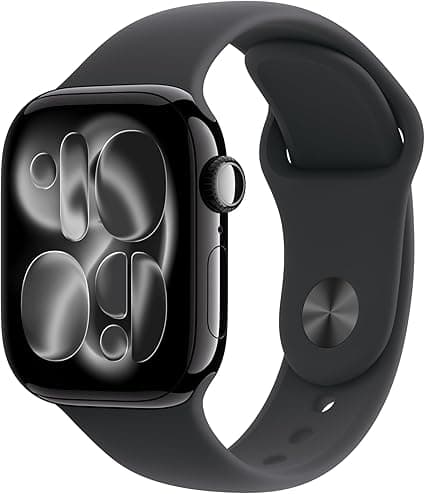
The Apple Watch Series 11 looks essentially identical to the Series 10. That's not a criticism — the Series 10 introduced the current design language with its larger, more rounded display and thinner profile, and it remains one of the best-looking smartwatches on the market. The 42mm and 46mm case sizes offer displays with 989 and 1,220 square millimeters of area respectively, both using the same wide-angle OLED LTPO3 panel with 2,000 nits of peak brightness and a 1Hz refresh rate for always-on functionality.
The real hardware improvement this year is in durability. The Ion-X glass on the aluminum models is twice as scratch-resistant as the Series 10, which is a genuinely meaningful upgrade for anyone who wears their watch during workouts, outdoor activities, or just daily life where the occasional knock against a doorframe or desk edge is inevitable. The titanium models continue to use sapphire crystal, which was already highly scratch-resistant.
The new Space Gray color replaces Starlight on the aluminum lineup and joins Rose Gold, Silver, and Jet Black. It's a subtle dark gray that sits somewhere between the old Space Gray and Space Black, and it looks surprisingly premium for a standard aluminum finish. The titanium colors — Gold, Natural, and Slate — remain unchanged.
At just 30.3 grams for the 42mm aluminum GPS model and 37.8 grams for the 46mm, the Series 11 is light enough to wear comfortably 24/7, including during sleep. The 9.7mm thickness hasn't changed, but it's thin enough to slide under dress cuffs without catching. The Digital Crown with haptic feedback remains one of the best input methods on any device, and the combination of touch, crown, side button, and gestures covers every interaction model you could want.
Health Features: The Headline Addition
The marquee new feature of the Apple Watch Series 11 is hypertension notifications. This uses the third-generation optical heart sensor to analyze your blood vessel response over a 30-day period, looking for signs of chronic high blood pressure. If the algorithm detects sustained patterns that suggest hypertension, it sends you a notification alerting you to consult a healthcare provider.
It's important to be clear about what this is not. It is not a blood pressure monitor. It does not give you systolic and diastolic readings. It cannot replace a medical-grade blood pressure cuff for people who have already been diagnosed with hypertension. What it does is serve as an early warning system for people who may not know they have elevated blood pressure — a population that includes roughly one in three adults with hypertension worldwide.
The feature works passively in the background, requiring no active effort from the user beyond wearing the watch normally. After 30 days of baseline data collection, the watch can begin generating alerts if it detects concerning trends. This is genuinely valuable for a population that often misses the early signs of hypertension, which has no symptoms until it becomes a serious health issue.
That said, there's a complication: this feature is not exclusive to the Series 11. Apple has made hypertension notifications available on the Series 9 and later, as well as the Ultra 2 and later. So if you already have a newer Apple Watch, this isn't a reason to upgrade.
Other health features remain excellent. The ECG app can generate a single-lead electrocardiogram in 30 seconds, and the irregular rhythm notification feature has been clinically validated to detect atrial fibrillation. Sleep apnea notifications, introduced with the Series 10, use the accelerometer to monitor breathing patterns during sleep and alert users to potential moderate-to-severe sleep apnea. The Vitals app provides a morning snapshot of key health metrics including heart rate, respiratory rate, wrist temperature, and blood oxygen.
The blood oxygen sensor is physically present in the hardware, though its availability varies by region due to ongoing patent disputes. In markets where it's active, it provides on-demand blood oxygen readings that can be useful for high-altitude activities or general wellness awareness.
watchOS 26: A Meaningful Software Update
The Apple Watch Series 11 ships with watchOS 26, which brings several notable improvements that also benefit older models.
The Liquid Glass UI is a visual refresh that modernizes the interface with translucent elements, updated animations, and a new depth effect. The new Flow watch face is a dynamic, interactive face that responds to movement and time of day, and the updated Photos face now uses machine learning to curate your best shots automatically.
The wrist flick gesture is a clever addition. Instead of tapping the screen or pressing a button to dismiss a notification, you can flick your wrist back and forth — it's interpreted as a dismissal gesture. It takes a day or two to get used to the motion, but once you do, it feels natural and reduces the need to tap the screen constantly. It complements the existing double-tap gesture (index finger and thumb together) that was introduced with the Series 9.
Communication features get meaningful upgrades. Live Translation in Messages lets you type or dictate a message in your language and have it translated in real time for the recipient. Call Screening uses Siri to ask who's calling and transcribe the response, so you can decide whether to pick up without looking at your phone. Hold Assist is a quality-of-life feature for anyone who's ever been stuck on hold — the watch can listen for when a human agent answers and notify you.
The Notes app has finally made its way to the Apple Watch, which is one of those features that seems minor until you actually use it. Dictating a quick note or grocery list to your wrist is surprisingly convenient, and the notes sync instantly with your iPhone and Mac.
Performance and Battery Life
The S10 chip is carried over from the Series 10, so there's no generational performance leap this year. That's fine — the S10 is already more than fast enough for watchOS 26, with smooth animations, quick app launches, and responsive Siri interactions. The 4-core Neural Engine handles on-device processing for Siri requests, dictation, and health algorithm computations without sending data to the cloud.
The 64GB of storage is generous for a smartwatch and gives you plenty of room for music playlists, podcasts, and apps without worrying about running out of space.
Battery life is rated at 24 hours of normal use, up from 18 hours on the Series 10. In practice, with the always-on display enabled, normal notification load, and a 30-60 minute workout with GPS, the Series 11 comfortably lasts from morning wake-up to bedtime with 20-30% remaining. The low power mode extends this to 38 hours by disabling the always-on display and limiting background sensor readings.
The fast charging is genuinely impressive. A 15-minute charge delivers 8 hours of normal use, and a full 0-80% charge takes about 30 minutes. This means you can top up while showering and never worry about the watch dying on you. The 5-minute charge for 8 hours of sleep tracking is a particularly nice touch — if you forgot to charge before bed, a quick burst while you brush your teeth is enough to get through the night.
5G Connectivity: Future-Proofing
The cellular models of the Apple Watch Series 11 are the first to support 5G, using the RedCap standard (Reduced Capability) designed specifically for IoT and wearable devices. This doesn't mean you'll get gigabit download speeds on your wrist — RedCap 5G is about lower power consumption, better coverage, and more efficient use of the network than about raw speed.
In practice, this means the cellular Series 11 should have better connectivity in fringe areas where LTE might struggle, and the lower power consumption of 5G RedCap could extend battery life during cellular use. If you use the cellular model regularly — for runs, hikes, or days when you want to leave your phone at home — this is a meaningful upgrade over the Series 10's LTE-only radio.
Fitness and Activity Tracking
The Series 11 continues Apple's strong tradition of comprehensive fitness tracking. The workout app covers running, cycling, swimming, hiking, yoga, strength training, and dozens of other activities with detailed metrics for each.
For runners, the custom workouts feature lets you create interval sessions with specific time, distance, or pace targets. Heart rate zones display your current effort level relative to your maximum heart rate, and the Pacer feature helps you maintain a target pace during races or training runs. The automatic track detection uses GPS to identify when you're running on a standard 400-meter track and adjusts the distance calculation accordingly, which is a welcome improvement for track workouts.
For cyclists, the watch supports Bluetooth accessories like power meters and speed sensors, and it can display Functional Threshold Power (FTP) and power zones during rides. The Live Activity feature shows your workout metrics on your iPhone's Dynamic Island or Lock Screen, which is useful when your phone is mounted on the handlebars.
For hikers, the Compass app now displays bearing, incline, and coordinates, and you can drop custom waypoints that sync with cellular connectivity for sharing your location. The Backtrack feature uses GPS waypoints to help you retrace your steps if you lose the trail. Offline maps and topographic maps for all 63 U.S. national parks are available with the cellular model.
The Training Load feature tracks the impact of your workouts over time and helps you balance exertion and recovery. It uses a rolling 7-day and 28-day comparison to show whether you're training harder, easier, or about the same as your recent baseline.
Durability and Water Resistance
The Series 11 is rated IP6X for dust resistance and water resistant to 50 meters, making it suitable for swimming, snorkeling, and water sports. The depth gauge and water temperature sensor are useful for pool swimming and open water activities, and the SWOLF score (a combination of strokes and length) provides a measure of swimming efficiency.
The Ion-X glass on aluminum models is, as mentioned, twice as scratch-resistant as the Series 10. This is a meaningful real-world improvement — I've seen plenty of Series 10 watches with visible micro-scratches after a few months of daily wear, and the Series 11's glass holds up noticeably better.
The watchOS 26 Experience: Deep Dive
watchOS 26 is one of the more significant software updates Apple has released for the Watch in recent years, and it's worth exploring its features in more detail.
The Liquid Glass UI is more than just a visual refresh. The translucent interface elements create a sense of depth that makes the display feel like it extends beyond the physical glass. The parallax effect when tilting the watch is subtle but convincing, and the new animations — particularly when transitioning between watch faces and apps — feel fluid and responsive.
The Flow watch face deserves special mention. It's a dynamic face that adapts to your activity and time of day. In the morning, it shows your sleep data and the day's weather. During workouts, it displays activity rings and heart rate. In the evening, it shifts to a more subdued color palette. It learns your routines over time and surfaces the information you need when you need it, reducing the number of times you need to swipe or tap to find what you're looking for.
The Photos face has been upgraded with machine learning curation. Instead of manually selecting which photos appear, you can let the watch surface the best shots from your library based on composition, faces, and recent activity. It's surprisingly good at picking memorable photos, and the new depth effect makes portrait shots look particularly striking against the always-on display.
Live Translation on the wrist is one of those features that seems gimmicky until you actually need it. In a conversation with someone who speaks a different language, you can dictate or type a phrase and the watch displays the translation on screen. It supports over a dozen languages and works offline for downloaded languages. The response is nearly instantaneous, and the accuracy is on par with dedicated translation apps.
Call Screening is another quality-of-life improvement. When an unknown number calls, Siri can answer and ask who's calling, transcribing the response on your watch screen. You can then decide to take the call, send it to voicemail, or reply with a message. It effectively eliminates spam calls without requiring you to look at your phone.
Hold Assist addresses a specific annoyance: being stuck on hold with customer service. You initiate a call, the watch places it on speakerphone, and when a human agent picks up, the watch taps your wrist and displays a notification. It's a small feature, but anyone who has spent twenty minutes listening to elevator music on speakerphone will appreciate it.
How the Series 11 Compares to the Apple Watch SE
The Apple Watch SE ($249) is the budget alternative, and the gap between it and the Series 11 has widened this generation. The SE lacks the always-on display, which means you have to raise your wrist or tap the screen to see the time. It uses the older S8 chip rather than the S10, so some watchOS 26 features like the Liquid Glass UI animations are less smooth. It doesn't have the ECG app, blood oxygen sensor, or temperature sensor, which means it can't generate hypertension notifications or provide the full suite of health monitoring features.
The SE also has a smaller, lower-resolution display (the same size as Series 8), slower charging, and no fast charging capability. The Ion-X glass is not the upgraded scratch-resistant version found in the Series 11.
For someone who just wants basic fitness tracking, notifications, and the core Apple Watch experience, the SE is still a solid choice. But the Series 11's superior display, more comprehensive health sensors, faster charging, and better durability make it worth the $150 premium for most buyers, especially at the Prime Day price where the gap narrows to just $30.
How the Series 11 Compares to the Apple Watch Ultra 3
The Apple Watch Ultra 3 ($799) is the extreme sports version of the Apple Watch. It has a larger 49mm titanium case with a flat sapphire crystal display, an action button that can be customized for quick access to workouts or features, a brighter 3,000-nit display, and a siren for emergencies. The battery life is rated at 36 hours of normal use and up to 72 hours in low power mode, making it the choice for multi-day adventures.
The Ultra 3 also features a more precise dual-frequency GPS (L1 + L5) that provides better accuracy in challenging environments like dense urban areas or heavy tree cover. The depth gauge extends to 40 meters (vs. 6 meters on the Series 11), and there's an integrated water temperature sensor for diving.
But for most people, the Ultra 3 is overkill. It's bulkier, heavier (61.4g vs. 37.8g for the 46mm Series 11), and significantly more expensive. The Series 11's 24-hour battery life covers a full day of normal use plus sleep tracking, and the fast charging means you can top up during any 30-minute window. Unless you routinely spend multiple days away from a charger or need the ultra-precise GPS for backcountry navigation, the Series 11 is the better choice.
Real-World Battery Scenarios
The 24-hour battery rating translates to real-world performance that varies based on usage. Here are some typical scenarios:
Light use (no workouts, minimal notifications, standard watch face): The Series 11 comfortably makes it through a full day and night with 30-40% remaining. You can skip a charge and still have enough for a second day of light use.
Moderate use (one 30-60 minute GPS workout, normal notification load, always-on display enabled): The watch lasts from 7 AM to 11 PM with 15-25% remaining. Charging while you shower and get ready in the morning is sufficient to keep it topped up indefinitely.
Heavy use (multiple GPS workouts, cellular streaming, extensive app usage): You'll want to charge during the day. A 15-minute charge provides 8 hours of use, so even on heavy days, a quick top-up during lunch or while getting ready for bed is enough.
Sleep tracking (8 hours): The watch uses about 15-20% battery overnight. With the 5-minute charge for 8 hours of sleep tracking, you can easily maintain a routine of charging while brushing your teeth and winding down for bed.
The S10 Chip: Not New, But Still Fast
The S10 chip in the Series 11 is the same processor found in the Series 10. In a world where annual chip upgrades are the norm, this might seem like a disappointment. But in practice, the S10 is more than adequate for everything the Apple Watch does.
The dual-core 64-bit CPU handles app launches, UI animations, and Siri requests with no perceptible lag. The 4-core Neural Engine processes health algorithms on-device, which means your health data stays private and results are instantaneous. The chip's efficiency also contributes to the improved battery life — the Series 11 achieves 24 hours from the same battery capacity as the Series 10's 18 hours, thanks to software optimizations and more efficient sensor polling.
The real beneficiary of the S10's Neural Engine is the on-device Siri processing. Common requests like starting a workout, setting a timer, or sending a message are processed entirely on the watch, with no round-trip to the cloud. This makes Siri feel faster and more reliable, especially in areas with poor cellular or Wi-Fi connectivity.
A Note on Sustainability
Apple has made significant progress in reducing the environmental impact of the Apple Watch. The Series 11 is made with 40% recycled content by weight, including 100% recycled aluminum in the case, 100% recycled cobalt and 95% recycled lithium in the battery, and 100% recycled rare earth elements in the magnets. The packaging is 100% fiber-based and 40% more efficient on shipping pallets compared to the Series 8.
All manufacturing electricity is sourced from renewable sources, and no waste from final assembly sites goes to landfill. These are meaningful achievements for a product that sells in the tens of millions annually.
The Apple Watch Series 11 is in an unusual position. It's the best standard Apple Watch ever made, but the improvements over the Series 10 are incremental enough that most Series 10 owners can skip this generation without feeling like they're missing out.
If you're coming from a Series 9 or older — or if this is your first Apple Watch — the Series 11 is an easy recommendation. The larger display, faster charging, improved scratch resistance, hypertension notifications, and 5G cellular (if you choose the cellular model) all add up to a compelling package. The S10 chip may not be new this year, but it's more than capable, and watchOS 26 brings meaningful software improvements that benefit the entire experience.
If you're a Series 10 owner, the equation is different. The only reasons to upgrade are: (1) you want 5G on the cellular model, (2) you've been frustrated by scratch-prone glass on your Series 10, (3) you really want the Space Gray color, or (4) you find the extra 6 hours of daily battery life valuable. For most Series 10 owners, none of these are compelling enough to justify a $399+ outlay.
For first-time smartwatch buyers, the Series 11 faces competition from the Apple Watch SE (which is cheaper but lacks the always-on display, ECG, blood oxygen, and fast charging) and the Apple Watch Ultra 3 (which offers better battery life, a more durable titanium build, and an action button, but starts at $799). The Series 11 hits the sweet spot for most people — it has all the essential health and fitness features, a beautiful display, excellent performance, and a price that undercuts the Ultra by $400.
Value at $279 (Prime Day Pricing)
With the current Prime Day pricing at $279 on Amazon (down from $399), the Apple Watch Series 11 becomes an absolute steal. At that price, it's competitive with the Apple Watch SE on value while offering a superior display, faster charging, more health sensors, and the always-on display. If you've been waiting for the right time to buy an Apple Watch, this is it.
Even at the standard $399, the Series 11 is a solid value proposition for a device that you'll wear every day for three to five years. The health monitoring features alone — ECG, irregular rhythm detection, sleep apnea notifications, and now hypertension screening — provide peace of mind that's hard to quantify in dollars. Add in the fitness tracking, communication features, and ecosystem integration, and the cost per day of ownership is negligible.
The Competition
The smartwatch market has become increasingly competitive, but the Apple Watch Series 11 maintains its lead for iPhone users through superior ecosystem integration. Features like seamless pairing, automatic device unlocking, Apple Pay, Find My integration, and the tight coupling with Apple Fitness+ create an experience that no other smartwatch can match when paired with an iPhone.
For Android users, the Samsung Galaxy Watch 7 and Google Pixel Watch 3 are excellent alternatives, but they can't match the Apple Watch's depth of health sensor integration or app ecosystem.
The direct competition from within Apple's own lineup is perhaps more relevant. The Apple Watch Ultra 3 offers 36 hours of battery life, a more rugged titanium build, an action button, and a brighter 3,000-nit display for $799. If you're an extreme athlete, diver, or someone who routinely spends multiple days away from a charger, the Ultra 3 is worth considering. But for the vast majority of users, the Series 11's 24-hour battery life and comprehensive feature set are more than sufficient at half the price.
Final Verdict
The Apple Watch Series 11 is a refinement of an already excellent product. It's not the dramatic leap forward that the original Series 4 was with the larger display and ECG, or that the Series 10 represented with the thinner design and sleep apnea detection. But it doesn't need to be. The formula works, and Apple has made smart, targeted improvements in the areas that matter most: durability, battery life, connectivity, and health monitoring.
The hypertension notifications are a genuinely valuable addition for public health, even if they're not Series 11-exclusive. The improved scratch resistance addresses a real pain point for daily wearers. The faster charging and extended battery life make the "charge while you shower" routine even more reliable. And watchOS 26 brings a fresh, modern interface that makes the watch feel new even on existing hardware.
If you own a Series 10, keep it. If you own anything older — or nothing at all — the Apple Watch Series 11 is the best standard smartwatch money can buy, especially at its Prime Day price of $279.
Pros
- Hypertension notifications provide early health warnings
- 2x more scratch-resistant display than Series 10
- First Apple Watch with 5G (cellular models)
- Fast charging: 15 minutes for 8 hours of use
- watchOS 26 brings Liquid Glass UI and useful new features
- Lightweight and comfortable for 24/7 wear
- Excellent value at Prime Day pricing
Cons
- Same design and S10 chip as Series 10
- Incremental upgrade — Series 10 owners can skip
- Hypertension notifications also available on older models
- Blood oxygen sensor still restricted in some regions
- Still requires daily charging
Final Verdict
The Apple Watch Series 11 refines an already excellent formula with hypertension notifications, 5G cellular, improved scratch resistance, faster charging, and watchOS 26 — making it the best standard Apple Watch yet at $399, and an absolute steal at its Prime Day price of $279.