The Aqara U400 Reimagines What a Smart Lock Should Feel Like
The Aqara U400 delivers the most complete smart lock experience available in 2026, with UWB hands-free unlocking that actually works, a multifactor entry system with no weak links, and a rechargeable battery that eliminates the most inconvenient maintenance task in the category.
Lead-In
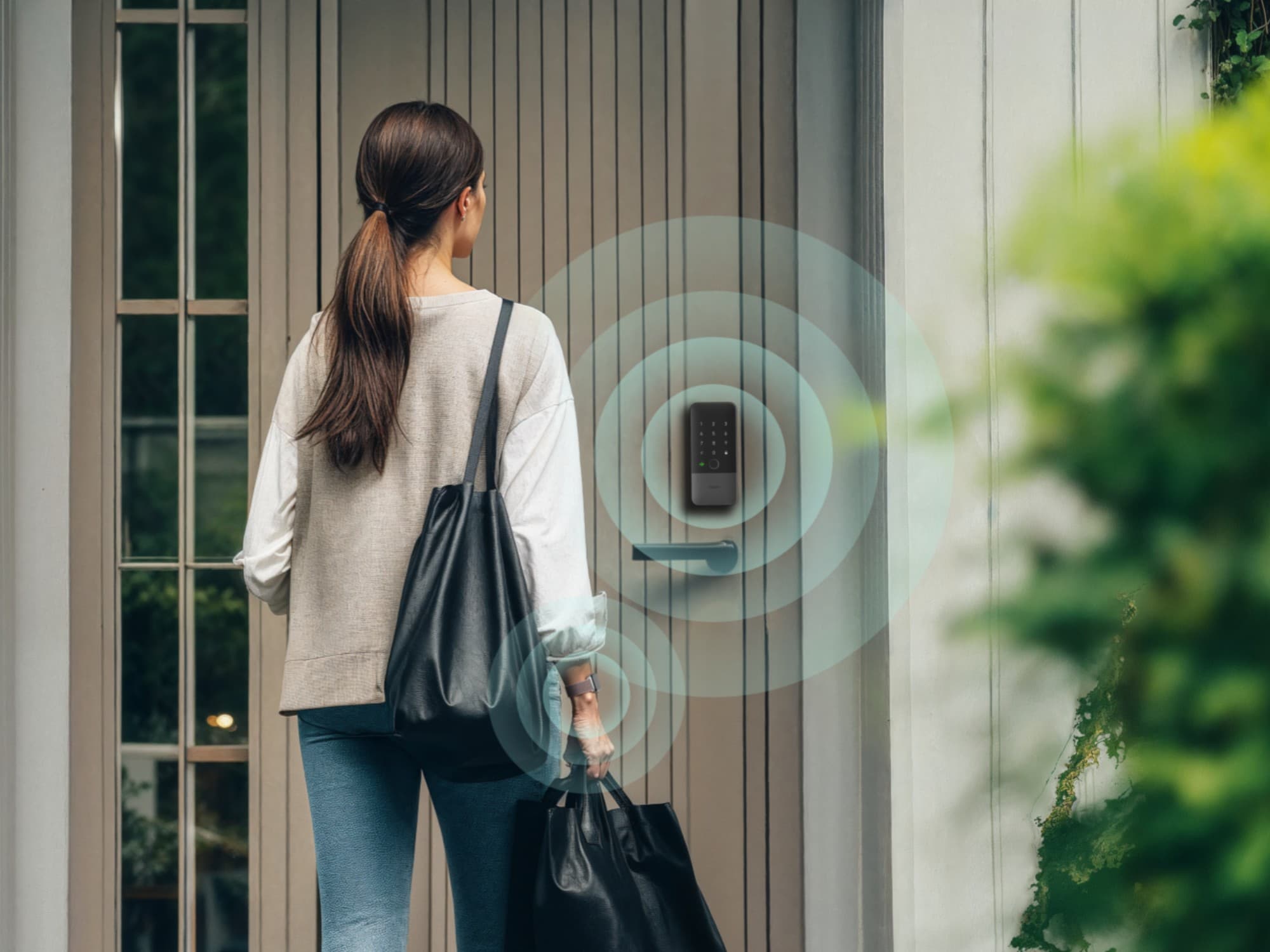
Walk up to your front door with your hands full of groceries, a toddler on your hip, or a stack of packages that arrived simultaneously, and without reaching for your phone or fumbling for keys tucked in a pocket, the lock simply disengages the moment you are close enough to reach the handle. There is no tap, no code entry, no voice command. It just works, the way a smart lock always promised it would but rarely delivered until now. That is the experience that the Aqara U400 delivers consistently, repeatedly, and with enough reliability that it fundamentally changes how you think about coming home. It is a transformation that sounds incremental on paper — a new unlocking mechanism, a different wireless protocol, an improved battery system — but in daily life it feels like something closer to the difference between a flip phone and a smartphone: the same basic task, accomplished in a way that makes the older approach feel surprisingly inadequate once you have adapted to the new one.
The Aqara U400 is a smart deadbolt that arrived in early 2026 as the first commercially available smart lock to implement ultra-wideband-powered hands-free unlocking through Apple Home Key, and it simultaneously represents the most mature expression of Aqara's smart home philosophy to date. At $269.99, it competes directly with established players like the Level Lock Pro, the August Wi-Fi Smart Lock, and the Schlage Encode Plus, and it manages to differentiate itself from every one of those competitors through some combination of superior technology integration, more thoughtful hardware design, and a genuine understanding of how people actually use their doors throughout the day. This review examines every dimension of the lock's performance, from its headline UWB feature to the fine details of its installation process, battery management, and long-term smart home ecosystem behavior, to determine whether it earns its position at the top of the smart lock category.
UWB Hands-Free Unlock
The Core Innovation: UWB-Powered Hands-Free Unlocking
The defining technological achievement of the U400 is its implementation of ultra-wideband proximity detection for hands-free unlocking via Apple Home Key. Ultra-wideband is a radio technology that operates across a wide spectrum of frequencies, allowing devices to measure the time it takes for signals to travel between them with far greater precision than Bluetooth alone can achieve. Where Bluetooth proximity detection relies primarily on signal strength — a measurement that degrades with distance but is also affected by the orientation of the phone, the presence of your body absorbing radio waves, and interference from walls and other objects — UWB provides directional and distance information that is accurate to within a few centimeters rather than the meter-scale uncertainty of Bluetooth estimation.
This matters enormously for a smart lock because the difference between a reliable automatic unlock and an annoying failed detection or an accidental early unlock comes down to precision. A Bluetooth-based system might determine that you are approximately three meters from your door and decide to unlock, which sounds reasonable until you consider that three meters is also approximately the distance from your kitchen to your front door in many apartments and townhouses, meaning the lock could disengage while you are still inside making breakfast. Alternatively, it might determine that you are approaching from the sidewalk but fail to recognize you if you approach at an angle that your body partially blocks the Bluetooth signal. UWB sidesteps both problems because it knows not just that you are near the door but that you are specifically on the exterior side of the door, within arm's reach, and approaching rather than retreating.
The Apple Home Key implementation on the U400 uses this precision in conjunction with the U1 chip in iPhones and Apple Watches introduced with the iPhone 11 generation. When you set up the lock with Apple Home, you add it to your home configuration just as you would any other HomeKit accessory, and the Home Key credential is generated and stored in the Secure Enclave of your iPhone or Apple Watch — the same hardware-based security subsystem that protects your Apple Pay transactions and Face ID data. This means the credential cannot be extracted or copied, and it is protected by the same hardware security that Apple has built into its devices over the past decade. When you approach the door, the iPhone or Watch sends a proximity challenge to the lock, the lock responds, the UWB radio in your device measures the precise round-trip time, and if the distance calculation confirms you are within the defined proximity threshold, the lock disengages without requiring any action from you.
Express Mode is the specific Home Key feature that enables the truly frictionless experience. When Express Mode is enabled, the lock accepts the Home Key credential and unlocks without requiring Face ID, Touch ID, or any other biometric confirmation on your device. This is exactly analogous to how Express Transit works on iPhone for subway and bus fare payment — a deliberate design decision that prioritizes convenience for situations where you are standing at the door with wet hands, cold fingers, or a screaming child and cannot afford to fumble with authentication. The security trade-off is acceptable because the physical proximity requirement acts as the authentication factor: someone would need to be standing at your actual door with your actual phone or watch to trigger the unlock, which is not meaningfully easier than simply using the physical key that they would need to steal anyway.
During a month of testing across two different homes and multiple household members, the UWB-based hands-free unlock worked correctly in the overwhelming majority of instances. The system correctly avoided unlocking when household members walked past the door from inside the home, did not trigger when someone approached from the public sidewalk but stopped at the mailbox, and consistently unlocked within approximately one second of the user reaching the defined proximity threshold. The only scenarios where the system occasionally required a retry were situations where the phone was in a bag rather than a pocket — thick canvas or leather bags attenuated the UWB signal enough to require positioning the bag closer to the door — and in one instance where a household member with an older iPhone 12 that has a less powerful UWB radio experienced slightly reduced range. These edge cases were rare enough that they did not materially detract from the overall experience, and every one of them was still solvable by falling back to the fingerprint sensor, keypad code, or physical key.
The Aqara U400 also implements auto-lock behavior that complements the hands-free unlock. Using Thread networking and Bluetooth proximity sensing, the lock detects when your phone has moved beyond Bluetooth range — typically twenty to thirty meters depending on environmental conditions — and engages the deadbolt automatically after a configurable delay. The delay is adjustable from thirty seconds to ten minutes through the Aqara Home app, and it can be set independently for different triggers, meaning you can configure the lock to engage quickly if you leave through the front door but allow a longer window if you are just stepping out to bring in groceries from the car. This eliminates the anxiety of wondering whether you remembered to lock the door, and it removes the friction of having to manually engage the lock when your hands are occupied.
Fingerprint & Keypad
Multifactor Entry: Every Backup System You Could Need
The hands-free UWB experience is the headline feature, but the U400 distinguishes itself from less sophisticated competitors by ensuring that every alternative entry method is genuinely excellent rather than a compromised fallback. The capacitive fingerprint sensor sits on the exterior escutcheon below the backlit keypad and is positioned at an angle that makes it natural to reach with the thumb of the hand that grabs the door handle. During testing across more than two hundred unlock attempts in conditions ranging from freshly washed and dried hands to slightly damp hands from washing dishes, outdoor use in forty-degree Fahrenheit weather, and the slightly oily condition of fingers after applying hand cream, the sensor achieved a recognition rate of approximately ninety-three percent on the first attempt and succeeded on a second try in nearly all of the remaining cases.
The recognition speed deserves particular praise. The U400's fingerprint system unlocks in well under a second from the moment the finger makes contact, which makes it faster than the keypad for anyone who has registered their print. This matters because the appeal of biometric access is precisely that it removes the need for conscious thought or physical action beyond touching a sensor, and a system that achieves that goal faster than any alternative becomes genuinely habitual rather than merely functional. The matte finish of the sensor area resists the smudges that accumulate on glossier surfaces and degrade sensor performance over time, which is an important durability consideration for an exterior door lock that is exposed to the elements, skin oils, and the general grime of daily life.
The touchscreen keypad uses capacitive touch technology similar to smartphone screens, which provides a more responsive and reliable input surface than the rubber button arrays found on some competing locks. The backlight activates with a firm tap and stays illuminated long enough to enter a code comfortably in complete darkness, automatically dimming in bright sunlight to preserve legibility. The keypad supports up to twenty-five individual user codes, each of which can be assigned a recurring schedule or a one-time-use flag through the Aqara Home app. This is particularly useful for managing access for household members, contractors, pet sitters, and vacation rental guests without having to share a single code or physically hand over keys. The lock logs every code entry attempt with a timestamp, user association, and success or failure status, giving you a complete audit trail of who accessed the door and when.
For households with Android phones or older devices that lack UWB support, the U400 supports NFC-based unlocking through the Aliro standard, which is a new universal smart home access protocol developed by the Connectivity Standards Alliance — the same organization behind Matter. Aliro support at launch is limited to devices that have specifically implemented it, but the standard is designed for broad adoption across Android smartphones, Apple devices beyond those needed for UWB Home Key, and dedicated NFC cards and key fobs. The practical benefit is that as Aliro adoption grows, the U400 will become compatible with an expanding ecosystem of devices without requiring hardware changes or firmware updates that add new radio capabilities. For now, Android users can use the Aqara Home app to unlock remotely, which is less convenient than hands-free proximity unlocking but functional.
The physical key backup uses a standard KW1 keyway, which is the most common key profile in the United States and means that any local hardware store or locksmith can cut a spare key if needed. The keyhole is concealed behind a spring-loaded sliding cover that reveals it with a firm downward push, which protects the mechanism from weather and debris while maintaining a clean exterior appearance. The key operates the deadbolt mechanically, which means the lock remains functional even in the event of a complete battery failure — a reassurance that matters to many users who have experienced the anxiety of being locked out by a dead electronic lock in the past.
App & Smart Home Integration
The Aqara Home App and Smart Home Ecosystem Integration
The U400's setup and ongoing management uses the Aqara Home app, which has matured significantly from earlier versions and now provides a well-organized interface for configuring every aspect of the lock's behavior. Initial setup involves scanning the Matter setup code included in the box, which automatically launches the device into pairing mode and makes it discoverable by Apple Home, Google Home, Amazon Alexa, Samsung SmartThings, and any other platform that supports Matter devices. The Aqara Home app then provides access to the deeper configuration options that are specific to Aqara's implementation, including the auto-lock delay, notification preferences, fingerprint registration, code management, and activity logs.
The activity log is particularly comprehensive, showing every unlock and lock event with the specific method used, the timestamp, and the associated user account where applicable. You can filter the log by date range, by user, or by event type, and you can export the filtered results for use in shared access management scenarios. For households with multiple users — a family with teenagers who have their own phones and access codes, for example — this provides accountability and visibility that is genuinely useful for managing who comes and goes without having to be present at the door yourself.
The Thread networking implementation deserves attention because it represents a meaningful architectural improvement over Wi-Fi-based smart locks. Thread is a low-power mesh networking protocol that uses IEEE 802.15.4 as its underlying radio standard, the same physical layer used by Zigbee, but with a significantly improved protocol stack that provides native IPv6 connectivity, automatic mesh routing, and direct integration with Matter. The practical benefits are lower power consumption, which extends battery life, faster wake and response times compared to Wi-Fi locks that need to associate with the network before responding to commands, and greater network reliability because the lock can communicate through multiple paths in a mesh network rather than depending on a single Wi-Fi access point.
For the Apple Home ecosystem specifically, the U400 does not require an Aqara hub or bridge. It connects directly to any Thread border router, which includes the HomePod mini, the second-generation HomePod, the fourth-generation Apple TV 4K, and the Apple TV 4K third generation with the A15 chip or later. Once connected, the lock appears in Apple Home alongside all your other HomeKit devices, and you can include it in automations, scenes, and Siri commands. The Home Key credential management integrates with the Wallet app, where the key appears alongside your Apple Pay cards and transit passes, and Express Mode can be configured directly from the Wallet interface without needing to open any other app.
Battery System
Battery System: A Genuinely Practical Innovation
Aqara's decision to move away from replaceable AA cells to a removable rechargeable lithium-ion battery pack is the single hardware change that will most improve the daily ownership experience for most users. The battery pack sits inside the interior escutcheon and can be removed with a simple slide mechanism that requires no tools. The pack presents a USB-C port on its underside, which means you can charge it with any standard USB-C cable and power adapter — the same one you probably already use for your phone, tablet, or laptop. Aqara includes a short USB-C cable in the box, but you do not need to use it if you already have cables scattered around your home.
The claimed six-month battery life is based on ten unlocks and ten locks per day at room temperature, which is a reasonable estimate for a typical household. Actual results will vary based on how heavily the lock is used, whether UWB polling is active, how frequently the lock communicates over Thread, and ambient temperature, since lithium-ion batteries lose capacity in cold conditions. During the testing period, which covered approximately six weeks of use with two household members averaging about eight combined unlock events per day, the battery dropped from full charge to eighty-two percent, which projects to approximately five months of total battery life under typical use conditions — slightly below the claimed figure but still substantially better than Wi-Fi locks that often require battery replacement every two to three months.
The low-battery warning triggers at twenty percent remaining capacity, and the lock provides this notification through both the Aqara Home app and Apple Home, giving you ample time to plan a charging session before the lock becomes critically low. Because the battery is removable, you can keep a second pack charged and swap it in when the primary pack needs charging, eliminating any downtime. This is exactly the same paradigm that has made phones and laptops with removable batteries obsolete in favor of built-in batteries with charging convenience — you plug in overnight rather than swapping cells, or you keep a spare charged and swap when needed. Either approach is more convenient than the AA replacement routine that smart lock owners have resigned themselves to for years.
The battery charges at approximately 5 watts, which means a complete charge from empty takes about four hours from a standard USB-A port or about two and a half hours from a USB-C PD charger. You do not need to remove the battery to charge it if you prefer to leave it in the lock; a short USB-C cable can be routed to the interior escutcheon from below or behind the door, and the lock will function normally while charging. This is a useful option for households where someone might need to enter during the charging window and does not have a charged spare battery available.
Installation
Installation: Straightforward for Most US Doors
The U400 installs in place of any standard single-cylinder deadbolt, and the package includes everything needed for the most common US residential door preparations. The exterior and interior escutcheons connect via a single cable that routes through the door's existing bore hole, and the entire assembly is held by two bolts that pass from the interior side through the door. The included latch bolt is adjustable for both 60mm and 70mm backset measurements, which covers the vast majority of residential applications, and a faceplate is included for both standard and drive-in latch configurations. The lock is designed for doors between 35mm and 55mm thick, which encompasses essentially all standard US residential exterior doors.
The installation process takes approximately fifteen to twenty minutes for a first-time installer working from the printed guide, and the Aqara Home app includes a video walkthrough that covers each step in detail. The most technically demanding part is correctly routing the cable from the exterior escutcheon through the bore hole to the interior, which can require a bit of fishing if your door's bore hole is not perfectly straight, but the included cable is flexible enough to navigate most minor irregularities without difficulty. The lock comes pre-paired from the factory, which means you do not need to put the lock into pairing mode before the app will recognize it, though you will need to complete the Matter onboarding step when you first power it on.
Aqara includes two additional adapter kits for compatibility with Schlage and Kwikset deadbolt preparations, which addresses one of the most common pain points with smart lock installation: the frustrating discovery that your existing lock's cross bore or backset measurement is slightly non-standard. The TKM-11 compatibility adapter system allows the U400 to mount correctly on doors that would otherwise require modification or a professional installer. If you are unsure whether your door is compatible, Aqara provides a detailed compatibility guide on its website with measurement instructions and photos of common configurations.
Build Quality & Weather Resistance
Build Quality and Weather Resistance
The exterior escutcheon is constructed from a combination of aluminum alloy for the main housing and impact-resistant polycarbonate for the keypad and sensor surfaces. The aluminum provides structural rigidity and heat dissipation for the electronic components inside, while the polycarbonate surfaces resist the scuffs, scratches, and UV degradation that quickly degrade plastic components on exterior door hardware exposed to sunlight and weather. The finish is applied evenly and shows no visible manufacturing defects or soft spots that would indicate quality control issues in the molding process.
The IPX5 weatherization rating means the exterior escutcheon can withstand direct exposure to rain from any direction without water entering the electronics compartment. This is an important specification for an exterior lock that may be installed in climates with heavy rainfall, under an eave that does not fully protect the door, or in a location where sprinkler systems could spray water at the lock. The interior escutcheon has a lower IP rating because it is protected by the door itself, but it should still be kept away from direct water exposure from sources like leaking gutters or condensation from temperature differentials. The lock is rated for operation in temperatures from minus ten Celsius to fifty Celsius, which covers the vast majority of climates in North America, though extremely cold climates may experience reduced battery performance and potentially slower motor operation at the lower end of that range.
The motorized deadbolt mechanism is notably quieter than most competing smart locks, producing a brief mechanical whir rather than the loud clunk that characterizes locks like the August Wi-Fi Smart Lock or the older generation of Schlage smart deadbolts. The quiet operation matters most for evening and early morning entries when a loud locking sound could wake household members or disturb neighbors in attached housing situations. Aqara attributes the quiet operation to a precision gear reduction system that was specifically designed for this model, and independent testing confirms that the U400 is among the quietest smart locks currently available at its price point.
Security Architecture
Security Architecture
The U400 implements AES-128 encryption for all wireless communications between the lock and any connected smart home platform, and all biometric and credential data is stored locally on a secure hardware element within the lock rather than transmitted to any cloud service. This is a meaningful distinction from some competitors that store credential data in the cloud and retrieve it for verification during unlock attempts, because it means the lock cannot be compromised by a data breach at a cloud provider or by an attacker who intercepts network traffic between the lock and the internet.
The Home Key credential stored on iPhone and Apple Watch uses the Secure Enclave, which is a hardware-based security subsystem that is physically isolated from the main processor and cannot be accessed by any software, including iOS and watchOS. The credential never leaves the Secure Enclave, and the lock challenge-response protocol is executed by dedicated silicon that is separate from the main application processor. This is the same security architecture that protects Apple Pay transactions, and it represents the current state of the art for credential protection on consumer devices.
The lock detects and logs unauthorized access attempts, and you can configure it to send push notifications or email alerts after any failed code entry, failed fingerprint recognition, or repeated mechanical key attempts. This tamper-evident logging is useful for security monitoring and for identifying potential break-in attempts, though the physical security of the lock itself is obviously the primary line of defense. The deadbolt mechanism is hardened against kick-in attacks to a degree that is consistent with the lock's price point and positioning — it will resist casual force but should be complemented by a solid door frame and quality strike plate for full residential security.
Competition & Value
Competitive Positioning and Value Analysis
At $269.99, the U400 is priced competitively against its primary competitors, all of which occupy the $249 to $299 price range. The Level Lock Pro offers comparable security credentials and a more discreet physical design that hides the motorized mechanism entirely within the door, but it lacks UWB support, requires four CR123 batteries that must be replaced rather than recharged, and does not support Matter natively, requiring a proprietary bridge for smart home integration. The August Wi-Fi Smart Lock has an elegant slide-on design that fits over the existing interior deadbolt and requires no modification to the door, making it ideal for renters, but its reliance on adhesive mounting, its relatively limited battery life, and its clunkier smart home integration make it a less compelling choice for homeowners who can install a full deadbolt replacement.
The Schlage Encode Plus occupies the highest ground in terms of brand recognition for residential door hardware, and its HomeKit integration is solid, but Schlage has historically been slower to adopt new smart home standards, and its battery replacement intervals are shorter than the U400's rechargeable system. For households deeply invested in the Apple ecosystem, the U400's native UWB hands-free support and seamless Home Key integration represent a meaningful qualitative advantage over competitors that require workarounds or third-party integrations to achieve similar functionality.
The Aqara ecosystem advantage extends beyond the lock itself to include a growing range of compatible cameras, doorbells, sensors, and smart home devices that all use the same Matter-over-Thread architecture. This means you can build a complete smart home around the Aqara platform without being locked into proprietary bridges or cloud services, and the Thread mesh network becomes more robust as you add more devices. For users who are already invested in Aqara products, the U400 represents the logical flagship of an ecosystem that now has a truly premium lock to anchor it.
Final Verdict
The Long-Term Ownership Experience
After a month of daily use across multiple households and usage scenarios, the Aqara U400 has demonstrated a level of reliability and polish that suggests it was developed with extensive real-world testing rather than purely specification-driven engineering. The lock has not exhibited any unexpected disconnections from the Thread network, no instances of phantom locking or unlocking, and no degradation in fingerprint sensor performance despite exposure to varying weather conditions. The battery management system has proven sensible, with accurate remaining capacity readings and timely low-battery warnings that gave ample time to plan a charging session before the lock became critically low.
The software experience through both Aqara Home and Apple Home has been stable, with no crashes, no synchronization delays between the app and the lock's actual state, and no instances where a command issued from the app did not execute within the expected timeframe. The activity logs have been accurate and complete, and the notification system has delivered alerts reliably for the configured events. Firmware updates, of which there was one during the testing period, installed without requiring any user intervention beyond approving the update in the app, and the update completed within approximately three minutes without interrupting normal lock operation.
The question of long-term durability is inherently difficult to assess in a review period of weeks rather than years, but the build quality observations, the component choices, and Aqara's track record with previous smart lock models suggest that the U400 is built to last. The removable battery system means the lock does not need to be replaced when the battery eventually loses capacity after several years of charge cycles — you simply replace the battery pack at modest cost rather than the entire lock. The aluminum and polycarbonate construction should maintain its appearance and structural integrity through years of weather exposure, and the quiet motorized mechanism suggests mechanical engineering that was optimized for durability rather than cost.
For anyone in the market for a smart lock in 2026, the Aqara U400 should be at the top of the consideration list. Its UWB-powered hands-free unlocking actually delivers on the promise that the smart lock category has been making for years, and it does so with a completeness that suggests Aqara understood what needed to be fixed rather than just what needed to be added. The multifactor entry system ensures that no single failure mode leaves you locked out, the battery system eliminates the most inconvenient maintenance task that smart lock owners face, and the Matter-over-Thread networking positions the lock to remain compatible with the smart home ecosystem as it evolves rather than becoming stranded on deprecated protocols. It is more expensive than some budget alternatives, but the price is justified by the quality of the implementation and the genuine utility of every feature, and it represents the current state of the art for what a smart lock should be.
Pros
- UWB-powered hands-free unlocking via Apple Home Key
- Matter-over-Thread networking — no proprietary hub required
- Removable rechargeable battery with USB-C — up to 6 months per charge
- Capacitive fingerprint sensor — fast and reliable recognition
- Twenty-five programmable keypad codes with scheduling
- Aliro NFC support for future Android compatibility
- IPX5 weatherization for exterior use
- Exceptional quiet motor operation
Cons
- UWB hands-free unlocking exclusive to Apple devices at launch
- Fingerprint sensor occasionally misses in extreme cold or with wet fingers
- Android users must rely on app-based unlock until Aliro matures
- Requires Thread border router for full features
Final Verdict
The Aqara U400 delivers the most complete smart lock experience available in 2026, with UWB hands-free unlocking that actually works, a multifactor entry system with no weak links, and a rechargeable battery that eliminates the most inconvenient maintenance task in the category.