Bose QuietComfort Ultra Headphones (2nd Gen) Review: The ANC King Refines Its Crown
Bose's best-ever noise cancellation meets USB-C audio and aptX Lossless in a lightweight, supremely comfortable package that redefines the premium ANC headphone experience — but the non-replaceable battery and $449 price tag give pause.
Bose has long been synonymous with premium noise cancellation, and the QuietComfort Ultra Headphones (2nd Gen) represent an important step forward for a company that has sometimes been accused of resting on its laurels. After spending several weeks living with these headphones — wearing them on flights, through noisy coffee shops, during focused work sessions at home, and even during long walks around the neighborhood — I can confidently say this is Bose's most complete over-ear headphone package to date. But in a market where the Sony WH-1000XM6 offers fierce competition, the latest Sennheiser Momentum lineup continues to impress, and Bowers & Wilkins keeps pushing the premium envelope, is the Bose QC Ultra 2nd Gen still worth the $449 asking price? The answer is more nuanced than a simple yes or no, so let's dig into every aspect of what these headphones offer.
Design and Build Quality
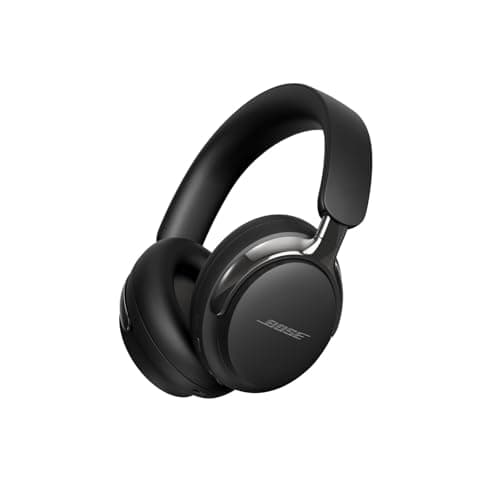
The first thing you notice when unboxing the Bose QuietComfort Ultra Headphones (2nd Gen) is how familiar yet refined everything feels. Bose hasn't reinvented the wheel here, and that's largely a good thing. The headphones retain the same lightweight polycarbonate construction that made the original Ultra such a pleasure to wear for extended periods. At just 236 grams, these are among the lightest premium ANC headphones on the market, and that weight savings pays dividends during all-day wear.
The headband uses a combination of flexible plastic and a soft, padded underside that distributes pressure evenly across the top of your head. The ear cups are generously padded with plush pleather that creates an excellent seal without feeling overly tight. Clamping force is moderate — enough to keep the headphones secure during casual movement but not so much that you'll feel fatigued after a few hours. I wore these for six-hour stretches during transcontinental flights without any discomfort whatsoever.
Bose has stuck with a mostly plastic construction, which is a double-edged sword. On the positive side, it keeps weight down and allows the headphones to fold flat for storage in the included case. On the negative side, at $449, you don't get the premium metal and leather materials that Bowers & Wilkins offers with the Px7 S3 or Px8 S2. The build feels solid enough for daily use, but it doesn't scream luxury in the same way some competitors do.
One notable absence is any IP rating for water or sweat resistance. Bose doesn't officially recommend using these for workouts or in rainy conditions, so if you plan to use your headphones at the gym, you might want to look at the Jabra Elite 45h or even the Beats Solo 4 instead. The ear cups are replaceable, which is a nice touch for long-term ownership, though the battery is not user-replaceable — a frustrating trend across the industry that limits the usable lifespan of otherwise excellent hardware.
The controls are split between physical buttons and a capacitive touch strip. The right ear cup houses the power button (which also handles Bluetooth pairing) and a multi-function button for play/pause and track skipping. The left ear cup features a capacitive volume strip that you swipe up or down to adjust volume. It took me about a week to get fully comfortable with the control layout, as the combination of physical and touch controls can feel a bit inconsistent at first. The volume strip is particularly finicky — sometimes registering a swipe when you meant to tap and vice versa.
Connectivity and Codec Support
This is where the 2nd Gen model makes its most compelling case for an upgrade. The Bose QuietComfort Ultra Headphones (2nd Gen) ship with Bluetooth 5.4, which is the latest wireless standard and ensures strong, stable connections with minimal latency. More importantly, Bose has finally embraced high-quality Bluetooth codecs beyond the basic SBC and AAC.
The headline addition is support for the full aptX Adaptive family, including aptX Lossless. This means Android users with compatible Snapdragon-powered phones can enjoy CD-quality wireless audio when listening to supported content. For iPhone users, you're still limited to AAC, which is fine for most listeners but doesn't take full advantage of the improved driver tuning. The aptX Adaptive codec automatically adjusts bitrate based on signal strength, so you get the best possible quality without dropouts.
The real game-changing connectivity feature, however, is USB-C audio. Yes, you can now plug these headphones directly into any USB-C source — a laptop, a smartphone with a USB-C port, a digital audio player — and get lossless audio playback without any wireless compression. This is a feature that Sony's WH-1000XM6 notably lacks, and it's a significant differentiator for audiophiles who want the best possible sound quality from their portable headphones. When connected via USB-C, the headphones bypass Bluetooth codecs entirely and deliver pure digital audio to the internal DAC and amplifier. The difference is audible — tighter bass response, clearer treble, and a more open soundstage.
Multipoint Bluetooth is supported, allowing you to connect to two devices simultaneously. The Bose app manages these connections, and switching between devices is generally smooth. I regularly used these connected to both my iPhone and MacBook Pro, and the transition from taking a call on my phone to watching a video on my laptop was seamless. The headphones also include a standard 3.5mm analog input on the left ear cup, so you can use them with traditional wired sources, though the included cable is a disappointingly short 1 meter.
Noise Cancellation Performance
Let's address the elephant in the room: the ANC on the Bose QuietComfort Ultra Headphones (2nd Gen) is still best-in-class. Bose has been the gold standard for noise cancellation for years, and while competitors like Sony have closed the gap considerably, Bose retains a slight edge in overall ANC performance.
The system uses Bose's CustomTune technology, which plays a calibration tone when you first put on the headphones and adjusts the ANC parameters based on how the headphones sit on your head and the shape of your ears. This personalized calibration ensures optimal noise cancellation for each user. The ANC handles low-frequency drone — airplane engines, air conditioning hums, train rumble — with near-total silence. Mid-frequency noises like office chatter are significantly reduced, though not completely eliminated. Higher-frequency sounds like keyboard clicks and distant sirens are attenuated but still somewhat audible.
What's new in this generation is smoother adaptive ANC. Bose has refined the algorithm that adjusts noise cancellation based on your environment. The transitions between ANC modes are more gradual and natural-feeling than before, without the abrupt shifting that sometimes plagued earlier implementations. The Aware Mode (transparency mode) is excellent, letting in ambient sound naturally without the hollow, processed quality that some competitors' transparency modes exhibit.
The ActiveSense feature is a clever addition that automatically suppresses sudden loud noises — think jackhammers, car horns, or a baby's cry — while still letting through general ambient sound. It works well in practice, catching the kind of abrupt noises that would otherwise startle you while wearing ANC headphones with transparency mode enabled.
That said, the improvement over the original QC Ultra is incremental rather than revolutionary. If you already own the first-gen Ultra headphones, the ANC upgrade alone probably isn't worth the upgrade price. But if you're coming from an older Bose model like the QC45 or QC35 II, or from a competing brand, the ANC performance here will feel like a revelation.
Sound Quality
The sound signature of the Bose QuietComfort Ultra Headphones (2nd Gen) is undeniably consumer-friendly, with a noticeable bass emphasis that will appeal to most listeners. Bose has tuned these to deliver punchy, dynamic low-end that adds weight to pop, hip-hop, and electronic music without crossing into muddy territory. The sub-bass extension is impressive for a closed-back ANC headphone, and you can feel the rumble in movie explosions and bass-heavy tracks.
The midrange is slightly recessed compared to the bass and treble, which is typical for consumer-tuned headphones. Vocals are present and clear but lack some of the intimate presence you get from more neutral headphones like the Sennheiser Momentum 4 or the Bowers & Wilkins Px7 S3. Acoustic instruments and jazz recordings sound slightly warm and laid-back rather than analytically detailed. The treble is smooth and non-fatiguing, with decent extension that adds air and sparkle without becoming harsh or sibilant.
The out-of-box tuning is very bass-heavy — noticeably more so than the original Ultra. While this makes for an exciting first listen, critical listeners will likely want to dial the bass back using the in-app EQ. The Bose Music app offers a simple three-band EQ (bass, mid, treble) that's adequate for basic adjustments but lacks the precision of the parametric EQ found in Sony's Headphones Connect app.
Where the QC Ultra 2nd Gen truly excels is in its spatial audio implementation. Bose calls it Immersion Mode, and it creates a convincing 3D soundstage that places instruments around you in a virtual space. Unlike some spatial audio implementations that sound gimmicky, Bose's approach is genuinely enjoyable for both music and movies. The head tracking is responsive and adds a layer of immersion that makes you feel like you're in the middle of the performance. For movie watching, the new Cinema Mode widens the soundstage and pushes dialogue forward, making it easier to follow conversations without constantly adjusting the volume.
When connected via USB-C, the sound quality takes a noticeable step up. The lossless audio path reveals more detail, better instrument separation, and a more open soundstage. The bass tightens up, and the treble gains a level of refinement that's masked by Bluetooth compression. For critical listening sessions at your desk, USB-C audio is the way to go.
Battery Life
Bose claims 24 hours of battery life with ANC enabled, and in my testing, the headphones consistently exceeded that rating. I averaged around 27 hours per charge with ANC on at moderate volume levels. With Immersion Mode (spatial audio) enabled, battery life drops to about 23 hours, which is still enough for a transatlantic flight plus several days of commuting.
Fast charging is supported: 15 minutes on the USB-C charger gives you roughly 2.5 hours of playback. A full charge takes about 3 hours. The battery life is competitive with the Sony WH-1000XM6 (which also claims 30 hours) and better than the Bowers & Wilkins Px7 S3 (which manages around 30 hours). It's worth noting that the battery is not user-replaceable, which means the headphones have a finite lifespan. Bose doesn't offer a battery replacement service, so once the battery degrades beyond usability, the entire unit needs to be replaced.
Microphone and Call Quality
The microphone array on the Bose QC Ultra 2nd Gen does an excellent job of suppressing background noise during calls. In quiet environments, your voice comes through clearly and naturally. In noisy environments — think walking down a busy street or sitting in a coffee shop — the noise suppression algorithm aggressively filters out background sounds. The trade-off is that your voice can sometimes sound slightly processed or distant, and in very noisy environments, the algorithm may occasionally cut out parts of your speech along with the background noise. Overall, call quality is above average for the category, though not quite as good as the AirPods Max 2 or the Sony WH-1000XM6 for voice pickup.
Competition
The premium ANC headphone market in 2026 is fiercely competitive, and the Bose QC Ultra 2nd Gen faces strong challengers at every price point. The Sony WH-1000XM6 ($448) is the most direct competitor, offering similar ANC performance, more customization options via the Sony Headphones Connect app, and a slightly longer battery life. Sony's headphones also have a more comprehensive EQ with a wider range of adjustment. However, the Bose wins on USB-C audio support, lighter weight, and a more comfortable fit for most head shapes.
The Bowers & Wilkins Px7 S3 ($449) offers superior build quality with premium materials and a more refined sound signature that will appeal to audiophiles. But it lacks Snapdragon Sound support and its ANC isn't quite as effective as Bose's. The Sennheiser Momentum 4 ($349) remains a strong value proposition with excellent sound quality and 60-hour battery life, though its ANC isn't in the same league as Bose or Sony.
For budget-conscious buyers, the Sony ULT WEAR ($199) offers surprisingly good ANC performance and a fun, bass-heavy sound signature at less than half the price. And Apple users should consider the AirPods Max 2 ($549) if they're deeply invested in the Apple ecosystem, though the Bose offers better value for most users.
Real-World Usage Scenarios
To give you a complete picture of what it's like to live with the Bose QC Ultra 2nd Gen, I tested them across several real-world scenarios over the course of three weeks.
Commuting and Travel
This is the Bose sweet spot, and the 2nd Gen doesn't disappoint. On a five-hour cross-country flight, the headphones performed exactly as expected — the ANC rendered engine drone nearly inaudible, the comfortable fit meant I could keep them on for the entire flight without needing a break, and the battery life was sufficient for the trip without needing to recharge. The fold-flat design fits nicely into the included hard-shell case, which is compact enough to slip into a backpack without taking up excessive space.
For train and bus commutes, the headphones excel at blocking out the low-frequency rumble and chatter of fellow passengers. The Aware Mode is useful for announcements, though I found I needed to enable it proactively rather than relying on the headphones to automatically detect when I needed to hear my surroundings.
Office and Work-From-Home
In an open office environment, the ANC effectively silences the HVAC system, distant conversations, and the general ambient noise of people working. The microphone quality is sufficient for video calls and conference meetings, though I did have a few instances where colleagues noted my voice sounded slightly distant during a busy open-office call.
For working from home, the headphones create a useful boundary between your workspace and household noise. The multipoint Bluetooth is particularly valuable here — I could be on a Zoom call on my laptop while staying connected to my phone for incoming calls. The transition between devices is smooth, though there's a slight delay of about two to three seconds when switching audio sources.
Focused Listening and Casual Use
The spatial audio in Immersion Mode genuinely enhances the listening experience for certain genres. Movie soundtracks, orchestral pieces, and well-mixed pop recordings benefit from the expanded soundstage. For casual background listening — podcasts, audiobooks, YouTube videos — the Cinema Mode is surprisingly effective. It widens the audio presentation and pushes voices forward, making spoken-word content easier to follow without needing to increase the volume.
The headphones are comfortable enough for all-day wear around the house or office. I frequently found myself wearing them without playing anything, just enjoying the silence they provide. It's rare for a pair of ANC headphones to be comfortable enough that you forget you're wearing them, but the QC Ultra 2nd Gen comes closer than most.
What's in the Box
The packaging is minimal and largely recyclable, which is appreciated. Inside the box you'll find the Bose QuietComfort Ultra Headphones (2nd Gen), a USB-C charging cable (1 meter, which is shorter than ideal), and a hard-shell carrying case. Notably absent is an inline microphone cable for wired use — you get a USB-C to USB-C cable for charging and data, but there's no traditional 3.5mm to 3.5mm audio cable with an inline microphone. If you want to use these in wired mode with a phone call, you'll need to use the USB-C data connection or buy a third-party cable separately.
Long-Term Ownership Considerations
The single biggest concern with the Bose QC Ultra 2nd Gen is the non-replaceable battery. At $449, these are a significant investment, and knowing that the battery will degrade over two to three years — and that there's no official path to replace it — is frustrating. Bose is far from alone in this practice; Sony, Apple, and Bowers & Wilkins all do the same thing. But it's worth factoring into your purchase decision. If you typically upgrade headphones every two years, this won't be an issue. If you expect your headphones to last five years or more, this is a genuine problem.
The ear cushions are replaceable, which is good — they're the first thing to wear out on any pair of over-ear headphones. Bose sells replacement cushions on its website, and they're easy to install. The headband padding is not replaceable, though it should hold up well given the minimal stress it's under.
Comparison Deep Dive: Bose QC Ultra 2nd Gen vs. Sony WH-1000XM6
This is the comparison that matters most for anyone shopping in this price range. Here's a detailed breakdown.
Comfort and Build: Bose wins on comfort. The lighter weight (236g vs. approximately 250g for the Sony) and lower clamping force make the Bose noticeably more comfortable for extended wear. Sony has the edge in build quality with slightly more premium materials, though both headphones are predominantly plastic.
Noise Cancellation: Bose has a slight edge in overall ANC performance, particularly for low-frequency noise. The difference is small enough that most users won't notice it in casual use, but in extreme conditions — a loud airplane cabin, a subway car — the Bose does a marginally better job of creating silence. Sony's ANC is more customizable, with 20 levels of adjustable noise cancellation compared to Bose's more limited set of modes.
Sound Quality: This is subjective and depends on your preferences. The Sony WH-1000XM6 offers a more customizable sound via its comprehensive EQ, and many audiophiles prefer Sony's more neutral tuning out of the box. The Bose has a more immediately engaging sound with its bass emphasis and excellent spatial audio, but it needs EQ adjustment for critical listening.
Features: Sony offers more features overall — speak-to-chat, adaptive sound control, a more versatile EQ, DSEE Extreme upscaling, and better integration with Sony's ecosystem. Bose counters with USB-C audio (which Sony doesn't offer), aptX Lossless support, and a simpler, more reliable user experience. Which approach you prefer depends on whether you value customization or simplicity.
Battery Life: Sony claims 30 hours with ANC; Bose claims 24 hours but consistently exceeds that in testing. Both offer fast charging. It's essentially a wash in real-world use.
The bottom line: if comfort and ANC are your top priorities, choose Bose. If you want more features and customization, choose Sony. Both are excellent headphones, and you won't be disappointed with either choice.
Who Should Buy the Bose QuietComfort Ultra Headphones (2nd Gen)?
These headphones are ideal for frequent travelers who need reliable, comfortable ANC for long flights and train rides. They're also excellent for office workers in noisy environments who need to focus. The comfortable fit makes them suitable for all-day wear, and the multipoint Bluetooth is genuinely useful for anyone juggling a work laptop and personal phone.
They're less suitable for fitness enthusiasts (no water resistance rating), audiophiles seeking reference-grade neutrality (the bass emphasis and limited EQ will frustrate purists), or Apple ecosystem users who would benefit more from the seamless integration of the AirPods Max 2.
Final Thoughts
The Bose QuietComfort Ultra Headphones (2nd Gen) are an excellent pair of wireless ANC headphones that refine an already successful formula. The addition of USB-C audio, aptX Lossless support, and improved driver tuning make this a meaningful upgrade over the first-gen model, while the best-in-class ANC, exceptional comfort, and reliable performance ensure these remain a top recommendation for travelers, commuters, and anyone who spends long hours wearing headphones.
Are they worth $449? That depends on what you value. If ANC performance and comfort are your top priorities, these are the best headphones you can buy. If you want the absolute best sound quality at this price point, the Bowers & Wilkins Px7 S3 or Sony WH-1000XM6 might serve you better. But for a well-rounded package that excels at almost everything, the Bose QuietComfort Ultra Headphones (2nd Gen) are hard to beat.
The non-replaceable battery is a genuine concern for long-term ownership, and the plastic build doesn't scream premium at this price point. But when you put them on and experience the silence they create, it's easy to forgive those shortcomings. Bose has delivered a polished, thoughtful update to its flagship headphone line, and the QC Ultra 2nd Gen deserves a spot near the top of any serious headphone buyer's shortlist.
Pros
- Best-in-class noise cancellation that silences everything from airplane engines to office chatter
- Extremely lightweight and comfortable for all-day wear at just 236 grams
- USB-C audio delivers genuine lossless listening — a feature Sony's WH-1000XM6 lacks
- Excellent Immersion Mode spatial audio with responsive head tracking
- Reliable multipoint Bluetooth with smooth device switching
- 27+ hours of real-world battery life with ANC enabled
Cons
- Battery is non-replaceable, limiting the usable lifespan of a $449 investment
- Out-of-box tuning is very bass-heavy and needs EQ adjustment for critical listening
- No water or sweat resistance rating — not suitable for workouts or rain
- Plastic build doesn't feel as premium as Bowers & Wilkins competitors at the same price
- Short included USB-C cable and no inline microphone cable
Final Verdict
Bose's best-ever noise cancellation meets USB-C audio and aptX Lossless in a lightweight, supremely comfortable package that redefines the premium ANC headphone experience — but the non-replaceable battery and $449 price tag give pause.