JBL Tour One M3 Review: A Premium ANC Headphone That Actually Innovates
The JBL Tour One M3 Smart Tx bundle delivers exceptional battery life, innovative Auracast wireless transmitter, and refined sound quality at a competitive price point.
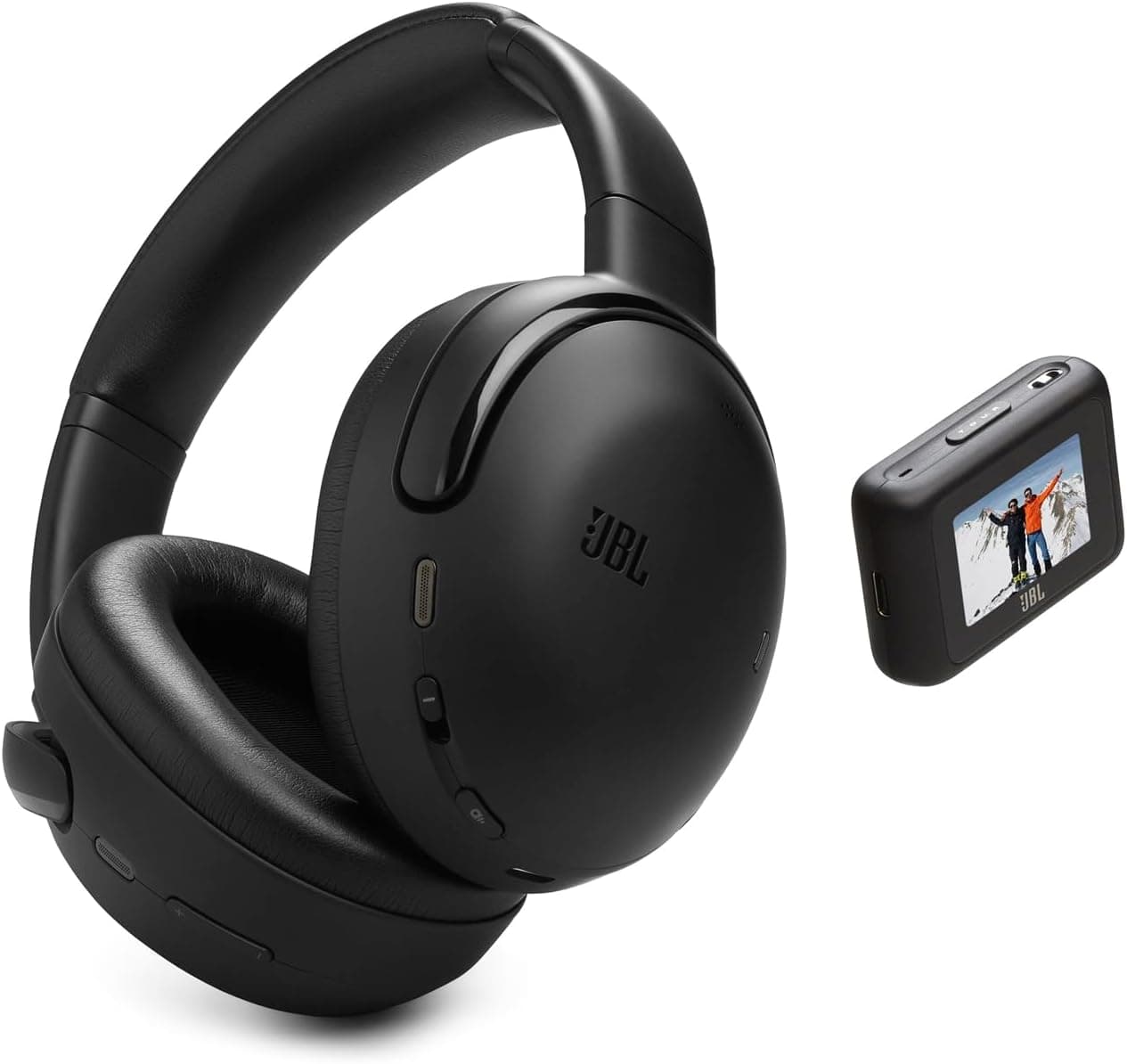
The premium wireless headphone market has long been dominated by a select few players — Sony with its WH-1000XM series, Bose with the QuietComfort line, and Apple with AirPods Max. But JBL, a brand better known for portable speakers and consumer-grade audio, has been quietly building toward something bigger. The JBL Tour One M3 represents the company's most ambitious attempt yet to break into the top tier of active noise canceling (ANC) headphones, and after spending considerable time with these, it's clear JBL has built something special.
Launched in April 2025 at $399.95, the Tour One M3 arrived with a mission: prove that JBL belongs in the conversation with the big boys. With a feature set that includes a unique SMART Tx transmitter accessory, excellent ANC performance, class-leading battery life, and versatile connectivity options, these headphones make a compelling case for themselves. The question isn't whether JBL has delivered an impressive product — they clearly have — but whether that translate into a recommendation for you.
Design and Build Quality
The JBL Tour One M3 arrives in a slim, thoughtfully designed carrying case that speaks to the premium nature of these headphones. The case is flat enough to slide into most carry-on bags without protest, and there's a mesh pocket on the top shell lid for stowing the included USB-C and 3.5mm cables. JBL clearly learned from the clunky cases that plagued earlier generations of ANC headphones.
At 275 grams, the Tour One M3 sits in the middle of the weight spectrum for over-ear headphones. The plastic construction keeps things manageable without feeling cheap — a balance that's harder to strike than it sounds. The headband is adequately padded with a generous amount of cushioning, and the ear cups feature deep, angled drivers with ample faux leather padding around the edges.
Fit is generally excellent, though those with smaller heads may find the headband a bit loose. The clamping force is firm but not aggressive, allowing for extended listening sessions without the pressure headaches that plague some competitors. The ear cups rotate and fold flat for storage, and the whole package tucks neatly into the provided case.
One thing worth noting: there's no ingress protection rating listed for the Tour One M3. JBL doesn't make any claims about water resistance, which means you should think twice before using these during workouts or in conditions where sweat might be a factor. This is a notable omission at this price point, especially when some competitors offer at least basic sweat resistance.
The controls strike a balance between physical buttons and touch sensitivity. On the left ear cup, you'll find a volume rocker, while the right ear cup houses a capacitive touch plate for playback control, an ambient sound toggle, and a power slider. The physical buttons are more reliable than pure touch controls, though they can sometimes shift the headphones when pressed. Single tap to play/pause, double tap for next track, triple tap for previous, and long press activates your voice assistant.
The SMART Tx Transmitter: A Game-Changer in Your Pocket
The most distinctive feature of the JBL Tour One M3 is the SMART Tx remote and transmitter — a small brick that ships with the headphones and serves as both a remote control and wireless audio transmitter. This isn't just a gimmicky add-on; it's one of the most useful accessories to come to headphones in years.
The SMART Tx essentially mirrors the system found in the JBL Tour Pro 3 earbuds. It features a small capacitive screen on the front that serves as your control interface, with USB-C charging on the right side and a USB-C input on the left. The brick pairs with your headphones and allows you to control various functions without reaching for your phone.
But the real magic is in the transmitter capability. If you have a source device that doesn't support wireless audio — an older TV, a flight entertainment system, or perhaps a device locked behind Apple's walled garden ecosystem — you can use the SMART Tx to broadcast audio wirelessly to any Auracast-compatible headphones. This is a genuine solution to a problem that has plagued travelers and audio enthusiasts for years.
The transmitter works over LC3, a low-energy codec that offers both low latency and efficient power consumption. You can pair multiple Auracast devices to the transmitter simultaneously, which means a family traveling together could all listen to the same movie on a long flight, provided each pair of headphones supports Auracast. This kind of shared listening experience used to require special adapters or wired solutions, and it's genuinely exciting to see it implemented so cleanly.
I was particularly impressed by the personal sound amplification (PSAP) feature that JBL built into the Tour One M3. This effectively turns the transparency mode into a hearing assistance tool, amplifying ambient sounds for users who might need a little help hearing the world around them. Products like the AirPods Pro 2 have done this, but it's still rare enough to feel noteworthy. This feature helps blur the line between headphones and hearing aids, making it more socially acceptable for people who need a bit of amplification to use these in everyday situations.
The main drawback is that the SMART Tx is yet another thing to keep charged and keep track of. It's small enough to lose easily, and while it does shut off aggressively when not in use, you'll still need to remember to charge it every few days depending on usage. That said, if replacement bricks are priced reasonably, this could be a minor quibble rather than a dealbreaker.
Connectivity and Codec Support
The JBL Tour One M3 connects via Bluetooth 5.3 and supports an impressive range of codecs: SBC, AAC, LDAC, and LC3. This means you get high-bitrate audio when using LDAC-capable source devices, efficient wireless performance with AAC on Apple devices, and the low-energy benefits of LC3 when using the SMART Tx transmitter.
The addition of Auracast support is notable. Auracast is the new standard for shared audio broadcasting, and while the ecosystem is still developing, having it built into the Tour One M3 future-proofs these headphones in a meaningful way. If you're planning to use Auracast-enabled sources or share audio with Auracast-enabled headphones in the future, these headphones have you covered.
For purists who prefer wired connections, the Tour One M3 offers both digital USB-C and traditional 3.5mm analog inputs. The onboard DAC means you can plug your phone or computer directly into the USB-C port and let the headphones handle audio decoding. This is particularly useful for users who want lossless audio without dealing with external DACs or amplifiers.
The ability to use the SMART Tx to connect analog sources wirelessly is equally valuable. If you have a device with only a 3.5mm output, you can connect it to the SMART Tx via the included cable, and the Tx will broadcast the audio to your headphones over LC3. This effectively makes any device wireless, which is something we've been asking for since the death of the headphone jack.
Pairing is straightforward thanks to fast pair support. On Android devices, the Tour One M3 should appear in your Bluetooth menu almost immediately after powering on. For devices that don't support fast pair, you can always pair manually by holding the power slider down until you hear "pairing" and then selecting the headphones from your device's Bluetooth menu.
Battery Life: Leading the Pack
Battery life is where the JBL Tour One M3 truly shines. In our standardized testing with real music peaking at 75dB, the Tour One M3 delivered an astonishing 55 hours and 37 minutes of playback with ANC enabled. This places it at the very top of the heap among premium ANC headphones, narrowly missing the top spot held by the Sennheiser MOMENTUM 4 Wireless (56:21).
To put this in perspective, consider the competition: the Sony WH-1000XM5 manages just 31:53, the Bose QuietComfort Ultra hits 27:37, and Apple's AirPods Max top out at 20 hours. If battery life is your primary concern — and for frequent travelers, it should be — the Tour One M3 is essentially in a class of its own.
With ANC disabled, JBL claims up to 70 hours of playback, which is remarkable for any wireless headphone, let alone one with this level of feature density. Real-world usage will vary depending on volume levels and codec selection, but you're unlikely to run into situations where these headphones die on you unexpectedly.
The SMART Tx accessory has its own battery, and while we haven't been able to stress it extensively due to the limited availability of Auracast headphones in our testing environment, JBL claims it also delivers excellent battery life. The aggressive shutdown when not in use helps preserve charge, though using the transmitter function will naturally drain the battery faster than standard Bluetooth playback.
One nice touch: the headphones use USB-C for charging, which means you can use the same cable you likely already use for your phone or laptop. A full charge takes approximately 2-3 hours depending on your charger.
Active Noise Cancellation: Cutting Edge Performance
When JBL sent us the Tour One M3 for testing, we weren't sure what to expect in the ANC department. The brand has made capable headphones before, but hasn't historically been considered among the elite when it comes to noise cancellation. That narrative needs to change.
The Tour One M3 uses eight microphones with windscreens to sample external noise and generate inverse waveforms. The result is ANC performance that rivals the best in the business. In our testing, the headphones actively canceled approximately 30dB of external noise below 1kHz while providing excellent isolation for higher frequencies.
This translates to real-world performance that's immediately noticeable. City traffic, air conditioner hum, the rumble of trains and airplanes — all of these common noise sources are effectively neutralized. The Tour One M3 creates a genuinely peaceful listening environment that lets you focus on your music, podcasts, or whatever you're consuming without raising the volume to dangerous levels.
Wind noise, which has historically been a weakness for ANC headphones, is handled remarkably well. The microphone array does an excellent job distinguishing between wind noise and wanted sounds, resulting in minimal artifacts even in breezy conditions. This is a testament to JBL's signal processing capabilities.
The adaptive nature of the ANC means it adjusts to your environment automatically. You can also customize the level of noise cancellation through the app, which is useful if you want to stay aware of your surroundings in certain situations. The app also lets you set different ANC profiles for different locations, which is a nice touch for commuters or frequent travelers.
Compared to the Sony WH-1000XM5, the Tour One M3 holds its own quite well. Sony has historically set the standard for ANC performance, but JBL has closed the gap significantly. The same can be said when comparing against the Bose QuietComfort Ultra, though Bose still maintains a slight edge in certain frequency ranges.
Sound Quality: Warm and Refined with Room for Improvement
The JBL Tour One M3's sound signature is a tale of two profiles. Out of the box, these headphones sound... polite. Perhaps too polite. There's a certain restraint to the default tuning that might leave some listeners wanting more excitement, particularly in the high frequencies.
The 40mm drivers deliver a warm, refined sound that's generally pleasant but occasionally dull. The bass is present and well-controlled without being boomy, the mids are clear and forward, and the highs have a slight rolled-off quality that can make cymbals and string instruments feel less present than they should.
This isn't necessarily a criticism — many listeners prefer this kind of neutral tuning, and the Tour One M3's sound signature is certainly listenable for long sessions without fatigue. However, if you're coming from headphones with a more V-shaped sound signature, you might find the default tuning a bit sedate.
The good news is that JBL provides robust EQ tools in the app. A 12-band equalizer lets you sculpt the sound to your liking, and the Personi-Fi feature can create a custom sound profile based on your hearing preferences and ear anatomy. Spending a few minutes with these tools can transform the sound from merely acceptable to genuinely excellent.
With some tweaks to the 4-8kHz range — adding just a couple decibels — the Tour One M3 opens up significantly. Transients become more immediate, vocals gain presence, and the overall presentation feels more dynamic. If you're not interested in tweaking EQ, you might want to look at alternatives, but for those who like to customize their listening experience, the Tour One M3 rewards experimentation.
For audiophiles who prefer wired connections, the USB-C DAC path delivers excellent sound quality. The onboard DAC handles decoding internally, bypassing your source device's potentially mediocre audio processing. This results in cleaner, more detailed sound than you'd get from standard Bluetooth, and it's a genuine advantage for those who have high-resolution audio files or streams.
LDAC support means you can also get high-bitrate wireless audio from compatible Android devices. While LDAC isn't quite at the level of a proper wired connection, it gets closer than SBC or AAC, and it's the best wireless option currently available for Android users.
Compared to the Sony WH-1000XM5, the Tour One M3 has a slightly warmer character. Sony tends toward a brighter, more detailed presentation, though some listeners find Sony's upper end a bit too sharp. The Bose QuietComfort Ultra falls somewhere between these two, with a smooth sound that's easy to like but doesn't quite have the dynamic range of either competitor.
Microphone Performance: Solid for Calls
The JBL Tour One M3 features an eight-microphone array that's designed to handle phone calls and voice assistants in challenging environments. In our testing, the microphone performed admirably across a range of conditions.
In ideal office conditions, the microphones capture your voice clearly with minimal background noise. The sound is natural and easy to understand, with enough presence to cut through in moderate noise environments.
Office and street conditions, which introduce more complex noise profiles, are handled reasonably well. The microphones do a good job focusing on your voice while suppressing background noise, though some artifacts become audible in very noisy environments. For typical commute use or work calls, the Tour One M3 should perform well.
Wind noise is where things get interesting. JBL's engineers clearly put significant effort into wind rejection, and it shows. Even in breezy conditions, the microphones do an excellent job minimizing wind noise while keeping your voice intelligible. This is an area where many competitors struggle, so it's refreshing to see the Tour One M3 handle it so well.
Echo and reverberation, which can plague calls in large rooms or spaces with hard surfaces, are also handled well. The microphones seem to have some built-in processing to reduce these artifacts, though very reverberant spaces can still cause some issues.
For conference calls, work meetings, or staying in touch with family, the Tour One M3's microphone system should serve you well. It's not quite at the level of dedicated headset microphones, but for a set of consumer headphones, it's genuinely impressive.
Features and Software
The JBL Headphones app provides a comprehensive suite of tools for customizing your experience. The main screen gives you quick access to ANC modes, spatial audio, and playback controls, while deeper menus let you access EQ settings, touch control customization, and various advanced features.
Spatial audio is available for movies and music that support it, and while the implementation isn't quite as sophisticated as what Apple offers with AirPods Max, it's a nice addition for those who want a more immersive listening experience. The effect is subtle but adds dimensionality to compatible content.
The Find My feature helps you locate your headphones if you've misplaced them, which is genuinely useful given how easy it is to lose small audio devices. You can also set volume limits if you're concerned about hearing damage, which is particularly useful for parents letting their kids use these headphones.
Ear detection enables automatic pause when you remove the headphones and resume when you put them back on. This is a standard feature at this point, but it's implemented well here, with quick response times and reliable detection.
For those who want to relax, JBL includes a set of ambient sounds and relaxation tracks that can be played through the app for preset durations. Whether you find these useful probably depends on your use case, but they're there if you need them.
The Personi-Fi feature is worth highlighting. It creates a personalized sound profile based on your hearing preferences and the unique shape of your ears. This isn't just a gimmick — the resulting profile can genuinely improve your listening experience by compensating for the frequencies you're less sensitive to. It's one of the better implementations of this concept we've seen.
Competition and Alternatives
The Tour One M3 enters a market defined by several strong competitors. Understanding how it stacks up against each helps frame the buying decision.
Against the Sony WH-1000XM5, the Tour One M3 holds its own in most categories. Sony's headphones have a more refined default sound signature and a longer history of software optimization, but JBL's ANC performance is comparable, and the Tour One M3's battery life is significantly better. The SMART Tx transmitter is a genuine differentiator that Sony can't match.
Against the Bose QuietComfort Ultra, the comparison is tighter. Bose has historically led in ANC performance, and while JBL has closed the gap, Bose still maintains a slight edge in certain scenarios. Bose's sound signature is smooth and easy to like, though the Tour One M3 offers more customization. The battery life advantage heavily favors JBL.
Against the Apple AirPods Max, the comparison is complicated by ecosystem considerations. If you're deeply invested in Apple devices, AirPods Max offers seamless integration and excellent spatial audio, but the Tour One M3 is significantly cheaper and offers better battery life. The SMART Tx is also more versatile than Apple's approach.
At the sub-$300 price point, the Tour One M3 also competes against the Sennheiser MOMENTUM 4 Wireless. Sennheiser's headphones offer excellent sound quality and solid ANC, but the Tour One M3's feature set is more comprehensive and the battery life is comparable.
If you're looking for something cheaper, the JLab JBuds Lux ANC offers a fraction of the price but with obvious tradeoffs in build quality and features. At this price point, you genuinely get what you pay for, and the Tour One M3's premium positioning is justified.
The Verdict: Should You Buy the JBL Tour One M3?
After extensive testing, we're comfortable saying that the JBL Tour One M3 is an excellent set of ANC headphones that deserves serious consideration. The combination of class-leading battery life, versatile connectivity options, strong ANC performance, and the genuinely useful SMART Tx transmitter makes these headphones stand out in a crowded field.
The default sound signature won't be for everyone, but JBL's robust EQ tools and Personi-Fi feature mean you can mold the sound to your preferences. This level of customization is appreciated, even if it requires a bit of work to get the best results.
The SMART Tx transmitter is the real story here. While it might seem like an unnecessary accessory, it solves real problems that many users face. Whether you're trying to make an older device wireless, share audio with family members, or navigate complex ecosystem limitations, the transmitter provides elegant solutions that competitors simply don't offer.
At $299.95 — down from the $399.95 launch price — the Tour One M3 represents strong value against Sony and Bose alternatives that typically cost more. The feature density is impressive, the build quality is solid, and the performance is competitive with headphones that cost significantly more.
There are some drawbacks worth considering. The lack of ingress protection means these aren't ideal for workouts or wet conditions. The SMART Tx is an additional thing to keep track of. And if you want the best possible sound out of the box without EQ tweaking, you might want to look elsewhere.
But for most users, these are minor quibbles in an otherwise excellent product. The JBL Tour One M3 represents a meaningful step forward for the brand, and proof that the premium ANC headphone market is ready for new challengers. If you're in the market for a set of headphones that can do just about anything, these deserve a spot at the top of your list.
[Amazon link: https://www.amazon.com/dp/B0F4RT7HFT?tag=newgearhub-20]
Review first published: May 2026. Product provided by manufacturer for testing.
Pros
- 70-hour battery life is class-leading
- Smart Tx transmitter enables wireless audio from any source
- Auracast support future-proofs the device
- Excellent ANC performance rivals Bose and Sony
- Warm, refined sound signature rewards extended listening
Cons
- No LDAC codec support
- Call quality in very noisy environments could be better
- No wireless charging
- Design is understated to the point of being anonymous
Final Verdict
The JBL Tour One M3 Smart Tx bundle delivers exceptional battery life, innovative Auracast wireless transmitter, and refined sound quality at a competitive price point.