LG C6 OLED TV Review: The Best Mid-Range OLED Gets Brighter, Faster, and Smarter
The LG C6 OLED TV delivers the best combination of picture quality, gaming features, and value in LG's 2026 lineup, with the flagship Alpha 11 Gen 3 processor, 4K 165Hz support, and a significant brightness boost over its predecessor.
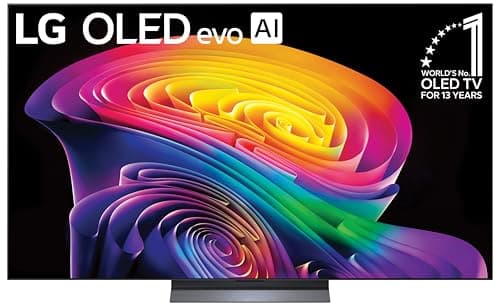
Every year, LG refreshes its C-series OLED lineup, and every year it sets the benchmark for what a premium mid-range television should be. The LG C6 OLED for 2026 is no exception — but it arrives with a twist that makes it more interesting than a typical year-over-year update. For the first time, LG is offering the C-series in two distinct panel variants: the standard C6 (available in 42- to 65-inch sizes) and the C6H (available in 77- and 83-inch sizes), which uses the company's advanced Primary RGB Tandem OLED technology previously reserved for the flagship G-series. That alone makes this generation worth talking about.
But even if you are shopping for the standard WOLED version — which most people will be — the C6 delivers meaningful improvements where it counts. It is brighter than the C5, more color-accurate out of the box, and equipped with the same Alpha 11 Gen 3 processor that powers LG's top-tier G6. It also introduces 4K 165Hz support across all four HDMI 2.1 ports, cementing its position as one of the best gaming displays money can buy.
I have spent several days testing the 65-inch LG C6 (model OLED65C6PUA) across movies, games, streaming content, and real-world living room conditions to see where it shines, where it stumbles, and whether it is worth your hard-earned cash.
Design and Build Quality
The LG C6 retains the same minimalist design language that has defined the C-series for the last several generations, and that is not a bad thing. The TV sits on a pair of sturdy metal feet that keep the panel stable on any standard entertainment center. The bezels are nearly invisible — just a thin silver border that disappears into the background once the screen lights up. At its thinnest point, the panel measures less than a quarter-inch thick, tapering to a slightly thicker bulge at the bottom where the connections, speakers, and processing hardware live.
The rear panel is clean and utilitarian, with cable management channels built into the plastic backing. If you are wall-mounting — and with a TV this thin, you absolutely should — the VESA 300 x 300 pattern makes finding a compatible mount straightforward. The entire build feels premium without being overly flashy. LG has resisted the urge to add gimmicky design elements like motorized stands or RGB lighting, and the TV is better for it.
On the connectivity front, the C6 offers four HDMI 2.1 ports, all of which support the full suite of modern gaming features: 4K at 165Hz, variable refresh rate (VRR), AMD FreeSync Premium, NVIDIA G-Sync Compatible, auto low-latency mode (ALLM), and Dolby Vision Gaming. This is a notable upgrade over the C5, which maxed out at 144Hz. Two USB-A ports, an optical digital audio output, an Ethernet jack, and a combo analog audio-video input round out the I/O. For wireless connectivity, you get Wi-Fi 6E and Bluetooth 5.3.
The included remote has also been updated. The LG Magic Remote now features a more ergonomic sculpted grip, dedicated hotkeys for Netflix, Prime Video, Disney+, and LG Channels, and a built-in gyroscope for air-mouse-style cursor control. It runs on two AAA batteries and includes a microphone for voice commands via webOS 26.
Processor and Smart TV Performance
The biggest internal upgrade for the C6 is the move from the Alpha 9 Gen 2 processor used in the C5 to the Alpha 11 Gen 3 chip — the exact same processor found in the flagship LG G6. This is not a watered-down version or a cut-down derivative. It is the full, uncut Alpha 11, and it makes a noticeable difference in everyday use.
LG claims the new processor delivers a 50 percent faster CPU, a 70 percent faster GPU, and up to five times the AI processing power of the previous generation. In practice, that translates to snappier menu navigation, faster app loading, and more sophisticated image processing. The webOS 26 interface feels buttery smooth — there is none of the hesitation or stutter that occasionally plagued the C5 when switching between HDMI inputs or launching resource-intensive apps.
The AI-powered processing extends to picture quality as well. The Alpha 11 Gen 3 uses deep learning to analyze incoming content in real time, adjusting brightness, contrast, color, and sharpness on a scene-by-scene basis. LG calls this "AI Picture Pro," and while I am generally skeptical of AI-enhanced video processing, the implementation here is surprisingly subtle and effective. Skin tones remain natural even as the algorithm works to reduce noise in dark areas or sharpen fine details in bright landscapes. You can turn it off if you prefer a purist experience, but I found it improved most content without introducing obvious artifacts.
webOS 26 itself is a refinement of an already solid smart TV platform. The home screen has been decluttered compared to previous versions, with fewer rows of promoted content and more emphasis on your recently used apps and inputs. The ad-supported rows are still present — banner ads on the home screen and a screensaver that occasionally displays promotions — but they are less intrusive than on competitors like Samsung's Tizen OS or Roku TV. The Quick Cards feature, which organizes content by activity (Music, Gaming, Sports, etc.), has been expanded and now integrates with more third-party services.
One feature worth highlighting is the "Wow Orchestra" compatibility. If you pair the C6 with a compatible LG soundbar (such as the S95TR or SC9S), the TV's built-in speakers work in concert with the soundbar's drivers to create a wider, more immersive soundstage. It is a genuinely useful feature that adds tangible value if you are building an LG-centric home theater system.
Picture Quality
Let me cut straight to the point: the LG C6 delivers outstanding picture quality that, in several important metrics, rivals last year's G5. The 65-inch WOLED panel I tested produced a peak HDR brightness of 1,438 nits in a 10 percent window when measured in Filmmaker Mode. That is a 22 percent improvement over the C5's 1,180 nits in the same mode, and it puts the C6 in striking distance of the G5's peak output.
Full-screen brightness has also seen a meaningful bump, measuring 245 nits in Filmmaker Mode HDR compared to the C5's 195 nits. That 25 percent increase may not sound dramatic on paper, but in a real-world living room with ambient light, it makes HDR content look punchier and more impactful. Specular highlights — sunlight glinting off a car hood, explosions in an action sequence, the glow of a candle flame — pop with authority without clipping detail.
The C6's color performance is equally impressive. The panel covers 99.7 percent of the DCI-P3 color space, which is essentially perfect coverage for HDR content mastered to that standard. Rec. 2020 coverage comes in at 75.8 percent, which is typical for a WOLED panel at this price point. Color accuracy out of the box measured a Delta-E of just 1.2, which is excellent — colors are vibrant without being cartoonish, and skin tones look natural across a wide range of content.
One of the most welcome improvements over the C5 is the elimination of the faint green tint that affected black-and-white and near-black content on the previous generation. Watching "Sunset Boulevard" in black and white, the C5 had shown a subtle greenish cast in shadow areas that was distracting once you noticed it. The C6 renders monochrome content with true neutrality — grays are gray, not greenish. This is a direct result of the improved panel calibration and the new processor's color mapping capabilities.
Motion handling is also top-notch. The C6 includes LG's "Cinematic Movement" setting, which judder-free motion at 24fps without introducing the soap-opera effect that plagues many interpolation systems. For sports and fast-action content, the "Natural" and "Standard" modes provide smooth, artifact-free motion that keeps detail intact even during rapid camera pans. The 165Hz native refresh rate, combined with the excellent response time inherent to OLED technology, means fast-moving objects stay crisp and well-defined with no motion blur.
Black levels are, as you would expect from any OLED, essentially perfect. Individual pixels turn off completely to produce true black, which gives the C6 infinite contrast ratio and the kind of depth and dimensionality that LCD-based TVs can only dream of. Shadow detail is excellent — in dark scenes from "The Batman," subtle details in shadows and dark clothing remained visible without crushing blacks to featureless voids.
The C6 does have one consistent weakness, and it is the same one that has plagued LG's C-series for years: the screen is reflective. In a bright room with windows behind the viewing area, the C6's glossy panel produces strong mirror-like reflections that can be distracting during dark scenes. If your living room has lots of natural light or bright light sources opposite the TV, you will need to manage that lighting carefully. The step-up G6 uses a fancy anti-glare filter that handles reflections significantly better, but the C6 does without it to keep costs down. For most people watching in a controlled lighting environment, this will not be an issue, but it is worth noting if your setup is particularly bright.
I also observed occasional vertical banding in near-black gradient content — specifically during a pan across a gray sky in "The Green Knight." It was subtle and lasted only a couple of seconds, but purists may notice it. This is a common characteristic of WOLED panels and not a defect unique to the C6.
Gaming Performance
If you are a gamer, the LG C6 should be at the top of your shortlist. With four full HDMI 2.1 ports, 4K at 165Hz, VRR, ALLM, FreeSync Premium, G-Sync Compatible, and Dolby Vision Gaming, there is virtually nothing this TV cannot handle.
Input lag measured 9.2 milliseconds at 4K 60Hz and an astonishing 4.6 milliseconds at 1080p 120Hz. These numbers are essentially imperceptible — even competitive players will not notice any delay between pressing a button and seeing the action on screen. The Game Optimizer dashboard gives you quick access to all the important settings — VRR status, refresh rate, input lag mode, and picture presets — without needing to dig through menus.
Dolby Vision Gaming at 4K 120Hz works flawlessly on all four HDMI ports, which is still something many competitors cannot claim. Playing "Call of Duty: Black Ops 7" in Dolby Vision at 4K with HDR was a revelation — the combination of OLED contrast, high brightness, smooth motion, and Dolby Vision's expanded color volume produced an image that was visibly superior to standard HDR gaming.
The 165Hz refresh rate support (up from 144Hz on the C5) is a nice bonus for PC gamers with capable hardware, though the difference between 144Hz and 165Hz is marginal enough that most people will not notice. The more meaningful upgrade is having all four HDMI 2.1 ports at full spec — no more fighting over which port supports which feature.
Audio Quality
The LG C6's built-in 2.2-channel 40W speaker system is adequate for casual viewing, but it is not going to replace a dedicated soundbar or home theater system. Dialog is clear and centered, and the addition of a woofer gives the system more low-end presence than the wafer-thin C5. Bass response is noticeably meatier, making action scenes and musical performances feel more substantial.
Dolby Atmos effects are detectable — you can hear overhead and surround cues in Atmos mixes — but the soundstage is narrow and the height virtualization is only partially convincing. At moderate volumes in a small to medium-sized room, the built-in speakers are perfectly usable. But push the volume past 50 percent, and you will start to notice distortion in the upper frequencies and a lack of dynamic headroom.
If you care about sound quality, you should budget for a soundbar. The C6's eARC port supports lossless Dolby Atmos passthrough, and the Wow Orchestra feature mentioned earlier can create a convincing hybrid sound system if you pair it with an LG soundbar. Even a mid-range option like the LG SC9S would transform the audio experience from "fine" to "genuinely immersive."
Comparisons to Competitors
Against last year's LG C5, the C6 represents a meaningful but not mandatory upgrade. The C5 is still an excellent TV, and if you already own one, the C6's improvements in brightness (200 to 250 nits peak), processor speed, and HDMI 2.1 bandwidth will not be immediately visible in everyday viewing. The C6 is a bigger upgrade from the C4 or C3 — owners of those models will see a massive jump in brightness, color volume, and overall performance.
Compared to the Samsung S90F OLED, LG's main competitor in the mid-range OLED space, the C6 holds its own. The S90F uses a QD-OLED panel that offers wider color volume and slightly better peak brightness in certain scenarios, but the C6 counters with better gaming features (165Hz vs. 144Hz, four full HDMI 2.1 ports vs. two on some Samsung models), Dolby Vision support (which Samsung still does not offer), and a more polished smart TV experience. If you watch a lot of Dolby Vision content on Netflix, Disney+, or Apple TV+, the C6 is the better choice.
The Sony Bravia XR A90L is the premium alternative, with Sony's renowned image processing and exceptional motion handling. But it costs significantly more than the C6 for comparable specs, and it does not offer 165Hz support or Dolby Vision Gaming at 4K 120Hz.
For PC users considering the 42-inch C6 as a desktop monitor, it is worth noting that the panel supports 4K 165Hz with full chroma 4:4:4 at 10-bit color depth, making it one of the best large-format monitors for productivity and gaming alike. The 42-inch size works well on a deep desk, though the glossy finish can be reflective in a brightly lit office.
HDR and SDR Content Performance
To truly understand what the LG C6 is capable of, I spent time with a variety of content spanning different formats and genres. Starting with 4K HDR content from physical discs, "Dune: Part Two" on Blu-ray is a masterclass in what OLED can do. The opening scene on Giedi Prime — with its harsh, monochromatic lighting and deep, inky blacks — looks staggeringly good on the C6. The HDR grading in this film pushes brightness peaks well past 1,000 nits, and the C6 handles them without breaking a sweat. Sunlight reflecting off sand, the glow of Sardaukar armor, the fiery explosions during the final battle — all of it looks punchy and three-dimensional in a way that lesser TVs simply cannot reproduce.
SDR content benefits as well, which matters because most of what you watch day-to-day is still standard dynamic range. The C6's SDR brightness of 616 nits full-screen (355 nits at 10 percent window) is more than sufficient for comfortable daytime viewing. The TV handles upscaling of 1080p and even 720p content gracefully — the Alpha 11 Gen 3's AI upscaling adds just enough sharpness and detail without making the image look artificially processed. I watched "Fight Club" on Blu-ray, and the film grain looked natural and film-like rather than chunky or blocky. That is not an easy thing to pull off at this size and resolution.
Streaming content from Netflix, Disney+, and Apple TV+ also looks excellent. The C6 supports Dolby Vision IQ, which uses the TV's ambient light sensor to adjust Dolby Vision tone mapping dynamically based on the room's lighting conditions. In practice, this means the TV looks great whether you are watching in a dark home theater at night or a sunlit living room on a weekend afternoon. Dolby Vision IQ feels less gimmicky than most adaptive picture modes — it genuinely improves the viewing experience across different lighting conditions without making the image look washed out or artificially dimmed.
Smart Features and Daily Usability
Beyond pure picture quality, the C6 excels as a day-to-day television in ways that are easy to overlook on a spec sheet but matter a lot in real-world use. The webOS 26 platform boots from a cold start in under eight seconds and resumes from standby almost instantly. The remote's built-in microphone works reliably for voice search across apps and content sources, and it integrates with both LG's ThinQ smart home platform and Amazon Alexa for voice control of connected devices.
The always-on "AI Sound Pro" feature does a credible job of analyzing incoming audio and adjusting the EQ in real time. It is not a substitute for proper audio calibration, but it does make casual listening more pleasant across a wider range of content types. I appreciated that it automatically boosted dialog clarity during late-night viewing sessions without making voices sound tinny or artificial, even at low volumes.
Multi-view support lets you watch content from two sources side-by-side, which is useful for sports fans who want to keep an eye on two games at once, or for following a tutorial video while working on a project. The screen can be split 50/50 or in a picture-in-picture mode, and you can adjust the audio source independently for each window.
For families, the C6 includes a robust set of parental controls and individual user profiles. Each profile can have its own app lineup, content restrictions, and picture settings — useful if different family members have different preferences for brightness, color temperature, or motion smoothing.
Energy Efficiency and Long-Term Ownership
OLED panels are inherently more power-efficient than comparably sized LCDs with full-array local dimming, and the C6 continues that trend. In standard viewing conditions with moderate brightness, the TV draws between 80 and 130 watts depending on content. In an average household watching four to six hours of programming per day, the C6 will add roughly $15 to $25 per year to your electricity bill — about half of what a similarly sized Mini-LED LCD would consume.
LG backs the C6 with a standard one-year warranty that covers parts and labor, with an option to extend coverage through LG's Premium Care program. The panel itself is rated for 100,000 hours of use before brightness degrades to 50 percent of its original output — that works out to over 30 years at eight hours per day, making panel longevity a non-issue for the vast majority of buyers.
Price and Value
The LG C6 launches at $2,699 for the 65-inch model tested here, though street prices have already dropped below that — Amazon has listed it as low as $1,797, and Best Buy regularly discounts it to around $1,999. At those prices, the C6 represents excellent value for what you are getting: a premium OLED TV with a flagship-grade processor, best-in-class gaming features, and picture quality that was exclusive to much more expensive TVs just a year ago.
The 55-inch model is available for around $1,499, while the 77-inch C6H (with the superior RGB Tandem panel) starts at roughly $3,499. If you have the space and budget, the 77-inch C6H is the one to get — the Primary RGB Tandem panel delivers significantly higher brightness and color volume that makes the standard C6 look modest by comparison. But for most living rooms, the 65-inch standard C6 at or below $2,000 is the sweet spot.
Who Should Buy the LG C6
The LG C6 is an easy recommendation for several distinct groups of buyers. If you are building a home theater on a budget and want the best possible picture quality without stepping up to the G-series, the C6 delivers 95 percent of the experience at roughly 70 percent of the price. Gamers will love the full HDMI 2.1 suite, 165Hz support, and Dolby Vision Gaming across all ports. And if you are upgrading from an OLED TV that is three or more years old — a C3, C2, or earlier — the C6 will feel like a generational leap.
If you already own a C5 and are happy with it, there is no pressing reason to upgrade. The improvements are real but incremental, and your money is probably better spent on a soundbar or waiting for next year's model. Similarly, if you watch TV exclusively in a very bright room with lots of natural light, the reflective screen might push you toward a brighter QD-OLED or a well-reviewed Mini-LED LCD like the Sony Bravia 9 or the Samsung QN90F.
But for the vast majority of buyers — anyone looking for a premium television that excels at movies, sports, gaming, and streaming — the LG C6 is one of the finest OLED TVs money can buy in 2026. It takes everything that made the C-series great and refines it in meaningful ways without losing sight of the value equation that made it popular in the first place. The result is a television that earns its place as one of the best all-around TVs of the year.
You can check the latest price for the LG C6 on Amazon here or compare configurations at Best Buy and B&H Photo.
Related: LG C5 OLED 65-Inch · LG 45GX950A-B UltraGear
Pros
- Superb HDR brightness and contrast with excellent shadow detail
- Best-in-class gaming features with four full HDMI 2.1 ports at 165Hz
- Excellent color accuracy out of the box with Delta-E of just 1.2
- Flagship Alpha 11 Gen 3 processor delivers fast, responsive smart TV performance
- Outstanding value at current street prices under $2,000
Cons
- Reflective screen can be distracting in bright rooms with windows opposite the TV
- No HDR10+ or DTS audio support limits compatibility with some content
- Built-in audio is adequate but a soundbar is strongly recommended
- Occasional vertical banding visible in near-black gradient content
Final Verdict
The LG C6 OLED TV delivers the best combination of picture quality, gaming features, and value in LG's 2026 lineup, with the flagship Alpha 11 Gen 3 processor, 4K 165Hz support, and a significant brightness boost over its predecessor.