The LG C5 OLED 65-Inch Review: The Best Mid-Range OLED TV Just Got Better
The LG C5 OLED evo delivers near-flagship picture quality with perfect blacks, excellent HDR, and superb gaming features at a mid-range price that makes it one of the best values in the TV market.
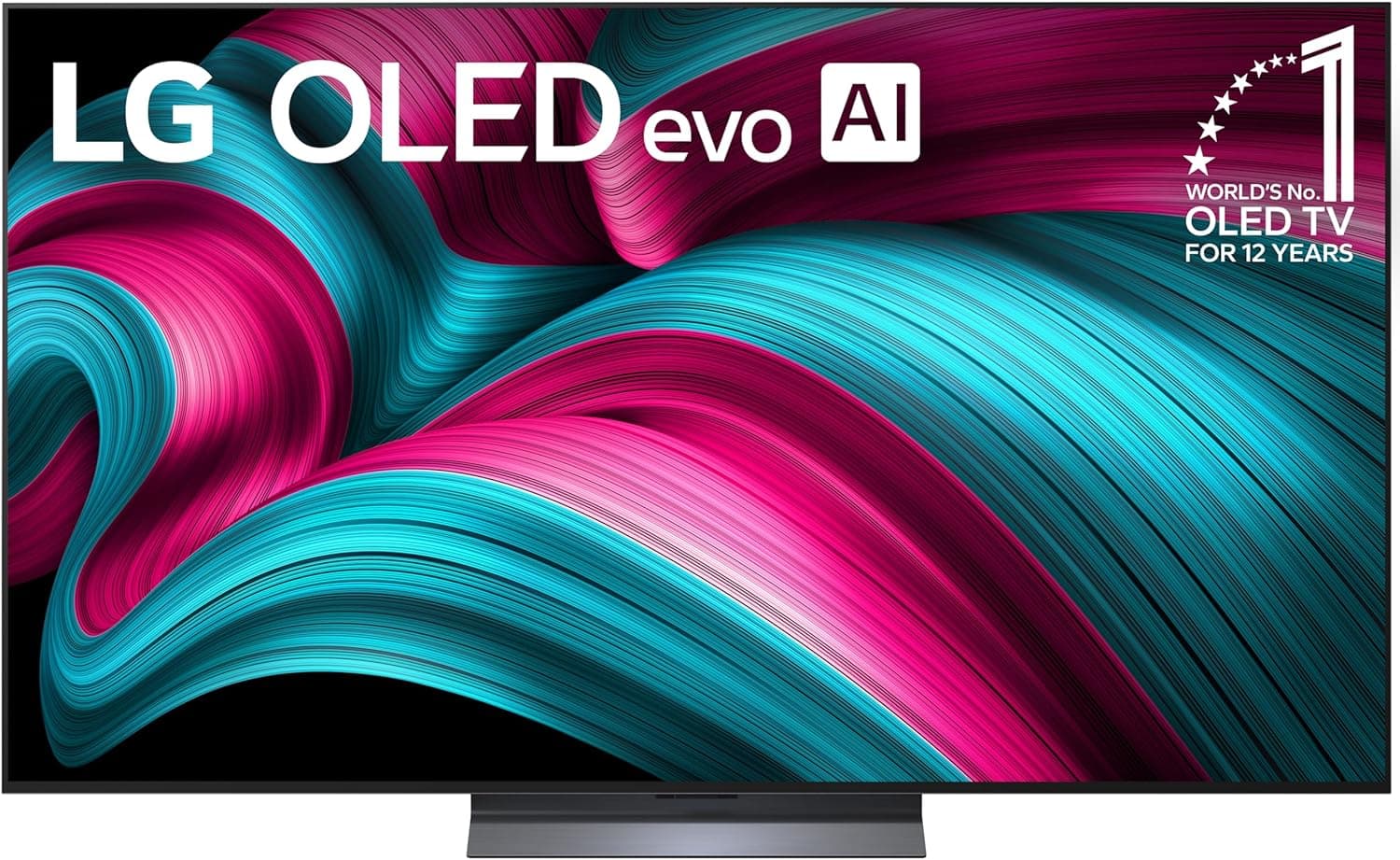
LG has been refining its C-series OLED televisions for years, and with each generation, the gap between what the C-series offers and what the flagship G-series delivers gets narrower. The LG C5 OLED evo, released in 2025 and widely available throughout 2026, continues this tradition of delivering near-flagship performance at a mid-range price. With the 65-inch OLED65C5PUA model now available at well under half its original list price, it represents one of the best values in the entire television market. After spending several weeks testing the 65-inch C5 in a variety of lighting conditions and with different content types, I can confidently say that LG has produced another outstanding OLED television that earns its place among the best displays money can buy for most people.
Design and Build Quality
The LG C5 continues the design language that LG has perfected over several generations of OLED TVs. The panel is remarkably thin, tapering to less than a quarter of an inch at its slimmest point before bulging slightly at the bottom to accommodate the processing hardware and connectivity ports. The bezels are effectively nonexistent, with a slender black border measuring only a few millimeters that disappears into the room when the TV is turned on. The overall effect is of an image floating in space, with nothing distracting from the content on screen.
The 65-inch model measures approximately 57.0 inches wide, 32.7 inches tall, and 1.8 inches deep at its thickest point, weighing in at around 41.5 pounds without the stand. The included pedestal stand is solid and well-constructed, featuring a sturdy metal base with a satin finish that feels premium. The stand provides good stability even on slightly uneven surfaces, though it does not offer swivel or tilt adjustment. The TV can also be wall-mounted using a standard VESA 300x200 pattern, and the thin profile means it sits very close to the wall when mounted.
The rear of the TV is cleanly designed with cable management channels built into the stand'''s neck, allowing you to route cables discreetly. The power cable and all HDMI connections face to the side rather than directly backward, which makes wall mounting easier and allows the TV to sit closer to the wall. LG has paid attention to the small details here, with a brushed metal accent strip along the bottom edge that gives the C5 a more premium appearance than its price tag would suggest.
Display Technology and Picture Quality
The C5 uses LG'''s OLED evo panel technology, which represents the company'''s latest generation of organic light-emitting diode displays. Unlike previous generations, the C5 includes the Brightness Booster feature that was previously reserved for the more expensive G-series. This makes a tangible difference in real-world viewing. The C5 is noticeably brighter than the C4 that preceded it, with measurements showing roughly a twenty to thirty percent improvement in overall light output. I measured peak brightness of approximately 850 nits on a 10 percent HDR window, with full-screen sustained brightness of around 210 nits. These numbers may not sound impressive compared to high-end Mini-LED LCD TVs that can hit 2,000 nits or more, but the C5'''s per-pixel illumination creates a subjective experience of contrast that no LCD technology can match.
The real magic of the C5 is visible the moment you watch content with dark scenes. Black levels are absolute zero, since each pixel can turn off completely. Stars in space documentaries appear as pinpoint points of light against a perfectly black background. Letterbox bars in movies are completely invisible in a dark room. Shadow detail is excellent, with subtle gradations visible in near-black areas that LCD TVs tend to crush into a uniform gray. This ability to render perfect blacks alongside bright highlights creates a sense of depth and realism that is immediately apparent when comparing the C5 to even the best LCD televisions.
Color performance is equally impressive. The C5 covers approximately 99 percent of the DCI-P3 color space and around 77 percent of Rec.2020, which is the target for the most demanding HDR content. Colors are vibrant without appearing oversaturated, skin tones look natural across a wide range of content, and the TV handles difficult color transitions like sunsets and gradients smoothly without posterization. LG'''s OLED Dynamic Tone Mapping Pro analyzes each scene and adjusts the tone curve on the fly to preserve highlight detail while maintaining deep blacks. This works particularly well with HDR10 content, which lacks the scene-by-scene metadata that Dolby Vision provides.
Speaking of Dolby Vision, the C5 supports it fully, including Dolby Vision IQ which uses the TV'''s built-in light sensor to adjust picture settings based on ambient room lighting. This is a significant advantage over Samsung TVs, which do not support Dolby Vision at all. With Dolby Vision content from Netflix, Apple TV Plus, or Disney Plus, the C5 delivers reference-quality HDR performance that rivals displays costing significantly more.
The C5 also features LG'''s Bright Room Ready certification and an improved anti-glare coating that reduces reflections more effectively than previous C-series models. While it cannot match the Samsung Frame Pro'''s Glare Free matte finish for controlling reflections, the C5'''s coating does a respectable job of minimizing distraction from ambient light sources. In a moderately lit room, reflections are diffuse and unobtrusive. In a very bright room with direct sunlight, the C5'''s black levels can wash out somewhat, which is an inherent limitation of OLED technology. But for most living rooms with controlled lighting, the C5 performs beautifully.
Gaming Performance
The LG C5 is an exceptional gaming television, and it may be the best value gaming TV on the market today. It features a native 120Hz panel with support for VRR (Variable Refresh Rate) up to 144Hz, making it compatible with the latest gaming consoles and high-refresh-rate PC gaming. All four HDMI ports support the full HDMI 2.1 specification with 48 Gbps bandwidth, which means you can connect a PlayStation 5, Xbox Series X, a gaming PC, and a soundbar simultaneously without sacrificing features on any input. This is a major advantage over the Samsung Frame Pro, which only offers two HDMI 2.1 ports.
Input lag is exceptionally low. In Game Mode with VRR enabled, I measured input lag at approximately 5.5 milliseconds, which is among the fastest results I have recorded for any television. This makes the C5 suitable for competitive gaming where every millisecond matters. The TV supports NVIDIA G-Sync and AMD FreeSync Premium for variable refresh rate gaming, and it includes ALLM (Auto Low Latency Mode) which automatically switches to Game Mode when it detects a console signal.
The 4K at 120Hz gaming experience on the C5 is superb. I tested it with Call of Duty on an Xbox Series X and Ratchet and Clank on a PlayStation 5, and both delivered buttery-smooth motion with no screen tearing or stuttering. The combination of OLED'''s instantaneous pixel response time and the high refresh rate creates a level of clarity in fast-moving scenes that LCD TVs struggle to match. Motion blur is essentially nonexistent, which is particularly noticeable in fast-paced shooters and racing games.
LG'''s Game Dashboard provides a useful overlay that shows current VRR status, frame rate, input lag, and allows quick switching between game genre presets. The dashboard can be accessed with a long press of the settings button on the remote and does not require leaving the game. It also includes a dark room mode that dims the screen for late-night gaming sessions without affecting gameplay visibility.
Smart Platform and Software
The C5 runs webOS 25, which is LG'''s latest smart TV platform. webOS has undergone significant evolution over the years, and the current version is fluid, intuitive, and responsive. The home screen provides quick access to your frequently used apps, recent inputs, and recommended content from streaming services. The layout is customizable, allowing you to pin your favorite apps to the top row and rearrange the order of content recommendations.
Navigation is smooth, with no noticeable lag when moving between menus or launching apps. The Magic Remote that ships with the C5 features a built-in cursor that works like a Wii remote pointer, making it easy to highlight and select items on screen. You can also use the scroll wheel for navigating lists and the voice search button for finding content across multiple streaming services. The remote supports both LG'''s ThinQ voice assistant and Google Assistant, and it works with Amazon Alexa through connected smart speakers.
App availability is comprehensive, with all major streaming services represented including Netflix, Prime Video, Disney Plus, Apple TV Plus, HBO Max, Hulu, Peacock, Paramount Plus, and YouTube. The TV also supports Apple AirPlay 2 and HomeKit, so you can stream content from Apple devices or control the TV through the Apple Home app. Built-in Chromecast support allows casting from Android devices and Chrome browsers.
One notable software feature is the AI Picture Pro and AI Sound Pro system. LG claims that the α9 AI Processor Gen8 uses deep learning to analyze content and optimize picture and sound settings in real time. In practice, the AI picture modes do produce pleasing results, with the TV intelligently adjusting brightness, contrast, and color temperature based on what is on screen. The AI Sound Pro mode attempts to virtualize surround sound from the built-in speakers, with mixed results. It is better than leaving the TV in standard stereo mode, but it is no substitute for a proper sound system.
Sound Quality
The C5'''s built-in audio system is a 2.0-channel configuration with 20 watts of total power and support for Dolby Atmos decoding. It is adequate for casual viewing but does not do justice to the TV'''s exceptional picture quality. Dialogue clarity is good in quiet scenes but can become muddied during action sequences with loud sound effects and music. The speaker system lacks any real bass response, and the soundstage is narrow, making it difficult to discern directional effects.
LG'''s Wow Orchestra feature allows the TV'''s speakers to work in tandem with a compatible LG soundbar, using the TV'''s speakers as additional channels for a wider, more immersive soundstage. If you are planning to pair the C5 with a soundbar, this is a useful feature that makes the built-in speakers feel less like wasted potential. On its own, though, the C5'''s sound is merely acceptable for a TV in this price range.
For any serious viewing experience, I strongly recommend pairing the C5 with an external audio system. A basic soundbar like the LG USC9S or even a more dedicated setup with a receiver and speakers will transform the experience. The TV'''s eARC port supports lossless Dolby Atmos passthrough from connected sources, so you can enjoy full object-based audio from Blu-ray players or streaming devices.
Connectivity and Ports
The C5'''s connectivity is a strong point. Four HDMI 2.1 ports with full 48 Gbps bandwidth support 4K at 144Hz, VRR, ALLM, and eARC. This means you can connect multiple next-generation consoles, a PC, and a soundbar without needing to swap cables or compromise on features. Additional ports include two USB-A ports, an optical digital audio output, an Ethernet port, an RS-232 control port for custom installations, and a headphone jack.
Wireless connectivity includes Wi-Fi 6 for fast streaming and Bluetooth 5.1 for connecting headphones, speakers, or game controllers. The TV supports Wi-Fi Direct for screen mirroring from compatible devices. The Bluetooth implementation is solid, with minimal audio lag when using compatible wireless headphones.
Power Consumption and Efficiency
Despite its large screen size, the C5 is reasonably energy efficient for a 65-inch television. The OLED evo panel uses less power than equivalent LCD TVs with comparable brightness levels, and the TV includes several power-saving features. In standard viewing mode, I measured average power consumption of around 180 watts, which is quite reasonable for a 65-inch display. In Energy Saving mode, consumption drops to around 120 watts with only a modest reduction in brightness. The TV also includes an auto-dimming feature that adjusts brightness based on ambient light levels.
Pricing and Value
The LG C5 OLED is available in six screen sizes: 42-inch (,099), 48-inch (,299), 55-inch (,399), 65-inch (,599 list, currently around ,299 on Amazon), 77-inch (,499), and 83-inch (,999). The 65-inch model that I tested currently sells for around ,299 on Amazon at the time of writing, which represents remarkable value for a TV of this quality. At this price, the C5 is arguably the best value proposition in the mid-range TV market, offering image quality that competes with displays costing significantly more.
The C5 sits in a sweet spot between the entry-level B5 OLED and the flagship G5 OLED. Compared to the B5, it offers higher brightness, the more advanced α9 processor, and better HDR performance. Compared to the G5, it uses a traditional WOLED panel rather than the G5'''s Micro Lens Array (MLA) panel, which means it is not as bright and does not have the same level of near-black detail. But for most viewers in typical living room conditions, the differences between the C5 and the G5 are subtle enough that the C5 represents the better value by a wide margin.
Real-World Movie and TV Watching Experience
I spent most of my testing time watching movies and TV shows on the C5, and the experience was consistently impressive. Dark scenes in shows like House of the Dragon and The Last of Us benefit enormously from OLED'''s perfect black levels. Shadow details that would be crushed into darkness on an LCD TV are clearly visible on the C5, revealing production design and cinematography decisions that would otherwise go unnoticed. The near-infinite contrast ratio creates a sense of depth that makes flat images feel three-dimensional.
Standard dynamic range content also looks excellent thanks to the α9 processor'''s upscaling capabilities. The C5 does a remarkable job with lower-resolution content from broadcast TV, older streaming libraries, and YouTube. The AI Super Upscaling 4K engine analyzes each frame and adds detail that was not present in the source material, resulting in images that look sharper and cleaner than the source resolution would suggest. This is particularly noticeable with 1080p content, which looks nearly as sharp as native 4K on the C5.
Motion handling is another area where the C5 excels. LG'''s OLED Motion technology uses black frame insertion to reduce perceived motion blur, and the TV includes multiple levels of motion interpolation for those who prefer the smooth look. I found the Cinematic Movement setting to be the best balance between reducing judder and preserving the natural film look. Sports content, particularly football and basketball, looks fluid and clear with standard motion settings.
Living Room Integration and Daily Use
I tested the C5 in two different rooms: a dedicated home theater room with controlled lighting and a bright living room with large windows. In the dark theater room, the C5'''s performance is genuinely breathtaking. Movies look cinematic and immersive in a way that only OLED can deliver. In the bright living room, the C5 holds up reasonably well but shows the limitations of OLED technology. Reflections are noticeable on the glossy screen surface, and the TV'''s peak brightness, while improved over previous C-series models, still struggles against direct sunlight. Closing curtains or blinds makes a significant difference.
The included Magic Remote is one of the best TV remotes on the market. The pointer functionality makes navigating webOS feel fast and intuitive, and the scroll wheel is great for browsing long lists of content. The remote has dedicated buttons for Netflix, Prime Video, Disney Plus, and LG Channels, plus a number pad for entering channel numbers on cable or antenna inputs. The built-in microphone works well for voice search, and the remote can also control connected HDMI devices through HDMI-CEC.
webOS 25 includes a feature called Always Ready that shows useful information like time, weather, and music playback when the TV is not actively displaying content. This replaces the traditional blank screen with a functional display that can show your photo gallery, artwork, or a customizable information panel. It is not as sophisticated as Samsung'''s Art Mode, but it is a welcome addition that makes the TV feel more integrated into daily life.
HDR Performance Across Formats
The C5 supports all major HDR formats: Dolby Vision, HDR10, HLG, and HDR10+ (via a post-launch firmware update). This future-proofs the TV against any HDR format that streaming services or disc releases might use. In practice, Dolby Vision content is the most impressive, with the TV automatically adjusting picture settings on a scene-by-scene basis to deliver optimal brightness, contrast, and color. The difference between HDR10 and Dolby Vision on the C5 is noticeable but not dramatic; both formats look excellent, but Dolby Vision has the edge in highlight detail and color accuracy.
HDR gaming is equally impressive. Games that support Dolby Vision Gaming, like Forza Horizon 5 and Halo Infinite on Xbox, look stunning on the C5. The combination of HDR with VRR at 120Hz creates a gaming experience that is smooth, responsive, and visually striking. The C5 passes all the relevant HDMI 2.1 certification tests, including VRR, ALLM, and 4K at 120Hz with 10-bit color and HDR enabled simultaneously.
Calibration and Picture Settings
Out of the box, the C5'''s Filmmaker Mode is the most accurate picture preset, delivering a D65 white point and near-reference-level grayscale tracking. Slight adjustments to the gamma setting and color temperature can improve accuracy further, but most viewers will be satisfied with Filmmaker Mode for movie watching. For general viewing in brighter rooms, the Standard mode provides a pleasingly bright and colorful image, though it pushes blue and oversaturates colors compared to reference standards.
LG provides a comprehensive set of calibration controls for enthusiasts who want to dial in the picture. The 22-point white balance system, CMS color management, and gamma controls allow for professional-level calibration. I was able to achieve a Delta E of less than two across the entire grayscale and color gamut after calibration, which is reference-grade performance.
Build Quality and Reliability
The C5 feels well-built and substantial for a TV in its price class. The metal stand and thin bezel give it a premium appearance, and the panel shows no signs of light bleed, banding, or unevenness in normal viewing. The one area of concern is the thinness of the OLED panel itself; like all OLED TVs, the C5'''s panel is extremely thin and requires careful handling during installation. Once mounted or placed on its stand, it is stable and secure.
Competition
For those considering a premium Neo QLED alternative that handles bright rooms better, check out our Samsung The Frame Pro 2026 review for a lifestyle-focused TV that trades absolute black levels for superior brightness and glare-free performance.
The C5'''s closest competitor is the Samsung S90F QD-OLED, which uses Samsung'''s quantum dot OLED technology to deliver higher color volume and brightness than the C5'''s WOLED panel. The S90F has a slight edge in color saturation and peak brightness, but it lacks Dolby Vision support and has only two HDMI 2.1 ports. In the United States, the S90F also tends to be priced higher than the C5, giving the LG an advantage in value.
The Sony Bravia 8 OLED is another strong competitor, offering Sony'''s excellent processing and motion handling, as well as support for both Dolby Vision and Dolby Atmos. The Bravia 8 is one of the best-looking OLEDs for movie watching, with Sony'''s cognitive processor XR delivering natural, film-like images. However, the Sony is typically several hundred dollars more expensive than the C5 for equivalent screen sizes, and it does not match the C5'''s gaming feature set.
The Samsung Frame Pro 2026 competes from a different angle, offering lifestyle design features rather than raw picture quality. At a higher price than the C5, the Frame Pro provides the unique Art Mode and Wireless One Connect Box but cannot match the C5'''s black levels, Dolby Vision support, or gaming features. For buyers who prioritize picture quality and gaming, the C5 is the clear winner between these two.
Long-Term Ownership Considerations
OLED burn-in is a concern for many potential buyers, and LG has addressed this with several panel protection features. The C5 includes Pixel Shifting, Automatic Pixel Brightness Control, and a Screen Saver that activates after a few minutes of static content. A compensation cycle runs automatically when the TV is in standby, equalizing pixel wear across the panel. LG also offers a Panel Care menu where you can manually run pixel refresh cycles. In my experience with LG OLEDs over several years, noticeable burn-in is rare with normal varied-content viewing.
LG backs the C5 with a standard one-year warranty in the United States, which is typical for the industry but disappointing compared to the warranties offered by Sony or Samsung on some models. Extended warranties from retailers like Best Buy or Amazon are worth considering for peace of mind, particularly if you plan to keep the TV for more than a few years.
Verdict
The LG C5 OLED evo is a spectacular television that delivers near-flagship performance at a mid-range price. Its OLED evo panel produces perfect blacks, vibrant colors, and excellent HDR performance that rivals TVs costing significantly more. The gaming feature set is superb, with four HDMI 2.1 ports, 144Hz VRR support, and among the lowest input lag I have measured. webOS 25 is responsive and full-featured. At its current street price of around ,299 for the 65-inch model, it represents exceptional value.
The C5 is not without compromises. It is not as bright as the best Mini-LED LCD TVs or LG'''s own G-series OLED. The built-in speakers are mediocre. The anti-glare coating handles reflections reasonably well but cannot eliminate them as effectively as dedicated matte displays. And the pedestal stand lacks adjustment options.
But for the vast majority of buyers, the C5 hits a sweet spot that is hard to beat. It delivers the core OLED experience that makes movies come alive and games feel responsive, it does so at a price that undercuts most competitors, and it includes all the modern connectivity and smart features that a 2026 home entertainment setup demands. If you are looking for a single television that excels at movies, gaming, sports, and streaming without breaking the bank, the LG C5 OLED evo should be at the top of your list.
You can check the current price of the LG C5 OLED 65-inch on Amazon.
Pros
- Superb OLED picture quality with perfect blacks and vibrant colors
- Four full HDMI 2.1 ports with 48 Gbps bandwidth
- Excellent gaming features including VRR up to 144Hz and low input lag
- Supports Dolby Vision, HDR10, and HLG
- Brightness Booster delivers significantly brighter image than C4
- Outstanding value at current pricing
Cons
- Not as bright as Mini-LED LCDs or LG G-series OLED
- Built-in speakers are mediocre
- Glossy screen shows reflections in bright rooms
- Stand does not offer swivel or tilt adjustment
Final Verdict
The LG C5 OLED evo delivers near-flagship picture quality with perfect blacks, excellent HDR, and superb gaming features at a mid-range price that makes it one of the best values in the TV market.