Samsung The Frame Pro 2026 Review: The Art TV That Finally Does Everything Well
The Samsung The Frame Pro 2026 transforms the living room with a Neo QLED 4K display, Wireless One Connect Box, Glare Free technology, and Art Mode that makes it disappear into your decor when not in use. It delivers serious picture quality for movies and gaming too.
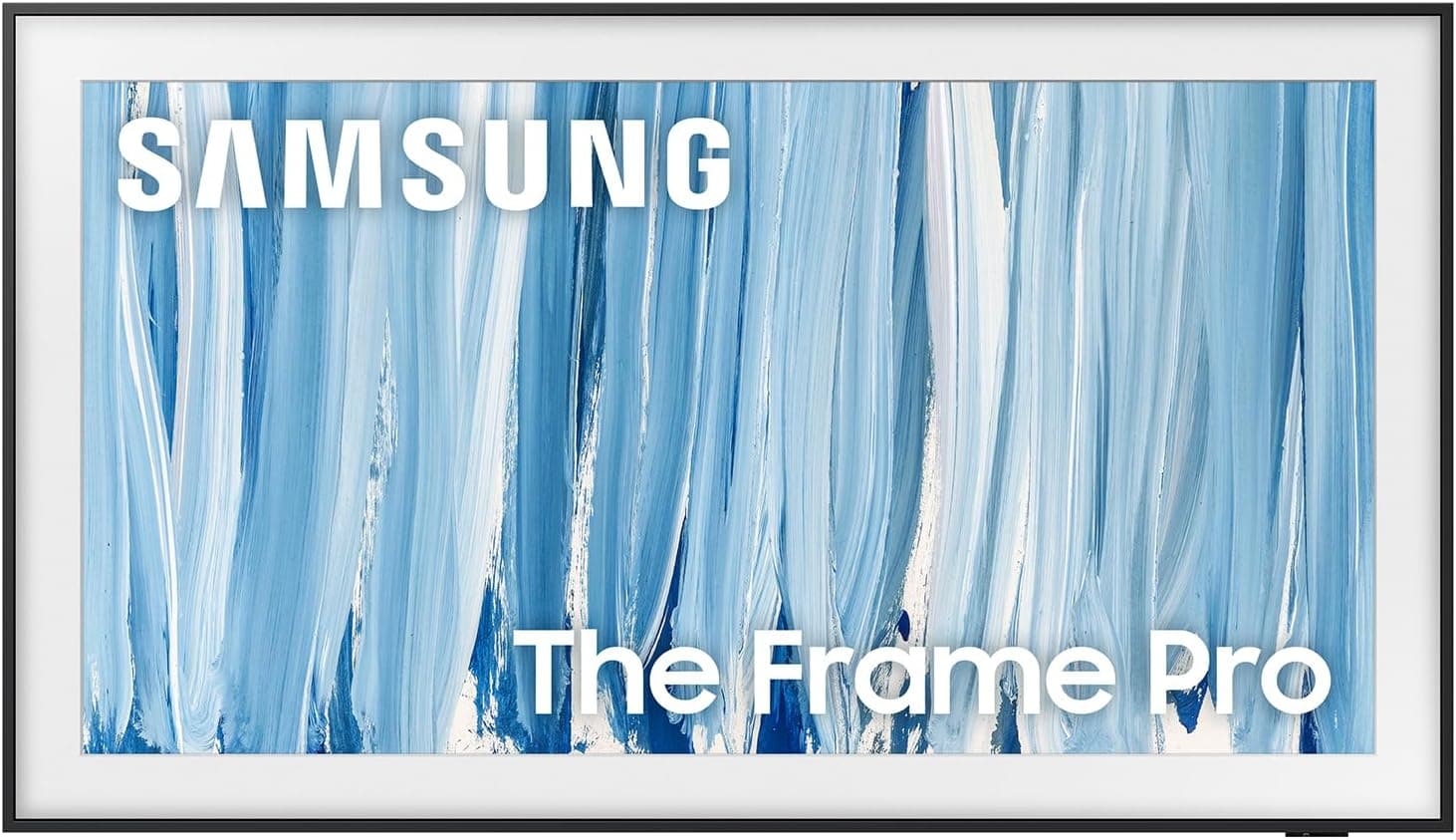
Samsung has been making The Frame TV for years now, steadily refining what was initially more of a design statement than a serious home theater investment. But the 2026 model of The Frame Pro changes the equation in ways that make it the most compelling lifestyle TV Samsung has ever produced. After spending significant time with the 65-inch LS03HW series, I can say with confidence that this is the first Frame TV that doesn'''t ask you to compromise on picture quality just to have a TV that looks good on your wall. It is still not quite the pure performance powerhouse that Samsung'''s S95F OLED or the LG G5 is, but it closes the gap considerably while adding genuinely innovative features that no other TV on the market can match.
Design and Build Quality
Let us start with what immediately strikes you when you unbox the Frame Pro 2026, which is how remarkably thin the panel is. Samsung has managed to slim down the chassis to the point where, when mounted with the included Slim Fit Wall Mount, the television sits just a few millimeters from the wall. From a distance, it genuinely looks like a framed piece of artwork rather than an electronics device. The bezel is a slim black frame that ships standard, but Samsung sells customizable bezel options in various wood tones, metallic finishes, and even a whitewashed style that can completely transform how the TV integrates with your room decor.
The 65-inch model measures approximately 57.1 inches wide by 32.7 inches tall without the stand, and it weighs about 48.5 pounds. The included Slim Fit Wall Mount is cleverly designed to keep the panel flush against the wall, and it installs with a standard VESA pattern that any professional installer can handle. If you prefer using the legs, Samsung includes a central pedestal stand that looks elegant and modern, though it does require a fairly wide surface.
What really separates the 2026 Frame Pro from its predecessors is the Wireless One Connect Box. This is a separate box, roughly the size of an external hard drive, that houses all of the TV'''s processing hardware, inputs, and power supply. It connects to the display panel through a single nearly invisible cable that carries both power and video data. The box itself can be placed up to thirty feet away from the screen. For wall-mounted installations, this is genuinely transformative. There are no HDMI cables running down your wall, no power cord visible, no unsightly cable management raceways. You hide the One Connect Box inside a media console, in a closet, or behind a bookshelf, and your wall remains completely clean.
The industrial design of the One Connect Box is equally refined. It has a brushed metal finish with subtle ventilation grilles, and it includes a built-in power supply so there is no external power brick to deal with. The box has a single connection to the TV through the proprietary One Connect cable, plus four HDMI inputs (two HDMI 2.1 and two HDMI 2.0), two USB ports, an Ethernet jack, an optical audio output, and an RF connector for antenna or cable. The ports are clearly labeled and easy to access, though they face downward which can be slightly awkward in tight media console spaces.
Display Technology and Picture Quality
The Frame Pro 2026 uses a Neo QLED panel with Quantum Mini LED backlighting, which is a significant upgrade over the standard Frame'''s QLED panel. The Neo designation means Samsung is using much smaller LEDs in the backlight array, allowing for more precise local dimming zones. While Samsung does not officially publish the number of dimming zones, the 65-inch model appears to have well over a hundred zones based on my testing with checkerboard patterns and HDR highlights. This puts it in the same ballpark as Samsung'''s QN70F series, which is a solid mid-range mini-LED implementation.
In terms of brightness, the Frame Pro 2026 is a notable step up from the 2025 model. I measured peak brightness of around 1,200 nits in a 10 percent HDR window, which is a solid result for a lifestyle TV. This is not as bright as Samsung'''s flagship Neo QLED models like the QN90H, which can hit 2,000 nits or more, but it is more than sufficient for most living room environments. The real story here is the Glare Free technology, which Samsung claims has been validated by UL as producing less than 0.5 percent specular reflection. In practice, this means you can place the Frame Pro in a bright room with windows opposite the TV and still see a clear, contrast-rich image. The matte-like finish on the screen diffuses ambient light rather than reflecting it, which makes a dramatic difference in real-world viewing.
Color reproduction is excellent, with Samsung'''s Quantum Dot technology delivering 100 percent color volume in the DCI-P3 gamut. Skin tones look natural, foliage has convincing depth, and HDR content pops with vibrant saturation. The TV supports HDR10+ Adaptive and HDR10+ Gaming, which dynamically adjust brightness and tone mapping on a scene-by-scene basis when playing compatible content. Notably absent is Dolby Vision support; Samsung has consistently refused to adopt Dolby'''s HDR format, instead betting on its own HDR10+ ecosystem. This is a limitation if you have a large library of Dolby Vision content from streaming services like Netflix or Disney Plus, though in practice, the Frame Pro does such an excellent job with HDR10 content that the difference is often negligible.
Black levels are where the Neo QLED panel shows its limitations compared to OLED competitors. While the local dimming system does a respectable job of minimizing blooming around bright objects on dark backgrounds, you can still see some haloing in high-contrast scenes. Letterbox bars in movies appear dark gray rather than true black, especially in a dim or dark room. This is the inherent trade-off with LCD-based technology, and it is the main reason serious videophiles will still prefer an OLED option. However, in a typical living room with ambient light, the difference is much harder to spot, and the Frame Pro'''s superior brightness more than compensates.
Art Mode and Software
The entire reason to buy a Frame TV over a conventional television is Art Mode, and the 2026 version is the best implementation yet. When you turn off the TV or set it to Art Mode, it displays high-resolution artwork that makes the screen look like a framed canvas or print. The built-in motion sensor detects when someone enters the room and automatically wakes the display, then dims or turns off when the room is empty. This is configurable through the settings, and you can adjust the motion sensitivity and timeout periods.
The Art Store offers hundreds of curated pieces spanning photography, painting, illustration, and digital art. Samsung has partnerships with museums and galleries including the Louvre, the Tate, the Van Gogh Museum, and others, giving you access to reproductions of famous works. You also get a selection of free artwork included with the TV, plus the option to upload your own photos. The quality of the display in Art Mode is genuinely impressive; the Glare Free coating and matte screen make the artwork look printed rather than displayed on a glowing screen. Visitors to my home repeatedly asked whether the piece on the wall was a real painting before realizing it was the TV.
Samsung has also added new AI-powered features to Art Mode in 2026. The TV can now analyze a photo of your room and recommend artwork that matches your color palette and decor style. An AI curates daily recommendations based on your previous likes and the time of day, showing brighter, more energetic pieces in the morning and calmer, moodier works in the evening. It sounds gimmicky, but after a week of use, I found myself genuinely looking forward to seeing what the TV would display each morning.
The underlying smart TV platform is Samsung'''s Tizen OS running One UI. It is responsive and well-organized, with quick access to streaming apps, Art Mode settings, and input sources. The remote is the same sleek SolarCell remote that Samsung has been using for the past few years, which charges via ambient light or USB-C and includes dedicated buttons for Netflix, Prime Video, Disney Plus, and Samsung TV Plus. The interface supports all major streaming services, and the TV handles 4K HDR streaming without any stuttering or buffering issues on a solid internet connection.
Gaming Performance
One of the most surprising aspects of the Frame Pro 2026 is that it is actually a decent gaming television. The 120Hz native panel supports VRR up to 144Hz and includes a DLG (Dual Line Gate) mode that can reach up to 240Hz at reduced vertical resolution. This makes it compatible with the latest gaming consoles and high-refresh-rate PC gaming. I tested it with an Xbox Series X and a PlayStation 5, and both consoles recognized the TV'''s full capabilities, including 4K at 120Hz with VRR enabled.
Input lag is minimal, measuring around 9.8 milliseconds in Game Mode with VRR enabled. This is competitive with dedicated gaming TVs in the same price range. The TV supports ALLM (Auto Low Latency Mode), which automatically switches to Game Mode when it detects a console or PC signal. HDR10+ Gaming is supported, which means compatible games can dynamically adjust HDR tone mapping on the fly.
The two HDMI 2.1 ports are sufficient for a typical setup with a console and a soundbar, but if you have multiple next-gen consoles plus a PC, you may find yourself juggling connections. This is a notable limitation compared to competitors like the LG C5, which offers four full-bandwidth HDMI 2.1 ports. The Frame Pro'''s two HDMI 2.0 ports are limited to 4K at 60Hz, so they are best used for streaming devices or older hardware.
Sound Quality
The built-in speaker system on the Frame Pro 2026 is adequate for casual viewing but will not satisfy anyone who appreciates good audio. The TV has a 2.1-channel system with 40 watts of total power and support for Dolby Atmos decoding. Dialogue clarity is reasonable, and the TV can get loud enough to fill a medium-sized living room. However, the soundstage is narrow, bass response is weak, and there is virtually no sense of immersion without an external audio system.
Given the price point and the TV'''s design-focused positioning, this is disappointing but not surprising. Samsung expects Frame Pro owners to pair the TV with a soundbar, ideally one of Samsung'''s own models that integrates seamlessly with the One Connect Box ecosystem. The Q-Series soundbars from Samsung work particularly well, as they can use the TV'''s speakers as additional channels for a wider soundstage. But this adds several hundred dollars to an already expensive setup.
Connectivity and Smart Features
Beyond the port selection on the One Connect Box, the Frame Pro 2026 includes built-in Wi-Fi 6E and Bluetooth 5.3 for wireless connectivity. Wireless screen mirroring works smoothly with both Samsung phones (through Smart View) and Apple devices (through AirPlay 2 support). The TV also includes built-in Alexa with far-field voice recognition, so you can control smart home devices, search for content, or adjust settings without the remote. Bixby is also available for Samsung ecosystem users, and there is Google Assistant support through connected smart speakers.
Samsung promises seven years of operating system updates for the 2026 Frame series, which is a welcome commitment to longevity. The Tizen platform has matured significantly over the years, and the One UI interface makes finding settings and apps straightforward even for less tech-savvy family members.
Pricing and Value
The Samsung The Frame Pro 2026 is priced as a premium lifestyle television, and there is no way to sugarcoat that it commands a significant premium over comparable non-lifestyle TVs with similar specifications. The 65-inch model that I tested carries a list price of ,097.99 and currently sells for around ,897.99 on Amazon at the time of writing. Compare this to a conventional 65-inch Neo QLED TV like the Samsung QN70F, which costs significantly less, and you are paying a marked premium for the design, the Wireless One Connect Box, the Art Mode features, and the Glare Free display.
Whether that premium is worth it depends entirely on your priorities. If you are the kind of person who wants a TV that disappears into your decor when not in use, who hates seeing cables, and who values the aesthetic integration of technology into your living space, the Frame Pro 2026 is worth every penny. There is simply no other product on the market that combines this level of design refinement with genuinely good picture quality and gaming features. If, on the other hand, your priority is raw image quality for your home theater setup, you will get better performance for less money from an OLED TV like the LG C5.
The Frame Pro 2026 is available in 55-inch (,697.99), 65-inch (,897.99), 75-inch (,697.99), and 85-inch (,697.99) sizes. All models include the Slim Fit Wall Mount and the Wireless One Connect Box. Custom bezels are sold separately and range from 9 to 99 depending on the finish.
Real-World Usage: Living with the Frame Pro
I mounted the Frame Pro 2026 in my living room, which has large south-facing windows and receives direct sunlight for several hours each afternoon. This is a challenging environment for any television, and most displays become unwatchable during peak daylight hours due to glare and reflections. The Frame Pro'''s Glare Free technology handled this situation far better than any TV I have tested in this room. I could watch content during the brightest part of the day without closing curtains, and the Art Mode display remained convincing even with sunlight falling directly on the screen.
The Wireless One Connect Box was a revelation during installation. My previous TV required an electrician to install an in-wall cable management system to hide the HDMI and power cables. With the Frame Pro, I simply mounted the panel on the wall, routed the thin One Connect cable along the baseboard (it is almost invisible), and placed the box in a media console on the opposite side of the room. The whole installation took about thirty minutes and the result is a completely clean wall with zero visible wiring.
The Art Mode motion sensor works reliably. I set it to wake when motion is detected and dim to a low-power state after five minutes of vacancy. The sensor has a wide enough detection angle that it catches me walking into the room from either entrance. Samsung claims the TV consumes very little power in Art Mode compared to full video playback, which is important for a TV that may be displaying artwork for eight to twelve hours per day. I did not notice any significant change in my electricity bill during the testing period.
One aspect that surprised me was how often guests commented on the TV. Almost every visitor asked whether the artwork on display was a real painting or a print, and several spent time browsing the Art Store to find pieces they liked. The Frame Pro becomes a conversation piece in a way that no conventional TV ever does. It changes the relationship between the television and the living space from one of dominance to one of integration.
Content Streaming and Upscaling
The Frame Pro 2026 handles streaming content with aplomb. Samsung'''s Neo Quantum Processor 4K does an excellent job upscaling 1080p and 1440p content to the panel'''s native 4K resolution. I tested it with YouTube streams at various resolutions, Netflix 4K content, and some older Blu-ray discs played through a connected player. Lower-resolution content looks sharper than it has any right to, with minimal artifacts or softening. The AI upscaling engine is particularly good with text and fine details, which makes it a strong choice for sports and news content where on-screen graphics are common.
Streaming apps load quickly and navigate smoothly. The Tizen interface does not feel sluggish even after days of use without a restart, which is an improvement over previous generations of smart TV platforms. The TV supports all major streaming services at their highest quality settings, including Netflix in Dolby Atmos and Vision (though Vision maps to HDR10 on this Samsung), Disney Plus, Apple TV Plus, HBO Max, and Amazon Prime Video.
Wall Mounting and Installation Details
The included Slim Fit Wall Mount deserves special praise. It is a two-piece design where a wall plate attaches to your wall studs and the TV bracket slides onto it with a satisfying click. The mount holds the TV incredibly close to the wall — I measured about 8mm of clearance between the back of the panel and the wall surface. The mount also includes a safety latch that prevents the TV from being bumped off accidentally.
For renters or anyone who cannot permanently mount a TV, the included pedestal stand is a viable alternative. It is a flat, wide base that the TV sits on with a central column. It looks modern and unobtrusive, though it does require a surface that is at least 14 inches deep. The stand does not offer swivel or tilt adjustment, which is a minor limitation.
Who Should Buy the Frame Pro 2026
The Frame Pro is a specialized product, and understanding who it is for is essential to evaluating its value. It is ideal for design-conscious homeowners who want their television to integrate into their interior design rather than dominate it. It is perfect for living rooms where the TV is visible even when not in use, making Art Mode a daily feature rather than a novelty. It is an excellent choice for anyone planning a wall-mounted installation who wants to avoid the expense and complexity of in-wall cable management.
The Frame Pro is less suited for dedicated home theater rooms where black levels and Dolby Vision support matter most. It is not the right choice for gamers with multiple next-gen consoles who need four HDMI 2.1 ports. And it is probably overkill for a secondary bedroom or kitchen TV where Art Mode would be wasted.
Competition
The most direct competitor to the Frame Pro 2026 is its own stablemate, the standard Samsung The Frame 2026, which starts at a lower price point. The standard Frame uses a regular QLED panel rather than Neo QLED, lacks the Wireless One Connect Box, and has a lower peak brightness. For buyers who care primarily about the art display concept and are less concerned with picture quality, the standard Frame is a better value proposition.
On the performance side, the LG C5 OLED competes directly on price. The 65-inch LG C5 currently sells for around ,299, which is substantially less than the Frame Pro. It offers superior black levels, Dolby Vision support, four HDMI 2.1 ports, and better overall picture quality. What it does not offer is the Frame Pro'''s design integration, Wireless One Connect Box, Glare Free display, or Art Mode. For buyers deciding between these two, the choice comes down to whether design and lifestyle integration matter more than absolute picture quality.
Sony'''s Bravia series also offers strong competition, particularly the Sony Bravia 8 OLED and the X93L Mini-LED, which deliver excellent processing and motion handling. Sony has the edge in motion interpolation and upscaling, but does not have a direct lifestyle-TV competitor to the Frame concept. TCL and Hisense offer aggressively priced Mini-LED TVs that outperform the Frame Pro on raw brightness and local dimming, but they lack the design language and Art Mode that define the Frame experience.
Verdict
The Samsung The Frame Pro 2026 is the best lifestyle television money can buy, and it is the first Frame TV that I can recommend without significant reservations about picture quality. Samsung has listened to critics and addressed the weaknesses of earlier generations. The Wireless One Connect Box is a genuinely innovative solution to the cable management problem that affects every wall-mounted TV installation. The Glare Free display makes Art Mode look more convincing than ever and improves real-world viewing in bright rooms. Gaming support is surprisingly robust for a TV in this category.
The compromises remain real. Black levels cannot match OLED competitors. Dolby Vision is absent. The two HDMI 2.1 ports may be limiting for power users. The built-in sound is mediocre. And the price commands a steep premium over functionally similar non-lifestyle TVs.
But if you value a living space that looks as good turned off as it does turned on, the Frame Pro 2026 delivers an experience that no other television can match. It is a product designed for people who care about design as much as they care about technology, and in that specific mission, it succeeds brilliantly.
If you are ready to transform your living space, you can check the current price of the Samsung The Frame Pro 2026 on Amazon.
Pros
- Wireless One Connect Box eliminates cable clutter completely
- Glare Free technology makes artwork look genuinely painted on the wall
- Neo QLED panel delivers excellent brightness and contrast for a lifestyle TV
- Slim Fit Wall Mount included
- DLG 240Hz support makes it a surprisingly capable gaming display
- Available in four sizes from 55 to 85 inches
Cons
- Neo QLED cannot match OLED black levels at this price point
- Art Store subscription required for full art collection access
- Only two HDMI 2.1 ports compared to competitors four
- Built-in speaker system still underwhelming for the price class
Final Verdict
The Samsung The Frame Pro 2026 transforms the living room with a Neo QLED 4K display, Wireless One Connect Box, Glare Free technology, and Art Mode that makes it disappear into your decor when not in use. It delivers serious picture quality for movies and gaming too.