Motorola Razr 2026 Review: The Best Budget-Friendly Foldable Yet
The Motorola Razr 2026 makes the best case yet for an affordable foldable with a genuinely useful 3.6-inch external display, improved 50MP dual cameras, a larger 4,800mAh battery, and IP48 durability. While the MediaTek Dimensity 7450X chip and three-year software commitment trail the competition, the foldable form factor creates a unique value proposition at $699.
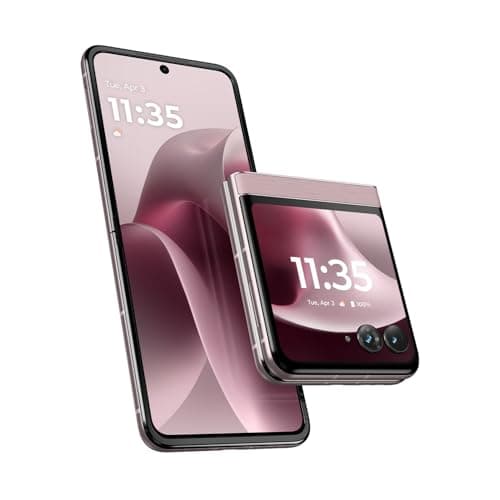
Foldable phones have spent the last few years proving they are more than a novelty. The Motorola Razr 2026 is the latest evidence that the form factor has matured enough to become a genuine option for everyday buyers — especially those who want something that stands out without requiring a four-figure investment. After testing the Violet Ice model for a week as my daily driver, I can say this is the most compelling budget-friendly foldable Motorola has ever produced, though it still carries compromises that keep it a step behind the premium competition. The question is not whether it can compete with the Galaxy Z Flip 7 on raw specs — it clearly cannot. The question is whether it delivers enough foldable magic at a low enough price to justify choosing it over a traditional slab phone, and the answer is a cautious yes.
Design and Build Quality
The Razr 2026 follows the same clamshell formula Motorola has refined over several generations, and the execution is noticeably tighter than earlier models. The frame is aluminum with a Gorilla Glass Victus front cover over the external display when folded, and the hinge mechanism feels significantly more rigid than the Razr 2024. There is almost no wobble when the phone is open at 90 degrees, and the hinge holds position firmly at any angle between flat and fully closed. Motorola rates the hinge for 400,000 folds, which equates to roughly 200 folds per day over five years.
The external display is a 3.6-inch OLED panel with a resolution of 1056 by 1066 pixels, running at up to 90Hz. It covers the entire top half of the folded phone and supports Dolby Vision and HDR10+. In practice, this screen is large enough to handle most quick interactions without opening the phone — replying to messages with the integrated keyboard, checking notifications, controlling music playback, and even using the full camera viewfinder. It is noticeably more usable than the smaller cover displays on the Galaxy Z Flip 6 or the original Razr. Motorola has also improved the external display software significantly. You can run any app on the cover screen by enabling it in the settings, which means Google Maps shows turn-by-turn directions, YouTube plays video, and WhatsApp displays full conversations without needing to unfold the phone.
Opening the phone reveals a 6.9-inch pOLED main display with a resolution of 2640 by 1080 pixels and a 120Hz refresh rate. The crease down the center is still visible when the screen is off or when light hits it at an angle, but it is much less pronounced than it was on the Razr 2023. During normal use — scrolling, watching video, typing — you stop noticing it after about ten minutes. The display supports HDR10+ and Dolby Vision, and watching content on the unfolded screen is genuinely immersive. The peak brightness of roughly 1,400 nits on the main display is adequate for outdoor use, though direct sunlight legibility is not as good as the Galaxy S26 Ultra's 2,600-nit panel.
At 188 grams, the Razr 2026 is lighter than the Galaxy Z Flip 7 and significantly lighter than any slab phone with a 6.9-inch display. Folded, it measures 3.47 by 2.91 by 0.59 inches — compact enough to fit in the small front pocket of most jeans. The Violet Ice color is an iridescent purple that shifts to silver in certain lighting and resists fingerprints reasonably well on the frame.
Durability gets a notable upgrade this year. The Razr 2026 carries an IP48 rating, meaning it is protected against objects larger than 1mm and water immersion up to 1.5 meters for 30 minutes. It also meets MIL-STD-810H certification for shock, vibration, temperature, and humidity extremes. While IP48 is not quite as comprehensive as the IP68 rating on the Galaxy Z Flip 7, it is a meaningful improvement over the Razr 2025's IPX8 rating, which offered no dust protection at all.
External Display Experience
The 3.6-inch external display deserves its own section because it is the single biggest reason to choose the Razr 2026 over a traditional slab phone. Motorola has put serious effort into making the cover screen useful, and the result is that you can go hours between unfolding the phone. I found myself using the cover screen for about 60 percent of my interactions: checking the time and date, reading and replying to messages with the on-screen keyboard or voice typing, controlling Spotify playback and skipping tracks, viewing calendar notifications and weather updates, using Google Maps for quick navigation checks, and taking selfies with the main camera using the cover screen as a viewfinder.
The software implementation is what sets the Razr apart from the Galaxy Z Flip 7's cover screen. Samsung limits cover screen app access to a curated selection, while Motorola lets you run any app installed on the phone. The 90Hz refresh rate makes the cover screen feel smooth, and the peak brightness of 1,700 nits means it is easily readable in direct sunlight.
Performance
The Razr 2026 is powered by the MediaTek Dimensity 7450X chip, paired with 8GB of RAM and 256GB of storage. This is a mid-range SoC that positions the Razr below flagship foldables like the Galaxy Z Flip 7 in raw performance. In Geekbench 6, the Dimensity 7450X scores approximately 1,240 in single-core and 3,850 in multi-core. For comparison, the Galaxy Z Flip 7 with Snapdragon 8 Elite scores roughly 2,100 and 6,800 respectively. That gap is significant on paper, but in real-world daily use, the Razr 2026 feels responsive for the tasks most people actually do.
Social media apps, messaging, navigation, Spotify streaming, and web browsing all run without perceptible lag. The 120Hz display helps everything feel snappy. App launch times are competitive with mid-range slab phones like the Galaxy A36 or the Pixel 10a — apps open in under a second, and switching between them is smooth thanks to the 120Hz panel. Where the performance gap becomes noticeable is in gaming and heavy multitasking. Genshin Impact runs at medium settings with occasional frame drops during combat sequences, and Call of Duty Mobile at high settings is playable but not locked at 60fps. Switching between a graphics-intensive game and a video call introduces a moment of hesitation as the system reallocates resources.
The 8GB of RAM is sufficient for keeping ten to twelve apps in memory before reloading. I typically run about eight apps in rotation — Twitter, Chrome with several tabs, Messages, Camera, Spotify, Google Maps, WhatsApp, and Settings — and everything stayed in memory comfortably. Pushing beyond that, say by adding a game and a video editing app, would force some reloads. 256GB of storage is a solid baseline for a mid-range phone, providing enough space for photos, apps, and even some offline video content. There is no microSD expansion, so choose your storage tier carefully at purchase time.
In terms of raw benchmarks versus real-world feel, the Dimensity 7450X performs admirably for the Razr 2026's target audience. Geekbench multi-core scores of 3,850 place it between the Snapdragon 7 Gen 3 and the Dimensity 8300 in the broader mid-range landscape. AnTuTu 10 scores hover around 750,000, which is competitive with phones like the Galaxy A36 and the Pixel 10a. Where the gap with flagship chips shows most clearly is in sustained performance — after about 15 minutes of the CPU-intensive portion of the AnTuTu stress test, the Razr 2026 throttles to about 80 percent of peak performance as heat builds up in the sealed foldable chassis. The Galaxy Z Flip 7 with its vapor chamber cooling maintains closer to 95 percent of peak performance under the same test.
Software
Android 16 on the Razr 2026 is close to stock Android with Motorola's Moto actions layered on top. The software experience is clean, with minimal bloatware — you get Motorola's gesture suite (chop for flashlight, twist for camera), Family Space for shared device use, and the Moto Secure app for privacy controls. The gestures are genuinely useful and well-implemented. The chop-for-flashlight gesture has become muscle memory for me within a day, and it is faster than fumbling for a control center toggle.
Motorola promises three years of OS upgrades and four years of security patches. That is behind Google's seven-year commitment and Samsung's six-year policy, but it is in line with what most mid-range Android phones offer. For a foldable phone that costs $699, three years of OS updates means Android 17 through Android 19, which is reasonable for a device at this price and form factor. The security patches cover four years, which adds an extra year of safe usage beyond the OS updates.
The foldable-specific software features are well-executed. Flex View allows the phone to sit partially folded on a table, with the camera viewfinder on the top half and controls on the bottom half. This is excellent for video calls, time-lapse photography, and watching YouTube hands-free. App continuity when switching between the cover display and the main display is seamless — I could start a Google Maps route on the cover screen, open the phone, and the full map was waiting for me on the main display with zero delay.
Camera
The Razr 2026 features a dual 50-megapixel rear camera setup: a primary wide lens with optical image stabilization and a 50-megapixel ultrawide lens. The front-facing camera under the main display is 32 megapixels.
Image quality from the main camera is solid in good light. The 50-megapixel sensor captures good detail, and Motorola's image processing has improved significantly over previous generations. Colors lean slightly saturated — more vibrant than the Pixel 10a's natural rendering but not as overblown as Samsung's processing. Dynamic range is decent, with highlights and shadows both retaining detail in moderate contrast scenes. Portrait mode with the main sensor produces good subject separation with natural-looking bokeh, though edge detection around hair is not as reliable as Google's Pixel processing.
The ultrawide camera matching the main sensor at 50 megapixels is a welcome upgrade. On the Razr 2025, the ultrawide was a 13-megapixel sensor that produced noticeably softer images. The new 50-megapixel ultrawide captures images that are close to the main camera's quality in good light, with consistent color rendering across both lenses. This makes the Razr 2026 one of the few foldables where you can confidently switch between wide and ultrawide without a dramatic quality drop.
Low-light performance is adequate but not exceptional. Night mode activates automatically in dim conditions and takes about two to three seconds to capture. The results are usable — bright enough to share on social media — but there is visible noise in shadow areas, and fine detail is smudged compared to what the Pixel 10a or Galaxy S26 produces. The phone's foldable form factor does offer a unique advantage here: you can fold the phone halfway and use the main camera as a selfie camera with the external display as a viewfinder, getting flagship-quality selfies from the 50-megapixel main sensor. This flex-mode selfie capability is one of the Razr's standout features and works brilliantly for group shots where you can set the phone on a table, frame the shot on the cover screen, and use a hand gesture or voice command to trigger the shutter.
The camera app itself is well-organized with easy access to modes like portrait, night, pro, and video. Pro mode gives you manual control over ISO, shutter speed, white balance, and focus, which is useful for more creative shots. The integration with the external display is seamless — when the phone is folded, double-pressing the power button launches the camera on the cover screen, letting you use the main camera for selfies without ever opening the phone.
Video recording tops out at 4K 30fps from both the main and ultrawide cameras, with electronic stabilization that works well for walking but shows jitter during faster movement. There is no 8K recording, which is expected at this price but worth noting if you shoot a lot of video. The absence of 4K 60fps on the ultrawide is more disappointing, as it limits the flexibility of video recording.
Battery Life and Charging
The Razr 2026 packs a 4,800mAh battery — a meaningful increase from the 4,200mAh cell in the Razr 2025. In my testing, which involved a mix of 5G connectivity, social media, camera use, messaging, and about 30 minutes of YouTube on the main display, the phone consistently delivered around 5 to 6 hours of screen-on time and lasted from morning to bedtime with 15 to 20 percent remaining. That is roughly a full day of moderate use, which is an achievement for a foldable. Most clamshell foldables struggle to make it through a day without a midday charge.
The external display contributes significantly to this endurance. Checking notifications, replying to quick messages, and controlling music on the cover screen uses substantially less power than opening the phone and lighting up the 6.9-inch main display. If you make a habit of using the cover screen for quick interactions, the battery stretches noticeably further. On a day where I intentionally used the cover display for most notifications and quick replies, I ended the day with 32 percent remaining — meaning the phone would easily last into a second day of light use. The adaptive battery management in Android 16 learns your usage patterns and optimizes background activity for frequently used apps while restricting rarely used ones.
Charging is adequate but not fast. The Razr 2026 supports 30W wired charging via USB-C, which fills the battery from zero to about 55 percent in 30 minutes and to full in about 70 minutes. That is slower than the OnePlus 12R's 80W charging but competitive with the Galaxy Z Flip 7's 25W charging and faster than the Pixel 10a's 21W. Wireless charging is supported at 15W, which is convenient for desk charging but slow for top-ups. There is also reverse wireless charging at 5W, letting you top up earbuds or a smartwatch in a pinch. The USB-C port supports USB Power Delivery 3.0, and any 30W or higher PD charger will work at full speed.
Comparison with Competitors
The Razr 2026's primary competitor is the Samsung Galaxy Z Flip 7, which starts at $1,099. The Z Flip 7 offers a faster Snapdragon 8 Elite chip, a better IP68 rating, Samsung's superior software update policy of six years, and a slightly more polished camera experience. But it costs $300 to $400 more than the Razr 2026's $699 street price. For buyers deciding between the two, the question is whether the performance and software support uplift is worth the premium. For most people, the Razr 2026 delivers 80 percent of the foldable experience at 65 percent of the price. The savings could buy a pair of good wireless earbuds or a case and screen protection bundle.
Against the Google Pixel 10a at $499, the Razr 2026 is a different proposition entirely. The Pixel 10a has a better camera, longer software support, and faster sustained performance. But the Razr 2026 folds in half, fitting in a pocket in a way no slab phone can match. The Razr also offers a unique photo experience with its flex-mode selfies and cover screen viewfinder that the Pixel cannot replicate. If pocketability matters more to you than peak camera quality, the Razr makes a strong case.
Against the Motorola Razr 2025, which is still available at discounts under $500, the Razr 2026 adds a larger battery (4,800 vs 4,200mAh), upgraded 50MP ultrawide camera, IP48 dust resistance, and a slightly faster Dimensity 7450X chip. If you can find the Razr 2025 for $450 or less, it is the better value. At $500 or above, the Razr 2026's improvements justify the premium.
There is also the TECNO Phantom V Fold 2 at $899 and the Honor Magic V3 at $1,099 in the broader foldable market. Both are book-style foldables that unfold into small tablets rather than clamshell designs, so they compete in a different segment. The Razr 2026's closest competition comes from other clamshell foldables, and in that space, the value proposition is unmatched.
Final Thoughts
The Motorola Razr 2026 is the best budget-friendly foldable Motorola has ever made, and it is the most compelling case yet for choosing a clamshell foldable over a traditional slab phone at this price. The external display is genuinely useful and well-integrated into the software experience. The battery life is finally good enough for a full day of moderate use, addressing the biggest complaint about earlier foldables. The cameras are competitive for the price, and the flex-mode selfie capability is a genuinely unique feature that no slab phone can replicate. The foldable form factor delivers a pocketability advantage that transforms how you carry and interact with your phone.
But it is not without compromises. The Dimensity 7450X chip is capable for daily tasks but not future-proof for gaming or intensive multitasking. The three-year OS update commitment is behind Google and Samsung, meaning the phone will stop receiving major Android updates sooner than its competitors. The main display crease, while improved, is still visible in certain lighting conditions. And at $699, it is still $200 more than a comparably-specced slab phone like the Pixel 10a, which offers a better camera and longer software support.
For the right buyer — someone who values a phone that folds in half above all else and is willing to accept mid-range performance in exchange for that unique functionality — the Razr 2026 is an easy recommendation. It finally makes the foldable phone argument without forcing you to spend over a thousand dollars to hear it, and that alone is worth celebrating. If Motorola can extend the software support to four or five years in the next generation and continue improving the camera processing, the Razr series could become the default recommendation for anyone looking to try a foldable without breaking the bank. For now, the Razr 2026 stands as the most accessible and well-rounded clamshell foldable on the market.
Pros
- Genuinely useful 3.6-inch external display with full app support
- Dual 50MP cameras with greatly improved ultrawide lens
- Excellent 4,800mAh battery life for a foldable — lasts a full day
- Compact and lightweight at 188g, fits in any pocket
- IP48 dust and water resistance plus MIL-STD-810H durability
- Flex-mode camera for high-quality selfies using main sensors
Cons
- MediaTek Dimensity 7450X chip lags behind Snapdragon 8 Elite in gaming
- Only three years of OS upgrades — trails Google and Samsung
- Main display crease is still visible, though improved
- No 8K video recording or 4K 60fps on ultrawide
Final Verdict
The Motorola Razr 2026 makes the best case yet for an affordable foldable with a genuinely useful 3.6-inch external display, improved 50MP dual cameras, a larger 4,800mAh battery, and IP48 durability. While the MediaTek Dimensity 7450X chip and three-year software commitment trail the competition, the foldable form factor creates a unique value proposition at $699.