Motorola Razr Ultra 2026 Review: The Best Flip Phone Is Still Too Expensive
The Motorola Razr Ultra 2026 is the most capable flip phone ever built, with a stunning design, excellent battery life, and a genuinely useful cover screen. But at $1,500, the missing telephoto lens, preinstalled bloatware, and shorter update commitment make it a tough sell over slab flagships.
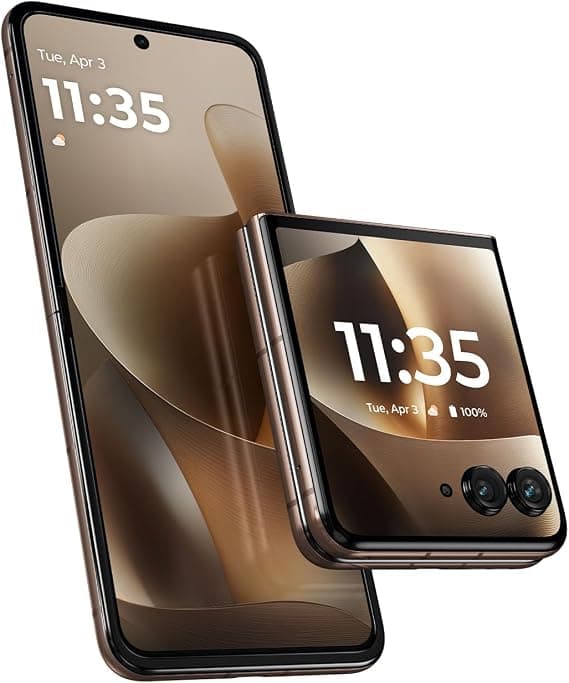
Motorola has dominated the clamshell foldable market in the United States for the better part of three years, and the Razr Ultra 2026 represents the company's most ambitious attempt yet to define what a luxury flip phone can be. At $1,499, it is also Motorola's most expensive handset ever, surpassing even the premium slab phones from Samsung and Google. After two weeks of daily use as my primary device, I can say with confidence that the Razr Ultra 2026 is the best flip phone Motorola has ever built. I can also say with equal confidence that most people should not buy it at full price.
A Familiar Shape with Subtle Refinements
The Razr Ultra 2026 is visually almost identical to its 2025 predecessor, which earned a CNET Editor's Choice award for its excellent battery life, useful cover screen, and playful design. The dimensions, internal screen size, and hinge mechanism carry over largely unchanged. Motorola clearly believes it found a winning formula and chose to iterate rather than reinvent. That decision makes sense from an engineering perspective but creates a challenging narrative for upgraders who are being asked to pay two hundred dollars more for what looks like the same phone.
What has changed are the materials and the internal components. The most immediately noticeable upgrade is the Orient Blue color option, which features a back panel made of Alcantara fabric, the same soft, woven synthetic material found on the seats of luxury cars. It is genuinely pleasant to hold. During testing, I found myself unconsciously running my thumb across the texture while waiting in line or sitting on the subway. The Cocoa and Scarab color variants use more traditional vegan leather finishes, but the Alcantara option is the standout for anyone who wants their phone to feel distinct from the glass-and-metal monoliths that dominate the market.
The cover display remains a 4-inch panel protected by Corning Gorilla Glass Ceramic, and it is still one of the most useful features on any foldable phone. You can reply to messages, browse maps, control music, and even run full apps without ever opening the device. Motorola's software optimization for the cover screen has improved since last year, with better keyboard scaling and more responsive gesture navigation. During a weekend trip to Chicago, I used the cover screen exclusively for directions, music control, and quick photo captures, opening the main display only when I needed to respond to longer emails or edit photos.
The Silicon-Carbon Battery Breakthrough
The most meaningful hardware upgrade in the Razr Ultra 2026 is hidden inside the chassis. Motorola has replaced the traditional lithium-ion battery with a silicon-carbon cell, allowing a 5,000 mAh capacity where last year's model made do with 4,700 mAh. The physics here are genuinely impressive. Silicon-carbon batteries store more energy in the same physical volume, which means Motorola managed to increase capacity without making the phone thicker or heavier, despite the space demands of the hinge mechanism.
In real-world use, the battery improvement is palpable. A typical day of moderate use, including two hours of Spotify streaming over Bluetooth, an hour of social media browsing, thirty minutes of navigation, and a handful of video calls, left the Razr Ultra at around 45 percent by bedtime. On lighter days, I occasionally skipped the nightly charge entirely and still had enough juice to get through the following morning. For a flip phone, this is exceptional. The Samsung Galaxy Z Flip 8, by comparison, typically demands a mid-afternoon top-up under similar usage patterns.
Charging speeds are competitive if not class-leading. The 68-watt wired charger included in the box delivers a full charge in just under 45 minutes. Wireless charging tops out at 30 watts, which is faster than Samsung's equivalent but slower than OnePlus or Xiaomi's flagships. The 5-watt reverse wireless charging is useful for juicing up earbuds or a smartwatch in a pinch, though it is too slow to be a practical primary charging method for anything larger.
Display Technology and Brightness
The internal display is a 6.9-inch LTPO AMOLED panel with a peak brightness of 5,000 nits, which is absurdly bright and genuinely useful in direct sunlight. Reading messages on a park bench at noon in August required no cupping of hands or angling of the screen. The cover display hits 3,000 nits, which is equally impressive for its size and ensures that the external screen remains legible even in harsh outdoor lighting.
Both displays support a 120Hz refresh rate, and the LTPO technology allows the internal screen to dial down to 1Hz when displaying static content, saving battery life. The crease where the display folds is still visible if you look for it, and you can feel it when dragging a finger across the middle of the screen. But in actual use, it fades into the background within a day or two. Watching videos, scrolling through Instagram, and playing games all feel perfectly natural, with no distracting distortion at the hinge line.
Camera System and the Lofic Sensor
Motorola equipped the Razr Ultra 2026 with three 50-megapixel cameras: a wide-angle main sensor, an ultrawide, and an internal selfie camera. On paper, this is identical to the 2025 model. The difference lies in the wide-angle sensor, which now uses a Lofic image sensor similar to the one found in Xiaomi's Leica Leitzphone. Lofic stands for Lateral Overflow Integration Capacitor, a technology designed to capture a wider dynamic range by preventing highlight clipping in bright scenes.
In practice, the Lofic sensor produces photos with exceptionally vivid colors and dramatic contrast. Landscapes shot at golden hour look almost hyperreal, with skies retaining deep blues and sunsets exploding in saturated oranges and magentas. The tradeoff is that the processing can push saturation to levels that feel borderline psychedelic. Skin tones in portrait mode occasionally skew too warm, and indoor shots under mixed lighting sometimes exhibit an unnaturally punchy quality that requires dialing back in editing.
The ultrawide camera is solid if unspectacular, with reasonable edge sharpness and minimal barrel distortion. The internal selfie camera benefits from the large 50-megapixel sensor and produces detailed self-portraits with pleasant background separation when using portrait mode. Video recording tops out at 4K resolution, and stabilization is smooth enough for handheld walking shots, though serious videographers will still want a gimbal for professional work.
The most significant camera limitation is the complete absence of a telephoto lens. At $1,500, this is a glaring omission. Every other flagship phone in this price bracket, including the iPhone 16 Pro Max, Samsung Galaxy S26 Ultra, and Google Pixel 10 Pro, offers at least a 3x optical zoom. Motorola's digital zoom is serviceable up to about 5x but falls apart quickly beyond that. For concert photography, wildlife spotting, or any scenario where you cannot physically get closer to your subject, the Razr Ultra is at a severe disadvantage.
Performance and Software
The Snapdragon 8 Elite processor is currently the most powerful mobile chip on the market, and in the Razr Ultra it delivers flawless performance. Multitasking between heavy apps, editing 4K video in CapCut, and playing demanding games like "Genshin Impact" all proceed without stutter or thermal throttling. The 16GB of RAM ensures that apps stay suspended in memory for days rather than hours, and the 512GB of base storage is generous enough that most users will never need to worry about running out of space.
Motorola's software skin runs on top of Android 16 and is generally clean and inoffensive. The company's gesture shortcuts, including the double-twist to launch the camera and the chop-chop to toggle the flashlight, remain genuinely useful differentiators. However, the bloatware situation has worsened since last year. My review unit arrived with no fewer than six preinstalled third-party apps, including a casino game, a budget tracker, and a shopping aggregator, none of which could be fully uninstalled without resorting to ADB commands. For a phone that costs as much as a high-end laptop, this is unacceptable.
Motorola has committed to three years of major OS updates and four years of security patches, which lags behind Samsung's seven-year promise and Google's similar commitment for Pixel devices. If you plan to keep the Razr Ultra for the long haul, this shorter support window is worth factoring into your purchase decision.
Hinge Durability and Build Quality
The titanium-reinforced hinge feels reassuringly solid, with a satisfying snap when opening or closing the device. Motorola rates it for 400,000 folds, which translates to more than five years of use if you open and close the phone two hundred times per day. During testing, the hinge developed no squeaks, looseness, or resistance changes, though long-term durability beyond a few weeks remains to be seen.
The IP48 rating provides meaningful protection against dust and water splashes, though it falls short of the IP68 rating found on most slab flagships. The "4" in IP48 means the phone is protected against solid objects larger than 1mm, which offers some peace of mind against pocket lint and sand but is not true dust sealing. The "8" indicates protection against continuous immersion, but Motorola's documentation specifies only 1.5 meters for 30 minutes, which is less robust than Samsung's equivalent rating.
The Cover Screen as a Primary Interface
The 4-inch cover display is where the Razr Ultra truly distinguishes itself from competitors. Unlike the smaller external screens on Samsung's Z Flip line, Motorola's cover display is large enough to be genuinely functional. You can type full sentences on the software keyboard without excessive typos, browse Google Maps with readable street labels, and even watch YouTube videos in a pinch.
Motorola's "Moto Unplugged" mode, which turns the cover screen into a minimalist information dashboard showing only the time, weather, and notification count, is a thoughtful addition for anyone trying to reduce screen time. I used it extensively during a digital detox weekend and found it striking how much less tempted I was to open the phone when the full app grid remained hidden.
The new video wallpaper feature allows you to set looping clips as the cover screen background, which is charming if slightly gimmicky. Setting a video of ocean waves from a recent beach trip made the phone feel more personal than any static wallpaper could achieve.
Missing Features and Compromises
For all its strengths, the Razr Ultra 2026 makes some puzzling compromises for a phone at this price point. The absence of Qi2 magnetic wireless charging means you cannot snap the phone onto MagSafe-compatible car mounts or wallets without an adapter. Standard Qi wireless charging works fine, but the lack of magnetic alignment makes one-handed docking in a vehicle more awkward than it should be.
There is no embedded stylus support, no desktop mode for external monitor use, and no microSD slot for storage expansion. These omissions are standard across most foldables, but they sting more at $1,500 than they would at $1,000. The speaker system is loud and clear but lacks the bass depth and stereo separation of the iPhone 16 Pro Max's audio setup.
Real-World Use Cases and Daily Life
Over two weeks, I used the Razr Ultra 2026 in a variety of scenarios that tested its versatility and exposed both its strengths and limitations. As a daily driver for messaging, navigation, and photography during a weekend road trip from Los Angeles to Joshua Tree, it performed admirably. The cover screen made it easy to control Spotify and check Google Maps turn-by-turn directions without distracting from driving. The battery easily lasted from a 7 AM departure until a 10 PM return even with heavy GPS use and intermittent hotspot sharing for a passenger's laptop.
The Alcantara back panel proved surprisingly durable despite concerns about dust and desert sand. After two days of being pulled in and out of pockets, tossed onto picnic tables, and slid across car center consoles, the fabric showed no visible wear and brushed clean with a quick swipe. It does collect fingerprints less aggressively than glass, which is a practical benefit that outweighs the occasional need to lint-roll the texture.
As a content creation tool, the phone was more mixed. The Lofic sensor's dramatic colors look fantastic on social media platforms like Instagram and TikTok, where saturation plays well with algorithmic compression. The cover screen's ability to act as a preview monitor when shooting with the main camera is genuinely useful for vloggers who want to frame themselves without guessing. But the lack of a telephoto lens limited shot variety significantly. Attempting to photograph a distant mountain ridge or capture detail on a concert stage from the crowd resulted in soft, noisy images that required heavy cropping and post-processing.
For business use, the large internal screen makes reviewing PDF documents and editing spreadsheets more comfortable than on a standard 6.1-inch phone, though it still cannot replace a tablet or laptop for serious productivity. Video calls look sharp on the internal camera, and the cover screen allows you to check meeting times and join Microsoft Teams or Zoom calls without unfolding the device. However, the narrow aspect ratio of the unfolded screen means some apps display with excessive letterboxing or awkward UI scaling that developers have not yet optimized for.
Social situations are where the Razr Ultra truly shines. Pulling the phone from a pocket, snapping it open with a flick of the wrist, and closing it with a satisfying clap after sending a message draws attention in a way that slab phones simply cannot. Multiple strangers asked about the device during testing, with reactions ranging from nostalgic delight from older users who remembered the original Razr V3 to genuine curiosity from younger buyers who had never seen a flip phone used as a primary device. It is a conversation starter, and for some buyers, that social currency alone justifies the purchase.
Comparison to Key Rivals
Against the Samsung Galaxy Z Flip 8, the Razr Ultra wins on battery life, cover screen utility, and charging speed, while Samsung counters with superior software support, better water resistance, and a more mature third-party app ecosystem for foldables. The Z Flip 8 also costs slightly less at $1,399, making the Razr Ultra's $1,500 price harder to justify for budget-conscious shoppers.
Against the iPhone 16 Pro Max, the comparison is almost unfair. Apple's slab phone offers a superior camera system with a proper 5x telephoto lens, longer software support projected through 2032, better resale value, and the unmatched depth of the iOS ecosystem. The Razr Ultra's only meaningful advantages are its compact folded size, the unique personality of the flip form factor, and the Alcantara aesthetic that no iPhone currently offers.
Against its own predecessor, the 2025 Razr Ultra, the 2026 model offers a larger battery, a more advanced camera sensor, the Alcantara finish option, and Android 16 out of the box. But the core experience is so similar that owners of the 2025 model have little reason to upgrade, especially since the older phone frequently drops to $800 or less during seasonal sales. For buyers considering both, the 2025 model at discount represents significantly better value unless you specifically need the Lofic camera or extended battery endurance.
Pricing, Market Context, and Value Proposition
The $1,500 asking price is the Razr Ultra 2026's biggest weakness and the factor most likely to determine its commercial success or failure. Motorola has historically priced its devices to accommodate frequent discounting, and there is every reason to believe the Razr Ultra will follow that pattern. Mother's Day sales already saw the 2025 model drop to $800, and Black Friday or Prime Day discounts on the 2026 version could plausibly reach $1,100 or lower within six months of launch.
The timing of this price hike is also unfortunate. The ongoing RAM shortage, sometimes referred to as "RAMageddon" in industry circles, has increased component costs across the smartphone industry. Samsung raised prices on its Galaxy S26 series earlier this year, and Motorola's $200 increase likely reflects similar supply chain pressures. However, Motorola has not explicitly cited component costs, offering only a vague statement that "pricing is always subject to change based on market conditions."
For early adopters and flip phone enthusiasts with the budget to spare, the Razr Ultra is genuinely delightful to use. The tactile satisfaction of snapping it shut after a call never gets old. The cover screen reduces screen time in ways that feel healthy rather than restrictive. And the battery life finally solves the endurance problem that has plagued foldables since the category's inception. At $1,100 or below, the Razr Ultra becomes a genuinely competitive option against mainstream flagships. At $1,500, it is a beautiful, flawed luxury item that proves Motorola can build world-class hardware but still struggles to justify flagship pricing in a market dominated by Apple and Samsung.
Who Should Buy the Razr Ultra 2026
The ideal buyer for the Razr Ultra 2026 is someone who values portability, novelty, and tactile satisfaction above camera versatility and long-term software support. If you have always been drawn to flip phones, if you want a device that stands out in a sea of glass rectangles, and if you are willing to accept the tradeoffs that come with early foldable technology, the Razr Ultra delivers the best flip phone experience currently available in North America.
Fashion-conscious buyers will appreciate the Pantone color partnerships and the Alcantara texture options. Minimalists will love how the folded form factor disappears into smaller pockets and clutch bags. Digital wellness advocates may find that the cover screen's limited functionality genuinely reduces compulsive scrolling.
For everyone else, the advice remains: wait for a sale, or consider the Razr Plus 2026 at $1,100, which offers 80 percent of the Ultra experience at a more palatable price. The baseline Razr 2026 at $800 is also worth considering for first-time foldable buyers who want to test the form factor without committing to flagship pricing.
Final Thoughts and Verdict
The Motorola Razr Ultra 2026 is a fascinating device that embodies both the promise and the peril of modern foldable phones. It is more polished, more capable, and more enjoyable than any flip phone Motorola has built before. It is also too expensive, too similar to its predecessor, and too compromised in camera performance to be an unqualified recommendation for the average smartphone buyer.
For the right user, it will be a beloved daily companion that sparks conversations, simplifies pocket carry, and delivers a smartphone experience that feels fundamentally different from the slab phones that have homogenized the market. For the wrong user, it will be an expensive reminder that the most interesting technology is not always the most practical, and that form factor innovation sometimes comes at the expense of features that users have come to expect at this price point.
Either way, Motorola deserves credit for continuing to refine a form factor that most of the industry has abandoned, and for proving that flip phones can be genuinely competitive in an era dominated by increasingly indistinguishable rectangles of glass and metal. The Razr Ultra 2026 is not perfect, but it is progress, and in the world of foldables, progress is worth celebrating even when the price tag makes you wince.
Pros
- Exceptional 5,000 mAh battery life for a foldable
- Large and functional 4-inch cover display
- Unique Alcantara fabric design
- Fast 68W wired and 30W wireless charging
- Snapdragon 8 Elite delivers flawless performance
Cons
- $1,500 price is hard to justify
- No telephoto camera at this price point
- Excessive bloatware preinstalled
- Shorter software support than Samsung or Google
- Color saturation can look oversaturated
Final Verdict
The Motorola Razr Ultra 2026 is the most capable flip phone ever built, with a stunning design, excellent battery life, and a genuinely useful cover screen. But at $1,500, the missing telephoto lens, preinstalled bloatware, and shorter update commitment make it a tough sell over slab flagships.