Motorola Razr Ultra 2026 Review: Best Flip Phone Hardware at a Premium Price
The Motorola Razr Ultra 2026 packs the best flip phone hardware available — a stunning 7-inch 165Hz display, innovative LOFIC camera sensor, and industry-leading 5,000mAh battery — but its $1,500 price tag and lack of a processor upgrade make it a tough sell against cheaper alternatives.
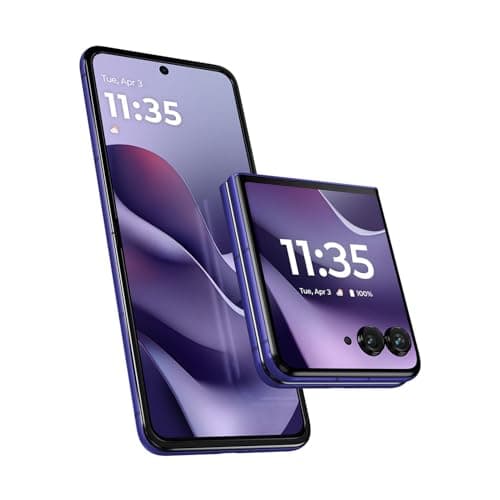
The foldable smartphone market has matured enormously over the past few years, and Motorola's Razr line has been at the heart of that evolution. The Razr Ultra 2026 is the company's most ambitious flip phone yet, packing a 7-inch 165Hz pOLED display that sets new standards for brightness and fluidity, a 4-inch cover screen that's more functional than most competing implementations, a new LOFIC camera sensor that dramatically improves image quality, and the largest battery ever fitted to a US-market flip phone. Motorola has clearly invested in making this the definitive foldable experience.
But here's where things get complicated. At $1,499.99 — a $200 premium over the already-expensive 2025 model — the Razr Ultra 2026 costs $400 more than Samsung's Galaxy Z Flip 7 while using the same Snapdragon 8 Elite processor as its predecessor. That's a tough pill to swallow, even with the hardware improvements. After spending considerable time with this phone, I can say the engineering is genuinely impressive, but whether it justifies its premium price tag depends heavily on what you value most in a smartphone.
This review will break down every aspect of the Razr Ultra 2026 — design, displays, performance, cameras, battery life, software, and value proposition — to help you decide if Motorola's latest flagship foldable is the right phone for your pocket.
Design and Build Quality
The Motorola Razr Ultra 2026 is a stunning piece of industrial design. It measures just 3.47 by 2.91 by 0.62 inches when folded, sliding comfortably into any pocket. At 199 grams, it's not the lightest flip phone on the market — the Galaxy Z Flip 7 comes in at 188 grams — but the weight distribution makes it feel well-balanced in the hand.
Motorola has introduced two new Pantone-certified finishes this year: Pantone Orient Blue with a suede-like Alcantara texture, and Pantone Cocoa with a natural wood veneer finish. The Alcantara option is particularly striking — it offers a tactile experience that stands apart from the cold glass and metal slabs dominating the smartphone market. However, it does attract dust and lint more readily than traditional materials, so keep a cleaning cloth handy.
The titanium-reinforced hinge mechanism feels robust and inspires confidence. Opening and closing the phone requires deliberate effort — there's none of the wobbliness you might find on cheaper foldables. Motorola rates the hinge for over 400,000 folds, which should comfortably outlast your two-year upgrade cycle. When closed, the two halves meet with nearly no gap, keeping pocket lint and debris at bay.
Durability has been improved with an IP48 rating. The "4" means the phone is protected against solid objects larger than 1mm, while the "8" means it can withstand submersion in up to 1.5 meters of water for 30 minutes. This is a meaningful upgrade over the IP52 rating on many previous foldables, though it still falls short of the dust resistance offered by phones like the Google Pixel 10 Pro Fold.
The button layout is straightforward: a volume rocker and power button (which doubles as a fingerprint sensor) sit on the right edge. On the left, there's a dedicated AI button that launches Moto AI — and frustratingly, it can't be remapped. If you're not a fan of AI assistants, that button will remain a permanent reminder of a feature you may never use.
Display: Two Screens, Both Excellent
The main 7-inch pOLED display is the star of the show. With a resolution of 2,992 by 1,224 pixels and a 165Hz refresh rate — the highest available on any foldable phone today — it's among the best screens I've tested in any device, folding or otherwise. The 165Hz refresh rate means every swipe, scroll, and animation feels impossibly smooth. While most content is limited to 60fps or 120fps, the difference in system UI navigation is immediately apparent when you switch back to a standard 120Hz phone.
The peak brightness of 5,000 nits is class-leading — the Galaxy Z Flip 7 tops out at 2,600 nits — making outdoor visibility exceptional even under direct California sun. HDR10+ and Dolby Vision support means streaming content from Netflix, Disney+, and Amazon Prime looks vibrant and punchy, with deep blacks and bright highlights that make HDR content truly pop. Color accuracy is excellent, with Pantone validation ensuring that what you see on screen matches real-world colors faithfully — a boon for photographers and designers editing on the go.
The crease is still present, but it's the least noticeable I've seen on any flip phone. You'll forget it's there after about five minutes of use, and it's invisible when looking at the screen straight-on. Only when the light catches it at an extreme angle will you remember this is a folding display. Motorola's UTG (Ultra-Thin Glass) implementation feels more rigid than previous generations, and the display shows fewer micro-wrinkles around the crease area compared to the Z Flip 7.
The cover screen deserves special mention — it's arguably the best implementation of a secondary display on any flip phone. At 4 inches with its own 165Hz LTPO AMOLED panel hitting 3,000 nits peak brightness, it's functionally a complete smartphone display in miniature. Motorola allows any app to run on the cover screen without restrictions — you can reply to WhatsApp messages, navigate with Google Maps, control Spotify, or even watch YouTube videos without ever opening the phone. Samsung's One UI still imposes limitations on what runs on the Z Flip 7's cover screen, requiring workarounds to run unsupported apps. This gives Motorola a genuine and meaningful software advantage that makes the external display far more useful in daily life.
One clever implementation detail: when you're using the cover screen and fold the phone open, your app seamlessly transitions to the main display exactly where you left off. There's no jank, no reloading, no loss of context. It's a small touch, but it speaks to the polish Motorola has achieved with its foldable software experience.
Performance and Benchmarks
The Snapdragon 8 Elite powers the Razr Ultra 2026, paired with 16GB of LPDDR5X RAM and 512GB of UFS 4.0 storage. This is the same chipset found in last year's Razr Ultra 2025, which has been a sore point for reviewers and potential buyers alike. Paying $200 more for the same processor stings, especially when the Galaxy Z Flip 7 ships with Samsung's new Exynos 2500.
That said, the Snapdragon 8 Elite is still a very capable chip. In Geekbench 6 testing, the Razr Ultra 2026 scores 3,058 in single-core and 9,139 in multi-core, comfortably beating the Z Flip 7's Exynos 2500 scores of 1,988 and 7,272 respectively. GPU performance is similarly strong, with the Adreno GPU handling demanding games like Genshin Impact and Asphalt Legends at smooth frame rates.
The real performance concern isn't raw power — it's thermal management. Foldable phones have less surface area for heat dissipation than traditional slab phones, and the Razr Ultra 2026 does throttle under sustained loads. In prolonged gaming sessions, you'll notice frame rates dip after about 20 minutes. The Z Flip 7 has a more effective thermal solution, so if gaming is a priority, Samsung's offering may serve you better.
Day-to-day performance is snappy. Apps open quickly, multitasking with split-screen is smooth thanks to the generous 16GB of RAM, and Moto's near-stock Android 16 implementation means there's very little bloatware bogging things down. The 165Hz refresh rate makes scrolling through Twitter, Instagram, and Chrome feel butter-smooth.
Battery Life and Charging
The headline feature of the Razr Ultra 2026 is its 5,000mAh silicon-carbon battery — the largest ever found in a flip phone sold in the US. This is a significant upgrade from the 4,700mAh cell in the 2025 model, and it makes a real difference in daily use.
In PCMag's battery test, which involves streaming 1080p video at maximum brightness, the Razr Ultra 2026 lasted 21 hours and 16 minutes. While that's actually slightly less than the 22 hours managed by the 2025 model (likely because the brighter display consumes more power), it's still excellent for a foldable. For context, the Galaxy Z Flip 7 managed just over 17 hours in the same test — a difference of nearly four hours.
In real-world usage, the Razr Ultra 2026 comfortably gets through a full day of heavy use. Starting at 7 AM with moderate usage — email, messaging, social media, some YouTube, and about an hour of navigation — I ended the day at around 8 PM with 25% battery remaining. Light users could stretch this to a day and a half.
Charging speeds are excellent for a flip phone. The 68W wired charging gets you from zero to full in about 70 minutes — noticeably faster than the Z Flip 7's 1 hour 58 minutes. Wireless charging at 30W is supported, and there's 5W reverse wireless charging for topping up your earbuds or smartwatch. One frustration: Motorola doesn't include a charging brick in the box, so you'll need to supply your own 68W USB-PD charger.
Camera System
The Razr Ultra 2026 features a triple 50-megapixel camera setup: a main wide camera with optical image stabilization, an ultrawide with a 122-degree field of view, and a front-facing selfie camera hidden in the display punch-hole. The main camera gets the headline upgrade this year — a new LOFIC (Lateral Overflow Integration Capacitor) sensor that represents a fundamental shift in how the camera handles light and dynamic range.
To understand why LOFIC matters, you need to understand a limitation of traditional smartphone camera sensors. Standard sensors use photodiodes that collect light and convert it into electrical charge. When too much light hits a pixel — a bright sky behind a subject, for example — the charge overflows into neighboring pixels, causing overexposure and blown highlights. LOFIC adds a capacitor alongside each photodiode that captures this excess charge, effectively preventing highlight clipping. The result is dramatically improved dynamic range in high-contrast scenes.
What does this mean in practice? In a sunset portrait shot with the Razr Ultra 2025, the sky would be completely blown out or the subject's face would be lost in shadow. With the LOFIC sensor on the 2026 model, both the sky retains its gradient and the subject's face is properly exposed — without needing HDR processing that can create unnatural halos around edges. This is computational photography done right, letting the hardware do the heavy lifting rather than relying on software tricks.
Daylight photos are excellent across the board. Colors are natural and well-saturated without leaning into oversaturation. Detail is impressive in the 50MP mode, though the default 12.6MP pixel-binned output offers better low-light performance and smaller file sizes. Dynamic range is noticeably improved over the 2025 model, which often struggled with high-contrast scenes.
Low-light performance is good but not class-leading. The LOFIC sensor helps in mixed lighting, but in very dim conditions, the f/1.8 aperture requires longer exposures that can introduce motion blur with moving subjects. Night mode helps considerably, extending exposure time to pull in more light, but you'll need to hold the phone steady for two to three seconds.
The 50MP ultrawide camera with its 122-degree field of view is great for landscape shots and group photos. There's a slight falloff in sharpness toward the edges, but nothing unusual for an ultrawide lens at this price point. The ultrawide also doubles as a macro camera, letting you get impressively close to subjects for detailed close-up shots of flowers, textures, and small objects. Macro mode is activated automatically when you move close to a subject, and the results are serviceable for social media sharing.
The 50MP selfie camera produces sharp, detailed images with accurate skin tones. Motorola's processing can be a touch aggressive — skin textures sometimes look smoothed over in a way that reminds me of a subtle beauty filter — but the results are perfectly acceptable for social media and video calls. The real party trick is using the cover screen as a viewfinder to take selfies with the main camera. This is where the Razr Ultra really shines, producing self-portraits that rival those from traditional flagship phones like the Galaxy S26 Ultra or iPhone 17 Pro Max. Being able to frame your shot on the bright 4-inch cover screen while using the superior main camera sensor makes a tangible difference in selfie quality.
Video recording tops out at 8K at 30 frames per second, with 4K at 60fps also available. Dolby Vision recording adds extra dynamic range for compatible displays. Stabilization is effective in 4K mode — walking footage is smooth with only minor wobbles. The 8K mode disables stabilization, so it's best reserved for tripod use. A new "Camcorder Mode" lets you twist the phone body to zoom in and out during recording — it's surprisingly intuitive and makes one-handed video capture much more natural than tapping on-screen zoom controls.
Audio and Call Quality
The Razr Ultra 2026 features stereo speakers tuned by Dolby Atmos, and they deliver surprisingly good audio for a foldable phone. The sound profile is balanced, with clear mids and decent treble presence. Bass is present but not overwhelming — you won't get thumping low-end, but podcasts, phone calls, and YouTube videos sound crisp and clear. Max volume is sufficient for watching content in a moderately noisy room, though you'll want headphones for noisy environments.
Call quality is excellent. The earpiece delivers clear, natural-sounding voice reproduction, and the noise cancellation on the microphone array does a commendable job filtering out background noise during calls. On the other end, callers reported that my voice came through clearly even when I was walking along a busy street. The speakerphone mode is equally impressive, with good volume and clear pickup from the bottom-firing speaker.
There's no headphone jack — Motorola removed it with the Razr 2024 generation — so you'll need USB-C headphones, a dongle, or Bluetooth headphones for private listening. Bluetooth 5.4 is supported with aptX HD and LDAC codecs for high-quality wireless audio, so your wireless headphones will sound their best.
Software and AI Features
The Razr Ultra 2026 ships with Android 16, and Motorola's software approach remains refreshingly close to stock Android. There's minimal bloatware, no duplicate apps, and the interface is clean and responsive. This is in stark contrast to Samsung's One UI, which layers extensive customization and duplicate Samsung apps on top of Android, or Xiaomi's HyperOS, which resembles iOS in some respects but adds significant overhead. Motorola's approach means you get timely core Android updates without waiting for manufacturer customizations to be ported over.
One UI 8.0-specific features borrowed from Samsung's playbook include the Now Bar — a dynamic notification pill that appears on the lock screen for music, timers, and navigation — and improved multitasking gestures. Motorola's gestures remain some of the best in the business: chop twice for flashlight, twist for camera, three-finger screenshot. These feel natural and become muscle memory within days.
Motorola promises three years of OS upgrades and five years of security patches. While that's behind Samsung's seven-year commitment and trailing Google's Pixel guarantee, it's competitive with most Android manufacturers and should see the phone through to Android 19. Given that many people upgrade their phones every two to three years, this support window is adequate for the typical ownership cycle.
Moto AI is new this year and includes several features worth exploring. "Remember This" lets you save on-screen content — a screenshot, a note, a web page — for later recall with a simple voice command. It works reliably and integrates with Google's ecosystem, saving your remembered items to Google Keep. "Catch Me Up" summarizes your notification backlog when you've been away from your phone for a while, providing a digest of missed messages, emails, and alerts. And "Image Studio" generates AI images from text prompts, though it's limited to two to three generations per day via a credit system that feels artificially restrictive.
The AI features work reasonably well, but they don't feel essential. "Remember This" is genuinely useful for saving product links or articles you want to revisit, but "Catch Me Up" is a solution in search of a problem — most people can glance at their notification shade and get the same information faster. The dedicated AI button on the left edge that can't be remapped is the most controversial software decision, taking up prime real estate that could be used for a customizable shortcut like launching the camera or opening WhatsApp.
Flex Mode — the software adaptation that triggers when the phone is partially folded — has been improved. YouTube shows video controls on the bottom half of the screen while the video plays on the top. Google Photos lets you view a photo on top with editing controls below. And Google Duo calls put your video on the top half with controls on the bottom. Third-party app support remains limited, but the basics are covered.
Comparison to Competitors
vs. Samsung Galaxy Z Flip 7 ($1,099.99): Samsung's flip phone is $400 cheaper and offers better software support (seven years of OS upgrades), mmWave 5G support, and more effective thermal management. The Razr Ultra 2026 fights back with a larger battery (5,000mAh vs. 4,000mAh), brighter displays (5,000 nits vs. 2,600 nits), faster charging (68W vs. 25W), and unrestricted cover screen app support. If battery life and display quality matter most, choose the Razr. If price and long-term support are your priorities, the Z Flip 7 is the smarter buy.
vs. Motorola Razr Ultra 2025: This is the toughest comparison. The 2025 model uses the same Snapdragon 8 Elite processor, has nearly identical camera performance, and is now available for around $800 — nearly half the price of the 2026 model. The 2026 model's advantages — larger battery, LOFIC camera sensor, brighter displays, and new AI features — are real but incremental. Unless you specifically need that extra battery capacity, the 2025 model offers better value.
vs. Galaxy Z Fold 7 ($1,999.99): If you're considering spending $1,500 on a foldable, the Z Fold 7's larger 7.6-inch inner screen and multitasking capabilities might tempt you. But it costs $500 more and weighs significantly more. The Razr Ultra 2026 is a more pocketable, more affordable entry into the foldable ecosystem.
Who Should Buy the Motorola Razr Ultra 2026?
The Razr Ultra 2026 is for someone who wants the absolute best flip phone hardware available today. If you value display quality, battery life, and camera performance above all else — and you're willing to pay a premium for those features — this is the flip phone to buy.
It's also an excellent choice for anyone who wants unrestricted cover screen functionality. Being able to run any app on the 4-inch external display without opening the phone is genuinely useful, and Motorola's approach here is superior to Samsung's more restrictive implementation.
Who Should Skip It
If you're price-sensitive, the Galaxy Z Flip 7 offers 80% of the experience for $400 less. If you already own a Razr Ultra 2025, the upgrades don't justify the $1,500 price tag — stick with what you have or wait for a significant discount. And if you need the best possible sustained performance for gaming, the Z Flip 7's superior thermal management makes it a better choice.
Final Verdict
The Motorola Razr Ultra 2026 is the cream of the crop when it comes to flip phone hardware. The display is best-in-class, the battery is genuinely all-day, and the camera improvements — particularly the LOFIC sensor — address long-standing complaints about Motorola's photography. But the $200 price increase over an already-expensive predecessor, combined with the lack of a processor upgrade, makes this a difficult recommendation at full price.
If you can find it on sale — and Motorola's phones typically see substantial discounts within a few months of release — the Razr Ultra 2026 becomes an easy recommendation. At full price, it's a phone you buy because you want the best flip phone experience money can buy, not because it's the smartest financial decision.
Pros
- Best-in-class 7-inch 165Hz display with 5,000 nits peak brightness
- Massive 5,000mAh battery lasts over 21 hours in testing
- LOFIC camera sensor delivers dramatically improved dynamic range
- Unrestricted cover screen runs any app without compromises
- 68W wired and 30W wireless charging are fastest in class
Cons
- Same Snapdragon 8 Elite chip as last year's model at a $200 higher price
- Dedicated AI button cannot be remapped
- No mmWave 5G support
- Only three years of OS updates trails Samsung's seven-year commitment
Final Verdict
The Motorola Razr Ultra 2026 packs the best flip phone hardware available — a stunning 7-inch 165Hz display, innovative LOFIC camera sensor, and industry-leading 5,000mAh battery — but its $1,500 price tag and lack of a processor upgrade make it a tough sell against cheaper alternatives.