Nothing Headphone (a) 2026 Review: Best-in-Class Battery, Distinctive Design
The Nothing Headphone (a) delivers best-in-class 135-hour battery life, distinctive transparent design, and excellent physical controls at a compelling $199 price point, making it one of the best value over-ear headphones available in 2026.
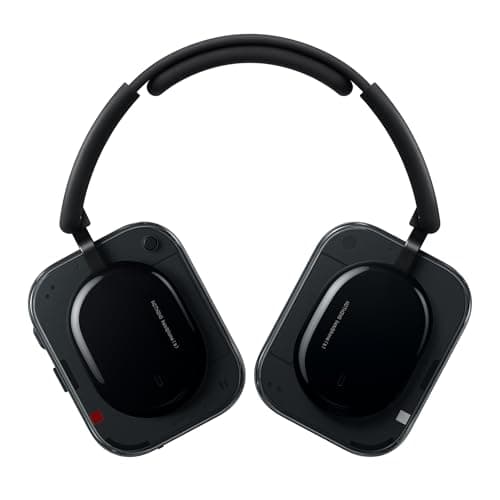
Nothing has been on an absolute tear in the audio space. After launching its first over-ear headphones in 2025 with the Headphone (1), the London-based brand has returned with something even more compelling: the Nothing Headphone (a). Priced at just $199 and available in four eye-catching colors, these cans promise to deliver nearly all of what made the original special while cutting the price in half. After spending considerable time with them, I can say they mostly deliver — and in some areas, they exceed expectations entirely.
This is a review of the Nothing Headphone (a), covering its design, sound quality, active noise cancellation, battery life, app experience, and how it stacks up against fierce competition from Sony, Sennheiser, Anker, and others.
Design and Build Quality
Nothing products have always been about design, and the Headphone (a) continues that tradition. The transparent aesthetic that made the brand famous is still here, though toned down compared to the Headphone (1). While the original featured more metallic accents and a cybernetic look, the (a) model leans into a softer, more approachable industrial design. The ear cups still feature transparent outer shells revealing the internal screws and hardware, but the overall silhouette is gentler, with smoother curves replacing the sharp angles of the original.
The build material has shifted from a mix of aluminum and plastic to mostly polycarbonate. Before you write that off as a cost-cutting downgrade, spend a few minutes handling these headphones. There is virtually no noticeable difference in perceived quality. The plastic used here feels dense and robust, with no creaking or flexing during normal use. Nothing kept metal in the critical places — the hinge mechanisms connecting the ear cups to the headband are still metal, ensuring longevity where it matters most. The headband uses a flexible plastic core wrapped in a soft silicone-like material that resists stretching over time.
At 310 grams, the Headphone (a) is noticeably lighter than the original's 329 grams but still heavier than many competitors in this price range. The Sennheiser Accentum Plus, for example, weighs just 227 grams. You will feel these on your head, and the clamping force is stronger than average. During extended listening sessions of two to four hours, I found the pressure around my ears to be noticeable but not uncomfortable. If you have a particularly sensitive head or wear glasses, you might want to try them on before committing. The synthetic leather ear pads are plush but don't breathe particularly well, so your ears may get warm during summer months or longer sessions.
The color options deserve a mention. Alongside standard Black and White, Nothing offers Pink and a Limited Edition Yellow. The Black and White models look the most cohesive, with the transparent elements matching the overall color scheme. The Pink and Yellow variants are more polarizing — the colored plastic on the ear cups contrasts with the transparent headband in a way that some might find less elegant. But if you want your headphones to stand out, these are undeniably unique.
The Best Controls in the Business
Let me say this plainly: Nothing provides the best physical control scheme on any pair of wireless headphones available today, regardless of price. The right ear cup houses a scroll wheel that functions as a volume control. Rolling it up or down produces an audible, satisfying click for each volume step — you always know exactly where you are. Pressing the wheel cycles through ANC modes (High, Mid, Low, Adaptive, and Transparency). It is intuitive, tactile, and makes touch-based controls on rival headphones feel imprecise by comparison.
Below the scroll wheel sits a paddle switch for track navigation: flick it forward for next track, backward for previous track, or press to play or pause. On the left ear cup, there is a customizable button that can be mapped to your voice assistant, EQ presets, camera shutter (when connected to a Nothing Phone), or mute for calls. A dedicated Bluetooth pairing button lives inside the left ear cup recess, and a two-way power switch completes the physical controls. There is no confusing touch surface to learn, no accidental inputs when adjusting the headphones — just satisfying, reliable mechanical controls.
The Nothing X companion app rounds out the experience with deep customization options. The app itself is clean, well-designed, and doesn't require an account to use — a refreshing change from many competitors. From within the app, you can adjust ANC modes, toggle Spatial Audio virtualisation, customize the EQ with an 8-band equalizer complete with Q-factor adjustment, enable low-latency gaming mode, toggle multipoint Bluetooth, and even locate your headphones via a built-in chirp. It is one of the best companion apps in the audio space, period.
Sound Quality: Impressive With Some Caveats
The Nothing Headphone (a) uses custom 40mm dynamic drivers engineered in partnership with KEF, the renowned British speaker manufacturer. On paper, the frequency response spans 20Hz to 40kHz, earning Hi-Res Audio certification for both wired and wireless playback. The headphones support SBC, AAC, and LDAC codecs over Bluetooth 5.4.
Out of the box, the Headphone (a) arrives with the "More Bass" EQ preset enabled. This is important context because the stock tuning significantly shapes first impressions. With this preset, the low end is prominent — thumpy, energetic, and designed to make pop and electronic music sound exciting. Tracks like Kendrick Lamar's "Loyalty" deliver rich vocals with a sub-bass foundation that will satisfy casual listeners looking for that consumer-friendly warmth.
However, this bass-forward tuning can overwhelm more complex or acoustically-oriented material. On orchestral pieces or intricate rock arrangements, the low end can bleed into the lower mids, reducing clarity and separation. The opening strings in Bill Callahan's "Drover" sound full and natural, but as more instruments enter, the soundstage narrows and things get a bit congested.
The saving grace is the Nothing X app's custom EQ. Switching to the "Balanced" preset immediately opens up the midrange and treble, revealing detail that the bass-heavy tuning obscures. With some manual tweaking — reducing the lower bands by 2-3 dB and slightly boosting the upper mids — you can achieve a significantly more neutral and detailed presentation. In fact, using the same custom EQ settings I had dialed in for the Nothing Headphone (1), the (a) model caught up a surprising amount of ground to its pricier sibling.
The TechRadar review captures this well: "The Nothing Headphone (a) immediately feel like a big expansive highway in comparison — it's an open, wide and free-flowing soundstage." That expansive quality is real once you move past the default tuning. The LDAC codec on Android makes a meaningful difference here, delivering cleaner treble and better instrument separation compared to AAC on iPhone. If you are an Android user, make sure to enable LDAC in the Bluetooth settings — it is not turned on by default, which is a minor annoyance.
Where the Headphone (a) falls short against pricier competitors is in raw detail retrieval and instrument separation. Compared to the Sennheiser Accentum Plus or Sony WH-1000XM6, the Nothing headphones sound slightly soft on fine details. Guitar string textures and drumskin attacks lack the last bit of crispness that audiophiles crave. But this is a $199 headphone we are talking about. In its price bracket, the sound quality is competitive and, with EQ adjustment, genuinely impressive.
Tom's Guide was more critical, calling the sound "flat and muddy" in some genres. I found that assessment a bit harsh — it depends heavily on the EQ preset and source material. With LDAC and a custom EQ dialed in, heavy rock and electronic tracks are more than enjoyable. The Headphone (a) handles acoustic and singer-songwriter genres best, where the natural midrange and smooth treble shine.
Active Noise Cancellation and Transparency
The active noise cancellation on the Nothing Headphone (a) is good but not class-leading. It offers five modes: High, Mid, Low, Adaptive, and Transparency. In High mode, the ANC effectively tames low-frequency rumble — think air conditioning, subway engines, and bus drones. These constant sounds are significantly reduced, creating a noticeably quieter listening environment.
Where the ANC falls short of the state of the art is in handling higher-frequency, more random noises. Office chatter, keyboard typing, and sudden noises like someone calling your name are only partially masked. If you work in a noisy open-plan office or commute on a particularly loud train line, the Sony WH-1000XM6 or Bose QuietComfort Ultra will serve you better.
The Transparency mode is a mixed bag. When listening to voices or announcements, it works well — you can hold a conversation without removing the headphones. However, wind noise is a serious problem. Even a gentle breeze across the microphones creates a roaring sound that makes Transparency mode unusable outdoors. This is a notable issue that Nothing should address with a firmware update. In calm conditions, Transparency sounds natural enough for situational awareness.
The Adaptive ANC mode automatically shifts between cancellation levels based on your environment. It works but transitions slowly — switching back from loud to quiet environments can take several seconds to recalibrate. Some users may prefer to manually select a mode.
Battery Life: The Undisputed Champion
Here is where the Nothing Headphone (a) genuinely demolishes the competition. Nothing claims 135 hours of playback with ANC turned off and 75 hours with ANC on. After a month of regular use — roughly four to five hours per day of mixed music listening, podcast playback, and occasional calls — I never once thought about charging these headphones.
To put that in perspective, the Sony WH-1000XM6 manages 40 hours with ANC on. The Sennheiser Accentum Plus delivers 50 hours. The Nothing Headphone (a) essentially doubles or triples what the competition offers. Even heavy users will likely charge this headphone once a month.
When you do need to top up, a 5-minute quick charge provides 8 hours of playback. A full charge from empty takes about 2 hours via USB-C. There is no wireless charging, but that is a forgivable omission given the price.
The real-world implications of this battery life are significant. You can take these on a two-week international trip and leave the charging cable at home. You can listen to podcasts all day at work without ever seeing a low-battery warning. The fear of running out of power on a long flight simply does not exist with these headphones. Nothing has turned battery anxiety into a non-factor, and that alone makes the Headphone (a) worth considering.
Connectivity and Call Quality
The Nothing Headphone (a) uses Bluetooth 5.4, supporting SBC, AAC, and LDAC codecs. There is no aptX or aptX HD support, which will matter to some Android users, though LDAC provides comparable if not superior quality. Pairing is seamless with Android via Google Fast Pair, and the connection range is excellent — I walked across my office building without a single dropout.
Multipoint Bluetooth is supported, allowing you to connect to two devices simultaneously. However, it is not enabled by default. You need to toggle it on in the Nothing X app before it works. Once active, switching between my phone and laptop was smooth and automatic.
Call quality is acceptable for everyday use but not spectacular. The four-microphone array picks up your voice clearly in quiet environments, and background noise suppression is impressive — a truck rumbling past during a call was completely silenced on the other end. However, callers reported that my voice sounded slightly muffled and distant compared to dedicated headset microphones. For professional meetings where clear communication is critical, you may want a purpose-built headset. For casual calls with friends or family, the Headphone (a) performs just fine.
What's Missing?
Nothing had to cut some corners to hit the $199 price point, and knowing what is missing helps set expectations. There is no hard carrying case — you get a soft drawstring pouch that offers minimal protection. Travelers will want to buy a third-party case. There is no automatic wear detection (auto-pause when you remove the headphones), which is a feature found on most competitors at this price. The ear pads are not replaceable without tools, which is a concern for long-term durability. And as mentioned, wind noise during Transparency mode is a real annoyance.
How It Compares
vs. Nothing Headphone (1): The (a) model costs $100 less, weighs slightly less, and delivers 99% of the same experience. The original has a marginally better out-of-box sound quality and a slightly more premium feel, but the gap is small enough that the (a) is the better value by a wide margin.
vs. Sennheiser Accentum Plus ($179): The Sennheiser offers better detail retrieval, a more neutral sound signature, and weighs significantly less. The Nothing counters with vastly superior battery life, better controls, and a more distinctive design.
vs. Anker Soundcore Space One Pro ($149): Anker's offering is lighter, includes a hard case, and has auto-wear detection. The Nothing wins on battery life, build quality feel, and control scheme.
vs. Sony WH-1000XM6 ($349): The Sony is better in every audio-related metric — ANC, sound detail, call quality, and comfort. But it costs $150 more. The Nothing is not trying to beat the XM6; it is targeting a completely different price bracket.
Final Verdict
The Nothing Headphone (a) is a remarkable achievement at $199. It brings distinctive design, genuinely innovative controls, and battery life that puts every competitor to shame. The sound quality is solid — especially with EQ adjustment — and the ANC is respectable for the price. It is not perfect: the clamping force is strong, the ear pads get warm, the carrying case is flimsy, and wind noise in Transparency mode needs fixing.
Real-World Usage Scenarios
To give you a complete picture, here is how the Nothing Headphone (a) performs across different use cases based on extended real-world testing.
Commuting and Travel: The ANC in High mode handles subway rumble and bus engine noise effectively, letting you hear your music at reasonable volume levels without cranking the dial. The strong clamping force is actually an advantage here — these headphones stay firmly on your head even during sudden movements. The 135-hour battery means you can take a two-week trip and never plug them in. The lack of a hard case is the main downside for travel. I ended up buying a third-party hardshell case for $25, which solved the issue entirely.
Office and Work-From-Home: For open-office environments, the ANC is sufficient to block ambient chatter and HVAC noise, though it won't silence a loud coworker on a call. The Transparency mode is useful for quick conversations without removing the headphones. Multipoint Bluetooth lets you stay connected to both your computer and phone simultaneously, which is essential for modern workflows. The 135-hour battery is a godsend for the desk worker — you can leave your charging cable at home and never worry about battery during the work week.
Gym and Outdoor Use: The IP52 rating means these can handle sweat and light rain, which is rare for over-ear headphones. I tested them during a few gym sessions and found they stayed in place during weight training and treadmill running. The ear pads get warm during exercise, and the lack of breathability is more noticeable when you are sweating. For outdoor walking, the Transparency mode is useful in calm conditions but becomes problematic in any wind. If outdoor use is your primary scenario, consider the Sony WH-1000XM6 or Bose QuietComfort Ultra, which handle wind far better.
Gaming: The low-latency mode in the Nothing X app reduces Bluetooth delay noticeably. In gaming mode, I tested with Call of Duty Mobile and Fortnite and found the audio-visual sync acceptable for casual gaming. The soundstage is wide enough for directional awareness in most games. Hardcore competitive gamers will still want a dedicated gaming headset, but for casual gaming on a phone or tablet, the Headphone (a) performs admirably.
Long-Term Durability Assessment
After a month of daily use, the Nothing Headphone (a) shows no signs of wear. The plastic ear cups still look new, the headband maintains its tension, and the ear pads show no flattening or peeling. The metal hinges remain tight with no wobble. The scroll wheel still produces crisp, tactile clicks. The synthetic leather on the ear pads is the most likely component to wear over time, but after 30+ days of use, there is no visible degradation.
The headband's stretch resistance is worth noting. I deliberately stretched it to its maximum size repeatedly during testing, and it springs back to its original shape without any deformation. The cable connections (USB-C and 3.5mm) feel secure, with no wobble or intermittent connection issues. The overall build quality inspires confidence that these headphones will last several years with normal use.
How the Nothing Headphone (a) Compares to Key Competitors
Nothing Headphone (a) vs. Sennheiser Accentum Plus ($179): This is the most direct competition. The Sennheiser offers slightly better sound clarity and detail retrieval, particularly in the midrange, where voices and acoustic instruments sound more natural and textured. The Sennheiser also weighs significantly less at 227g vs. 310g, making it more comfortable for all-day wear. However, the Nothing wins decisively on battery life (135 vs. 50 hours), control scheme (physical roller vs. touch), design distinctiveness, and app quality. If sound purity and comfort are your priorities, choose the Sennheiser. If you want a more enjoyable overall experience with better features, choose the Nothing.
Nothing Headphone (a) vs. Anker Soundcore Space One Pro ($149): Anker's offering undercuts the Nothing on price and includes features like a hard carrying case and auto-wear detection that the Nothing lacks. Sound quality is comparable, with the Anker leaning slightly more neutral. The Nothing feels more premium in the hand, has a far superior companion app, and offers triple the battery life. This is a close call, and the decision comes down to whether the hard case and auto-pause matter more to you than battery life and design.
Nothing Headphone (a) vs. Sony WH-1000XM6 ($349): This comparison is not entirely fair given the $150 price gap, but it helps contextualize the Nothing's performance. The Sony is better in every audio metric: ANC is significantly stronger, sound detail is superior, call quality is clearer, and comfort is better thanks to lower weight and softer padding. The Nothing's advantages are battery life (135 vs. 40 hours) and its unique control scheme. If you have the budget, the Sony is the better headphone. But the Nothing delivers 80% of the experience for 57% of the price, which is an impressive ratio.
Nothing Headphone (a) vs. CMF Headphone Pro ($69): CMF is Nothing's sub-brand, and its Headphone Pro is a budget alternative at roughly one-third the price. The Headphone (a) justifies its premium with better build quality, significantly better sound, proper ANC instead of basic noise isolation, the superior Nothing X app, and vastly better battery life. The CMF is impressive for its price, but the Headphone (a) is in a completely different league.
Who Should Buy the Nothing Headphone (a)?
The Nothing Headphone (a) is ideal for commuters and travelers who need battery life measured in weeks rather than hours. It is perfect for Android users who can take full advantage of LDAC for high-quality wireless audio. It is a fantastic choice for anyone who values distinctive design and does not want their headphones to look like every other pair of black plastic cans on the market. And it is an excellent recommendation for people who find touch controls frustrating and want proper physical buttons and dials.
Skip the Nothing Headphone (a) if you are an audiophile seeking ultimate sound purity and detail — the Sennheiser Accentum Plus or Sony WH-1000XM6 will serve you better. Skip it if you need class-leading noise cancellation for loud commutes. Skip it if you cannot tolerate strong clamping pressure on your head. And skip it if you need a hard carrying case included in the box.
Pricing and Value
At its $199 retail price, the Nothing Headphone (a) offers exceptional value. The combination of build quality, battery life, control scheme, ANC performance, and app support is unmatched at this price point. Currently available on Amazon for as low as $151 during promotions, the value proposition becomes nearly irresistible. When you consider that the Nothing Headphone (1) launched at $299 with only marginal improvements over this model, the (a) represents a significant step forward in value.
The headphones are available in Black, White, Pink, and Yellow through Amazon and the Nothing website. All color variants include the same accessories: a USB-C charging cable, a 3.5mm audio cable, and the drawstring carrying pouch. The Limited Edition Yellow variant occasionally sells out, so grab it quickly if that color appeals to you.
The Bottom Line
The Nothing Headphone (a) is a triumph of focused engineering. Nothing identified the key priorities for a midrange headphone — battery life, design, controls, and app experience — and executed them flawlessly. The compromises made in sound detail, ANC strength, and included accessories are acceptable given the $199 price point. This is not a headphone that tries to beat the Sony WH-1000XM6 at its own game; it is a headphone that redefines what $199 should get you.
Nothing has proven that great design and thoughtful engineering do not have to cost a fortune. The Headphone (a) is a confident, bold product from a company that understands what its audience wants. For anyone looking for a stylish, long-lasting pair of everyday headphones without breaking the bank, the Nothing Headphone (a) is an easy recommendation.
Pros
- Best-in-class 135-hour battery life
- Distinctive transparent design with fun color options
- Excellent physical controls with scroll wheel and paddle
- Solid ANC performance for the price
- Great companion app with deep customization
- LDAC support on Android
- IP52 water resistance for sweat and light rain
Cons
- Bass-heavy default tuning needs EQ adjustment
- Strong clamping force may be uncomfortable for some
- No auto-wear detection or hard carrying case
- Wind noise severely affects Transparency mode outdoors
- Ear pads get warm during extended use
Final Verdict
The Nothing Headphone (a) delivers best-in-class 135-hour battery life, distinctive transparent design, and excellent physical controls at a compelling $199 price point, making it one of the best value over-ear headphones available in 2026.