Nothing Headphone (a) Review: 135-Hour Battery Life Meets Signature Design
Nothing's most affordable over-ear ANC headphones deliver 135-hour battery life, LDAC Hi-Res Audio, and a signature transparent design for just $169 — an exceptional value proposition that challenges Sony, Bose, and Apple.
Nothing has built a reputation for disrupting established product categories with design-forward devices that don't compromise on substance. The Nothing Headphone (a), the company's second-generation over-ear ANC headphones, continues that tradition with a compelling mix of striking aesthetics, genuinely useful battery life, and a price that undercuts the category leaders by a wide margin. After spending significant time with the Nothing Headphone (a), these headphones make a surprisingly strong case for themselves in a market dominated by Sony, Bose, and Apple. The question isn't whether they're good for the price — it's whether they're good enough to make you reconsider spending twice as much on the competition.
Design and Build Quality
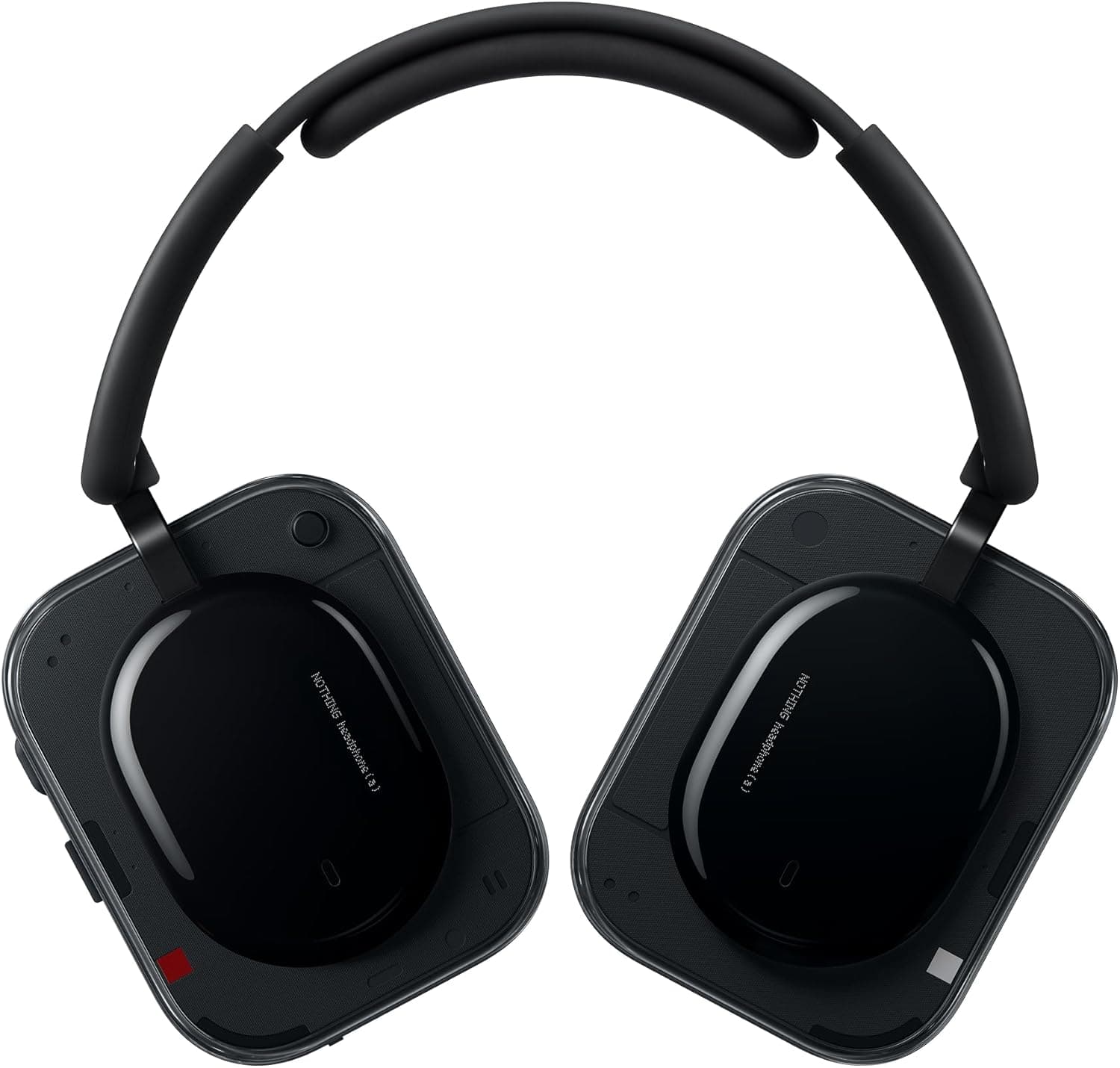
Nothing's design language has always been its strongest differentiator, and the Headphone (a) carries the torch with confidence. The transparent aesthetic that made the Ear (1) and Phone (1) so instantly recognizable is front and center here. The ear cups feature a clear outer shell that reveals the internal components — circuit boards, drivers, and wiring — all arranged with the kind of visual intentionality that makes industrial design feel like art. It's a conversation starter in a way that virtually no other headphones in this price range can claim. The Black variant offers a subtly smoked transparency that's less overt than the White version, while still maintaining the distinct Nothing look. Pink and Blue color options are also available for those who want more personality.
The headband is padded with a soft silicone-like material that distributes weight evenly across the top of the head. At 310 grams, the Headphone (a) is lighter than the Apple AirPods Max (385g) and competitive with the Sony WH-1000XM6 (around 250g). The all-plastic construction keeps weight down, though it doesn't feel as premium as the aluminum-and-leather build of premium competitors. That said, Nothing makes no apologies for this — the plastic is high-quality, with no creaking or flexing during normal use, and the weight savings translates directly into comfort during extended listening sessions. The matte finish on the outer surfaces resists fingerprints well, a practical consideration that matters more than most reviews acknowledge.
The ear cups rotate flat and fold inward, making the Headphone (a) genuinely portable — a feature that the AirPods Max conspicuously lacks. The adjustment mechanism has clear detents, and the clamping force is moderate: tight enough to maintain a good seal for ANC but not so tight that you'll feel fatigued after an hour. The ear cushions are covered in a soft protein leather with memory foam filling that conforms well to different head shapes. Over time, the memory foam settles slightly to match your specific contours, improving both comfort and the passive noise isolation seal.
One design choice worth noting: the physical buttons. The Headphone (a) has a dedicated button for ANC mode switching and a volume rocker plus play/pause button on the right ear cup. The click is satisfyingly tactile, and the buttons are easy to locate by touch without looking at the headphones. On the bottom of the right ear cup, you'll find a USB-C charging port and a 3.5mm headphone jack — a welcome inclusion that many manufacturers have abandoned. The 3.5mm jack supports passive playback, so you can use the headphones even if the battery is completely dead, which is an important failsafe for travelers.
The IP52 rating means the Headphone (a) can handle light sweat and splashes, though you wouldn't want to take them out in heavy rain. For gym use or commuting in light drizzle, they'll be fine. Notably, the IP52 rating is better than the Sony WH-1000XM6, which has no official IP rating at all. The build quality overall inspires confidence for daily use — these aren't fragile showpieces, they're daily drivers with a designer flair.
Comfort and Fit
Long listening sessions are where the Headphone (a) truly shines from an ergonomic standpoint. The 310-gram weight is well-distributed, and the memory foam ear cushions provide a comfortable seal without excessive heat buildup. I wore them for three-hour stretches without feeling the need to take them off, which is something I cannot say for the AirPods Max or even some heavier over-ear competitors. The protein leather ear pads breathe reasonably well — they get warm after a couple of hours, but not uncomfortably so, and certainly less than leather-only pads on some premium headphones.
The clamping force is balanced — tight enough to keep ANC effective but gentle enough that glasses wearers won't feel pinched. The headband's silicone underside provides enough friction to keep the headphones in place during head movements, whether you're looking down at a laptop or walking around the office. I tested these during a six-hour work-from-coffee-shop session and found them comfortable throughout, with only minor readjustments needed every couple of hours.
If there's a comfort criticism, it's that the ear cups are slightly smaller than those on the Sony WH-1000XM6 or Bose QuietComfort Ultra. Users with larger ears may find that their ears touch the inner mesh after extended wear. For most users, though, the fit will be perfectly comfortable, and the slightly smaller cups contribute to the Headphone (a)'s more compact fold-flat profile.
Active Noise Cancellation
Nothing equipped the Headphone (a) with hybrid ANC that uses a combination of feed-forward and feedback microphones to cancel ambient noise. The claimed 40dB of noise reduction is competitive for this price segment, and in practice, it performs admirably for the money. The hybrid approach means that two external microphones capture ambient noise before it reaches your ears while two internal microphones monitor what actually makes it through, allowing the ANC processor to adjust in real time.
The Headphone (a) offers four ANC modes: High, Medium, Low, and Smart Adaptive. High mode is what you'll use on planes, trains, and in noisy cafes — it effectively neutralizes low-frequency rumble like HVAC systems, engine noise, and air conditioning. Mid and high frequencies like voices and keyboard clatter are reduced but not eliminated, which is typical for this class of headphones. Medium mode is useful for moderately noisy environments where you still want some situational awareness. Low mode is essentially a transparency-lite setting that lets in enough ambient sound for safe street walking.
Smart Adaptive mode automatically adjusts the ANC level based on your environment's noise profile. It works reasonably well, though I found myself occasionally overriding it manually when transitioning between quiet and loud spaces faster than the algorithm could react. The transparency mode is natural-sounding and doesn't have the artificial "pressure" feel that some budget ANC headphones exhibit. Voices come through clearly enough for quick conversations without removing the headphones, and you can hear traffic and announcements when walking or commuting.
Compared to the Sony WH-1000XM6 and Bose QC Ultra, the Headphone (a) falls short on sheer noise cancellation power. Sony and Bose still lead the category with ANC that can make a coffee shop sound like a library. The Headphone (a) reduces noise significantly but doesn't eliminate it to the same degree — you'll still hear the murmur of conversations and the clatter of a busy cafe, just at a much lower volume. But considering the Headphone (a) costs half as much as those flagships, the ANC performance here is remarkable value. It's closer to the Sony WH-1000XM5's ANC level than to budget headphones like the Anker Soundcore Space Q45.
Sound Quality
The Headphone (a) uses 40mm dynamic drivers with a PEN+PU (polyethylene naphthalate + polyurethane) composite diaphragm, coated with titanium for added stiffness. The frequency response spans 20Hz to 40kHz, and the headphones support LDAC — Sony's high-resolution wireless audio codec — alongside AAC and SBC. LDAC support is particularly significant at this price point, as it's usually reserved for headphones in the $300+ range.
Out of the box, the Headphone (a) has a consumer-friendly tuning with a noticeable bass boost. The low end is punchy and warm, with good extension that doesn't bleed into the mids. Kick drums have satisfying impact, and electronic music sounds energetic and engaging. If you're a bass head, you'll appreciate the extra low-end presence without the muddiness that plagues cheaper headphones. The titanium-coated drivers contribute to faster transient response, so bass notes hit hard but decay quickly rather than lingering and smearing into the next beat. This makes the Headphone (a) particularly good for genres like electronic, hip-hop, and modern pop where rhythmic precision matters.
The midrange is where the Headphone (a) shows some of its budget constraints. Vocals are clear and reasonably forward, but there's a slight lack of warmth and body compared to the Sony WH-1000XM6. Acoustic guitars and strings sound good but not exceptional — they lack the last bit of texture and detail that premium headphones deliver. That said, for $199 (or $169 on sale), the midrange performance is competitive with anything else in this price bracket. The upper mids are slightly recessed, which takes some edge off harsh recordings but can also make rock vocals sound a little distant.
Treble is detailed without being harsh. Cymbals and hi-hats have a pleasing shimmer, and there's good airiness in the upper frequencies. LDAC support makes a meaningful difference here — streaming Tidal Master or Amazon Music Ultra HD content over LDAC reveals more detail and spaciousness than AAC can deliver. If you're an Android user with a phone that supports LDAC, this is a significant advantage over the AirPods Max 2, which only supports AAC. On iPhone, the experience is limited to AAC, which still sounds good but doesn't take full advantage of the hardware.
Soundstage width is average for closed-back over-ear headphones. The imaging is precise enough to place instruments in stereo space, but don't expect the holographic presentation of open-back headphones. For a commuting and office-use headphone, the soundstage is perfectly adequate. Instrument separation is good — you can pick out individual elements in a busy mix without them blurring together, which is more than you can say for most sub-$200 wireless headphones.
The Nothing X companion app includes a 5-band EQ with several presets and a custom mode. The EQ is responsive and makes meaningful changes to the sound signature. I found myself using the "More Bass" preset for electronic and hip-hop and switching to "Balanced" for acoustic and classical. The custom EQ lets you save your own tuning, which is a welcome feature that not all competitors offer at this price. The EQ changes persist even after closing the app, so you don't need to keep the app running to maintain your preferred sound.
Battery Life
The headline feature of the Nothing Headphone (a) is its battery life, and the numbers are genuinely impressive. With ANC off, Nothing claims up to 135 hours of playback. With ANC on, that drops to about 75 hours — still among the best in class. In real-world mixed use (ANC on for commuting, off for office listening), I got about 90 hours between charges. That's roughly three to four weeks of typical daily use, depending on your ANC habits.
To put that in perspective: the Sony WH-1000XM6 offers 40 hours with ANC on. The AirPods Max 2 offers about 24 hours. The Bose QC Ultra manages 24 hours. The Nothing Headphone (a) effectively triples or quadruples the battery life of its premium competitors. If you're the type of person who forgets to charge their headphones, the Headphone (a) is essentially a set-it-and-forget-it device — charge it once and you'll get through two or three weeks of daily use. For frequent travelers, this is a genuinely liberating feature because you never have to think about whether your headphones will last through a long-haul flight.
When you do need to charge, USB-C fast charging gives you about 10 hours of playback from a 10-minute charge. A full charge takes about 2 hours. The headphones also support USB-C audio passthrough, so you can use them wired while charging if the battery runs out. There's no wireless charging support, which is expected at this price point but worth noting if you've become accustomed to dropping your devices on a charging pad.
The battery management is also smart — the headphones automatically power off after 10 minutes of inactivity, and the Nothing X app shows the exact remaining percentage for both the headphones and, in the case of the earbuds, the charging case. For the Headphone (a), you just get the headphone percentage, which is sufficient given the massive capacity.
Connectivity and Features
Bluetooth 5.4 provides rock-solid connectivity. I experienced no dropouts even in congested urban areas with competing Bluetooth signals. The range is excellent — I could walk about 30 feet away from my phone with a wall between us before the signal started stuttering. Bluetooth 5.4 also brings improved power efficiency, which contributes to the exceptional battery life numbers.
Multipoint Bluetooth — connecting to two devices simultaneously — works seamlessly. I had my phone and laptop connected simultaneously, and switching between them when a call arrived was flawless. The headphones pause music automatically when a call arrives and resume when the call ends. This is implemented better than on many competitors — some headphones require you to manually trigger the switch, but the Headphone (a) handles it automatically without missing a beat.
Google Fast Pair and Microsoft Swift Pair make initial setup effortless on Android and Windows devices respectively. On iOS, you'll need to pair manually through the Bluetooth settings, but it's a one-time process. The Fast Pair implementation includes the nice touch of showing a battery level card for the headphones right in the Android quick settings panel.
In-ear detection pauses playback when you remove the headphones and resumes when you put them back on. The optical sensor is responsive and reliable — I never experienced false triggers or delayed responses. It's implemented exactly as it should be: immediate pause when the headphones come off, immediate resume when they go back on.
The Nothing X app is clean and well-designed. It offers ANC mode selection, EQ adjustment, firmware updates, and a "Find My Headphone" feature. The app is available for both Android and iOS and connects reliably via Bluetooth. The firmware update process is straightforward — the app downloads the update and installs it automatically, with the headphones rebooting once complete. Nothing has been good about post-launch firmware updates, and the Headphone (a) is likely to receive continued software support.
Call Quality
The five-microphone array (three for voice pickup on calls, two dedicated to ANC) delivers above-average call quality for this price segment. The beamforming algorithm does a good job of isolating your voice from background noise. In quiet environments, callers reported that I sounded clear and natural, with good microphone volume and no robotic artifacts. In noisy environments (a busy street corner), my voice remained intelligible, though some background noise bled through and there was occasional slight compression on louder speech.
The wind noise reduction is less effective — calls taken outdoors on a breezy day had noticeable wind distortion in the microphone feed. The ear cups themselves do a good job of passively blocking wind from reaching the microphone ports, but in gusty conditions, call quality degrades noticeably. For indoor and most outdoor use, though, call quality is solid and comparable to headphones in the $200-250 range. Voice pickup is clear enough for Zoom calls and voice memos, and the sidetone feature (hearing your own voice through the headphones during calls) sounds natural and helps you avoid speaking too loudly.
The Nothing Ecosystem
If you already own a Nothing Phone (4a) or other Nothing devices, the Headphone (a) integrates into the broader Nothing ecosystem. You get quick settings controls for ANC and EQ directly from the phone's notification shade, and the Glyph interface on Nothing phones can show connection status. For Android users with Nothing phones, the integration adds a layer of convenience that you don't get with third-party brands. For iPhone users or users of other Android phones, the companion app provides all the same control — just with one extra step to open it.
Comparisons
vs. Sony WH-1000XM6: Sony's flagship offers better ANC, warmer and more detailed sound, and a more premium build with metal components and leather padding. But it costs $349 to $399 and delivers only 40 hours of battery life. The Headphone (a) is a clear value play: you sacrifice some ANC and sound refinement but gain 3x the battery life and save $150-200.
vs. Apple AirPods Max 2: Apple's over-ears offer superior build quality with aluminum ear cups, deeper Apple ecosystem integration with H2 chip features like Live Translation and Adaptive Audio, and better spatial audio with head tracking. But they weigh 385g, cost $549, and deliver only 24 hours of battery. For iPhone users with deep pockets, the AirPods Max 2 is the better experience. For everyone else, the Headphone (a) is more practical.
vs. Bose QuietComfort Ultra: Bose still leads in ANC performance — the QC Ultra makes the world quieter than any competitor. The QC Ultra also has a more refined sound signature for acoustic and vocal-heavy music with less bass emphasis. But the Bose costs $349 and delivers 24 hours of battery. The Headphone (a)'s 75-135 hour battery is in a completely different league.
vs. Nothing Ear (a) Earbuds: If you prefer true wireless earbuds for portability, the Nothing Ear (a) earbuds are excellent at $99 with good ANC and Nothing's signature design. But over-ear headphones like the Headphone (a) offer significantly better battery life, more effective ANC (the physical seal of over-ears helps), and all-day comfort without ear fatigue. For home and office use, the Headphone (a) is the better choice. For gym and on-the-go portability, the Ear (a) earbuds win.
Who Should Buy the Nothing Headphone (a)
The Nothing Headphone (a) is an excellent choice for:
- Commuters who want reliable ANC and don't want to charge their headphones every few days
- Office workers who need all-day comfort and multipoint Bluetooth connectivity
- Android users who can take advantage of LDAC for high-resolution audio streaming
- Design-conscious buyers who want headphones that look as interesting as they sound
- Budget-conscious shoppers who want premium features without paying flagship prices
- Travelers who need battery life that lasts through multi-leg international flights
The Nothing Headphone (a) is less ideal for:
- Audiophiles seeking the last word in sound quality and detail retrieval — look at wired open-back options
- Frequent flyers who need best-in-class ANC to block engine noise at altitude
- Heavy gym users (the IP52 rating is splash-resistant, not sweat-proof for intense workouts)
- Apple ecosystem users who will miss seamless H2/H1 chip integration and spatial audio
Final Thoughts
The Nothing Headphone (a) is one of the most compelling value propositions in the over-ear ANC headphone market right now. At $199 (often available for $169 on Amazon), it delivers a design that stands out, battery life that puts every premium competitor to shame, and performance that punches well above its price class in every meaningful category.
The ANC isn't class-leading — Sony and Bose still hold that crown — but it's good enough for most environments. The sound quality won't satisfy the most discerning audiophiles, but with LDAC support and a capable EQ in the companion app, the Headphone (a) sounds genuinely good for its price. The build is lightweight and comfortable, and the physical button controls are a welcome relief from the unreliable touch panels found on many competitors.
What makes the Headphone (a) truly special is that Nothing didn't cut corners on the features that matter most. LDAC, multipoint Bluetooth, in-ear detection, ANC with adaptive modes, and a 3.5mm jack are all present. The 135-hour battery life is the standout feature — it fundamentally changes how you interact with the headphones because you never think about charging. You just use them, day after day, until you eventually remember that it's been a few weeks and maybe you should plug them in. That kind of freedom from battery anxiety is rare in the headphone world, and Nothing deserves credit for prioritizing it.
Nothing has proven with the Headphone (a) that you don't need to spend $350 to $549 to get a genuinely excellent pair of ANC over-ear headphones. You just need to know where to look, and right now, the answer is clear.
Related: Sony WH-1000XM6 · Bose QuietComfort Ultra Headphones · Soundcore Space 2
Pros
- Exceptional 135-hour battery life (75+ hours with ANC)
- LDAC Hi-Res Audio support for high-quality wireless streaming
- Striking transparent design at a highly competitive price
- Good hybrid ANC performance with adaptive modes
- Multipoint Bluetooth and Google Fast Pair support
- Physical button controls instead of unreliable touch panels
Cons
- Sound quality lacks the refinement of premium competitors
- ANC falls short of category-leading Sony and Bose flagships
- All-plastic build doesn't feel as premium as the price suggests
- Ear cups slightly small for users with larger ears
Final Verdict
Nothing's most affordable over-ear ANC headphones deliver 135-hour battery life, LDAC Hi-Res Audio, and a signature transparent design for just $169 — an exceptional value proposition that challenges Sony, Bose, and Apple.