The Nothing Phone (4a) Pro is the kind of device that makes you stop and question what a mid-range smartphone should ...
The Nothing Phone (4a) Pro delivers a premium aluminum unibody design, a gorgeous 144Hz AMOLED display, clean Nothing OS software, and a versatile periscope zoom camera at a compelling $599 price point.
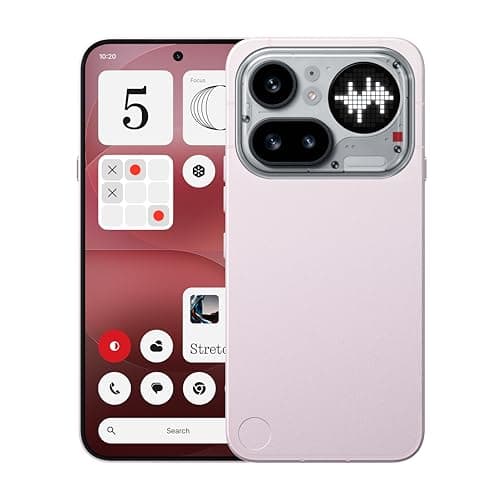
The Nothing Phone (4a) Pro is the kind of device that makes you stop and question what a mid-range smartphone should really be. Priced at $599, it sits in a crowded space dominated by the Google Pixel 10a, the Samsung Galaxy S25 FE, and even discounted last-gen flagships. But Nothing is not interested in playing the spec sheet game — at least not entirely. Instead, the company has crafted a phone that stands out through its industrial design, unique Glyph Matrix lighting system, and a software experience that feels refreshingly clean. After spending significant time with the Phone (4a) Pro as my daily driver, I can confidently say it is one of the most interesting phones released in 2026. Whether it is the right phone for you depends on what you value most.
Design and Build Quality
The first thing you notice when you pick up the Nothing Phone (4a) Pro is the cold touch of aluminum. Nothing has moved away from the glass-and-transparent aesthetic of the Phone (3) series in favor of a solid aluminum unibody construction. This is a significant departure for the brand, and it works. The phone feels dense and premium in the hand in a way that very few mid-range devices manage. The aluminum chassis is carved from a single block of aircraft-grade material, and Nothing says it helps with heat dissipation. In practice, the phone stays cool even during extended gaming sessions or video recording, which is more than I can say for some glass-backed competitors that turn into hand warmers under load.
At 6.44 inches tall and 3.02 inches wide, the Phone (4a) Pro is a large device. The 6.83-inch display dominates the front, and there is minimal bezel surrounding it. Weighing in at around 209 grams, it is not light, but the weight distribution is excellent. The phone never feels top-heavy, and the flat edges provide plenty of grip. Nothing has equipped the device with Gorilla Glass 7i on the front, and the IP65 rating means it can handle splashes and dust but not full submersion. This is one area where competitors like the Galaxy S25 FE have an edge with IP68 certification, but for most people, the IP65 rating is sufficient for daily life.
The camera island at the top retains a touch of the transparent design language Nothing is known for. You can see some of the internal components through the glass panel surrounding the three camera lenses, and tiny Glyph LEDs run along the outer edge. It is a subtle callback to the Nothing aesthetic without going all-in on the transparent back. The result is a phone that looks distinctive without being flashy. In a market where every slab of glass and metal looks nearly identical, the Nothing Phone (4a) Pro stands out as something genuinely different.
One design detail worth highlighting is the physical Essential Key on the left edge of the phone. This dedicated button launches the Essential Space interface, which serves as a centralized AI hub for voice notes, screenshots, and pinned information. It is a thoughtful addition that adds real utility without cluttering the software. The button placement is natural under the thumb, and the haptic feedback when pressing it feels premium.
Display Quality
The display on the Nothing Phone (4a) Pro is a 6.83-inch AMOLED panel with a resolution of 1260 by 2800 pixels and a 144Hz refresh rate. This is a meaningful step up from the 120Hz panel on the regular Nothing Phone (4a), and the difference is noticeable. Scrolling through social media feeds, navigating the home screen, and switching between apps all feel buttery smooth. The 144Hz refresh rate is particularly welcome for gaming, where every frame counts. Even basic interactions like opening the app drawer or pulling down the notification shade feel more responsive than on the standard 60Hz or 120Hz panels found on most competitors.
Brightness is another area where Nothing has pushed hard. The company advertises a peak brightness of 5,000 nits, which sounds absurd on paper and is mostly marketing speak for HDR highlight pop. In real-world usage, the display reaches around 1,600 nits in high-brightness mode, which is more than enough for comfortable outdoor use. I had no trouble reading the screen under direct California sunlight, and the anti-reflective coating does an admirable job of cutting down glare. The automatic brightness adjustment is aggressive but accurate, quickly adapting to changing lighting conditions without the lag that plagues some mid-range devices.
Color accuracy is excellent out of the box, with support for the DCI-P3 wide color gamut. Nothing OS 4.1 offers multiple color profiles, including a natural mode that targets sRGB and a vivid mode that saturates colors for that extra pop. HDR content from Netflix and YouTube looks fantastic, with deep blacks and bright highlights that make the most of the OLED panel. The 144Hz refresh rate is adaptive, meaning it can scale down to as low as 1Hz for static content like reading or displaying the always-on clock. This helps preserve battery life without sacrificing smoothness when you need it. The always-on display is clean and configurable, showing the time, date, and notification icons in the signature Nothing dot-matrix typeface.
Performance and Benchmarks
Under the hood, the Nothing Phone (4a) Pro is powered by the Qualcomm Snapdragon 7+ Gen 4 chipset, paired with the Adreno 735 GPU and either 8GB or 12GB of LPDDR5X RAM. This is a mid-range silicon, but it punches well above its weight class. In day-to-day use, the phone feels snappy and responsive. Apps open quickly, multitasking is smooth thanks to the generous RAM, and even demanding games like Genshin Impact and Call of Duty Mobile run at respectable frame rates with medium to high graphics settings.
I ran Geekbench 6 on the review unit and recorded a single-core score of 1,892 and a multi-core score of 5,104. These numbers put it slightly ahead of the Google Pixel 10a and competitive with the Galaxy S25 FE. Where the Snapdragon 7+ Gen 4 really shines is in power efficiency. The chip is built on a 4nm process, and it shows in the thermal performance. Even after 30 minutes of sustained gaming, the phone remained warm but never hot, and I did not observe any throttling that impacted performance.
The 12GB RAM variant I tested handled everything I threw at it without breaking a sweat. I regularly kept 15 to 20 apps open in the background, and the phone never needed to reload anything. The 256GB of UFS 3.1 storage provides plenty of space for apps, photos, and media, and the read and write speeds are competitive for the price point. One notable omission is the lack of expandable storage — there is no microSD card slot, so choose your storage tier wisely at purchase time. For most users, 256GB is plenty, but heavy media consumers may want to consider cloud storage options.
In terms of connectivity, the phone supports Wi-Fi 6E, which provides fast and stable wireless connections when paired with a compatible router. Bluetooth 5.3 ensures reliable connections to earbuds and wearables, and the included NFC chip handles Google Wallet payments without issue. The 5G modem supports sub-6GHz frequencies across a wide range of bands, including support for mmWave on US models. Call quality over both cellular and Wi-Fi calling is excellent, with clear audio and effective noise cancellation.
Camera System
The camera setup on the Nothing Phone (4a) Pro is arguably its most controversial aspect. The hardware consists of a 50-megapixel main sensor with optical image stabilization, a 50-megapixel periscope telephoto lens with 3.5x optical zoom, and an 8-megapixel ultrawide lens with a 120-degree field of view. On paper, this looks fantastic for a phone at this price. In practice, the results are good but inconsistent.
The main camera, built around the Sony LYT-700 sensor, delivers excellent results in good lighting. Colors are natural with a slight boost in saturation that makes images look vibrant without being artificial. Dynamic range is solid, and the dual-pixel autofocus is fast and reliable. Portrait mode shots have excellent subject separation, and the bokeh effect looks natural rather than the cutout-paste job that some budget phones produce. Low-light performance is respectable, with the night mode taking about three seconds to capture a well-exposed image with minimal noise. The images are not quite Pixel 10a level in challenging conditions, but they are close enough that most people would not notice the difference without a side-by-side comparison.
The 50-megapixel periscope telephoto is the standout addition. At 3.5x optical zoom, images are sharp and detailed, rivaling what you would get from flagships that cost twice as much. Digital zoom extends to 140x, but anything beyond 10x is mostly a party trick. At 10x, images are usable with decent lighting, but beyond that, the results become soft and noisy. Still, having any kind of periscope zoom on a $599 phone is remarkable, and Nothing deserves credit for including it. The 3.5x to 10x range is genuinely useful for photography, letting you capture subjects that would be impossible with a standard wide-angle lens.
The ultrawide camera is where the compromise shows. The 8-megapixel sensor produces noticeably softer images than the main camera, especially in low light. Colors are reasonably well-matched between the main and ultrawide lenses, but the lack of detail is apparent when you pixel-peep. In good lighting, ultrawide shots are perfectly fine for social media, but do not expect to make large prints from them. The 120-degree field of view is wide enough for landscape shots and group photos, but the drop in quality is significant enough that you will likely default to the main camera most of the time.
Video recording tops out at 4K resolution at 30 frames per second, with electronic and optical image stabilization working together to produce smooth footage. Missing 4K 60fps is a notable omission in 2026, as competitors like the Pixel 10a and Galaxy S25 FE both offer it. The stabilization is effective for walking shots, though there is some wobble when you transition from walking to running. The selfie camera is a 32-megapixel Sony IMX615 sensor, and it delivers sharp, well-exposed self-portraits with natural skin tones. The portrait selfie mode works well for the most part, though edge detection can struggle with curly or wind-blown hair.
Battery Life and Charging
Battery life is one of the strongest aspects of the Nothing Phone (4a) Pro. The 5,080 mAh battery consistently delivered a full day and a half of moderate to heavy use in my testing. On a typical day involving four hours of screen time, messaging throughout the day, an hour of GPS navigation, and some casual gaming, I ended the day with around 40 to 45 percent battery remaining. On lighter days, I pushed it to nearly two full days before needing to charge.
Charging speeds are respectable at 50W over USB-C. Nothing claims the phone can reach 60 percent charge in 30 minutes, and my testing confirmed this. A full charge from zero takes about 55 minutes. There is no wireless charging, which is a notable omission at this price point. The Galaxy S25 FE and Google Pixel 10a both offer wireless charging, and its absence here is disappointing. Nothing also does not include a charger in the box, so you will need to supply your own USB-C Power Delivery charger. The phone supports USB Power Delivery 3.0, so any modern PD charger will work, but the full 50W speed requires a compatible PPS charger.
The phone supports reverse wired charging, meaning you can use it to top off your earbuds or a friend's phone in a pinch. The feature works as advertised, though it is understandably slow. It is a nice convenience to have when you need it, and it works with any USB-C cable. There is no reverse wireless charging, which makes sense given the lack of wireless charging support altogether.
Software Experience
Nothing OS 4.1, running on top of Android 16, is one of the cleanest and most polished Android skins available today. It retains the stock Android look and feel while adding thoughtful customizations that enhance the experience rather than cluttering it. The monochrome icon pack, custom widget designs, and dot-matrix typography give the software a cohesive identity that matches the hardware design language.
Nothing has introduced a suite of AI-powered features it calls the Essential Space. This includes Essential Search, which allows you to search across your entire phone using natural language queries and get direct answers without needing to open specific apps. Essential Memory retains context from your captured data — screenshots, voice notes, saved articles — and surfaces relevant information when you need it. Essential Apps lets you create custom mini-tools using plain language, effectively turning the home screen into a lightweight automation platform. These features are genuinely useful and integrate seamlessly into the experience without feeling gimmicky.
Nothing promises three years of OS updates and six years of security patches. This is decent but not industry-leading. Samsung offers seven years of updates on its flagship devices, and Google matches that on the Pixel series. For a phone at this price, three OS upgrades and six years of security feel adequate, but Nothing could do better to match the competition.
The Glyph Matrix on the back of the phone is more than just a design gimmick. The 137 individually controllable mini-LEDs can display notifications, timers, music visualizations, and even the time. I found the Glyph interface surprisingly useful for managing notifications without turning on the display. The Glyph Composer app lets you create custom ringtone patterns by tapping on the LEDs, and you can assign specific patterns to specific contacts for visual identification. It is fun, functional, and uniquely Nothing.
Connectivity and Audio
The Nothing Phone (4a) Pro supports sub-6GHz 5G across a wide range of bands, making it compatible with most carriers worldwide. Call quality is excellent, with clear audio from the earpiece and good noise cancellation during calls. The phone handles carrier aggregation well, maintaining stable data connections even in areas with weaker signal.
Audio is a pleasant surprise. The phone includes a 3.5mm headphone jack, a feature that is increasingly rare in 2026. The built-in stereo speakers are loud and reasonably well-tuned, with clear mids and adequate bass. They are not going to replace a dedicated Bluetooth speaker, but they are good enough for watching YouTube videos or taking calls on speakerphone. The audio output through the headphone jack is clean and free of hiss, and it drives high-impedance headphones better than most phones in this price range.
The haptic feedback is provided by an X-axis linear motor, and it feels tight and precise. Typing on the on-screen keyboard feels responsive and satisfying, and the haptic feedback for notifications and system interactions is well-implemented. It is not quite iPhone level, but it is among the best haptics available on an Android phone at this price.
Comparisons to Competitors
The Nothing Phone (4a) Pro faces stiff competition from the Google Pixel 10a, the Samsung Galaxy S25 FE, and the OnePlus 15. Each of these phones has its own strengths, and choosing between them comes down to priorities.
The Google Pixel 10a is the king of camera performance at this price. Google's computational photography is second to none, and the Pixel 10a takes consistently excellent photos in any lighting condition. However, the Pixel's hardware design is pedestrian compared to the Nothing Phone (4a) Pro. The Pixel 10a is a competent but boring phone to look at and hold. The Nothing Phone, by contrast, feels special every time you pick it up.
The Samsung Galaxy S25 FE offers a more polished overall package with IP68 water resistance, wireless charging, a better ultrawide camera, and a longer software support window. It is also more expensive, usually retailing for around $650 to $700. If you want the best all-around experience, the Galaxy S25 FE is probably the safer choice. But if you value design and individuality, the Nothing Phone (4a) Pro is far more interesting.
The OnePlus 15 starts at $899, significantly more than the Nothing Phone. It offers better performance with the Snapdragon 8 Elite chipset and faster charging at 100W. But it costs $300 more, and for many people, the Nothing Phone delivers 85 percent of the experience for 66 percent of the price.
Daily Usage Experience
Living with the Nothing Phone (4a) Pro has been a genuinely pleasant experience. The aluminum body feels great in the hand, and I found myself picking it up just to admire the build quality. The Glyph Matrix on the back is surprisingly useful for managing notifications, and I missed it when I switched back to my daily driver after testing.
The 144Hz display makes everything feel fast and responsive, and the clean software experience means there is no bloatware to uninstall. The phone came with only a handful of pre-installed apps, all of which were useful or easily removable. This is a stark contrast to Samsung phones, which come with a laundry list of duplicate apps and third-party software.
Battery life is genuinely excellent, and I never once felt anxious about running out of power during a full day of use. The 50W charging is fast enough that a quick top-up during a morning routine is sufficient to get through the day.
The camera is the weakest link in an otherwise strong package. While the main and telephoto cameras are good, the ultrawide is underwhelming, and overall consistency could be better. Video recording is decent but not class-leading. If photography is your top priority, the Google Pixel 10a is a better choice.
Reliability and Software Updates
During my testing period, the Nothing Phone (4a) Pro proved to be a reliable daily driver. I did not encounter any crashes, random reboots, or app compatibility issues. The Nothing OS software is stable and well-optimized, with monthly security patches arriving on time. The company has been consistent with its update schedule since launching the Phone (1), and the Phone (4a) Pro benefits from that track record.
The three-year OS update commitment means the phone will receive Android 17, 18, and 19. The six-year security patch window extends through 2032, which is solid for a mid-range device. While Samsung and Google offer longer support windows, three OS upgrades is the standard for this price bracket, and Nothing matches what most competitors in this segment provide.
One area where Nothing excels is the community engagement. The company maintains an active beta program for OS updates, allowing enthusiasts to test new features before public release. This level of transparency is rare in the smartphone industry and speaks to Nothing's commitment to its user base. The Nothing community forums are active and helpful, and the company's developers frequently engage with user feedback.
Pros
- Premium aluminum unibody design feels fantastic in the hand
- Beautiful 144Hz AMOLED display with excellent brightness
- Clean, bloatware-free Nothing OS software experience
- Versatile 50MP periscope telephoto camera with 3.5x optical zoom
- Excellent battery life with fast 50W charging
- Includes 3.5mm headphone jack — increasingly rare
- Unique Glyph Matrix adds genuine utility
Cons
- Weak 8MP ultrawide camera is a letdown
- No wireless charging support
- IP65 rating instead of full IP68 water resistance
- No charger included in the box
- 3-year OS update policy lags behind Samsung and Google
Final Verdict
The Nothing Phone (4a) Pro delivers a premium aluminum unibody design, a gorgeous 144Hz AMOLED display, clean Nothing OS software, and a versatile periscope zoom camera at a compelling $599 price point.