The Samsung Galaxy Z Fold7 Is the Foldable That Finally Stops Asking You to Make Excuses for It
The Galaxy Z Fold7 delivers a wider cover screen, 200MP camera, Snapdragon 8 Elite power, and Samsung's most refined foldable software yet — making it the first foldable that works as well closed as it does open.
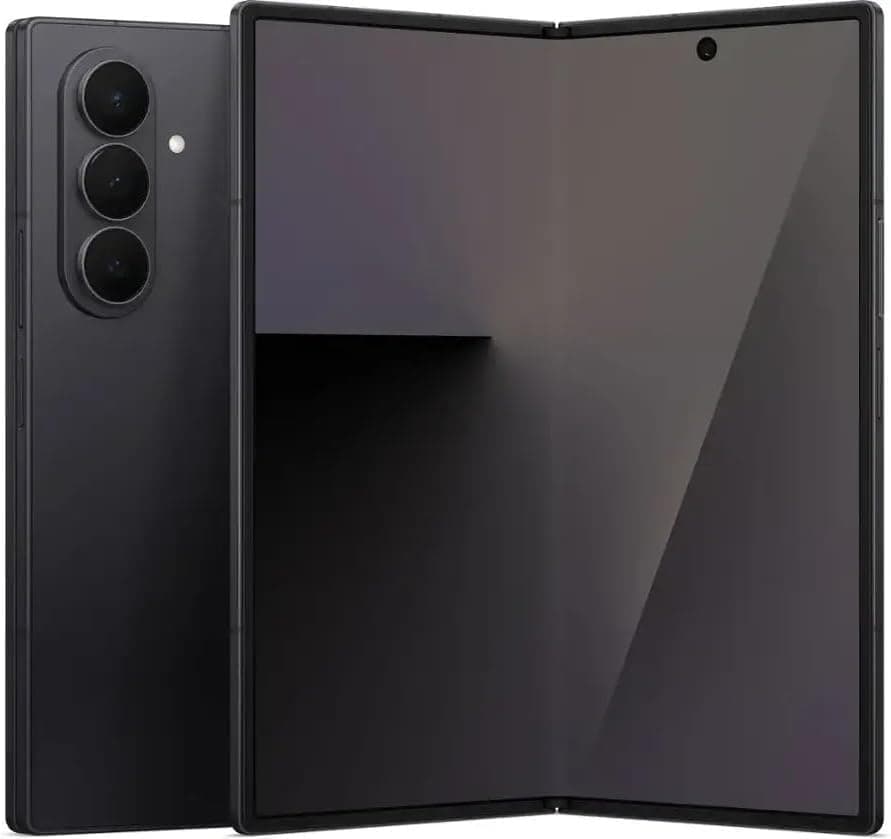
Samsung has been refining its foldable vision since the original Galaxy Fold debuted back in 2019 — a device that felt more like a prototype than a product you could trust with your daily workflow. Six years and seven generations later, the Galaxy Z Fold7 arrives not as an incremental update, but as a statement piece that finally delivers on the promise foldable enthusiasts have been waiting for. Wider cover screen, lighter body, a 200-megapixel camera, and the full weight of Samsung's software ecosystem make this the most compelling foldable Samsung has ever produced — and possibly the most compelling foldable on the market, period.
Let's get the obvious question out of the way first: yes, the Galaxy Z Fold7 is expensive. The 512GB unlocked model retails for roughly $1,900 on Amazon, and the 256GB variant sits around $1,773. That is premium territory, without question — well above what you would pay for a Galaxy S25 Ultra or an iPhone 17 Pro Max. But price tells only part of the story. The Z Fold7 justifies its cost by being two devices in one: a perfectly usable 6.5-inch smartphone when closed, and a capacious 8-inch tablet when open. No other form factor on the market gives you that duality without asking you to carry two separate devices everywhere you go.
The most immediately noticeable change this generation is the cover display. Samsung widened it to 6.5 inches with a 21.9:9 aspect ratio and a resolution of 2520 by 1080 pixels at a buttery-smooth 120Hz refresh rate. In daily practice, this means you can actually use the Z Fold7 closed — something that was always a compromise on earlier Folds where the narrow cover screens felt like afterthoughts. Typing messages, scrolling through social feeds, taking quick photos, checking Navigation — all of it works without the constant urge to unfold the device. The cover screen is AMOLED, naturally, popping with Samsung's trademark oversaturated vibrancy that makes every image and video look just a little more alive than it does on competitor panels. Brightness peaks at 2,200 nits, which is more than enough for outdoor readability even in direct sunlight. You will not be squinting at this screen, period.
Unfold the device and you are greeted with that glorious 8-inch Dynamic AMOLED 2X inner display running at 2184 by 1968 pixels, also at 120Hz. At 368 pixels per inch, text renders crisply and photos look immersive. This is the experience that keeps people in the foldable camp — a real, usable tablet that fits in your pocket. Samsung has maintained the under-display camera on the inner screen, which uses a diffraction-based design to make the camera hole nearly invisible when you are watching a video or reading. It is still a compromise — selfie quality from the UDC remains merely adequate — but the visual seamlessness of the display is worth the trade-off. You will occasionally notice a slight shimmer over the camera area when displaying bright white content, but in normal use it fades into the background quickly.
Design & Build
The inner display also supports Samsung's S Pen Fold Edition, which offers 4,096 levels of pressure sensitivity and minimal latency for note-taking and sketching. Writing on the Z Fold7's inner display feels natural and responsive, and Samsung's built-in note-taking app has been refined over multiple generations into a genuinely useful productivity tool. You can convert handwriting to text, annotate screenshots, and create handwritten notes that sync across your Samsung ecosystem. The S Pen is sold separately, which is a disappointment at this price point, but the writing and drawing experience itself is excellent.
Under the hood, the Galaxy Z Fold7 runs Samsung's custom-tuned Snapdragon 8 Elite for Galaxy processor, paired with 12GB of RAM across all configurations. This is Qualcomm's latest silicon, and it is an absolute powerhouse. Benchmarks place it roughly 30 percent ahead of last year's Snapdragon 8 Gen 3 in multi-core workloads, and in real-world use, the difference is immediately apparent. Apps open faster, multitasking is snappier, and the Z Fold7 handles everything from 8K video recording to split-screen productivity with three apps running simultaneously without breaking a sweat. The 12GB of RAM ensures that background apps stay resident rather than refreshing, which is crucial when you are running a desktop-class workflow on a phone.
GPU performance on the Snapdragon 8 Elite is equally impressive. The Adreno 830 GPU handles graphic-intensive games like Genshin Impact at maximum settings on the inner display without frame drops. For a device that doubles as a tablet, having this level of gaming performance is genuinely relevant — you are not compromising on gameplay quality just because you chose a foldable form factor. Real-time ray tracing support means that supported games look better than ever on the Z Fold7's large AMOLED canvas.
Display Quality
Storage options of 256GB and 512GB use UFS 4.0, delivering sequential read speeds north of 4,200 MB/s. That translates to fast app installs, quick camera burst processing, and snappy file transfers. There is no microSD expansion here — Samsung abandoned that years ago — so choose your storage tier wisely. For most users, 256GB will suffice, but if you shoot a lot of 8K video or store offline media for travel, 512GB gives you breathing room that prevents the anxiety of watching your available storage tick downward with every photo session.
Samsung's camera strategy for the Z Fold7 represents a serious upgrade over previous generations. The back of the device houses a triple-camera system headlined by a 200MP main sensor with an f/1.7 aperture, supported by Samsung's ProVisual Engine for computational photography. This is the same sensor philosophy Samsung uses in the S26 Ultra, and it brings foldable photography into genuine flagship territory for the first time ever on a foldable device. The 200MP sensor uses pixel binning to produce 12.5MP images with excellent dynamic range and low-light performance by default, or you can shoot in full 200MP mode for images with extraordinary detail that hold up to aggressive cropping and large-format printing.
The ultrawide camera offers a 12MP sensor with a 123-degree field of view that captures expansive landscapes and tight interior spaces with minimal barrel distortion. Color science between the main and ultrawide cameras is well-matched, meaning you can switch between focal lengths in a single shooting session without jarring shifts in tone or white balance. The telephoto provides 3x optical zoom with a 10MP sensor, digital extension to 30x with Samsung's Space Zoom technology. While 30x digital zoom is more of a party trick than a practical photography tool, the 3x optical zoom produces genuinely useful results for portraits and moderate-distance subjects.
Camera System
For a foldable device, this camera system is remarkably versatile. The 200MP main camera produces images with genuinely impressive dynamic range — shadows retain detail without blowing out highlights, and Samsung's HDR processing has matured to the point where it rarely creates the oversaturated painting effect that plagued earlier Galaxy cameras. Low-light performance is strong too, thanks to the large sensor and Samsung's night mode algorithms that balance noise reduction and detail preservation better than they ever have. Night mode shots on the Z Fold7 produce images that are usable and shareable, not just technically impressive on paper.
Where the Z Fold7's camera really shines, though, is in the integration with the foldable form factor. Flex mode lets you set the phone at a 90-degree angle to take group selfies using the main camera and the cover screen as a viewfinder — no more propping your phone against a water bottle and hoping it does not fall over. Director's View lets you simultaneously record from front and rear cameras, and Screenshots lets you capture exactly what is on that expansive inner display. The Cover Screen Preview feature shows a live viewfinder on the external display when taking rear-camera selfies, so your subjects can see how they are framed before you press the shutter. These are not gimmicks — they genuinely change how you use a phone camera and why the foldable form factor is uniquely suited to photography.
On the video side, the Z Fold7 records up to 8K at 30fps or 4K at 120fps, with optical image stabilization that does an admirable job smoothing out handheld jitter. The 120fps 4K mode deserves special mention — it produces footage with a cinematic smoothness that is hard to achieve on phones, and you can slow it down to 24fps in post for a dreamy slow-motion effect. Samsung's Super Steady mode uses the ultrawide camera with electronic stabilization for action footage that stays smooth even when you are running. Audio recording quality from the stereo microphones is clean and spatial, making the Z Fold7 a credible vlogging tool even without an external microphone.
Performance & Silicon
Samsung's software stack is anchored by One UI 8 running on Android 16, and it is the most foldable-optimized software Samsung has ever shipped. The Continuity features — the ability to seamlessly transition apps from the cover screen to the inner display when you unfold — work consistently and quickly, with no app restarts or lost state. Multi Window has been refined to the point where running three apps side by side feels genuinely productive rather than cramped. Samsung DeX, when paired with an external monitor, turns the Z Fold7 into a credible desktop workstation, running multiple resizable windows with keyboard and mouse support.
The taskbar at the bottom of the inner display provides quick access to your most-used apps, and Samsung has added the ability to pin app pairs for split-screen shortcuts. This might sound like a minor feature, but in practice it saves significant time — having inbox and messaging apps as a pinned pair means you can open both with a single tap rather than setting up the split manually each time. App continuity between Samsung devices has also improved, with the ability to drag and drop files between your phone and Galaxy Tab with a simple gesture.
Google Gemini integration on the Z Fold7 goes deeper than on any other Samsung device. Screenshare lets you point your camera at something or share what is on your screen and get real-time AI assistance — identifying objects, translating text, suggesting recipes from ingredients, or pulling up relevant information from the web. On the inner display, Gemini can run in a sidebar while you work in the main window, acting as an always-available research assistant. It is the most natural AI integration seen on a phone, and it makes the Z Fold7's large screen feel purpose-built for AI assistance rather than bolted on as an afterthought.
Battery & Charging
Battery life on the Z Fold7 houses a 4,400mAh cell — a modest increase over the Z Fold6 — powered by the more efficient Snapdragon 8 Elite. In practical terms, you can expect a full day of moderate to heavy use, which for a foldable with two large displays to light up is genuinely impressive. The phone comfortably lasts from morning to bedtime with mixed use of browsing, social media, some camera work, and streaming. Heavy multitasking with three apps and video streaming will drain it faster, but Samsung's power management does an admirable job prioritizing the active display. Samsung quotes 33 hours of talk time on a single charge, though real-world use with the inner display active will see closer to 11 hours of mixed usage. Wired charging is 25W, wireless charging reaches 15W, and reverse wireless charging is available for topping up earbuds or a Galaxy Watch. None of these speeds are class-leading — the Galaxy S26 Ultra offers 45W wired charging — but they are adequate for a device with this much screen real estate to power.
The Z Fold7's physical design deserves real praise. At 216 grams, it is lighter than the Z Fold6, and the wider cover screen means the device feels less like a slender remote and more like an actual phone when closed. The hinge mechanism is Samsung's most refined yet — it opens with a satisfying snap and holds intermediate angles securely for Flex mode. The new Armor Aluminum frame provides genuine drop protection, and Corning Gorilla Glass Ceramic 2 on the displays offers improved scratch resistance compared to previous generations. Water resistance carries an IP48 rating, making it the most water-resistant foldable on the market, though the 4 in IP48 is a reminder that it is dust resistant but not fully dust-proof like traditional candy-bar phones.
Sound quality from the stereo speakers has been improved with tuning by AKG. The speakers get loud enough to fill a small room, and the spatial audio implementation creates a wider soundstage than you would expect from phone speakers. There is no headphone jack — Samsung removed that flagship feature years ago — but Bluetooth audio is rock-solid, with support for the latest codecs including LDAC and Samsung's own SSC codec for Galaxy Buds. Samsung has also improved haptic feedback this generation, with more precise vibration patterns that make typing on the on-screen keyboard feel satisfying and alerts feel distinct and recognizable.
Software & Multitasking
Connectivity is comprehensive: 5G with sub-6GHz and mmWave support, Wi-Fi 7, Bluetooth 5.4, NFC, and UWB for precise spatial awareness with Samsung's SmartTags. The USB-C 3.2 Gen 2 port supports DisplayPort Alt Mode for wired external display output, enabling Samsung DeX with a single cable. Dual SIM support (physical nano-SIM plus eSIM) gives you the flexibility to run two lines, which is useful for business users who need separate work and personal numbers. Wi-Fi 7 support means the Z Fold7 is ready for next-generation routers, with theoretical speeds up to 46 Gbps, though real-world speeds will depend on your network infrastructure.
How does the Z Fold7 compare to the competition? Google's Pixel 9 Pro Fold offers a wider inner display and superior computational photography, but it is thicker, heavier, less powerful, and has not matched Samsung's software polish for foldable-specific features. The OnePlus Open remains an excellent foldable at a lower price point, but its older silicon and lack of water resistance feel like compromises in 2026. Huawei's Mate X6 has stunning hardware but no Google services, making it a non-starter for most Western users. The Z Fold7 strikes the best balance of hardware quality, software maturity, ecosystem integration, and — crucially — continued software support with seven years of OS updates and security patches.
Samsung's commitment to longevity extends beyond software. The Z Fold7's hinge is rated for 200,000 folds — that is over five years of opening and closing 100 times per day — and Samsung offers its Premium Care program for accidental damage protection. The company has learned hard lessons from the original Fold's growing pains, and it shows in every aspect of the Z Fold7's design, from the flush display bezels to the confident snap of the hinge. The pre-applied screen protector on the inner display is thinner and more durable than in previous generations, though Samsung still advises against peeling it off, as removing it may compromise the display's longevity.
Competition & Value
Who should buy the Galaxy Z Fold7? If you are someone who constantly switches between phone and tablet — reading documents on your commute, multitasking at your desk, or just consuming media on the biggest screen you can fit in your pocket — the Z Fold7 eliminates that friction entirely. The wider cover screen means you are no longer punished for keeping the phone folded, and the inner display's 8 inches of real estate means you are no longer squinting at a phone screen pretending it is enough. Power users, content creators, and mobile professionals will find the Z Fold7 genuinely transformative. The 200MP camera system finally removes the asterisk of "good for a foldable" and replaces it with simply "good."
For casual users who do not feel the constant pull of a bigger screen, the math is harder. At nearly $1,900, you are paying a significant premium over a top-tier slab phone like the Galaxy S26 Ultra or iPhone 17 Pro Max, both of which offer comparable — or in some cases superior — camera performance, battery life, and raw processing power. The Z Fold7's value proposition lives entirely in that foldable form factor and the software that maximizes it. If you will not regularly use the inner display for productivity or entertainment, you are paying for capability you will not fully leverage.
But here is what keeps resonating after extended use: the Galaxy Z Fold7 made me reach for my laptop less. That is not a small thing. Checking email attachments, reviewing spreadsheets, reading PDFs, watching video — all of these moved from the laptop to the Z Fold7 with a level of comfort and usability that no slab phone can match. The multi-window experience is finally good enough that you can actually work on three things at once without wanting to throw the phone across the room. And when you are done working, that same screen becomes an immersive media consumption device that makes Netflix feel cinematic rather than cramped.
Samsung has also built out an ecosystem of accessories that enhance the foldable experience. The S Pen Fold Edition works well on the inner display for note-taking and sketching, though Samsung does not include it in the box. Galaxy Buds pair seamlessly for immersive audio, and SmartThings integration means the Z Fold7 can serve as a control center for your entire smart home. The combination of the Z Fold7 with a Galaxy Watch 8 creates a complementary ecosystem where health data, notifications, and quick interactions live on the wrist while deeper engagement happens on the phone.
The Samsung Galaxy Z Fold7 is not perfect. It is expensive. The inner display, while improved, still shows a faint crease under certain lighting conditions. The 4,400mAh battery is adequate but not generous. There is no headphone jack, no included charger, and no S Pen in the box. The cameras are excellent but still a small step behind the best slab phones in extreme low light. And at 216 grams, it is lighter than its predecessor but still denser than most phones in your pocket.
But these are nitpicks on a device that fundamentally recalibrates what a smartphone can be. The wider cover screen finally resolves the Z Fold's biggest real-world limitation. The 200MP camera removes the foldable tax on photography. The Snapdragon 8 Elite delivers desktop-class performance. And Samsung's software has matured to the point where the foldable form factor is not just tolerated — it is genuinely productive. The Galaxy Z Fold7 is the foldable that finally does not ask you to make excuses for it. It just works, and it works brilliantly.
Final Verdict
Pros
- Wider 6.5-inch cover screen finally usable as a normal phone
- 200MP main camera brings foldable photography to flagship territory
- Snapdragon 8 Elite delivers desktop-class performance
- 8-inch inner display with 120Hz AMOLED is genuinely productive
- Seven years of OS updates and security patches
- IP48 water resistance — best in class for a foldable
Cons
- Premium pricing starting near $1,773
- Inner display crease still visible under certain lighting
- 4,400mAh battery adequate but not generous
- No S Pen, charger, or headphone jack included
Final Verdict
The Galaxy Z Fold7 delivers a wider cover screen, 200MP camera, Snapdragon 8 Elite power, and Samsung's most refined foldable software yet — making it the first foldable that works as well closed as it does open.