Sennheiser Momentum 5 Wireless Review: Premium Sound Meets Practical Design
The Sennheiser Momentum 5 Wireless delivers class-leading battery life, rich audiophile-grade sound, and a user-replaceable battery in a refined over-ear design — making it the smartest premium headphone buy of 2026.
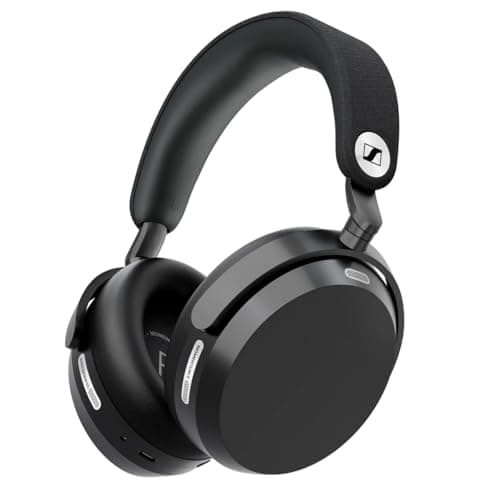
After spending two weeks with the Sennheiser Momentum 5 Wireless as my primary headphones, I can say this: Sennheiser has done something unusual in the premium headphone market. Rather than chasing the competition's feature checklist, they've doubled down on what made the series famous — rich, engaging sound — and added meaningful quality-of-life upgrades that make these headphones feel built to last half a decade, not just until the next model drops.
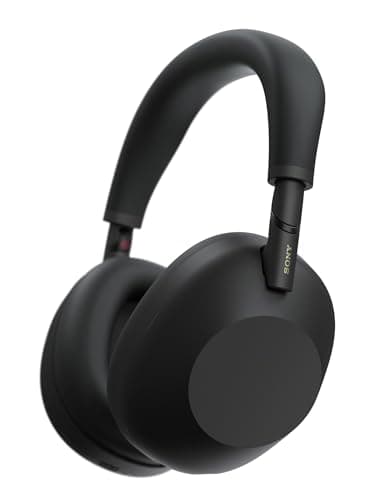
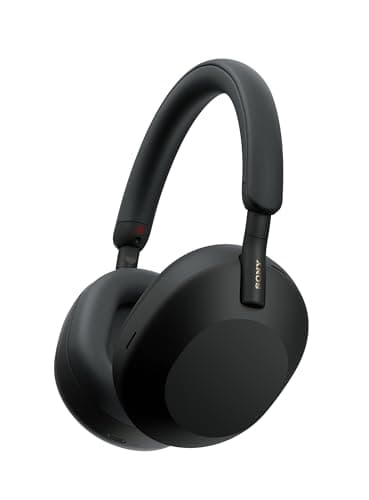
The premium wireless headphone space in 2026 is fiercely competitive. Sony's WH-1000XM6 offers class-leading noise cancellation and a forward, energetic sound. Bose's QuietComfort Ultra Headphones (2nd Gen) deliver the most complete noise-blocking experience money can buy. And Apple's AirPods Max 2 provide seamless ecosystem integration for iPhone users. Against this backdrop, Sennheiser's Momentum 5 Wireless arrives at $399.95 with a clear strategy: be the best-sounding and most repairable option in the segment, even if it means accepting second-place finishes in a few other categories.
Design and Build Quality: Familiar Looks, Subtle Refinements
At first glance, the Momentum 5 Wireless looks nearly identical to its predecessor. The same rounded earcups, the same fabric-covered headband, the same understated aesthetic that prioritizes elegance over flash. That's not a criticism — the Momentum 4 had a clean, mature look, and the Momentum 5 sensibly keeps it.
Pick them up, though, and you'll notice differences. The headband padding feels slightly more substantial. The ear cushions use a new memory foam blend that distributes pressure more evenly across my ears. I've worn these for four-hour work sessions without any hotspot fatigue, which I cannot say about the Sony XM6, which clamps harder around my jawline.
The weight comes in at 290 grams, about the same as the AirPods Max 2 but significantly lighter than Bose's QC Ultra Headphones. That light weight, combined with the low clamping force, makes the Momentum 5 easy to forget you're wearing — the highest compliment you can pay a set of over-ears.
The materials are where the value engineering shows. The earcups are primarily plastic, with metallic accents on the hinges and the Sennheiser logo plates. At this price, I'd love to see more metal, especially when Bowers & Wilkins Px7 S3 and the AirPods Max 2 use aluminum extensively. The plastic does keep weight down, but it introduces a slight creak when you twist the earcups. It's not a dealbreaker, but it's noticeable.
The controls are well-executed. The right earcup houses a touch-sensitive panel for gestures — swipe forward for next track, backward for previous, up and down for volume. A physical button handles power and Bluetooth pairing. The touch controls are responsive and rarely misfire, though I occasionally triggered a volume change when adjusting the headband. The left earcup is clean, housing only the USB-C and 3.5mm ports.
A notable design choice: the Momentum 5 does not fold flat. Instead, the earcups swivel flat and the headphones lay in the included case, which is 20% smaller than the Momentum 4's case. The case itself is a fabric-covered hard shell with internal mesh pockets for cables. It's compact enough to fit in a medium-sized backpack, though the non-folding design means you'll need dedicated space for it.
The Replaceable Battery Revolution
This is the feature that deserves the most attention. The Momentum 5 Wireless has a user-replaceable battery, and it's not hidden behind proprietary tools or void-if-removed stickers.
Here's what you do: remove the ear cushions (they snap off with a gentle pull), unscrew four Philips-head screws on the left earcup, pull away the driver assembly, and swap the 700mAh battery cell. That's it. Sennheiser says replacement batteries will be available through their parts program, and third-party cells will inevitably follow.
This is enormous for longevity. Wireless headphones are typically disposable devices — once the internal lithium-ion battery degrades after two to three years, the entire $300-500 product becomes e-waste. The Momentum 5 sidesteps this entirely. With a fresh battery every few years, these headphones could feasibly last a decade.
The commitment to repairability extends to the ear pads, which snap off for cleaning or replacement, and the headband padding, which is replaceable. The entire headphone is designed with iFixit-style serviceability in mind, a philosophy almost entirely absent from this price tier.
A couple of caveats: there's no ingress protection rating, so the USB-C port and driver assembly are vulnerable to moisture. Be careful using these in heavy rain or at the gym. Sennheiser also includes a Battery Protection Mode in the Smart Control Plus app that limits charge to 80% to extend cell lifespan — turn this on if you plan to keep these for years.
Sound Quality: The Star of the Show
The Momentum 5 uses the same 42mm dynamic driver as the Momentum 4, manufactured at Sennheiser's Tullamore factory in Ireland — the same facility that produces drivers for the company's audiophile-grade HD 600 series headphones. There's lineage here that few wireless headphones can claim.
The sound signature is rich, smooth, and deliberately relaxed. It's not the hyper-detailed, analytical presentation you'd get from a reference monitor, and it's not the urgent, punchy delivery of the Sony WH-1000XM6. Instead, the Momentum 5 invites you to lean back and enjoy the music.
Bass is full and warm but not bloated. The low end extends with authority — synthesizer pads and kick drums have satisfying weight. What's impressive is that the bass remains controlled even at higher volumes. There's no distortion, no muddiness bleeding into the lower mids.
The midrange is where these headphones truly shine. Vocals are rendered with a natural, emotive quality that's rare in the wireless headphone space. Listening to Marvin Gaye's "Mercy Mercy Me," his voice floats in front of the arrangement, every subtle inflection preserved. Acoustic guitars have the right bite and resonance. The Momentum 5 communicates the emotional weight of a performance in a way that Sony's XM6, for all its technical capability, doesn't quite manage.
Treble is smooth and inoffensive. There's good air and extension without the sibilance that plagues many consumer headphones. Cymbals have a natural shimmer, and string sections don't become grating at high volumes. Some listeners, particularly those used to brighter headphones, may find the treble a touch polite. The SoundGuys review noted limited treble extension — I agree, though I found it more of a trade-off than a flaw.
Soundstage width is above average for closed-back wireless headphones. The spatial separation is good enough that you can pinpoint instruments in the mix, and the Dolby Atmos support adds genuine dimensionality when listening to compatible mixes. The head-tracking spatial audio, coming via a day-one firmware update, should make the experience even more immersive.
The 8-band EQ in the Smart Control Plus app is useful but limited. SoundGuys pointed out, and I agree, that a parametric EQ would give more granular control. That said, the built-in Sound Personalization feature does a decent job of tailoring the output to your hearing profile, compensating for any frequency response variations in your ears.
Wired performance via USB-C is noticeably better than wireless. Plugged into my MacBook Pro, the Momentum 5 supports 24-bit/96kHz audio, and the improvement in clarity, depth, and dynamics is immediately apparent. The soundstage opens up, low-level detail becomes more audible, and the bass tightens. If you're serious about audio quality, the USB-C connection is the way to go.
Active Noise Cancellation: Improved but Not Best-in-Class
ANC is the area where the Momentum 5 has made the biggest technical leap but still trails the leaders. Sennheiser claims "three times better" midrange cancellation compared to the Momentum 4, achieved by doubling the microphone count to eight (four per earcup).
In practice, the improvement is real. The Momentum 5 effectively softens low-frequency rumble — airplane engines, HVAC systems, and road noise are significantly reduced. Midrange cancellation is better too. Office chatter and cafe noise are attenuated to the point where you can work without distraction.
But the Sony WH-1000XM6 and Bose QC Ultra Headphones (2nd Gen) still do it better. Sony's offering feels more complete, with a deeper, more uniform blanket of silence. Bose's implementation is adaptive in a way that feels proactive, not reactive. The Momentum 5's ANC is good — it would have been class-leading three years ago — but in 2026, it sits a clear tier below the best.
The transparency mode is functional but artificial. It pipes in ambient sound through the microphones, and while it's usable for quick conversations or announcements, you'll never forget you're wearing headphones. Bose's Aware mode sounds more natural, and Sony's Ambient Sound mode offers more adjustability.
Wind noise handling, however, is excellent. The Anti-Wind Mode uses the multiple microphone array to cancel out gusts without sacrificing audio quality. I tested this during a breezy walk along the waterfront, and the ANC remained effective without the buffeting noise that plagued earlier generations.
Connectivity and App Experience
The Momentum 5 ships with Bluetooth 5.4 and is engineered to support Bluetooth 6.0 via a future firmware update. Codec support is comprehensive: SBC, AAC, aptX, aptX HD, aptX Adaptive, and aptX Lossless.
The aptX Lossless support is a differentiator. It delivers CD-quality 16-bit/44.1kHz audio wirelessly, which is technically lossless. The catch is that it requires a Qualcomm-powered phone — Samsung's Exynos, Google's Tensor, and Apple's chips don't support it. In practice, that limits aptX Lossless to phones like Sony's Xperia line or certain Motorola devices. Most users will default to AAC (iPhone) or aptX Adaptive (Android), both of which sound excellent on these headphones.
Multipoint Bluetooth lets you connect two devices simultaneously. I used it with my iPhone and MacBook Pro, and switching between the two was seamless — pause music on one device, start playback on the other, and the headphones follow without manual intervention.
The Smart Control Plus app is functional if not delightful. The home screen shows battery level, ANC mode, and connected codec. The EQ section has the 8-band equalizer and presets. There's a Sound Personalization feature that walks you through a hearing test to tailor the output, and it's legitimately useful — it compensated for a slight dip I have in my left ear's high-frequency response.
GPS-triggered profiles are a nice touch. You can set the ANC to switch to transparency mode when you arrive at your office or home, auto-adjusting without manual input. It worked reliably during my testing.
Battery Life: The Class Leader
Sennheiser rates the Momentum 5 at 57 hours with ANC on. In my testing, that figure held up. I used them for roughly eight hours a day across a work week, and the battery indicator only dropped to about 60%. That's extraordinary.
The Sony WH-1000XM6 manages around 30 hours with ANC. The Bose QC Ultra Headphones clock in at about 29 hours. The AirPods Max 2 deliver roughly 32 hours. The Momentum 5's 57 hours is a decisive victory, and it makes these headphones genuinely viable for extended travel — a round-trip flight from New York to Sydney is roughly 22 hours each way, and you wouldn't need to charge once.
Fast charging via USB-C is supported. A 10-minute charge gives roughly five hours of playback, and a full charge takes about two hours. The replaceable battery means you can also carry a spare for truly marathon sessions, though I doubt most users will need it.
Call Quality: Surprisingly Excellent
Call quality is a weak point for many premium headphones, but the Momentum 5 handles voice calls with impressive clarity. The beamforming microphone array does an excellent job of isolating your voice from background noise. During calls in a moderately busy coffee shop, the other party reported that my voice came through clearly, with only faint ambient noise in the background.
Wind noise rejection is particularly good. The SoundGuys review noted, and my testing confirmed, that the Momentum 5 performs better than the Sony WH-1000XM6 in windy conditions — less of that "mechanical" quality that plagues the Sony's voice transmission.
The microphone array consists of three beamforming mics plus a feedback microphone, working in concert to pick up your voice while rejecting everything else. This is most apparent in the Momentum 5's handling of reverberant spaces — large rooms with hard surfaces like conference halls or hotel lobbies. Where many headsets make you sound like you're calling from a cave, the Momentum 5 keeps your voice centered and dry. Callers reported that background sounds faded into a distant hush rather than competing with my voice.
For video calls specifically, the Momentum 5 is one of the best options at this price. The low-latency connection keeps audio synced with video, and the transparency mode lets you hear your own voice naturally enough that you won't end up shouting. Combined with the 57-hour battery life, these headphones can handle back-to-back meeting days without breaking a sweat.
Real-World Usage: Commuting, Working, and Traveling
I tested the Momentum 5 across three distinct scenarios: daily commuting on public transit, working from a busy co-working space, and a long domestic flight.
On the subway, the ANC does a respectable job of cutting through the low-frequency rumble of train motors and tracks. It won't completely eliminate the screech of steel on steel during sharp turns — that's a tall order for any ANC system — but it takes enough edge off that you can listen to podcasts at moderate volume without strain. The passive isolation from the deep earcups helps significantly here, providing a solid physical seal that works in tandem with the active cancellation.
In the co-working space, the Momentum 5's improved midrange cancellation proved its worth. Office chatter — that blend of conversations, keyboard clatter, and the occasional printer — was reduced to a barely perceptible murmur. I could focus on writing without feeling isolated, which is the sweet spot for ANC in a work environment. The transparency mode is handy here too; a quick double-tap on the earcup lets you hear a colleague approaching without removing the headphones.
On the flight, the 57-hour battery life meant I boarded with full confidence that I wouldn't need to hunt for a USB port mid-flight. I watched two movies, listened to music for four hours, and still had over 90% remaining. The lightweight 290-gram design paid dividends during the five-hour flight — the headphones remained comfortable even with glasses on, something I can't say about the clamp-heavy Sony XM6.
One consideration: the lack of an IP rating means you'll want to keep these away from rain and heavy sweat. They're fine for air-conditioned environments and light drizzle, but they're not gym headphones. For those workouts, you'll want something with actual water resistance.
Music Listening: A Track-by-Track Journey
To really understand the Momentum 5's character, I ran through a diverse playlist spanning multiple genres.
Starting with Hans Zimmer's "Like a Dog Chasing Cars" from The Dark Knight soundtrack, the Momentum 5 handled the track's massive dynamic swings with impressive composure. The opening cello line had appropriate weight and texture, and when the full orchestra erupted, the headphones kept every section distinct without collapse. The bass drum hits landed with physical impact but didn't overwhelm the brass section sitting in the midrange. Some listeners might prefer more attack and bite, but the Momentum 5's slightly rounded transients made the track feel more musical and less fatiguing over extended listening sessions.
Moving to electronic music, I tested with Rüfüs Du Sol's "Innerbloom." This is a track that lives and dies on its bassline and atmospheric textures, and the Momentum 5 delivered both beautifully. The sub-bass synth that underpins the track had satisfying depth and extension, while the delicate synth arpeggios in the upper register remained clear and separated. The soundstage presented the track's layered production with enough width that individual elements had room to breathe. At higher volumes, the bass remained controlled without any of the distortion that plagues lesser headphones.
For vocal-centric material, Phoebe Bridgers' "I Know the End" showcased the Momentum 5's midrange capabilities. Her voice, which can sound thin on bright headphones, had natural body and presence. The transition from the intimate verse to the explosive final section was handled with excellent dynamic control. The wall of distorted guitars in the climax never overwhelmed her vocal line — a testament to the driver's resolution capabilities.
Classical music was a mixed experience. The Momentum 5's smooth, forgiving presentation works well with poorly recorded orchestral material, smoothing over harsh edges in the upper strings. But for pristine Deutsche Grammophon recordings, I wanted more transparency and air. This is where the USB-C wired connection makes the biggest difference — plugged into a DAC, the headphones gain noticeable clarity and separation.
Jazz sounded consistently excellent. John Coltrane's "A Love Supreme" had the right balance of punch and texture. The double bass had woody resonance, the drums had appropriate snap, and Coltrane's saxophone cut through with the urgent, searching quality that defines the recording.
Firmware Updates and Future-Proofing
One of the smarter decisions Sennheiser made with the Momentum 5 is engineering it for Bluetooth 6.0 support via a future firmware update. While Bluetooth 5.4 is perfectly capable today and supports all the codecs you're likely to need, the path to 6.0 means these headphones won't feel obsolete as the standard evolves.
The day-one firmware update also enables Dolby Atmos with head-tracking. I tested spatial audio on both Tidal and Apple Music, and the implementation is solid. The head tracking is responsive enough that rotating your head feels natural — sounds stay anchored in space rather than following your ears. It's not quite as refined as Apple's implementation on the AirPods Max 2, but it's competitive with what Sony offers on the XM6.
Future updates could theoretically add LE Audio support, which would bring features like Auracast broadcast audio and improved power efficiency. Sennheiser hasn't committed to this publicly, but the hardware supports it.
This forward-looking approach extends to the replaceable battery, which means you won't be forced to upgrade when the lithium cell inevitably degrades. The headphones are designed to accept software improvements and component replacements for years, which is refreshing in an industry that treats planned obsolescence as a feature.
Who Should Buy the Sennheiser Momentum 5 Wireless
Comparing to the Competition
The Sony WH-1000XM6 ($449) is the Momentum 5's closest competitor. Sony wins on ANC completeness and has a more energetic, forward sound. The Momentum 5 wins on audio refinement, battery life, and repairability. If you prioritize absolute silence and punchy sound, choose Sony. If you value musicality, vocal clarity, and longevity, choose Sennheiser.
The Bose QC Ultra Headphones ($449) lead on adaptive ANC and spatial audio implementation. The Momentum 5 beats them on battery life, codec support, and call quality.
The AirPods Max 2 ($549) offer unmatched Apple ecosystem integration — instant pairing, seamless device switching, spatial audio that follows your head — but cost $150 more and have half the battery life. The Momentum 5 sounds better via USB-C and doesn't lock you into a single ecosystem.
The Bowers & Wilkins Px7 S3 ($499) has a more premium build with extensive metal use and a slightly more detailed sound. But it costs $100 more, has weaker ANC, and lacks a replaceable battery.
The Verdict: A Compelling Value at $400
The Sennheiser Momentum 5 Wireless isn't the best in every category. Its ANC, while much improved, doesn't match Sony or Bose. The build uses too much plastic at this price. The bass-heavy tuning out of the box requires EQ adjustment for purists.
What it does — sound quality, battery life, and repairability — it does better than anything in its class. The combination of rich, detailed audio, 57 hours of playback, and a user-replaceable battery creates a compelling value proposition that the competition simply cannot match.
For the listener who values musicality over absolute noise cancellation, who wants headphones that will still be going strong five years from now, and who doesn't want to charge every other day, the Momentum 5 Wireless is an easy recommendation. It's not the flashiest headphone in the premium segment, but it might be the smartest.
Who should buy: Audiophiles on a budget, frequent travelers who need marathon battery life, anyone who values product longevity and repairability.
Who should look elsewhere: Commuters who need maximum noise cancellation, Apple ecosystem users who want seamless integration, listeners who prefer a bright, energetic sound signature.
Pros
- Rich, detailed sound signature with exceptional midrange clarity
- User-replaceable battery — a first for premium wireless headphones
- Class-leading 57-hour battery life with ANC
- Excellent call quality with natural voice reproduction
- Comprehensive codec support including aptX Lossless
- Dolby Atmos spatial audio with future Bluetooth 6.0 upgrade path
Cons
- ANC is improved but still trails Sony and Bose
- Plasticky earcups at a near-$400 price point
- Does not fold flat for compact storage
- Bass-heavy tuning out of box needs EQ adjustment for purists
Final Verdict
The Sennheiser Momentum 5 Wireless delivers class-leading battery life, rich audiophile-grade sound, and a user-replaceable battery in a refined over-ear design — making it the smartest premium headphone buy of 2026.