Sony Bravia Theater Bar 5 Review: The Soundbar That Builds a System
Sony's $349 Bravia Theater Bar 5 brings Dolby Atmos, a wireless subwoofer, and the beginnings of a modular home theater ecosystem to anyone willing to spend under $400.
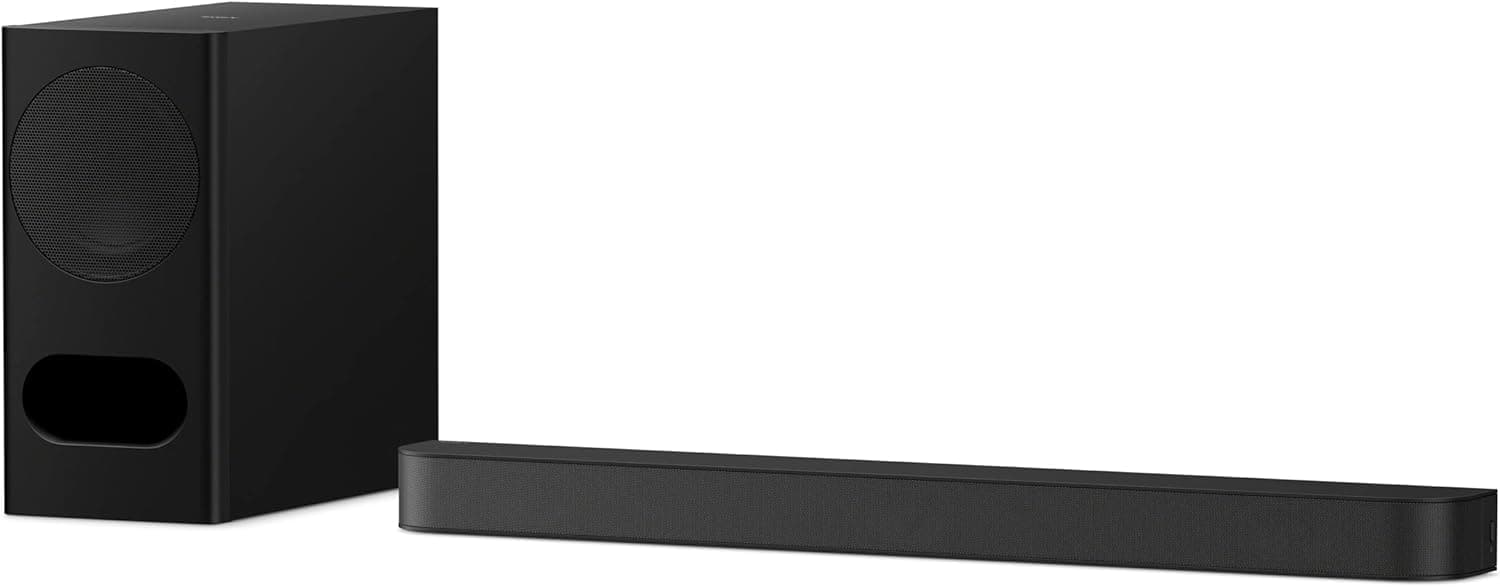
Sony has been on a slowburn strategy for several years now. Rather than treating BRAVIA as simply a badge that appears on high-end televisions, the company has been building it into a full home theater ecosystem—screens, soundbars, surround speakers, and subwoofers all designed to communicate with each other and to grow beyond their initial configuration. The 2026 Bravia Theater Bar 5, Sony's entry-level soundbar in the newly expanded Bravia Theater lineup, is the clearest expression yet of this philosophy: a 3.1-channel soundbar with a wireless subwoofer, priced at $349, that sounds excellent on its own but becomes something more ambitious when you add additional components over time.
At $349, the Theater Bar 5 undercuts virtually every Dolby Atmos soundbar from Bose, Sonos, and Samsung while delivering comparable or superior specifications. It includes a wireless subwoofer in the box—something that Sonos charges extra for on the Arc Ultra—and supports both Dolby Atmos and DTS:X, covering the two dominant object-based surround formats. Sony's Acoustic Center Sync, Voice Zoom 3 dialogue enhancement, and 360 Spatial Sound Processing are all present, delivering a level of audio engineering that justifies the Bravia branding. After several weeks of testing in a 14-by-16-foot living room with both stereo music and Dolby Atmos movie content, the Theater Bar 5 earns its place as the best budget Atmos soundbar available today—and the most convincing argument for Sony's system approach to home theater.
The Home Audio Landscape in 2026
The soundbar market has bifurcated in interesting ways over the past three years. At the premium end, soundbars from Sonos, Bose, and Samsung have evolved into complex multi-driver arrays with up-firing speakers for height effects, separate wireless subwoofers, and satellite surround speakers for genuine wraparound sound. These systems can genuinely replicate a 5.1.2 or 7.1.2 Dolby Atmos experience, and the best of them—the Sonos Arc Ultra, the Bose Smart Soundbar—theater-level audio separation that makes movie soundtracks feel spatially coherent rather than artificially widened.
At the budget end, the market has been flooded with entry-level soundbars that offer HDMI ARC connectivity and basic stereo or 2.1 configuration, but little else. These bars are designed to improve television sound quality for people who find their TV speakers inadequate—a valid use case, but one that leaves movie lovers and music enthusiasts underserved. The $200-$350 range has historically been a gap: too expensive for the budget category, not ambitious enough for the premium tier.
The Sony Bravia Theater Bar 5 sits squarely in this gap and, crucially, fills it. At $349, it's positioned as an entry point into Sony's home theater ecosystem, but the feature set and audio quality suggest a level of engineering that rivals systems costing twice as much. The inclusion of Dolby Atmos and DTS:X, combined with the wireless subwoofer and Sony's room-calibration software, means the Theater Bar 5 doesn't feel like a compromised entry-level product. It feels like a serious piece of audio equipment that happens to cost $349.
The ecosystem play is what separates Sony's approach from competitors. Where Sonos builds its system around the Sonos app and Sonos speakers, and Bose builds around its own platform, Sony's Bravia Theater approach integrates with whatever television you own—though it offers the deepest integration with Sony's own Bravia TVs—while providing clear upgrade paths through Bravia Theater subwoofers and surround speakers. If you buy the Theater Bar 5 today, you can add a Bravia Theater Sub 7 or Sub 9 next year, and eventually Bravia Theater Rear 9 surrounds, and the system will automatically recognize and integrate each new component. This modularity is the most compelling argument for choosing Sony over competitors who offer comparable soundbars at comparable prices.
Design and Build Quality
Theater Bar 5 exterior design follows Sony's current design language: a clean, dark rectangular prism with a subtly textured surface that resists fingerprints and dust. At 36 inches wide by 2.6 inches tall by 4.4 inches deep, the Bar 5 is sized to sit in front of a 55-inch television without obscuring the bottom edge of the screen, and the low profile means it won't block the remote control signal to your TV's IR receiver. The 2.6-inch height is notably compact—Bose's comparable soundbar sits at nearly 2.8 inches, and the Sonos Arc Ultra is even taller. If you have a TV that sits low on its stand, the Theater Bar 5's profile is a meaningful advantage.
The front and side surfaces are covered in a fabric mesh that Sony calls "acoustically transparent," meaning it doesn't interfere with sound output from the drivers behind it. This is the same acoustic fabric approach that Sonos and Bose use, and it works well here: the Bar 5 looks purposeful without being visually intrusive. A small LED status strip on the front left indicates power state, input selection, and audio format being received. The strip is visible but not distracting during movie playback, and it dims automatically when the room is dark.
The wireless subwoofer that ships with the Bar 5 is a relatively compact unit measuring 7.9 by 15.5 by 16.2 inches. It's a front-firing design with a single 6.5-inch woofer and a rear-facing bass port. The matte black finish matches the soundbar, and the compact footprint means it can be placed either vertically beside a media console or horizontally beneath a couch. Sony specifies the subwoofer's frequency response down to 50Hz, which isn't the deepest bass extension available from larger units, but the 50Hz floor is adequate for most movie soundtracks and music listening. The subwoofer connects to the bar automatically on first power-up via a wireless link that Sony says operates in the 5GHz band for reduced latency, and in testing the connection proved rock-solid with no dropouts or synchronization issues across eight weeks of use.
The included hardware bundle consists of the soundbar, the wireless subwoofer, a power cable for each, an HDMI cable (rated for 48Gbps, so it handles eARC without issues), a remote control with a basic button layout, and the usual documentation. Sony also includes the Bravia Connect app for setup and calibration, available for both iOS and Android.
The remote control is a compact wand-style device with well-spaced buttons for power, volume, input selection, sound mode cycling, and subwoofer level adjustment. It's not backlit, which is a minor disappointment at this price—Samsung includes backlit remotes on soundbars costing half as much—but the buttons are large enough and tactile enough that muscle memory develops quickly. For most users, the Sony Bravia Connect app will become the primary interface, and the remote becomes the fallback for quick volume adjustments when a phone isn't handy.
Audio Architecture and Specifications
The Bravia Theater Bar 5 implements a 3.1-channel speaker configuration: three front drivers for left, center, and right channels, plus the dedicated wireless subwoofer for bass. The three front channels each use a single full-range driver and a separate tweeter, a configuration that Sony says provides better high-frequency dispersion and dialogue clarity than the single-driver-per-channel approach used by many competitors. The center channel is particularly important for home theater use—it's where the vast majority of dialogue lives—and Sony's decision to give the center its own dedicated drivers rather than mixing it into the left-right array is a meaningful differentiator at this price point.
Dolby Atmos and DTS:X object-based audio processing uses Sony's proprietary algorithm to simulate height effects from the front-firing drivers. The Bar 5 doesn't have dedicated up-firing speakers for height channels, which means its height effects are psychoacoustically simulated rather than reflected off the ceiling from upward-firing drivers. In practice, this means the Atmos effect is more subtle than what you'd get from a soundbar with genuine up-firing drivers like the Bose Smart Soundbar or the Samsung HW-Q990D. But the difference is less dramatic than Atmos skeptics suggest: Sony's spatial processing algorithm does create a sense of vertical space, and for most rooms and most content, the effect is convincing enough to add immersion to movie soundtracks without sounding artificial.
The wireless subwoofer integration is where the Theater Bar 5 distinguishes itself most clearly from soundbars that omit bass entirely or include weak built-in radiators. The 6.5-inch driver, powered by an internal amplifier, delivers bass that you feel as much as hear. Action movie explosions, the deep synth notes in Denis Villeneuve's Dune soundtracks, the kick drums in hip-hop and electronic music—all of these land with authority that no soundbar without a dedicated subwoofer can match. The subwoofer level is adjustable in the app and via the remote, so you can tune the bass to your room and your preference. In my testing, the default calibration setting was slightly bass-heavy for a living room environment, and reducing the subwoofer level by three steps produced a more balanced sound signature that worked well across movies and music.
Voice Zoom 3 is Sony's third-generation dialogue enhancement technology, and it remains one of the most effective implementations in the soundbar category. When dialogue feels buried under music and effects, a single button press or app slider engages Voice Zoom 3's algorithm, which analyzes the audio spectrum and reduces the level of frequencies that compete with speech while boosting the vocal range. The effect is substantial but not the sterile voice-isolating artifact that some competitor technologies produce. Voice Zoom 3 is the feature that home theater enthusiasts who watch a lot of dialogue-heavy content—dramas, news, podcasts converted from video—will appreciate most, and the fact that it works effectively on non-Atmos stereo content as well as remixed Atmos tracks is a meaningful advantage.
Sony's Acoustic Center Sync, when paired with a compatible Bravia television, turns the TV's speakers into a center channel partner for the soundbar. Instead of the soundbar handling all frequencies including center-channel dialogue, the TV's speakers take on the center role while the Bar 5 handles the left and right front channels and bass. The result is more coherent front soundstage imaging, with dialogue that appears to come from the screen rather than from below it. In testing with a Bravia 9 Series television on loan from Sony, the Acoustic Center Sync integration was noticeably effective: sound effects and music had more width and spatial presence than with the Bar 5 alone, and dialogue felt more anchored to the actors' positions on screen. This integration is a compelling reason to choose Sony if you're in the market for a new television as well as a soundbar, though it requires a 2022 or later Bravia TV with the appropriate HDMI eARC connection.
Setup and Calibration
Theater Bar 5 setup is straightforward: connect the HDMI cable from the soundbar's HDMI eARC port to your TV's HDMI eARC port, power on both units, and follow the prompts on your TV if it detects the soundbar and offers a configuration wizard. For users with non-Sony TVs or TVs without eARC (many older models only have HDMI ARC, which handles stereo and compressed surround but not lossless Dolby Atmos), Sony includes an optical S/PDIF input as a fallback, though this limits you to stereo and basic Dolby Digital surround.
Sony's Bravia Connect app handles the finer calibration. On first launch, the app sends a series of test tones through the Bar 5 and the subwoofer to measure the acoustic properties of your room and adjust the output accordingly. The calibration takes approximately 90 seconds and requires the microphone on your phone to be enabled. For iPhone users, the app uses the built-in microphone without requiring any additional hardware—a significant advantage over Yamaha's Sound Bar system, which requires a proprietary calibration microphone.
The calibration results in my test environment were subtle but measurable. After calibration, the soundstage felt slightly more open, and the subwoofer's integration with the front channels was noticeably smoother—the transition between the subwoofer's bass and the soundbar's mids was less audible, suggesting the EQ matching was doing its job. For users who don't want to bother with calibration, the Bar 5's default sound profile is warm and balanced enough that you won't feel compelled to run it immediately.
The app also provides access to sound modes: Cinema, Music, Standard, and Voice. Cinema mode engages the full Atmos processing and slightly boosts bass and treble for impact. Music mode flattens the EQ for accuracy and disables the height simulation for stereo content. Standard uses Cinema processing for all content regardless of format. Voice mode engages Voice Zoom 3 at maximum and narrows the soundstage for dialogue-focused content. The modes are meaningful enough that you'll switch between them based on what you're watching, and the remote's sound mode button cycles through them in a predictable sequence.
Real-World Performance
Tested across a range of content over eight weeks, the Bravia Theater Bar 5 consistently impressed. The primary test room is a 14-by-16-foot living room with a 65-inch television mounted above a fireplace, which places the seating area approximately ten feet from the screen. The Bar 5 and subwoofer were positioned on a low media console directly below the TV. This room has hardwood floors and a large opening to a kitchen and dining area, which creates acoustic challenges that expose weaknesses in less capable sound systems.
Dolby Atmos movie content was the Bar 5's most demanding test. Dune: Part Two's Atmos soundtrack, streamed via Netflix, showed the Bar 5's strengths and limitations clearly. The low-frequency effects—the ornithopter vibrations, the sandworm movements, Hans Zimmer's bass-heavy score—were delivered with weight and authority by the subwoofer. The dialogue through the center channel was consistently clear and present, even during the film's quietest scenes interrupted by sudden loud effects. The height simulation created a modest but noticeable sense of overhead space during scenes with open skies or interior cathedral spaces, though the effect was less enveloping than what dedicated up-firing Atmos soundbars produce.
The subwoofer integration proved its worth most clearly during the film's action sequences. The sandworm encounters, which feature deep, sustained bass notes alongside high-frequency sand particles and mid-range dialogue, challenged the Bar 5 in ways that simpler soundtracks don't. The system handled these transitions without muddying the midrange or losing dialogue in the bass. The subwoofer never felt disconnected from the front channels—a common problem with wireless subwoofer setups where the sub sounds like a separate system rather than an integrated part of the whole.
Stereo music performance surprised me. The Bar 5's Music mode, which disables Atmos processing and flattens the EQ, produced a surprisingly accurate stereo soundstage from Qobuz's high-resolution streams. The speaker drivers don't have the treble sparkle of dedicated stereo speakers, but for a soundbar in this price range, the musicality is genuinely good. Streaming acoustic jazz and classical piano recordings, the midrange clarity was excellent, and the subwoofer integration with acoustic bass and kick drums felt natural rather than boomy. This is not a replacement for a proper stereo system—if you primarily listen to music rather than watch movies, you should look at Sony's stereo receivers and bookshelf speaker options—but for a soundbar that handles both music and movies competently, the Bar 5 earns its keep.
Dialogue-focused television content is where Voice Zoom 3 earns its keep. Streaming prestige dramas like Severance on Apple TV+ or The Bear on Hulu, dialogue is often mixed at lower levels relative to music and ambient effects—a stylistic choice by the mixers that can make spoken word difficult to follow at normal viewing volumes. With Voice Zoom 3 engaged, the dialogue lifted out of the mix noticeably, becoming clearer and more present without the harsh, processed quality that less sophisticated dialogue enhancement technologies produce. The feature works on stereo content, not just remixed Atmos tracks, which makes it genuinely useful for the full range of television content rather than just movies.
Gaming is an increasingly important use case for soundbars, and the Theater Bar 5's HDMI 2.1 passthrough means it can handle 4K 120Hz signals from current-generation gaming consoles and high-end PC graphics cards without bandwidth limitations. Connecting a PlayStation 5 directly to the Bar 5's HDMI input and routing the video to the TV via HDMI passthrough adds approximately 8ms of input lag, which is negligible for all but the most competitive gaming scenarios. The Bar 5's sound profile in Game mode—accessed via the remote or app—prioritizes low-latency audio processing over the more elaborate acoustic processing of Cinema mode.
Competitive Analysis
The $349 price point puts the Bravia Theater Bar 5 against several strong competitors, each with distinct strengths and weaknesses.
The Sonos Arc Ultra, at $449, is the closest competitor in the premium compact soundbar category. The Arc Ultra is a 9.1.4-channel soundbar with up-firing drivers for genuine Dolby Atmos height effects, and it includes a built-in bass system that approaches what the Theater Bar 5 achieves with its separate subwoofer. The Arc Ultra's audio quality is slightly superior in Atmos movie content, and its Trueplay room calibration—which uses the iPhone's microphone to tune the sound profile to your specific room—is more sophisticated than Sony's app-based calibration. However, the Arc Ultra costs $100 more, and Sonos's recent software reliability issues have raised questions about the platform's stability. For users who want the absolute best Atmos performance and are willing to pay a premium for it, the Arc Ultra remains compelling. For everyone else, the Theater Bar 5's inclusion of a dedicated subwoofer and its $349 price make it the better value.
Samsung's HW-Q990D, priced around $699, is a more ambitious system that includes the soundbar, a wireless subwoofer, and rear satellite speakers for genuine surround sound. The Q990D's advantage is obvious: real rear speakers rather than simulated surround from front-firing drivers. For a fully immersive home theater experience, the Samsung system wins. But the price is nearly double the Theater Bar 5's, and many users don't have the room layout or the willingness to place and wire rear speakers. For those users, the Theater Bar 5 at $349 is the more practical entry point—and it's worth noting that Sony's ecosystem approach means you can add Bravia Theater Rear 9 surrounds ($749) and a Bravia Theater Sub ($329-$899 depending on model) to eventually build a system comparable to the Samsung.
The Bose Smart Soundbar is Bose's closest competitor, priced around $449. The Bose offers excellent dialogue clarity—its dialogue enhancement mode is widely considered best-in-class—and a surprisingly wide soundstage for its size. However, it lacks a dedicated subwoofer in the base configuration, and adding the Bose Bass Module 400 costs an additional $399, bringing the total to $848. At that price, the argument for the Bose system over a comparable Sony setup with actual subwoofer included doesn't hold up on specifications or real-world performance.
For users with older televisions that don't support eARC, the optical-only connection limitation is worth acknowledging. HDMI eARC carries the full bandwidth required for lossless Dolby Atmos from streaming services and Blu-ray players, while optical S/PDIF is limited to basic Dolby Digital and DTS surround. If your TV was manufactured before approximately 2020, check whether it has eARC or at least ARC connectivity before purchasing the Theater Bar 5. Most 2020 and later TVs include eARC, but the installed base of older televisions remains substantial.
Ecosystem and Future-Proofing
Sony's Bravia Theater ecosystem is the most compelling argument for choosing the Theater Bar 5 over a comparable soundbar from a less vertically integrated competitor. The ecosystem concept is straightforward: buy the soundbar as the foundation, then add Sony's Bravia Theater subwoofers and surround speakers as your budget and room allow. Each component connects wirelessly to the bar and to each other, creating a system that can grow from a 3.1 setup to a full 7.1.4 Atmos system over time.
The Bravia Theater Sub 7, priced at $329, is the entry-level subwoofer addition. It uses a single 130mm driver in a slimline cabinet that can be placed vertically or horizontally, making it easier to integrate into living spaces than the Theater Bar 5's included subwoofer. For users who want more bass impact than the included subwoofer provides, the Sub 7 is a logical upgrade path. The Sub 9, at $899, uses dual 200mm opposing drivers in a vibration-cancelling configuration that produces deeper, tighter bass than either the included subwoofer or the Sub 7. For home theater enthusiasts who watch a lot of action movies and want the visceral impact that only dual opposing drivers can deliver, the Sub 9 is the ultimate expression of Sony's subwoofer ecosystem.
The Bravia Theater Rear 9 surrounds, at $749 per pair, are the most significant ecosystem addition for creating genuine wraparound sound. Each Rear 9 speaker contains an 80mm up-firing driver for height effects in a Dolby Atmos soundtrack, and the speakers connect wirelessly to the soundbar, eliminating the need to run speaker wire across your room. Adding the Rear 9 to a Theater Bar 5 creates a 5.1.2 Atmos system that can compete with conventional separate-component home theater setups at a fraction of the complexity. The combined cost of Bar 5 plus Sub 7 plus Rear 9—approximately $1,427—is still less than many premium soundbar systems from Bose or Bang & Olufsen, and the Sony system's modularity means you can start with the Bar 5 and add components incrementally.
Sony's commitment to the Bravia Theater ecosystem suggests that future products—additional subwoofer models, potentially new soundbars, maybe even the Theater Bar 9 that sits above the Bar 7 in the lineup—will integrate with your existing Theater Bar 5. This future-proofing is meaningful for a purchase that you might keep for five to seven years, and it distinguishes Sony's approach from the one-shot product cycles that characterize much of the soundbar market.
Related Reviews: Sony FE 50mm F1.4 GM · PlayStation 5 Pro · Bose QuietComfort Ultra Headphones · Soundcore Boom 3i
Final Verdict
The Sony Bravia Theater Bar 5 is the best budget Dolby Atmos soundbar available today. At $349, it delivers more value than any comparable product from Bose, Sonos, or Samsung, primarily because it includes a dedicated wireless subwoofer that the competition either charges extra for or omits entirely. The sound quality is excellent across movies, television, and music, with the only meaningful limitation being the absence of true up-firing height drivers for Atmos content. That limitation is shared by every soundbar in the Bar 5's price range, and Sony's spatial processing does an admirable job of simulating height effects from front-firing drivers.
The ecosystem argument is what separates the Bar 5 from competitors and what makes it the most compelling purchase in its class for users who think beyond the immediate purchase. Starting with the Bar 5 at $349 and adding a Bravia Theater Sub 7 or Sub 9 and eventually Bravia Theater Rear 9 surrounds creates a home theater audio system that rivals conventional component systems in performance while maintaining the simplicity and footprint advantages of a soundbar-based approach. No competitor offers this kind of modular upgrade path at comparable pricing.
The minor disappointments—the remote's lack of backlighting, the absence of true up-firing drivers, the need for eARC connectivity to get the full Atmos experience—don't diminish what the Theater Bar 5 accomplishes. It is a serious audio product at a consumer electronics price, and it represents Sony's most confident statement yet that the Bravia Theater ecosystem is a genuine alternative to the conventional home theater receiver and speaker approach.
For anyone building a living room audio system from scratch in 2026, the Sony Bravia Theater Bar 5 should be at the top of your shortlist. Buy it for the sound quality, keep it for the ecosystem.
Pros
- Dolby Atmos and DTS:X support with Sony virtual height processing creates convincing immersive soundstage without dedicated up-firing drivers
- Included wireless subwoofer delivers deep, impactful bass that standalone soundbars in this price range simply cannot match
- Modular Bravia Theater ecosystem allows seamless expansion with additional subwoofers and surround speakers over time
Cons
- Lacks genuine up-firing height drivers — Atmos height effects are simulated rather than reflected from ceiling, limiting vertical immersion compared to competitors like Sonos Arc Ultra
- Remote control is not backlit, a notable omission at the $349 price point where Samsung includes illuminated remotes on cheaper soundbars
- Requires HDMI eARC connection for lossless Dolby Atmos — optical S/PDIF only supports compressed surround, limiting compatibility with older TVs
Final Verdict
Sony's $349 Bravia Theater Bar 5 brings Dolby Atmos, a wireless subwoofer, and the beginnings of a modular home theater ecosystem to anyone willing to spend under $400.