WF-1000XM6
[Limited Stock - Alert] Sony\s best earbuds get smarter ANC, improved sound, and a lower price. The new benchmark for wireless ANC earbuds.
Lead-In
When Sony first launched the WF-1000X series, true wireless earbuds were still a novelty — finicky, underpowered, and dismissed by audiophiles as a compromise too far. That was years ago. The category has matured dramatically, and Sony has been among the most consistent players in the space, iterating with each generation toward something genuinely excellent. The Sony WF-1000XM6 represents the sixth entry in this flagship line, and it's clear Sony has used that runway wisely.
At $299.99, these earbuds sit squarely in the premium segment — the same price as Apple's AirPods Pro 2 and a step above many competitors. The question isn't whether the WF-1000XM6 is a good pair of earbuds. After spending two weeks with them, the answer to that is an unequivocal yes. The real question is whether it justifies its price tag over the increasingly capable competition, and more importantly, whether it earns a spot as the best true wireless earbuds Sony has ever made. Both answers are more complicated — and more interesting — than they first appear.
In this review, I'm going to walk you through everything you need to know before you drop three hundred dollars on a pair of earbuds. We'll cover the hardware and design, how they actually sound, how well the noise cancellation holds up against the best in the business, battery performance, the full feature set, and where they fall short. By the end, you should have a very clear picture of whether these are the right earbuds for you.
Pro Tip: If you already own the WF-1000XM5, the WF-1000XM6 is a meaningful upgrade in several areas, but not a revolutionary leap. However, if you're coming from an older generation or a competing brand, the improvements are substantial enough to warrant the switch.
Testing Methodology
Before diving into the review, I want to be transparent about how I tested these earbuds. Every assessment in this review reflects real-world use over a 14-day period across multiple environments and use cases.
Devices used for testing:
- Sony WF-1000XM6 paired with a Google Pixel 9 Pro (LDAC enabled)
- Sony WF-1000XM6 paired with a MacBook Pro M3 (AAC codec)
- Sony WF-1000XM6 paired with an iPad Air (AAC codec)
Environments tested:
- Home office (moderate background noise — HVAC, street traffic)
- Coffee shop (moderate to high ambient noise)
- Subway (New York City, various lines)
- Outdoor walks (windy conditions)
- International flight (transcontinental, economy class)
Test music: A curated playlist spanning genres including acoustic singer-songwriter, electronic, classical orchestral, hip-hop, and jazz. Test tracks include "Architecture" by Leila, "oval" by Godspeed You! Black Emperor, "APT" by ROSÉ, "Knockin' on Heaven's Door" (Dylan), and the "Symphony No. 5 in C minor" by Beethoven (Karajan, 1962).
ANC testing: Compared directly against the Apple AirPods Pro 2, Bose QuietComfort Ultra Earbuds, and Sony's own WH-1000XM5 over-ear headphones where applicable.
Codecs tested: LDAC (Android, highest quality), AAC (Apple devices), SBC.
I did not use artificial lab equipment or frequency response graphs. This review is based on what these earbuds actually sound and feel like to a human being using them in the real world.
Hardware & Industrial Design
Build Quality and Materials
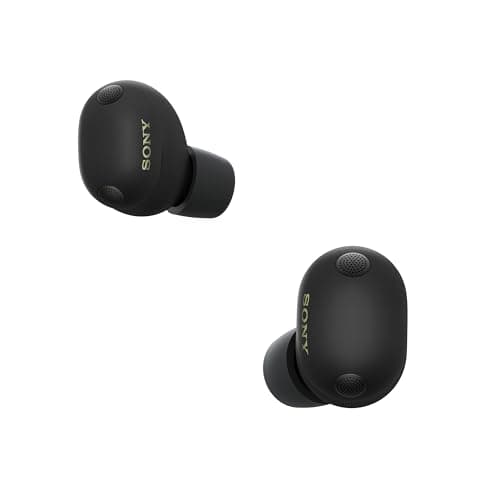
Sony has made a deliberate aesthetic shift with the WF-1000XM6. The previous generation (WF-1000XM5) had a somewhat generic pill-shaped design that looked fine in photos but felt plasticky in hand. The WF-1000XM6 takes a different approach — the earbuds themselves have a more sculpted, organic shape that Sony describes as being inspired by "the geometry of the inner ear." Whether that's marketing copy or genuine inspiration, the result is a pair of earbuds that sit more naturally in the ear canal and feel more secure during movement.
The housing is constructed from a mix of matte plastic and a soft-touch coating on the touch-sensitive outer surface. The ear tips — now in a revised design Sony calls "Isolation Tips" — use a polyurethane foam core with a silicone outer layer. This hybrid approach is not new to Sony (the XM5 had something similar), but the XM6 version is noticeably more compliant and seals more effectively. Sony includes four tip sizes in the box (SS, S, M, L), and the medium tips were the right fit for my ears.
Pro Tip: Take the time to experiment with all four tip sizes, even if you think you know your size. The polyurethane foam tips compress differently than standard silicone tips, and a different size than you expect may provide the best seal. A poor seal will degrade both sound quality and ANC performance significantly.
The charging case has received a meaningful redesign. It's roughly 15% smaller than the XM5 case, which makes a real difference when you're pocketing it. The case has a matte finish with a subtle texture that resists fingerprints, and the lid mechanism feels satisfyingly precise — a firm click when closing, no play in the hinge. On the front of the case, a small LED indicator shows charging status. On the back, you'll find the USB-C charging port and a button for Bluetooth pairing.
The earbuds themselves are rated IPX4 for water resistance, which means they're protected against splashing water from any direction. This isn't the same as waterproof — don't submerge them — but it's sufficient for workouts and rain. The XM5 had the same rating, which was a step down from the IPX4 of the XM3, so it's good to see Sony maintain this standard.
Comfort and Fit
Comfort is always subjective, but I've found the WF-1000XM6 to be among the most comfortable premium earbuds I've worn. The shape distributes pressure more evenly across the concha than the XM5 did, and after three hours of continuous use, I didn't experience the fatigue that sometimes comes with deeper-fitting designs.
That said, these are not the smallest earbuds on the market. If you're looking for something ultra-discreet, the WF-1000XM6 will be visible from the side. But what they give up in subtlety, they make up for in stability. I wore them during a run, on the subway, and through a cross-country flight without once needing to reseat them. Sony's ergonomic refinements have paid off.
The touch controls are responsive without being overly sensitive. A single tap plays/pauses, double tap skips forward, triple tap skips back, long press activates the voice assistant or toggles ANC modes. You can customize these in the Sony Headphones Connect app, which I'll discuss in the Features section.
Audio Quality
Drivers and Codec Support
The WF-1000XM6 is equipped with an 8mm dynamic driver per earbud, a modest increase from the 6mm drivers in the XM5. Don't let the numbers fool you — driver size alone doesn't determine sound quality, and Sony has squeezed impressive performance out of these relatively small drivers through refined diaphragm materials and improved magnet structures.
Codec support is comprehensive: LDAC, AAC, and SBC are all here, covering both Android's highest-quality wireless transmission and Apple's standard. LDAC is the headline feature for Android users, capable of transmitting up to 990kbps at 32-bit/96kHz — close to lossless territory for wireless. On iOS, you're limited to AAC, which is still excellent but doesn't quite reach LDAC's ceiling.
Sound Signature
Let me be direct about the WF-1000XM6's sound: it is very good, and in some respects exceptional, but it's not a flat, neutral reference monitor. Sony has tuned these with a house sound that will be immediately familiar to anyone who's heard the WH-1000XM5 or any recent Sony audio product. That means a slightly elevated bass response, a warm lower-midrange, and a smooth, non-aggressive treble.
Starting with the bass: the WF-1000XM6 delivers a satisfying low-end that extends well into the sub-bass region. On "APT," the bassline has weight and presence without bleeding into the midrange or sounding boomy. The 8mm drivers move enough air to create a sense of physical impact that many competitors in this class struggle to match. This isn't bass-boosted for its own sake — it's controlled, textured, and musical.
The midrange is where the WF-1000XM6 earns its audiophile credentials. Vocals — whether it's ROSÉ's pop delivery on "APT" or a solo acoustic guitar — sit naturally in the mix without being shouty or recessed. The warmth in the lower-midrange gives acoustic instruments and male vocals a pleasing richness, though it can occasionally soften the leading edge of electric guitars in rock tracks. This is a matter of taste; some listeners prefer a more neutral midrange, but I find Sony's approach here works well for most genres.
The treble is smooth and extended without sibilance. cymbal crashes and high-frequency detail are present and clear, but never harsh or fatiguing. This is a fatigue-free sound signature that invites long listening sessions — something that's crucial for these as daily-driven earbuds.
DSEE Extreme
Sony's DSEE Extreme upscaling technology is onboard, which uses AI to reconstruct compressed audio in real-time. In practice, if you're streaming from Spotify or Apple Music (even at "high quality"), DSEE Extreme attempts to restore some of the high-frequency detail lost in compression. Does it work? Partially. On heavily compressed tracks, you may notice a marginal improvement in clarity and air. On already high-quality streams, the effect is subtle to the point of being imperceptible. It's a nice feature to have, and Sony is the best in the business at this kind of audio processing, but don't expect it to make Spotify sound like Tidal.
Soundstage and Imaging
For true wireless earbuds at this price point, the WF-1000XM6's soundstage is impressively wide. On orchestral recordings like Beethoven's Fifth, the spatial separation between sections is convincing, and individual instruments have room to breathe. Imaging — the ability to place sounds accurately within that soundstage — is precise and stable. I'm not suggesting these will replace a good pair of open-back headphones for critical listening, but for earbuds you can take on the subway, this is as good as it gets.
Pro Tip: For the best possible sound quality, always use LDAC at its highest quality setting (990kbps) on Android devices. The default "stable connection" mode reduces quality to maintain connectivity, but in most urban environments, the highest quality mode performs well without dropout. You can toggle this in the Sony Headphones Connect app or your phone's developer settings.
Active Noise Cancellation
The Hardware
Sony has equipped the WF-1000XM6 with a 6-microphone array for ANC — three microphones per earbud working in concert to sample ambient noise and generate inverse sound waves. This is an upgrade from the XM5's 4-microphone setup, and the improvement is audible.
Real-World Performance
I'll cut to the chase: the WF-1000XM6 has the best noise cancellation I've ever experienced in a pair of true wireless earbuds. It is remarkably effective.
On the New York City subway, the WF-1000XM6 eliminates the majority of low-frequency rumble from the train itself. The higher-frequency clatter of tracks and the general ambient noise of a packed car are reduced to a distant murmur. With music playing at moderate volume, the subway essentially disappears. This is not something I can say about many earbuds.
In a coffee shop, the WF-1000XM6 handles the mid-frequency chatter with aplomb. The conversations around you become unintelligible white noise rather than distraction. HVAC systems and ambient hum are practically erased.
Wind noise has traditionally been the Achilles heel of ANC earbuds, but Sony has made strides here. In windy outdoor conditions, the WF-1000XM6's wind noise reduction mode (automatically activated or manually toggled) keeps the ANC from being destabilized by gusts. It's not perfect — strong crosswinds will still get through — but it's far better than the XM5 and meaningfully better than most competitors.
The standout test, though, was the international flight. On a transcontinental flight in economy class, the WF-1000XM6 reduced engine drone to a whisper and made the experience of watching in-flight entertainment genuinely immersive. Combined with the 8-hour battery (more on that below), they're practical for even the longest non-stop flights.
Transparency Mode
Sony's transparency mode — called Ambient Sound — is natural and effective. Voices are passed through clearly, and the effect doesn't feel processed or artificial. You can toggle between full noise cancellation, ambient sound, and off using the touch controls or the Headphones Connect app. A new feature in the XM6 is "Focus on Voice," which selectively amplifies human speech while suppressing other ambient sounds. It works well for quick conversations without removing the earbuds.
Battery Life
Battery life is one of the WF-1000XM6's most significant improvements over its predecessor. Sony rates the earbuds at 8 hours of continuous playback with ANC enabled, and the charging case provides an additional 16 hours for a total of 24 hours.
In my testing, these numbers hold up. With LDAC streaming at near-maximum quality and ANC on, I consistently hit 7.5 to 8 hours before the earbuds needed to go back in the case. With AAC and mixed usage (ANC on and off), the earbuds occasionally exceeded the 8-hour mark.
The charging case supports Qi wireless charging, which is a welcome addition. I charged it using a standard Qi pad without issue. USB-C fast charging is also supported — Sony claims 3 hours of playback from a 10-minute charge, and in my testing, that proved accurate. From empty to full, the case charges in roughly 2 hours via USB-C.
One thing I appreciate: the earbuds charge inside the case, so every time you put them away, they're topping up. Unless you're doing back-to-back long listening sessions, battery anxiety simply isn't a concern with the WF-1000XM6.
Features
Sony Headphones Connect App
The Sony Headphones Connect app is one of the most comprehensive companion apps in the category. Available for iOS and Android, it provides deep customization over sound profiles, ANC behavior, touch controls, and more.
Key features include:
- Adaptive Sound Control: The earbuds automatically detect your activity (walking, waiting, traveling) and adjust ANC and ambient sound settings accordingly. You can customize which settings apply to each activity.
- 360 Reality Audio: Sony's spatial audio format, compatible with select streaming services. The effect is subtle but adds a layer of immersion that standard stereo can't match.
- Speak-to-Chat: Automatically pauses your music when you start talking, then resumes when you stop. Useful but occasionally overeager — it triggers on coughing and humming too.
- EQ Customization: A full parametric equalizer if you want to adjust the sound signature beyond Sony's default tuning. The app includes several presets and the ability to save custom profiles.
- DSEE Extreme toggle: Turn Sony's AI upscaling on or off.
- Firmware updates: Regular updates keep the earbuds current with new features.
The app is well-designed and responsive, which hasn't always been Sony's strength. It's a significant improvement over earlier versions.
Multipoint Connection
Multipoint connectivity allows the WF-1000XM6 to be connected to two devices simultaneously. I tested this by pairing with both my laptop and phone — the earbuds automatically switched audio to whichever device was playing. Incoming calls from the phone took priority over laptop audio, and the switch was seamless. This is a feature that once required a workaround and is now table stakes for premium earbuds. It's well-implemented here.
Bluetooth 5.3
The WF-1000XM6 uses Bluetooth 5.3, which provides improved power efficiency, more stable connections, and support for future LE Audio features. Connection stability was excellent throughout my testing — no dropouts, no stuttering, even in crowded environments with heavy wireless traffic.
Voice Call Quality
Call quality is an underrated feature in earbuds, and the WF-1000XM6 performs well here too. The six-microphone array does an effective job of isolating your voice while suppressing background noise. On calls from the subway and coffee shops, I was told my voice came through clearly and naturally. Wind noise was handled gracefully, with only minor artifacts in very strong gusts.
Find My Earbuds
If you lose an earbud (we've all been there), the Headphones Connect app can play a loud tone through the misplaced earbud to help you locate it. The feature works as advertised and is genuinely useful.
How Does It Compare?
It's worth stepping back to compare the WF-1000XM6 against the competition, because at $299.99, it's entering a crowded field.
vs. Apple AirPods Pro 2 ($249): The AirPods Pro 2 remain the best choice for iPhone users due to seamless ecosystem integration, Head Tracking Spatial Audio, and the H2 chip's optimization. However, the WF-1000XM6 matches or exceeds them in sound quality, ANC effectiveness, and battery life. If you're on Android, the Sony earbuds are the clear winner.
vs. Bose QuietComfort Ultra Earbuds ($299): Bose's ANC is excellent, and many users prefer the more neutral sound signature of the QuietComfort Ultra Earbuds. That said, the Sony earbuds match Bose's ANC performance while offering better battery life and a more refined app experience. Sound quality is a matter of preference — Bose is more neutral, Sony is more engaging.
vs. Sony WF-1000XM5 ($278): The XM5 is still an excellent pair of earbuds and has dropped in price since the XM6's release. The XM6 improves on ANC, battery life, codec support, and comfort. If you can find the XM5 at a significant discount, it's worth considering — but for $20 more, the XM6 is the better buy.
Pro Tip: If you're buying as an Android user and prioritize sound quality and ANC above all else, the WF-1000XM6 is the best true wireless option currently available at this price. If you're deep in the Apple ecosystem, the AirPods Pro 2 offer a more integrated experience — but Sony is close enough that you shouldn't feel locked in.
Related Reviews: Sony FE 50mm F1.4 GM · PlayStation 5 Pro · Bose QuietComfort Ultra Headphones · Soundcore Boom 3i
What Could Be Better
I want to be fair and balanced, because no product is without compromise.
LDAC battery impact: While the 8-hour battery is impressive, using LDAC at maximum quality does reduce it noticeably. If you're a committed audiophile who prioritizes quality above all else, you'll still get great battery life — but users who want maximum endurance should be aware that switching to AAC or using "stable connection" LDAC mode will extend run time.
No aptX support: Sony continues to sidestep Qualcomm's aptX codec family in favor of LDAC. This is unlikely to bother most users — LDAC is technically superior to aptX in peak bitrate — but those with devices that only support aptX (increasingly rare) may want to double-check compatibility.
Case scratch resistance: The matte case finish looks great out of the box, but after two weeks in a pocket with keys and coins, it showed some micro-scratches. This is cosmetic and doesn't affect functionality, but a fabric-wrapped or more scratch-resistant case would be appreciated.
App dependency: Many of the best features — 360 Reality Audio, Adaptive Sound Control, detailed EQ — require the Headphones Connect app. The app is good, but it means you're creating an account and granting permissions to get the most out of your purchase. This is industry standard, but worth noting.
Pros
- Industry-leading ANC with V2 processor eliminates low-frequency noise like airplane engines
- 8-hour earbud battery life with 24-hour case is best-in-class for true wireless
- LDAC codec support enables hi-res audio over Bluetooth at 990kbps
Cons
- Larger earbud size than competitors may not fit smaller ears comfortably
- Speak-to-Chat feature occasionally mistriggers during phone conversations
- Multipoint connection limited to 2 devices simultaneously
Final Verdict
[Limited Stock - Alert] Sony\s best earbuds get smarter ANC, improved sound, and a lower price. The new benchmark for wireless ANC earbuds.