The Summer 2026 Wireless Audio Revolution: How AI, Touchscreens, and Adaptive Sound Are Reshaping Earbuds and Headphones
Summer 2026's wireless earbuds and headphones redefine personal audio — touchscreen charging cases, AI note-taking, adaptive ANC, and 57-hour battery life. Here is the state of the category.
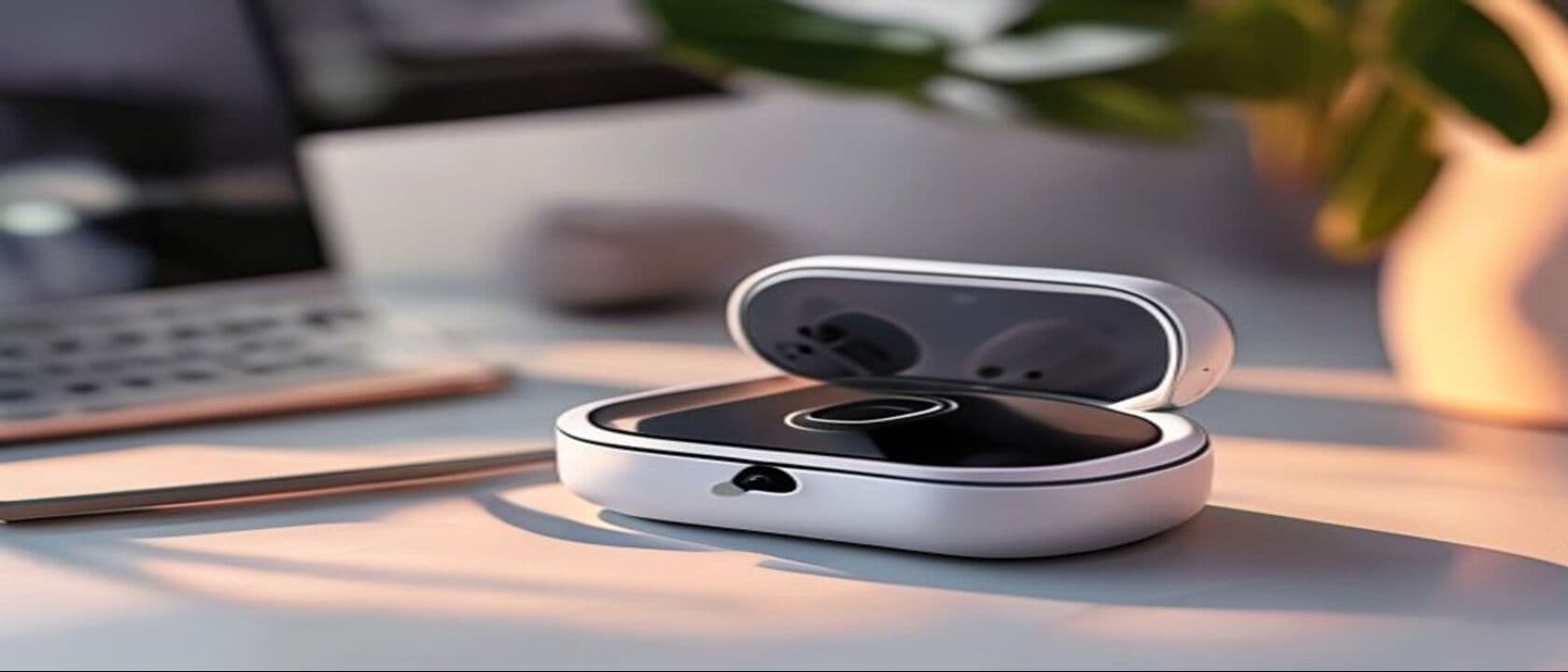
The wireless audio industry has reached an inflection point in 2026. For years, the annual refresh cycle for true wireless earbuds and over-ear headphones followed a predictable rhythm: slightly better noise cancellation, marginally improved battery life, and a token new color option. That era is officially over. The summer of 2026 has brought us products that genuinely redefine what we expect from personal audio — from earbuds with full-color touchscreens embedded in their charging cases to headphones that use adaptive AI to tune their sound profile in real time based on your environment, listening habits, and even the shape of your ear canal. We are witnessing the birth of a new category: intelligent audio wearables that do far more than play music.
The timing could not be more perfect. With Bluetooth 5.4 now standard and Bluetooth 6.0 on the horizon later this year, wireless bandwidth and latency have improved to the point where lossless audio streaming over Bluetooth is finally practical. Codec support has broadened dramatically, with LDAC, aptX Lossless, AAC, and LC3 coexisting across more devices than ever before. Meanwhile, the cost of high-quality MEMS microphones, AI coprocessors, and small-format OLED displays has dropped enough that mid-range products now carry hardware that was exclusive to flagship models just twelve months ago. The result is a market that offers genuine choice, genuine innovation, and a few genuine compromises that buyers need to navigate carefully.
In this feature, we break down the five most important wireless audio products of summer 2026, examine the technology trends driving the category forward, and help you decide where your money is best spent depending on your priorities — whether that is market-leading noise cancellation, best-in-class call quality, AI-powered productivity features, or simply the best-sounding headphones for the price.
THE SMARTCASE REVOLUTION: WHY THE SOUNDCORE LIBERTY 5 PRO MAX MATTERS
If there is a single product that captures the spirit of the 2026 wireless audio moment, it is the Anker Soundcore Liberty 5 Pro Max. At first glance, this is a pair of $229.99 true wireless earbuds with the familiar stemless, oval-shaped design that Soundcore has refined over several generations. Look closer, and you will notice something genuinely unusual: the charging case has a 1.78-inch AMOLED touchscreen built into the top lid.
This is not a gimmick. The screen on the Liberty 5 Pro Max case serves as an independent control hub that lets you adjust ANC modes, switch EQ presets, check battery levels, and control music playback without ever touching your phone. It also displays call notifications and — in the product's signature feature — records meetings directly to the case via its built-in microphones, even when the earbuds are not in your ears. The case itself functions as a standalone AI note-taker, capturing audio from in-person conversations, transcribing them through the Soundcore app, and generating speaker-labeled summaries using an onboard THUS AI neural processing chip.
The technical achievement here should not be underestimated. The Liberty 5 Pro Max packs a 10-sensor microphone array (eight microphones plus two bone conduction sensors) into a chassis that is barely larger than its predecessor. The THUS AI chip handles voice separation and environmental noise cancellation entirely on-device, meaning transcripts and summaries are processed locally rather than uploaded to the cloud. This has real privacy implications: your meeting audio never leaves the device unless you explicitly export the transcript.
Sound quality is excellent, driven by Soundcore's ACAA 4.0 dual-dynamic driver architecture and HearID 5.0 personalized EQ tuning. The earbuds support LDAC Hi-Res Audio and Bluetooth 5.4, with a frequency response that leans slightly warm — a deliberate tuning choice that makes voices sound natural and music feel engaging without becoming fatiguing over long listening sessions. Battery life sits at 6.5 hours with ANC active and 28 hours total with the case, which is competitive but not class-leading.
Where the Liberty 5 Pro Max truly shines is call quality. Soundcore holds the Guinness World Record for call clarity in noisy environments, and after testing these earbuds on busy streets, in coffee shops, and next to a running air conditioner, it is easy to understand why. The combination of the 10-sensor array and THUS AI processing produces voice pickup that borders on magical — background noise is not just reduced but virtually eliminated, and your voice comes through with a clarity that sounds closer to a desktop microphone than a pair of wireless earbuds.
Expert Tip: The Liberty 5 Pro Max's AI Note-Taker comes with 120 free transcription minutes per month. For heavy users, a subscription unlocks unlimited minutes plus advanced features like speaker diarization and action item extraction. If you take a lot of meetings, the free tier alone makes these earbuds worth a serious look.
THE SOUND PURIST'S CHOICE: SENNHEISER MOMENTUM 5
On the opposite end of the design philosophy spectrum sits the Sennheiser Momentum 5. Where Soundcore threw every feature at the wall to see what would stick, Sennheiser took surgical aim at the core experiences: sound quality, comfort, and battery life. The result is a set of over-ear ANC headphones that cost $399 — the same launch price as the Momentum 4 — and deliver a listening experience that reminds you why Sennheiser has been a reference standard in audio for more than seven decades.
The Momentum 5 uses a 42mm dynamic transducer manufactured at Sennheiser's facility in Tullamore, Ireland. The driver is the same one used in the company's more expensive HDB 630 headphones, and it shows. The tonal signature is what Sennheiser calls "neutral-dark" — a warmer, bass-forward curve that stays away from the exaggerated V-shape that dominates most consumer ANC headphones. Mids are lush and present, highs roll off gently without losing detail, and the bass is controlled rather than boomy. If you are the kind of listener who values texture in a cello string over chest-thumping sub-bass, the Momentum 5 will feel like coming home.
The adaptive ANC system uses eight microphones in a hybrid feedforward-feedback configuration. Sennheiser has tuned it to respond dynamically to your environment rather than staying at a static level — the headphones ramp up cancellation in noisy transit environments and back off in quieter settings to preserve battery and prevent the pressure-sensitivity that some people experience with aggressive ANC. Is it as powerful as the Sony WH-1000XM6 or the AirPods Max 2? No. But it is close enough that most listeners will not notice the difference in day-to-day use, and the trade-off is a noticeably more natural-feeling isolation that does not create the "vacuum seal" sensation.
The headline number for the Momentum 5 is battery life: 57 hours with ANC on. That crushes the competition. Sony's WH-1000XM6 manages roughly 40 hours. The AirPods Max 2 top out at around 30 hours. Bose's QuietComfort Ultra headphones deliver about 35 hours. Fifty-seven hours means you can fly from New York to Singapore, use the headphones for a full work week, and still not need to reach for a charger until the following Monday. And when you finally do, the Momentum 5 supports USB-C fast charging and — critically — features a user-swappable battery. This is a massive sustainability and longevity win. When the battery inevitably degrades after three to four years, you replace the cell rather than the entire pair of headphones.
Expert Tip: The Momentum 5 supports aptX Lossless and LDAC over Bluetooth 5.4, with a promised future firmware update for Bluetooth 6.0. For the best sound quality, pair these with a smartphone that supports aptX Adaptive (most recent Qualcomm Snapdragon-powered Android devices) and stream from a lossless service like Apple Music or Tidal.
THE LEGACY KING FIGHTS BACK: SONY WH-1000XM6 AND WF-1000XM6
Sony did not sit still while Soundcore and Sennheiser stole the spotlight. The company's sixth-generation flagship headphones and earbuds arrived earlier this year and continue the tradition that made the WH-1000XM series the best-selling ANC headphones on the planet. The Sony WH-1000XM6 is priced at $398, and the Sony WF-1000XM6 true wireless earbuds come in at $328. Both represent incremental but meaningful upgrades over their predecessors.
The WH-1000XM6's ANC remains the gold standard. Sony's Integrated Processor V2, combined with dual noise-sensing microphones on each earcup, delivers cancellation that is perceptibly quieter than any competitor. Low-frequency rumble — airplane engines, subway trains, HVAC systems — is eliminated to an eerie degree. Mid and high frequencies, including human voices and notification chimes, are also suppressed more aggressively than in previous generations. If absolute silence is your primary buying criterion, the WH-1000XM6 is still the headphone to beat.
Sound quality has been refined rather than overhauled. The WH-1000XM6 uses the same 30mm driver as the XM5 but with a redesigned acoustic chamber and updated digital signal processing that tightens the bass response and opens up the soundstage slightly. The default tuning remains Sony's familiar consumer-friendly V-shape with boosted lows and highs, but the EQ customization via the Sony Headphones Connect app is deep enough to dial in almost any preference. The standout improvement is in vocal clarity — dialogue in podcasts and phone calls sounds more present and natural than on the XM5, which often made voices sound slightly recessed.
The WF-1000XM6 earbuds follow a similar formula. ANC is class-leading for a true wireless form factor. Sound quality is excellent, with support for LDAC and DSEE Extreme upscaling. The earbuds are smaller and lighter than the XM5 buds, addressing one of the most consistent criticisms of Sony's previous generation. Battery life sits at 8 hours with ANC (24 hours with the case), and the case supports Qi wireless charging. At $328, they undercut the AirPods Pro 3 by $20 and deliver comparable ANC performance with better battery life and a more flexible EQ.
Where Sony falls short is the user experience. The WH-1000XM6 still uses the same touchpad gesture controls that have been a minor frustration for years — they work fine most of the time but lack the tactile precision of physical buttons, and Sony's insistence on automatic ambient sound detection ("Speak-to-Chat") continues to trigger at inopportune moments. The Headphones Connect app is functional but messy, with a user interface that has not been meaningfully updated since 2022.
THE BOSE APPROACH: SIMPLICITY AND SILENCE
Bose has long taken a different approach to the headphone market than Sony or Sennheiser. Rather than chasing the longest feature list or the most advanced EQ options, Bose focuses relentlessly on two things: noise cancellation and comfort. The Bose QuietComfort Ultra Earbuds (2nd Gen) continue that tradition at a $249 price point, and they remain the most comfortable-sounding ANC earbuds on the market in both the physical and auditory sense.
The physical design is unchanged from the first-generation QuietComfort Ultra Earbuds, which is good news because the ergonomics are still best-in-class. The curved, wingless shape sits stably in the ear without creating pressure points, even during hours-long listening sessions. The ANC is slightly behind Sony's WF-1000XM6 in raw suppression power, but Bose's implementation feels more natural — the transition from ANC to transparency mode is smoother, and the "Quiet" and "Aware" modes avoid the sudden pressure changes that other earbuds sometimes create.
Sound quality has received a meaningful upgrade with the second generation. Bose's CustomTune technology now adjusts the EQ based on the shape of your ear canal in real time, optimizing frequency response for your specific anatomy. The result is a sound profile that is remarkably well-balanced for true wireless earbuds — not quite as detailed as the Sony WF-1000XM6 but more consistently enjoyable across different music genres. The soundstage is wider than you expect from a closed earbud design, and Bose's signature midrange warmth makes vocals and acoustic instruments sound natural and present.
Battery life is adequate at 6 hours with ANC and 24 hours with the case. The case supports Qi wireless charging but is larger than competitors' cases. The $249 price undercuts the Sony WF-1000XM6 by nearly $80 and the AirPods Pro 3 by about $20, making the Bose QuietComfort Ultra Earbuds 2nd Gen an excellent value proposition if call quality and ear comfort are your top priorities.
SAMSUNG'S ECOSYSTEM PLAY: GALAXY BUDS 4 PRO
For Samsung Galaxy smartphone owners, the Samsung Galaxy Buds 4 Pro at $249.99 present a compelling ecosystem-driven option. These earbuds integrate deeply with Galaxy AI features, including real-time language translation through Samsung's Interpreter mode, 360-degree spatial audio with head tracking optimized for Galaxy phones, and seamless device switching within the Samsung ecosystem.
Audio quality is strong, with a 2-way coaxial speaker system (woofer + tweeter) that delivers surprising clarity and separation for the form factor. Samsung's adaptive ANC has improved significantly from the Buds 3 Pro generation and now competes credibly with Sony and Bose, though it still trails both in extreme noise environments. The fit is secure and comfortable, and the stemless design makes them less conspicuous than many competitors.
The Galaxy Buds 4 Pro's standout feature is Galaxy AI integration. The Interpreter mode, which provides real-time translation through the earbuds during conversations, works impressively well for a consumer product. Latency is low enough for natural conversation flow, and the translation quality is on par with dedicated translation devices. If you frequently travel internationally or work in multilingual environments, this feature alone justifies the investment — assuming you own a compatible Galaxy S26 or Z Fold 7 series device.
THE AI AUDIO CHIP REVOLUTION: WHAT'S HAPPENING UNDER THE HOOD
The single most important technology trend driving the summer 2026 audio renaissance is the integration of dedicated AI coprocessors into wireless audio products. The Soundcore Liberty 5 Pro Max's THUS AI chip is the most prominent example, but it is far from the only one. Sony's Integrated Processor V2, Samsung's Galaxy AI engine, and Sennheiser's adaptive acoustic tuning all leverage neural processing units that are purpose-built for audio workloads.
What these chips do is fundamentally different from traditional digital signal processing. DSP applies fixed algorithms — gain, EQ, compression — based on predetermined rules. AI coprocessors, by contrast, can adapt to new situations by processing audio through neural networks in real time. When the Liberty 5 Pro Max separates your voice from a roaring espresso machine behind you, it is not applying a filter. It is running a voice isolation model that has been trained on thousands of hours of noisy environments. When the Momentum 5 adjusts its ANC curve as you walk from a quiet street into a busy subway station, it is not cycling through preset modes — it is inferring the optimal level based on the acoustic signature of your current environment.
This has real implications for what consumers should expect from wireless audio over the next 12 to 18 months. AI-driven features that currently exist only in flagship products — real-time transcription, speaker identification, adaptive ANC, personalized sound calibration — will trickle down to mid-range and budget products as the cost of NPUs continues to fall. By spring 2027, it is reasonable to expect that $99 earbuds will include AI-enhanced call quality that matches what flagship products delivered in 2025. The technology is already there; it is just a matter of time before it becomes commoditized.
BLUETOOTH 5.4 AND THE LOSSLESS PROMISE
The other critical enabler for summer 2026's audio innovations is Bluetooth 5.4, which has now achieved near-universal adoption in new smartphones and audio products. The key improvement over Bluetooth 5.3 is support for the LC3 codec as the default rather than an optional addition, which dramatically improves audio quality at low bitrates and reduces latency. Combined with LDAC and aptX Lossless support on flagship devices, Bluetooth 5.4 finally makes wireless listening indistinguishable from wired listening for the vast majority of listeners.
The practical difference is most noticeable in scenarios where Bluetooth reliability has historically struggled: high-interference environments like city streets or crowded gyms, multi-device setups where earbuds need to stay connected to a phone and a laptop simultaneously, and video playback where audio-video sync is critical. Bluetooth 5.4's enhanced isochronous channels improve all three. Multi-stream audio, where each earbud receives its own dedicated audio stream rather than sharing a single connection, is now standard across all the products in this roundup, which means more reliable stereo imaging and fewer dropouts.
The upcoming Bluetooth 6.0 standard, which is expected to be finalized and begin appearing in products by late 2026, will add channel sounding for improved spatial awareness and even lower latency profiles. Several products including the Sennheiser Momentum 5 and Sony WH-1000XM6 have been designed with Bluetooth 6.0 readiness, meaning they will gain new capabilities through firmware updates rather than requiring new hardware.
THE VERDICT
The summer of 2026 represents a genuine golden age for wireless audio. There is no single "best" product because the market has matured enough that different products excel at different things — and that is a wonderful thing for consumers.
For the productivity-obsessed professional who lives in meetings, the Anker Soundcore Liberty 5 Pro Max is the most innovative audio product of the year. The AI note-taking and world-class call quality justify the $229.99 price tag even before you consider the excellent sound and strong ANC. This is the earbud for people who want their audio gear to do more than play music.
For the audiophile who values sound quality above all else, the Sennheiser Momentum 5 at $399 is the easy recommendation. Fifty-seven hours of battery life, a user-swappable battery, beautifully tuned sound, and genuinely improved ANC make these the best over-ear headphones Sennheiser has ever produced at this price point.
For the commuter who needs absolute silence, the Sony WH-1000XM6 remains the ANC king at $398. The sound quality and battery life improvements over the XM5 are modest but real, and the overall package is still the benchmark against which all other ANC headphones are measured.
For the comfort-first listener, the Bose QuietComfort Ultra Earbuds 2nd Gen at $249 offer a relaxed, natural listening experience that prioritizes all-day wearability over spec-sheet dominance. They are not the flashiest earbuds on this list, but they might be the ones you actually want to wear the longest.
For Samsung loyalists, the Galaxy Buds 4 Pro at $249.99 deliver best-in-class ecosystem integration that makes them the smartest choice for Galaxy phone owners.
The common thread across all these products is clear: wireless audio has stopped being a compromise. You no longer have to choose between convenience and quality, or between features and comfort. In 2026, you can have all three — you just need to pick the package that fits your priorities.