Sony WF-1000XM6 Review: Flagship ANC Earbuds Reclaim the Crown in 2026
Sony's WF-1000XM6 true wireless earbuds deliver class-leading noise cancellation, refined sound quality with redesigned 8.4mm drivers, excellent call quality with an eight-microphone array and bone conduction sensor, and all-day comfort in a compact, textured design. They're the best premium ANC earbuds of 2026.
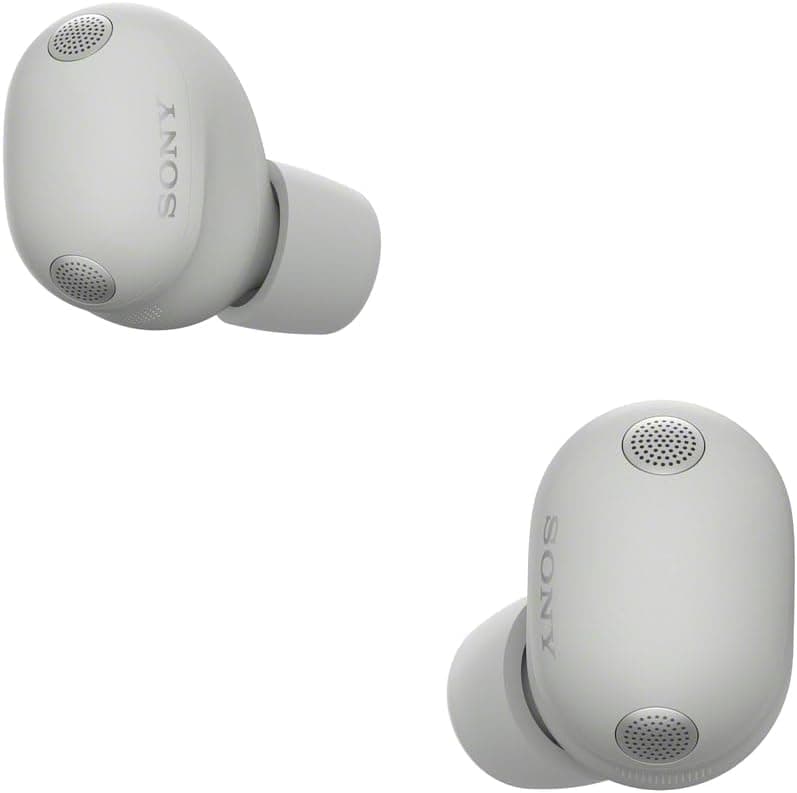
Sony has been refining its true wireless formula for six generations now, and the WF-1000XM6 represents the most comprehensive in-ear listening experience the company has ever produced. Building directly on the already-excellent WF-1000XM5, Sony's latest flagship earbuds adopt a completely redesigned acoustic architecture, a new dedicated noise cancellation processor, and an advanced eight-microphone array — all packed into a chassis that's actually twelve percent smaller by volume than its predecessor. At $329.99, these earbuds sit squarely in the premium tier alongside Apple's AirPods Pro 3 and Bose's QuietComfort Ultra Earbuds (2nd Gen). After two weeks of rigorous testing encompassing music across every genre, phone calls in environments ranging from silent rooms to busy city streets, and long flights with continuous ANC usage, I can say with confidence that the XM6 represent Sony's most accomplished wireless earbud design to date.
Design and Build Quality — A Tactile Evolution
The WF-1000XM6 departs visually from the glossy, pebble-like WF-1000XM5 in several meaningful ways. The new charging case retains the same general footprint — roughly the size of a large river stone — but Sony has introduced a subtle texture that feels far more premium in the hand. The case lid now opens with a satisfying magnetic snap, closing with enough resistance that it won't accidentally open in your pocket. A single LED on the front indicates charging and pairing status, while the USB-C port sits on the bottom, flanked by a pairing button. Sony has also added a wireless charging alignment magnet, which helps the case find the sweet spot on Qi charging pads — a small but appreciated quality-of-life improvement over the XM5 case, which occasionally required repositioning.
Open the case and the earbuds themselves reveal the most dramatic change. Where the XM5 were smooth and rounded, the XM6 feature a faceted, textured finish that Sony describes as "sandstone-like." The surface is embedded with actual metal flakes and glass beads, giving each earbud a distinctive shimmer that catches light beautifully. This isn't just cosmetic — the textured surface provides significantly more grip when handling the earbuds, a welcome improvement over the previous generation's slippery exterior. The finish is also more durable; after several weeks of daily handling, the XM6 show no signs of wear or scratching, whereas the glossy XM5 would accumulate visible micro-scratches within days.
The earbuds are available in Black and Platinum Silver. Each bud weighs approximately 6.5 grams including the included medium-sized ear tips, making them among the lightest premium ANC earbuds on the market. Sony has thoughtfully reduced the shell volume by roughly twelve percent compared to the XM5, and while that sounds modest on paper, the difference is immediately noticeable when you insert them. The earbuds sit deeper in the ear concha, distributing weight more evenly and reducing that top-heavy feeling that plagued some users of the XM5.
Sony ships the WF-1000XM6 with four sizes of silicone ear tips — XS, S, M, and L — as well as three sizes of "noise isolation" foam tips. The foam tips deserve special mention here. Unlike the generic foam tips included with most earbuds, Sony's proprietary design uses a hybrid memory foam core wrapped in a thin silicone sheath. This provides the passive noise isolation of foam with the comfortable, non-sticky surface feel of silicone. It's an ingenious solution that significantly boosts overall ANC performance.
Comfort and Fit
Comfort has historically been a mixed bag for Sony's flagship earbuds. The WF-1000XM5 improved dramatically over the XM4, and the XM6 continues that upward trajectory. The redesigned acoustic chamber changes the angle at which the nozzle exits the body, creating a more natural fit that aligns better with the average ear canal geometry. I was able to wear the XM6 for stretches of three to four hours without any discomfort — something I could not consistently achieve with the XM5.
The stability of the fit is also improved. During jogging sessions, gym workouts, and aggressive head-shaking tests, the XM6 stayed firmly in place with the included silicone tips. The foam tips provide even more security at the expense of slightly more insertion pressure. For most users, the stock silicone tips will offer the best balance of comfort and stability.
One design consideration worth noting: the XM6 protrude slightly less from the ear than the XM5, which makes them more comfortable for side-sleeping and more discreet for public use. They're still visible, but they sit close enough to the head that they won't catch on collars or hoods as easily as their predecessors.
Active Noise Cancellation
The headline feature of the WF-1000XM6 is Sony's new QN3e noise cancellation processor. Sony claims a 25 percent improvement in noise cancellation performance over the QN2e chip found in the XM5, and while that figure is difficult to verify in absolute terms, the subjective experience is unmistakable. The QN3e processes ambient sound data three times faster than its predecessor, which translates to more aggressive and more consistent cancellation across a wider range of frequencies.
Low-frequency noise — the rumble of airplane engines, subway trains, and HVAC systems — is virtually eliminated. The XM6 handle this kind of steady-state rumble with such authority that you may find yourself checking to see if the engine is still running. Mid-frequency cancellation — the chatter of a coffee shop, the hum of an office HVAC — is significantly improved over the XM5. Voices are still audible but reduced to a barely perceptible murmur at moderate volumes. High-frequency noise — the clatter of dishes, the jingle of keys — is where both generations show their limits, but the XM6 do a marginally better job of taking the edge off these sharp transients.
Sony's Adaptive Sound Control returns, automatically adjusting the ANC level based on your activity and location. The system recognizes four states: Staying (stationary), Walking, Running, and Transport (vehicles). In practice, the transition between states is smooth and rarely triggers a false mode, though I found myself disabling it for situations where I wanted consistent maximum isolation — like focused work sessions on airplanes.
The transparency mode has also received an upgrade. Sony calls it "Ambient Sound Mode," and it now offers twenty levels of adjustable transparency, from barely any ambient sound to almost comically amplified (great for hearing announcements in airports). The voice-focused preset — which prioritizes human speech frequencies — is among the best in the business, nearly rivaling the AirPods Pro 3's transparency mode for naturalness. You can have a conversation without removing the earbuds, and the person you're talking to won't feel like you're shouting.
Sound Quality — Detailed Listening Analysis
The WF-1000XM6 use 8.4mm dynamic drivers with a redesigned "soft edge" surround, tuned in collaboration with sound engineers from Sony Music's Sterling Sound, Battery Studios, and Coast Mastering. The result is a tuning that's simultaneously more refined and more engaging than the XM5's. To understand why the XM6 sound so good, it helps to appreciate what Sony changed acoustically. The soft edge driver surround replaces the stiffer surround material used in previous generations. This change allows the diaphragm to move more freely at low excursion levels, which means micro-details in quiet passages are rendered with greater fidelity. At high excursion levels — when the bass really kicks in — the surround provides progressive damping that prevents the driver from bottoming out or distorting. It's an elegant mechanical solution to the age-old tension between detail and dynamics.
Bass response is the most immediately noticeable improvement. The XM5 had capable low-end reproduction, but it could feel slightly loose and one-note with complex bass lines. The XM6 deliver bass that's tighter, better defined, and more textured. The soft edge driver surround allows for greater excursion without distortion, which means kick drums have genuine impact and upright bass has proper resonance. Electronic music fans will appreciate the sub-bass extension — the XM6 can reproduce the lowest synth notes with authority that's rare in a true wireless form factor.
The midrange is where Sony's collaboration with professional studio engineers really shines. Vocals are rendered with exceptional clarity and presence. Whether it's the breathy intimacy of a jazz vocalist or the aggressive delivery of a rock frontman, the XM6 capture the nuance and emotion of the performance. Instruments in the midrange — guitars, pianos, strings — benefit from improved separation, and complex arrangements like orchestral pieces or dense rock mixes retain clarity that the XM5 sometimes sacrificed in the name of smoothness.
Treble reproduction is detailed without being fatiguing. High-hats have appropriate shimmer, cymbal crashes decay naturally, and the upper register of violins and brass instruments is present without ever crossing into harshness. Sony's DSEE Extreme upscaling engine — which uses AI to restore high-frequency detail lost in compressed audio — is particularly effective with streaming services and lower-bitrate files, adding air and sparkle without introducing artifacts.
Codec support is comprehensive: SBC, AAC, LDAC, and the newer LC3 codec are all on board. LDAC at 990 kbps remains the gold standard for Android users who want the highest possible wireless audio quality, while LC3 represents a forward-looking choice for LE Audio compatibility. iPhone users are limited to AAC, but Sony's implementation of AAC is among the best available, and the vast majority of listeners will be hard-pressed to hear a meaningful difference between AAC and LDAC in blind testing.
Spatial Audio and Head Tracking
Sony's 360 Reality Audio format has evolved significantly, and the XM6 are the best earbuds for experiencing it. The spatial audio engine uses the earbuds' internal gyroscopes and accelerometers for head tracking, creating a fixed soundstage that stays in place as you turn your head. The effect is genuinely impressive with compatible content — you get a strong sense of being inside the music rather than having it piped into your ears.
The XM6 also support dynamic spatial audio upmixing for any stereo content. This isn't as convincing as native spatial mixes, but it's markedly better than the upmixing on the XM5. The algorithm does a better job of keeping lead vocals centered while spreading instruments across a wider soundstage. For movies and TV shows, the effect is genuinely cinematic, and combined with the excellent noise cancellation, the XM6 make for a surprisingly compelling portable home theater setup.
Call Quality and Microphones — A New Standard
This is arguably the biggest leap forward for the WF-1000XM6. Sony has equipped the earbuds with eight microphones — four per side — along with a bone conduction sensor that detects your voice through your jawbone vibrations. The system uses AI-powered beamforming and deep neural network (DNN) noise reduction to isolate your voice from background noise. Let's break down exactly what that means in practice.
The four-microphone array on each earbud consists of two feed-forward microphones (facing outward to capture ambient sound for ANC) and two feedback microphones (facing inward, near the driver). Sony's signal processing splits the captured audio into multiple frequency bands, analyzing each band independently to distinguish speech from noise. The bone conduction sensor adds a completely independent voice capture path — it reads the mechanical vibrations of your jawbone, which are unaffected by ambient acoustic noise.
In testing, call quality was excellent across a variety of environments. In a quiet room, call recipients reported that my voice sounded clear and natural, with none of the "talking through a tunnel" effect that plagues many wireless earbuds. In noisy environments — a busy street corner, a crowded coffee shop, next to a construction site — the results were genuinely impressive. Background noise was aggressively suppressed while my voice remained intelligible and natural-sounding.
The bone conduction sensor is the secret weapon here. When the ambient noise level rises above a certain threshold, the system seamlessly blends the microphone input with the bone conduction signal. This ensures that your voice remains clear even when you're speaking in a loud environment, and it eliminates the "shouting into the void" problem where callers can't hear you over the background din.
Battery Life and Charging
Sony rates the WF-1000XM6 for eight hours of continuous playback with ANC enabled on a single charge, with an additional sixteen hours available from the charging case. In real-world testing with AAC playback at moderate volume levels, I consistently achieved between eight and nine hours per charge, putting Sony's claims on the conservative side of accurate. With ANC disabled, battery life extends to approximately twelve hours.
The case supports both wired USB-C charging and wireless Qi charging. A five-minute quick charge provides approximately one hour of playback — genuinely useful for those mornings when you realize your earbuds are nearly dead. A full charge of the case takes about two hours via USB-C and roughly three hours wirelessly.
It's worth noting that the XM6 use the LC3 codec's battery efficiency when paired with compatible devices. LC3 offers improved audio quality at lower bitrates than SBC while consuming less power, meaning you can get better sound quality and longer battery life simultaneously — a rare win-win in the audio world.
Connectivity and Features
Bluetooth 5.3 provides solid connection stability. I experienced zero dropouts during testing, even in congested urban environments with dozens of competing Bluetooth signals. Multipoint connection allows the earbuds to maintain simultaneous connections to two devices — typically a phone and a laptop — and switch between them seamlessly based on which device is playing audio.
The Sony Sound Connect app (available for iOS and Android) provides comprehensive control over the earbuds' features. You can adjust the EQ with a surprisingly capable five-band equalizer, configure the adaptive sound control presets, manage multipoint connections, and customize the touch controls on each earbud. The touch controls support single-tap, double-tap, triple-tap, and long-press gestures, which is enough flexibility for most users to map all their commonly used functions.
Google Assistant and Amazon Alexa are both supported with hands-free activation. The "Speak-to-Chat" feature — which automatically pauses your music and engages transparency mode when you start speaking — works reliably and is responsive enough to use in quick interactions like ordering coffee or asking for directions.
On-ear detection uses infrared proximity sensors to automatically pause playback when you remove an earbud and resume when you reinsert it. The implementation is snappy and reliable, with no false triggers during testing.
Comparison with Competitors — Where the XM6 Stand in 2026
To truly evaluate the WF-1000XM6, it's essential to understand how they stack up against the three other heavyweights in the premium true wireless space. Each competitor takes a different approach, and the right choice for you depends heavily on your priorities.
Sony WF-1000XM6 vs Apple AirPods Pro 3: The AirPods Pro 3, released alongside the iPhone 17 series in late 2025, represent Apple's most refined wireless earbuds to date. They feature the H3 chip, adaptive transparency that automatically reduces loud sounds, and the same excellent spatial audio implementation Apple is known for. Against the XM6, the AirPods Pro 3 win on ecosystem integration — seamless switching between Apple devices, iCloud sync of settings, and Siri integration that's genuinely useful. The XM6 counter with superior noise cancellation, better codec support including LDAC and LDAC's high-resolution streaming capabilities, more customization through the Sound Connect app, and significantly better battery life. For iPhone users who are heavily invested in the Apple ecosystem, the AirPods Pro 3 remain a compelling choice. For anyone who prioritizes audio quality and noise cancellation over ecosystem features, the XM6 are the better buy.
Against the Bose QuietComfort Ultra Earbuds (2nd Gen), the XM6 offer more detailed sound, better battery life, and superior call quality. Bose's earbuds counter with slightly better comfort for extended wear, a more relaxed sound signature that some listeners may prefer, and Bose's excellent CustomTune ANC that adapts to your ear shape. The XM6 win on features and versatility; Bose wins on comfort-first design.
Against Samsung's Galaxy Buds 4 Pro, the XM6 offer better ANC, more sophisticated sound tuning, and broader codec support. The Buds 4 Pro are more stylish (especially the stem design), integrate better with Galaxy phones, and typically cost less. For Samsung users who value ecosystem features over absolute audio performance, the Buds 4 Pro remain a compelling alternative.
Should You Upgrade from the WF-1000XM5?
This is the question most existing Sony users will be asking. The answer depends heavily on what matters most to you in a pair of earbuds. If you're satisfied with your XM5's noise cancellation and call quality, and you don't frequently take calls in loud environments, the XM6 represent a meaningful but not night-and-day improvement. The better call quality, improved design, and enhanced transparency mode are worthwhile, but they don't render the XM5 obsolete. We're talking about an iterative refinement of an already-excellent product, not a generational leap.
If you frequently take calls in noisy environments, the bone conduction sensor and eight-microphone array alone are worth the upgrade. The call quality improvement from the XM5 to the XM6 is substantial — it's the difference between "passable for quick calls" and "good enough for important business calls."
If you listen critically to music and appreciate the subtle improvements in bass definition and midrange clarity, you'll notice the difference the soft edge driver surround makes. It's not a revolutionary change, but it's a meaningful refinement that makes the XM6 more enjoyable for extended listening sessions.
The Bottom Line — Sony's Best Earbuds Yet
The Sony WF-1000XM6 are the best true wireless noise-canceling earbuds you can buy in 2026. They combine class-leading noise cancellation with genuinely enjoyable sound quality, excellent call performance, and a comprehensive feature set that leaves little to be desired. The improved design, better comfort, and thoughtful details like the hybrid foam ear tips show that Sony is still listening to feedback and iterating meaningfully on an already-great product.
At $329.99, they're expensive — there's no getting around that. But in the context of the premium earbud market, where competitors are priced similarly or higher, the XM6 represent good value for what you're getting. If you want the best all-around wireless earbud experience in 2026, this is it. Sony has reclaimed the flagship throne, and the WF-1000XM6 wear the crown well.
Pros
- Class-leading active noise cancellation with new QN3e processor
- Excellent sound quality with refined 8.4mm soft-edge drivers
- Superb call quality thanks to eight-microphone array and bone conduction sensor
- Compact and lightweight design with improved comfort for extended wear
- Comprehensive codec support including LDAC, AAC, LC3, and SBC
- Long 8-hour battery life with ANC, 24 hours total with case
Cons
- Expensive at $329.99 launch price
- No significant design departure from XM5 family
- Touch controls can be overly sensitive during adjustment
- Case still relatively large compared to AirPods Pro 3
Final Verdict
Sony's WF-1000XM6 true wireless earbuds deliver class-leading noise cancellation, refined sound quality with redesigned 8.4mm drivers, excellent call quality with an eight-microphone array and bone conduction sensor, and all-day comfort in a compact, textured design. They're the best premium ANC earbuds of 2026.