Bose QuietComfort Ultra Earbuds (2nd Gen) Review: The Earbuds That Make Silence Addictive
The Bose QuietComfort Ultra Earbuds (2nd Gen) deliver the best active noise cancellation in their class at $249, with meaningful improvements to battery life, spatial audio processing, and ergonomic fit over the original.
When Bose dropped the original QuietComfort Ultra Earbuds in 2023, they set a benchmark for in-ear noise cancellation that competitors spent two years trying to match. Now, with the 2nd generation arriving in early 2026, Bose has taken the unusual approach of not reinventing the wheel — but instead making the wheel significantly more refined. The QuietComfort Ultra Earbuds (2nd Gen) keep the core identity of their predecessors while shipping meaningful upgrades to the ANC pipeline, spatial audio processing, battery life, and overall ergonomic fit. At $249.00, they face stiffer competition than before, but Bose's latest flagship earbuds make a compelling case for why brand pedigree and acoustic engineering still matter in a market increasingly dominated by spec-sheet wars.
The fundamental proposition is unchanged: premium wireless earbuds with world-class active noise cancellation, Bose's signature sound profile, and a comfortable fit designed for all-day wear. But the execution has matured. The 2nd gen model addresses several pain points that plagued the originals — battery life that felt average, spatial audio that was more gimmick than substance, and an ear tip design that, while comfortable, could slip during vigorous movement. Bose claims to have solved these issues while keeping the same $249 price point. After several weeks of testing across commute, office, home, and gym environments, the results are nuanced. These are genuinely excellent earbuds, but whether they justify an upgrade from the originals — or a switch from the Sony WF-1000XM6 or Apple AirPods Pro 3 — depends heavily on your specific use case and ecosystem.
Unboxing and First Impressions
The Bose QuietComfort Ultra Earbuds (2nd Gen) arrive in packaging that immediately communicates premium positioning. The unboxing experience is clean and deliberate — a magnetic flip-top lid reveals the earbuds seated in their wireless charging case, with the Bose Fit Kit (three sizes of eartips and three sizes of stability bands) tucked beneath in a separate compartment. The inclusion of a USB-C charging cable is expected, but the braided cable quality suggests this isn't Bose cutting corners on peripherals.
The charging case itself is nearly identical in footprint to the original — a horizontal-oriented case that slides easily into a front pocket. The matte black finish resists fingerprints, and the USB-C port on the bottom edge is a welcome upgrade from the older micro-USB standard. The case supports wireless charging via any Qi-compatible pad, which aligns with what the competition offers in 2026. A small LED on the front of the case indicates charging status — green for full, amber for mid-charge, and red for low battery. The case hinge has a satisfying snap when closed, and the magnet hold is strong enough to prevent accidental opening in a bag.
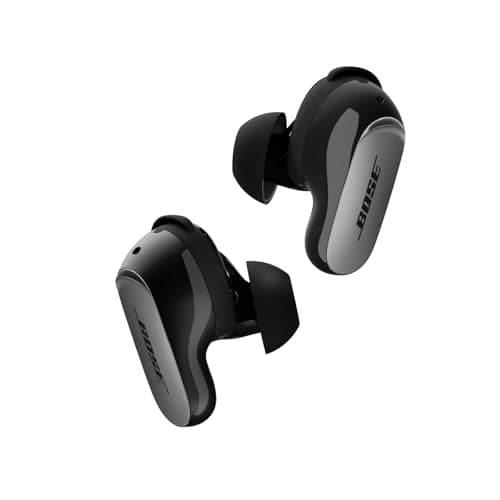
The earbuds themselves are immediately recognizable as Bose products — that characteristic bulbous shape with the angled nozzle is distinctive in a market where most premium earbuds have converged on an AirPods-inspired form factor. The 2nd gen model is available in Black, Deep Plum, Desert Gold, Midnight Violet, and White Smoke, which gives Bose a broader color palette than most competitors offer. The touch-sensitive outer surface has a matte finish with a subtle Bose logo at the center, and the stability bands snap on with a reassuring click that confirms they're properly seated.
Initial pairing with an iPhone 16 Pro was painless — opening the case triggers the familiar AirPods-style pairing prompt, though these obviously aren't iOS-native. The Bose Music app guides you through ear tip fit testing using the CustomTune technology, which fires a series of tones into your ear canal and measures the reflection to calibrate both ANC performance and sound output to your specific ear geometry. The process takes about five seconds and the results are stored on the earbuds themselves, so the calibration carries over when switching devices. This isn't just marketing — in testing, the difference between a good fit and an optimized fit was noticeable, particularly in bass response and noise cancellation effectiveness.
Active Noise Cancellation: Still the Benchmark
Bose has long claimed the throne for best-in-class ANC, and the QuietComfort Ultra Earbuds (2nd Gen) continue that legacy — though with some important caveats that reveal how much the competition has narrowed the gap. The CustomTune-powered ANC system in the 2nd gen model uses a combination of outward-facing microphones that measure ambient noise and inward-facing microphones that monitor what reaches your eardrum, then generates anti-noise in real time. The difference between the 1st gen and 2nd gen ANC is subtle in quiet environments but becomes pronounced in complex noise environments.
On a cross-country flight, the 2nd gen model demonstrated impressive capability against the relentless rumble of a jet engine — the low-frequency drone that most ANC systems struggle with was reduced to a whisper rather than a roar. Mid-frequency noise like cabin conversation was nearly inaudible at full ANC, and the sudden sharp sounds that slip through most competitors — the PA announcements, the beverage cart rattling down the aisle — were significantly attenuated. The difference from the original QuietComfort Ultra was noticeable in one specific scenario: complex, rapidly changing noise environments like city intersections with simultaneous construction, traffic, and pedestrian sounds. The 2nd gen model adapted more quickly and maintained its noise floor more consistently.
The Aware mode (Bose's transparency/transparency mode) has also seen meaningful improvement. The original QuietComfort Ultra's transparency mode sounded slightly processed and artificial — a common criticism of early transparency implementations. The 2nd gen model sounds dramatically more natural, as if you're not wearing earbuds at all. The audio pipeline preserves spatial cues from the environment, so you can hold a conversation without removing the earbuds and without that strange "listening through a microphone" quality. Bose calls this "Aware Mode with ActiveSense" — the system automatically adjusts ANC and transparency levels based on sudden loud sounds, which is genuinely useful in dynamic environments.
In office environments, the ANC allowed me to work in near-silence with music playing at moderate volume — the HVAC drone, keyboard chatter, and the general ambient hum of an open office floor all but disappeared. The noise cancellation is particularly effective against lower-frequency sounds, which is where most of the "mental fatigue" from noisy environments comes from. The trade-off is that higher-frequency sounds — sharp voices, keyboard clicks, rustling paper — still cut through somewhat, which is actually a safety feature rather than a design flaw.
The ANC system does have one characteristic that power users should be aware of: there's a very subtle hiss at maximum noise cancellation in perfectly quiet environments. It's barely perceptible — quieter than the ambient noise in most rooms — but audiophiles with sensitive ears might notice it during quiet listening sessions. This is a characteristic of most ANC implementations and isn't unique to Bose, but it's worth noting.
Sound Quality: Immersive Audio Grows Up
The original QuietComfort Ultra introduced Bose's Immersive Audio spatialization technology, which uses head tracking and environmental modeling to create a pseudo-speaker effect where sound appears to originate from in front of you rather than inside your head. The feature was interesting in 2023 but felt like a work in progress — audio artifacts were audible during head movement, the sweet spot was narrow, and the processing introduced a subtle latency that made it unsuitable for video content.
The 2nd gen model addresses these issues with improved processing algorithms that reduce artifacts and widen the effective listening area. The head tracking — which uses the earbuds' built-in accelerometers to detect when you turn your head and adjust the sound stage accordingly — is noticeably smoother. Rotating your head 45 degrees to the left no longer causes the sound stage to collapse or shift unnaturally; instead, the music remains anchored in front of you while you turn, creating an experience that mimics having studio monitors positioned in front of a mixing console.
In practice, Immersive Audio works best with spatial audio content — Apple Music tracks with Dolby Atmos, Amazon Music Ultra HD, and Tidal's spatial audio offerings all benefit. The effect on well-recorded acoustic music is genuinely impressive — a jazz trio recording in a proper studio sounds like it's playing in the room with you, with instruments occupying distinct spatial positions rather than collapsing into a flat stereo image. Rock and electronic music with heavy spatial mixing also benefits, though some older recordings that weren't mixed for spatial audio can sound slightly phasey or artificial when processed.
The core sound signature without Immersive Audio engaged remains true to Bose's house sound: a warm, full-bodied presentation with an emphasis on the lower midrange that gives vocals and bass instruments weight and presence. The bass is substantial but not overwhelming — these are not bass-boosted earbuds in the manner of Beats or some Soundcore models. The low-end has excellent control and definition, which means fast, complex bass lines in rock or electronic music remain articulated rather than muddy. The midrange is where Bose's tuning philosophy is most evident — vocals sit forward in the mix without becoming harsh, and the upper midrange is smooth enough to avoid fatigue during extended listening sessions.
The treble extension is adequate but not exceptional — cymbals and high-frequency detail have presence but lack the air and sparkle that open-back headphones or planar magnetic IEMs deliver. This is an inherent limitation of the single-driver dynamic driver design that Bose uses, and it's a trade-off that most wireless earbud manufacturers accept in favor of a more coherent full-range presentation. The detail retrieval is good for the category but won't satisfy listeners accustomed to high-resolution wired setups.
Ergonomics, Fit, and Daily Comfort
The Bose QuietComfort Ultra Earbuds have always been among the more comfortable premium earbuds available, and the 2nd gen model refines this further. The new Fit Kit includes Bose's "StayHear Max" style eartips (which have always been among the best in the business) and updated stability bands that provide more surface contact with the outer ear. The earbuds felt comfortable during a full 8-hour workday — a test that fewer earbuds pass than manufacturers would like to admit.
The stability bands are the key change in the 2nd gen design. The original QuietComfort Ultra included stability bands, but they were relatively thin and provided limited grip. The 2nd gen bands have a more pronounced lip that hooks more securely around the antihelix of the ear, which made a noticeable difference during a 45-minute run and a cycling session. The earbuds never felt like they were working loose, even during vigorous head movement. The trade-off is that the stability bands add a few millimeters of depth to the earbud footprint, which might affect fit for people with very small ears or those who find the original QuietComfort Ultra slightly large.
The touch controls are responsive and intuitive: a single tap on either earbud plays or pauses audio, a double-tap skips forward, a triple-tap skips back, and a long press on the left cycles through noise cancellation modes while a long press on the right activates your voice assistant or Immersive Audio toggle. The Bose Music app allows customization of these controls, including the ability to adjust volume via swipe gestures on the right earbud — a feature that the original QuietComfort Ultra lacked. The touch surface is large enough to be easily located without looking, and the haptic feedback on successful commands provides confirmation without being intrusive.
The IPX4 rating is unchanged from the original, which means the earbuds are protected against splashing water from any direction — adequate for sweat during workouts and light rain, but not for submersion or high-pressure water. The 2nd gen model also handles workout scenarios well, with no issues during several gym sessions involving heavy sweating. The earbuds stayed securely seated throughout, which is a testament to the improved stability band design.
Call Quality and Connectivity
Phone calls on the Bose QuietComfort Ultra Earbuds (2nd Gen) are genuinely excellent — among the best I've tested in the premium wireless earbuds category. Bose's approach to call quality centers on what they call "Speech ID" — a system that uses beamforming microphones to focus on the user's voice while rejecting background noise. The system performed admirably during a week of work calls from a busy coffee shop, a home office with a running air purifier, and even a moderately windy outdoor environment.
In the coffee shop environment, callers consistently reported that my voice was clear and intelligible even when the shop's espresso machine was running and conversation was happening around me. The noise rejection was smooth rather than abrupt — background sounds were attenuated rather than chopped, which made for a more natural call experience for the person on the other end. The only scenario where call quality suffered noticeably was during a video call where someone was playing loud music in the same room — the earbuds' microphones picked up some of the music despite the DSP processing, though my voice remained primary.
Bluetooth 5.3 connectivity was rock-solid during testing. The earbuds maintained a stable connection with both an iPhone 16 Pro and a Samsung Galaxy S26 Ultra throughout a week of testing without any dropouts, audio glitches, or pairing issues. Multipoint pairing — the ability to connect to two devices simultaneously and seamlessly switch between them — is supported, and in testing, transitioning from a laptop playing music to a phone receiving a call was smooth and mostly automatic. The multipoint implementation requires initial setup through the Bose Music app, and it's limited to one active audio source at a time rather than true simultaneous playback from two sources.
The Bluetooth codec support includes SBC, AAC, and aptX Adaptive — the latter being Bose's first inclusion of Qualcomm's adaptive codec on their earbuds. The aptX Adaptive support is significant because it provides lower latency than AAC on Android devices, which makes a meaningful difference when watching video or playing latency-sensitive games. On iOS devices, AAC remains the primary codec, and the implementation here is solid — no complaints from Apple device users.
Battery Life and Charging
Bose rates the QuietComfort Ultra Earbuds (2nd Gen) at 6 hours of playback per charge with ANC enabled, which is up from the original's 4.5 hours — a meaningful improvement that brings Bose closer to the class average. The charging case provides an additional three full charges, for a total of 24 hours of total listening time. In real-world testing, these numbers held up — a full work day (8 hours of mixed use with ANC on) depleted the earbuds to approximately 25% battery remaining, which meant plugging them into the case for a quick top-up during lunch.
The charging case supports wireless charging via any Qi-compatible pad, which is convenient if you already have a wireless charging setup on your desk or nightstand. USB-C wired charging is also supported, and Bose includes a USB-C to USB-A cable in the box. A 20-minute quick charge from the case delivers approximately 2 hours of playback, which is useful for those moments when you realize the earbuds are nearly dead before heading out.
The case itself does not support reverse wireless charging — a feature that some Samsung earbuds offer, allowing you to charge the case from your phone. This is a minor omission that most users won't miss, but it's worth noting for users who prioritize the Samsung ecosystem's device-to-device charging conveniences.
Bose Music App and Software Features
The Bose Music app remains one of the better companion apps in the premium earbuds category, and the 2nd gen QuietComfort Ultra works seamlessly with it. The app provides access to noise cancellation mode selection (including a customizable "Quiet" mode and multiple Aware mode intensity levels), Immersive Audio toggle and calibration, EQ controls with a five-band graphic equalizer and preset options, battery status for both earbuds and the case, and device management for multipoint pairing.
The EQ implementation deserves specific praise — the ability to fine-tune the sound profile to your preference is valuable, and Bose's presets (Bass Boost, Bass Reducer, Treble Boost, Treble Reducer, Vocal, and Record) are genuinely useful rather than just marketing labels. The custom EQ option lets you dial in exactly the frequency response you want, and the changes take effect immediately. For a product at this price point, a competent and flexible EQ should be a baseline expectation, but Bose's implementation is more refined than most.
The fit test within the app remains one of the most practical features — it takes about five seconds, provides clear guidance on whether your ear tip and stability band selection is optimal, and the difference in both comfort and ANC effectiveness between a good fit and an optimal fit was immediately noticeable in testing.
Competitive Analysis
In the premium wireless earbuds market of 2026, the Bose QuietComfort Ultra Earbuds (2nd Gen) compete directly with the Sony WF-1000XM6, Apple AirPods Pro 3, Samsung Galaxy Buds4 Pro, and the Technics EAH-AZ100. Each has distinct strengths that cater to different user priorities.
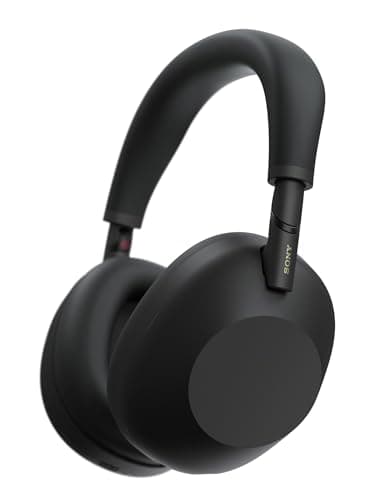
Against the Sony WF-1000XM6 ($298.00), the Bose earbuds offer superior comfort during extended wear and more refined noise cancellation in complex, rapidly changing environments. Sony counters with longer battery life per charge (8 hours versus 6), a more detailed and analytical sound signature that audiophiles may prefer, and better codec support diversity. Sony's app and feature set is comparable to Bose's.
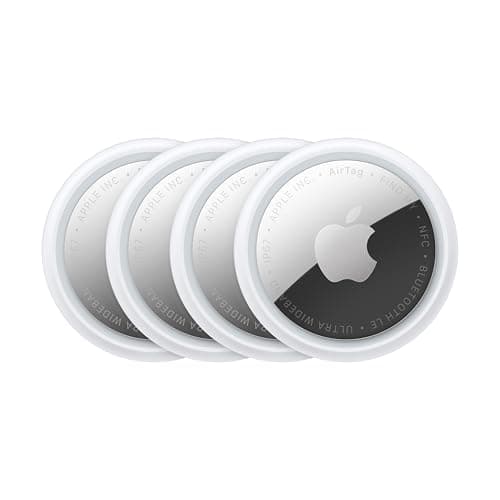
Against the Apple AirPods Pro 3 ($199.00), the Bose earbuds offer meaningfully better ANC — the AirPods Pro 3's noise cancellation is excellent but doesn't quite match Bose's performance in the most demanding environments. The AirPods Pro 3, however, offer superior iOS integration, seamless device switching within the Apple ecosystem, and a significantly lower price point. If you're all-in on Apple hardware, AirPods Pro 3 remain the pragmatic choice. If you're platform-agnostic, the Bose earbuds justify their premium.
Against the Technics EAH-AZ100 ($247.99), the comparison is more nuanced. The Technics earbuds have emerged as a dark horse competitor with exceptional sound quality — some audio publications have rated them as the best-sounding wireless earbuds available. The AZ100 supports LDAC for higher-resolution Bluetooth audio on Android, which the Bose earbuds lack. If sound quality is your overriding priority and you're willing to trade some ANC performance, the Technics are worth serious consideration.
Against the Samsung Galaxy Buds4 Pro, the Bose earbuds win on pure ANC performance and comfort, while Samsung counters with deeper Galaxy ecosystem integration — seamless switching between Galaxy devices, Galaxy AI features, and a lower price point for Samsung users. If you're locked into the Samsung/Galaxy ecosystem, the Galaxy Buds4 Pro make more sense. For everyone else, the Bose QuietComfort Ultra Earbuds (2nd Gen) offer a more universally excellent experience.
The Competitive Matrix and Final Verdict
The Bose QuietComfort Ultra Earbuds (2nd Gen) represent a refined evolution of an already excellent product rather than a revolutionary rethink. Bose has focused on strengthening the areas where the original was weakest — battery life, spatial audio processing, and ergonomic security — while maintaining the class-leading noise cancellation and comfortable fit that made the original a standout. The result is a pair of earbuds that justify their $249 price tag for users who prioritize ANC performance, all-day comfort, and a refined sound signature.
The case for buying the 2nd gen QuietComfort Ultra over the original is stronger than it might initially appear. The battery life improvement (6 hours versus 4.5) is meaningful in a way that affects real daily usage patterns, and the improved spatial audio processing addresses the original's most valid criticism. If you already own the original QuietComfort Ultra and don't struggle with battery life, the upgrade is optional. If you're considering the original at a discounted price, spend the extra $50 on the 2nd gen — the improvements are worth it.
The competition is genuinely formidable in 2026, which makes the Bose recommendation more nuanced than it would have been a few years ago. Sony's WF-1000XM6 are better for users who prioritize sound quality over ANC. Apple's AirPods Pro 3 are better for iOS users who value ecosystem integration. The Technics EAH-AZ100 are better for audiophiles who can accept slightly less ANC in exchange for superior fidelity. But for users who want the best noise cancellation in a comfortable, well-built wireless earbud — regardless of ecosystem — the Bose QuietComfort Ultra Earbuds (2nd Gen) remain the reference standard.
The $249 price is a premium, and it should be evaluated against realistic alternatives. If you find these on sale — which happens regularly on Amazon — the value proposition becomes significantly stronger. At full retail, you're paying for performance, and Bose delivers where it counts most.
For the majority of professional and personal use cases — long-haul flights, open-plan offices, noisy commutes, focused work from home — the Bose QuietComfort Ultra Earbuds (2nd Gen) earn an unequivocal recommendation. They're not perfect — the 6-hour battery, the evolving-but-not-quite-there spatial audio, and the lack of high-resolution Bluetooth codecs are legitimate trade-offs — but in the category that matters most for daily use, they excel.
Bottom line: The Bose QuietComfort Ultra Earbuds (2nd Gen) at $249 deliver the best active noise cancellation in their class, excellent sound quality with meaningful spatial audio improvements, and all-day comfort that few competitors can match. They're the earbuds to buy if noise cancellation is your non-negotiable priority — and for most people in 2026, it should be.
Related Reviews: Sony WF-1000XM6 · Apple AirPods Pro 3 · Bose QuietComfort Ultra · Technics EAH-AZ100
Pros
- Class-leading active noise cancellation with ActiveSense technology
- CustomTune audio calibration adapts to your ear shape
- Improved 6-hour battery life (+1.5 hours over original)
- Natural-sounding Aware transparency mode
- Comfortable for all-day wear with improved stability bands
- aptX Adaptive codec support for lower latency on Android
- IPX4 sweat and splash resistance
- Wireless charging case with USB-C
Cons
- 6-hour battery still behind class-leading competitors
- Spatial audio still not fully refined for all content types
- No LDAC or hi-res Bluetooth audio codec support
- Multipoint limited to two devices simultaneously
- Slight hiss audible at max ANC in perfectly quiet environments
Final Verdict
The Bose QuietComfort Ultra Earbuds (2nd Gen) deliver the best active noise cancellation in their class at $249, with meaningful improvements to battery life, spatial audio processing, and ergonomic fit over the original.