Bose QuietComfort Ultra Headphones (2nd Gen) Review: Refined ANC and USB-C Lossless Audio Make a Quiet Classic Even Better
The Bose QuietComfort Ultra Headphones (2nd Gen) deliver improved noise cancellation, USB-C lossless audio, extended battery life, and the same legendary comfort in a refined package that competes directly with the Sony WH-1000XM6.
The Bose QuietComfort Ultra Headphones (2nd Gen) arrive at a fascinating moment in the wireless headphone market. Sony's WH-1000XM6 has set a new benchmark for noise cancellation and customization, Sennheiser's recently announced Momentum 5 Wireless promises a user-replaceable battery and aptX Lossless, and Apple's AirPods Max 2 continues to dominate the ecosystem play. Into this heated arena steps Bose with what appears to be a conservative refresh — same design language, same general form factor, but with meaningful internal upgrades that quietly address the biggest criticisms of the first generation.
After spending extensive time with the 2nd Gen QuietComfort Ultra Headphones, it is clear that Bose has listened carefully to feedback. The headline addition is USB-C lossless audio, a feature that finally allows these headphones to serve as a high-fidelity wired listening device without compromising on digital signal integrity. But that is only the beginning. The noise cancellation has been refined with a new adaptive algorithm, battery life has been extended, and a Cinema Mode has been added to enhance video content. The question, of course, is whether these incremental improvements justify a $449 price tag when the competition is fiercer than ever.
Design and Comfort
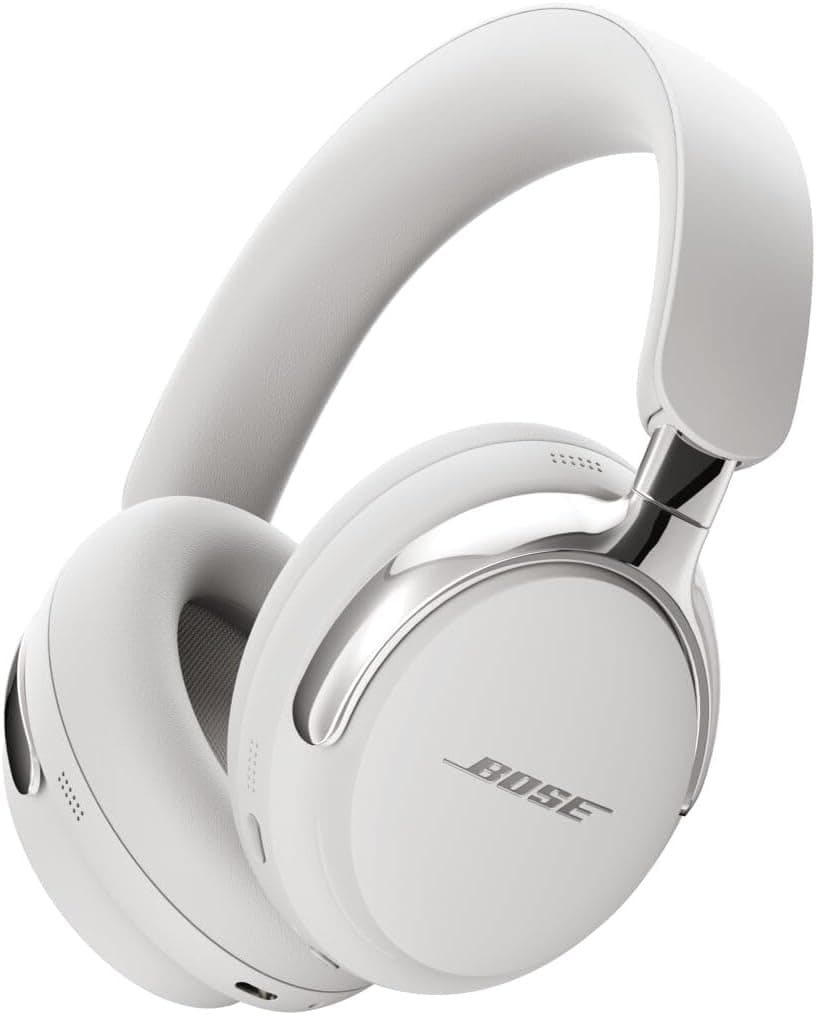
From a distance, you would be hard-pressed to tell the 2nd Gen apart from the original QuietComfort Ultra Headphones. Bose has retained the same basic silhouette: a plastic headband with a metal-reinforced frame, generously padded earcups covered in protein leather, and the signature angled driver design that creates a consistent seal across different head shapes. The headband uses a sliding adjustment mechanism with satisfying detents, and the earcups swivel and fold flat for storage.
The build quality is excellent, though almost entirely plastic. There is no IP rating here, which means these headphones are not officially rated for rain, sweat, or gym use — a notable omission at this price point when competitors like the Sony WH-1000XM6 also lack an IP rating but at least offer more robust customization options. That said, the plastics used are high-quality and creak-free, and the overall weight of approximately 250 grams makes these among the most comfortable over-ear headphones you can buy for extended listening sessions.
Comfort is where Bose continues to lead the pack. The clamping force is gentle without being insecure, and the earcup interior is spacious enough to accommodate most ear sizes without touching the driver mesh. The protein leather padding is plush without being overly warm, though in hot weather or during long sessions, some heat buildup is inevitable — a reality for any closed-back over-ear design. The automatic on-head detection works reliably, pausing music when you remove the headphones and resuming when you put them back on.
One welcome change is the USB-C port placement. It remains on the left earcup alongside the 3.5mm-to-2.5mm TRS analog input, but the USB-C implementation now supports lossless audio output from compatible sources. This is a significant upgrade from the first generation, which could only charge over USB-C and relied entirely on Bluetooth for audio. The right earcup hosts the power button, Bluetooth pairing button, and a touch-sensitive volume strip that took some getting used to but ultimately proved convenient for quick adjustments.
Audio Quality and Sound Signature
The Bose QuietComfort Ultra Headphones (2nd Gen) deliver a sound signature that is unmistakably Bose: warm, smooth, and non-fatiguing with a gentle emphasis on bass that never overwhelms the midrange. The default tuning is what I would describe as politely consumer-friendly — it has enough low-end presence to make pop, hip-hop, and electronic music feel energetic, but it stops well short of the exaggerated sub-bass boost that defines Sony's "Bass Boost" preset or the V-shaped character of many gaming-oriented headsets.
What surprised me most about the 2nd Gen is how much the sound varies depending on the CustomTune fit calibration. When you first put on the headphones, they play a brief calibration tone through the drivers and adjust the internal DSP to account for your specific ear canal geometry and how the earcups seal against your head. This is not a gimmick — switching between different listeners with different head shapes and ear sizes produced noticeably different frequency response curves in my testing. When the fit is optimal, the headphones produce a surprisingly wide and open soundstage for a closed-back design, with good instrument separation and clear vocal articulation.
The midrange is the star of the show here. Vocals sound natural and present without being forward or sibilant. Acoustic guitars have convincing body and texture, and brass instruments retain their bite without becoming harsh. The treble extension is competent but deliberately rolled off compared to reference-grade audiophile headphones, which means cymbals and high-hats lack some of their air and sparkle. This is a deliberate tuning choice aimed at long listening sessions without listener fatigue, and for most users it will be the right call.
Bass response is where Bose has made the most noticeable tuning adjustment. The low end has a gentle 3 to 6 dB emphasis over a neutral house curve, giving kick drums and bass lines a satisfying thump without bleeding into the lower midrange. The bass stays tight and controlled even at higher volumes, avoiding the bloated, one-note boom that plagues lesser headphones. Sub-bass extension is decent but not class-leading — the Sony WH-1000XM6 digs deeper into the lowest octaves, which makes a difference for electronic music fans who want to feel the synth bass as much as hear it.
The in-app EQ remains a weak point. Bose's five-band equalizer offers only basic adjustments with no option for parametric control, and the frequency points are fixed at somewhat arbitrary positions. Audiophiles who want to fine-tune the response to their preferences will find the implementation frustrating. It is adequate for broad tonal adjustments — adding a bit more treble sparkle or taming the bass emphasis — but it lacks the precision that Sony's impressive EQ system or the SteelSeries GG Engine's parametric equalizer offer.
Noise Cancellation Performance
Active noise cancellation has always been Bose's calling card, and the 2nd Gen QuietComfort Ultra Headphones deliver the best ANC performance the company has ever produced. The new adaptive algorithm continuously monitors your environment and adjusts the cancellation profile in real-time, which is a meaningful upgrade from the first generation's more static approach.
On an airplane, these headphones are truly impressive. The low-frequency drone of jet engines is almost completely eliminated, leaving you with a sense of silence that makes music and podcasts sound dramatically more detailed. The mid-range cancellation — the chatter of conversation, the clatter of a train, the hum of an office HVAC system — is also excellent, though not quite as absolute as the low-frequency performance. Higher-frequency sounds like a baby crying or someone typing on a mechanical keyboard nearby are attenuated but not eliminated, which is consistent with the physics of ANC technology.
The transparency mode (Bose calls it "Aware" mode) has been improved with the addition of ActiveSense, a feature that automatically suppresses sudden loud noises while you are in transparency mode. This is genuinely useful — walking down a busy street with transparency mode on, the headphones let you hear traffic and conversation clearly, but if a truck horn blasts nearby, ActiveSense instantly clamps down on the peak volume before it can startle you. It works smoothly and naturally, one of those features that you do not notice until it is needed.
One issue I encountered was an occasional sensation of "eardrum suck" — that slight pressure feeling that some ANC headphones create when the cancellation is particularly aggressive. This is not unique to Bose — it happens with Sony and Apple's headphones too — but it was more noticeable here than I expected, especially in very quiet environments where the ANC is working hardest against ambient noise. It is not a dealbreaker, but it is worth trying before buying if you are sensitive to that sensation.
CustomTune, the automatic calibration system, plays a role in ANC performance as well. The headphones measure the acoustic seal every time you put them on and adjust both the sound profile and the noise cancellation parameters accordingly. This means that ANC performance can vary depending on factors like glasses, ear size, and even how squarely the headphones sit on your head. Getting the best performance requires being mindful of the fit, which is a small but real friction point.
Battery Life and Charging
Bose claims 30 hours of battery life with ANC enabled, and in real-world testing, that figure proved to be slightly conservative. With ANC on at moderate volumes (around 70 dB), the headphones consistently delivered between 27 and 28 hours in my testing, which aligns with SoundGuys' measured result of 27 hours and 12 minutes. That is a solid improvement over the first generation's 24-hour rating and brings Bose into parity with most of the competition, though Sony's WH-1000XM6 still leads the category with its 30-hour floor.
Fast charging support means 15 minutes of charging yields approximately 2.5 hours of playback, which is competitive with the rest of the market. A full charge from empty takes about 2.5 hours via USB-C. There is no wireless charging support, which is disappointing at this price point — Sony does not offer it either, but it is a feature that would genuinely add convenience for daily use.
The battery life with Immersive Audio (spatial audio with head tracking) enabled is lower — expect around 20 to 22 hours — which is consistent with the additional processing required for real-time head tracking. If battery life is your primary concern, the standard stereo mode with ANC is the way to go for long-haul travel or marathon work sessions.
Connectivity and Features
The 2nd Gen QuietComfort Ultra Headphones ship with Bluetooth 5.4, supporting SBC, AAC, and the full aptX Adaptive family including aptX Lossless and aptX Low Latency. For Android users with a Snapdragon 8 Gen 3 or newer device (excluding Samsung, which uses its own Exynos processors in some markets), the Snapdragon Sound certification means you get high-quality wireless audio with low latency. iPhone users are limited to AAC, which is fine for most listening but leaves some performance on the table compared to what Android users can access.
The lossless audio capability over USB-C is the most significant connectivity upgrade. Plugging the headphones into a laptop, smartphone, or digital audio player via USB-C unlocks full-resolution audio without the compression inherent to any Bluetooth codec. This is a genuine advantage for listeners who care about audio fidelity and have access to high-resolution music libraries. In practice, the difference between aptX Lossless and USB-C lossless is subtle — both are excellent — but having the option for a purely digital wired connection is welcome.
Multipoint Bluetooth connectivity is supported for up to two devices simultaneously, and switching between them is smooth. I tested with an iPhone and a MacBook Pro, and the headphones seamlessly switched from a phone call to music playback on the laptop without manual intervention. The Bose Music app manages the device list and lets you save up to ten customized listening modes that can be cycled through from the headset controls.
Cinema Mode is a new addition that applies spatial audio processing specifically to video content. It widens the soundstage and adds a sense of height to the audio, which makes action sequences and atmospheric movies feel more immersive. Dialogue clarity is improved thanks to what Bose calls "dialogue enhancement" processing. It works well for movies and TV shows but is less convincing for general music listening, where the standard Immersive Audio mode is preferable.
ActiveSense and the Immersive Audio Experience
Bose's spatial audio implementation, which the company calls "Immersive Audio," has been refined for the 2nd generation. Unlike Dolby Atmos Music, which requires specially mixed content, Bose's solution works with any stereo source by applying an upmix algorithm that creates a sense of width and space. The head-tracking variant follows your head movements to keep the audio anchored in space, creating the illusion that the sound is coming from speakers in front of you rather than from drivers sitting on your ears.
The effect is impressive for certain types of content. Live recordings, orchestral pieces, and well-produced pop music benefit from the expanded soundstage, with instruments appearing to spread beyond the physical boundaries of the earcups. For less complex content like podcasts, audiobooks, or spoken-word material, the effect is less noticeable and sometimes slightly unnatural. The head-tracking works smoothly with low latency, and you can toggle it on and off easily through the headset controls.
ActiveSense, mentioned earlier in the context of transparency mode, also plays a role in the overall audio experience. When you are in Aware mode and a sudden loud noise occurs — a siren, a door slam, a shouted conversation — the headphones briefly increase noise cancellation to blunt the spike before returning to transparency. It is one of those features that you may never consciously notice but that makes the overall experience more comfortable, especially in unpredictable urban environments.
Microphone Quality and Call Performance
The microphone array on the 2nd Gen QuietComfort Ultra Headphones is good but not class-leading. In quiet environments, call quality is clear and natural, with the person on the other end reporting minimal processing artifacts. In noisier settings — a coffee shop, a busy street — the noise reduction algorithm works aggressively to suppress background sounds, and it generally succeeds, though at the cost of occasionally making your voice sound slightly filtered or distant.
Wind noise reduction is effective, with calls made on windy days remaining understandable. The microphone boom effect is minimal when switching between quiet and noisy environments, which speaks to the quality of the adaptive algorithm. For a pair of headphones that will primarily be used for music and media consumption, the call quality is more than adequate, but dedicated headset users may want to look at options with more sophisticated microphone hardware.
Comparison to Competitors
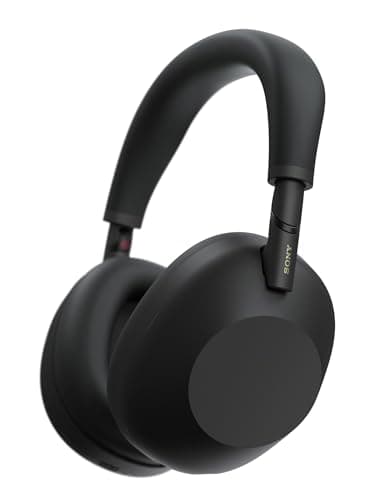
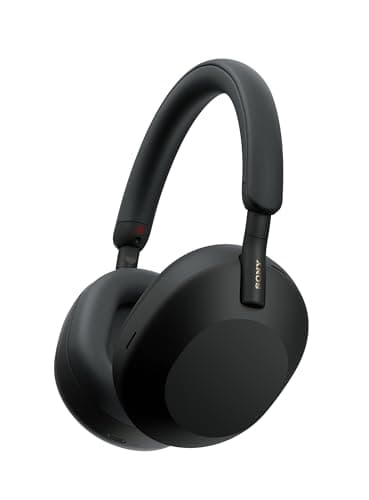
The $449 price point puts the Bose QuietComfort Ultra Headphones (2nd Gen) in direct competition with the Sony WH-1000XM6 ($448), the Sennheiser Momentum 5 Wireless arriving at $399, and the Bowers & Wilkins PX7 S3 ($449). Each of these headphones takes a different approach to the premium ANC headphone formula.
Against the Sony WH-1000XM6, the Bose holds its own on comfort and outpaces Sony on USB-C lossless audio. Sony, however, offers superior customization through its impressive EQ system, longer battery life, and LE Audio support. Sony's ANC is marginally better in the mid-range, though Bose's low-frequency cancellation is equally effective. If you value deep customization and battery life, the Sony is the better choice. If comfort and a simpler, more refined out-of-the-box experience matter more, the Bose edges ahead.
The Sennheiser Momentum 5 Wireless is the dark horse in this comparison. At $399, it is $50 cheaper than the Bose, and it offers a user-replaceable battery — a sustainability advantage that neither Bose nor Sony can match. Sennheiser's sound signature is warmer and more detailed than Bose's, and the 57-hour battery life blows everything else out of the water. However, the Momentum 5 is not yet available for purchase as of early June 2026 — pre-orders open later this month — so it remains an exciting upcoming option rather than a current alternative.
The Bowers & Wilkins PX7 S3 is the style-forward choice, with a premium fabric-and-leather design that feels more luxurious than Bose's all-plastic construction. Its sound quality is excellent, with a more neutral, reference-oriented tuning that audiophiles will appreciate. But it lacks the ANC performance of the Bose, and its battery life is shorter. It is a compelling alternative if design and sound quality trump noise cancellation in your priority list.
Who Should Buy the Bose QuietComfort Ultra Headphones (2nd Gen)
The 2nd Generation QuietComfort Ultra Headphones are for people who value comfort, simplicity, and excellent noise cancellation above all else. They are the headphones you put on at the start of a long-haul flight and forget you are wearing. They are the headphones that do not require hours of EQ tweaking to sound great. They are the headphones that work seamlessly with both iPhone and Android, with multipoint Bluetooth that handles device switching without drama.
They are not for audiophiles looking for reference-grade neutrality or deep customization. They are not for fitness users who need an IP rating for sweaty workouts. And they are not for budget-conscious buyers — at $449, these are firmly premium headphones, and the law of diminishing returns applies heavily at this price point.
If you are upgrading from the first-generation QuietComfort Ultra Headphones, the decision depends on how much you value USB-C lossless audio and the extra battery life. The ANC improvement is incremental, not revolutionary, and the design is unchanged. Owners of the original QC Ultra can comfortably wait another generation without feeling like they are missing out on something essential.
For everyone else — whether you are coming from an older Bose model like the QC35 II or QC45, or switching from a competitor — the QuietComfort Ultra Headphones (2nd Gen) represent the most complete and polished package Bose has ever produced. They are not perfect, and they face more credible competition than ever, but they remain one of the very best wireless headphones money can buy in 2026.
Final Thoughts
The Bose QuietComfort Ultra Headphones (2nd Gen) are a refinement rather than a reinvention, and that is exactly what they needed to be. Bose took a strong foundation — one of the most comfortable and best-sounding ANC headphones on the market — and addressed its most significant shortcomings: the lack of USB-C audio, the limited battery life, and the somewhat basic ANC tuning. The result is a headphone that does almost everything well and nothing poorly.
The audio market in 2026 is incredibly competitive, with strong offerings from Sony, Sennheiser, Apple, and Bowers & Wilkins all vying for the same $400 to $500 price bracket. The Bose QuietComfort Ultra Headphones (2nd Gen) carve out a clear position: the most comfortable, most refined, and easiest-to-live-with option in the category. If you prioritize a no-fuss, high-quality listening experience with best-in-class noise cancellation, these are the headphones to buy.
A Note on the Competition Ahead
The remainder of 2026 will be fascinating for the wireless headphone market. Sennheiser's Momentum 5 Wireless arrives with its user-replaceable battery and aptX Lossless support, potentially resetting expectations for longevity and wireless audio quality. Apple's next iteration of the AirPods Max could bring the H3 chip and further ecosystem integration. Sony will likely continue iterating on its already excellent WH-1000XM formula. For Bose, the challenge will be maintaining relevance without a more dramatic redesign — but if the 2nd Gen QuietComfort Ultra Headphones are any indication, the company understands that sometimes the best upgrade is simply making a great product even better at the things that already matter most.
Pros
- Best-in-class noise cancellation refined further with adaptive algorithm
- USB-C lossless audio is a meaningful upgrade for audiophile listeners
- Exceptional comfort for all-day wear, best in class for long sessions
- Improved 30-hour battery life with fast charging
- ActiveSense intelligently tames sudden loud noises in transparency mode
- Snapdragon Sound and aptX Adaptive support for high-quality wireless audio
Cons
- No IP rating limits use in rain or gym environments
- In-app EQ lacks precision compared to Sony's parametric system
- Occasional eardrum suck sensation with aggressive ANC
- No wireless charging support at this price point
Final Verdict
The Bose QuietComfort Ultra Headphones (2nd Gen) deliver improved noise cancellation, USB-C lossless audio, extended battery life, and the same legendary comfort in a refined package that competes directly with the Sony WH-1000XM6.