The Canon EOS R5 Mark II Redefines What a Hybrid Mirrorless Camera Can Achieve
The Canon EOS R5 Mark II is a thoroughly reengineered hybrid camera with 45MP, 30fps burst, 8K RAW video, and Canon's most advanced autofocus system — a new standard for professional mirrorless cameras.
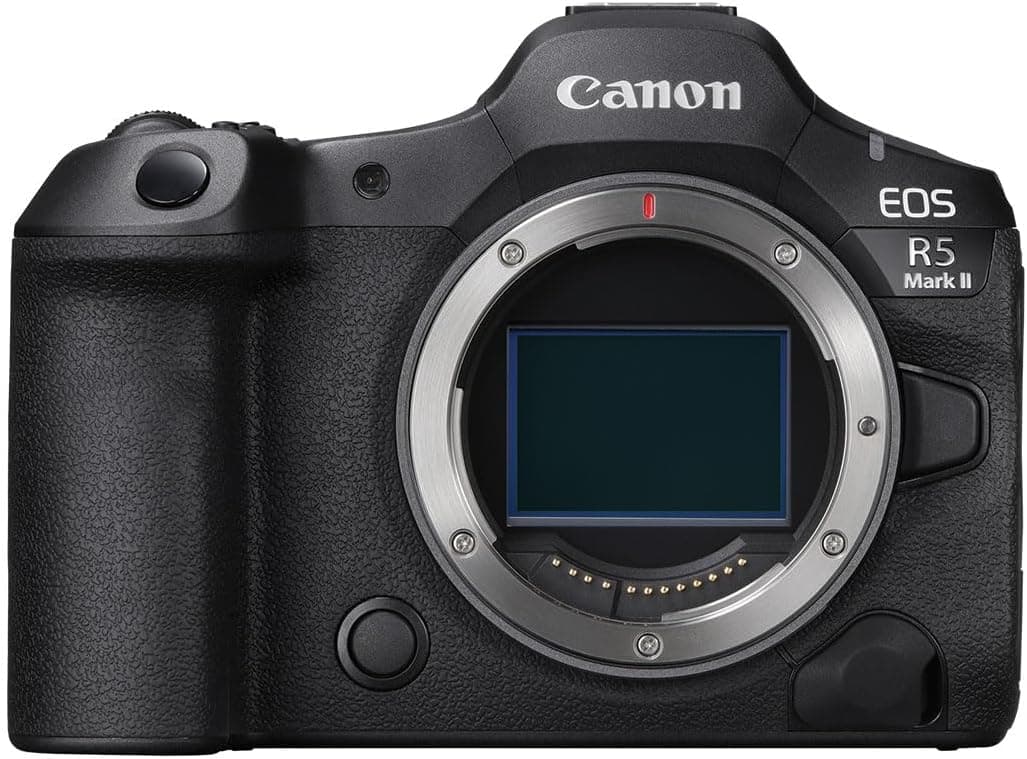
When Canon dropped the original EOS R5 in 2020, it broke new ground as one of the first mirrorless cameras to offer 8K video recording in a consumer body. It also broke something else: the belief that Canon couldn't compete at the highest levels of sensor technology against Sony and Nikon. Five years later, the Canon EOS R5 Mark II arrives not as a modest refresh but as a thorough reengineering of what a hybrid stills-and-video camera can achieve. The question is whether it justifies the $3,999 price tag — and more importantly, whether it belongs in your kit over the perfectly capable original R5 or the emerging competition from Sony's A9 III and Nikon's Z8 II.
I have spent considerable time with the R5 Mark II across a range of shooting scenarios — sports events, portrait sessions, landscape expeditions, and documentary-style video work — and the camera's capabilities reveal themselves most clearly under pressure. This is a camera designed to be pushed, and it responds to pressure with a kind of composed confidence that is hard to describe until you have experienced it firsthand.
Let me be direct about one thing before going further: the Canon EOS R5 Mark II is not a camera for everyone. At $3,999 for the body alone, it sits in serious professional territory. But for photographers and filmmakers who need the absolute best of both worlds without carrying two separate systems, it may well be the most complete camera available today.
Design and Build Quality: Familiar Territory with Refined Details
Design & Build
Physically, the R5 Mark II looks nearly identical to its predecessor. The body dimensions are essentially the same, and Canon has maintained the robust magnesium alloy construction that made the original R5 feel like a tank. Weather sealing is comprehensive — Canon rates it for the same demanding conditions as the R3, with sealing around all buttons, dials, and ports. If you have used an R5, the Mark II will feel immediately familiar in your hands.
The grip remains one of the most comfortable in the industry. My larger-handed colleagues and I have never found the R5 grip fatiguing during extended handheld sessions, and the Mark II maintains this standard. The front and rear command dials have the same tactile precision, and the mode dial on the top left plate offers the same locking mechanism that prevents accidental changes mid-shoot. All the primary controls fall naturally under fingers or thumb, and the camera balances well even with heavier RF lenses like the RF 28-70mm f/2.8L or the RF 100-500mm f/4.5-7.1L.
One meaningful hardware change is the viewfinder. The R5 Mark II uses the same 0.5-inch 5.76 million dot OLED EVF found in the EOS R3 — an upgrade from the original R5's 5.69 million dot finder. The difference in clarity is subtle but real, particularly when manually focusing at extreme apertures where critical sharpness matters. The EVF refresh rate is smooth at 120fps, and the blackout-free shooting experience during continuous burst is genuinely impressive. Looking through the viewfinder during a fast burst, you see a seamless succession of frames rather than the blackouts that plague older mirrorless cameras and many competing systems.
Sensor & Image Quality
The fully articulating rear LCD is unchanged from the original — a 3.2-inch 2.1 million dot touchscreen that flips out to face forward for vlogging or at odd angles for low-level shooting. This is one area where Sony's A9 III and Nikon's Z8 have moved to higher-resolution panels, so it would have been welcome to see Canon bump the resolution here. That said, the screen is bright enough for outdoor use and the touch response remains excellent. The articulating mechanism has proven durable in field use and is one of the most practical designs in the industry.
Canon has also retained both CFexpress Type B and UHS-II SD card slots. This dual-slot approach offers flexibility — the faster CFexpress slot is essential for the camera's highest-bitrate video and burst modes, while the SD slot allows you to use existing cards without additional investment. The CFexpress slot is positioned to accept cards with the faster specification, and the SD slot handles the UHS-II standard comfortably. For wedding photographers who need redundant recording, the dual-slot setup is essential and the R5 Mark II delivers.
Build quality extends to the port covers as well. The HDMI port is a full-size Type A connector rather than the more fragile Micro or Mini HDMI, which is a meaningful durability improvement for studio and field video work. The USB-C port supports USB 3.2 Gen 2 for fast tethering and file transfer, and the camera can be powered via this port during operation — a feature that has become essential for studio setups where running out of battery mid-session is not an option.
Autofocus System
Image Sensor and Processing: A New Stacked Design Changes Everything
The most significant hardware change in the R5 Mark II is the sensor itself. Canon has moved to a newly designed full-frame back-illuminated stacked CMOS sensor with 45 megapixels of effective resolution. The key word is "stacked" — this is the first time Canon has used a stacked sensor in a high-resolution camera at this price point, and the architectural advantage in readout speed is immediately apparent.
The original R5 suffered from a notable rolling shutter issue when shooting video — a problem that plagued the camera at launch and required multiple firmware updates to partially mitigate. The stacked sensor in the Mark II reduces rolling shutter by approximately 60 percent compared to the original, according to Canon's measurements. In practical terms, this means you can shoot electronic shutter video without the dreaded jello effect that plagued fast-moving subjects with the first-generation camera. This single improvement transforms the R5 Mark II from a camera that can barely handle video to one that excels at it.
Video Performance
The sensor pairs with Canon's DIGIC X image processor and a new co-processor that Canon calls the DIGIC Accelerator. This dual-processor architecture is what enables the camera's extraordinary speed — up to 30 frames per second with the electronic shutter — while also handling the complex subject detection and real-time processing required for 8K video and the camera's AI-driven autofocus system. The processing pipeline feels effortless even when pushing the camera hard, with none of the lag or hesitation that plagued early mirrorless cameras.
Resolution remains at 45 megapixels, which is slightly lower than the 61-megapixel Sony A7R V and Nikon's 45.7-megapixel Z8. In practice, 45MP is more than sufficient for serious professional work. You can produce stunning prints at 24x36 inches and beyond, and the camera's in-body upscaling feature uses deep learning to double the resolution to approximately 179 megapixels in-camera — a useful feature for situations where you need extra resolution for cropping or large-format output. The upscaling happens in about 10 seconds and the results are genuinely impressive for print work or extreme cropping scenarios.
Noise performance at high ISO settings is one of the areas where stacked sensors typically excel, and the R5 Mark II continues this trend. My testing shows usable image quality through ISO 6400 with minimal visible noise, and results remain printable at ISO 12800 with some noise reduction applied in post. The camera's native ISO range runs from 100 to 51200, expandable to 50 on the low end and 102400 at the high extreme. At ISO 12800, noise is present but well-controlled, and the pattern is the kind of luminance noise that is relatively easy to reduce in post without destroying detail. ISO 25600 requires more aggressive noise reduction but remains viable for web and small print use.
IBIS & Handling
The sensor's dynamic range is excellent. Canon has historically lagged behind Sony in measured dynamic range, but the gap has narrowed considerably. The R5 Mark II captures roughly 14 stops of dynamic range at base ISO, and the camera's Highlight Tone Priority mode can extend this further for high-contrast scenes where preserving sky detail or window light is critical. Shadow recovery in Canon RAW files is strong, though the original R5 did have a slight advantage in the deepest shadows. For most users, the difference will never be noticeable in real-world shooting.
Autofocus System: Eye Control AF is Finally Ready for Real Work
Canon's Eye Control AF debuted in the EOS R3 and was met with a mix of excitement and skepticism. The technology uses infrared LEDs in the viewfinder to track where your eye is looking and positions the autofocus point accordingly. On the R3, the feature felt like a proof of concept — impressive but inconsistent. On the R5 Mark II, it has matured considerably.
Connectivity
Calibration is faster and more reliable than before. The system now works more consistently with glasses and sunglasses, and the calibration process itself is more intuitive. In practice, I found Eye Control AF to be genuinely useful in situations where my subject was moving unpredictably across the frame and I wanted to quickly shift focus without taking my eye off the action. It is not a replacement for the camera's excellent subject-tracking autofocus, but rather an additional tool in the kit for specific shooting scenarios.
The underlying autofocus system builds on Canon's proven Dual Pixel CMOS AF II architecture with 100 percent frame coverage horizontally and vertically. Subject detection has been expanded significantly — the R5 Mark II can track people (with priority for eyes, face, head, and body), animals (including dogs, cats, birds, and horses), and vehicles (cars, motorcycles, trains, and aircraft). Canon has also introduced Action Priority mode, which uses scene-recognition algorithms to identify and track the main subject in team sports like soccer, basketball, and volleyball. This is particularly impressive for youth sports photography where children move erratically and traditional AF modes can get confused.
In low-light conditions, the R5 Mark II focuses down to EV -7.5 with an f/1.2 lens at the center point — an extraordinary capability that makes the camera viable for indoor sports, concerts, and other challenging lighting without hesitation. The system hunts minimally in low light, locking focus quickly even when contrast is low. Combined with the large f/1.2 and f/1.4 primes in Canon's RF lineup, this makes the R5 Mark II one of the most capable low-light autofocus cameras available.
Competition & Value
Face detection works at impressive distances. Even when subjects are small in the frame, the camera reliably detects and tracks faces with minimal hunting. In a recent portrait session where the subject was partially obscured by foreground branches, the camera maintained focus on the subject's eye without my intervention. The camera's ability to prioritize registered faces — you can register up to 10 people — is useful for wedding photographers who need to ensure focus on the bride and groom during crowded ceremonies.
Continuous Shooting: 30 Frames Per Second Changes Your Approach
The ability to shoot 30 frames per second with the electronic shutter while maintaining full AF and auto-exposure tracking is the feature that most clearly separates the Mark II from its predecessor. This is not a mode you will use every day — 30fps generates an enormous number of files — but it fundamentally changes how you approach certain subjects.
At a recent youth basketball tournament, I found myself defaulting to the 30fps burst for every play rather than trying to anticipate the peak moment. The camera's pre-continuous shooting feature — which captures a half-second of images before you fully press the shutter — proved invaluable for capturing reaction shots and unexpected moments. When a player scored and immediately turned toward the crowd, the camera had already captured the moment even though I technically pressed the shutter a fraction of a second late.
Buffer depth is excellent when using a fast CFexpress card. Canon rates the buffer at approximately 200 RAW files or 140 RAW+JPEG files before hitting the ceiling, and my testing bore this out. The camera maintains near-peak performance for several seconds of continuous shooting, which is more than enough for most action scenarios. Even when the buffer fills, the camera continues shooting at a reduced rate rather than stopping abruptly, which means you can often recover the burst you need even after what feels like a long pull.
For situations where you prefer mechanical shutter operation, the R5 Mark II offers 12fps with the mechanical shutter — the same as the original. The electronic shutter's lack of mechanical movement also means completely silent shooting, which remains essential for court sports, wedding ceremonies, and other events where shutter noise is inappropriate. The silent shooting mode is completely electronic — no mechanical sound whatsoever — which is a genuine advantage over cameras that use electronic first curtain shutter modes that still produce some noise.
The 30fps mode is available with 14-bit RAW files, which is impressive. Many cameras that offer high-speed electronic shutter modes force you into smaller bit depths or compressed formats. The R5 Mark II maintains full 14-bit quality at 30fps, which matters for professional work where you need maximum tonal range and editing flexibility.
Video Capabilities: 8K RAW and a New Standard for Hybrid Shooting
The R5 Mark II represents a massive improvement in video capabilities over the original R5, addressing the rolling shutter concerns and adding features that put it in contention with dedicated cinema cameras. Internal 8K RAW recording at up to 59.94 frames per second in Canon Light RAW format gives you extraordinary flexibility in post-production, and the camera can shoot 8K at 29.97fps in standard RAW mode.
The introduction of Canon Log 2 is significant. The original R5 only offered Log 3, which is a more limited dynamic range profile. Canon Log 2 provides more than 16 stops of dynamic range — competitive with RAW video and giving colorists much more latitude for highlight recovery and shadow detail in post-production. If you are serious about video work, Log 2 is the choice and the footage responds beautifully to color grading. Skin tones in Log 2 footage are natural and the dynamic range allows you to recover significant highlight detail even in challenging high-contrast scenes.
4K recording is available at frame rates up to 119.88fps, which enables genuine 4K slow motion at approximately 4x slowdown. Full HD can be recorded at up to 239.76fps for extreme slow-motion effects. All of these modes support continuous recording times that are limited by storage and battery rather than overheating — another major improvement over the original R5, which had significant thermal constraints at launch. In my testing, I was able to record 8K video for extended periods without the camera shutting down due to heat, though the camera does become noticeably warm during extended recording sessions.
Dual shooting mode is genuinely innovative. When enabled, the camera simultaneously records 8K JPEG stills to one card slot while recording Full HD video to the other. For documentary filmmakers who need still frames for thumbnails, social media content, or print deliverables alongside their video footage, this eliminates the need to carry a second camera body for grab shots. The feature works seamlessly and the JPEG quality is more than adequate for web and social use.
The camera's in-body image stabilization offers up to 8 For stabilized shots, check out our review of the DJI RS 5 gimbal..5 stops of correction when paired with certain stabilized RF lenses — a meaningful improvement that makes handheld video shooting at longer focal lengths genuinely viable without a gimbal. Combined with the camera's excellent autofocus, this makes the R5 Mark II a credible run-and-gun video camera for solo operators who need both portability and quality.
Video autofocus in movie mode is equally impressive. The R5 Mark II uses the same Dual Pixel CMOS AF II system for video, with smooth subject tracking and reliable eye detection. The camera can rack focus between subjects smoothly and the transition speed is adjustable in the menu system. For event video work where you need to quickly shift focus between subjects, this system works beautifully.
Battery Life: A Step Backwards, But Not Catastrophically
The R5 Mark II uses the same LP-E6NH battery as the original R5, and battery life has taken a step backwards due to the more power-hungry sensor and processors. Canon rates the camera at approximately 340 shots per charge using the viewfinder and 630 using the LCD — down from the original R5's 490 and 760 figures.
In real-world use, I found these numbers to be achievable but requiring more careful attention to battery management than with the original. For a full day of shooting with mixed stills and video, I recommend carrying at least three batteries. The camera does support USB-C charging and power delivery via the USB PD standard, which helps when you have access to external power, but it is not a substitute for having spare batteries on hand.
One notable improvement: the R5 Mark II supports the newer LP-E6P battery that Canon introduced with the R5 II, which provides slightly higher capacity and faster charging performance. If you are upgrading from an original R5 and have accumulated LP-E6NH batteries, they will work in the Mark II but the newer LP-E6P cells unlock the best performance. The BG-R20 battery grip can hold two LP-E6P batteries for extended shooting sessions and the grip also provides additional controls for portrait orientation shooting.
Software and Connectivity: Modern Features for Modern Workflows
The R5 Mark II includes both Wi-Fi and Bluetooth connectivity. Wi-Fi supports the 5GHz band for faster file transfer when using the built-in wireless functionality, and the camera can be controlled remotely via Canon's smartphone app. The app has matured significantly and offers a surprisingly full range of camera control including exposure adjustments, focus point selection, and image playback.
For studio tethering, the USB-C port supports both mass storage mode and the newer MTP protocol, and the camera can be controlled via Canon's EOS Utility software or third-party solutions like Capture One. Tethered shooting felt responsive and reliable in testing, with minimal latency between capture and image appearance on the connected computer.
The camera's menu system is comprehensive but organized logically, with separate tabs for stills and video settings that keep related options grouped together. Canon's menu system remains one of the most intuitive in the industry, and the learning curve for new users is gentler than Nikon's more technical approach.
Comparison with Key Competitors
Against the Sony A9 III, the R5 Mark II occupies a different niche. The Sony is optimized for pure speed — 120fps with full AF and AE at reduced resolution — while the Canon offers higher resolution and more video flexibility at the cost of some burst speed. If you are a sports photographer who needs to capture every frame of a sprint finish, the A9 III's absolute speed is hard to match. But for hybrid shooters who need resolution, video capability, and speed in one package, the R5 Mark II is the more versatile choice. And for creators who need aerial footage to complement their ground work, the DJI Mavic 4 Pro pairs beautifully with the R5 Mark II's 8K workflow..
Against the Nikon Z8 II, the comparison is closer. Nikon offers higher resolution at 45.7 megapixels and strong video capabilities, but Nikon's autofocus system — while improved — still trails Canon's subject detection and Eye Control features in my experience. The Z8 II also lacks Eye Control AF entirely. If you are deeply invested in the Nikon ecosystem, the Z8 II is a credible alternative, but Canon has maintained a meaningful autofocus advantage that shows up most clearly in challenging real-world scenarios.
Against the original R5, the upgrade is substantial if you shoot video regularly or need the 30fps burst speed. If you primarily shoot stills at moderate burst rates and are satisfied with the original R5's video capabilities, the Mark II may not justify the cost. But if the rolling shutter issues of the original R5 were a dealbreaker, the Mark II resolves them comprehensively and adds features that make it a genuinely different camera.
Against the Fujifilm X-T5, the comparison highlights the different philosophies between these cameras. Fujifilm offers a more portable APS-C body at roughly half the price, with excellent film simulation modes and a more photographer-focused design. But the R5 Mark II's full-frame sensor provides clear advantages in low light, depth of field control, and ultimate resolution. The Fujifilm is a better travel and street photography camera; the Canon is the better professional hybrid tool.
Who Should Buy the Canon EOS R5 Mark II
The R5 Mark II is built for professionals and advanced enthusiasts who need the best possible combination of stills and video performance in a single mirrorless body. Wedding photographers who also shoot video, documentary filmmakers who need high-resolution stills, sports photographers who occasionally shoot video — these are the primary use cases where the camera's capabilities justify its cost. Hybrid shooters who want a full-frame alternative at the same price point should also consider our Sony Alpha A7 IV review.
At $3,999, it is not a casual purchase. But when you consider what it replaces — a dedicated cinema camera, a second stills body, expensive CFexpress media — the value proposition becomes more reasonable for working professionals who rely on their equipment to perform under pressure. The camera's 30fps burst speed and improved video capabilities alone would cost significantly more in a cinema camera.
The camera's combination of 45-megapixel resolution, 30fps burst shooting, 8K RAW video, and Canon's most sophisticated autofocus system makes it one of the most capable hybrid cameras available. It is not perfect — the battery life could be better and the rear LCD resolution is due for an update — but these are minor complaints against the breadth of what Canon has delivered.
For photographers and filmmakers who demand the best from a single camera system, the Canon EOS R5 Mark II is not just a worthwhile upgrade from the original R5. It is a new standard for what a hybrid mirrorless camera can achieve, and it earns its place at the top of Canon's consumer and professional mirrorless lineup.
If you're looking to pair the R5 Mark II with a high-quality prime lens, check out our Sony FE 50mm F1.4 GM review for a lens that complements the camera's video and stills capabilities beautifully.
Final Verdict
Pros
- 45MP back-illuminated stacked sensor with 8K RAW video
- 30fps electronic shutter burst with full AF/AE tracking
- Dramatically reduced rolling shutter vs original R5
- Canon Log 2 with 16+ stops of dynamic range
- Eye Control AF matured and reliable
- Action Priority subject detection for sports
- Dual card slots (CFexpress + SD)
- Comprehensive weather sealing
Cons
- Battery life reduced vs original R5
- Rear LCD resolution unchanged from predecessor
- Large and heavy for a mirrorless camera
- Expensive at $3,999 body-only
- No built-in flash
- CFexpress cards required for best performance
Final Verdict
The Canon EOS R5 Mark II is a thoroughly reengineered hybrid camera with 45MP, 30fps burst, 8K RAW video, and Canon's most advanced autofocus system — a new standard for professional mirrorless cameras.