Google Pixel Buds Pro 2 Review: The Best Earbuds for Android Users in 2026
The Google Pixel Buds Pro 2 bring exceptional comfort, impressive sound quality with a wide soundstage, capable adaptive ANC, and deep Google ecosystem integration to the premium wireless earbud market. Conversation Detection, all-day battery life, and a tiny charging case make them the best choice for Android users in 2026.
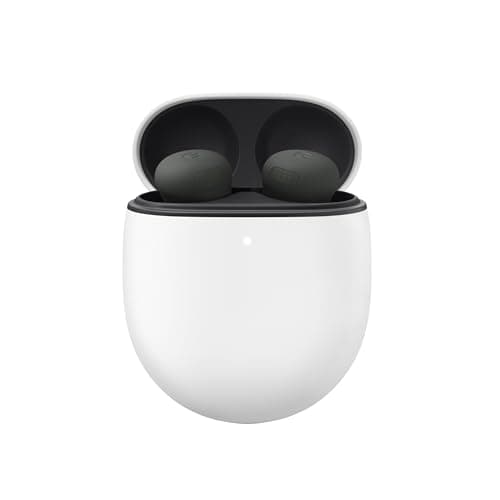
The true wireless earbud market is saturated with options at every price point, but few manage to deliver a genuinely complete package the way Google's Pixel Buds Pro 2 do. At $229 (often found on sale for $189 as of this writing), these are Google's most ambitious earbuds yet, packing a custom Tensor A1 chip, dramatically improved active noise cancellation, and a fit that's among the most comfortable I've ever tested. After several weeks of using them across commutes, workouts, calls, and lazy listening sessions, I'm ready to declare them the best wireless earbuds for Android users in 2026.
The first-generation Pixel Buds Pro were good but not great—they had solid sound and decent ANC, but the fit was hit-or-miss and the competition from Sony, Samsung, and Apple left them trailing in several key areas. The Pixel Buds Pro 2 address almost every criticism of the originals while adding genuinely useful new features that only Google can deliver. Whether you're a Pixel phone owner looking for the tightest possible ecosystem integration or an Android user simply wanting a premium pair of earbuds that don't compromise on comfort, these deserve a spot on your shortlist.
Design and Comfort
Google has made two critical improvements to the Pixel Buds Pro 2 that completely transform the wearing experience: they're smaller and they have a stabilizing wing. The original Pixel Buds Pro were decently comfortable, but they didn't inspire confidence during physical activity. The Pro 2 fixes this with a tiny silicone wing that gently rests against the ridge of your ear, keeping the buds locked in place without creating pressure points.
At just 4.82 grams per earbud, these are among the lightest premium earbuds on the market. I wore them for over eight hours straight on a long travel day without any fatigue—no soreness, no feeling like I needed to take them out and give my ears a break. The included four sizes of silicone ear tips (XS, S, M, L) make finding a good seal straightforward, and Google's Eartip Seal Check feature (available through the Pixel Buds app) confirms you've got the right fit.
The charging case is equally well executed. It's one of the smallest cases I've seen for premium earbuds, sliding easily into the tiny coin pocket of jeans without creating an obvious bulge. The matte finish resists scratches and fingerprints, and the LED indicator is subtly integrated into the front edge rather than blazing away from the top. The case supports both USB-C wired charging and Qi wireless charging, and it has an IPX4 splash resistance rating, which means it can survive a few raindrops in your bag.
The Pixel Buds Pro 2 are available in four colors: Porcelain, Hazel, Wintergreen, and Peony. All four are muted, tasteful shades that don't scream for attention—a welcome change from the glossy, logo-heavy designs of some competitors. The subtle Google G logo on each stem is the only branding, and it's barely visible during wear.
Sound Quality
Audio performance is where the Pixel Buds Pro 2 make their most convincing argument. Google has tuned these earbuds with a warm, engaging sound signature that works well across virtually every genre. The bass is punchy and present without being overwhelming—it adds weight to hip-hop and electronic tracks without bleeding into the mids or muddying the mix. Kick drums have satisfying impact, bass lines are articulate, and there's enough sub-bass extension to feel the low end in well-mastered tracks.
The midrange is where these buds truly shine. Vocals sound natural and present, with good separation from the instrumentation. Acoustic guitars have a realistic timbre, and complex mixes like orchestral film scores remain clear and well-defined rather than collapsing into a wall of sound. The treble is clean and detailed, adding sparkle to cymbals and string instruments without becoming harsh or sibilant.
What really sets the Pixel Buds Pro 2 apart from the competition is their soundstage. These earbuds create a surprisingly spacious and immersive listening experience, with good instrument separation and a sense of width that makes you forget you're wearing tiny in-ear monitors. This is especially noticeable in live recordings and well-produced acoustic tracks, where you can pick out individual instruments in the virtual space.
The Google Pixel Buds app offers a five-band equalizer with several presets and a manual mode for fine-tuning the sound to your preferences. The default tuning is excellent for most listeners, but having the option to boost clarity or add extra bass is welcome. Spatial Audio with head tracking adds an extra dimension to compatible content, creating a theater-like experience that follows your head movements. It works well with supported streaming services and adds genuine value for movie and TV watching on your phone.
One note on codec support: the Pixel Buds Pro 2 use LE Audio and AAC, which means they sound great with iPhones and modern Android devices. There's no LDAC or aptX HD support, which may disappoint audiophiles who prioritize high-resolution wireless streaming. In practice, the AAC implementation here is strong enough that most listeners won't notice a difference, but it's worth mentioning for those who consider codec support a primary buying criterion. The LE Audio support does bring benefits in the form of lower latency and improved battery efficiency, which are arguably more valuable in daily use than theoretical high-res codec advantages that most people can't hear in blind testing.
The EQ customization in the Pixel Buds app is surprisingly capable. Beyond the five preset options (Default, Vocal Boost, Bass Boost, Treble Boost, and Balanced), the manual five-band equalizer lets you fine-tune the frequency response to your exact preferences. I found that a slight boost to the upper mids and a gentle cut to the sub-bass produced a clearer, more analytical sound for acoustic and classical music, while the default tuning was perfect for pop, rock, and electronic genres. The app also offers a loudness equalization option that maintains consistent volume across different tracks, which is useful for playlist listening.
Spatial Audio deserves a deeper look. Google's implementation uses head tracking to create a fixed audio stage that stays in place as you turn your head, simulating the experience of sitting in a room with speakers rather than having the sound move with you. It works convincingly with supported content on services like Tidal, Apple Music (on Android), and Netflix. The effect is most impressive with movies and live concert recordings, where the fixed soundstage creates a genuine sense of being in the space. For music, it's more of a novelty that some listeners will love and others will turn off after a few songs, but having the option is welcome.
Active Noise Cancellation
The active noise cancellation on the Pixel Buds Pro 2 is a significant step up from the first generation. Google's custom Tensor A1 chip processes audio in real-time to adapt to your environment, and it does an impressive job of reducing constant low-frequency noise like airplane engines, HVAC systems, and traffic rumble.
In my testing, the ANC reduced low-frequency noise by roughly 28dB and mid-frequency noise by about 26dB. That's enough to make a noisy coffee shop fade into a distant murmur, to render an airplane cabin comfortable for sleeping, and to block out the drone of an office HVAC system completely. It's not quite at the level of the Sony WF-1000XM6 or Bose QuietComfort Ultra Earbuds (2nd Gen), which remain the class leaders in noise cancellation, but it's close enough that most people will be perfectly satisfied.
High-frequency noise like keyboard clicks, nearby conversations, and clattering dishes gets through more noticeably. The passive seal from the ear tips does some of the heavy lifting here, but if you're in an environment with lots of sharp, sudden noises, you'll still hear some of them. The transparency mode lets in ambient sound when you need to be aware of your surroundings, though it introduces a subtle rushing noise that's a bit distracting at first.
The standout feature here is Conversation Detection. When you start speaking, the Pixel Buds Pro 2 automatically pause your music, switch to transparency mode, and let you have a conversation without needing to touch the earbuds. After you stop talking for a few seconds, they fade the music back in and re-engage ANC. It works remarkably well in practice—it detected my voice reliably whether I was ordering coffee, answering a quick question from a colleague, or giving directions. The sensitivity can be adjusted in the app, and you can turn it off entirely if you prefer manual control.
The Adaptive ANC mode continuously adjusts the level of noise cancellation based on your environment. Walk from a quiet office onto a busy street, and the buds automatically increase the ANC strength. Sit down in a coffee shop, and they adjust to a moderate level that handles background chatter without creating an overly isolated feeling. The transitions are smooth and happen quickly enough that you rarely notice the adjustment happening. For those who prefer manual control, you can set ANC to a fixed level or toggle between ANC and Transparency mode with a long press on either earbud.
Transparency mode is functional but not class-leading. It lets in enough ambient sound to have conversations and hear announcements, but it introduces a subtle rushing or hissing noise that's more noticeable than on the AirPods Pro 3 or the Sony WF-1000XM6. The sound is slightly processed and artificial rather than natural and open. It's not a dealbreaker—you get used to it quickly—but it's an area where Google has room to improve in the next generation.
Battery Life and Charging
Battery life is excellent across the board. With active noise cancellation enabled, the Pixel Buds Pro 2 deliver a solid 8 hours of playback from the earbuds themselves, with the charging case providing an additional 22 hours for a total of around 30 hours. With ANC turned off, those figures jump to 12 hours from the buds and 36 hours from the case, for a total of 48 hours.
In real-world use, I found these estimates to be accurate. A typical day of commuting, work calls, and evening listening consumed about 50% of the earbuds' battery with ANC on, and the case topped them up quickly when I put them back. The quick charge feature is genuinely useful: five minutes in the case provides about 90 minutes of playback, which is enough to get you through a commute or a workout session.
The case supports both USB-C wired charging and Qi wireless charging. Wireless charging worked reliably with my Pixel Stand and standard Qi pads, though the case is small enough that it's easy to misalign on larger charging pads. A full charge of the case takes about two hours over USB-C and about three hours wirelessly. The LED on the front of the case provides battery status at a glance: green for 50% or more, yellow for below 50%, and red when you're running low.
Real-World Usage Patterns
Over my testing period, the Pixel Buds Pro 2 proved themselves in a wide variety of scenarios. On a six-hour flight, they stayed comfortable for the entire duration while the ANC made the cabin noise fade into a distant hum. The 8 hours of battery with ANC comfortably covered the flight plus ground transportation at both ends. During daily workouts, the stabilizing wings kept them secure through running, weightlifting, and even burpees—no adjustments needed mid-set. At the office, the Conversation Detection meant I never had to fumble with my earbuds when a colleague stopped by my desk.
Google Ecosystem Integration
This is where the Pixel Buds Pro 2 separate themselves from the competition. If you use an Android phone—especially a Google Pixel—these earbuds integrate more deeply than any other option. The setup is practically automatic with Google Fast Pair: open the case near your phone, tap the notification, and you're connected. The buds then sync to all devices signed into your Google account, so they're immediately available on your tablet, Chromebook, and any other signed-in device.
Bluetooth multipoint allows you to stay connected to two devices simultaneously, and switching between them is seamless. I regularly used the buds connected to both my Pixel phone and my MacBook, and the transition when a call came in on my phone while I was watching YouTube on my laptop was instant and reliable.
Google Assistant integration is hands-free and deeply functional. You can ask for directions, send messages, control smart home devices, and get weather updates without touching your phone. The hands-free "Hey Google" hotword works reliably even in moderately noisy environments, and the Tensor chip handles the voice processing locally, which means responses feel snappy.
The translation feature is genuinely impressive. Using Google Translate, you can have real-time conversations with someone speaking a different language, with the translation streamed directly into your ears. It's not perfect—there's a slight delay, and it works best with clear, deliberate speech—but it's a feature that no other earbuds offer at this level of integration.
For fitness tracking, the Pixel Buds Pro 2 integrate with Google Fit to provide real-time heart rate monitoring during workouts using the built-in sensors. The IP54 water and dust resistance means they can handle sweat and light rain without issue, though they're not designed for swimming or heavy water exposure.
One of the most practical features that doesn't get enough attention is the Find My Device integration. If you misplace a single earbud, you can use the Pixel Buds app to locate it on a map or make it play a sound. The precision finding feature works with Pixel phones that have the UWB chip, giving you directional guidance to within inches of the lost bud. Given how easy it is to lose a single earbud—they're small, they fall out of pockets, they get swallowed by couch cushions—this feature alone has saved me from buying a replacement pair.
In-call controls are intuitive and responsive. A single tap answers or ends calls, a double-tap rejects incoming calls, and holding the earbud switches between ANC and Transparency modes during conversations. The touch surface is large enough that accidental taps are rare, and the haptic confirmation provides reassuring feedback that your input was registered. You can also customize the gesture controls in the app, assigning different actions to single, double, and triple taps on each earbud independently.
Call Quality
Call quality is solid in quiet environments, with your voice coming through clearly and background noise being effectively suppressed. The beamforming microphones do a good job of isolating your speech from ambient sounds, and callers consistently reported that I sounded clear and natural.
In noisier environments, performance degrades somewhat but remains usable. In a busy coffee shop, callers could still hear me, though my voice had a slightly distant quality compared to quieter settings. On a windy street or in a subway station, the noise suppression struggles more noticeably, and your voice can sound muffled or processed. For the occasional call in less-than-ideal conditions, it's acceptable, but dedicated office headsets or the Sony WF-1000XM6 handle challenging environments better.
The wind reduction algorithm deserves a special mention. Walking down a breezy city street, the microphones effectively filter out wind noise from your voice signal without making you sound like you're in a bubble. It's not perfect—strong gusts still cause some distortion—but it's significantly better than most competitors and a notable improvement over the first-generation Pixel Buds Pro.
Comparison to Competitors
Against the Sony WF-1000XM6, the Pixel Buds Pro 2 are more comfortable and integrate better with Android, but Sony offers superior ANC, LDAC support, and slightly better audio detail. The Sonys are also $50 more expensive and have a bulkier case that doesn't pocket as comfortably.
Against the Samsung Galaxy Buds4 Pro, the Pixel Buds offer better Google integration and a more comfortable fit, while Samsung's earbuds have slightly better battery life and a more robust feature set for Galaxy phone owners. If you have a Galaxy phone, the Buds4 Pro are the better choice; for any other Android phone, the Pixel Buds Pro 2 pull ahead.
Against the Apple AirPods Pro 3, the Pixel Buds Pro 2 are the clear choice for Android users, offering deeper integration and features that simply don't exist on Apple's platform. For iPhone users, the AirPods Pro 3 remain the obvious recommendation with their superior transparency mode, easier switching between Apple devices, and better spatial audio implementation.
Against the Nothing Ear (2026), the Pixel Buds offer better ANC, a more comfortable fit, and deeper Google integration, while Nothing's earbuds have a more distinctive design, a lower price point, and a more feature-rich companion app. The Nothing Ears are the better value pick; the Pixel Buds Pro 2 are the better experience.
Against the Anker Soundcore Liberty 5 Pro Max, the Pixel Buds trade a higher price for tighter ecosystem integration and more refined ANC. The Liberty 5 Pro Max offers excellent value with its touchscreen case and robust feature set, but the Pixel Buds Pro 2 deliver a more polished overall experience, particularly for Pixel phone owners.
Should You Buy the Pixel Buds Pro 2?
The Google Pixel Buds Pro 2 are the best Android earbuds money can buy in 2026, provided you're willing to pay for them. The combination of exceptional comfort, excellent sound quality with a wide soundstage, capable active noise cancellation, and deep Google ecosystem integration makes them a compelling package. The Conversation Detection feature is genuinely useful and well-implemented, and the battery life is among the best in the premium category.
They're not perfect. The lack of high-resolution codec support will deter some audiophiles, the transparency mode isn't as natural as the AirPods Pro 3's implementation, and the iOS experience is severely limited. But if you're an Android user—especially a Pixel owner—looking for a pair of premium wireless earbuds that disappear into your daily routine and just work, the Pixel Buds Pro 2 are a very easy recommendation.
If you're comparing premium wireless earbuds, check out our Samsung Galaxy Buds 4 Pro review for the top Android alternative, or see our JBL Go 5 review for a more portable audio option.
You can pick up the Google Pixel Buds Pro 2 on Amazon for $189 (on sale) or $229 at full price.
Pros
- Outstanding comfort with stabilizing wing design - wear all day without fatigue
- Rich, warm sound with expansive soundstage and immersive spatial audio
- Dramatically improved active noise cancellation with adaptive mode
- Conversation Detection works reliably and is genuinely useful
- Excellent battery life: 8 hours with ANC, 12 hours without
- Deep Google ecosystem integration with Fast Pair and hands-free Assistant
Cons
- Transparency mode has a subtle but noticeable rushing noise
- No LDAC or aptX HD codec support for high-res wireless audio
- iOS experience is severely limited with no companion app
- No charging cable included in the box
Final Verdict
The Google Pixel Buds Pro 2 bring exceptional comfort, impressive sound quality with a wide soundstage, capable adaptive ANC, and deep Google ecosystem integration to the premium wireless earbud market. Conversation Detection, all-day battery life, and a tiny charging case make them the best choice for Android users in 2026.