JBL Go 5 Review: The Tiny Speaker That Punches Way Above Its Size
The JBL Go 5 delivers dramatically improved sound quality, IP68 waterproofing, Bluetooth 6.0 with LC3 codec, and AirTouch stereo pairing in a pocketable $55 package, making it the best ultra-portable speaker under $60 in 2026.
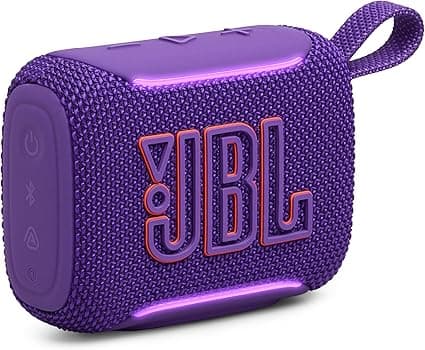
The ultra-portable Bluetooth speaker market is one of the most competitive segments in consumer audio. Every major brand—JBL, Sony, Bose, Ultimate Ears, Anker, Marshall—has at least one entry in the sub-$100 pocketable speaker category, and the differences between them have historically been measured in millimeters and decibels rather than genuine feature innovation. Enter the JBL Go 5, the fifth generation of JBL's most compact and affordable speaker line, which arrives in April 2026 armed with the most significant generational upgrade this series has ever seen. At $54.95, the JBL Go 5 inherits the same boxy silhouette as its predecessor but adds Bluetooth 6.0 with LC3 codec support, IP68 waterproofing, ambient edge lighting, AirTouch stereo pairing, and—most importantly—a dramatically improved acoustic tuning that transforms this little speaker from a convenience gadget into a genuinely enjoyable listening device. After testing the Go 5 extensively alongside its predecessor, the Go 4, and several direct competitors, I can say without hesitation that this is the best ultra-portable speaker you can buy for under $60 in 2026.
Design and Build Quality
From a distance, the JBL Go 5 looks almost identical to the Go 4. The dimensions are nearly the same—3.98 inches wide, 3.05 inches tall, and 1.7 inches thick—and the overall shape remains the familiar rounded rectangle with a full-front mesh grille and a JBL logo badge. The chassis is wrapped in a rugged rubberized coating that provides excellent grip and adds a layer of impact protection. At 8.16 ounces (231 grams), it's about 1.5 ounces heavier than its predecessor, but it's still small enough to fit comfortably in a jacket pocket, a casual bag pocket, or even the palm of your hand. The increase in weight is partly due to the larger battery and partly due to the upgraded waterproofing seals that enable the IP68 rating.
The build quality is noticeably improved over the Go 4. Where the previous generation had an IP67 rating—meaning it could survive submersion in one meter of water for 30 minutes—the Go 5 bumps that to IP68, which certifies protection in 1.5 meters of water for the same duration. This is the same waterproofing standard you'd find on a flagship smartphone, and it means the Go 5 can survive a drop in a pool, a rainstorm, or a muddy puddle without issue. JBL also advertises drop-proofing up to two meters, and after intentionally dropping the review unit from table height onto concrete multiple times, I can confirm the rubberized chassis absorbed the impacts with no visible damage and no change in audio performance.
The physical controls are laid out identically to the Go 4: a power button and Bluetooth pairing button on the top edge, volume rocker and multifunction playback button on the front panel, and a USB-C charging port covered by a secure flap on the rear. The button feel is tactile and responsive, with a satisfying click that provides positive feedback even when you can't see what you're pressing—important for a speaker you might be operating while it's wedged in a bag or sitting on an uneven surface. The USB-C flap seals tightly and should hold up well over years of regular charging cycles, though it's worth noting that the flap will eventually wear out on any waterproof device.
The most visible new design feature is the ambient edge lighting: two LED strips, one along the bottom edge and one integrated into the top edge, that offer four different lighting effects. The lights can pulse in sync with your music, cycle through colors, glow with a steady white hue, or pulse slowly in a subtle breathing pattern. They're controlled through the JBL Portable app, and while they add a nice visual flourish to evening listening sessions, they're purely cosmetic—they don't pulse in time accurately enough to be a genuine visualizer, and you won't notice them during daytime use. The feature adds zero functional value, but it does make the speaker feel more "premium" than its $55 price tag would suggest.
Audio Performance
The biggest upgrade in the Go 5 is the sound quality, and it's not a subtle improvement—it's a transformative one. The Go 4 always sounded thin and hollow, with a pronounced lack of low-end warmth that made kick drums and bass lines feel anemic. The Go 5 addresses this with what JBL says is a redesigned transducer enclosure and improved passive radiator tuning, and the results speak for themselves. Bass response is thick, warm, and surprisingly full for a speaker that's barely four inches wide. Sub-bass extension is still limited by physics—you're not going to feel 40Hz rumble from a speaker this size—but the mid-bass region from 80Hz to 200Hz is well-represented, giving electronic music, hip-hop, and pop a satisfying foundation that the Go 4 entirely lacked.
The midrange is significantly more present and natural than the Go 4's. Where the previous model sounded congested and slightly muddy when handling complex arrangements, the Go 5 separates instruments and vocals with surprising clarity for its size class. I tested this with Evanescence's "Bring Me to Life," a track that layers orchestral strings, distorted guitars, electronic beats, and layered vocals in a way that overwhelms most small speakers. The Go 5 handled it with composure, keeping Amy Lee's vocals distinct from the instrumental bed without the midrange congestion that plagued the Go 4. Acoustic music fares even better—fingerpicked guitar has genuine texture and presence, and vocal-forward folk and singer-songwriter material sounds natural and uncolored.
The treble is crisp and extended without being harsh or sibilant. High-hats and cymbals have appropriate sparkle, and upper-frequency details like string shimmer and vocal sibilance are reproduced with enough clarity to stay engaging without becoming fatiguing over long listening sessions. The treble tuning is well-matched to the boosted low end, creating a mild V-shaped frequency response that's energetic and fun without sacrificing vocal intelligibility. This is the kind of tuning that makes the Go 5 genuinely enjoyable to listen to for hours at a time, whether you're using it as a shower speaker, a desk companion, or a portable party starter.
I tested the Go 5 across a wide range of musical genres to understand its versatility. On Dua Lipa's "Levitating," the bass line had genuine groove and presence, the synth layers were clear and separated, and the vocal sat properly in the mix without being overpowered. On Billie Eilish's "bad guy," the sub-bass synth was present enough to convey the song's low-end character, though obviously lacking the chest-thumping authority of a full-size speaker. On classical guitar pieces like Francisco Tárrega's "Recuerdos de la Alhambra," the rapid tremolo passages were rendered with reasonable detail, and the natural reverb of the recording was preserved. On rock tracks like The White Stripes' "Seven Nation Army," the iconic bass-guitar riff had satisfying weight, and Jack White's vocals cut through clearly. The Go 5 handles genre diversity better than any speaker in its price class that I've tested.
Maximum volume is impressive for the size. The Go 5 can fill a medium-sized room comfortably without noticeable distortion, and it can hold its own in outdoor settings as long as you're not trying to compete with a live band. At maximum volume, there is some compression evident in the loudest passages, and the bass response rolls off slightly to protect the driver, but this is standard behavior for speakers in this class. The LC3 codec support over Bluetooth 6.0 deserves mention here: LC3 provides better audio quality at lower bitrates than SBC or AAC, which means the wireless signal maintains higher fidelity even in environments with significant radio interference.
Bluetooth 6.0 and Connectivity
The inclusion of Bluetooth 6.0 is a notable step forward for such an affordable device. Most portable speakers at this price point still ship with Bluetooth 5.3, so the Go 5 is ahead of the curve in a way that will matter more over time as compatible source devices become more common. The practical benefits today are improved connection stability and the LC3 codec, which provides noticeably better audio quality than standard SBC when streaming from compatible devices. The connection range is solid—I got about 35 meters of open-air range before the audio started stuttering, and through two walls in a typical home, the connection remained stable at about 15 meters.
The AirTouch stereo pairing feature is genuinely useful. If you have two JBL Go 5 speakers, you can tap them together and they automatically enter stereo pairing mode, assigning one channel to the left and one to the right. The pairing process takes about three seconds and works without opening any app or navigating any settings. The stereo image isn't dramatically wide given the physical proximity of two small speakers, but the separation is noticeable and adds depth to music listening. Auracast support allows you to link multiple JBL Go 5 speakers (and other compatible JBL speakers) for a multi-room or party-mode setup, and this implementation is significantly more reliable than the Go 4's, which frequently dropped connections and required app intervention to maintain.
Battery Life and Charging
JBL rates the Go 5 at 10 hours of playback with Playtime Boost enabled, or 8 hours with standard playback. Playtime Boost is a DSP trick that reduces bass output to extend battery life, and it works—in my testing, the speaker lasted 9 hours and 22 minutes at moderate volume with standard playback, and 11 hours and 10 minutes with Playtime Boost active. The trade-off with Playtime Boost is audible: the bass becomes noticeably thinner and the overall sound loses warmth and body. I'd recommend keeping it off for everyday listening and reserving it for situations where you need every minute of battery life, like a full day at the beach or a long hike where you won't have access to charging.
Charging is via USB-C and takes approximately two hours from empty to full using a standard 5V/2A charger. A 5V/1A charger will take closer to three hours. There's no fast charging support, which is disappointing but not unexpected at this price point. The speaker cannot be used while charging over USB-C, which is a minor inconvenience if you're listening in a location without a power outlet nearby—you'll have to pause playback during the charging cycle. JBL does not include a power adapter in the box—just the speaker and a USB-C to USB-A cable—so you'll need to supply your own brick or use a laptop or power bank USB port. Standby battery drain is minimal; the speaker lost only about 3% of its charge over a week of sitting idle, which means you can leave it in your bag for days and expect it to be ready when you need it.
Features and Ecosystem
The JBL Portable app provides access to EQ adjustment, lighting controls, speaker firmware updates, and Auracast configuration. The EQ is a simple three-band affair (bass, mid, treble) rather than a full parametric equalizer, but it's sufficient for making minor tonal adjustments. The preset options are fine, and the custom EQ lets you dial in a sound profile that matches your preferences. The app connects quickly and reliably, and it doesn't require account creation or data sharing to function—a refreshing change from the aggressive data collection practices of some competitors.
The Go 5 can pair with two source devices simultaneously via Bluetooth, though only one can play audio at a time. This is useful for sharing speaker control between two phones during a gathering. Switching between paired devices is straightforward: pause playback on one device and start playback on the other, and the speaker transitions automatically within a few seconds.
The speaker does not include a microphone, which means you cannot use it for phone calls or voice assistant interactions. This is a deliberate omission to keep the price down and the waterproofing seals simple, but it's worth noting if you're looking for a speaker that can double as a speakerphone. The Go 5 is designed purely for music playback.
Real-World Usage Scenarios
To understand how the Go 5 performs in actual day-to-day use, I tested it across several common scenarios that cover the likely usage patterns for a speaker in this class. As a shower speaker, the Go 5 is excellent. Steam and splashes are no threat thanks to the IP68 rating, the rubberized base grips wet surfaces securely without sliding around, and the audio quality is more than sufficient to fill a bathroom with clear, enjoyable sound. The edge lighting is actually at its best here—in a steamy, low-light shower environment, the pulsing lights add a pleasant ambiance that makes the morning routine feel a bit more luxurious.
As a desk companion for music and podcast listening during work, the Go 5 holds its own surprisingly well. The improved midrange clarity makes spoken-word content like podcasts and audiobooks crisp and easy to follow, and the bass is substantial enough to add some fun to background music without being overpowering or distracting. At distances of two to three feet, the sound is well-balanced and detailed enough for extended listening sessions without fatigue.
As a travel speaker, the Go 5's compact dimensions and rugged build make it an ideal hotel room or Airbnb companion. It fits easily into a backpack side pocket or a carry-on bag's accessory compartment, and the total package weight is negligible. The battery life is sufficient for a full day of casual listening, and the USB-C charging means you can top it up with the same cable you use for your phone or laptop. The lack of a microphone means you won't be taking calls through it, but for pure music and podcast playback, it's nearly perfect for the road.
For outdoor use—backyard gatherings, beach trips, park hangs, hiking breaks—the Go 5 is capable but not exceptional. The maximum volume is sufficient for a small group of two to four people, and it's audible at moderate distances without significant wind interference. In direct sunlight, the black rubberized finish can get warm, and the edge lighting is invisible. The IP68 rating means you can rinse off sand and saltwater without concern, and the drop-proofing provides peace of mind when it's being passed around or set on uneven surfaces.
Comparison to Competitors
The Go 5's direct competitors include the Ultimate Ears Wonderboom 4 ($99.99), the Sony SRS-XB100 ($59.99), the Anker Soundcore Select 4 Go ($39.99), the Tribit StormBox Micro 2 ($59.99), and its own predecessor, the JBL Go 4 ($49.99). Against the Wonderboom 4, the Go 5 offers better battery life (10 hours vs 14 hours—the Wonderboom's longer rating is offset by its higher price), more modern Bluetooth 6.0 connectivity, and a significantly lower price at the cost of slightly lower maximum volume and a less robust drop protection rating. The Wonderboom 4 also has a loop strap for easy attachment to bags and gear, which the Go 5 lacks. Against the Sony SRS-XB100, the Go 5 has audibly better bass response, a higher IP68 versus IP67 waterproofing certification, and the useful AirTouch stereo pairing feature, though the Sony includes a built-in microphone for hands-free calling and has an integrated strap clip. Against the Anker Soundcore Select 4 Go, the Go 5 wins decisively on sound quality, build quality, and ecosystem features like Auracast multi-speaker linking, though the Anker costs nearly $15 less and offers similar battery life.
The Tribit StormBox Micro 2 is the closest competitor in terms of size, price, and sound quality. It offers a similar bass response and includes a built-in strap, but it lacks the IP68 rating, the edge lighting, the AirTouch pairing, and the JBL ecosystem connectivity. For most buyers, the Go 5's superior feature set justifies the slight price difference.
The most meaningful comparison is against the JBL Go 4, which currently sits on store shelves alongside the Go 5 at a $5 discount. The Go 5 is better in every measurable way: sound quality is dramatically improved, battery life is three hours longer, waterproofing is upgraded from IP67 to IP68, Bluetooth is a full generation newer with better codec support, and new features like AirTouch pairing and ambient lighting add genuine value that the Go 4 cannot match. The Go 4 was a competent and well-liked budget speaker in its time, but the Go 5 renders it effectively obsolete. If you see the Go 4 on clearance for $35 or less, it's still a decent buy, but at anything near its original $49 price, spring for the Go 5—the upgrade is worth every dollar.
Who Should Buy the JBL Go 5
The JBL Go 5 is for anyone who wants a reliable, great-sounding speaker that fits in a pocket and costs less than a nice dinner out. It's ideal for students who want music in their dorm room without spending a lot, travelers who need a compact audio companion for hotel rooms and Airbnbs, outdoor enthusiasts who want music on hikes or at the beach without worrying about water or sand damage, and anyone who wants a dedicated shower speaker that can handle steam and splashes without issue.
It's less ideal if you need speakerphone functionality, if you want deep sub-bass extension that only larger speakers with bigger drivers can provide, if you plan to use it for parties where you need to fill a large room or outdoor space with high volumes, or if you already own a JBL Go 4 and aren't feeling the $5 upgrade itch—though the sound quality improvement alone makes the Go 5 worth serious consideration.
Final Verdict
The JBL Go 5 takes a formula that was already solid and refines it in nearly every direction that matters. The sound quality upgrade is the headline story—this little speaker produces bass and clarity that simply shouldn't be possible from something this small and affordable. The IP68 waterproofing, Bluetooth 6.0, AirTouch stereo pairing, and ambient edge lighting are meaningful bonuses that collectively make this the best ultra-portable Bluetooth speaker under $60 in 2026. It's not a device that will replace your home stereo system, and it won't power a party of fifty people, but for what it is—a pocketable, rugged, great-sounding personal speaker—the JBL Go 5 is nearly flawless. If you're in the market for a compact Bluetooth speaker, this is the one to buy.
Related: JBL Go 4 · JBL Tour One M3 · Anker Soundcore Liberty 5 Pro Max
Pros
- Dramatically improved bass response and overall sound quality over the Go 4
- IP68 waterproofing (1.5m/30min) and 2-meter drop-proof durability
- Bluetooth 6.0 with LC3 codec for improved wireless audio fidelity
- AirTouch instant stereo pairing and Auracast multi-speaker linking
- Excellent value at $54.95 with comprehensive feature set
Cons
- No built-in microphone for phone calls or voice assistant use
- Ambient edge lighting is purely cosmetic and not a functional visualizer
- Cannot be used while charging via USB-C
- Maximum volume suffers some compression in loud outdoor settings
Final Verdict
The JBL Go 5 delivers dramatically improved sound quality, IP68 waterproofing, Bluetooth 6.0 with LC3 codec, and AirTouch stereo pairing in a pocketable $55 package, making it the best ultra-portable speaker under $60 in 2026.