Nothing Phone (4a) Pro Review: Premium Mid-Range Done Right
The Nothing Phone (4a) Pro brings premium aluminum build quality, a gorgeous 144Hz AMOLED display, and genuinely distinctive design to the mid-range smartphone segment. While it compromises on wireless charging and water resistance, the clean Nothing OS software, excellent battery life, and fun Glyph Matrix make it one of the most enjoyable phones to use under $600.
The mid-range smartphone segment has never been more competitive than it is in 2026, and Nothing's latest entry aims to stand out in a sea of glass slabs. The Nothing Phone (4a) Pro is a bold departure from both the company's previous designs and the broader industry trends, swapping out the transparent glass back for a premium aluminum unibody construction that feels every bit as expensive as phones costing twice as much. After spending significant time with the device as my daily driver, I can confidently say that Nothing has created something genuinely distinctive — a phone that prioritizes design personality and user experience over chasing spec sheet supremacy. It is not without compromises, but for the right buyer, the (4a) Pro delivers where it matters most.
Design and Build Quality
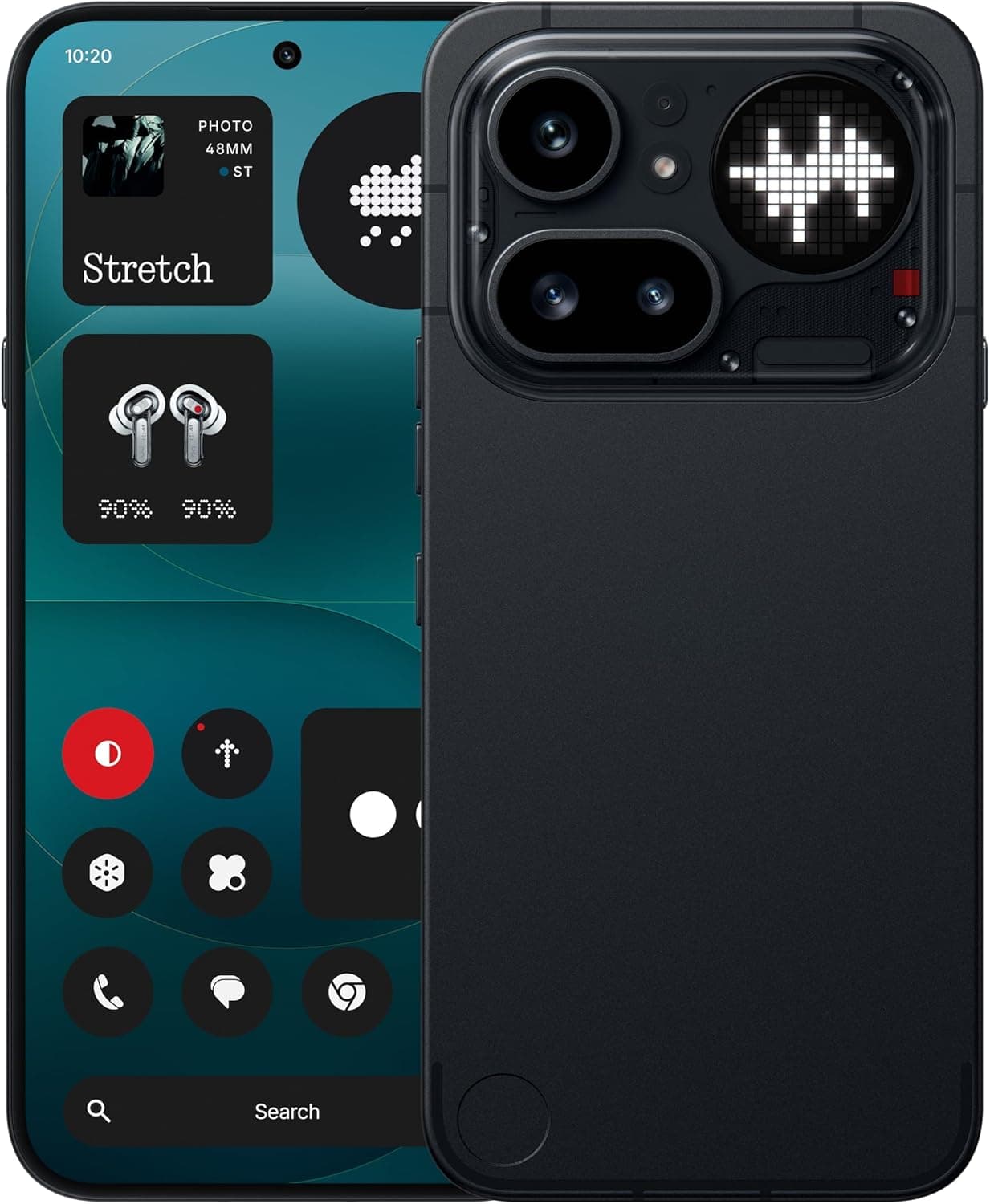
The first thing you notice when you pick up the Nothing Phone (4a) Pro is the build quality. The aluminum unibody chassis is exceptionally well-machined, with smooth curved edges that make the large phone surprisingly comfortable to hold. At 6.83 inches, this is undeniably a big phone, but Nothing has managed the weight distribution well enough that it never feels unwieldy during extended use. The matte finish on the aluminum resists fingerprints far better than glass-backed competitors, which is a practical consideration that anyone who has tried to photograph a glossy phone after a day of use will appreciate.
Where Nothing really distinguishes itself is in the camera island. The company has retained its characteristic transparent aesthetic in a small window at the top that showcases some of the internal components, including a decorative red accent piece that adds a welcome pop of color to an otherwise monochromatic design. It feels like a watchmaker showing off a movement through a display case back — unnecessary from a pure engineering standpoint, but charming in a way that few smartphones bother to be anymore.
The Glyph Matrix on the back is the showpiece feature. This array of individually addressable LEDs can display notifications, countdown timers, volume levels, and even show the time. It is genuinely useful for seeing notifications at a glance when your phone is face-down on a table, and the customizable patterns let you assign different light sequences to specific contacts so you know who is calling without looking at the screen. Is it essential? No. Is it fun and occasionally quite practical? Absolutely. Nothing has iterated on this concept across multiple generations now, and the (4a) Pro represents the most refined implementation yet, with brighter LEDs and more granular control through the Nothing OS software.
Display and Multimedia
The 6.83-inch AMOLED display is one of the best I have seen on a mid-range phone this year. With a resolution of 2800 by 1260 pixels, it is sharp enough that individual pixels are invisible at normal viewing distances, and the 144Hz refresh rate makes scrolling through social media feeds, web pages, and app drawers feel exceptionally fluid. The difference between 120Hz and 144Hz is subtle — most people will not notice it in day-to-day use — but the consistency of the refresh rate implementation matters more than the peak number, and Nothing has done a good job of keeping frame pacing smooth across the interface.
Brightness is another strong suit. The display can hit over 1,100 nits in high-brightness mode, which makes it perfectly readable outdoors even under direct California sun. HDR content on YouTube and Netflix looks punchy, with good contrast and vibrant colors that are not oversaturated. Nothing offers several color profiles in the settings, including a more accurate sRGB mode for photo editing and a vivid mode that boosts saturation for media consumption. Out of the box, the default profile strikes a reasonable balance between accuracy and pop that will satisfy most users without needing to dig into settings.
The stereo speaker setup is adequate for a phone in this price range. The earpiece doubles as a second speaker to create a stereo image, and while it lacks the bass response of dedicated speaker grilles found on some gaming phones, it gets loud enough for YouTube videos, podcasts, and speakerphone calls without significant distortion at maximum volume. For music listening, you will still want a pair of Bluetooth earbuds or wired headphones — the phone retains a USB-C audio output, and Nothing's own Ear (a) and Ear (stick) earbuds pair seamlessly with the device.
Performance and Software
Under the hood, the Nothing Phone (4a) Pro packs Qualcomm's Snapdragon 7 Gen 4 chipset paired with 12GB of RAM. This combination delivers performance that comfortably handles everything most users throw at a smartphone in 2026. Daily tasks like scrolling through Twitter, browsing Chrome with multiple tabs, messaging on WhatsApp and Telegram, and switching between a dozen apps feel instantaneous. The 144Hz display combined with the capable processor makes the Nothing OS interface feel exceptionally snappy.
Gaming performance is respectable for a mid-range device. I tested Genshin Impact, Call of Duty Mobile, and Wuthering Waves at their default graphics settings, and all three remained playable with occasional frame drops during intense combat sequences rather than consistent stuttering. The Snapdragon 7 Gen 4 includes the Adreno 722 GPU, which delivers roughly 25 percent better graphics performance than the previous generation's 7 Gen 3. If you are a competitive mobile gamer who needs locked 60fps at maximum settings, you will still want a Snapdragon 8-series flagship, but for casual and mid-range gaming, the (4a) Pro holds its own.
Nothing OS 4.1, running on top of Android 16, remains one of the cleanest and most thoughtful Android skins on the market. Nothing has resisted the temptation to bloat the software with duplicate apps, aggressive notifications, or confusing settings menus the way some Chinese OEMs do. The monochrome icon theme is consistent across first-party and many third-party apps thanks to Nothing's widget system, which encourages developers to create custom widgets that match the brand's dot-matrix aesthetic. Essential Space, a new addition in Nothing OS 4.1, provides a customizable home screen panel for your most-used contacts, widgets, and tools — think of it as a smarter, more intentional version of the app drawer.
One of the standout software features is the Glyph Composer, which lets you create custom ringtone and notification patterns using the Glyph Matrix LEDs and corresponding sounds. It is a genuinely creative tool that makes personalizing your phone feel more rewarding than picking a ringtone from a list. Nothing promises three years of major Android updates and four years of security patches, which is competitive for the mid-range segment.
Camera System
The Nothing Phone (4a) Pro features a triple camera setup that represents a meaningful upgrade over the standard (4a). The primary 50-megapixel Sony sensor with an f/1.9 aperture and optical image stabilization captures detailed, well-exposed photos in good lighting. Daylight shots have natural colors with accurate white balance — Nothing has clearly tuned its image processing pipeline to avoid the oversharpened, artificial look that plagues many mid-range phones. Skin tones look natural, foliage retains its texture without turning into mushy green blobs, and dynamic range is respectable thanks to the HDR processing that kicks in automatically when the scene demands it.
The 50-megapixel periscope telephoto camera with 3.5x optical zoom is the standout addition here. Optical zoom at this price point is still relatively rare, and Nothing's implementation produces genuinely usable zoomed photos. At 3.5x, images retain excellent detail and color accuracy that matches the main camera well. Digital zoom extends to 10x, and while quality degrades noticeably beyond 5x, the results are still usable for social media sharing. The telephoto camera also doubles for portrait mode, delivering pleasing subject separation with natural-looking bokeh that avoids the jagged edge detection issues common to computational portrait modes.
The 8-megapixel ultrawide camera with a 120-degree field of view is the weakest link in the system, which is consistent with the mid-range segment. Photos taken with the ultrawide show noticeably less detail than the main camera, with softer corners and slightly less dynamic range. In good lighting, the results are fine for landscape shots and group photos, but in low light, the ultrawide struggles significantly and is best avoided.
Low-light photography is a mixed bag. The main camera with OIS does a reasonable job in dim conditions, capturing usable shots that are not excessively noisy, though detail takes a hit compared to daytime shots. Night Mode improves things noticeably by combining multiple exposures, but it requires a steady hand and takes several seconds to process. The telephoto camera struggles more in low light, and the ultrawide is essentially unusable after dark. This is par for the course at this price — even the Pixel 9a, widely considered the best camera phone in the mid-range segment, faces similar limitations.
Video recording tops out at 4K 30fps on all three cameras, with 1080p 60fps available on the main sensor. Electronic image stabilization works well for walking shots at 1080p, though it introduces a slight crop. The lack of 4K 60fps is a notable omission in 2026, especially given that competitors like the Samsung Galaxy A57 offer it. For casual video capture — social media clips, family events, quick vlogs — the quality is perfectly acceptable, but serious mobile videographers will want to look elsewhere.
Battery Life and Charging
Battery life is one of the strongest aspects of the Nothing Phone (4a) Pro. The 5,080mAh cell, combined with the power-efficient Snapdragon 7 Gen 4, delivers dependable all-day battery life that easily gets through a full day of moderate to heavy use. In my testing, which included roughly five hours of screen-on time spread across social media, messaging, YouTube streaming, camera use, and email, I consistently ended the day with 25 to 30 percent battery remaining. On lighter days with three to four hours of screen-on time, the phone easily stretches into a second day.
Video streaming over Wi-Fi at half brightness drains about 8 to 10 percent of battery per hour, while gaming with demanding titles like Genshin Impact consumes around 15 to 18 percent per hour. These are solid numbers that compare favorably with the Samsung Galaxy A57 and Google Pixel 9a, both of which have smaller batteries and similar or worse efficiency.
Charging is handled at 50W over USB-C, which fills the battery from empty to about 60 percent in 30 minutes and fully charges in just over an hour. That is competitive for the mid-range segment and significantly faster than the Pixel 9a's 23W charging. The phone does not support wireless charging, which is a notable omission at this price point. The standard Nothing Phone (4a) also lacks wireless charging, so at least Nothing is consistent, but the $599 Pro model really should include it. If wireless charging is a dealbreaker for you, the Samsung Galaxy A57 includes it and costs roughly $50 less.
Real-World Daily Usage
Living with the Nothing Phone (4a) Pro as your primary device reveals both its strengths and its quirks in ways that spec sheets cannot capture. The aluminum unibody develops a subtle warmth during extended use, which is far more pleasant than the hot-spot sensation you get from glass-backed phones under heavy processing loads. After a week of use, the matte finish shows minimal micro-abrasions, though I would still recommend a case if you plan to keep the phone pristine for resale value.
The Glyph Matrix becomes genuinely useful in ways I did not expect. Setting a timer while cooking and being able to see the countdown on the back of the phone without touching the screen is surprisingly convenient. The volume indicator that lights up when you press the rocker switch is another small touch that reduces friction in daily use. Notification assignments to specific contacts take about ten minutes to set up but pay dividends in convenience — I never need to pick up my phone for texts from my partner or urgent emails from my manager because the light pattern tells me what I need to know.
Multitasking on the 6.83-inch display is a genuine productivity advantage over smaller phones. Split-screen mode with Slack on top and Chrome on the bottom feels natural rather than cramped, and the 144Hz refresh rate keeps both apps feeling responsive. The pop-up view for messaging apps works well for quick replies without leaving your current app. These software touches add up to a cohesive experience that feels designed rather than assembled.
Audio Quality and Media Consumption
The Nothing Phone (4a) Pro handles media consumption admirably thanks to its large, vibrant display and capable stereo speakers. Streaming Dolby Atmos content on Netflix and Amazon Prime Video reveals good spatial separation, with dialogue remaining clear even during action sequences with heavy background scores. The lack of a 3.5mm headphone jack is expected in 2026, but the USB-C to 3.5mm adapter supports high-impedance headphones, and the built-in DAC produces clean audio output free of the hiss that plagues some budget phones.
Bluetooth audio performance is excellent thanks to support for LDAC and AAC codecs. Paired with Sony WH-1000XM5 headphones, the phone delivered consistently stable connections with no dropouts even at the maximum LDAC bitrate. The Bluetooth 5.3 implementation supports dual-device audio, allowing you to share music with a friend's earbuds, though the feature is limited to select apps and requires compatible receiving hardware.
Build Durability and Longevity
Nothing rates the Phone (4a) Pro with IP64 water resistance, meaning it can handle splashes and dust but should not be submerged. This is a step down from the IP67 and IP68 ratings offered by competitors like the Galaxy A57 and Pixel 9a, and it is one of the more notable compromises in the (4a) Pro's specification. If you frequently take your phone near pools, beaches, or in heavy rain, this lower rating should give you pause.
The Gorilla Glass Victus 2 on the front provides excellent scratch and drop resistance that matches the current flagship standard. After two weeks without a screen protector, I could not find any micro-scratches despite sharing a pocket with keys and coins. The aluminum frame is more resistant to dents than the polished metal frames on some flagships, though the matte finish will show scuffs if you regularly set the phone down on rough surfaces.
Nothing offers three years of major OS updates and four years of security patches, which is reasonable but trails behind Samsung's four-year OS update commitment and Google's seven-year Pixel promise. For buyers who keep their phones for three or more years, the Samsung Galaxy A57 offers better long-term software support, though Nothing's clean OS means updates arrive faster than Samsung's carrier-tested rollout schedule.
The Nothing Phone (4a) Pro supports sub-6GHz 5G across all major US carrier bands, Wi-Fi 6, Bluetooth 5.3 with support for LDAC and AAC codecs, and NFC for Google Pay. Cellular reception has been solid in my testing on T-Mobile's network, with no dropped calls or unexpected signal drops in areas where other phones maintain a connection. The dual-SIM support (nano-SIM plus eSIM) is convenient for travelers who need to maintain a home number while using a local data plan abroad.
The optical under-display fingerprint sensor is fast and reliable, unlocking the phone consistently in under half a second. Face unlock via the front camera is available as a secondary option and works well in good lighting but is less secure and should not be relied upon for sensitive authentication. The haptic motor delivers crisp, precise feedback that makes typing feel more satisfying than many competitors' implementations.
The in-display fingerprint sensor is placed at a comfortable height — not so low that you have to contort your thumb, and not so high that it interferes with content viewing. This might sound like a minor detail, but anyone who has used a phone with an awkwardly placed sensor knows how frustrating it can be.
Comparison to Competitors
The Nothing Phone (4a) Pro sits in a competitive segment of the market that includes the Google Pixel 9a, Samsung Galaxy A57, and the OnePlus Nord 5. Each of these phones costs between $450 and $600 and targets similar buyers with slightly different priorities.
The Google Pixel 9a is the camera king in this segment, offering Google's exceptional computational photography that consistently produces stunning photos regardless of lighting conditions. However, the Pixel 9a has a 6.1-inch 120Hz display that feels small compared to Nothing's 6.83-inch 144Hz panel, and its design is utilitarian rather than exciting. If camera quality is your sole priority, get the Pixel. If you want a phone that is actually enjoyable to look at and hold while still taking good photos, the Nothing (4a) Pro is the better choice.
The Samsung Galaxy A57 offers a more balanced package with a 6.6-inch 120Hz AMOLED display, wireless charging, IP67 water resistance, and Samsung's proven update track record. The Galaxy A57 also includes a microSD card slot, which the Nothing lacks entirely. Where the Nothing pulls ahead is in software experience — One UI is feature-rich but increasingly cluttered, while Nothing OS is clean, fast, and distinctive.
The OnePlus Nord 5 competes directly on performance with a slightly faster chipset and faster charging, but its design lacks the Nothing's personality and build quality. The OnePlus also has a significantly worse camera system, particularly in the telephoto department where the Nothing's periscope zoom gives it a clear advantage.
Verdict
The Nothing Phone (4a) Pro is not trying to be the best value phone on paper — it is trying to be the phone that makes you smile when you pick it up, and in that mission, it succeeds admirably. The aluminum unibody construction, the clever Glyph Matrix, the clean software, and the genuinely useful telephoto camera combine to create a smartphone experience that feels more considered and more intentional than anything else in its price range.
The compromises are real: no wireless charging, no microSD slot, no 4K 60fps video, and an ultrawide camera that is merely adequate rather than impressive. If any of those are hard requirements, the Galaxy A57 or Pixel 9a may serve you better. But if you value design, software polish, and a phone that feels like it was made by people who actually care about the experience of using it, the Nothing Phone (4a) Pro is an easy recommendation. It proves that mid-range does not have to mean boring, and that is a philosophy more phone makers should embrace.
Related: Nothing Phone (4a)
Pros
- Premium aluminum unibody design feels far more expensive than it is
- Bright 6.83-inch 144Hz AMOLED display with excellent colors
- Excellent all-day battery life with fast 50W charging
- Clean, thoughtful Nothing OS software with minimal bloatware
- Versatile telephoto camera with genuine 3.5x optical zoom
Cons
- No wireless charging at a $599 price point
- No microSD expansion for storage
- Only IP64 water resistance, not IP67 or IP68
- Ultrawide camera is merely adequate, especially in low light
Final Verdict
The Nothing Phone (4a) Pro brings premium aluminum build quality, a gorgeous 144Hz AMOLED display, and genuinely distinctive design to the mid-range smartphone segment. While it compromises on wireless charging and water resistance, the clean Nothing OS software, excellent battery life, and fun Glyph Matrix make it one of the most enjoyable phones to use under $600.