Nothing Phone (4a) Pro Review: The Mid-Range Phone That Finally Stands Out
The Nothing Phone (4a) Pro brings a striking aluminum unibody design, a gorgeous 144Hz AMOLED display, clean software, and a versatile periscope zoom camera to the $499 mid-range segment. It's the most distinctive smartphone you can buy for the money, even if the camera system and lack of wireless charging require some compromise.
The mid-range smartphone market is a brutally competitive space where most brands play it safe. You get a glass sandwich, a generic circular camera bump, and a software experience that's either a bloated mess or a boring recreation of stock Android. Then there's the Nothing Phone (4a) Pro. At $499, this phone doesn't just compete—it dares to be different in almost every way that matters. After spending several weeks with the Nothing Phone (4a) Pro as my daily driver, I can confidently say it's one of the most refreshing smartphones to hit the US market in 2026, and a compelling option for anyone tired of the same old slab.
Nothing has carved out a unique identity in the smartphone world by leaning hard into design transparency both literally and figuratively. The Glyph interface, the dot-matrix typeface, the exposed internal screws—every element of a Nothing phone feels intentional. With the Phone (4a) Pro, the company is making a bold statement: mid-range phones don't have to feel like compromises wrapped in recycled design language. This phone feels like something you chose, not something you settled for.
Design and Build Quality
The first thing you notice about the Nothing Phone (4a) Pro is that it feels different in your hand. Nothing has abandoned the glass-and-metal sandwich design of its predecessors in favor of a single-piece aluminum unibody. It's a bold move in a market where glass backs are equated with premium, but it pays off handsomely. The aluminum construction gives the phone a dense, confidence-inspiring heft without making it uncomfortably heavy at roughly 205 grams. More importantly, it's structurally far more durable than glass—drop this phone and you're far less likely to end up with a spiderweb of cracks on the back.
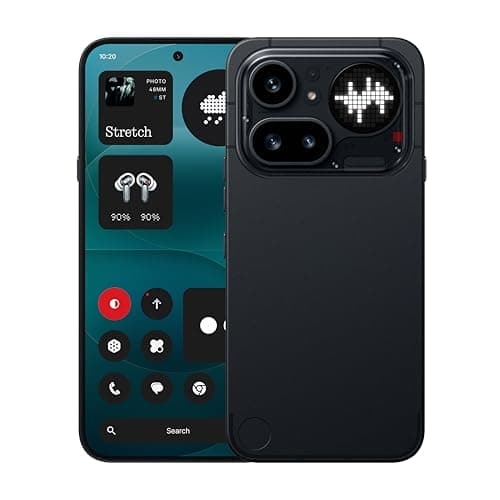
The aluminum unibody is finished with a subtle matte texture that resists fingerprints surprisingly well, and the camera module sits in a semi-transparent cutout at the top that reveals the internal layout beneath. It's a design language that Nothing has made its own, and the (4a) Pro refines it further. The phone is available in three colors: Silver, Pink, and Black. The Silver option is particularly striking, with the natural aluminum finish contrasting against the darker camera module.
Around the front, you get a 6.83-inch AMOLED display with impressively slim bezels. The hole-punch camera sits centered at the top, and Nothing has managed to keep the chin remarkably small for a phone at this price point. The IP65 rating means it can handle rain, splashes, and dust without issue, though you probably won't want to take it swimming.
One of the standout design features is the Glyph Matrix on the back. Unlike the flagship Phone (3), which has a staggering 489 individual LEDs, the (4a) Pro uses a more modest 137 mini-LEDs arranged in seven distinct zones. It's less flashy than the flagship, but it's arguably more practical. The Glyph Matrix functions as a notification light system, a camera viewfinder countdown timer, a volume indicator, and even a tiny platform for simple games. Is it essential? No. Is it charming and genuinely useful in daily use? Absolutely. Being able to see who's calling or what notification arrived without flipping the phone over is a convenience I didn't expect to appreciate as much as I do.
Display
The Nothing Phone (4a) Pro's display is one of its strongest features. The 6.83-inch AMOLED panel offers a resolution of 2,800 × 1,260 pixels, which puts it comfortably above standard Full HD+ territory. The pixel density is sharp enough that individual pixels are invisible at normal viewing distances, and text looks crisp and clear no matter what you're reading.
The headline feature here is the 144Hz refresh rate. While most phones at this price point top out at 120Hz, Nothing has pushed to 144Hz, and the difference is noticeable in day-to-day use. Scrolling through social media feeds, navigating the app drawer, and flipping through photo galleries all feel buttery smooth. The display intelligently scales its refresh rate based on what you're doing, dropping to lower frequencies for static content like reading an article to save battery.
Peak brightness is rated at up to 5,000 nits, which is genuinely impressive for a mid-range phone. In practice, that means excellent outdoor visibility even under direct sunlight. I had no trouble reading messages or navigating with Google Maps on a bright summer day. The display also supports HDR content, and watching HDR video on YouTube and Netflix looks vibrant with deep blacks and punchy colors.
Color accuracy out of the box is good, with Nothing's software offering several display profiles if you prefer a warmer or cooler look. The default setting leans slightly toward the vibrant side, which most people will find appealing. There's also an always-on display mode that shows the time, date, and notification icons without consuming too much battery. It's basic compared to what Samsung or Apple offer, but it serves its purpose well.
One thing worth noting is the display's aspect ratio. The 6.83-inch panel has a slightly taller aspect ratio than some competitors, which means the phone feels narrower in the hand than its screen size suggests. This actually makes one-handed use more feasible than you'd expect from a phone with this much screen real estate. Typing with one hand is comfortable, and the reachability is better than on devices like the iPhone 17 Pro Max or Samsung Galaxy S26 Ultra.
Performance and Benchmarks
Powering the Nothing Phone (4a) Pro is Qualcomm's Snapdragon 7 Gen 4 chipset, paired with 8GB or 12GB of RAM depending on the configuration. This isn't the kind of silicon that's going to set benchmark records, but it's a thoroughly capable processor for daily use. Apps open quickly, multitasking is smooth, and the phone handles everything from email and messaging to social media and web browsing without any hint of lag.
Where the Snapdragon 7 Gen 4 does show its mid-range roots is in gaming. Less demanding titles like Call of Duty Mobile and PUBG Mobile run well at high settings with stable frame rates. More graphically intensive games like Genshin Impact and Zenless Zone Zero are playable but require dialing down the graphics settings to maintain smooth performance. The 144Hz display is a noticeable benefit here—even if the chip can't always drive 144 frames per second in demanding games, the higher ceiling means that animations and UI transitions feel consistently fluid.
Storage options include 128GB and 256GB configurations using UFS 3.1 technology, which means read and write speeds are snappy. App installs are quick, and file transfers don't feel sluggish. There's no microSD card slot, so choose your storage tier carefully.
In day-to-day use, I never found the phone wanting for performance. The combination of the Snapdragon 7 Gen 4 and Nothing's lightweight software skin means the phone feels responsive and eager at all times. It's not going to beat the iPhone 17 Pro or Samsung Galaxy S26 Ultra in raw performance, but for the vast majority of users, it's more than enough.
Camera System
The camera setup on the Nothing Phone (4a) Pro is where the compromises become most apparent, but the story is more nuanced than a simple good-or-bad verdict.
The hardware specs are impressive on paper: a 50-megapixel main sensor with f/1.9 aperture and optical image stabilization, a 50-megapixel periscope telephoto lens with 3.5x optical zoom, and an 8-megapixel ultra-wide camera. Up front, there's a 32-megapixel selfie camera.
In good lighting conditions, the main camera produces solid results. Photos have good dynamic range, accurate colors, and plenty of detail. Nothing's image processing has improved significantly since earlier phones, and the (4a) Pro handles complex scenes like landscapes and architecture well. The 50-megapixel mode captures additional detail, though it's best reserved for well-lit static subjects.
The periscope telephoto is the phone's headline camera feature, and it largely delivers on its promise. At 3.5x optical zoom, images are sharp and clear with good color consistency compared to the main sensor. The digital zoom extends to an eye-popping 140x, but the results at maximum zoom are more of a party trick than a usable tool—you can make out the rough shape of distant objects, but detail is heavily processed and images are very soft past about 10x zoom. The real-world sweet spot is between 3.5x and 10x, where the hybrid combination of optical and digital zoom produces usable, shareable results.
The ultra-wide camera is the weakest link in the system. The 8-megapixel sensor is the same resolution as the ultra-wide on phones several years old, and it shows. Images lack detail, especially in the corners, and dynamic range is noticeably narrower than the main camera. In good light, you can get acceptable shots for social media, but don't expect to be cropping or printing them.
Low-light performance is decent but not class-leading. The main camera benefits from OIS and does a respectable job of capturing usable nighttime shots with Night Mode engaged. The telephoto struggles significantly once the sun goes down, reverting to the main sensor's crop for anything beyond 3x zoom. The ultra-wide is largely unusable indoors or at night.
Video recording tops out at 4K 30fps, which is adequate but behind competitors offering 4K 60fps at this price. The electronic stabilization does a reasonable job of smoothing out handheld footage, and the audio recording quality is acceptable for casual use.
For the $499 price point, the camera system is capable enough for everyday memories, social media content, and the occasional zoom shot of distant subjects. If camera quality is your absolute priority, the Google Pixel 10a takes consistently better photos, particularly in challenging conditions. But the (4a) Pro's cameras are versatile and fun to use, and the periscope zoom is a unique differentiator at this price.
One area where the camera software excels is the Glyph Matrix integration for photos. When you set a self-timer, the Glyph lights count down in sequence, creating a visual cue that's both practical and delightful. It's a small touch that makes using the camera feel more eventful than on a standard phone. The Camera app itself is clean and fast to navigate, with all the shooting modes you'd expect including Portrait, Night, Pro (manual), Panorama, and Slow Motion.
Battery Life and Charging
Battery life is one of the Nothing Phone (4a) Pro's strongest assets. The 5,080mAh cell is generous for a phone of this size, and the efficient Snapdragon 7 Gen 4 chip means the phone sips power rather than gulping it. In my testing, the phone regularly lasted a full day and then some. With moderate use—email, messaging, social media, a couple hours of video streaming, and some light gaming—I was consistently ending the day with 25 to 30 percent battery remaining. Heavy users will still get through a full day without needing to top up.
When you do need to charge, the 50W wired charging is impressively fast. A 30-minute charge takes the battery from empty to roughly 60 percent, and a full charge takes about 75 minutes. That's competitive with phones costing significantly more. There's no charger included in the box, which is disappointing but increasingly standard at this price point. Nothing recommends using a 50W USB Power Delivery charger, and any quality PD charger will deliver good results.
The elephant in the room is the lack of wireless charging. The aluminum unibody design doesn't accommodate wireless charging coils, and it's a genuine omission. If you've built your daily routine around a wireless charging pad, the (4a) Pro will force you to change your habits. It's a meaningful compromise that some buyers won't be able to overlook.
Software and AI Features
The Nothing Phone (4a) Pro ships with Android 16 and Nothing OS 4.1 on top, and this combination is one of the phone's strongest selling points. Nothing OS is clean, fast, and refreshingly free of bloatware. There's no duplicate app store, no pre-installed games, no pushy service notifications. You get Google's suite of apps, Nothing's own apps (Recorder, Camera, Weather), and that's about it.
Nothing's design language carries through the entire interface. The monochromatic dot-matrix widget style, custom fonts, and thoughtful animations give the software a distinctive character without feeling gimmicky. The Glyph Matrix integration is seamless—you can customize which apps trigger which light patterns, and the integration with the Essential Key hardware button is well implemented.
The Essential Key is a new addition sitting on the left edge of the phone. A single press opens the Essential Space app, which serves as a kind of AI-powered memory palace. You can dictate voice notes that get automatically transcribed and analyzed, save screenshots that the system indexes for later search, and pin important information for quick access. The AI transcription is good but not perfect, occasionally mangling technical terms or names. Still, it's genuinely useful for capturing quick thoughts or saving information you want to find later.
Nothing promises three years of OS updates and six years of security patches. That's improved from previous generations but still behind Samsung's seven-year commitment and Google's extended support window. It's adequate for the price but not class-leading. If you plan to keep your phone for four or more years, this is something to consider carefully. However, for the typical buyer who upgrades every two to three years, the update commitment is more than sufficient.
The fingerprint sensor deserves specific praise. It's an optical in-display sensor that's fast, accurate, and positioned at a comfortable height on the screen. I experienced very few failed reads during my testing, and the setup process takes only seconds. Face unlock is also available via the front camera, though it's less secure than the fingerprint sensor and works best in good lighting.
Audio and Connectivity
The Nothing Phone (4a) Pro features stereo speakers that get loud enough for casual media consumption and video calls. They lack the depth and richness of flagship phone speakers—bass is minimal, and the sound can get a bit harsh at maximum volume—but they're perfectly serviceable for YouTube and podcasts.
Support for high-resolution audio codecs including aptX Adaptive means the phone sounds excellent with quality Bluetooth headphones. The headphone jack is absent (unsurprisingly for 2026), but Nothing sells a USB-C to 3.5mm adapter for wired listening.
Connectivity is robust with support for 5G (including mmWave on US models), Wi-Fi 6E, Bluetooth 5.4, and NFC for Google Pay. Call quality is good, with the earpiece delivering clear audio and the microphone picking up voices accurately even in moderately noisy environments.
Comparison to Competitors
At $499, the Nothing Phone (4a) Pro goes up against some formidable competition. The Google Pixel 10a is its most direct rival, offering superior camera performance, wireless charging, and a more compact form factor. Google's software update commitment is also stronger. However, the Pixel 10a has a standard 60-120Hz display, a more conventional design, and lacks the Nothing's periscope zoom.
The Samsung Galaxy S25 FE is another strong contender, typically priced around $550-600. Samsung offers a more polished camera experience, DeX desktop mode, and a seven-year software commitment. But the S25 FE is heavier, has a smaller battery, and its design, while premium, is far less distinctive than the Nothing.
The iPhone 17e, at $599, brings Apple's ecosystem, better video recording, and the unmatched performance of the A19 chip. But it has a lower-resolution display, smaller battery, and only a single 48MP camera—no ultra-wide or telephoto at all.
What the Nothing Phone (4a) Pro offers that none of its competitors can match is character. It's a phone that makes you smile when you glance at the glowing Glyph Matrix on your desk. It's a phone that prompts strangers to ask "What phone is that?" It's a phone that proves mid-range doesn't have to mean boring. The aluminum unibody, the distinctive Glyph lighting patterns, the clean software aesthetic—every aspect of this phone has been designed with intention and care.
There's also a practical argument for the (4a) Pro that goes beyond aesthetics. The aluminum unibody is genuinely more durable than the glass backs used by most competitors. It won't shatter if you drop it, it doesn't attract fingerprints the way glossy glass does, and it feels more substantial in the hand. The included TPU case in the box is a nice bonus that most competitors don't offer, and it adds an extra layer of protection while still showing off the phone's design through the transparent material.
The Competition at $500
The Google Pixel 10a is the elephant in the room at this price point. At $499, it matches the Nothing on price while offering Google's class-leading computational photography, a more compact and pocketable design, wireless charging, and a longer software support commitment. It's the safe choice, and for many people, it's the right choice. But the Pixel 10a lacks a telephoto zoom lens, its 120Hz display isn't as smooth as the Nothing's 144Hz panel, and its design is conservative to the point of being forgettable. The Pixel takes better photos; the Nothing is more fun to own.
The OnePlus 13R, at $549, brings a Snapdragon 8 Gen 2 chipset that outperforms the Snapdragon 7 Gen 4 in the Nothing, along with faster charging. But it runs OxygenOS, which has become increasingly heavy and ad-laden in recent years, and its design, while premium, is indistinguishable from a dozen other phones on the market.
The iPhone 17e is $100 more expensive but brings Apple's ecosystem advantage, superior video recording, and the powerful A19 chip. It also has better resale value and the security of Apple's long-term software support. But you're paying more for a phone with a smaller screen, no telephoto camera, and no ultra-wide camera at all. It's a one-camera phone in 2026, which feels like a tough sell regardless of the ecosystem benefits.
For those coming from a Nothing Phone (3a) or (2a), the (4a) Pro represents a meaningful upgrade in display quality, camera versatility, and overall build quality. The aluminum unibody alone justifies the upgrade for anyone who has ever cracked a glass-backed phone.
Should You Buy the Nothing Phone (4a) Pro?
The Nothing Phone (4a) Pro is not a perfect phone. The ultra-wide camera is weak, the lack of wireless charging is frustrating, and the chipset won't satisfy hardcore mobile gamers. But at $499, it delivers an experience that punches well above its weight in the areas that matter most for daily use: a gorgeous 144Hz display, all-day battery life, clean and fast software, and a design that stands out in a sea of identical slabs.
If camera quality or wireless charging are non-negotiable for you, the Google Pixel 10a is a better choice. If you want the most powerful processor at this price, the OnePlus 13R or a discounted flagship from last year might serve you better. But if you want a phone that feels special, that brings a smile to your face every time you pick it up, and that handles daily tasks with grace and ease, the Nothing Phone (4a) Pro is an easy recommendation. It's the most exciting mid-range phone of 2026, and a sign that Nothing is a brand to watch closely.
If you're exploring the latest smartphones, read our Honor Magic V5 review for a premium foldable alternative, or check out our OnePlus Watch 3 review for the perfect companion wearable.
You can pick up the Nothing Phone (4a) Pro on Amazon for $499.
Pros
- Stunning aluminum unibody design with distinctive Glyph Matrix lighting
- Gorgeous 6.83-inch 144Hz AMOLED display with excellent brightness
- Clean, bloat-free Android experience with Nothing OS 4.1
- All-day battery life with fast 50W wired charging
- Versatile camera system with 3.5x optical periscope zoom
- Dedicated Essential Key for AI-powered note-taking and organization
Cons
- Ultra-wide camera is underwhelming with only 8MP resolution
- No wireless charging support due to aluminum unibody
- Software update commitment (3 years OS) lags behind competitors
- Snapdragon 7 Gen 4 chip struggles with demanding mobile games
Final Verdict
The Nothing Phone (4a) Pro brings a striking aluminum unibody design, a gorgeous 144Hz AMOLED display, clean software, and a versatile periscope zoom camera to the $499 mid-range segment. It's the most distinctive smartphone you can buy for the money, even if the camera system and lack of wireless charging require some compromise.