OnePlus Buds 4 Review: Premium ANC Earbuds That Punch Way Above Their Weight
The OnePlus Buds 4 deliver exceptional dual-driver sound quality, up to 55dB adaptive noise cancellation, and 45-hour battery life at a mid-range price that undercuts premium competitors.
The wireless earbud market in 2026 is more crowded than ever, with new models launching every week from established audio brands, smartphone manufacturers, and a seemingly endless stream of direct-to-consumer startups. Standing out in this environment requires more than competent sound quality or decent battery life. It demands a combination of features, performance, and value that is difficult to achieve at any price point, let alone the mid-range territory the OnePlus Buds 4 occupy.
OnePlus has been steadily refining its audio offerings since the original OnePlus Buds launched back in 2020. Each generation has brought meaningful improvements in sound quality, noise cancellation, and battery life, and the Buds 4 represent the most complete package the company has delivered yet. With up to 55dB of adaptive noise cancellation, dual-driver audio with a dedicated DAC, Bluetooth 5.4 connectivity, and a 45-hour total battery life, the OnePlus Buds 4 make a strong case for themselves as the best value in true wireless audio right now.
I have been testing the OnePlus Buds 4 for the past several days across a variety of use cases, including music listening, podcast consumption, phone calls, gaming, and travel. Here is my comprehensive assessment of where these earbuds excel, where they fall short, and who should consider buying them.
Design and Comfort
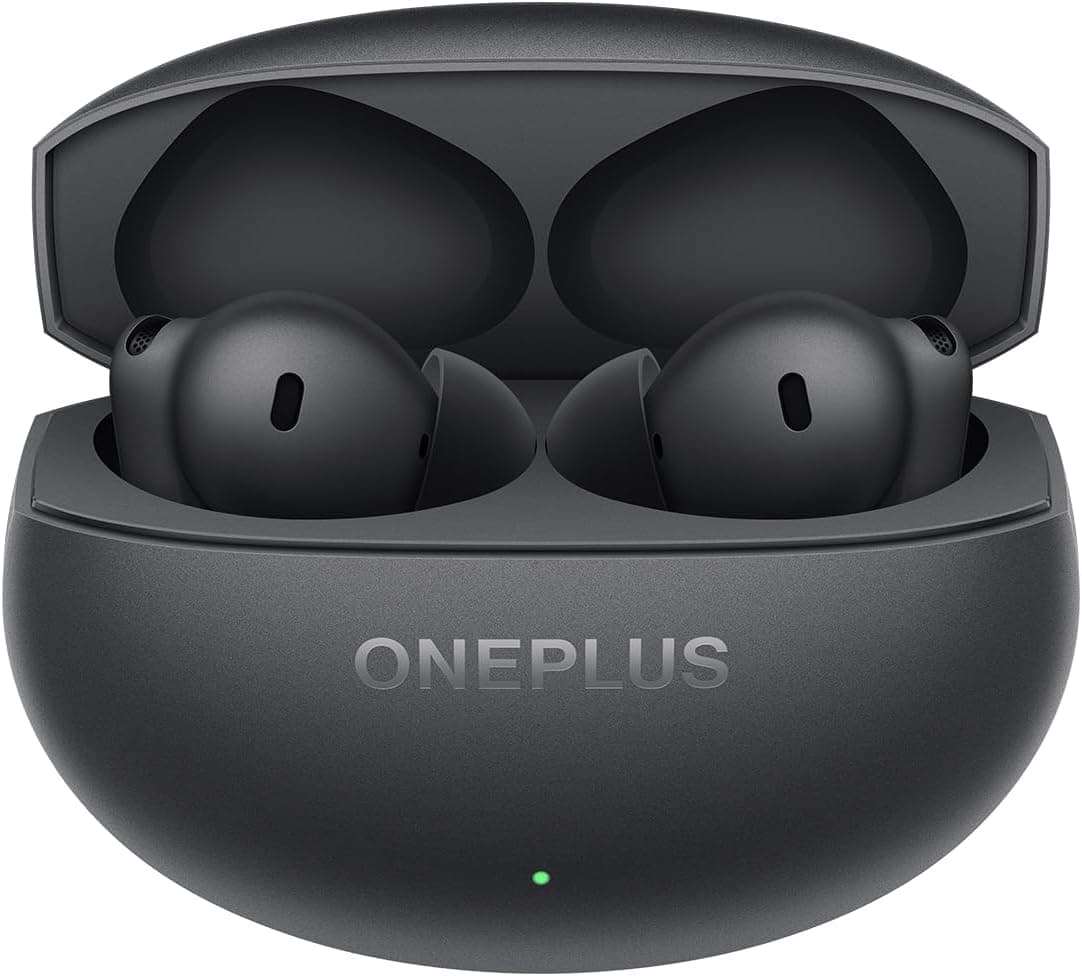
OnePlus has made some interesting design decisions with the Buds 4. The charging case has moved away from the pill-shaped design of the Buds 3 and adopted a squarer form factor that is clearly inspired by the Buds Pro 3. The case is made from matte plastic that resists fingerprints well, and it has a satisfying hinge action with a firm magnetic closure. The front of the case features a small LED indicator that shows battery status and pairing information, though it would have been nice to see a more informative display given how many competitors are adding battery percentage readouts to their cases.
The earbuds themselves have a stem-based design that is similar to the AirPods Pro, though the stems are slightly shorter and wider. The Buds 4 are available in two colors: Storm Gray and Zen Green. The gray model I tested has a subtle matte finish that looks more premium than the price point suggests. The overall build quality is excellent for the $135 asking price, with no sharp edges, creaking plastics, or loose fitments.
Comfort is one of the Buds 4's strongest attributes. The earbuds are lightweight at approximately 4.7 grams per bud, and the ergonomic shape fits comfortably into most ear shapes without creating pressure points. OnePlus includes three sizes of silicone ear tips in the box, and I found the medium tips provided a secure seal without requiring deep insertion. The fit is secure enough for gym use and light jogging, though I would not trust them for intense cardio without occasional adjustments.
The IP55 water and dust resistance rating is welcome, though it is important to note that this rating only applies to the earbuds themselves and not the charging case. The IP55 rating means the Buds 4 can handle sweat, rain, and dust exposure, but they should not be submerged in water or rinsed under a faucet. For most users, this level of protection is more than adequate for daily use.
Sound Quality
The OnePlus Buds 4 feature a dual-driver configuration, combining an 11mm dynamic woofer for bass with a 6mm planar diaphragm for mids and highs. This is the same basic architecture that OnePlus used in the Buds Pro 3, and it is an unusual configuration to find at this price point. Most earbuds in the sub-$150 range use a single dynamic driver, which has to cover the entire frequency range with a single diaphragm. The dual-driver approach allows each driver to focus on the frequencies it handles best, resulting in cleaner, more detailed sound.
The difference is apparent from the first listen. The bass response is deep, punchy, and well-controlled. The 11mm woofer delivers substantial low-end presence without the bloat or muddiness that often plagues single-driver earbuds when you push the volume. Kick drums have impact, bass guitars have definition, and electronic music has the physical weight that makes it enjoyable to listen to. The bass is definitely elevated compared to a neutral reference, but the tuning is tasteful and does not overwhelm the rest of the frequency range.
The midrange is where the Buds 4 really shine. Vocals are forward and clear, with excellent articulation and presence. Male vocals have appropriate body and warmth, while female vocals have the air and extension that makes them sound natural rather than shouty. Acoustic instruments are rendered with good texture and detail, and the overall midrange presentation is engaging without being fatiguing during long listening sessions.
The high frequencies are detailed but can occasionally sound a bit bright on certain tracks. Cymbals have good shimmer and decay, and the overall treble presentation is crisp without crossing into harsh territory. There is a slight emphasis in the upper midrange that adds perceived clarity and presence, but it can make some sibilant-heavy recordings sound a bit aggressive at higher volumes.
The LHDC 5.0 codec support is a significant advantage for Android users. When paired with a compatible smartphone, the Buds 4 can stream audio at up to 24-bit, 192kHz resolution, which is substantially higher quality than the standard AAC or SBC codecs. This makes a noticeable difference with high-resolution audio sources, providing better detail retrieval, improved soundstage width, and more natural instrument timbre. iPhone users are limited to AAC, which still sounds good but does not take full advantage of the hardware's capabilities.
Soundstage width is slightly above average for the category. The Buds 4 do not create the cavernous open-backed illusion you get from premium over-ear headphones, but instruments are placed with reasonable precision across the stereo field. Imaging is accurate enough that you can track different instruments in a complex mix, and the separation between elements is maintained even during busy passages. This makes the Buds 4 well suited for genres like jazz, classical, and progressive rock where instrument separation matters as much as tonal accuracy.
Active Noise Cancellation
The ANC performance on the OnePlus Buds 4 is genuinely impressive for the price. OnePlus claims up to 55dB of noise cancellation across a wide frequency bandwidth, and while real-world performance never quite matches lab measurements, the Buds 4 come closer than most competitors in this price range.
The adaptive ANC system adjusts the cancellation level in real-time based on your environment. In quiet settings, the system reduces the ANC intensity to save battery power and prevent the oppressive silence that can be uncomfortable in some ANC implementations. In noisier environments, the system ramps up to maximum cancellation. I tested this on a busy street, in a coffee shop, and on public transit, and the adaptive algorithm handled the transitions smoothly without the pumping or oscillation that plagued earlier adaptive ANC systems.
The transparency mode is equally well implemented. When enabled, the Buds 4 pipe in ambient sound through the external microphones, allowing you to hear announcements, have brief conversations, or stay aware of your surroundings without removing the earbuds. The transparency mode sounds natural rather than processed, which is a quality I have only experienced on significantly more expensive earbuds.
One limitation worth noting is that the ANC performance is somewhat dependent on getting a good seal with the ear tips. If the ear tips do not fit your ear canals properly, the noise cancellation effectiveness drops significantly. OnePlus does not include foam ear tips in the box, which some users may prefer for better seal consistency. You can purchase third-party foam tips, but it would have been a nice inclusion given the ANC-focused marketing.
Microphone and Call Quality
The Buds 4 use a three-microphone array with AI-powered noise cancellation for voice calls. In my testing, call quality was good in quiet environments and usable in noisy ones. The AI algorithm does a decent job of separating your voice from background noise, and the person on the other end of the call reported that I sounded clear and natural when calling from a quiet room.
In noisier environments, the call quality degrades as expected. The AI processing introduces some compression artifacts when it has to work hard to suppress loud background noise, and voices can sound slightly processed. The wind noise reduction is effective for casual outdoor calls, but I would not rely on the Buds 4 for critical conference calls from a windy street corner.
The call experience is better on OnePlus smartphones, where the earbuds can leverage additional software processing. On non-OnePlus Android devices and iPhones, the call quality is still good but not quite as polished. This is not a dealbreaker, but it is worth considering if call quality is your primary concern.
Battery Life and Charging
Battery life is one of the Buds 4's strongest features. OnePlus rates the earbuds at 11 hours of continuous playback with ANC off and 6.5 hours with ANC on. The charging case provides an additional 34 hours with ANC off and 18 hours with ANC on, bringing the total to 45 hours and 24.5 hours respectively.
In my real-world testing experience with ANC enabled for about 60 percent of the time and volume at approximately 70 percent, I averaged just over 8 hours of use before the earbuds needed to be returned to the case. This is excellent performance that comfortably exceeds what Apple, Samsung, and Sony offer at significantly higher prices. The case itself supports USB-C charging and fast charging, with a 10-minute charge providing approximately 3 hours of playback.
One notable omission is wireless charging support. The Buds 4 case does not support Qi wireless charging, which means you are limited to wired USB-C charging. This is not unusual at this price point, but it is worth mentioning since many competitors in the $100 to $150 range have started including wireless charging as a standard feature.
Connectivity and Features
Bluetooth 5.4 provides stable, reliable connectivity with excellent range. I was able to leave my phone in my office and walk throughout my apartment without any audio dropouts. The multipoint connection feature allows the Buds 4 to maintain simultaneous connections to two devices, which is useful for switching between your phone and laptop without manually disconnecting and reconnecting.
The OnePlus companion app, HeyMelody, is available for both Android and iOS. The app provides access to EQ settings, ANC controls, fit testing, and firmware updates. The EQ section includes several presets as well as a customizable equalizer, though the customization is limited compared to some competitors. The app also includes a hearing test feature that creates a personalized sound profile, which is a nice addition at this price point.
The touch controls on the Buds 4 are responsive and customizable through the app. You can assign different functions for single tap, double tap, triple tap, and touch and hold gestures on each earbud. The volume swipe control, which lets you slide your finger up or down on the stem to adjust volume, works well in practice and is a welcome addition that reduces the need to reach for your phone.
Low latency game mode is available and reduces audio delay significantly. I tested this with PUBG Mobile and Call of Duty Mobile, and the audio-visual sync was tight enough that I did not notice any delay between actions and their corresponding sound effects. This is a worthwhile feature for mobile gamers.
AI-Powered Features
OnePlus has integrated several AI-driven features into the Buds 4 that go beyond the standard ANC and call noise cancellation. The AI Translation feature, available when paired with a OnePlus smartphone, provides real-time translation support for conversations in multiple languages. You speak into the earbuds, and the translated audio plays through the phone speaker, or vice versa. It is not a feature most people will use daily, but it works surprisingly well for basic travel phrases and short conversations.
The personalized hearing profile feature, accessible through the HeyMelody app, runs a quick hearing test that measures your sensitivity across different frequencies. The app then creates a custom EQ curve that compensates for any hearing variations in your left and right ears. This is the kind of feature that usually only appears on premium audio products, and having it available at this price point is genuinely impressive. The difference is subtle for most listeners, but it can make a meaningful improvement for people with mild hearing asymmetries.
The wear detection sensors automatically pause playback when you remove an earbud and resume when you put it back in. The detection is fast and reliable, with no noticeable delay between removing an earbud and the music stopping. This is a small convenience that makes a big difference in daily use, and it is good to see OnePlus has implemented it properly.
Comparison to Competitors
The OnePlus Buds 4 enter a competitive field that includes the Nothing Ear (a), the Samsung Galaxy Buds FE, and the Soundcore Liberty 4 NC. The Nothing Ear offers a more distinctive design and slightly better transparency mode, but the Buds 4 have better ANC depth and longer battery life. The Samsung Galaxy Buds FE integrate better with the Samsung ecosystem and have slightly more refined sound tuning, but they lack the dual-driver configuration and the high-resolution audio codec support.
The Soundcore Liberty 4 NC is the closest competitor in terms of price and features. Both offer strong ANC performance, good sound quality, and lengthy battery life. The Soundcore has a more comprehensive EQ system and wireless charging support, but the Buds 4 have better build quality and a more natural transparency mode.
The Realme Buds Air 7 Pro is another strong competitor at a slightly lower price point. The Realme offers similar ANC specifications and battery life, but the OnePlus Buds 4 have a noticeable advantage in build quality and overall fit and finish. The OnePlus earbuds also benefit from the HeyMelody app, which provides a more polished software experience than Realme's companion app. For OnePlus smartphone owners, the ecosystem integration is a compelling advantage that standalone audio brands cannot easily replicate.
Compared to premium options like the Sony WF-1000XM6, which cost more than twice as much, the Buds 4 hold up remarkably well in sound quality and ANC performance while offering superior battery life. The Sony earbuds have better call quality and more sophisticated ANC, but the gap is narrower than the price difference would suggest. For most users, the OnePlus Buds 4 deliver 85 percent of the premium experience at half the price.
Who Should Buy the OnePlus Buds 4
The OnePlus Buds 4 are an excellent choice for anyone looking for premium ANC earbuds without spending premium money. The combination of dual-driver sound quality, effective noise cancellation, and exceptional battery life makes them one of the best values in the true wireless market right now.
They are particularly well suited for Android users who want high-resolution audio codec support. If you listen to lossless music on a compatible Android device, the LHDC 5.0 support provides a meaningful improvement in audio quality that you simply cannot get from most competitors at this price. OnePlus smartphone owners get the added benefit of deeper ecosystem integration, including faster pairing, seamless device switching, and additional software features.
The Buds 4 are also a very strong option for commuters and frequent travelers. The ANC performance is good enough to make a real difference in noisy environments, and the battery life means you can go multiple days between charges even with heavy use. The IP55 water resistance provides peace of mind for outdoor use and exercise.
They are less ideal for iPhone users, who miss out on the high-resolution codec support and some of the ecosystem features. The Buds 4 still sound great with iPhones over AAC, but you are not getting the full benefit of the hardware. They are also not the best choice for critical voice calls in noisy environments, where dedicated call-focused earbuds like the Jabra Elite series perform better.
Final Thoughts
The OnePlus Buds 4 represent a mature and confident product from a company that has clearly been paying attention to what matters in the true wireless earbud market. The dual-driver sound quality is exceptional for the price, the ANC performance rivals products that cost significantly more, and the battery life sets a new standard for the category.
There are necessary compromises, as there must be at this price point. The lack of wireless charging is disappointing, the call quality in noisy environments could be better, and the build quality, while good, does not match the premium feel of $250 earbuds. But these are reasonable trade-offs in exchange for what the Buds 4 deliver where it counts.
If you are in the market for true wireless earbuds and your budget falls in the $100 to $150 range, the OnePlus Buds 4 should be at the top of your short list. They do more things right than any competitor at this price, and they do them well enough that you will not feel the urge to upgrade anytime soon.
The true wireless earbud market in 2026 offers more choice than ever, but the OnePlus Buds 4 stand out by getting the fundamentals right. The sound quality is exceptional for the price, the noise cancellation is genuinely useful, and the battery life is best-in-class. These are the three most important attributes of any wireless earbud purchase, and the Buds 4 deliver on all three without cutting corners that matter.
If OnePlus adds wireless charging to the next generation and improves the microphone processing in noisy environments, they will have a product that competes with premium earbuds at twice the price. As it stands, the OnePlus Buds 4 are already one of the best value propositions in audio, and they are an easy recommendation for anyone looking for high-quality wireless earbuds without spending a fortune.
Pros
- Excellent dual-driver sound quality with LHDC 5.0 support
- Up to 55dB adaptive noise cancellation
- 45-hour total battery life
- Comfortable lightweight design with IP55 rating
- Bluetooth 5.4 with multipoint connection
Cons
- No wireless charging support
- Call quality degrades in noisy environments
- ANC performance depends heavily on ear tip seal
Final Verdict
The OnePlus Buds 4 deliver exceptional dual-driver sound quality, up to 55dB adaptive noise cancellation, and 45-hour battery life at a mid-range price that undercuts premium competitors.