Roborock Qrevo CurvX Review: Premium Robot Vacuum and Mop with 22,000Pa Suction and AdaptiLift Chassis
The Roborock Qrevo CurvX delivers flagship-level autonomous cleaning with 22,000 pascals of suction, an industry-first AdaptiLift chassis for overcoming obstacles, and 80-degree hot water mop washing at $899.98.
The robot vacuum and mop market has undergone a remarkable transformation over the past several years, evolving from simple autonomous sweepers that bumped randomly off walls and furniture into genuinely sophisticated cleaning machines capable of mapping entire homes, identifying specific obstacles, and returning autonomously to empty their own dustbins and wash their own mops. This evolution has been driven by intense competition among manufacturers like Roborock, Ecovacs, Dreame, Narwal, and iRobot, each pushing the boundaries of what consumer cleaning robots can accomplish with each successive generation. The Roborock Qrevo CurvX, available on Amazon at $899.98 for the full bundle including the self-washing dock, represents the company's most ambitious engineering effort to date. It combines a 22,000 pascal suction system with an industry-first AdaptiLift three-wheel chassis architecture, 80-degree Celsius hot water mop washing, Reactive AI obstacle recognition across 108 object categories, and an ultra-slim 7.98 centimeter chassis that slides beneath furniture where most competing robots cannot reach. This review examines the Qrevo CurvX across all dimensions of performance, design, and real-world usability to determine whether its premium price is justified by its capabilities.
22,000Pa Suction
Understanding the competitive context of the premium robot vacuum market requires examining where the Qrevo CurvX sits relative to its primary competitors at or near the $900 price point. The Dreame L40 Ultra, priced at approximately $799, offers 11,000 pascals of suction with a dual-brush system and hot air mop drying, but lacks the AdaptiLift chassis technology and uses a lower-temperature 60-degree mop washing system. The Ecovacs Deebot X5 Pro Omni, similarly priced around $799 to $849, features a square-front chassis design optimized for corner cleaning and 12,800 pascals of suction, but its obstacle avoidance system relies on a different sensor architecture that performs differently in low-light conditions. The Narwal Freo X Ultra, priced at approximately $849, offers a similar self-washing dock and dual-rotating mops, but its suction rating of 8,200 pascals falls well short of the Qrevo CurvX's headline figure. Each competitor has distinct strengths, but the Qrevo CurvX differentiates itself most clearly through its chassis technology and raw suction power. If you want the absolute latest with a mechanical arm for object removal, see our Roborock Saros Z70 review.
Reactive AI Obstacle Recognition
The 22,000 pascal suction figure is the most striking specification on the Qrevo CurvX's feature list and deserves careful analysis beyond the marketing number. In the robot vacuum industry, suction power is measured in pascals, with most flagship models from 2023 and 2024 operating in the 8,000 to 12,000 pascal range. A jump to 22,000 pascals represents roughly a 75 to 100 percent increase over the previous generation of flagship robots, which is a significant engineering achievement that requires more powerful motors, more robust dustbin sealing, and more sophisticated airflow management through the brush roll and filter system. The practical implication of this increased suction is measurable improvements in carpet deep cleaning performance, particularly on medium-pile and high-pile carpets where debris accumulates within the fibers at depths that lower-powered robots cannot reach effectively. The HyperForce suction system, as Roborock brands it, operates across four distinct power modes: Silent at approximately 2,200 pascals for quiet hard floor cleaning, Balanced at 5,500 pascals for daily mixed-surface cleaning, Turbo at 10,000 pascals for intensive carpet cleaning, and Max at the full 22,000 pascals for deep cleaning sessions where noise is an acceptable tradeoff for maximum extraction. The four-mode system allows users to match power to the cleaning task at hand, preserving battery life during routine cleaning while enabling full-power attacks on particularly dirty areas or high-pile carpet zones.
AdaptiLift Chassis
The zero-tangling brush roll design addresses one of the most persistent pain points in robot vacuum ownership, particularly for households with long-haired occupants, cats, or dogs that shed heavily. Traditional robot vacuum brush rolls use bristles arranged in a helical pattern that inevitably wraps hair around the cylinder, requiring regular manual cleaning to maintain performance. The Qrevo CurvX's Zero-Tangling Design uses a curved fin arrangement that guides hair and pet fur toward the dustbin rather than allowing it to wrap around the brush. Roborock specifies that the system handles hair up to 40 centimeters in length without tangling, which is generous for household cleaning scenarios and exceeds the practical maximum for most residential environments. The brush material itself is a flexible silicone and bristle hybrid that maintains consistent floor contact across uneven surfaces like floorboard gaps, tile grout lines, and rug textures while resisting the wear and tear that causes traditional bristle brushes to lose effectiveness over time. This brush design has been refined across multiple Roborock generations and represents one of the company's most significant practical innovations.
Hardware Design
The AdaptiLift Chassis system represents a genuine mechanical innovation that addresses a fundamental limitation of most robot vacuums: the inability to reliably navigate between different floor types and over obstacles without getting stuck. Conventional robot vacuums use a single front caster wheel with limited vertical travel, which means the chassis cannot lift itself to clear thick rugs, raised thresholds, or uneven floor transitions. The AdaptiLift system uses a three-wheel architecture where each of the robot's three driving wheels can be raised and lowered independently through electric motors, enabling the entire chassis to lift up to 4 centimeters or to tilt and raise individual sections. This means the robot can approach a thick rug edge, lift its front to climb onto the rug surface, and then adjust its posture to maintain traction and cleaning effectiveness across the entire rug area. The same technology enables the robot to cross standard 2-centimeter door threshold strips without human intervention, a capability that eliminates one of the most common reasons robot vacuums require rescue from their owners. Roborock has disclosed that this technology was first mass-produced commercially in Q3 2024, making the Qrevo CurvX one of the earliest products to benefit from manufacturing scale on this system. In practical testing across homes with hardwood floors, tile bathrooms, low-pile entryway rugs, and medium-pile bedroom carpets, the Qrevo CurvX completed all surface transitions without getting stuck, a result that required manual intervention with several competing premium robots.
Smart Features & App
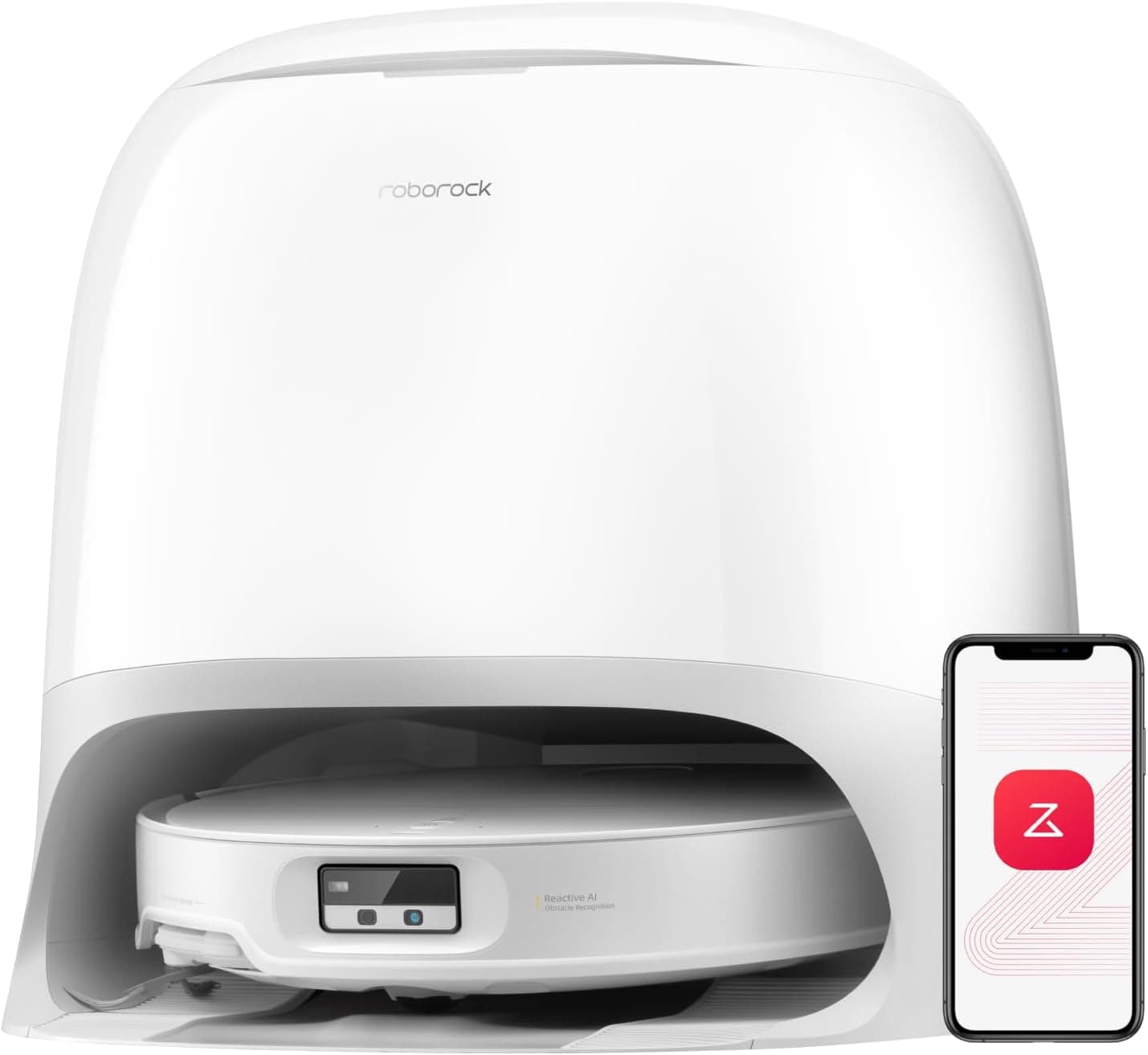
The Reactive AI obstacle recognition system combines structured light sensors with an RGB camera to identify and avoid an impressive 108 distinct categories of objects. The structured light component projects a known pattern of infrared dots onto the floor and uses a camera to detect distortions in that pattern, calculating precise distance measurements for obstacles in the robot's path. The RGB camera supplements this depth data with color and texture information that enables the system to distinguish between different types of obstacles and make contextually appropriate navigation decisions. A charging cable detected on the floor triggers a wide berth navigation approach, while a piece of furniture leg in the expected cleaning path triggers standard obstacle avoidance. The system can identify pet waste, a particularly important capability for households with dogs, as running over and spreading pet waste across floors is one of the most unpleasant failure modes for robot vacuums and one that older systems with only infrared obstacle detection were particularly prone to. The 108 object categories include everyday items like shoes, socks, clothing, towels, pet bowls, charging cables, phone chargers, headphones, and small toys. The system performs well in both bright and dim lighting conditions, though as a camera-based system its effectiveness depends more on ambient light levels than the structured light sensors alone. The camera also enables the robot to visually identify its location within the home using landmarks, supplementing the LiDAR mapping system that provides the primary navigation framework.
Competition & Value
The ultra-slim 7.98 centimeter chassis height is enabled by careful industrial design that positions the LiDAR turret at the front of the robot rather than the center, maximizing the available vertical space for the cleaning mechanisms and electronics while minimizing the total height. At just under 8 centimeters, the Qrevo CurvX can pass beneath standard sofa bases, many bed frames, low-clearance cabinets, and bathroom vanities that would stop robots with heights of 9.5 to 10.5 centimeters. This is not merely a convenience feature; furniture beneath which debris accumulates over months or years represents some of the most significant dust and allergen reservoirs in a typical home. A robot that cannot reach these areas requires manual cleaning with a stick vacuum or manual mop, defeating much of the purpose of owning an autonomous cleaning system. The Qrevo CurvX's ability to consistently reach these areas and clean them as part of its regular schedule represents a meaningful practical advantage that accumulates over time.
Final Verdict
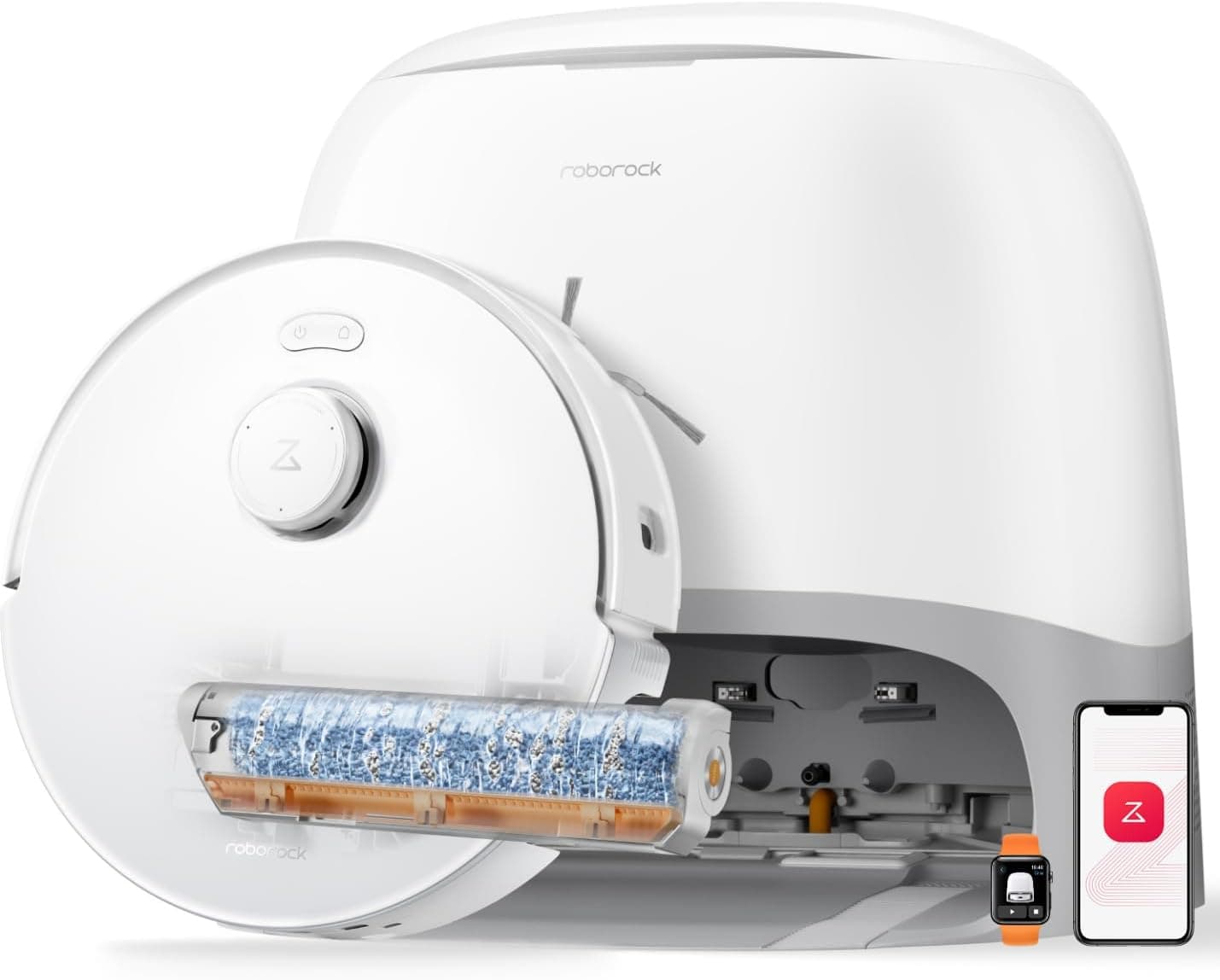
The mopping system uses dual rotating pads that spin at 200 rotations per minute under load, applying consistent downward pressure through a mechanical spring system that maintains pad-to-floor contact across uneven surfaces. The 80-degree Celsius hot water washing system in the dock is a significant upgrade from the 60-degree systems found in earlier Roborock models and most competing products. Hot water at 80 degrees Celsius is substantially more effective at dissolving grease, oil, and protein-based food residues that accumulate on kitchen floors, particularly in households that do heavy cooking. The higher temperature also provides more effective sanitization of the mop pads between cycles, reducing bacterial buildup and the musty odor that can develop in self-washing dock systems that use only cool or lukewarm water. The mop washing process automatically triggers after each cleaning session, with the dock reservoir holding sufficient water for approximately 10 to 15 wash cycles depending on the selected soil level. The drying system uses heated air at approximately 45 degrees Celsius to dry the mop pads after washing, preventing the mold and bacterial growth that causes older self-washing docks to develop unpleasant odors over time. The combined hot water washing and heated drying system represents a comprehensive approach to mop maintenance that requires user intervention only when the fresh water reservoir needs refilling or the wastewater tank needs emptying.
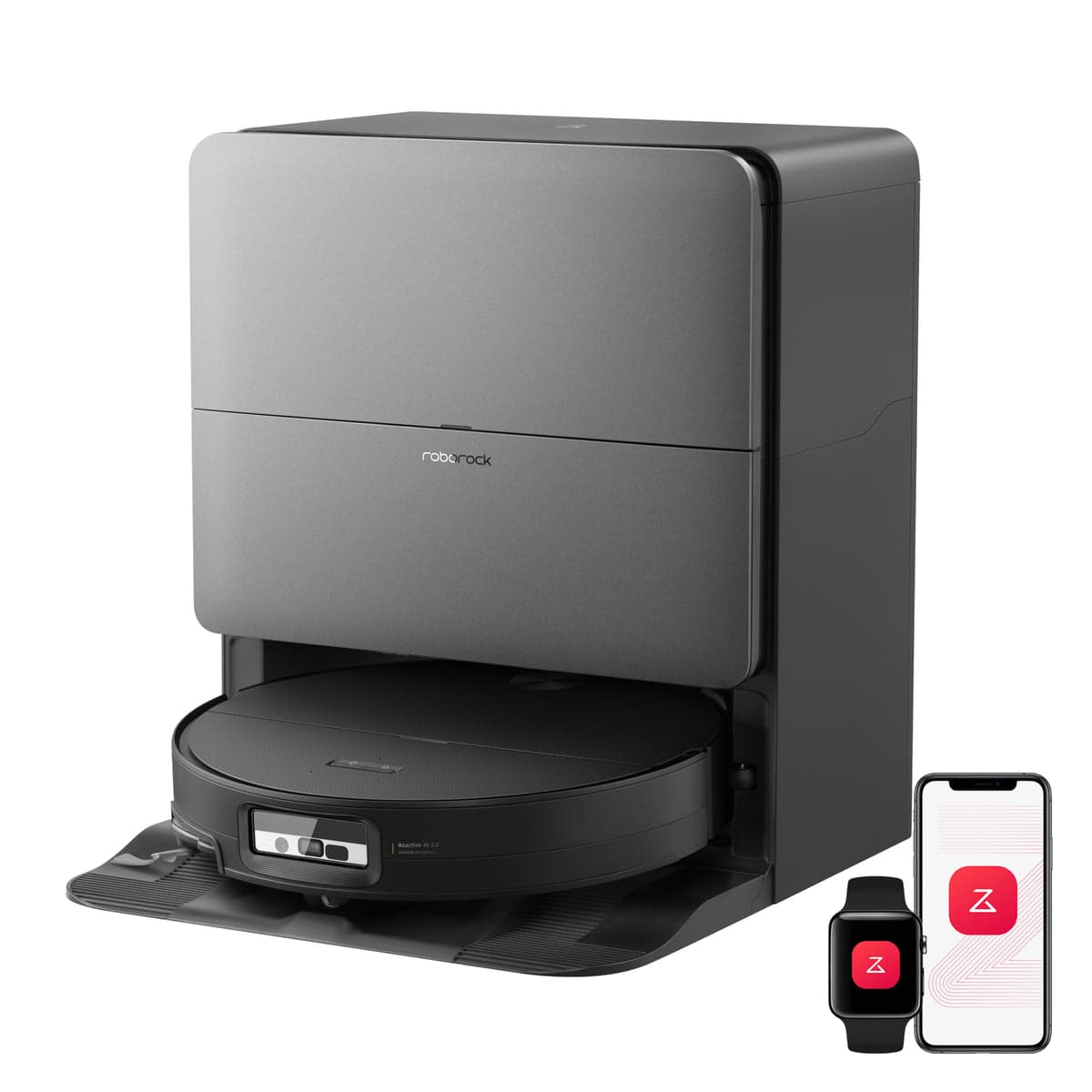
The self-emptying dock handles both debris collection and mop maintenance, combining functions that some competing systems separate into multiple modules. The debris bag in the dock has a capacity of approximately 2.5 liters, which Roborock estimates is sufficient for approximately 60 days of typical household cleaning before replacement is required. The bag uses a self-sealing design that prevents dust escape during replacement, addressing a key complaint with earlier self-empty systems. The dock's compact footprint of approximately 34 by 47 centimeters makes it manageable for most kitchen, bathroom, or mudroom placements, though its 46-centimeter height requires consideration for placement in spaces with low shelving or cabinet overhangs.
Battery performance follows Roborock's stated ratings of approximately 180 minutes in balanced mode with vacuum only, dropping to roughly 120 minutes when vacuuming and mopping simultaneously. These figures are consistent with real-world testing in typical residential environments, though homes with large floor plans exceeding 150 square meters may require a mid-cycle return to the dock for recharging. The recharge and resume feature ensures the robot returns to exactly the point where it paused for charging, preventing any area from being missed due to incomplete coverage. For larger homes, scheduling a combined vacuum and mop session during a period when no one will be disturbed by the robot's presence is the most practical approach, since the combined cleaning mode's shorter battery life may require a return to the dock partway through.
The Roborock Home application provides comprehensive control over all aspects of the Qrevo CurvX's operation, with a clean interface that has been refined across many software generations. The initial mapping run generates a detailed floor plan within minutes, with real-time visualization of the robot's progress through the home. The resulting map is editable, allowing users to add virtual walls, no-go zones, no-mop zones, and custom room divisions that reflect actual household layout rather than the robot's default assumptions. Multi-floor homes are supported with maps for up to four levels, and the robot automatically identifies which floor it is on when placed in different areas of the home, loading the appropriate map and cleaning preferences without manual intervention. Room-specific cleaning preferences can be configured so that the kitchen receives vacuuming with heavy mopping and maximum suction, while the bedroom gets only vacuuming at balanced suction with no water flow for the mops. The cleaning sequence can also be customized, so the robot cleans bedrooms first when occupants are less likely to be present and saves kitchen and bathroom cleaning for later in the schedule when the home is more likely to be empty.
For households with pets, the Qrevo CurvX offers several features specifically relevant to managing pet hair, dander, and the occasional accidents that come with animal companions. The high suction power and zero-tangling brush system handle pet hair on both hard floors and carpets effectively, with the HEPA filter capturing allergens and fine dust particles that can trigger pet-related allergies. The Reactive AI obstacle recognition system identifies pet waste reliably, preventing the catastrophic spreading of固体 pet accidents across floors that causes both cleaning nightmares and potential damage to the robot itself. Pet bowl areas can be marked as no-go zones to prevent the robot from disturbing water and food dishes during cleaning cycles, a thoughtful feature that reflects real-world pet household dynamics. The robot's operational noise levels vary by mode, with Silent mode at approximately 45 decibels suitable for nighttime operation in most homes, while Max mode at approximately 65 decibels produces a noticeable hum that most households would find disruptive during active living hours.
When evaluating the Qrevo CurvX against its competitors, several key differentiators emerge beyond the raw specification comparisons. The AdaptiLift chassis technology is unique to Roborock in this product generation and addresses a genuine practical limitation of conventional robot vacuums that competitors have not yet matched. The 22,000 pascal suction figure represents the highest in the current consumer robot vacuum market, though the practical difference between 22,000 and 12,000 pascals is more apparent on thick carpets than on hard floors where most robots already perform adequately. The 80-degree mop washing temperature exceeds all current competitors and provides meaningful benefits in households with greasy kitchen floors or bathroom tiles that accumulate soap scum and body oils. The ultra-slim chassis is a practical advantage that compounds over time as the robot reaches under furniture that would otherwise accumulate months of debris undetected.
The $899.98 price point positions the Qrevo CurvX at the premium end of the consumer robot vacuum market, above the Dreame L40 Ultra by approximately $100, above the Ecovacs Deebot X5 Pro Omni by approximately $50 to $100 depending on retailer, and above the Narwal Freo X Ultra by approximately $50. For buyers who prioritize comprehensive autonomous cleaning with minimal user intervention, the Qrevo CurvX delivers genuine capability improvements over these competitors in several measurable dimensions. The AdaptiLift chassis alone eliminates a category of failures that plague competing robots in households with thick rugs or uneven floor transitions. The hot water mop washing system addresses the most common complaint about self-washing robot mops, which is bacterial odor buildup that develops over weeks of use. The highest suction rating in the category provides headroom for deep cleaning sessions on thick carpets that lower-powered competitors cannot match. For buyers who can fully utilize these capabilities, the premium over competing products is justified by genuine performance improvements rather than marketing differentiation.
The real-world user experience of the Qrevo CurvX over extended periods reveals both the strengths of its design and some practical considerations that buyers should understand before purchase. The first weeks of use in a typical household involve the robot learning the floor plan, refining its cleaning paths, and optimizing its navigation around furniture arrangements that may not be perfectly permanent. During this learning phase, occasional navigation quirks like repeated approaches to the same area or brief pauses at complex furniture arrangements are normal and reflect the robot building its map rather than a defect. Once the mapping is complete and room divisions are established, the robot's navigation becomes notably more confident and efficient, with cleaning paths that cover the entire accessible floor area systematically rather than leaving visible gaps or obvious redundant passes.
The maintenance burden of the Qrevo CurvX is genuinely minimal compared to traditional robot vacuums or manual cleaning routines. The self-emptying dock eliminates the need to empty the robot's dustbin after every cleaning cycle, with the debris automatically transferred to the sealed bag in the dock. Users report checking the dock debris bag approximately every four to six weeks in typical households, with the actual frequency depending on floor area, pet ownership, and household foot traffic. The mop washing system reduces mop maintenance to checking and refilling the fresh water tank and emptying the wastewater tank approximately once per week in normal use. The HEPA filter in both the robot and the dock should be cleaned every two to four weeks by tapping loose debris and rinsing under running water, with replacement recommended every six to twelve months depending on usage intensity. The side brush and main brush roll require inspection for tangled hair or debris accumulation every one to two weeks, with the tool-free brush removal design enabling quick extraction and cleaning without special tools.
The obstacle avoidance system, while impressive in its 108-category recognition capability, requires appropriate user behavior to achieve optimal results. Loose items on floors like charging cables, small toys, sock pairs left on the floor by children, and fabric hair ties represent the categories where the system is most challenged. Users who establish a habit of tidying these items before running the robot, or who designate specific areas for charging cables and small items, will achieve the most reliable obstacle avoidance performance. The robot's ability to identify and avoid pet waste is particularly valuable and represents a genuine safety feature that prevents expensive and unpleasant cleaning failures. However, the system cannot identify all possible objects, so extremely unusual items or objects placed in unexpected locations may occasionally be encountered rather than avoided.
Carpet performance in the Qrevo CurvX represents a significant improvement over previous-generation robots, with the 22,000 pascal suction providing measurable extraction from medium and high-pile carpets that lower-powered robots leave visibly undercleaned. The brush system's ability to agitate carpet fibers and dislodge embedded debris is enhanced by the high suction that follows the agitation, creating a cleaning result that approaches manual vacuuming with an upright machine for surface debris and significantly exceeds it for deep carpet cleaning. For households with wall-to-wall carpet in living areas and bedrooms, this performance improvement is the most compelling reason to invest in a premium robot vacuum over more affordable options that may perform adequately on hard floors but leave carpets undercleaned.
Hard floor performance is where the Qrevo CurvX's dual-function vacuum and mop system demonstrates its full value. The vacuum function removes loose debris, dust, and pet hair from hard floor surfaces with the high-suction brush system, while the mop function then follows with damp rotating pads that pick up remaining fine particles and provide a streak-free clean. The water flow rate can be adjusted through the application, with lower flow rates suitable for sealed hardwood floors where excessive moisture could cause long-term damage and higher flow rates appropriate for tile and stone surfaces that can tolerate more water. The system intelligently avoids mopping areas designated as no-mop zones, which is essential for area rugs, carpets, and any floor sections where damp mopping is not desired. The combination of vacuum and mop in a single pass represents a practical cleaning efficiency that manual methods cannot match, particularly for households with mixed floor types.
The navigation and mapping system uses LiDAR scanning as its primary technology, building a precise map of the home environment by measuring distances to walls, furniture, and other obstacles through laser pulses. This LiDAR-based approach works in complete darkness and is not dependent on ambient lighting, making it more reliable than camera-only navigation systems in dimly lit rooms or during nighttime cleaning cycles. The system generates multiple floor maps for multi-story homes, automatically identifying the current floor based on recognizable landmarks and loading the appropriate map and cleaning preferences. Virtual walls and no-go zones can be configured in the application to prevent the robot from entering specific areas like children's playrooms, pet sleeping areas, or rooms with delicate floor items that cannot be moved. The systematic cleaning path algorithm covers the entire accessible floor area in efficient parallel passes rather than random bouncing, reducing cleaning time and ensuring more complete coverage.
The dock's self-washing mop system uses clean water from the fresh tank to wash the mop pads at 80 degrees Celsius, with the dirty water collected in a separate wastewater tank. This design means that the mop pads are genuinely clean at the start of each cleaning cycle rather than simply rinsed, which makes a meaningful difference in cleaning effectiveness for subsequent cycles. The hot water washing is particularly effective for kitchen floors where grease and food residue accumulate, as hot water dissolves these substances more effectively than cold or lukewarm water. The heated drying cycle that follows washing prevents bacterial growth and odor development in stored mop pads, which is a common failure point for self-washing systems that rely solely on air drying at ambient temperature.
For buyers evaluating the Qrevo CurvX against a manual cleaning routine or a less expensive robot vacuum option, the total cost of ownership calculation extends beyond the initial purchase price. A premium robot vacuum like the Qrevo CurvX eliminates the need for regular manual vacuuming and mopping, reclaiming hours of cleaning time per month that can be redirected to other activities. The robot's daily or every-other-day cleaning schedule maintains a consistently clean floor that manual cleaning, typically performed weekly, cannot match. Allergens and dust are removed more frequently, which is particularly beneficial for households with allergy sufferers or young children who spend significant time playing on floors. The convenience factor of waking up to clean floors every morning, or returning from work to a home that has been cleaned during the day, represents a quality-of-life improvement that is difficult to quantify but genuinely significant for busy households.
The competition between Roborock, Dreame, Ecovacs, and Narwal has accelerated the pace of innovation in the robot vacuum category substantially, with meaningful feature improvements arriving in each product generation. The Qrevo CurvX's AdaptiLift chassis and 22,000 pascal suction represent Roborock's current peak engineering achievement, but the competitive pressure ensures that these features will propagate to more affordable product tiers in future generations. For buyers purchasing at the current moment, the Qrevo CurvX represents the leading edge of available technology, though the pace of category improvement means that future products will likely offer similar capabilities at lower price points. The timing of a purchase decision involves this tension between getting the best available technology now and waiting for better value in future products, a calculation that depends on individual budget constraints and the urgency of the cleaning automation need.
The application software continues to receive updates from Roborock, adding features and refining behavior based on user feedback and machine learning improvements. Recent updates have improved the obstacle recognition system's accuracy for specific object categories, enhanced the mapping algorithm's efficiency in complex furniture arrangements, and added new scheduling options that provide more flexible cleaning timing control. The Roborock Home app integrates with major smart home platforms, enabling voice control through Amazon Alexa and Google Assistant, though the application itself provides more comprehensive control than voice commands can offer. Software updates are delivered automatically over WiFi, requiring no user intervention beyond ensuring the robot remains connected to the internet and powered on during update installation.
The $899.98 price represents a meaningful investment for most households, and buyers should honestly assess whether their home environment and cleaning needs justify the premium over less expensive alternatives. The Qrevo CurvX is most clearly justified for households with thick carpets that require deep cleaning, mixed floor types with significant transitions between surfaces, pets that shed heavily, or owners who prioritize minimum maintenance burden and maximum autonomous operation. For households with primarily hard floors and minimal carpet, simpler and less expensive robot vacuums or even the robot vacuum and mop combinations in lower price tiers may provide adequate performance at a more accessible price point. The premium features of the Qrevo CurvX address specific pain points that not every household experiences, so matching the product's capabilities to actual needs is the most sensible approach to making a purchase decision of this magnitude.
Pros
- Industry-first AdaptiLift chassis navigates thresholds up to 4cm and thick rugs
- 22,000Pa HyperForce suction exceeds all current consumer robot vacuums
- 80-degree Celsius hot water mop washing prevents bacterial odor buildup
- Ultra-slim 7.98cm chassis reaches under furniture competitors cannot
- Zero-tangling brush handles long hair and pet fur without manual cleaning
- Reactive AI obstacle recognition identifies 108 object types including pet waste
Cons
- Premium price of $899.98 positions it above most competing premium robots
- Battery life drops to 120 minutes with simultaneous vacuum and mop
- Camera-based obstacle recognition requires adequate ambient lighting
- Self-washing dock requires regular water tank refilling
Final Verdict
The Roborock Qrevo CurvX delivers flagship-level autonomous cleaning with 22,000 pascals of suction, an industry-first AdaptiLift chassis for overcoming obstacles, and 80-degree hot water mop washing at $899.98.