Samsung Galaxy S25 Edge Review: Style Over Substance?
The Galaxy S25 Edge is Samsung's thinnest and lightest flagship at just 5.8mm and 163g, featuring a stunning 200MP camera and brightest-ever display. But the 3,900mAh battery and missing telephoto lens demand real compromises for that ultra-slim design.
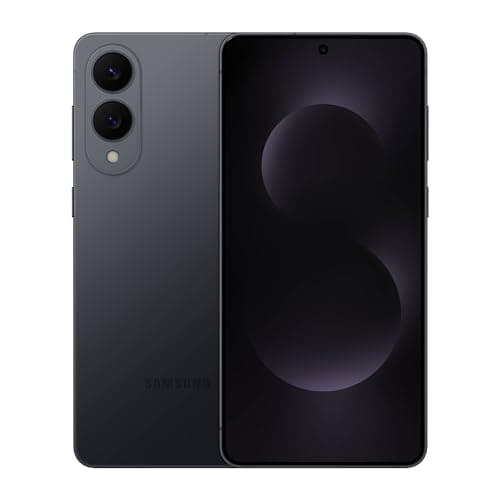
The Samsung Galaxy S25 Edge is a phone built around a single, audacious idea: what if we made a flagship smartphone so thin and light that it redefines what's possible without sacrificing the core experience? The answer, after spending time with Samsung's slimmest S Series phone ever, is a fascinating mix of engineering triumph and practical compromise. At 5.8mm thick and just 163 grams, the S25 Edge feels like a device from the future in your hand—but it asks you to accept trade-offs that might make you think twice before buying.
Design and Build: Engineering Marvel
The Galaxy S25 Edge measures 158.2 x 75.6 x 5.8mm—that's 31% thinner than the Galaxy S25 Ultra's 8.2mm frame and a staggering 29% lighter at 163 grams versus the Ultra's 230 grams. To put that in perspective, it's barely thicker than a USB-C port and lighter than many 6.1-inch phones. Pick it up, and the first thing you notice is the weight—or rather, the lack of it. The phone feels almost impossibly light for a device packing a 6.7-inch display, a 200MP camera, and a Snapdragon 8 Elite processor.
The in-hand feel is genuinely different from any other flagship phone available today. Where the iPhone 17 Pro Max or Galaxy S25 Ultra feel like substantial chunks of glass and metal, the S25 Edge feels almost delicate—not in a cheap way, but in the way a well-designed piece of jewelry feels precious. It slides into pockets without creating a visible bulge, and holding it for extended periods causes no hand fatigue whatsoever. The flat sides with subtly rounded edges provide a secure grip despite the thin profile.
Samsung has used a titanium frame combined with Corning Gorilla Glass Ceramic 2 on the front and back. Despite the thin profile, the build quality is outstanding. There's no flex, no creaking, no sense that this phone has been compromised structurally to achieve its svelte dimensions. It feels every bit as premium as the S25 Ultra, just dramatically thinner and lighter.
The phone comes in three colors: Titanium Silver, Titanium JetBlack, and Titanium IcyBlue. The titanium frame is visible along the edges, and the matte glass back resists fingerprints reasonably well. The camera module protrudes noticeably—a necessity given the 200MP sensor inside a 5.8mm body—which means the phone wobbles when you use it on a flat surface. You'll want a case for that reason alone, though finding one that maintains the thin profile may be challenging.
Available in 256GB and 512GB configurations, the S25 Edge ships without a charger in the box—just a USB-C cable and SIM ejector tool. Samsung has followed Apple's lead in this regard, and it's an annoying omission at this price point.
Display: Best-in-Class Brightness
The 6.7-inch QHD+ Dynamic AMOLED 2X display is arguably the best part of the Galaxy S25 Edge. With a resolution of 3120 x 1440 pixels, a 120Hz adaptive refresh rate, and a peak brightness of 1,997 nits, this is the brightest display Samsung has ever put in a phone according to Tom's Guide testing. It outshines the Galaxy S25 Ultra's 1,860 nits and the S25 Plus's 1,350 nits by a comfortable margin.
In practical terms, this means the S25 Edge is exceptionally readable in direct sunlight. HDR content looks spectacular, with deep blacks, vibrant colors, and punchy highlights that make movies and games pop. The 120Hz adaptive refresh rate intelligently scales between 1Hz and 120Hz depending on what you're doing, saving battery during static content and delivering buttery smoothness during scrolling and gaming.
Color accuracy is excellent. In Natural mode, the display achieves a Delta-E score of 0.25—anything under 1 is considered excellent. In Vivid mode, it covers 151.3% of the sRGB gamut and 107.2% of DCI-P3, making colors truly pop without looking cartoonishly oversaturated. Whether you're editing photos, watching Netflix, or browsing social media, the S25 Edge's display is a genuine highlight.
The only downside is that the thin bezels and flat display (by 2025/2026 standards) mean there's precious little room for error when holding the phone. The display goes nearly edge to edge, and accidental touches around the periphery are more common than on phones with slightly thicker bezels.
Cameras: A Tale of Two Sensors
The Galaxy S25 Edge makes a controversial camera decision: it uses a dual-camera setup with a 200MP main sensor (f/1.7, OIS) and a 12MP ultrawide (f/2.2, 120-degree FoV), but there is no dedicated telephoto lens. All zoom beyond 1x is digital, which is a significant compromise for a phone that costs over $1,000.
Main Camera
The 200MP main camera is the same sensor found in the S25 Ultra, and it performs accordingly. In good lighting, photos are sharp, detailed, and well-exposed with accurate colors. Samsung's image processing has matured significantly, and the S25 Edge produces images that are competitive with the Pixel 9 Pro and iPhone 17 Pro in most scenarios.
The 200MP sensor bins pixels down to 12.5MP by default, combining 16 pixels into one for improved light sensitivity. You can shoot in full 200MP mode if you want maximum detail for cropping, but the file sizes are enormous—around 40-50MB per shot.
Low-light performance is impressive for such a thin phone. Night mode captures usable images with good dynamic range and reasonable noise levels. The phone's astrophotography mode, hidden in Expert RAW, produces excellent results with 2-3 minute exposures that rival the S25 Ultra's output.
Ultrawide Camera
The 12MP ultrawide is competent but not class-leading. It captures a wide 120-degree field of view with decent color matching to the main sensor. Detail is good in the center but softens toward the edges, and low-light performance is merely adequate. It gets the job done for landscape shots and group photos, but it's not going to blow you away.
The Missing Telephoto
The absence of a telephoto lens is the S25 Edge's most obvious compromise. At 3x zoom, the digital crop from the 200MP sensor produces acceptable results in good light, but by 5x zoom, fine details like text on signs or facial features start to look processed. By 10x zoom, the difference compared to the S25 Ultra's dedicated telephoto is stark—the Ultra produces sharp, detailed images at 10x; the Edge produces soft, smudgy results that look like they've been through a heavy watercolor filter. Digital zoom at 20x and beyond is essentially unusable except for identifying distant objects.
If zoom photography matters to you, the S25 Edge is not the right phone. Samsung has clearly prioritized thinness over camera versatility, and that decision shows. The hybrid zoom system uses pixel-binning from the 200MP sensor to approximate telephoto results, but it simply cannot match optical zoom in terms of detail retention, especially in medium to low light conditions where the digital crop amplifies noise alongside the subject. Portrait mode photos rely exclusively on the main sensor's depth mapping, and while results are generally good with accurate edge detection, the bokeh effect lacks the natural compression and perspective that a dedicated telephoto lens provides.
Video Recording
Video quality is excellent, with support for 8K recording at 30fps and LOG profile for color grading. HDR video actually exposes shadows better than the S25 Ultra in some scenarios, which is a pleasant surprise. The stabilization is effective for handheld shooting, and audio quality from the built-in microphones is clear.
Performance: Flagship Power in a Slim Package
The Snapdragon 8 Elite for Galaxy chipset paired with 12GB of RAM delivers the kind of performance you'd expect from a 2025 flagship. In Geekbench 6, the S25 Edge scores approximately 3,129 single-core and 9,916 multi-core—virtually identical to the S25 Ultra and S25 Plus. Everyday tasks like app switching, web browsing, and multitasking are instantaneous.
Gaming performance is slightly constrained by the thin chassis. In 3DMark Wild Life Unlimited, the S25 Edge manages 149.18 fps compared to the S25 Ultra's 161.66 fps and the S25 Plus's 157.07 fps. The difference is attributable to thermal throttling—the thin body has less surface area and airflow for heat dissipation. In practice, demanding games like Genshin Impact and Call of Duty Mobile run smoothly at high settings, but the phone gets warmer than its thicker siblings, and sustained performance may dip slightly after extended sessions.
The phone never feels slow or laggy in normal use. One UI 7 on Android 15 is well-optimized, and Samsung's software experience remains one of the best Android implementations available. Galaxy AI features—including Generative Edit, Sketch to Image, Audio Eraser, and Portrait Studio—are all present and work as well as they do on the S25 Ultra.
Battery Life and Charging: The Achilles' Heel
This is where the Galaxy S25 Edge's thin design exacts its heaviest toll. The 3,900mAh battery is significantly smaller than the S25 Plus's 4,900mAh and the S25 Ultra's 5,000mAh. In Tom's Guide's battery test (continuous web browsing over cellular at 150 nits), the S25 Edge lasted 12 hours and 24 minutes. That's nearly 5 hours less than the S25 Ultra's 17 hours and 14 minutes, and over 4 hours less than the S25 Plus's 16 hours and 55 minutes.
In real-world usage, this means the S25 Edge will comfortably get through a typical workday but will need a charge before evening if you're a heavy user. Light users who spend most of their time on Wi-Fi might squeeze through a full day with 15-20% remaining, but power users, gamers, streamers, and anyone who relies on GPS navigation will find themselves reaching for a charger by mid-afternoon. I consistently needed to top up around 3 or 4 PM during my testing, even with moderate use that included about three hours of screen-on time by lunch.
Charging speeds compound the problem. The S25 Edge supports just 25W wired charging, compared to 45W on the S25 Plus and Ultra. In 30 minutes, the S25 Edge reaches 54% charge, while the S25 Ultra hits 71% in the same time. A full charge from empty takes over an hour—closer to 75 minutes with a compatible 25W charger. Wireless charging at 15W is even slower, and reverse wireless charging at 4.5W is available for topping up Galaxy Buds or a smartwatch in a pinch.
The combination of a small battery and slow charging is the S25 Edge's biggest weakness—and one that's directly tied to the thin design that defines the phone. You can't have a 5.8mm phone with a 5,000mAh battery, and Samsung chose thinness over endurance. Whether that trade-off is acceptable depends entirely on your usage patterns and tolerance for midday charging.
One practical consideration: if you commute, travel frequently, or spend long days away from a power outlet, the S25 Edge will require more careful battery management than any other Samsung flagship. Carrying a portable power bank becomes almost mandatory for heavy use days, and the slow 25W charging means even quick top-ups take longer than they should. Samsung's decision to cap charging at 25W feels particularly stingy when competing phones at half the price offer 45W, 65W, or even 80W charging.
Software and One UI 7
One UI 7 on Android 15 is polished, feature-rich, and well-integrated with Galaxy AI. The Now Brief feature provides personalized daily summaries, while Now Bar acts as Samsung's version of Apple's Dynamic Island, showing app shortcuts around the punch-hole camera.
Galaxy AI tools are genuinely useful. Generative Edit lets you remove objects or people from photos with impressive accuracy. Sketch to Image turns rough drawings into polished artwork. Audio Eraser removes unwanted background noise from videos. These features work locally on the device, preserving privacy.
Samsung's update commitment of 7 years of OS upgrades and security patches applies to the S25 Edge, matching Google's Pixel promise. That's excellent long-term value, though the small battery may feel even more constrained after several years of chemical aging reduces its already modest capacity. Samsung's One UI 7 also includes enhanced customization options, with the ability to tweak almost every visual element of the interface—from icon shapes and grid layouts to edge panels and lock screen widgets. The Good Lock suite of customization tools remains available for power users who want even deeper control over their phone's behavior and appearance. The device also supports Samsung DeX for desktop-like productivity when connected to an external monitor, a feature that works surprisingly well for light productivity tasks despite the phone's modest thermal headroom.
Competition: How the S25 Edge Fits In
At $992.99 on Amazon (or $1,099 MSRP), the Galaxy S25 Edge occupies an awkward position in Samsung's lineup. Here's how it compares:
Galaxy S25 Plus ($999.99): Same 6.7-inch display size, larger 4,900mAh battery, 45W charging, and an additional telephoto camera. It's thicker at 7.3mm and heavier, but it offers objectively better battery life and camera versatility. For most people, the S25 Plus is the better phone.
Galaxy S26 Ultra ($1,299): The full flagship experience with S Pen support, four cameras including dedicated telephoto lenses, a 5,000mAh battery, and 45W charging. It's significantly thicker (8.2mm) and heavier (230g), but offers no compromises. If you can afford the extra $300, the Ultra is the better device in almost every measurable way.
Google Pixel 9 Pro ($999): Superior camera processing, longer battery life, and a cleaner software experience. The Pixel 9 Pro is thicker at 8.5mm but offers a telephoto lens and better computational photography.
iPhone 17 ($799): Better battery life, better video recording, and deeper ecosystem integration. The iPhone 17 is thicker and heavier but offers a more polished overall experience.
Motorola Razr Ultra 2025 ($999): Similar thinness in a foldable form factor. The Razr offers the novelty of a foldable design with comparable battery life to the S25 Edge.
Who Should Buy the Galaxy S25 Edge?
The S25 Edge is for a specific type of buyer: someone who values thinness and lightness above all else, who's willing to accept battery and camera compromises for a phone that disappears in a pocket and feels barely noticeable in the hand. If you've ever wished your phone were lighter or thinner, the S25 Edge delivers in ways no other non-foldable flagship does. It's the phone you buy with your heart and your eyes, not with a spec sheet comparison.
It's also a strong choice for someone who primarily uses their phone for communication, social media, web browsing, and light photography—tasks that don't stress the battery or demand optical zoom. For these users, the S25 Edge's compromises are unlikely to be dealbreakers, and the design benefits will enhance the daily experience in subtle but meaningful ways.
Let's talk about audio. The Galaxy S25 Edge's stereo speakers are surprisingly good for such a thin device. They produce clear mids and respectable highs, though bass response is naturally limited by the thin chamber. They're loud enough for casual listening and video watching, and call quality through the earpiece is excellent. The phone supports Samsung's Seamless Codec for high-quality Bluetooth audio when paired with Galaxy Buds, along with standard AAC and SBC codecs. There's no 3.5mm headphone jack, which is expected at this point, but the USB-C audio output delivers clean sound through wired headphones or DACs.
Who Should Skip It
Anyone who needs all-day battery life, anyone who frequently uses zoom photography, anyone who games for extended periods, and anyone who wants the best possible camera system should look elsewhere. The Galaxy S25 Plus or Ultra offer better battery life, better cameras, and faster charging with relatively minor increases in thickness and weight.
Final Thoughts
The Samsung Galaxy S25 Edge is a remarkable engineering achievement that asks a simple question: how much are you willing to trade for thinness? The answer is personal, and Samsung has made its bet that there's a meaningful market of buyers who will choose a phone that's 5.8mm and 163 grams over one that's 7.3mm and 196 grams—even if it means charging slower, zooming digitally, and reaching for a power bank by mid-afternoon.
For those buyers, the S25 Edge delivers. It's the thinnest, lightest flagship Android phone you can buy without going foldable, and it does so without compromising on build quality, display excellence, or core performance. The 200MP camera captures stunning photos in good light, the display is the brightest Samsung has ever made, and One UI 7 is as polished as Android gets. The Snapdragon 8 Elite ensures everything from app launches to multitasking feels instantaneous, and gaming performance—while slightly below the S25 Ultra—is still excellent for a thin phone.
But for everyone else—and I suspect that's the majority of buyers—the compromises are too steep. The S25 Plus costs the same, lasts four hours longer on a charge, charges faster, and includes a telephoto camera. The S25 Ultra costs $300 more but offers a complete flagship experience without meaningful compromises. The S25 Edge is a specialist device in a world of generalists, and specialists always have a narrower appeal. It's the kind of phone that makes you smile every time you pick it up, but also makes you reach for a charger every afternoon.
At $992.99 on Amazon, the Galaxy S25 Edge is available at a meaningful discount from its $1,099 MSRP. At that price, it's a more compelling proposition—but the fundamental trade-offs remain. Buy it for the design, but understand what you're giving up.
Wrap-Up
The Galaxy S25 Edge is ultimately a test of priorities. If you value the feel of a phone in your hand above all else—if you want a device that disappears into your pocket and makes every other flagship feel unnecessarily bulky—this is the phone for you. Samsung has proven that it's possible to build a 5.8mm flagship — unlike the Galaxy Z Fold 7 which takes a different approach to form factor innovation — without sacrificing build quality, display excellence, or camera quality (at least on the main sensor). But the battery life compromise is real, and the 25W charging in 2026 feels deliberately held back.
For Samsung, the S25 Edge is an important showcase device—proof that the company can innovate in industrial design even within the established S series formula. For buyers, it's a reminder that engineering trade-offs are unavoidable. You can have thin, or you can have battery endurance. You can have light, or you can have a telephoto lens. The S25 Edge makes its choices boldly, and it's up to you to decide whether they align with your priorities.
Pros
- Stunning 5.8mm thin and 163g design—the lightest flagship by far
- Brightest Samsung display ever at 1,997 nits peak brightness
- Excellent 200MP main camera with great daylight and astrophotography
- Snapdragon 8 Elite delivers flagship performance
- IP68 durability with titanium frame and Gorilla Glass Ceramic 2
Cons
- 3,900mAh battery struggles to last a full day for heavy users
- 25W charging is slow for a 2025/2026 flagship
- No dedicated telephoto lens—digital zoom only
- Priced at $1,099 MSRP with significant compromises
- Essential Key placement leads to constant accidental presses
Final Verdict
The Galaxy S25 Edge is Samsung's thinnest and lightest flagship at just 5.8mm and 163g, featuring a stunning 200MP camera and brightest-ever display. But the 3,900mAh battery and missing telephoto lens demand real compromises for that ultra-slim design.