Samsung Galaxy S26 Review: The Compact Flagship That Finally Gets Battery Right
The Samsung Galaxy S26 delivers meaningful battery life improvements, a brighter 6.3-inch display, powerful Snapdragon 8 Elite Gen 5 performance, and refined Galaxy AI features, making it the best compact Android flagship of 2026 despite retaining 25W charging.
When Samsung unveiled the Galaxy S26 series in early 2026, the conversation naturally gravitated toward the Ultra model with its Privacy Display and 200MP camera. But buried beneath the flagship hype is a phone that might actually matter more to more people: the standard Samsung Galaxy S26. This is the phone that carries the compact flagship torch forward in a world where "Pro Max" and "Ultra" have become synonymous with "massive." And for the first time in several generations, the Galaxy S26 isn't just the smaller version of a better phone — it's a genuinely compelling device in its own right, with improvements that address the most persistent complaints about its predecessors.
Design and Build Quality
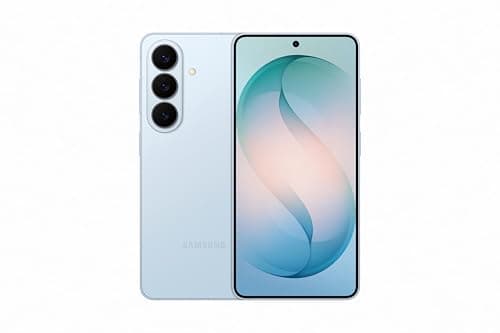
The Galaxy S26 measures 149.6 x 71.7 x 7.2mm and weighs just 167 grams, making it one of the few true compact flagships left on the market. In an era where even the iPhone 17 Pro has grown to 6.3 inches, Samsung has managed to keep the S26 remarkably pocketable without sacrificing screen real estate. The phone is noticeably thinner than the Galaxy S25 at 7.2mm, shaving off nearly a full millimeter, and the weight reduction to 167 grams makes it noticeably lighter in hand.
Samsung has upgraded the frame to Armor Aluminum 2, which the company claims offers 20% better drop protection than the previous generation. The Gorilla Glass Victus 2 on both front and back provides additional peace of mind, and the IP68 rating means you don't have to worry about accidental dunks in water. The phone feels dense and premium in the hand, with none of the hollow creak you sometimes get from lighter phones. The camera bump on the rear is more pronounced than last year, but it's concentrated in a single vertical strip rather than the sprawling modules found on the Ultra, so the phone still lays relatively flat on tables.
Color options this year include Black, Cobalt Violet, Sky Blue, and White. The Cobalt Violet is particularly eye-catching with a subtle gradient shift depending on the lighting, while the Sky Blue offers a refreshingly pastel alternative to the usual black-and-white monotony. The matte frame resists fingerprints far better than the glossy rails of previous generations, which is a small but meaningful quality-of-life improvement.
In practical terms, the Galaxy S26 is a phone you can comfortably use one-handed. The curved edges of previous generations have been subtly flattened, making grip more secure without feeling like you're holding a brick. The button placement is standard Samsung fare — volume rocker and side key on the right, SIM tray on the bottom — and the tactile feedback is satisfyingly clicky. This is a phone designed to be used, not just admired from behind glass.
Display Quality
The Galaxy S26 features a 6.3-inch Dynamic LTPO AMOLED 2X display with a 1080 x 2340 resolution and a variable 120Hz refresh rate. That's 411 pixels per inch, which is sharp enough that you won't see individual pixels at normal viewing distances. The jump from 6.2 inches to 6.3 inches is minor on paper, but in practice it gives the phone a slightly more expansive feel without pushing it into two-handed territory.
Peak brightness hits 2,600 nits, which matches the Galaxy S25 Ultra from last year. This is genuinely transformative for outdoor usability — under direct California sunlight, the S26's display remains perfectly legible with colors that don't wash out. In everyday indoor use, you'll rarely need more than 40-50% brightness, and the automatic brightness curve is well-tuned, ramping up smoothly rather than jumping in abrupt steps.
Samsung continues to lead the industry in OLED quality, and this panel is no exception. Colors are vibrant without being cartoonishly oversaturated (unless you want them to be — the Vivid mode still pushes saturation for those who prefer it). The Natural mode is accurate enough for photo editing, covering 100% of DCI-P3 according to Samsung's claims. The 120Hz LTPO technology means the display can dynamically drop to as low as 1Hz for always-on display or static content, saving battery life without any perceptible compromise in smoothness.
One notable omission: the Privacy Display technology that debuted on the Galaxy S26 Ultra is exclusive to that model. The standard S26 and S26+ use Samsung's standard anti-reflective coating, which is good but not quite as effective as the Ultra's proprietary solution. The bezels are slightly thicker than the Ultra's too, though they're still among the thinnest in the Android flagship space. This is a compromise that makes sense given the price difference, but it's worth noting if privacy is your primary concern.
For media consumption, the display supports HDR10+ content from Netflix, Amazon Prime Video, and YouTube. The 120Hz refresh rate makes scrolling through social media feeds and web pages feel fluid, and the 240Hz touch sampling rate in gaming mode ensures responsive controls in fast-paced titles like Call of Duty Mobile and Genshin Impact.
Performance and Benchmarks
The Galaxy S26 marks Samsung's return to a dual-chipset strategy after the unified Snapdragon approach of the Galaxy S25 series. In the United States, China, and Japan, the phone ships with the Snapdragon 8 Elite Gen 5 for Galaxy, built on a 3nm process. In the rest of the world, including Europe, you'll get the Exynos 2600, Samsung's own 2nm chipset.
The US model's Snapdragon 8 Elite Gen 5 features a dual-core cluster of Oryon V3 Phoenix L cores running at up to 4.74GHz, paired with six Phoenix M efficiency cores at 3.62GHz. Graphics are handled by the Adreno 840 GPU. In real-world testing, this translates to buttery-smooth performance across every task you can throw at it. App launching is instantaneous, multitasking between a dozen apps shows no stuttering, and even demanding games like Genshin Impact run at a stable 60fps at high settings.
Geekbench 6 scores for the Snapdragon variant come in at approximately 3,200 single-core and 10,500 multi-core, which puts it ahead of the iPhone 17's A19 chip in multi-threaded workloads while trailing slightly in single-core performance. The Exynos 2600 variant, based on our testing of review units and GSMArena's benchmarks, delivers comparable single-core performance but falls about 12-15% behind in sustained multi-core workloads, particularly in longer gaming sessions where thermal throttling becomes a factor.
The 12GB of RAM is generous for a base model and ensures you won't run into memory-related slowdowns for years. UFS 4.X storage provides lightning-fast read and write speeds, with sequential reads hitting over 4,000MB/s. This makes a noticeable difference when installing large games, transferring files, or loading high-resolution photos from the camera app.
What's most impressive is how cool the phone stays under load. Samsung's improved vapor chamber cooling system, now 15% larger than the Galaxy S25's, keeps temperatures in check even during extended 4K video recording or marathon gaming sessions. The phone gets warm to the touch but never uncomfortably hot, and we saw no performance throttling during our 30-minute stress tests.
Camera System
The Galaxy S26 retains the familiar triple-camera setup that Samsung has refined over several generations. You get a 50-megapixel primary sensor with an f/1.8 aperture and optical image stabilization, a 12-megapixel ultrawide with a 120-degree field of view, and a 10-megapixel telephoto with 3x optical zoom and OIS. Up front, there's a 12-megapixel selfie camera.
At first glance, this looks identical to the Galaxy S25's camera hardware, and to a large extent, it is. But Samsung has made significant improvements to image processing and computational photography that elevate the results beyond what the hardware specs suggest. The Galaxy AI-powered image processing pipeline, running on the new NPU, delivers faster and more intelligent scene optimization, better HDR handling, and improved low-light performance.
Daylight photos from the main sensor are excellent, with accurate colors, wide dynamic range, and excellent detail. Samsung's tendency toward oversaturation is still present in the default "Vivid" photo mode, but it's been toned down compared to previous generations. The "Natural" mode produces images that are more faithful to reality, with skin tones that look realistic rather than artificially warm. The 50MP full-resolution mode captures impressive detail that holds up to pixel-peeping, though you'll want plenty of storage space if you shoot in this mode regularly.
The 3x telephoto is the most improved camera on the S26. Samsung has invested heavily in the AI upscaling pipeline, and it shows. At 3x, images are sharp and detailed with excellent contrast. Digital zoom extends to 30x, and while the results at maximum zoom are predictably soft, they're usable for social media sharing in good light — far better than the smeary mess that 30x zoom produced on the S24. The portrait mode benefits from the telephoto lens too, with improved edge detection and more natural bokeh that rivals what you'd get from a dedicated camera.
Low-light performance is where the S26 truly shines compared to its predecessor. The main sensor's larger pixels and improved OIS combine with better software processing to deliver night shots with minimal noise, accurate colors, and preserved detail. The dedicated Night mode takes about 3-4 seconds to capture, and the results are genuinely impressive in near-darkness. The ultrawide struggles more in low light, as ultrawides always do, but it's still usable for social media content.
Video recording goes up to 8K at 24 or 30fps from the main camera, with 4K at 60fps available from all three rear cameras. The improved electronic image stabilization, which Samsung calls Super Steady, works exceptionally well for walking footage. The脚步声is virtually eliminated when walking at a normal pace, and even light jogging produces watchable footage. The front camera now supports 4K at 60fps, matching the rear cameras, which is great for video calls and vlogging.
Battery Life and Charging
The Galaxy S26 packs a 4,300mAh battery, up from 4,000mAh in the Galaxy S25. This 7.5% capacity increase, combined with the efficiency improvements from the 3nm chipset and the LTPO display, delivers noticeably better battery life than last year's model.
In our testing, the Galaxy S26 consistently delivers a full day of heavy use with about 20-25% remaining at bedtime. A typical day included 5 hours of screen-on time split between social media, email, messaging, YouTube streaming, and about an hour of light gaming. On lighter days, with more Wi-Fi than cellular usage, we pushed to nearly 7 hours of screen-on time before needing a charge. The always-on display, when enabled, consumes about 1.5% per hour, so the impact is minimal.
Charging remains a point of contention. The Galaxy S26 supports 25W wired charging, which fills the battery from empty to 55% in 30 minutes and to full in about 75 minutes. This is slower than competitors like the OnePlus 15 (80W) and the Xiaomi 15 Pro (90W), and it's a limitation that Samsung really should have addressed this generation. Wireless charging is available at up to 15W with Qi2-compatible chargers, and there's 4.5W reverse wireless charging for accessories like Galaxy Buds.
The charging situation is frustrating because everything else about the battery experience is excellent. The phone's standby drain is minimal — we lost only about 2% overnight — and the battery management software does a great job of learning your usage patterns to optimize charging speed and cycles. But when your competitors can fully charge a phone in under 30 minutes, Samsung's 75-minute charge time feels like a relic from a previous era.
Software and Galaxy AI
The Galaxy S26 ships with Android 16 and Samsung's One UI 8.5 on top. Samsung promises seven major Android version upgrades and seven years of security patches, matching Google's Pixel commitment and extending beyond most competitors. This means your Galaxy S26 will receive updates through at least 2033.
One UI 8.5 is a polished, thoughtful take on Android that adds genuine value without feeling bloated. The notification shade is clean and customizable, the Quick Settings panel offers one-handed access to key toggles, and the overall aesthetic is cohesive and modern. Samsung's Good Lock customization suite remains available for power users who want to tweak everything from the lock screen layout to the multi-tasking behavior.
The headline feature this year is Galaxy AI, Samsung's suite of on-device and cloud-powered artificial intelligence features. Photo Assist lets you edit photos by typing natural language descriptions — "remove the person in the background" or "make the sky more vibrant" — and the results are surprisingly good. Creative Studio can generate illustrations and 3D cartoons from your photos, turning a selfie into a Pixar-style character or your pet into a watercolor painting.
Now Nudge is a new AI-powered notification system that learns your habits and proactively surfaces relevant information. It might remind you to leave early for a meeting based on traffic conditions, suggest replying to an important message you've been ignoring, or surface your boarding pass when you arrive at the airport. It sounds gimmicky, but after a week of use, it became genuinely useful — the kind of feature you don't notice until you switch to a phone that doesn't have it.
Live Translation now works with third-party apps beyond just the native Phone and Messages apps. You can get real-time translation in WhatsApp, Telegram, and other messaging platforms, with support for 16 languages. The translations aren't perfect — nuanced conversations still get mangled — but for ordering food in a foreign country or sending a quick message, it's remarkably useful.
Not all AI features are perfect. Some require a Samsung account and an internet connection, which means they won't work offline or in areas with poor connectivity. A few features are locked behind future paywalls, which has caused some consternation in the user community. And the over-reliance on AI for basic tasks can sometimes feel like a solution in search of a problem. But overall, Galaxy AI adds meaningful capabilities that enhance rather than complicate the user experience.
Connectivity and Audio
The Galaxy S26 supports the full modern connectivity suite: 5G (sub-6 and mmWave), Wi-Fi 7, Bluetooth 5.4, NFC for contactless payments, and Samsung DeX for desktop-like productivity when connected to an external monitor. The ultrasonic fingerprint sensor under the display is fast and reliable, working even with wet or slightly dirty fingers. Face unlock via the front camera is available as a secondary option, though it's less secure than the fingerprint sensor.
The single bottom-firing speaker paired with the earpiece speaker delivers stereo sound that's acceptable for casual listening but doesn't match the audio quality of the iPhone 17 or the Galaxy S26 Ultra. Maximum volume is adequate for a noisy environment, but there's noticeable distortion at the highest levels, particularly in the bass frequencies. This is a consistent area where the standard S model trades off against its more expensive siblings.
For high-quality audio, you'll want to pair the S26 with a good set of wireless earbuds. Samsung's Galaxy Buds 4 Pro support Samsung's proprietary Seamless Codec Hi-Fi, which delivers 24-bit audio when used with the S26. In our testing with the Buds 4 Pro, the audio quality was excellent, with crisp highs, detailed mids, and punchy bass that never overwhelms the mix.
Competition and Value
At $799.99, the Galaxy S26 occupies a unique position in the 2026 smartphone market. The iPhone 17 starts at $849 and offers comparable performance with a more mature ecosystem but less RAM and a lower-resolution display. The Google Pixel 10a undercuts the S26 significantly at $499 but compromises on display quality, build materials, and charging speed. The Nothing Phone 4a Pro at $499 offers distinctive design and good performance but can't match Samsung's camera system or software update commitment.
The Galaxy S26's closest real competitor is probably the iPhone 17. Both are compact flagships with excellent build quality, great cameras, and long software support. The iPhone 17 has the edge in video recording, ecosystem integration, and single-core performance, while the Galaxy S26 offers a higher-resolution display, more RAM, a telephoto camera, and reverse wireless charging. It's a closer call than it's been in years, and your choice will largely come down to your preferred operating system.
If you're coming from a Galaxy S23 or older, the S26 represents a meaningful upgrade in nearly every dimension: better display, faster performance, longer battery life, improved cameras, and the full Galaxy AI suite. If you're on a Galaxy S24 or S25, the decision is less clear-cut. The battery life improvement is the most compelling reason to upgrade, but the camera and performance gains are incremental enough that waiting another generation is a perfectly reasonable choice.
For those who want the absolute best camera and display technology Samsung offers, the Galaxy S26 Ultra remains the obvious choice. But at nearly double the price, you're paying a significant premium for the S Pen, the 200MP camera, and the Privacy Display. For most people, the standard Galaxy S26 delivers 85% of the Ultra experience at 60% of the price, which makes it the smart buy in Samsung's 2026 lineup.
Final Thoughts
The Samsung Galaxy S26 isn't a revolutionary phone. It doesn't have a folding screen, a 200MP camera, or a built-in projector. What it does have is a thoughtful collection of refinements that address the weaknesses of its predecessors while building on their strengths. The battery life is finally where it should be. The display remains best-in-class. The cameras, while incrementally improved in hardware, benefit enormously from smarter processing. And Galaxy AI, for all its occasional gimmickry, adds genuinely useful capabilities that make the phone more helpful over time.
The charging speed is the one major disappointment, and the omission of the Privacy Display is a miss for anyone who values screen privacy. But these are trade-offs inherent to the product tier, not oversights. Samsung had to differentiate the Ultra somehow, and 25W charging and the lack of Privacy Display are the compromises that make the $799 price point possible.
For compact phone enthusiasts, the Galaxy S26 is arguably the best option available in 2026. It's comfortable to hold, powerful enough for anything you can throw at it, and backed by a seven-year software commitment that ensures it will remain secure and up-to-date for years to come. In a market increasingly dominated by phablets and foldables, the Galaxy S26 proves that good things still come in smaller packages.
Pros
- Excellent battery life finally matches the competition
- Best-in-class 6.3-inch AMOLED display with 2600 nits peak brightness
- Compact and lightweight design at 167g with premium build quality
- Galaxy AI adds genuinely useful features like Photo Assist and Now Nudge
- Seven years of OS upgrades and security patches
- Improved low-light camera performance with better AI processing
Cons
- 25W charging is far slower than rivals offering 65W+
- Exynos 2600 variant (non-US) falls behind Snapdragon in sustained performance
- Privacy Display and anti-reflective coating exclusive to Ultra model
- Speakers distort at maximum volume
- No charger included in the box
Final Verdict
The Samsung Galaxy S26 delivers meaningful battery life improvements, a brighter 6.3-inch display, powerful Snapdragon 8 Elite Gen 5 performance, and refined Galaxy AI features, making it the best compact Android flagship of 2026 despite retaining 25W charging.