Samsung Galaxy Watch 9 Review: The Smartest Health-Tracking Watch on Android
The Galaxy Watch 9 keeps the Watch 8's design but upgrades the silicon, extends battery life to two full days, and adds a genuinely useful layer of AI health coaching — the best Android smartwatch for fitness-focused users.
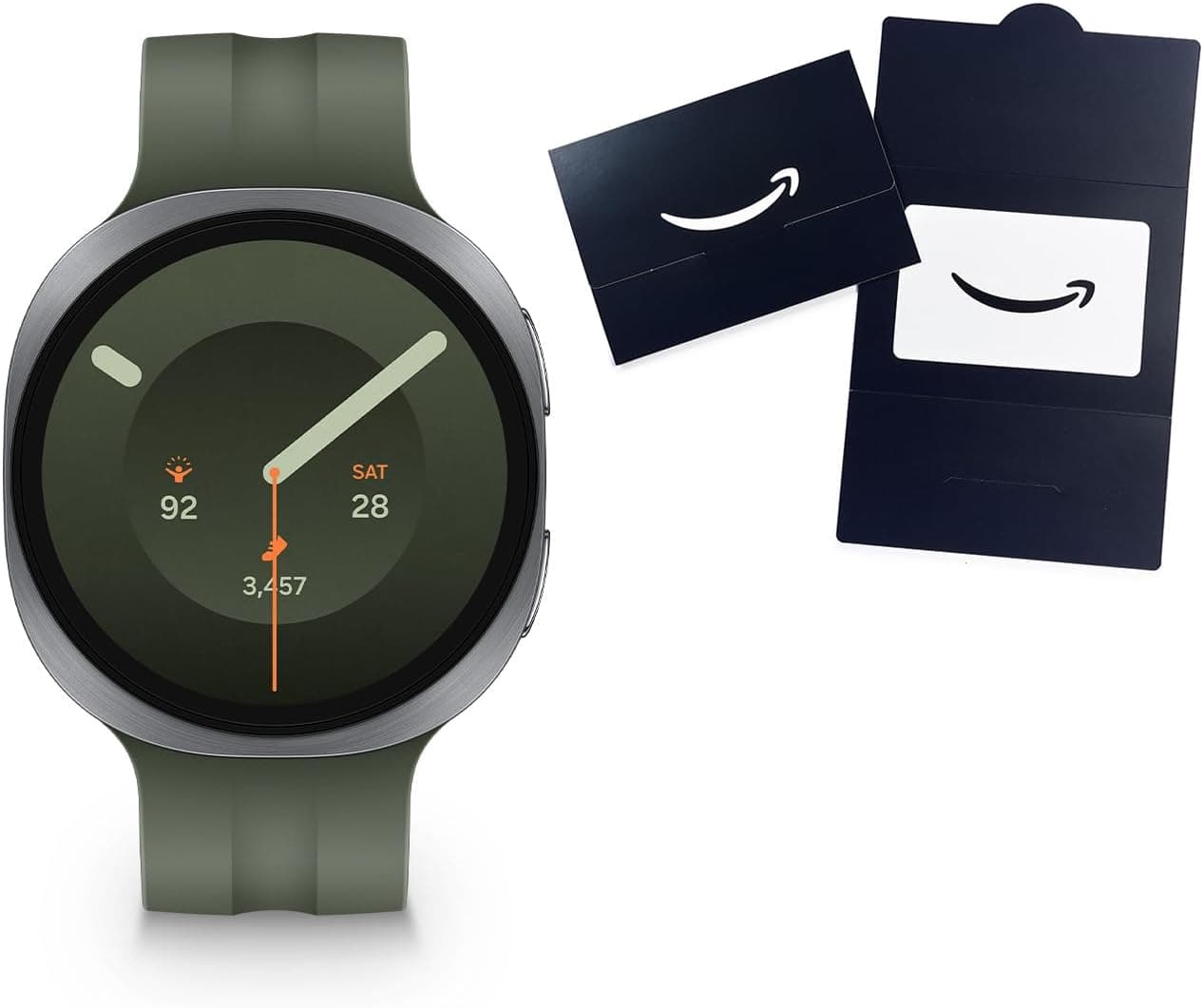
The Samsung Galaxy Watch 9 is easy to dismiss at first glance. Hold it next to the Galaxy Watch 8 and you will struggle to spot a difference — same round face, same squared-off aluminum case, same cushion-style band system, same 3,000-nit display. If you judged it on looks alone, you would be forgiven for assuming Samsung shipped the same watch twice. But the Watch 9 is not a lazy refresh. Under that familiar shell, Samsung has upgraded the processor, enlarged the battery, and — most importantly — poured its energy into software. The Watch 9's biggest changes are invisible until you strap it on and start using it: a new generation of AI health coaching, a heart health score, deeper fitness analytics, and the first real attempt to make the smartwatch feel like a proactive health advisor rather than a passive data collector. After two weeks of daily wear, training sessions, and sleep tracking, I came away convinced that this is the best Android smartwatch you can buy — and also that its value depends entirely on how much you care about the new health features.
Design and Display
Let's deal with the elephant in the room: the Watch 9 looks like the Watch 8. The "cushion design" that Samsung introduced last year — a dynamic lug system that curves the band into the case so the watch sits flush against your wrist — carries over unchanged. The case is still aluminum, offered in 40mm and 44mm sizes, and the display is the same Super AMOLED panel: 1.3 inches at 432 by 432 pixels for the smaller model, 1.5 inches at 480 by 480 pixels for the larger one. Both peak at 3,000 nits of brightness, which remains outstanding — I read the watch easily in direct midday sun while running, and the auto-brightness handles the transition from indoors to outdoors without fuss.
That flush-fit band system is worth dwelling on, because it's the most consequential design decision Samsung has made in years. Instead of traditional spring-bar lugs, the Watch 9's bands slide into the case and lock with a small button. The payoff is twofold: the watch sits closer to your skin, which measurably improves sensor contact for heart rate and sleep tracking, and band changes are genuinely tool-free — a quick press of the button and the band slides out. The downside is that your existing Galaxy Watch 8 and older bands won't fit the new system, so anyone with a collection of third-party straps will need to start over. Samsung's own bands are well made, and the selection includes sport, leather, and fabric options, but the ecosystem reset is real.
The display itself is as good as smartwatch panels get. Super AMOLED means true blacks, punchy colors, and an always-on mode that is genuinely usable outdoors. The Watch 9's screen-to-body ratio is excellent, with thin bezels and a smooth sapphire-like glass front (Samsung uses strengthened glass rather than sapphire on the standard model — the Ultra 2 is the one that gets the full sapphire treatment). Navigation uses the familiar combination of touch, a physical home button, and a rotating bezel-style digital crown on the right edge, which remains the fastest way to scroll through notifications and widgets on any smartwatch.
Performance and Software
Inside, the Watch 9 gets a serious silicon upgrade. Samsung has moved the standard Galaxy Watch to the Qualcomm Snapdragon Wear Elite platform — the same class of chip that powers the Watch Ultra 2 — replacing the Exynos W1000 that ran the Watch 8. The difference is apparent immediately. App launches are snappier, the UI scrolls at a constant 60 frames per second with no dropped frames, and the watch no longer stutters when a workout and a notification arrive at the same time. Wear OS has always felt slightly behind Apple's watchOS in raw smoothness; the Watch 9 closes most of that gap.
The watch runs Wear OS with Samsung's One UI Watch overlay, which remains the most polished implementation of Google's wearable platform. Notifications mirror your phone faithfully, reply options include the full keyboard and voice dictation, and the app drawer is customizable. Gemini is built in, and it's genuinely useful on the wrist — I used it to set timers, start workouts, send quick messages, and ask for a summary of my step count and heart rate trends. Google Assistant is still there as an alternative, but Gemini is the default and it works reliably with a Galaxy phone.
Samsung's apps are the real draw. The Galaxy Wearable app on the phone handles setup, watch face selection, and app management cleanly. The Health app on the phone aggregates everything into a coherent dashboard. And Samsung's watch faces remain the best in the business — there are hundreds available, from ultra-minimal analog designs to data-dense fitness faces that show heart rate, steps, stress, and weather at a glance. Third-party app support on Wear OS has matured dramatically in the last couple of years; Spotify, Strava, WhatsApp, and most major fitness apps have full watch versions, and the app library now feels complete rather than aspirational.
Health Tracking: The New AI Features
This is where the Watch 9 earns its keep. Samsung has built a new layer of AI health features on top of the already-excellent sensor suite, and they're the reason to consider upgrading even if the hardware looks familiar.
The headline addition is the Heart Health Score. Where previous Galaxy Watches gave you raw heart rate data and let you draw your own conclusions, the Watch 9 distills resting heart rate, heart rate variability, and activity patterns into a single score with an explanation of what it means and what moves it. It sounds gimmicky until you use it; the score genuinely does a good job of surfacing trends — mine dipped after a few days of poor sleep and recovered after a rest week, which matched how I actually felt. It's the kind of feature that turns a passive metric dump into something you check every morning.
The new Vitals Insights and fitness index take the same approach to your overall wellness. The fitness index combines body composition, strength estimates, flexibility, and cardiorespiratory data into an overall picture of how fit you are and how aligned you are with your training goals. It then makes specific suggestions — more zone 2 work, more rest days, more strength sessions — based on the metrics you're weakest on. It's not a replacement for a human coach, but it's a surprisingly thoughtful starting point for people who train without guidance.
Cardio load tracking is another welcome addition. The watch estimates the training load of each workout and tracks cumulative load over a week, warning you when you're overreaching and telling you when you're ready to push harder. Runners and cyclists who follow structured training will recognize the concept from Garmin and Whoop; having it built into a mainstream smartwatch with no subscription is a significant move. The AI Running Coach from the Watch 8 carries over and remains one of the best guided running experiences on any watch, with real-time form feedback, pacing guidance, and post-run analysis.
Sleep tracking continues to improve. The Watch 9 tracks sleep stages, sleep apnea events (with the medical-grade feature Samsung licenses), blood oxygen during the night, and skin temperature, and rolls it all into an Energy Score each morning that tells you how recovered you are. The sleep coaching program offers multi-week plans with nightly guidance. Compared to a dedicated sleep ring like the Oura Ring 4, the Watch 9's sleep tracking is close in accuracy and far richer in context, and it doesn't require a subscription to see your data.
Fitness and Training Tools
Beyond the AI features, the Watch 9 is a serious fitness device. It has dual-band GPS with support for all the major satellite constellations, and I found the tracking accurate in urban canyons where single-band watches drift. There are auto-detection profiles for more than a hundred workout types, from running and cycling to swimming, rowing, and strength training. The strength training mode uses the accelerometer and gyroscope to count reps and sets automatically — it's not perfect, but it's good enough that I stopped correcting it after the first few sessions. Swimming tracking is solid, with stroke detection and lap counting, and the 5ATM rating means it's safe in the pool.
The workout experience is where the Watch 9's smoothness pays off. Starting a run takes two taps, GPS locks in under five seconds, and the real-time metrics — pace, heart rate, heart rate zones, cadence — update without lag. You can build interval workouts on the watch or import them from the phone, and the vibration haptics for lap and zone alerts are strong enough to feel through winter gloves. For runners who want more, the watch pairs with the Galaxy ecosystem's training plans and syncs everything to Samsung Health, which exports to Strava and other platforms automatically.
Sensor Accuracy and the Health Data You Can Trust
None of the AI coaching matters if the underlying sensors are unreliable, so I spent part of my testing cross-checking the Watch 9 against a chest-strap heart rate monitor and a dedicated pulse oximeter. The results were reassuring. During steady-state runs, the optical heart rate sensor tracked within a beat or two of the chest strap at moderate effort, and even in interval work — where wrist-based sensors historically struggle — the Watch 9 stayed within a few beats per minute. Resting heart rate measurements were consistent morning to morning, and the overnight blood oxygen readings matched my finger pulse oximeter within one percentage point. Skin temperature tracking showed sensible daily patterns that correlated with my sleep quality, and the body composition measurements (bioelectrical impedance) were repeatable, which is what matters for tracking trends over time.
The sensor suite itself is comprehensive: optical heart rate, electrical heart rate for ECG recordings, blood oxygen, skin temperature, bioelectrical impedance, and a barometer for elevation tracking. The ECG app is a genuine medical tool that records a single-lead electrocardiogram and screens for atrial fibrillation, with clearance from regulators in most markets — it's a feature that still sets Samsung apart from most of the competition. Blood pressure monitoring exists on the watch in regions where it's medically approved, though it requires periodic calibration with a traditional cuff and is not available everywhere, so check local availability before relying on it.
What impressed me most was how the Watch 9 turns this data into something legible. The morning Health Snapshot screen gathers your overnight stats — sleep stages, blood oxygen, skin temperature, heart rate, and energy score — into a single scrollable summary that takes ten seconds to read. That daily ritual is the feature I'd miss most if I switched watches: it's the difference between owning a sensor collection and owning a health tool.
One thing to know: like all Samsung watches, the Watch 9 is Android-only. There's no iPhone support, so Apple Watch users should look elsewhere. Within Android, it works with any modern phone, but it's at its best paired with a Galaxy device, where features like camera control, phone-finding, and seamless health data integration work without compromise.
Battery Life and Charging
Battery life was a sore spot on the Watch 8, and Samsung has addressed it directly. The Watch 9's cell is larger than its predecessor's, and combined with the more efficient Snapdragon platform, the result is a watch that comfortably lasts two full days with the always-on display enabled, and pushes toward three days if you turn the always-on display off and skip heavy GPS workouts. In my testing with a 44mm model — a 45-minute GPS run daily, sleep tracking every night, notifications throughout the day — I was charging every other night and never came close to running out. That's a genuine improvement over the Watch 8, which sometimes needed a top-up before bedtime.
Charging is via the same magnetic puck, and it's fast: about 45 minutes to go from empty to full, and a 10-minute top-up adds roughly 10 to 12 hours of use. Wireless charging from a Galaxy phone's reverse wireless charging also works in a pinch — handy when you forget the puck on a trip. The battery numbers won't embarrass a Garmin, which still measures its life in days and weeks rather than hours, but for a full-featured Wear OS watch with an always-on display, two to three days is right at the top of the class. The Apple Watch Series 11, by comparison, still struggles to make a full day and a half for heavy users.
Durability and Everyday Use
The Watch 9 is built to take a beating. It carries an IP68 rating for dust and water resistance, a 5ATM rating that allows submersion to 50 meters, and a MIL-STD-810H military durability certification covering temperature extremes, humidity, shock, and vibration. The aluminum case is lighter than the stainless steel of the Ultra 2, which makes the Watch 9 more comfortable for all-day wear and sleep tracking, at the cost of some premium heft. In two weeks of daily wear, including a few accidental knocks against door frames and gym equipment, the case and glass came through unscratched.
Everyday usability is excellent. Samsung Pay works anywhere NFC payments are accepted, and it's fast — double-tap the home button and you're at the payment screen. Notifications are well handled, with quick replies, emoji responses, and the ability to take calls on the watch when paired to a phone. The speaker is surprisingly decent for a wrist device, and the microphone handles voice commands and calls clearly even on a busy street. The watch also works as a remote shutter and viewfinder for your phone's camera, a feature that's more useful than it sounds for group photos and tripod shots. LTE models add standalone connectivity — calls, messages, and streaming without the phone nearby — which is a meaningful convenience for runners and swimmers who like to leave the phone at home. The 44mm Bluetooth model I tested starts at $409.99 on Amazon, with LTE versions priced higher, and the 40mm model starting at $379.
The Competition
The Watch 9's natural rivals are the Apple Watch Series 11, the Google Pixel Watch 4, and — for upgraders — its own predecessor, the Galaxy Watch 8.
Against the Apple Watch Series 11, the Watch 9 is the better value for Android users by definition (the Apple Watch doesn't work with Android at all), but even on its own terms it competes well: a brighter display, longer battery life, comparable health tracking, and no subscription for premium health insights. Apple still wins on app polish and the sheer depth of the watchOS ecosystem, and the Series 11's crash detection and emergency features are more mature. But the Watch 9's two-to-three-day battery and Samsung's free AI health coaching give it a genuine edge for fitness-focused users.
Against the Google Pixel Watch 4, the Watch 9 wins on battery life, display brightness, and health feature depth. The Pixel Watch 4 is a fine watch with a beautiful design and seamless Google integration, but its one-day battery and comparatively shallow health analytics leave it a step behind. The Pixel Watch 4 is the better choice if you live entirely in Google's ecosystem and want the cleanest Wear OS experience; the Watch 9 is the better choice if you care about training and health data.
Against the Galaxy Watch 8, the Watch 9 is a real upgrade if you train seriously. The faster processor, larger battery, and the new heart health and fitness index features justify the premium for anyone who will actually use them. If you only wear a watch for notifications and step counting, the Watch 8 remains a perfectly good watch — but it's the same price trajectory, and the Watch 9's software improvements will keep arriving while the Watch 8 settles.
For fitness enthusiasts who are considering a Garmin, the trade-off is philosophical. A Garmin Forerunner or Fenix will give you deeper running dynamics, mapping, and multi-week battery life. The Watch 9 counters with a far better smartwatch experience — notifications, payments, apps, calls — plus health coaching that's now genuinely competitive with Garmin's baseline training features. For most people, the Watch 9 is the better everyday companion, and its training tools are good enough that only dedicated athletes will feel the need for a Garmin.
Who Should Buy the Galaxy Watch 9
The Galaxy Watch 9 is for Android users who want a full-featured smartwatch that takes health seriously. If you train regularly — running, cycling, strength, swimming — the combination of the AI running coach, cardio load, the fitness index, and the heart health score is compelling, especially when you consider that Garmin-class features are included with no subscription. If you're on a Galaxy phone, the integration is seamless: health data flows into Samsung Health, calls and messages work flawlessly, and the watch feels like a natural extension of the phone rather than a separate device.
It's also the right pick for anyone upgrading from a Galaxy Watch 6 or earlier — the cushion design, brighter display, dual-band GPS, and the new health features are all substantial jumps. Watch 8 owners should weigh whether the new AI health layer and battery improvement are worth the upgrade; for training-focused users, they are. The one group that should look elsewhere is iPhone users (Apple Watch territory), and anyone who needs multi-week battery life and expedition-grade navigation should still be looking at Garmin.
The Galaxy Watch 9 doesn't reinvent the smartwatch. It doesn't need to. What it does is take the already-excellent Watch 8 formula and sharpen every edge that matters — faster silicon, better battery, and a genuinely useful layer of AI health coaching that makes the data it collects actionable rather than merely displayed. Samsung's big bet this year is that software is what separates a great smartwatch from a forgettable one, and after two weeks with the Watch 9, I think the bet pays off. For Android users who want the most capable health-tracking smartwatch you can strap to your wrist, this is the one to buy.
Pros
- Two-to-three-day battery life with always-on display
- AI health coaching: Heart Health Score, fitness index, cardio load
- Snappy Snapdragon Wear Elite performance
- Bright 3,000-nit Super AMOLED display
- Accurate sensors, ECG and sleep apnea screening included
- Tool-free flush-fit band system
Cons
- Design is nearly identical to the Galaxy Watch 8
- Proprietary band system drops support for older bands
- Android-only — no iPhone support
Final Verdict
The Galaxy Watch 9 keeps the Watch 8's design but upgrades the silicon, extends battery life to two full days, and adds a genuinely useful layer of AI health coaching — the best Android smartwatch for fitness-focused users.