Samsung Galaxy Z Flip 7 Review: The Foldable That Finally Feels Finished
Samsung's Galaxy Z Flip 7 brings a wider 6.9-inch display, a nearly invisible crease, and a 4.1-inch cover screen to the best-built clamshell foldable yet — if you can live with the Exynos 2500 and unchanged cameras.
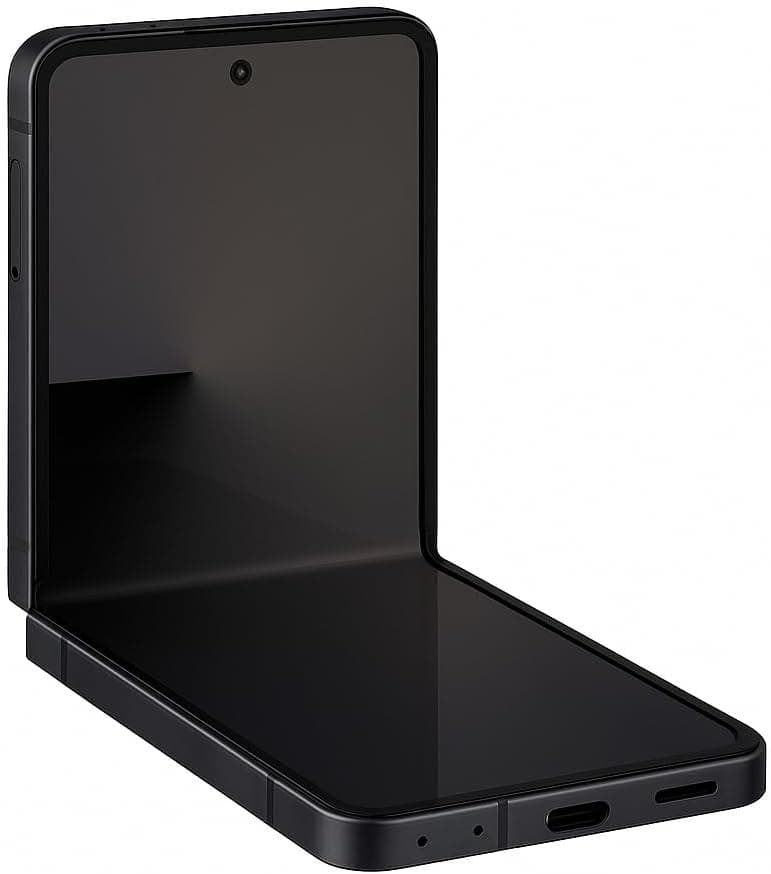
The Samsung Galaxy Z Flip 7 is the phone that finally makes the clamshell argument feel complete. After several generations where the Flip line felt like a fashion accessory that happened to run Android, Samsung's 2025 model arrives with a dramatically wider inner display, a cover screen that finally covers the entire top half of the phone, and a chassis so thin it barely registers in a pocket. It is not a perfect phone, and it makes one processor decision that will annoy spec-sheet readers, but after spending extended time with it, the Z Flip 7 is the most convincing case yet that the flip form factor can be a primary phone for normal people rather than a novelty for early adopters.
Design and Build Quality
The first thing you notice about the Z Flip 7 is how it disappears when folded. At 13.7mm closed, it is noticeably slimmer than the 14.9mm of the Z Flip 6, and Samsung has reworked the hinge so the two halves meet with no visible gap. The phone closes with a satisfying, confident snap, and the hinge holds its position at virtually any angle between fully open and fully closed. That means Flex Mode is genuinely usable this time — you can prop the phone at 45 degrees on a table for video calls, angle it for hands-free shots, or tent it for watching content with the display folded.
The build quality is excellent across the board. The aluminum frame feels dense and premium, the Gorilla Glass Victus 2 panels resist fingerprints reasonably well, and the IP48 rating means the phone shrugs off splashes and dust in a way earlier Flips never could. You should still treat it carefully around pools and beaches — IP48 is dust-tight but only rated against splashes, not submersion — but it is a meaningful step up from the IP48-less Flip 6 in everyday peace of mind. The phone weighs just 188 grams, which puts it in the same territory as the Galaxy S25 Plus and well under the 200-gram mark that most slab flagships now hover around.
The star of the show, though, is the crease. It is nearly gone. Samsung has made the crease so subtle that, in normal use, you will forget it is there entirely. Run your finger across the middle of the 6.9-inch display and you feel the faintest ripple, but visually the panel looks flat in almost every lighting condition. The Android Central review noted the crease was so unobtrusive the reviewer caught himself treating the phone like a slab and trying to pocket it without folding it. That is the highest compliment a foldable can receive in 2026.
Displays
The main display is a 6.9-inch Dynamic AMOLED 2X panel with a 2520 x 1080 resolution, LTPO technology that scales from 1Hz to 120Hz, HDR10+ support, and a peak brightness of 2,600 nits. The key change this year is the aspect ratio. Previous Z Flip phones used a tall, narrow 22:9 panel that made videos look small and keyboards feel cramped. The Z Flip 7 moves to a wider 21:9 layout that is nearly identical in width to the Galaxy S25 Plus and S25 Edge, and the difference is immediate. Typing feels normal. Video fills more of the screen. Apps that previously looked stretched now render exactly the way they do on a regular phone.
Outdoor visibility is excellent. At 2,600 nits peak, the panel stays readable in direct sunlight, and the anti-reflective coating does real work. Colors are punchy and saturated in Samsung's characteristic way, but the panel is accurate enough out of the box that most people will not feel the need to dig into display settings. Tom's Guide measured a peak brightness of 1,989 nits in its testing with a color accuracy delta-E of 0.23, which is excellent by any standard.
The cover display is where the hardware story really changes. Samsung jumped from the 3.4-inch panel on the Flip 6 to a 4.1-inch Super AMOLED that now covers the entire upper half of the folded phone. It runs at 948 x 1048, which is the sharpest resolution ever on a Flip cover screen, and it supports a 120Hz refresh rate and 2,600 nits peak brightness. The panel itself is superb — bright, smooth, and easy to read in direct sun. You can check notifications, reply to messages with the on-screen keyboard, use the camera viewfinder, control music, and check the weather without ever opening the phone.
The frustrating part is the software, which we will get to shortly. The hardware is genuinely best-in-class; the software is where Samsung still refuses to let the hardware do its job.
Performance and the Exynos Question
Here is the decision that dominates every conversation about this phone: Samsung swapped Qualcomm's Snapdragon for its own Exynos 2500 chipset, making the Z Flip 7 the first Flip in years without a Snapdragon processor. The Exynos 2500 is built on a 3nm process with a deca-core CPU configuration that tops out at 3.3GHz, paired with an Xclipse 950 GPU. In everyday use, you will not notice the change. Apps open instantly, scrolling is fluid, multitasking is smooth, and the phone handles demanding games like Genshin Impact and Honkai Star Rail at high settings without drama.
The benchmarks tell a more complicated story. In Android Authority's testing, the Exynos 2500 posted single-core Geekbench scores that fell slightly behind the Snapdragon 8 Gen 3 in the Flip 6, while multi-core scores edged ahead. In PCMark, the Flip 7 finished last among the foldables tested. Android Central's numbers showed the Flip 7 at 1,849 single-core and 6,822 multi-core on Geekbench 6, versus 2,682 and 8,102 for the Razr Ultra 2025 with its Snapdragon 8 Elite. The gap is real, but so is the context: the Snapdragon 8 Elite in the Razr Ultra is a more expensive, more power-hungry chip, and most people will never feel the difference in day-to-day tasks.
The more tangible issue is thermals. The Exynos 2500 runs hotter than the Snapdragon 8 Gen 3 did in the Flip 6, and the compact, tightly-packed chassis does not dissipate heat especially well. Android Authority measured an average charging temperature of 36.6 degrees Celsius, noticeably hotter than the Flip 6's 29.5 degrees, and noted that sustained gaming sessions can push the phone into warm territory. The phone does not throttle aggressively enough to ruin the experience, but it is something to know before you buy.
Where the Exynos 2500 actually shines is AI. In Geekbench AI testing, the Flip 7 scored 3,581, more than 1,000 points ahead of the Flip 6 and ahead of the Razr Ultra 2025. That makes the Z Flip 7 arguably the most capable flip phone for on-device AI in North America, which matters as Samsung continues pushing Galaxy AI features like instant language translation, generative photo editing, and the new Now Brief daily intelligence summary. If you care about AI features running locally on your phone, the Flip 7 is genuinely strong here.
Battery Life and Charging
The Z Flip 7 packs a 4,300mAh battery, up slightly from the 4,000mAh in the Flip 6, but the Exynos 2500's higher power draw means real-world endurance is roughly unchanged. In Android Authority's testing, a light day of Wi-Fi use with two to three hours of screen-on time left 40 percent remaining at 11pm from a 6:30am start. A heavy day on 5G with gaming is firmly a one-day phone. Android Central's streaming test told a similar story: after two hours of 4K HDR streaming at full brightness, the Flip 7 had 70 percent remaining versus 72 percent for the Flip 6.
This is a phone that will get most people through a full day, but not a phone that will get you through a full day and into the next morning. Power users should plan to top up in the afternoon, and travelers should carry a power bank. The phone supports 25W wired charging, which fills the battery in about 91 minutes, and 10W wireless charging, plus 4.5W reverse wireless for topping up earbuds. The charging speeds are not class-leading — the Razr Ultra charges faster and Motorola's 45W standard looks generous by comparison — but they are acceptable for the form factor. One omission worth noting: there are no built-in magnets for Qi2 wireless charging, so magnetic accessories like card holders and battery packs will not snap on without a third-party adhesive ring.
Cameras
The camera hardware is unchanged from the Z Flip 6: a 50MP f/1.8 primary sensor and a 12MP f/2.2 ultrawide on the outside, and a 10MP f/2.2 sensor on the inner display. Samsung did not upgrade the sensors this year, and you can tell in the fine details. In good light, the primary camera produces bold, well-saturated images with Samsung's characteristic punchy look. The ultrawide is consistent and reliable, with a 123-degree field of view and minimal fish-eye distortion. But push into the details and the processing shows its age: fine textures like fur or fabric can look soft, almost watercolor-like, and low-light shots carry noticeable noise in the shadows. Moving subjects in dim conditions come out blurry — concert shots are a mess, as Android Authority's review confirmed.
What the Flip 7 lacks in sensor hardware it partially makes up for in software and form factor. The FlexCam modes are genuinely useful: you can prop the phone open at an angle and use the rear cameras as a selfie camera with the cover screen as a viewfinder, which produces selfies that are dramatically better than any front-facing camera could manage. Auto Zoom frames subjects automatically in video, and Camcorder Mode turns the phone into a mini camcorder with the cover screen showing the recording. Dual recording lets you capture the rear camera and front camera simultaneously in a picture-in-picture layout, which is great for vloggers and travel content.
The video capabilities are solid across the board: 4K at up to 60fps with HDR10+, 8K capture is absent (a minor disappointment for the price), and the stabilization is good enough for handheld walking shots. If you are a photographer who demands the best sensor in the price class, the Flip 7 is not for you — the Galaxy S26 or the Razr Ultra will do better. But if you value the unique shooting angles the form factor enables, the Flip 7 punches above its sensor hardware.
Software and One UI 8
The Z Flip 7 ships with Android 16 and One UI 8, and Samsung's commitment to seven years of OS and security updates means this phone will be supported well into the 2030s. One UI 8 is polished, fast, and packed with features, and the Galaxy AI suite is the most complete on any Android phone: live translation in calls and messages, generative photo editing, note summarization, and the Now Brief that surfaces your day's schedule and weather on the cover screen. The integration with Google's Gemini is excellent, and you can summon Gemini Live from the cover screen without opening the phone.
The elephant in the room is the cover screen software. Despite the dramatically improved 4.1-inch hardware, Samsung still locks the Flex Window down in ways that have frustrated reviewers for years. You cannot add third-party widgets. You cannot edit the quick settings toggles. You cannot use Gboard or any third-party keyboard on the cover screen. You cannot rotate the cover screen orientation. You cannot multitask or see recent apps. And you cannot customize the clock faces beyond Samsung's limited built-in options. The workaround is installing Good Lock and MultiStar from the Galaxy Store, which unlocks full app support on the cover screen, but that is a power-user hack, not a mainstream solution.
This is the single most frustrating thing about the Z Flip 7, because the hardware is so good. Motorola's Razr phones let you run any app on the cover screen out of the box, and the Razr Ultra's 4-inch cover display is nearly the same size. Samsung has no good reason to keep the software this locked down, and the company's own reviewers have said as much. If you buy a Flip 7, plan to spend ten minutes setting up Good Lock to get the cover screen you paid for.
Connectivity
The Z Flip 7 supports 5G across sub-6GHz bands, Wi-Fi 7, Bluetooth 5.4 with LE Audio and Auracast, and NFC for payments. Samsung swapped the Qualcomm modem for its own Exynos 5400, and in real-world testing the change is invisible — Android Central's testing on AT&T's 5G network in Phoenix never dropped below 150Mbps and peaked around 300Mbps. The phone also supports satellite connectivity for emergency messaging, a first for the Flip line, which is a meaningful safety feature for hikers and travelers who venture off the grid. Call quality is excellent, with clear audio and solid noise cancellation on both ends.
Comparison With the Competition
The Z Flip 7's natural rivals are the Motorola Razr Ultra 2026 and the Razr 2026, the Galaxy Z Flip 7 FE, and the slab phones at the same price. Against the Razr Ultra, the Flip 7 loses on raw performance — the Snapdragon 8 Elite in the Motorola is meaningfully faster — and on cover screen software freedom. But the Flip 7 wins on build quality, update commitment (seven years versus Motorola's five), water resistance, and the sheer polish of the folding experience. The Razr Ultra's cover screen is technically slightly smaller at 4 inches, though its software makes it feel far more useful.
Against the Galaxy Z Flip 7 FE, which launched at $649 with the older Exynos 2400, a larger 4,900mAh battery, and the same cover screen hardware, the standard Flip 7 is the better phone for anyone who wants the best display, the faster chip, and the full camera experience. The FE is the value pick; the Flip 7 is the flagship pick. And against slab phones at the $1,099 price, the Flip 7 asks you to trade camera versatility and raw performance for the folding form factor. That trade is worth making if you want a phone that disappears in your pocket and stands out in your hand, and it is not worth making if you just want the most phone for the money.
Real-World Use Cases
The Z Flip 7 excels in specific scenarios in a way slab phones simply cannot match. Commuters will love that it folds small enough to slip into a jeans pocket or a small bag. Content creators get the selfie camera advantage, the FlexCam angles, and the dual recording. People who take video calls will appreciate propping the phone open on a desk and walking away with the camera still framed. Gym-goers can tent the phone on a bench and follow workouts hands-free. And the cover screen means you can check notifications, reply to quick messages, and control music without ever unfolding the phone — which, over a week, saves far more time than you would expect.
The form factor also changes how you use the phone socially. It is a conversation starter, a phone that people notice and ask about, and a device that feels personal in a way an anonymous black slab does not. For the first time in years, a Flip phone feels like the phone you want to show people rather than the phone you settled for.
Durability and Long-Term Ownership
Foldables used to be fragile luxury items that demanded kid-glove treatment, and the Z Flip 7 continues Samsung's push to change that reputation. The hinge mechanism is rated for hundreds of thousands of folds — Samsung's official rating is 400,000 folds, which works out to folding the phone over a hundred times a day for a decade — and the IP48 rating means dust and splashes are no longer existential threats. The frame is aircraft-grade aluminum, and both displays sit behind Gorilla Glass Victus 2. Samsung also includes a free screen protector replacement within the first year of ownership, which is a genuinely useful warranty perk given that the pre-installed inner screen protector will eventually show wear.
The one durability caveat is the same one every foldable carries: the inner display is plastic-backed, not glass, so a sharp impact at the wrong angle can still spell disaster, and the replacement cost for the folding panel is far higher than a slab phone screen. That is the hidden cost of the form factor, and it is worth factoring into your decision. In practice, though, the Z Flip 7 feels substantially more robust than the Flip 3 or Flip 4 of a few years ago, and the 188-gram weight makes it less likely to take a tumble out of a loose pocket in the first place.
Galaxy AI in Practice
Samsung has made AI the centerpiece of the Flip 7 experience, and unlike some competitors' half-baked efforts, most of it actually works. Live Translate handles real-time conversation translation in the phone app and in Messages, which is a killer feature for travelers and anyone with a multilingual family. Circle to Search is as fast and useful as ever. Generative photo editing lets you remove photobombers and expand images with results that are usually convincing on the first try. The Now Brief aggregates your calendar, weather, commute, and news into a cover-screen card each morning, and Now Bar surfaces timers, music, and navigation as a persistent pill on the lock screen.
The on-device AI performance advantage of the Exynos 2500 shows up here. Features that require local processing — live translation, photo editing, voice transcription — run quickly and without the lag you get on phones with weaker NPUs. Samsung's seven-year update promise also means the AI features will keep improving for years after you buy, which is a meaningful consideration when the AI race is moving this fast. This is one of the few phones where the AI features feel like a reason to buy rather than a marketing bullet point.
Final Considerations Before You Buy
Before you commit, think honestly about how you use your phone. If you spend hours a day gaming, shooting photos in low light, or editing video on-device, the Z Flip 7 will frustrate you at the edges — the thermals, the unchanged cameras, and the modest charging speeds are all real limitations. If your phone is a communication device, a camera for everyday moments, and a media player that you want to carry without noticing, the Flip 7 is close to ideal. The form factor also has a practical superpower that specs never capture: it makes you use your phone less. The cover screen handles the 80 percent of interactions that are just checking something, and the act of unfolding adds a deliberate pause before you dive into the scroll. Reviewers across the board noted spending less time on social apps with the Flip 7 than with a slab phone. That is a feature no benchmark measures.
Should You Buy It
The Samsung Galaxy Z Flip 7 is the best clamshell foldable Samsung has ever made, and it is the easiest Flip to recommend to a mainstream buyer. The wider display fixes the form factor's biggest ergonomic complaint, the near-invisible crease removes the last visual objection, the thinner chassis makes the phone genuinely pocketable, and the seven-year update commitment is best-in-class for the category. The Exynos 2500 is a slight step back from the Snapdragon chips in competitors, the cameras are unchanged from last year, the cover screen software is still needlessly restricted, and charging is slow by 2026 standards. But none of those flaws are deal-breakers, and most are things you will forget about within a week of ownership.
If you want the most capable flip phone money can buy in North America, this is it. If you want maximum performance per dollar, the Razr Ultra 2026 or a slab flagship is a better argument. But if you want a phone that is genuinely fun to use, that fits in any pocket, and that makes you look twice at your screen every time you open it, the Galaxy Z Flip 7 delivers in a way few phones do. At the current Amazon price of $699.99 for the 512GB international model, it is an even easier recommendation — you are getting last year's flagship flip at a midrange price. You can check the current price on Amazon here: Samsung Galaxy Z Flip 7 on Amazon.
Final Thoughts
Samsung took the safest possible approach with the Z Flip 7: refine the design, widen the display, shrink the chassis, and keep everything else mostly as it was. The result is not a revolution, but it is a phone that finally feels finished. The crease is gone, the display is as good as any slab flagship's, the build is genuinely premium, and the day-to-day experience is fast and smooth. The Exynos 2500 debate is real but overblown for most buyers, the cover screen software frustration is real but fixable with Good Lock, and the unchanged cameras are a missed opportunity rather than a fatal flaw. Samsung promised the flip form factor would mature, and with the Z Flip 7, it finally has. This is the flip phone to buy in 2026 — just know what you are trading for the privilege of a phone that folds in half.
Related: Samsung Galaxy Z Fold 7 Review · Motorola Razr Ultra 2026 Review
Pros
- Wider 6.9-inch display with a nearly invisible crease
- Best-in-class 4.1-inch cover screen hardware
- Thin, premium build with IP48 protection
- Seven years of Android updates
Cons
- Cover screen software still needlessly restricted
- Camera hardware unchanged from the Z Flip 6
- Exynos 2500 runs hotter and trails Snapdragon rivals
- Slow 25W charging, no built-in Qi2 magnets
Final Verdict
Samsung's Galaxy Z Flip 7 brings a wider 6.9-inch display, a nearly invisible crease, and a 4.1-inch cover screen to the best-built clamshell foldable yet — if you can live with the Exynos 2500 and unchanged cameras.