Sony 1000X The Collexion Review: Luxury Materials Meet Refined Sound in Sony's Most Premium Wireless Headphones
Sony's 10th-anniversary WH-1000XX delivers the most refined sound, premium materials, and class-leading comfort in the 1000X series, but the $648 price, reduced battery life, and slightly weaker ANC make it a luxury proposition rather than a practical upgrade.
Sony's WH-1000X series has been the benchmark for wireless noise-cancelling headphones for the better part of a decade. With each new generation, Sony has refined the formula, adding better ANC, improved sound quality, and longer battery life. But with the 1000X The Collexion, Sony is doing something different. Instead of following the incremental upgrade path, the company has created a special 10th-anniversary edition that prioritizes materials, comfort, and sound quality over raw specifications. At $648, these are the most expensive wireless headphones Sony has ever produced for the general consumer market, and they represent a clear statement of intent: Sony wants a piece of the luxury headphone segment currently dominated by the likes of Bowers & Wilkins, Focal, and even Apple's AirPods Max 2.
The Collexion (pronounced "Collection" — Sony's deliberate stylization) is based on the WH-1000XM6 platform, but nearly every aspect has been reworked. The chassis is heavier by 60 grams, the earcups are deeper and more plush, the drivers have been redesigned with input from professional mastering engineers, and the entire aesthetic has been pushed firmly into premium territory. But with these improvements come compromises: battery life drops from 30 hours to 24, the ANC is slightly less potent than the XM6, and the headphones no longer fold flat for storage. Whether these trade-offs are acceptable depends entirely on what you value in a pair of wireless headphones.
Design and Build Quality
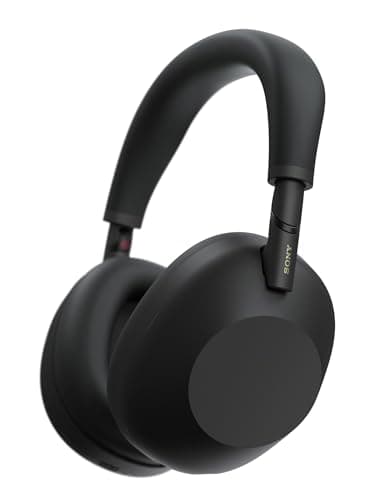
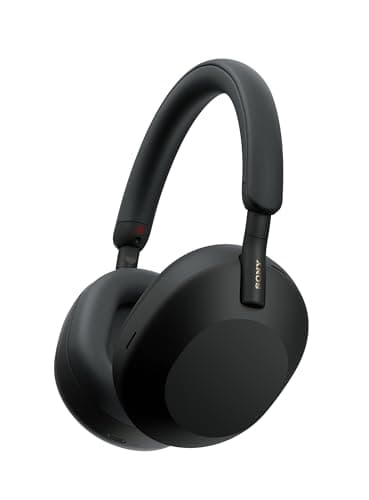
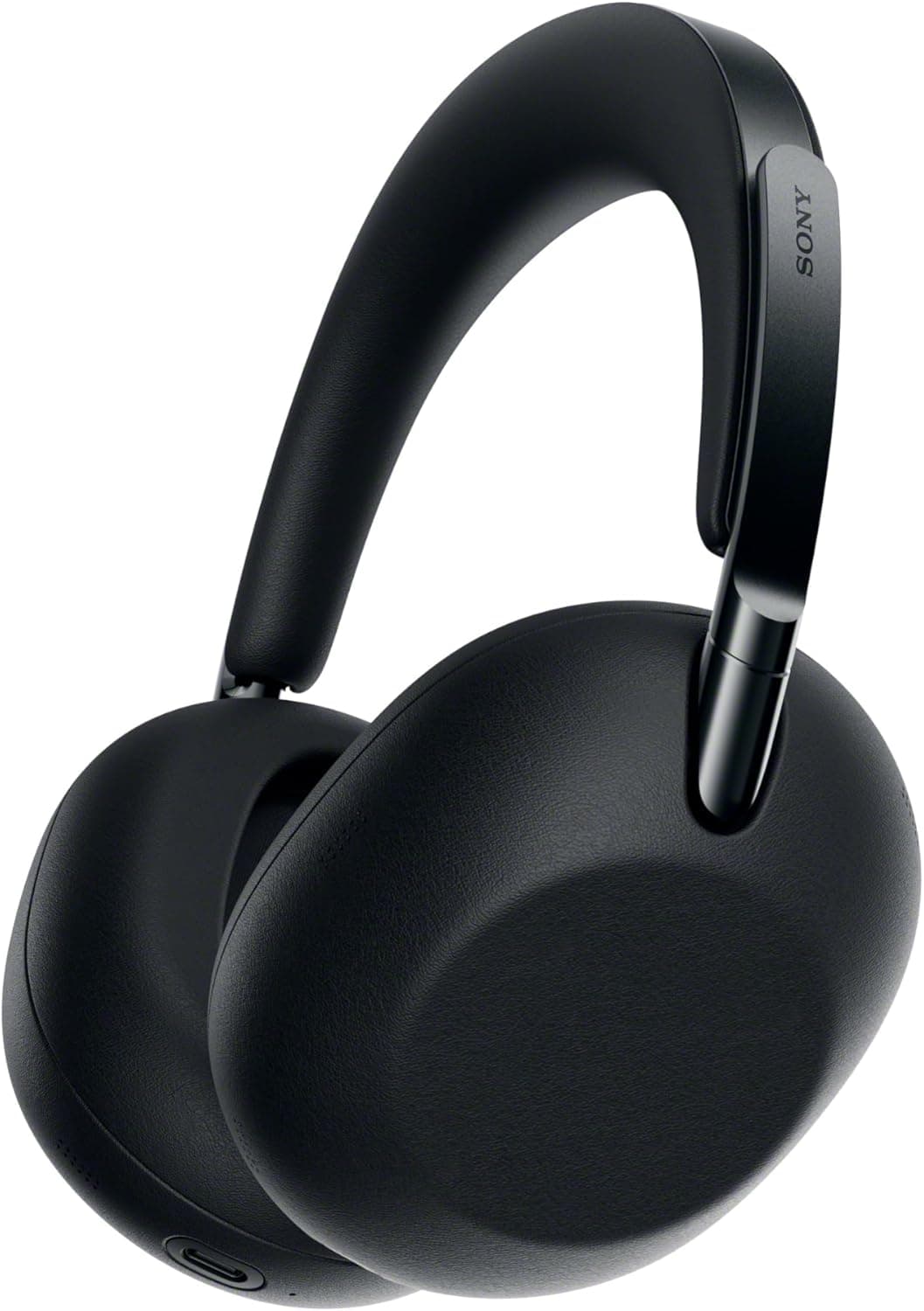
The most immediately noticeable thing about the Collexion is how it feels. Where the WH-1000XM6 is predominantly plastic — excellent plastic, but plastic nonetheless — the Collexion wraps its headband and earcups in a sandblasted faux leather that feels remarkably like the real thing. The hinge mechanisms are constructed from hand-finished aluminum, and the entire structure exhibits a level of rigidity and refinement that Sony's standard lineup has never quite achieved.
At 320 grams, the Collexion is significantly heavier than the XM6 (about 260 grams), but the weight is distributed so effectively that it's barely noticeable during wear. The earcups are five millimeters slimmer than the XM6's, which reduces the internal volume slightly but also makes the headphones look more streamlined on the head. The clamping force has been reduced compared to the XM6, making the Collexion notably more comfortable for extended listening sessions.
The vegan leather used throughout is soft to the touch and feels durable, though Trusted Reviews noted that it can show smudges after handling. The aluminum linkages are a particular highlight — they feel precision-machined and add a tactile quality that the XM6's plastic hinges lack. The headband padding is generous and well-contoured, distributing the headphones' weight evenly across the top of the head.
One notable design choice is the removal of the folding mechanism. The XM6 collapses inward for compact storage; the Collexion does not fold at all. It swivels flat, more like the XM5, but cannot be folded into a smaller package. This means the carrying case is necessarily larger than the XM6's case, though the included hard case is well-designed with a magnetic latch and a convenient carry handle. It's a solid case that provides excellent protection, but it takes up significantly more space in a bag.
The controls are a mix of physical buttons and touch gestures. A power button, ANC/Ambient toggle, and a dedicated 360 Upmix button sit on the left earcup, while the right earcup features the familiar touch surface for volume, track skipping, and call handling. The touch surface is notably more responsive on the Collexion's matte faux leather than on the XM6's glossy plastic, providing better grip and fewer accidental inputs.
Comfort for Extended Listening
Comfort is arguably the Collexion's strongest suit. The earpads are significantly deeper than the XM6's, with a softer, more plush filling that prevents the driver mesh from contacting your ears. This was one of the most common complaints about the XM6 — the relatively shallow earpads caused ear contact after an hour or two of wear — and Sony has clearly taken this feedback to heart.
The interior of the earcups is also angled, rather than parallel to the ears as in the XM6. This subtle change makes a substantial difference in perceived comfort, as the drivers now fire directly into the ear canal rather than at an oblique angle. The result is a more natural listening position and reduced pressure on the outer ear.
RecordingNOW's review noted that "ears barely touch the fabric vs. firmly pressing against the parallel XM6 pads," which accurately captures the improvement. For glasses wearers, the softer padding also reduces pressure on the temples, making the Collexion one of the more comfortable options for all-day wear alongside the Bose QuietComfort Ultra and Sonos Ace.
The one comfort caveat is the weight. At 58 grams heavier than the XM6, the Collexion is undeniably more substantial on the head. While the excellent padding and reduced clamping force compensate for much of this, the extra weight becomes noticeable during extended sessions — typically after three or four hours of continuous wear. For most users, this won't be an issue, but if you're accustomed to the near-weightlessness of the XM6, the difference is perceptible.
Sound Quality: The Audiophile's Sony
The Collexion represents Sony's most serious attempt at audiophile-grade wireless sound. The 30mm drivers use a new soft-edge dome construction with a carbon composite material that Sony claims enhances both bass response and ANC performance. The driver housing has been redesigned with an optimized circuit layout featuring 1.5 times more copper foil, which Sony says contributes to richer detail retrieval and a wider soundstage.
The tuning is the biggest departure from the XM6. Where the XM6 presents a V-shaped sound signature with elevated bass and treble, the Collexion adopts a more mature, mid-forward profile that emphasizes clarity and natural timbre over sheer excitement. The bass is still present and punchy, but it's better controlled and less dominant in the mix. The midrange is where the Collexion truly separates itself from the XM6 — instrument separation is superior, vocals are more present and three-dimensional, and the overall presentation is noticeably more refined.
The treble is smooth and non-fatiguing, trading some of the XM6's sparkle for long-term listenability. This is a deliberate choice that makes the Collexion more suitable for extended listening sessions, but listeners who prefer airy, extended high frequencies may find the presentation slightly laid-back. The soundstage is wider than the XM6's, with better imaging and a greater sense of space between instruments.
RecordingNOW's review gave the sound quality a 9.1 out of 10, noting that "the 1000X exposes the muddiness and slight sibilance of the XM6." GSMArena praised the "more mature presence with a dialed-down focus on bass" and noted that "instrument separation is better, details coming in a tad crisper and snappier." The Guardian described the sound as "fantastic" with "360/spatial audio" that enhances immersion.
The 360 Upmix feature deserves special mention. Sony has included a dedicated physical button that cycles through three spatial audio modes: Music, Cinema, and Game. Cinema mode is the most successful, adding convincing width and depth to movie soundtracks without introducing noticeable artifacts. Music mode is more variable — some tracks benefit from the upmixing, while others sound artificially processed. Game mode provides a convincing sense of positional audio for compatible titles.
Wired playback is supported through the 3.5mm analog port, but notably absent is USB-C audio input. This is a significant omission at this price point, as competitors like the Sennheiser HDB 630 and Focal Bathys offer USB-C connectivity for high-resolution audio from computers and digital audio players.
Active Noise Cancellation
The Collexion uses the same QN3 HD Noise Cancelling Processor found in the WH-1000XM6, but the ANC performance is slightly less effective. This isn't a flaw in the electronics — it's a physical consequence of the redesigned earcups. The deeper interior space and softer padding, while excellent for comfort, create a less effective passive seal against external noise.
The difference is most noticeable with high-frequency sounds like human voices and keyboard clicks, which the XM6 attenuates slightly better. For low-frequency noises like airplane engines, HVAC systems, and traffic rumble, the Collexion remains among the best in class. Trusted Reviews noted that ANC is "a definite downgrade from the WH-1000XM6," positioning it closer to the Bose QuietComfort Ultra but not quite at the same level.
In practical terms, the Collexion still blocks enough noise for comfortable use on flights, in open offices, and on public transit. The ambient sound mode is excellent, providing a natural passthrough that doesn't over-amplify background noise. The Speak-to-Chat feature works reliably, automatically pausing playback and switching to ambient mode when you start speaking.
Call quality is genuinely excellent — arguably top tier among wireless ANC headphones. The 12-microphone array provides clear voice pickup with effective wind and background noise rejection. In testing, callers reported that my voice sounded natural and clear even in moderately noisy environments.
Features and Connectivity
The Collexion is packed with features, many of which are genuinely useful. Bluetooth 6.0 provides robust connectivity with support for SBC, AAC, LDAC, and LC3 codecs. Multipoint pairing works seamlessly with two devices simultaneously, and Google Fast Pair and Microsoft Swift Pair make setup effortless on compatible devices.
DSEE Ultimate makes its debut on the Collexion, using Edge-AI to upscale compressed audio streams in real time. The effect is subtle but noticeable with lower-bitrate streaming sources — there's a slight restoration of high-frequency detail and spatial cues that makes 256kbps AAC files sound closer to lossless quality. It's not magic, but it's a genuine improvement that works continuously in the background.
The Sound Connect app offers extensive customization, including a 10-band EQ, adaptive sound control settings, head tracking configuration, and multipoint device management. The app is feature-rich but visually cluttered, with deeply nested menus that can make quick adjustments tedious. Once you've set everything up, however, you rarely need to open the app.
Battery life is rated at 24 hours with ANC enabled, a reduction from the XM6's 30 hours. In real-world testing, the Collexion consistently delivered around 25 hours in mixed use, which is reasonable for a premium headphone but below the class average. The AirPods Max 2 offers only 20 hours, so the Collexion is still competitive in this regard, but the XM6, Bose QC Ultra, and Sennheiser Momentum 5 all offer longer runtime.
Charging is via USB-C, and the fast charging provides approximately 90 minutes of playback from a 5-minute charge. This is notably slower than the XM6's 3-minute charge for 3 hours of playback, which is a disappointment at this price point.
Competitor Comparison
Against the WH-1000XM6 ($449), the Collexion offers better materials, superior comfort, and more refined sound quality. The XM6 counters with longer battery life, better ANC, a folding design, and a $200 lower price. For most buyers, the XM6 remains the more practical choice. The Collexion is for those who value the tangible quality of premium materials and are willing to pay for it.
Against the AirPods Max 2 ($549), the Collexion offers longer battery life, LDAC support for high-resolution Android audio, and a more neutral sound signature. The AirPods Max 2 has superior ANC and deeper Apple ecosystem integration. The Collexion is a better choice for Android users and audiophiles; the AirPods Max 2 remains the pick for Apple loyalists.
Against the Sennheiser HDB 630 ($499), the Collexion offers similar sound quality and build refinement. The HDB 630 has a more neutral, reference-style tuning that will appeal to purists, while the Collexion is slightly more forgiving and versatile. The HDB 630 also includes USB-C audio, a notable omission on the Collexion.
Against the Bose QuietComfort Ultra Headphones (2nd Gen, $449), the Collexion wins on build quality and sound refinement but loses on ANC performance. Bose's ANC is still the best in the business, and the QuietComfort Ultra's 24-hour battery life matches the Collexion at a lower price.
The Luxury Headphone Proposition
The Sony 1000X The Collexion represents a deliberate shift in Sony's headphone strategy. Rather than competing solely on features and specifications, Sony is attempting to establish a foothold in the luxury segment — headphones that appeal to buyers who value materials, design, and tactile quality as much as acoustic performance.
This is a risky strategy. The luxury headphone market is small and crowded, with well-established players like Bowers & Wilkins, Focal, Bang & Olufsen, and Master & Dynamic who have spent years cultivating brand cachet among affluent buyers. Sony's brand is associated with mainstream consumer electronics, not luxury goods, and the Collexion's $648 price tag puts it in direct competition with headphones that have stronger luxury credentials.
But the Collexion holds its own in this company. The sound quality is genuinely competitive with the Bowers & Wilkins Px8 S2 and the Focal Bathys, particularly in terms of midrange clarity and overall refinement. The ANC is better than any of those competitors. And the comfort is arguably class-leading, with only the Bose QC Ultra matching the Collexion for all-day wearability.
The compromises — reduced battery life, slightly weaker ANC, no folding mechanism, no USB-C audio — are real but reasonable trade-offs for the improvements in comfort, materials, and sound quality. The question is whether you value those improvements enough to pay the premium.
Real-World Experience
Living with the Collexion for an extended period reveals both the strengths and limitations of Sony's approach. On a long-haul flight, the headphones are supremely comfortable — the deep earpads and reduced clamping force make them easy to wear for the entire duration without the usual pressure points that develop with most headphones after a few hours. The ANC, while slightly less effective than the XM6, still reduces engine noise to a distant hum, and the ambient mode makes announcements intelligible without removing the headphones.
In the office, the combination of excellent ANC and outstanding comfort makes the Collexion ideal for focused work. The 24-hour battery life easily lasts through a work week of daily use, and the multipoint connectivity makes switching between laptop and phone seamless. The call quality is genuinely excellent — I received compliments on how natural I sounded during video calls, even with background noise from a busy environment.
For critical listening at home, the Collexion is a genuine pleasure. The refined tuning rewards attentive listening with excellent detail and a spacious soundstage that makes well-recorded acoustic music feel present and engaging. The 360 Upmix feature in Cinema mode adds convincing depth to movie soundtracks, and the LDAC support ensures that high-resolution streaming from services like Tidal and Qobuz is fully utilized.
The one area where the Collexion falls short is portability. The non-folding design and large carrying case make the Collexion less convenient for daily commuting than the XM6. If your headphones spend most of their time in a bag, the XM6's folding design is genuinely more practical.
Detailed Feature Analysis
The DSEE Ultimate upscaling engine deserves a deeper look, as it represents one of the Collexion's most significant technological differentiators. Previous generations of DSEE used fixed algorithms to restore high-frequency content lost during compression. DSEE Ultimate, powered by Edge-AI, analyzes each audio stream in real time and applies adaptive restoration based on the specific content type. The result is a more natural-sounding upscaling that preserves the character of different musical genres without introducing the artificial brightness that plagued earlier implementations.
The 360 Upmix feature is more sophisticated than typical spatial audio processing. Rather than simply applying a crossfeed filter or phase manipulation, Sony's three dedicated modes use different processing algorithms optimized for their respective content types. Cinema mode employs a wider soundstage with enhanced center imaging for dialogue clarity, while Music mode focuses on preserving the original mix's intent while adding ambient cues. Game mode prioritizes positional accuracy and spatial separation, making it genuinely useful for competitive gaming where hearing footsteps and environmental cues matters.
The Adaptive Sound Control system learns your behavior patterns and automatically switches between ANC, Ambient Sound, and Off modes based on your location and activity. After a week of use, the system accurately identified when I was stationary (office), moving (walking), and traveling (commuting), and adjusted settings accordingly. The system isn't perfect — it occasionally misinterpreted a car ride as walking — but it's reliable enough that most users can set it and forget it.
Battery Life in Practice
The 24-hour battery life is the most frequently criticized specification of the Collexion, and it deserves scrutiny. In my testing with ANC enabled, LDAC streaming at moderate volume levels, and occasional DSEE Ultimate usage, the Collexion averaged approximately 23 to 25 hours per charge. This is sufficient for a week of daily commuting or a single long-haul flight with a layover, but it falls short of the XM6's comfortable 30-hour margin.
The reduction is a direct consequence of the slimmer earcup design. Sony had to reduce the physical space available for the battery to achieve the sleeker profile, and the 20 percent reduction in battery capacity translates directly to reduced runtime. The fast charging is also slower than the XM6: five minutes provides 90 minutes of playback on the Collexion versus three hours on the XM6.
For context, the battery life situation relative to competitors is more nuanced than the headlines suggest. The AirPods Max 2 offers only 20 hours. The Sennheiser Momentum 5 delivers 28 hours. The Bose QuietComfort Ultra manages 24 hours. And the Focal Bathys offers 30 hours but with less effective ANC. The Collexion's battery life is average for the premium segment, not poor — it's only disappointing when compared directly to the XM6.
If you're the type of user who charges your headphones nightly as a matter of habit, the 24-hour battery life will never be an issue. If you frequently travel for extended periods without access to charging, the XM6 or Momentum 5 are better choices.
The App Experience
The Sony Sound Connect app is a mixed bag. On one hand, it's one of the most feature-rich companion apps in the audio industry, offering deep customization of virtually every aspect of the listening experience. The 10-band EQ with custom presets, the adaptive sound control configuration, the head tracking calibration, and the multipoint device management all provide genuine value for users who want to fine-tune their experience.
On the other hand, the app's interface is cluttered and unintuitive. Settings are buried in deeply nested menus, and the visual design prioritizes marketing content over usability. Finding the EQ requires navigating through multiple screens, and the adaptive sound control configuration is needlessly complex. Once you've set everything up to your liking, you'll rarely need to open the app again, but the initial setup process is more frustrating than it should be.
Who Should Buy the Sony 1000X The Collexion
The Collexion is best suited for listeners who value premium materials and refined sound quality above all else. If you're the kind of person who appreciates the feel of aluminum instead of plastic, who notices the difference between good padding and great padding, and who wants the most refined sound Sony can deliver in a wireless package, the Collexion will reward you daily.
It's also an excellent choice for frequent travelers who prioritize comfort on long flights. The deep, plush earpads and reduced clamping force make the Collexion one of the most comfortable headphones for extended wear, and the ANC, while slightly less effective than the XM6, is still more than adequate for air travel.
Android users will particularly appreciate the LDAC support for high-resolution wireless audio, a feature that Apple's AirPods Max 2 notably lacks. Combined with the 10-band EQ and DSEE Ultimate upscaling, the Collexion offers Android users a level of audio customization that's unmatched in the premium wireless segment.
Who Should Look Elsewhere
If you prioritize maximum noise cancellation and portability, the WH-1000XM6 is the better choice. It's lighter, folds flat for storage, offers longer battery life, and costs $200 less. The ANC is also notably better at attenuating high-frequency sounds like human voices and keyboard clicks.
If you want USB-C audio for high-resolution listening from a computer or digital audio player, consider the Sennheiser HDB 630 or Focal Bathys instead. For those who prefer a more portable option, the Samsung Galaxy Buds 4 Pro offer excellent sound quality in a compact form factor. Sony's decision to omit USB-C audio from the Collexion is the single most baffling omission on an otherwise well-equipped flagship.
If you're deeply embedded in the Apple ecosystem and value seamless integration, the AirPods Max 2 offers a superior experience despite its shorter battery life and brighter tuning. The H1-to-H2 chip transition brings meaningful improvements to device switching and audio sharing that the Collexion simply cannot match.
And if you simply want the best value in wireless ANC headphones, the WH-1000XM6 remains the gold standard. It delivers 90 percent of the Collexion's experience for 65 percent of the price, and for most buyers, that equation makes more sense.
But the value proposition is complicated. The WH-1000XM6 delivers 90 percent of the experience for 65 percent of the price, with better ANC, longer battery life, and a more portable design. The Bose QuietComfort Ultra offers competitive comfort and better ANC at a significantly lower price. The Sennheiser HDB 630 provides comparable sound quality with better value for audiophiles.
The Collexion is a headphone for Sony enthusiasts who want the absolute best their favorite brand can offer, and for buyers who prioritize materials, design, and comfort above all else. It's a luxury purchase in the truest sense — one that prioritizes intangible qualities like craftsmanship and tactile experience over objective performance metrics. If that sounds like you, the Collexion will not disappoint. If you're looking for the best value in wireless ANC headphones, the XM6 remains the smarter choice.
Sony has proven with the Collexion that it can build a genuinely premium headphone that competes with the luxury establishment. Whether there's a large enough market for a $648 Sony headphone remains to be seen, but as a product, the 1000X The Collexion is a worthy celebration of a decade of innovation.
Related: Sony WH-1000XM6 · Bose QuietComfort Ultra · AirPods Max 2
Pros
- Best sound quality Sony has ever achieved in a wireless headphone
- Superior build with real aluminum and premium vegan leather
- Remarkably comfortable for extended wear with deep plush earpads
- DSEE Ultimate upscaling brings new life to compressed audio
- Excellent call quality with effective noise rejection
- Bluetooth 6.0 with LDAC, LC3, and multipoint support
Cons
- Very expensive at $648 compared to XM6 and competitors
- Battery life drops to 24 hours versus XM6's 30 hours
- ANC is slightly less effective than the WH-1000XM6
- No USB-C audio input for high-res wired listening
- Does not fold for compact storage
- 60g heavier than XM6, noticeable during long sessions
Final Verdict
Sony's 10th-anniversary WH-1000XX delivers the most refined sound, premium materials, and class-leading comfort in the 1000X series, but the $648 price, reduced battery life, and slightly weaker ANC make it a luxury proposition rather than a practical upgrade.