Samsung Galaxy Buds 4 Pro Review: Premium Sound and Seamless Galaxy Integration
The Samsung Galaxy Buds 4 Pro deliver excellent dual-driver audio, a comfortable lightweight design, and deep Galaxy ecosystem integration at $249.99, though the lack of Bluetooth multipoint and mediocre ANC give us pause.
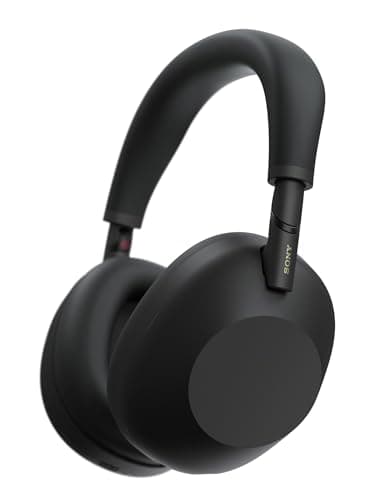
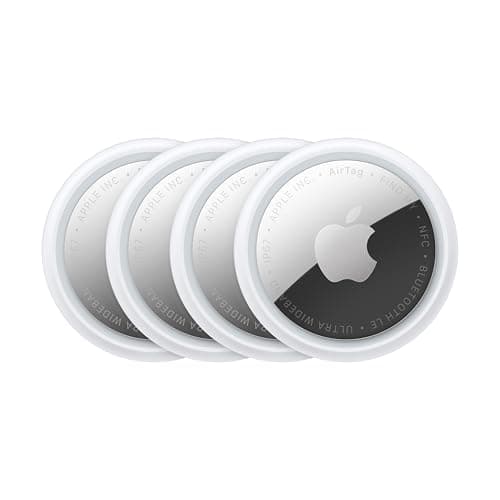
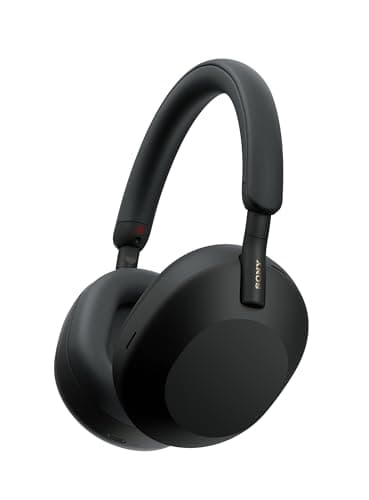
The Samsung Galaxy Buds 4 Pro arrive at a pivotal moment in the wireless earbuds market. Coming off the excellent Buds 3 Pro, Samsung had a tough act to follow, and the 2026 flagship earbuds landscape is more competitive than ever. Apple's AirPods Pro 3 continue to dominate the iOS crowd with seamless integration and class-leading ANC. Sony's WF-1000XM6 push the envelope on noise cancellation and battery life with an $80 premium price tag. Bose recently refreshed its QuietComfort Ultra Earbuds lineup. Against this backdrop, the Galaxy Buds 4 Pro land at $249.99, slotting into the same pricing tier as the AirPods Pro 3 while undercutting Sony's offering by a meaningful margin.
After spending significant time with the Galaxy Buds 4 Pro across a range of devices and environments, I can report that Samsung has delivered a genuinely compelling package — but one that comes with important caveats that could be dealbreakers depending on your phone, your priorities, and your tolerance for ecosystem lock-in. Let's dive into the full picture.
Design and Build Quality
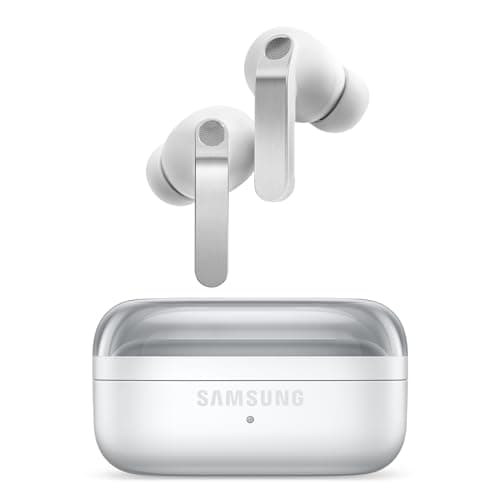
The most immediately noticeable change from the Buds 3 Pro is the redesign. Samsung has moved away from the angular "blade" stem of the previous generation in favor of a more conventional stem-based design that closely resembles the lollipop shape of the AirPods Pro. The earbuds feature a flat outer face with a metallic cladding that gives them a noticeably more premium look and feel than their predecessors. The stems are shorter than AirPods, which helps them sit more discreetly in the ear.
The charging case has also been completely reworked. It's a clamshell design with a transparent lid — a striking aesthetic choice that lets you see the earbuds inside without opening it. The case is compact and pocket-friendly, smaller than the pill-shaped Sony WF-1000XM6 case and much more pocketable than the bulky AirPods Pro 3 case. The hinge action is satisfyingly solid with no wobble, and the lid stays firmly shut when closed.
At just 5.1 grams per earbud, the Galaxy Buds 4 Pro are among the lightest flagship earbuds on the market. The Sony WF-1000XM6, by comparison, are noticeably heavier and bulkier. This weight advantage becomes immediately apparent during extended listening sessions. The Buds 4 Pro are comfortable enough to wear for hours without that fatiguing pressure sensation that heavier earbuds can cause. The included silicone ear tips come in multiple sizes, and Samsung has improved the nozzle shape to create a more secure seal across a wider range of ear shapes.
Durability is a significant selling point. The IP57 rating means these earbuds are not just splash-proof but dust-protected and capable of surviving brief submersion in water. This is a meaningful upgrade over the IPX4 rating of both the Sony WF-1000XM6 and the standard Galaxy Buds 4. You can confidently wear them during intense workouts, in light rain, or even rinse them under a tap if they get dirty. The case does not share this rating, so keep that in mind.
Controls and Usability
Samsung has opted for a hybrid control scheme that combines squeeze and swipe gestures. The squeeze controls handle core playback functions — a single squeeze for play/pause, double for track forward, triple for track back. The swipe gestures control volume, which is a far more intuitive approach than the tap-based volume controls found on many competitors. The squeeze mechanism provides satisfying haptic feedback, and I found accidental activations to be rare.
One of the standout new features is head gesture controls. You can answer or reject phone calls by nodding or shaking your head. This works surprisingly well in practice and feels genuinely futuristic the first few times you use it. It's particularly useful when your hands are full — cooking, working out, or carrying groceries. The gesture recognition is accurate and responsive, though it does require a Samsung phone to function.
The companion experience depends heavily on your device. On a Samsung Galaxy phone, the full settings integration lives directly in the system Settings app — no separate app download required. You get the 9-band EQ with six presets plus a custom mode, Adaptive Sound that adjusts volume based on your environment, Spatial Audio with head tracking, and the full suite of Samsung-exclusive features. On non-Samsung Android phones, you'll need the Galaxy Wearable app, which still offers good functionality but lacks the deepest integration. On iPhones, you get basic functionality only — no Spatial Audio, no ANC customization beyond on/off, no EQ.
Audio Performance
The dual-driver architecture is the star of the show here. Samsung has fitted a dedicated 11mm woofer alongside a separate tweeter, creating a true two-way speaker system inside each earbud. This is relatively rare in the wireless earbud space and gives the Buds 4 Pro a clear advantage in sound separation and clarity over single-driver competitors.
Out of the box, the default tuning leans toward the warmer side. Bass is prominent and punchy without being overwhelming or muddy. The low-end extension is impressive for in-ear buds — kick drums have real weight, bass lines are articulate, and electronic music sounds energetic and engaging. The midrange is where the Buds 4 Pro truly shine. Vocals are forward and clear with excellent presence, and the separation between instruments is noticeably better than what you get from the Galaxy Buds 3 Pro. Acoustic recordings, vocal-forward tracks, and jazz all benefit from this midrange clarity.
The treble is slightly rolled off compared to competitors like the Sony WF-1000XM6 or the AirPods Pro 3. This means cymbal crashes and high-frequency details aren't as pronounced, which some listeners will prefer for fatigue-free extended listening but others may find lacking in air and sparkle. The SoundGuys MDAQS testing confirms this — both the Samsung and Sony score identically on timbre (4.9/5) and overall (4.8/5), but the Sony edges ahead on immersiveness (4.5 vs 4.3), likely due to its wider soundstage and more extended treble.
The soundstage is genuinely wide for in-ear headphones. Orchestral tracks benefit significantly — instruments are placed with precision across the stereo field, and there's a sense of space that most wireless earbuds at this price point cannot match. The PCMag review rightly praised this aspect, noting that it makes for "a highly immersive experience."
Samsung's SSC (Samsung Seamless Codec) codec supports 24-bit/96kHz playback on compatible Galaxy devices. This is genuinely high-resolution audio, and the difference is audible on well-mastered tracks — you get more detail retrieval, better instrument separation, and a more three-dimensional presentation. However, the absence of LDAC support is a notable omission for non-Samsung Android users who want high-resolution wireless audio. AAC performance on iPhones is solid but not class-leading.
The 9-band EQ is excellent and offers significant tuning flexibility. The default signature is warm and enjoyable, but the Clear preset brightens things up nicely for listeners who prefer more treble energy. The custom EQ lets you fine-tune from 63Hz to 16kHz, and the results are applied system-wide without any noticeable processing artifacts.
Active Noise Cancellation
ANC 2.0 represents a meaningful upgrade over the Buds 3 Pro, delivering approximately 84% average noise reduction across the audible spectrum according to SoundGuys' measurements. That's a solid improvement of about 5–10dB in the midrange frequencies where human voices and other disruptive sounds live.
In real-world use, the Galaxy Buds 4 Pro handle consistent low-frequency noise quite well. The hum of an airplane cabin, the rumble of a subway train, or the drone of an air conditioner are all effectively reduced to a distant murmur. This makes them perfectly serviceable for commuting and travel.
Where they fall short is against inconsistent, higher-pitched sounds. The hiss of a bus door opening, nearby conversations in a coffee shop, or keyboard clatter in an open office — these sounds are attenuated but not eliminated. The Sony WF-1000XM6, with its eight-microphone array and 88% average reduction, clearly outperforms the Samsung here. Apple's AirPods Pro 3 also deliver superior noise cancellation, as do Bose's QuietComfort Ultra Earbuds.
The adaptive ANC mode adjusts the cancellation level based on your environment, which works well in practice. Walking from a quiet room onto a busy street triggers a seamless transition to maximum cancellation. Transparency mode (Samsung calls it Ambient Sound) lets in environmental noise when you need to hear your surroundings. It's functional but not best-in-class — there's a faint background hiss, and the overall sound isn't as natural as what Apple achieves with the AirPods Pro 3.
Battery Life and Charging
Battery life has improved over the previous generation, though it still trails the class leaders. With ANC enabled, you get about 6 hours of continuous playback from the earbuds, with an additional 26 hours from the charging case for a total of 32 hours. With ANC off, those numbers increase to 7 hours from the buds and 30 hours from the case, totaling 37 hours.
These are solid numbers, but they fall short of the Sony WF-1000XM6, which delivers nearly 10 hours on a single charge with ANC active. The AirPods Pro 3 also offers better bud battery life at around 6.5 to 7 hours with ANC on. If all-day battery without reaching for the case is your priority, the Sony is the better choice.
Charging is handled via USB-C or wireless Qi. A quick 10-minute charge provides about an hour of playback, which is handy when you're in a rush. Full charging takes about 180 minutes via wireless. Notably, Samsung does not include a charging cable in the box — a frustrating trend that forces you to supply your own USB-C cable.
Call Quality and Microphone
The Galaxy Buds 4 Pro use three microphones plus a bone conduction sensor for voice capture. In quiet indoor environments, call quality is excellent. Your voice comes through clearly with good depth and minimal compression. The bone conduction sensor helps pick up your voice through vibrations in your jaw, which can improve clarity in noisy environments.
The real-world performance of the bone conduction sensor is more variable than I'd like. It requires the earbuds to be seated perfectly in your ears to work effectively. If the fit shifts even slightly — during a walk, while chewing, or after adjusting the buds — the sensor's effectiveness drops noticeably. In windy conditions, the microphone array struggles more than the Sony WF-1000XM6's eight-microphone setup with AI-powered beamforming. Sony's offering is simply in a different league for call quality, particularly in challenging acoustic environments.
Connectivity and Ecosystem
The Bluetooth 6.1 implementation is forward-looking and provides excellent connection stability. I experienced zero dropouts during testing across a Galaxy S26 Ultra, an iPhone 16 Pro, and a MacBook Pro. The range is excellent — I could walk about 40 feet away from my phone with walls in between before experiencing any signal degradation.
The lack of Bluetooth multipoint is the single biggest functional omission on these earbuds. You cannot maintain simultaneous connections to two devices — say, your phone and your laptop — and switch between them seamlessly. Instead, Samsung relies on its automatic switching feature, which only works between Samsung devices. If you're invested in the Samsung ecosystem with a Galaxy phone, tablet, and watch, the automatic switching works smoothly. But if you use devices from different manufacturers — an Android phone and a Windows laptop, or an iPhone and a MacBook — you'll be manually disconnecting and reconnecting every time you want to switch sources. This is a frustrating limitation that competitors like Sony (true multipoint on the WF-1000XM6) and Apple (seamless iCloud switching across all Apple devices) handle much better.
The Samsung-exclusive features are genuinely impressive if you have a compatible Galaxy device. The Live Translation feature has been significantly improved and now works well in both Listening Mode (translating incoming audio in real-time) and Conversation Mode (two-way translation for face-to-face conversations). Spatial Audio with head tracking creates an immersive theater-like experience for movies and supported music content. Auracast support lets you share audio to multiple pairs of Buds simultaneously, which is fun for sharing music or watching content together.
For non-Samsung Android users, the value proposition is less clear. You lose most of the unique features but still get excellent audio quality, solid ANC, and the comfortable fit. At $249.99, they're still competitive against the Google Pixel Buds Pro 2 ($229) and the standard Galaxy Buds 4 ($199.99), but the lack of LDAC and multipoint are harder to swallow.
For iPhone users, the conclusion is straightforward: buy the AirPods Pro 3 instead. They cost the same $249.99, offer better ANC, superior transparency mode, seamless ecosystem integration, and multipoint-style switching across Apple devices. The Galaxy Buds 4 Pro simply cannot compete on Apple's home turf.
Real-World Usage Scenarios
On morning commutes, the Galaxy Buds 4 Pro handle train and bus noise adequately. The ANC isn't class-leading, but it's good enough to bring podcasts and music to the foreground without maxing out the volume. The lightweight design means I could keep them in for the entire 45-minute commute without discomfort.
During workouts, the IP57 rating provides real peace of mind. I ran in light rain, sweat through intense gym sessions, and even accidentally dropped a bud in a puddle — it survived without issue. The secure fit means they stay put during running and jumping jacks, though I'd still recommend the wingtip-style accessories for truly intense exercise.
For office use, the lack of multipoint is the most significant pain point. Switching between my work laptop and personal phone required manually disconnecting and reconnecting every time. The Ambient Sound mode is adequate for quick conversations without removing the earbuds, though it doesn't match the naturalness of Apple's implementation.
For travel, the 6-hour battery with ANC is sufficient for most short-to-medium haul flights, but the additional charging stops from the case are convenient. The compact case is genuinely pocket-friendly, which matters more than you might think during airport transit. However, travelers who prioritize ANC above all else will find more capable options from Sony and Bose.
Comparisons to Key Competitors
Against the Sony WF-1000XM6 ($329.99), the Galaxy Buds 4 Pro are $80 cheaper but sacrifice ANC performance, battery life (6 hours vs nearly 10 hours), call quality, and multipoint connectivity. The Sony is objectively the more capable product in most technical categories, but it's also significantly more expensive and much bulkier. If you own a Samsung phone and $80 matters, the Buds 4 Pro make a lot of sense.
Against the Apple AirPods Pro 3 ($249.99), the Galaxy Buds 4 Pro match price but trail in ANC, transparency mode, and ecosystem fluidity. For iPhone users, this isn't a real competition. For Android users, the AirPods Pro 3 lose most of their value since their best features are locked to Apple devices.
Against the Bose QuietComfort Ultra Earbuds (2nd Gen, $299.99), the Galaxy Buds 4 Pro are cheaper and more compact. Bose still offers superior noise cancellation that effectively rivals Sony, and the Bose sound signature has a warmth and spaciousness that some listeners prefer. The Bose earbuds are larger and the case is substantially bulkier, making the Samsung a better everyday carry option for commuters.
Against the Google Pixel Buds Pro 2 ($229.99), the Galaxy Buds 4 Pro offer better audio hardware (dual drivers vs single) but Google's offering provides more platform-agnostic features and excellent Google Assistant integration. Price-conscious Android users who don't own a Samsung phone should seriously consider the Pixel Buds Pro 2.
Who Should Buy the Galaxy Buds 4 Pro
Let me be direct about who gets the most from these earbuds. If you own a Samsung Galaxy S26, S25, Z Fold 6, Z Flip 6, or any recent Galaxy flagship, the Galaxy Buds 4 Pro are an easy recommendation. The combination of Samsung Seamless Codec for high-resolution audio, automatic switching across your Galaxy devices, Live Translation, Spatial Audio with head tracking, and full Settings integration creates a cohesive experience that no other earbuds can match on Samsung hardware. The $249.99 price point feels justified when you factor in this ecosystem value.
If you own a non-Samsung Android phone, the recommendation is more nuanced. The audio quality and comfort are still excellent, but you lose many of the features that differentiate the Buds 4 Pro from the competition. Without Samsung Seamless Codec, you're limited to AAC and SBC, which means you're not getting the full high-resolution audio capability. You also miss out on Spatial Audio, head gestures, and the tight settings integration. At $249.99, you should compare against the Google Pixel Buds Pro 2 ($229.99) and even consider whether LDAC support from the Sony WF-1000XM6 justifies the higher price.
If you use an iPhone, the recommendation is straightforward: buy the AirPods Pro 3. They cost the same, offer better noise cancellation, superior transparency mode, seamless Apple ecosystem integration, and automatic switching across all your Apple devices. The Galaxy Buds 4 Pro work with iPhones as standard Bluetooth earbuds, but you lose virtually every feature that makes them special.
Price and Value
At $249.99, the Galaxy Buds 4 Pro are priced competitively within the flagship wireless earbud segment. They undercut the Sony WF-1000XM6 by $80, match the AirPods Pro 3, and come in $50 below the Bose QuietComfort Ultra Earbuds. You get genuine high-resolution audio potential (with a compatible Samsung phone), a comfortable all-day fit, IP57 durability, and a forward-looking Bluetooth 6.1 radio.
The value calculation changes dramatically based on your phone. For Samsung Galaxy S26, S25, or Z Fold/Flip series owners, the Galaxy Buds 4 Pro represent exceptional value because the ecosystem features genuinely elevate the experience beyond what any competing earbuds can offer on Samsung hardware. For everyone else — iPhone users, Pixel owners, OnePlus fans, or anyone using multiple device ecosystems — the value proposition is more muted, and you should carefully consider whether the missing multipoint and platform-specific feature locks are worth accepting.
The Bottom Line
The Samsung Galaxy Buds 4 Pro are excellent wireless earbuds that deliver class-leading audio quality, a comfortable and lightweight design, and meaningful durability through IP57 certification. The dual-driver acoustic system produces clean, detailed sound with impressive separation and a wide soundstage that rivals anything in this price bracket. The redesigned case is compact and premium-feeling.
But they are also earbuds with a clear intended audience. Samsung has made deliberate choices that optimize the experience for Galaxy phone users while leaving others with a less compelling product. The lack of Bluetooth multipoint is an increasingly difficult omission to justify at this price point, especially when competitors like Sony offer it alongside superior ANC and battery life.
If you own a recent Samsung Galaxy flagship phone, the Galaxy Buds 4 Pro are arguably the best earbuds you can buy for that device. The deep integration, Samsung-exclusive features, and excellent audio quality combine to create a cohesive and satisfying experience that non-Samsung earbuds simply cannot replicate on Galaxy hardware. If you don't own a Samsung phone, shop carefully — there are better options for your specific use case at this same price point or slightly higher.
Related: JBL Charge 6 Review · Marshall Emberton III Review · Google Pixel Buds Pro 2 Review
Pros
- Excellent dual-driver audio with wide soundstage
- Comfortable, lightweight design at 5.1g per bud
- IP57 water and dust resistance
- Bluetooth 6.1 with stable connectivity
- Deep Galaxy ecosystem integration with exclusive features
- Impressive 32-hour total battery with ANC
Cons
- No Bluetooth multipoint connectivity
- Noise cancellation lags behind Sony and Apple
- Samsung-exclusive features locked to Galaxy phones
- No charging cable included in the box
- No LDAC codec support
Final Verdict
The Samsung Galaxy Buds 4 Pro deliver excellent dual-driver audio, a comfortable lightweight design, and deep Galaxy ecosystem integration at $249.99, though the lack of Bluetooth multipoint and mediocre ANC give us pause.