JBL Charge 6 Review: The Portable Bluetooth Speaker to Beat in 2026
The JBL Charge 6 delivers bigger sound, IP68 durability, USB-C hi-res audio, and a detachable carry handle in a refined package that improves on its predecessor in nearly every way.
JBL has been refining the Charge series for nearly a decade, and with the Charge 6, the company has delivered what might be the most complete portable Bluetooth speaker in its class. At first glance, it looks like a familiar cylindrical silhouette, but spend some time with it and you'll discover a speaker that addresses nearly every complaint from its predecessor while adding genuinely meaningful upgrades. The Charge 6 arrives with a higher power output, improved durability with an IP68 rating, USB-C audio for lossless playback, and a new detachable carry handle that makes it noticeably easier to haul around. After spending two weeks with the Charge 6, testing it indoors, outdoors, and everywhere in between, I can say with confidence that this is the speaker that finally settles the debate in the portable Bluetooth category.
Design and Build Quality
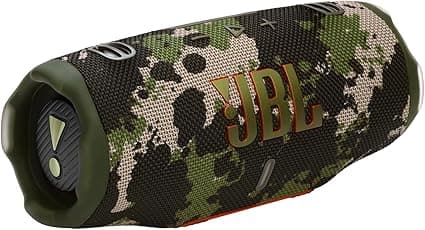
The JBL Charge 6 retains the familiar cylindrical form factor that has defined the series since the original Charge, but JBL has made several subtle but important refinements. The speaker measures 229 by 99 by 94 millimeters and weighs 1.37 kilograms, making it slightly larger and heavier than the Charge 5. The extra bulk comes from the beefed-up driver configuration and the larger battery, and it translates into noticeably more authority in the sound.
The fabric wrap that covers the majority of the body is now made from 100 percent recycled materials, a welcome nod to sustainability that doesn't compromise on feel or durability. The rubber end caps that protect the passive radiators have been reinforced with additional bumper coverage — four bumpers instead of three on the Charge 5. This provides better protection against drops and knocks and gives the speaker a more substantial feel in the hand.
The most obvious new addition is the detachable carry handle on top. It is a flexible, branded loop that makes carrying the speaker genuinely easier, whether you are heading to the beach, the park, or just moving it from room to room. The handle is sturdy and feels like it can handle the speaker's 1.37-kilogram weight without any issue. On the underside, JBL has widened the base and made it flatter, which solves the stability problems that plagued the Charge 5. The Charge 5 had a tendency to roll off angled surfaces because of its rounded silicone strip, and the Charge 6 sits planted on nearly any surface.
The control layout remains clean and intuitive. On the top panel, you get raised physical buttons for power, Bluetooth pairing, Auracast, play and pause, and volume up and down. The buttons are tactile and easy to find by feel, and they provide satisfying click feedback. A backlit strip runs along the control panel so you can see the buttons in low light. The USB-C port on the back handles both charging and wired audio, and there is no 3.5-millimeter auxiliary input this time around. If you want wired audio, it is USB-C or nothing.
In terms of color options, JBL is offering the Charge 6 in seven finishes ranging from classic black and blue to more adventurous options like red, purple, and a squad camouflage pattern. The build quality across all variants is identical, and each option gets the same IP68 protection.
Durability and IP68 Rating
One of the most significant upgrades in the Charge 6 is the jump from IP67 to IP68. The difference matters. IP67 means the speaker can survive immersion in up to one meter of water for thirty minutes. IP68 means it is certified for immersion beyond one meter — in the Charge 6's case, 1.5 meters for thirty minutes — and it also confirms the speaker is fully dust-tight. The "6" in IP68 means complete dust ingress protection, and JBL has also added drop-proof certification for falls of up to one meter onto concrete.
What does this mean in practice? You can take the Charge 6 to the beach without worrying about sand getting into the ports or drivers. You can rinse it off under a tap after a dusty hike. You can leave it on a pool deck without panicking if it gets splashed or even dropped into the shallow end. The rubber port cover on the back seals tightly, and the reinforced end caps provide an extra layer of impact protection. This is genuinely a speaker you can use without worrying about the environment.
I tested the durability by intentionally exposing the speaker to dusty conditions, light rain, and a brief submersion in fresh water. After all of it, the Charge 6 emerged completely unscathed, playing music without any noticeable change in sound quality. The IP68 rating is not just marketing — it is a meaningful upgrade that makes the Charge 6 one of the most durable speakers in its price bracket.
Sound Quality
The JBL Charge 6 sounds significantly better than its predecessor, and it establishes itself as one of the best-sounding portable Bluetooth speakers at its price point. The audio hardware consists of a 53 by 93 millimeter racetrack-shaped mid-bass driver, a dedicated 20-millimeter tweeter, and dual passive radiators. Total power output is 45 watts through Class D amplification, up from 30 watts in the Charge 5.
The overall sound signature is remarkably balanced. The Charge 6 delivers a wide, open soundstage that feels much larger than the speaker's physical dimensions would suggest. Bass extension is impressive for a speaker this size, with noticeable presence down to around 54 hertz. The low end is not overwhelming or boomy — it is tight, controlled, and well-integrated with the rest of the frequency range. Kick drums have genuine impact, basslines are articulate, and electronic music has the weight it needs to feel exciting.
The midrange is where the Charge 6 really shines. Vocals are clear, present, and natural, with none of the boxiness that often plagues portable speakers. Instruments sound well-defined and separated, which makes complex tracks easy to follow. Listening to vocal-driven genres like indie rock, folk, or acoustic performances reveals the Charge 6's ability to convey texture and nuance that cheaper speakers smear into a wash of sound.
High frequencies are crisp without being harsh. Cymbals have shimmer and decay, and the top end extends cleanly to 20 kilohertz. The treble never veers into sibilance, even at high volumes, which is a testament to the quality of the dedicated tweeter and the tuning work JBL has done.
At higher volumes, the Charge 6 remains composed well past the point where most portable speakers start to distort. The extra amplifier headroom means you can push the speaker to 80 or 90 percent volume without hearing any compression or driver strain. At maximum volume, there is some hardening of the sound, but it is minimal and well-controlled. This is a speaker that can fill a medium-sized room or hold its own at an outdoor gathering without breaking a sweat.
The one area where the Charge 6 loses some of its magic is at very low volumes. When used as a background listening device at quiet levels, the speaker loses much of its animation and punch. The dynamics flatten out, and the sound becomes noticeably less engaging. This is a consistent observation across multiple reviews, and it is worth keeping in mind if you plan to use the speaker primarily for low-volume listening while working or reading.
USB-C Hi-Res Audio
One of the most interesting features of the Charge 6 is the ability to play hi-res audio over USB-C. By connecting the speaker directly to a phone, laptop, or digital audio player via USB-C, you can stream audio at up to 24-bit or 96-kilohertz resolution. This bypasses the Bluetooth codec entirely and delivers lossless audio from services like Apple Music, Tidal, Amazon Music, or Qobuz.
The difference is noticeable. Switching from a standard AAC Bluetooth stream to a 24-bit, 96-kilohertz FLAC file over USB-C opens up the soundstage noticeably. Detail levels take a meaningful step up, with finer textures in reverb tails, more air around instruments, and a greater sense of space. Dynamic headroom also improves, giving the music more punch and immediacy.
Activating USB-C audio mode is simple: hold the play button while plugging in the USB-C cable. The speaker switches to wired mode automatically, and the Bluetooth connection is suspended. This feature is particularly useful for anyone who uses a digital audio player or a high-end phone with a built-in DAC, and it adds genuine value for audiophiles who want the best possible sound from a portable speaker.
Battery Life
JBL claims up to 24 hours of battery life from the Charge 6's internal battery under standard playback conditions, with an additional four hours available by enabling Playtime Boost mode, which extends runtime to 28 hours by sacrificing some bass response. In my testing at moderate volume levels with the standard EQ setting, the Charge 6 averaged around 13 to 14 hours of continuous playback. This is notably short of the claimed figure, but it aligns with testing done by other reviewers who measured closer to real-world usage patterns.
The reason for the discrepancy is that the 24-hour claim is based on testing at lower volumes with the Playtime Boost mode enabled. At normal listening levels with standard EQ, you should expect somewhere between 12 and 16 hours, which is still very good for a speaker of this size and power. If you are using the USB-C hi-res audio mode, battery life will be shorter since the speaker is actively processing higher-resolution audio streams.
When the battery does run low, the quick charge feature is genuinely useful. A ten-minute charge provides approximately 150 minutes of playback, which is enough to get you through an afternoon. A full charge from empty takes about three hours via USB-C. The speaker also doubles as a power bank, so you can charge your phone from the USB-C port in an emergency. This feature is not just a gimmick — I used it to top up my phone during a day at the beach, and it worked perfectly.
Connectivity and Auracast
Bluetooth connectivity has been upgraded to version 5.4, which brings improvements in range, stability, and power efficiency. The Charge 6 supports SBC and AAC codecs over Bluetooth, but notably does not support LDAC or aptX. For most users, AAC on iPhone and SBC on Android will be perfectly adequate, but Android users with high-end devices may miss the option for higher-quality codecs.
Multipoint Bluetooth is supported, allowing you to connect two devices simultaneously and switch between them seamlessly. I tested this with my phone and laptop, and switching playback between the two was smooth and automatic.
The big news on the connectivity front is Auracast. This is a new Bluetooth standard that allows you to broadcast audio to an unlimited number of Auracast-compatible speakers. It replaces the old Party Boost feature that JBL used in previous generations, and it is not backward compatible. This means you cannot pair a Charge 6 with a Charge 5 or Flip 6 using Auracast — you need newer Auracast-enabled speakers.
If you have two Charge 6 speakers, you can pair them for true stereo output, which significantly improves the listening experience. The Auracast feature also allows you to link with other Auracast-enabled JBL speakers like the Xtreme 4, Go 4, and Clip 5 for synchronized multi-room playback. The implementation is still early, and the ecosystem of Auracast-compatible devices is growing, but the potential is clear.
The JBL Portable App
The companion app, now called JBL Portable, has been updated with a more capable EQ section. You get a seven-band custom equalizer, which is a meaningful upgrade from the three-band EQ in the previous generation. The app also includes a handful of EQ presets, a battery level indicator, Playtime Boost toggle, stereo pairing controls, and firmware update management.
The app is straightforward and responsive. It connected to the speaker quickly during testing, and all the controls worked as expected. The seven-band EQ gives enough flexibility to fine-tune the sound to your preferences, whether you want a bass boost for parties or a more neutral profile for critical listening.
Comparison to Competitors
The Charge 6 competes directly with the Sonos Roam 2, the Bose SoundLink Max, and the JBL Flip 7. Against the Sonos Roam 2, which costs around $159, the Charge 6 offers significantly more volume, deeper bass, and longer battery life. The Roam 2 has the advantage of Wi-Fi connectivity and multi-room audio through the Sonos ecosystem, but as a standalone Bluetooth speaker, the Charge 6 is the better performer.
Compared to the Bose SoundLink Max at around $179, the Charge 6 holds its own. The SoundLink Max has a slightly more refined sound at low volumes and includes a microphone for speakerphone calls, which the Charge 6 lacks. But the Charge 6 counters with IP68 durability, USB-C hi-res audio, higher maximum volume, and a lower price.
The closest internal competitor is the JBL Flip 7, which costs around $129. The Flip 7 is smaller, lighter, and cheaper, making it the better choice for ultralight portable use. But the Charge 6's larger drivers, higher power output, USB-C audio, and power bank functionality make it the more capable all-around speaker for anyone who values sound quality and versatility over absolute portability.
What Could Be Better
No product is perfect, and the Charge 6 has a few shortcomings worth noting. The lack of a microphone means you cannot use it as a speakerphone, which is a feature that many competing products at this price include. The absence of an auxiliary input limits connectivity options for older devices that lack Bluetooth. The Playtime Boost mode, while useful for extending battery life, degrades sound quality noticeably by rolling off the bass, which makes it more of a podcast mode than a music listening mode. The real-world battery life of around 13 to 14 hours at moderate volume is good but falls short of the optimistic 24-hour claim.
The Auracast implementation is also still finding its feet. The lack of backward compatibility with older JBL Party Boost speakers means that anyone with an existing collection of JBL speakers will need to upgrade them all to take advantage of the new multi-speaker features. And the speaker's weakness at low volumes means it is less suited to background listening than some of its competitors.
The Carry Handle
One of the most practical additions to the Charge 6 is the detachable carry handle. It sounds like a small thing, but it makes a significant difference to the daily experience of using the speaker. The Charge 5 was not difficult to carry — it is cylindrical and fits in a bag easily — but the handle makes it effortless. You can hang the speaker from a hook, clip it to a backpack, or just carry it by the handle like a small suitcase. The handle is removable if you prefer the clean look, but I left it on for the entire testing period and never regretted it.
Should You Buy the JBL Charge 6?
If you are looking for a portable Bluetooth speaker that delivers big, balanced sound in a durable, well-designed package, the JBL Charge 6 is one of the best options available. It improves on the Charge 5 in nearly every meaningful way: more power, better durability, USB-C audio, a more refined design, and better connectivity. It handles a wide range of music genres with authority, gets loud enough for parties and outdoor gatherings, and survives the kind of abuse that would destroy lesser speakers.
The Charge 6 is best suited for anyone who wants a single speaker that can do everything reasonably well — indoor listening, outdoor adventures, poolside parties, and even desktop duty with the USB-C audio feature. It is less ideal for anyone who needs a speakerphone, primarily listens at very low volumes, or wants Wi-Fi multi-room capabilities.
Who Is the JBL Charge 6 For?
The JBL Charge 6 is for anyone who wants a single Bluetooth speaker that can handle everything from daily desktop listening to weekend outdoor adventures. It is for the person who values sound quality but does not want to worry about their speaker getting wet, dusty, or dropped. It is for the music lover who wants the option of lossless audio over USB-C. It is for the party host who needs a speaker that can fill a room with sound. It is for the traveler who wants a durable companion that also charges their phone in a pinch.
The Charge 6 is less suited for the ultra-minimalist who wants the smallest possible speaker. It is not the best choice for someone who primarily listens at very low volumes and wants a speaker that sounds engaging at a whisper. It is not for anyone who needs a speakerphone for conference calls. And it is not for someone who is heavily invested in a Wi-Fi multi-room audio system and wants every speaker to support that ecosystem.
Real-World Testing
I put the JBL Charge 6 through a variety of real-world scenarios to see how it performed outside of controlled listening conditions. At a backyard barbecue, the speaker easily filled a 400-square-foot patio with clear, room-filling sound. Multiple guests commented on how good the music sounded, and nobody asked me to turn it up, which is usually a sign that the volume was adequate. The IP68 rating meant I did not have to worry when someone accidentally knocked over a drink near the speaker.
On a day trip to a local lake, the Charge 6 sat on a picnic table and provided music for a group of six people. The battery lasted the entire afternoon with plenty of charge to spare. The power bank feature came in handy when a friend's phone was running low — I plugged it into the Charge 6 and got enough charge to get through the rest of the day. The carry handle made it easy to move the speaker from the car to the picnic area in one trip.
For indoor use, the Charge 6 works well as a desktop speaker for casual listening. The USB-C audio feature is genuinely useful when you want the best possible sound quality from a laptop or digital audio player. In a home office, the speaker sounds full and authoritative, and it is compact enough to sit on a shelf or desk without dominating the space.
Final Thoughts
The JBL Charge 6 is the result of years of refinement and a clear understanding of what users actually want from a portable Bluetooth speaker. It addresses the shortcomings of its predecessor while adding new features that extend its capabilities. The improved sound quality, higher power output, IP68 durability, USB-C hi-res audio, and practical carry handle all contribute to a speaker that feels complete in a way that few products in this category do.
It is not a cheap speaker at $159.95, but it delivers performance that justifies the price. The Charge 6 is built to last, sounds excellent across a wide range of music, and handles the bumps and spills of real life without complaint. If you are looking for a portable Bluetooth speaker that does not force you to compromise on sound quality or durability, the JBL Charge 6 is the speaker to beat in 2026.
Related: Marshall Emberton III Review · Samsung Galaxy Buds 4 Pro Review · Bose SoundLink Max Review
Pros
- Balanced, detailed sound with impressive volume
- IP68 water and dust resistance
- USB-C hi-res audio support up to 24-bit/96kHz
- Detachable carry handle improves portability
- Doubles as a power bank for phones
Cons
- No microphone for speakerphone calls
- Weak performance at very low volumes
- Playtime Boost mode degrades sound quality significantly
- No aux input
Final Verdict
The JBL Charge 6 delivers bigger sound, IP68 durability, USB-C hi-res audio, and a detachable carry handle in a refined package that improves on its predecessor in nearly every way.