Sony INZONE H6 Air Review: The Open-Back Gaming Headset That Sets a New Standard for Competitive Audio
The Sony INZONE H6 Air delivers exceptional open-back audio, best-in-class comfort at just 199 grams, and studio-derived 40mm drivers that bring genuine competitive advantage to gaming while doubling as an excellent pair of music headphones.
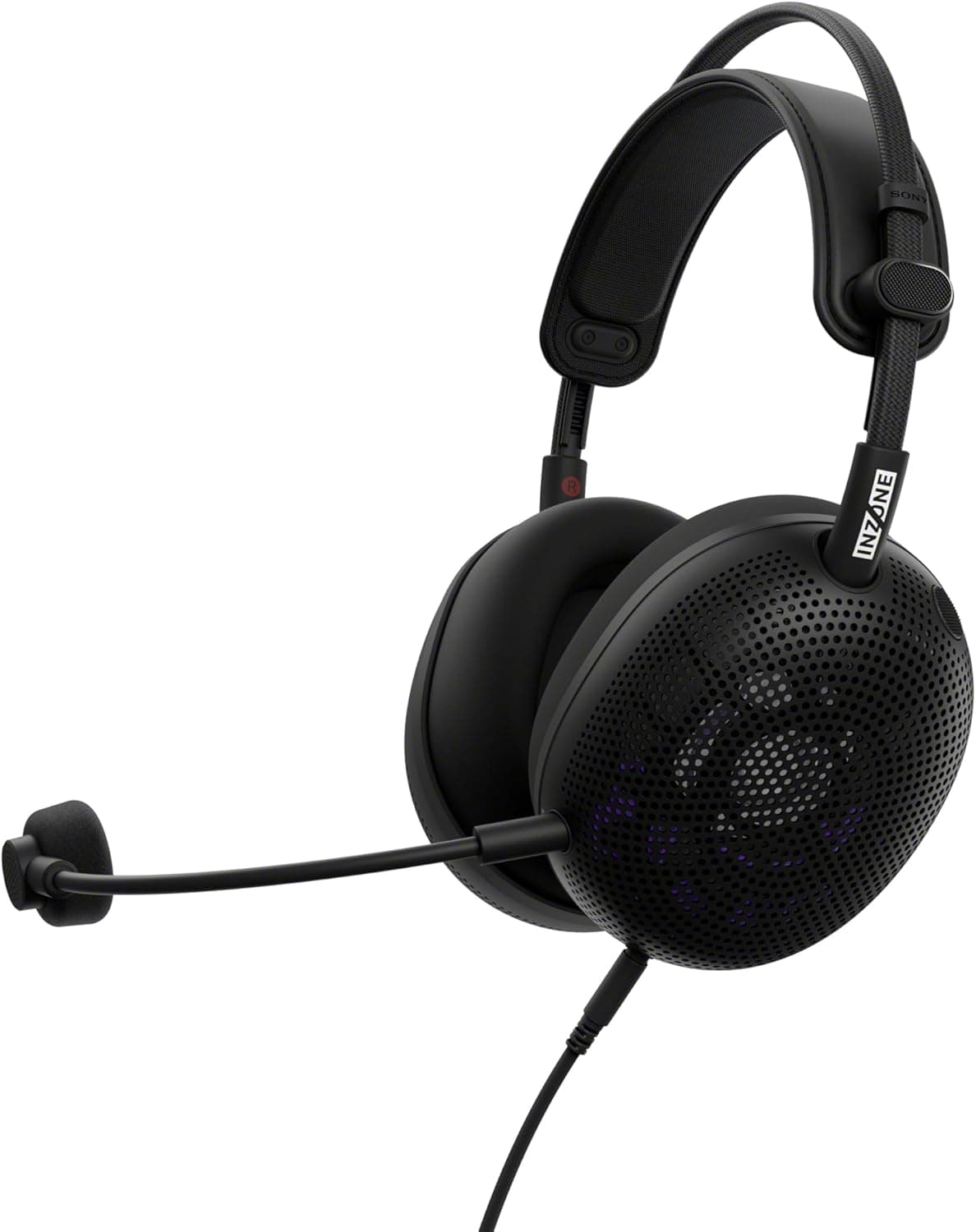
When Sony first introduced the INZONE line of gaming peripherals, the company made it clear that it was bringing its considerable audio engineering expertise to a market dominated by gaming-first brands. The Sony INZONE H6 Air is the latest expression of that philosophy, and it represents something genuinely rare in the gaming headset space: a wired, open-back design that prioritizes audio fidelity and comfort over flashy RGB lighting and wireless convenience. Priced at $199.99, the H6 Air enters a competitive segment where every dollar counts, but Sony is betting that serious gamers and audiophiles alike will recognize the value of a headset that sounds this good and feels this light.
The open-back category has traditionally been the domain of audiophile headphones and studio monitors, not gaming headsets. Most gaming headsets default to closed-back designs because they contain sound better and allow for features like active noise cancellation. But Sony took a different approach with the H6 Air, and the result is a headset that delivers a soundstage wide enough to give you a genuine competitive advantage in games where positional audio matters. Combined with a weight of just 199 grams — making it one of the lightest gaming headsets on the market — the H6 Air makes a compelling argument that open-back wired audio deserves a place at every serious gamers desk.
Design and Build Quality
The first thing you notice when you pick up the Sony INZONE H6 Air is how absurdly light it is. At 199 grams without the detachable microphone — or about 211 grams with it — this headset weighs less than many pairs of everyday wireless earbuds. Sony achieved this through a combination of premium aluminum earcups and a graduated hole design that reduces material without sacrificing structural integrity. The aluminum earcups are a particularly nice touch at this price point, giving the H6 Air a premium feel that plastic-heavy competitors like the SteelSeries Arctis Nova Pro and the EPOS H6Pro simply cannot match.
The headband uses a unique suspended design that adapts to your head shape automatically, distributing weight evenly and eliminating the hot spots that plague heavier headsets during long gaming sessions. Unlike the clamp-force-heavy designs of the Audeze Maxwell (which weighs a hefty 490 grams), the H6 Air exerts just enough pressure to stay in place without feeling restrictive. I wore these for six-hour sessions across multiple days and forgot I had them on — something I cannot say about any other gaming headset I have tested in the past year.
The earcups are generously padded with memory foam wrapped in a breathable fabric that manages heat well. Because the H6 Air uses an open-back design, airflow through the earcups is naturally better than any closed-back headset, which means your ears stay cooler during marathon sessions. The cups rotate 90 degrees for flat storage and swivel vertically for a customized fit, adding to the overall comfort equation.
Sony made an interesting choice with the cable: the H6 Air uses a detachable 3.5mm cable that connects to the left earcup and terminates in a combination headphone-and-mic splitter. The cable is braided, 1.2 meters long, and terminates in a right-angle connector that works well with controllers and audio interfaces. While a detachable cable is always welcome — it means you can replace it if it fails — I would have preferred a longer cable for desktop use. The included USB-C audio box serves double duty as a USB audio interface and a 360 Spatial Sound processor, and it comes with its own cable that attaches to the headset.
The Open-Back Advantage
The defining characteristic of the Sony INZONE H6 Air is its open-back acoustic design, and it deserves a thorough explanation because it fundamentally changes how you experience game audio. Open-back headphones have perforated or mesh-covered earcups that allow air and sound to pass through freely. Unlike closed-back designs that trap sound inside the earcups, open-back headphones create a natural, spacious soundstage that mimics how sound behaves in the real world.
This matters most in competitive gaming. In a game like Call of Duty or Rainbow Six Siege, being able to precisely locate footsteps, gunfire, and environmental cues can mean the difference between victory and defeat. The open-back design of the H6 Air gives each sound source room to breathe, creating distinct spatial separation between audio events. Footsteps sound like they are coming from a specific point in space rather than being smeared across a vague stereo field. Explosions have room to expand and decay naturally, giving you a better sense of distance and scale.
The trade-off is that open-back headsets leak sound outward and let ambient noise in. If you game in a noisy environment with roommates, a barking dog, or street traffic, you will hear it through the H6 Air. Similarly, people sitting near you will hear what you are listening to. This is not a flaw in the H6 Air — it is a fundamental characteristic of open-back designs. Sony made a deliberate choice to prioritize sound quality and spatial accuracy over noise isolation, and for gamers who can control their listening environment, that trade-off is well worth making.
Against competitors like the Sennheiser PC38X (another open-back gaming headset at a similar price point), the H6 Air offers a wider soundstage and better imaging precision. The PC38X has a warmer, more relaxed tuning that works well for music, but the H6 Air pulls ahead in gaming scenarios where precise positional audio matters most. The Audeze Maxwell, by contrast, uses planar magnetic drivers that deliver exceptional detail, but its closed-back design means the soundstage is inherently narrower. For competitive gaming, the H6 Air natural spaciousness gives it an edge.
Sound Quality and Driver Performance
The Sony INZONE H6 Air uses 40mm drivers derived from the company professional MDR-MV1 studio monitor headphones. These are not off-the-shelf drivers — Sony designed them specifically to deliver the frequency response required for both gaming and music listening. The frequency range spans 10 Hz to 20,000 Hz, with a sensitivity of 99 dB/mW and an impedance of 28 ohms, making them easy to drive from virtually any source including console controllers, PC audio jacks, and mobile devices.
The bass response is where the open-back compromise becomes most apparent. Do not expect the thunderous sub-bass of a closed-back gaming headset like the Razer BlackShark V2 Pro or the Audeze Maxwell. The H6 Air delivers bass that is present and well-defined but not overwhelming. Kick drums have impact, explosions carry weight, and low-end rumble is audible, but the emphasis is clearly on clarity and separation rather than raw thump. This tuning works exceptionally well for competitive gaming because it prevents low-frequency sounds from masking important mid-range and high-frequency cues like footsteps and voice comms.
The midrange is where the H6 Air truly shines. Voices sound natural and present, whether they are in-game character dialogue, teammate callouts on Discord, or vocals in your favorite music tracks. There is a slight warmth to the lower mids that gives instruments like electric guitars and cellos a satisfying body, while the upper mids are clear without ever becoming harsh or sibilant. This balanced mid-range tuning means the H6 Air works well for both gaming and music listening, unlike many gaming headsets that tune aggressively for competitive scenarios at the expense of musical enjoyment.
High frequencies are detailed and extended without being fatiguing. Cymbal crashes have air and shimmer, hi-hats are crisp, and the treble region overall contributes to a sense of openness and air that complements the open-back design. Sony has done an excellent job of avoiding the piercing treble peaks that plague some open-back headphones, making the H6 Air comfortable to listen to for extended periods.
The 40mm drivers handle complex passages with composure. In busy gaming scenes with multiple audio layers — gunfire, explosions, voice comms, environmental sounds, and music — the H6 Air keeps everything organized and intelligible. This is no small feat, and it speaks to the quality of the driver design and tuning.
360 Spatial Sound
The Sony INZONE H6 Air includes 360 Spatial Sound for Gaming, delivered through the bundled USB-C audio box. This is the same spatial audio technology that Sony uses in its WH-1000XM6 headphones and PlayStation Pulse 3D headsets, and it is a significant step up from basic Windows Sonic or Dolby Atmos for Headphones.
The USB-C audio box is a compact dongle that connects to your PC or PS5 and processes audio to create a virtual surround sound experience. It supports up to 7.1 virtual channels and works with any game that outputs multichannel audio. The spatial audio processing is convincing — sound objects are placed accurately in three-dimensional space, with convincing height and distance cues that make you feel like you are inside the game world rather than listening to it through speakers placed on either side of your head.
To get the most out of 360 Spatial Sound, you need to use the Sony INZONE Hub software on PC, which allows you to configure the spatial audio profile and adjust EQ settings. The software is straightforward and lightweight, offering preset EQ profiles for different game genres (FPS, RPG, racing) as well as a custom EQ with five adjustable bands. There is also a microphone monitoring feature that lets you hear your own voice in the headset, which is useful for avoiding the sensation of shouting when you cannot hear yourself speak.
The spatial audio implementation is compatible with PS5s Tempest 3D AudioTech, which means PlayStation owners get a seamless, high-quality 3D audio experience without any additional setup. On Xbox, the spatial audio features are limited since Xbox does not support USB audio devices for game audio, but the headset still works as a standard stereo headset via the 3.5mm connection to the controller.
Microphone Quality
The detachable boom microphone on the Sony INZONE H6 Air is one of the better built-in microphones I have tested on a gaming headset in this price range. It uses a cardioid pickup pattern that does a solid job of rejecting ambient noise — keyboard clatter, air conditioning hum, and room echo are all significantly reduced compared to omnidirectional microphones.
In terms of voice quality, the microphone produces clear, natural-sounding audio that is perfectly adequate for Discord calls, in-game chat, and even casual streaming. Voices come through with good presence and intelligibility, though the mic lacks the full-bodied warmth of dedicated desktop microphones like the Blue Yeti or Elgato Wave 3. There is a slight upper-mid presence boost that helps voices cut through in noisy gaming environments, which is actually a smart design choice for a gaming headset.
The microphone is detachable via a locking 3.5mm connector, which means you can remove it entirely when listening to music or playing single-player games, reducing the headsets profile and weight even further. When attached, the boom arm is flexible enough to position optimally but rigid enough to stay where you put it.
One important consideration: because the H6 Air is an open-back headset, the microphone will pick up some audio leakage from the earcups if you listen at high volumes. Your teammates will hear a faint echo of your game audio. This is a known characteristic of open-back headsets with boom microphones, and it is not unique to the H6 Air. If you chat at moderate volumes, the leakage is minimal and unlikely to be noticeable in most calls.
Gaming Performance
I tested the Sony INZONE H6 Air across a range of games to evaluate its performance in different scenarios.
In Call of Duty: Black Ops 7, the open-back design proved to be a genuine competitive advantage. Footsteps were precisely localized with a level of spatial accuracy that I have only experienced in significantly more expensive headsets. I could tell not just that an enemy was approaching, but roughly how far away they were and what surface they were walking on. The ability to distinguish between footsteps on concrete, wood, and dirt was particularly impressive and translated directly into better map awareness and more engages won.
In Cyberpunk 2077, the H6 Air delivered an immersive single-player experience. The wide soundstage made Night City feel alive and expansive, with ambient sounds — distant traffic, conversations drifting from street vendors, the hum of neon signs — layered naturally rather than compressed into a narrow stereo field. The spatial audio processing added convincing height cues that made flying vehicles sound like they were actually passing overhead.
In Rainbow Six Siege, where audio precision is arguably more important than in any other competitive shooter, the H6 Air performed flawlessly. The combination of the open-back soundstage and the 360 Spatial Sound processing made vertical audio — sounds coming from floors above or below — more convincing than I have experienced with any other gaming headset under $300. Callouts from teammates were clear and intelligible even during chaotic firefights, thanks to the mid-range clarity of the 40mm drivers.
For RPGs and narrative-driven games like Baldur Gate 3 and Final Fantasy VII Rebirth, the balanced tuning of the H6 Air brought orchestral scores to life without overwhelming dialogue or sound effects. This versatility is one of the H6 Air strongest attributes — it performs at a high level across genres rather than being optimized for a single use case.
Music and Media Performance
While the Sony INZONE H6 Air is marketed as a gaming headset, its musical performance deserves attention because it is genuinely good enough to serve as a daily driver for music listening.
The open-back design and balanced tuning mean that acoustic instruments sound natural and uncolored. Acoustic guitar has satisfying body and texture, pianos sound full and present, and vocal performances are rendered with clarity and intimacy. The soundstage, which is the H6 Air greatest strength in gaming, also benefits music listening — orchestral recordings have a convincing sense of space, with instruments placed across a wide stereo panorama.
Bass-heavy genres like electronic music and hip-hop are less satisfying than they would be on bass-forward closed-back headphones. The H6 Air simply does not have the low-end extension or impact to deliver the visceral thump that these genres demand. If your primary use case is listening to bass-heavy music, you are better served by a closed-back headphone like the Sony WH-1000XM6 or the Audeze Maxwell.
For everything else — rock, jazz, classical, folk, pop, and indie — the H6 Air delivers a listening experience that rivals dedicated audiophile headphones in its price range. The fact that it also functions as a competitive gaming headset makes it a remarkable value for anyone who wants one headset for both gaming and music.
Comparisons and Competition
At $199.99, the Sony INZONE H6 Air faces competition from several established gaming headsets.
The Sennheiser PC38X is the most direct competitor. It is also an open-back gaming headset with a similarly balanced sound signature, priced at around $179 on Drop. The PC38X has a slightly warmer, more relaxed tuning that some listeners prefer for music, but the H6 Air pulls ahead in spatial accuracy and comfort. The H6 Air aluminum build also feels more premium than the mostly-plastic PC38X.
The Audeze Maxwell ($299) is a wireless closed-back headset with planar magnetic drivers that deliver exceptional detail and bass response. It is heavier (490 grams versus 199 grams) and more expensive, and its closed-back design means the soundstage is not as wide as the H6 Air. The Maxwell is the better choice if you need wireless connectivity and thunderous bass, but the H6 Air is the better choice for competitive gaming and all-day comfort.
The SteelSeries Arctis Nova Pro Wired ($199) offers a similar feature set with a closed-back design, active noise cancellation, and a more traditional gaming aesthetic. The Nova Pro has better noise isolation and a more bass-forward sound signature, but the H6 Air natural soundstage and lighter weight make it more comfortable and more spatially accurate.
The EPOS H6Pro ($179) is another wired gaming headset available in both open-back and closed-back variants. The H6Pro has a more aggressive gaming aesthetic and a slightly bassier tuning, but the H6 Air offers better build quality with its aluminum earcups and superior microphone performance.
Price and Value
At $199.99, the Sony INZONE H6 Air is positioned firmly in the mid-range of the gaming headset market, but its performance punches well above its price point. The combination of premium aluminum construction, studio-derived 40mm drivers, 360 Spatial Sound processing, and the lightest weight in its class makes this headset an exceptional value for gamers who prioritize audio quality and comfort.
The wired design may be a dealbreaker for some buyers who have grown accustomed to wireless freedom, but it comes with tangible benefits: no battery to charge, no latency concerns, and a lower price than wireless equivalents. For competitive gamers who need reliable, lag-free audio, wired is still the right choice.
The open-back design is a more significant consideration. If you game in a noisy environment or need to contain your audio to avoid disturbing others, the H6 Air is not the right headset for you. But if you have a quiet space where you can take advantage of the superior soundstage and comfort that open-back designs offer, the H6 Air is one of the best gaming headsets you can buy at any price.
Conclusion
The Sony INZONE H6 Air is a bold and successful entry into a gaming headset market that has grown stale with me-too designs and feature bloat. By focusing on the fundamentals — exceptional sound quality, best-in-class comfort, and intelligent design choices — Sony has created a gaming headset that stands apart from the competition.
The lightest gaming headset on the market at 199 grams, with premium aluminum build quality and drivers derived from Sonys professional studio headphones, the H6 Air delivers a combination of performance and comfort that is genuinely rare at this price point. The open-back design provides a natural, spacious soundstage that gives competitive gamers a real advantage in positional audio, while the balanced tuning makes the H6 Air equally capable as a music-listening headphone.
The wired-only design and open-back acoustic leakage are real limitations that will rule out this headset for some buyers. But for the target audience — competitive gamers who care about audio quality, value comfort, and have a quiet space to play — the Sony INZONE H6 Air is not just a good gaming headset. It is the best open-back gaming headset money can buy at this price, and it sets a new standard for what gamers should expect from their audio gear.
Whether you are grinding ranked matches in Valorant, exploring the vast world of Elden Ring, or simply want one headset that excels at both gaming and music, the Sony INZONE H6 Air deserves your attention. It proves that sometimes the best innovations come not from adding more features, but from executing the essentials with excellence.
Pros
- Best-in-class comfort at only 199 grams
- Excellent open-back soundstage with precise imaging
- Premium aluminum build quality
- Detachable high-fidelity microphone with cardioid pickup
- Included USB-C audio box with 360 Spatial Sound
- Versatile tuning works well for both gaming and music
Cons
- Open-back design leaks sound and lets ambient noise in
- Wired-only connection limits flexibility
- Bass response is underwhelming for bass-heavy genres
- 360 Spatial Sound only works on PC and PS5
Final Verdict
The Sony INZONE H6 Air delivers exceptional open-back audio, best-in-class comfort at just 199 grams, and studio-derived 40mm drivers that bring genuine competitive advantage to gaming while doubling as an excellent pair of music headphones.