SteelSeries Arctis Nova Pro Omni Review: The Most Complete Wireless Gaming Headset
The SteelSeries Arctis Nova Pro Omni delivers universal multi-platform connectivity, excellent 40mm neodymium drivers, effective ANC, and a top-tier microphone at $399.99 — making it one of the most complete wireless gaming headsets available in 2026.
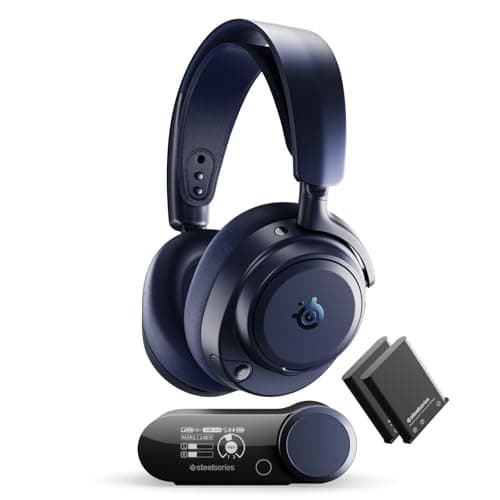
The SteelSeries Arctis Nova Pro Omni arrives as the company's latest bid for the premium wireless gaming headset crown, and on paper it looks like a contender that checks almost every box. At $399.99, it slots neatly between the long-running Arctis Nova Pro Wireless (still available at around $350) and the luxury-tier Arctis Nova Elite ($599.99), offering the core Elite experience at a significantly more accessible price point. After extensive testing across PC, PlayStation 5, Xbox Series X, and Nintendo Switch 2, I can say with confidence that SteelSeries has created one of the most versatile and complete gaming headsets available in 2026 — provided you can swallow that $400 entry fee.
Design and Build Quality
The Nova Pro Omni carries the now-familiar Arctis Nova design language, and that's a good thing. The slim, understated profile avoids the aggressive "gamer aesthetic" that makes so many gaming headsets unwearable outside of a dedicated gaming session. The midnight blue colorway of my review unit is particularly handsome — a dark navy that looks almost black in low light but reveals its true color in bright conditions. The headset is also available in all-black and all-white, so there's an option for every setup.
The build is predominantly plastic, which is a deliberate cost-saving measure compared to the Elite's metal construction. But this isn't cheap-feeling plastic. The headband is a neoprene suspension design borrowed from the Nova Elite, providing excellent weight distribution across the top of your head without creating a hot spot. The telescoping arms extend and retract with satisfying precision and hold their position securely. At 339 grams, the headset is lighter than the Nova Elite and many other premium wireless headsets, including the Audeze Maxwell 2, which tips the scales at a substantially more noticeable 450 grams.
The earcups are deep and generously padded with plush leatherette foam. The clamping force is slightly tighter than average, which contributes to excellent passive noise isolation — even without ANC enabled, you get a meaningful reduction in ambient sound. The trade-off is that the leatherette gets warm during extended sessions, and the clamp force, while comfortable for most, might feel snug for those with larger heads. After about five hours of continuous use, I did notice some warmth buildup, but never enough to become uncomfortable.
The controls are laid out intelligently. The left earcup houses a volume wheel with a premium tactile feel, a power button, a microphone mute toggle, and a 3.5mm auxiliary jack. The right earcup has a Bluetooth pairing button and a magnetic cap hiding the swappable battery. A USB-C port is hidden behind a removable cover on the left earcup, used primarily for firmware updates. Everything feels well-built and positively located — you can operate the controls by touch without fumbling.
The Base Station: The Star of the Show
The OmniPlay base station is genuinely the defining feature of the Nova Pro Omni and the primary reason to choose this headset over alternatives. It's a substantial desktop unit with three USB-C ports on the back (one dedicated to Xbox wireless protocol), a large tactile volume dial on the front, a monochrome OLED screen for menu navigation, and line-in/line-out for external speakers. The build quality matches the headset — clean, minimal, and functional.
The base station's party trick is connectivity. It supports simultaneous connections to up to six devices, and you can mix audio from up to four sources at once: two USB connections, Bluetooth, and wired 3.5mm. This means you can have your PC, PlayStation 5, Xbox Series X, and Nintendo Switch 2 all connected to the same base station and switch between them without any cable swapping. Even more impressively, you can mix audio from two different systems simultaneously — running Discord on your PC while gaming on your PS5, for example, with both audio streams coming through the same headset. This is a genuinely unique capability that no other gaming headset offers at this price point.
The base station's OLED screen displays useful information like battery levels, connection status, and audio format. There's also Tidal integration that shows album art and track information when playing from Tidal, though this feature doesn't work with Spotify or Apple Music, which feels like a missed opportunity.
The one drawback is that the base station is mandatory — there's no small USB dongle option for portable use. If you want to take the headset to a LAN party or use it with a laptop on the go, you're tethered to the fairly large base station. The Bluetooth 5.3 connection helps mitigate this for casual listening, but for gaming-quality wireless audio, the base station is required.
Audio Performance
The 40mm neodymium magnetic drivers deliver a sound signature that's clean, detailed, and impressively well-balanced for a gaming headset. The default tuning leans slightly towards consumer-friendly warmth, but avoids the exaggerated bass that plagues many gaming headsets. Instead, you get a robust low end that provides weight and impact without muddying the midrange.
Bass performance is punchy and controlled. Explosions in games have satisfying heft, and electronic music sounds energetic without becoming fatiguing. Kick drums have a nice thump, and bass lines are articulate rather than boomy. The bass extension is good for a closed-back gaming headset, though it doesn't reach the subterranean depths you'd get from a dedicated pair of audiophile headphones.
The midrange is where the Nova Pro Omni truly shines. Vocals in games and music are forward and clear with excellent presence. In-game dialogue comes through with clarity, making it easy to follow complex narratives without cranking the volume. Guitar tones in rock and metal recordings have satisfying crunch and texture. The transition between bass and mids is smooth, with no noticeable frequency masking.
Treble is smooth and detailed without being harsh or sibilant. High frequencies have good air and sparkle, but SteelSeries has carefully controlled the upper registers to avoid the piercing quality that some gamers find fatiguing during long sessions. Cymbal crashes have realistic shimmer, and high-hat work is clearly articulated.
Soundstage and imaging are where the headset earns its gaming credentials. The Nova Pro Omni delivers a wide and organized soundscape for a closed-back design. In Counter-Strike 2, footstep positioning was precise and easy to localize — I could tell not just which direction footsteps were coming from but also roughly how far away they were and what surface they were on. In more chaotic games like Call of Duty, the audio separation prevents the soundscape from becoming cluttered, letting you pick out individual audio cues even during intense firefights.
The hi-res audio support (24-bit/96kHz) is a nice-to-have rather than a game-changer. The difference is subtle at best for most users, and you need high-quality audio sources to notice it. That said, having it available provides peace of mind that you're getting the best possible audio quality from your headset.
Active Noise Cancellation
The ANC on the Nova Pro Omni is a significant improvement over the original Nova Pro Wireless. It effectively cancels low and mid-range frequencies — the hum of a PC tower, the drone of an air conditioner, the rumble of a washing machine in the next room are all reduced to near-silence. The ANC also handles human voices and keyboard clatter reasonably well, though not as effectively as dedicated ANC headphones like the Sony WH-1000XM6 or Bose QuietComfort Ultra.
In practice, the ANC transforms the gaming experience. The passive isolation from the deep earcups combined with active cancellation creates a remarkably quiet listening environment, letting you hear subtle in-game audio details that would otherwise be masked by ambient noise. It's particularly valuable for competitive gaming where audio cues matter, and for immersion in single-player titles where you want to be fully absorbed in the game world.
The ANC can be adjusted or turned off entirely through the SteelSeries GG software, and there's a transparency mode that lets in ambient sound when you need to hear your surroundings.
Microphone Quality
The ClearCast Pro omnidirectional microphone is one of the most impressive built-in headset mics I've tested. It's a retractable boom design that automatically mutes when fully retracted into the earcup — a wonderfully intuitive feature that eliminates the "are you on mute?" dance. When extended, the mic is flexible and stays where you position it.
Audio quality is excellent. Voice capture is clear, detailed, and natural-sounding with minimal compression artifacts. The AI-powered noise rejection does an impressive job of filtering out background noise — mechanical keyboard clatter, mouse clicks, and even moderate room noise are effectively suppressed without making your voice sound processed or robotic. In Discord calls, multiple people commented that I sounded "like I was using a standalone mic," which is high praise for a built-in gaming headset microphone.
The mic falls just short of the Beyerdynamic MMX 330 Pro for pure voice fidelity, but it's in the same conversation — and that's a conversation that includes some very capable dedicated USB microphones. For most gamers, the ClearCast Pro will be more than adequate for clear, professional-sounding voice communication.
Battery and Charging
The hot-swappable dual battery system remains one of SteelSeries' best innovations. The headset comes with two rechargeable battery packs — one in the headset and one charging in the base station. When the active battery runs low (typically after 15-20 hours with ANC and 2.4GHz+Bluetooth active), you swap it with the charged one in about 10 seconds. If you're quick, the headset stays powered on through the swap.
Real-world battery life depends heavily on usage patterns. With ANC enabled and using both 2.4GHz and Bluetooth simultaneously, each battery lasts approximately 15-20 hours. With ANC off and a single connection, you can push closer to 25-30 hours per battery. With two batteries in rotation, you're looking at 30-60 hours of total runtime before both need charging, and since one is always charging in the base station, the system effectively never runs out of power.
Fast charging has been improved, borrowed from the Nova Elite. A 15-minute charge provides over 4 hours of use, which is remarkably useful when both batteries somehow end up depleted.
Software and Customization
The SteelSeries GG software suite is comprehensive without being bloated. The main GG application handles device management, EQ adjustments, ANC settings, noise gate, and sidetone. The Sonar add-on unlocks deeper customization, including a parametric EQ with fine frequency band tuning, spatial audio behavior (Performance mode for competitive gaming, Immersion mode for cinematic experiences), and up to nine custom profiles. There are also hundreds of built-in game-specific profiles that automatically adjust EQ and spatial audio settings for particular titles.
The mobile app extends some of this functionality to your phone, allowing quick adjustments without alt-tabbing out of a game. It's not as full-featured as the desktop app, but it handles the basics well.
The one software quibble is that the Tidal base station display integration is locked to Tidal only. Users of Spotify, Apple Music, or other streaming services don't get album art or track info on the OLED screen, which feels like an unnecessary limitation.
Comfort and Everyday Wear
Comfort during extended gaming sessions is where the Nova Pro Omni truly distinguishes itself from heavier competitors. The 339-gram weight is distributed perfectly by the neoprene suspension headband, which creates a floating sensation that eliminates pressure points on the top of the head. I wore the headset for six-hour sessions without feeling the need to take it off — something I cannot say for the Audeuse Maxwell 2, which at 450 grams becomes noticeable after about two hours.
The deep earcups accommodate ears of all sizes without pinching. The leatherette material creates an excellent acoustic seal that enhances both passive isolation and bass response. The trade-off, as mentioned, is heat buildup. During summer months or in rooms without air conditioning, you will notice your ears getting warm after a few hours. SteelSeries offers fabric replacement earpads from third-party manufacturers like Wicked Cushions that improve breathability at the cost of some noise isolation and bass response.
The retractable microphone is another comfort win. Unlike headsets with permanently extended boom mics, the Nova Pro Omni looks and feels like a regular set of headphones when the mic is retracted. This makes it perfectly acceptable to wear outside of gaming sessions — for music listening on your phone via Bluetooth, for conference calls, or even for wearing in public spaces without looking like you just stepped away from a gaming tournament.
The controls are all within easy reach on the earcups and can be operated by touch alone. The volume wheel has a satisfying notched feel, and the buttons have positive click actuation. The mute toggle is particularly well-designed — a physical switch that gives you a clear tactile indication of whether you're muted or unmuted, eliminating the uncertainty that plagues software-based mute controls. Every control surface has been thoughtfully positioned and the result is a headset that you can operate completely by muscle memory within a few days of use.
Build Quality and Durability
While the Nova Pro Omni uses more plastic than the metal-intensive Nova Elite, the construction quality is excellent. The headband adjustment mechanism feels robust and shows no signs of loosening after weeks of use. The earcup hinges are reinforced and allow the cups to rotate slightly for a better fit. The earcups also fold flat, making the headset easier to store in a bag when traveling.
The leatherette ear cushions are replaceable, which is important for longevity — they'll eventually wear out after a year or two of heavy use. Replacement pads are available from SteelSeries and third-party manufacturers. The suspension headband is also replaceable, and the neoprene material is less prone to the peeling and flaking that affects leatherette headbands on older headsets.
The base station is built to the same standard. The volume dial has a solid, weighted feel, and the OLED screen is clear and readable at a glance. The USB-C ports are reinforced and hold cables securely. The rubberized base prevents the station from sliding around on your desk. Overall, this is a headset that feels built to last.
Real-World Gaming Performance
In competitive shooters like Counter-Strike 2 and Valorant, the Nova Pro Omni excels. The precise imaging and clean treble make footstep localization effortless, and the wide soundstage helps you build an accurate mental map of the game world. The ANC eliminates PC fan noise and other distractions, letting you focus entirely on the game.
In single-player narrative games like Final Fantasy XIV and God of War Ragnarök, the headset's balanced sound signature shines. Dialogue is clear and centered, orchestral scores have room to breathe, and environmental audio creates a convincing sense of space. The ability to mix game audio with Discord chat from a separate device is genuinely transformative for multiplayer experiences.
In music and media consumption, the Nova Pro Omni performs well above the gaming headset average. The balanced tuning and good detail retrieval make it a capable all-around headphone for music, movies, and YouTube content. It won't replace a dedicated pair of audiophile headphones, but it's one of the few gaming headsets I've used that I'd happily wear for non-gaming listening.
Price and Value
At $399.99, the Nova Pro Omni is undeniably expensive. It's $50-100 more than the aging Nova Pro Wireless, $150 more than the excellent Audeze Maxwell, and substantially more than capable mid-range options like the HyperX Cloud Alpha 2 or the SteelSeries Arctis Nova 7X Gen 2.
But the value proposition is unique. No other headset at any price offers the same combination of universal multi-platform connectivity, hot-swappable batteries, excellent ANC, top-tier microphone quality, and deep software customization. If you game on multiple platforms — particularly if you split time between PC and consoles — the Nova Pro Omni's base station eliminates cable management headaches and lets you switch between systems in seconds. If you primarily game on a single PC or console, the value proposition is weaker, and you should save money with something like the Audeze Maxwell for better audio or the Nova 7X Gen 2 for a more affordable wireless experience.
Comparisons
Against the Audeze Maxwell 2 ($349.99), the Nova Pro Omni offers better connectivity, ANC, and microphone quality, while the Maxwell 2 delivers slightly better sound quality through its larger planar magnetic drivers. The Maxwell 2 is also significantly heavier at 450 grams vs 339 grams, making the Omni the more comfortable choice for long sessions. The Maxwell wins on pure audio fidelity; the Omni wins on everything else.
Against the Astro A50 Gen 5 ($299.99), the Nova Pro Omni offers comparable connectivity but better ANC, microphone quality, and software customization. The Astro has a slightly more comfortable fit for some users and a lower price, but the Omni is the more feature-rich headset.
Against the SteelSeries Arctis Nova Elite ($599.99), the Omni is a remarkably similar experience for $200 less. The Elite has nicer materials (metal construction, carbon fiber drivers), slightly better audio, and a few extra features, but the Omni captures the vast majority of the Elite experience at a significantly lower price. For most users, the Omni is the smarter buy.
The Bottom Line
The SteelSeries Arctis Nova Pro Omni is the most complete wireless gaming headset available today at its price point. The combination of universal multi-platform connectivity through the OmniPlay base station, excellent 40mm neodymium drivers with hi-res audio support, effective ANC, a genuinely impressive ClearCast Pro microphone, and the endlessly useful hot-swappable battery system creates a package that's greater than the sum of its parts.
The $400 price is steep, and the mandatory base station limits portability. But if you game across multiple platforms, value audio quality in both games and media, and want a headset that can handle everything from competitive esports to immersive single-player adventures to music listening, the Nova Pro Omni makes a compelling case for itself. It's not the cheapest, it's not the most portable, but it is the most versatile — and for the right user, that versatility is well worth the premium.
Pros
- Universal multi-platform connectivity with OmniPlay base station
- Excellent 40mm neodymium drivers with balanced sound signature
- Top-tier ClearCast Pro microphone with AI noise rejection
- Innovative hot-swappable dual battery system
- Effective ANC and outstanding passive noise isolation
- Deep software customization via SteelSeries GG and Sonar
Cons
- Expensive at $399.99
- Mandatory base station limits portability
- Leatherette earpads get warm during long sessions
- Reduced wireless range compared to other Nova headsets
- Tidal display integration only works with Tidal
Final Verdict
The SteelSeries Arctis Nova Pro Omni delivers universal multi-platform connectivity, excellent 40mm neodymium drivers, effective ANC, and a top-tier microphone at $399.99 — making it one of the most complete wireless gaming headsets available in 2026.